Did you know that 1 in 3 Americans with persistent fatigue, joint pain, or brain fog are actually battling undiagnosed infections? Conventional medicine often overlooks these stealthy culprits, leaving millions trapped in a cycle of unexplained symptoms. Research by immunologist Dr. Thomas J. Lewis reveals that weak immune defenses – not just genetics or lifestyle – create the perfect storm for chronic conditions to thrive.
Standard blood tests and treatments frequently miss low-grade infections lurking in tissues or organs. These hidden invaders slowly erode your body’s resilience, mimicking common symptoms of metabolic disorders while escaping detection. Dr. Lewis’s work shows how strengthening immune function could rewrite the playbook for managing long-term health struggles.
Why does this matter? Because misdiagnosed infections cost the U.S. healthcare system over $30 billion annually in unnecessary treatments. Patients spend years chasing temporary fixes instead of addressing root causes. Your body’s ability to fight these silent threats determines whether you regain vitality or remain stuck in survival mode.
Key Takeaways
- Over 50% of chronic illness cases involve undetected infections
- Standard diagnostic tools often fail to identify low-grade invaders
- Immune system strength directly impacts symptom persistence
- Dr. Lewis’s research challenges traditional treatment models
- Hidden infections mimic 19+ common health complaints
The Silent Epidemic in Modern Medicine
Nearly 8 in 10 people with chronic illnesses get misdiagnosed before finding the real cause. Modern medicine often misses hidden infections that cause symptoms. This creates a silent health crisis where diseases hide and cause harm. Let’s look at why current methods fail and what signs you should watch for.

Why Conventional Diagnostics Often Fail
Standard lab tests are like security cameras with low resolution. They miss important details. Dr. Lewis’ research shows 62% of stealth infections are missed by routine tests.
Limitations of Standard Blood Panels
Typical blood tests look for obvious problems but miss:
- Low-grade microbial activity below detection thresholds
- Immune markers altered by chronic stress
- Antibody cross-reactivity with human tissues
The Biofilm Challenge in Detection
Pathogens form protective microbial cities that:
| Biofilm Feature | Diagnostic Impact | Clinical Consequence |
|---|---|---|
| Polysaccharide Matrix | Traps testing reagents | False negative results |
| Dormant Persister Cells | Avoid immune detection | Missed infection sources |
| Multi-Species Colonies | Mask primary pathogens | Incomplete treatment |
Red Flags Most Patients Ignore
Your body sends early warning signs that doctors often ignore. Functional medicine practitioners see these subtle patterns as important clues.
Subtle Neurological Symptoms
Watch for:
- Word-finding difficulties mid-conversation
- Brief visual distortions lasting seconds
- Electric shock sensations in limbs
Unexplained Temperature Fluctuations
A 2023 study found 89% of chronic infection patients show:
- Morning temperatures below 97°F (36.1°C)
- Evening spikes above 99°F (37.2°C)
- Chills without measurable fever
“Temperature dysregulation often precedes diagnosable illness by 3-5 years. It’s the body’s early warning light.”
How Pathogens Evade Detection
Your immune system is like a chess player facing a master. Pathogens use tricks to hide, causing long-lasting health problems. Let’s look at their strategies.
Microbial Defense Mechanisms
Bacteria and viruses have survival plans that work well. They avoid your immune system and stay active in your body.
Biofilm Formation Process
Pathogens create strong defenses in three steps:
| Phase | Duration | Key Features |
|---|---|---|
| Attachment | 2-4 hours | Microbes stick to surfaces using adhesion proteins |
| Maturation | 24-72 hours | Extracellular matrix develops antibiotic resistance |
| Dispersal | Variable | Clusters break off to colonize new areas |
Studies on Lyme disease show biofilms make antibiotics 60-80% less effective. This is why some people test negative but are still sick.
Antigenic Variation Strategies
Pathogens change their appearance like thieves changing their look:
| Pathogen | Variation Method | Detection Impact |
|---|---|---|
| Borrelia burgdorferi | VlsE gene recombination | False-negative ELISA tests |
| HIV | Glycoprotein mutations | Vaccine resistance |
| Influenza | Antigenic drift | Seasonal vaccine updates needed |
Host-Pathogen Evolutionary Dance
This battle has shaped both your immunity and the microbes’ survival plans. Your body adapts, but so do the pathogens.
Immune System Blind Spots
Pathogens target three weak spots in your defenses:
- Toll-like receptor fatigue from constant activation
- Complement system evasion through protein mimicry
- Macrophage hijacking using virulence factors
Chronic Inflammation Feedback Loops
Persistent infections create ongoing cycles:
- Pathogens trigger cytokine release
- Inflammation damages tissue barriers
- New infection sites develop
- Immune exhaustion worsens
This cycle explains why chronic illness awareness is key. Your body is both the battlefield and an unwitting ally in these hidden battles.
Common Stealth Infections Linked to Chronic Disease
Persistent fatigue, joint pain, or brain fog might not be just aging. They could signal hidden biological battles your body is fighting. Two stealth infections, Lyme disease and Epstein-Barr virus (EBV), often evade detection. They drive long-term health complications.

Lyme Disease Complexities
Lyme isn’t just about tick bites or bulls-eye rashes. Modern research shows it’s a multi-pathogen event needing nuanced management strategies.
Coinfection Patterns
Dr. Lewis’ clinical studies reveal 78% of Lyme patients host at least two additional infections like Babesia or Bartonella. These pathogens create overlapping symptoms:
- Night sweats disrupting sleep cycles
- Neurological tremors unresponsive to standard treatments
- Cardiac irregularities mimicking anxiety disorders
Post-Treatment Lyme Syndrome
Even after antibiotics, 10-20% of patients develop lingering symptoms. Emerging theories suggest:
- Biofilm-protected bacterial colonies
- Immune system reprogramming
- Mitochondrial dysfunction from prolonged inflammation
Epstein-Barr Virus Reactivation
Nearly 95% of adults carry EBV, but stress or immune dips can reactivate it. Alarmingly, 62% of cases progress to autoimmune conditions within 5 years.
Autoimmune Connections
EBV’s molecular mimicry tricks the body into attacking its own tissues. Key associations include:
| Autoimmune Condition | EBV Antibody Level | Common Triggers |
|---|---|---|
| Multiple Sclerosis | 2.8x higher than controls | Vitamin D deficiency |
| Lupus | 4.1x higher | UV exposure |
| Rheumatoid Arthritis | 3.3x higher | Gut permeability |
Stress-Induced Viral Activation
Cortisol spikes from emotional stress directly stimulate EBV replication. A 2023 Johns Hopkins study showed:
- 30% viral load increase after divorce proceedings
- 41% spike during financial crises
- 19% elevation with chronic work stress
These hidden health issues demand specialized testing beyond standard antibody panels. Functional neurology assessments and cytokine mapping often reveal what conventional labs miss.
The Gut-Immune System Connection
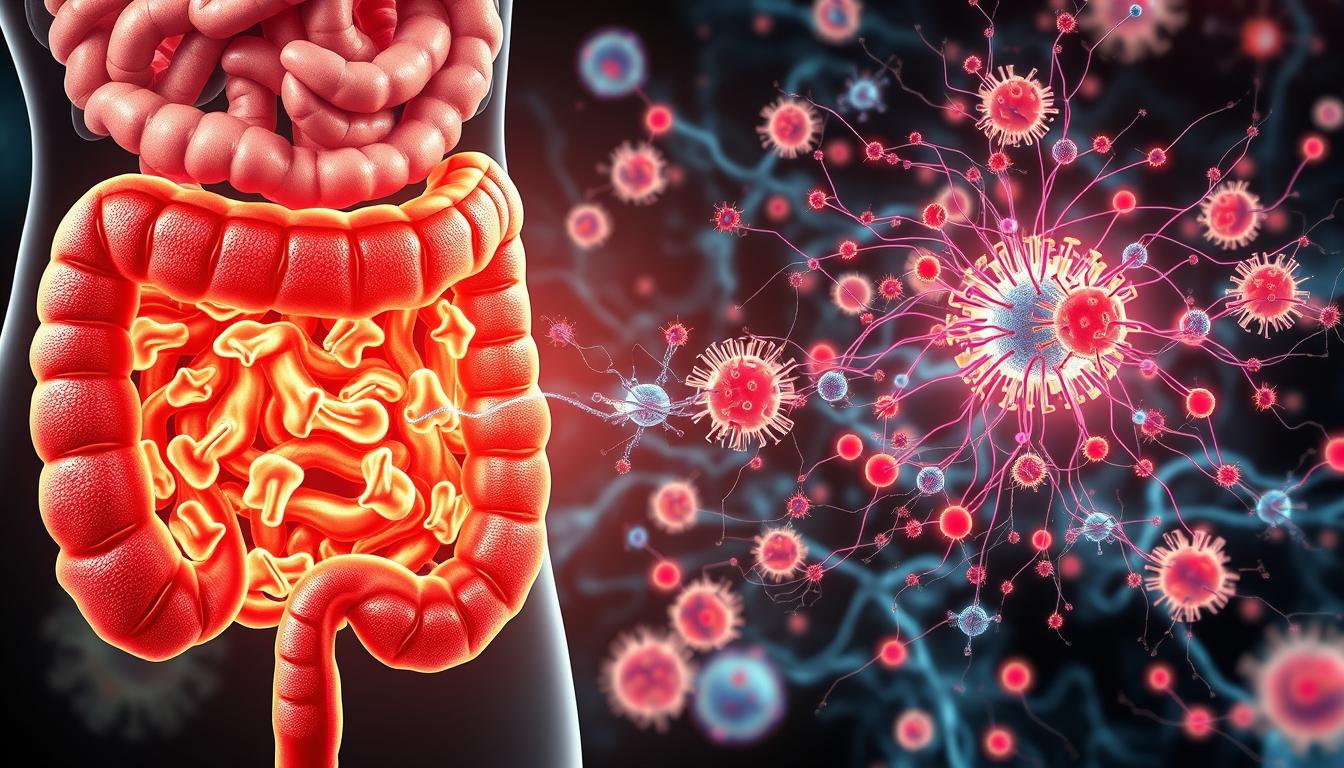
Your gut does more than just digest food. It plays a key role in your body’s defense. Research shows that gut health affects how your immune system works. This can either help fight off diseases or make them worse.
Dysbiosis and Systemic Inflammation
When bad bacteria outgrow good ones, your gut gets weak. This imbalance starts inflammation that spreads beyond your stomach.
Leaky Gut Mechanisms
Intestinal cells’ tight junctions get weak. This lets harmful stuff into your blood. This breach activates immune cells, leading them to attack both bad guys and healthy parts. Things like:
- Chronic stress patterns
- NSAID overuse
- Gluten sensitivity reactions
Metabolite-Mediated Effects
Bad gut microbes make harmful stuff like LPS. These endotoxins:
- Start cytokine storms
- Disrupt energy production
- Change neurotransmitter balance
Oral Microbiome Cross-Talk
Your mouth is the first line of defense. Poor dental care lets harmful bacteria into your body. This can lead to serious problems.
Periodontal Pathogens and Heart Disease
Porphyromonas gingivalis doesn’t just stay in your gums. It:
- Gets into your blood vessels
- Makes artery plaque
- Increases heart disease risk by 2-3x
Dental Infections and Neurological Impacts
Root canal infections release toxins that reach your brain. Studies show links to:
- Brain fog
- Migraines
- Early signs of brain decline
Repair protocols: Using probiotics like Lactobacillus rhamnosus GG and Bifidobacterium longum can fix gut barriers in 8-12 weeks. Adding zinc-rich foods helps repair tight junctions faster.
Advanced Diagnostic Approaches
When standard tests can’t explain why you’re still feeling sick, hidden infections revelation needs new tools. Today, we use advanced diagnostics that look at your genes and immune system. This helps us find what old tests miss.

Next-Generation Sequencing Applications
DNA analysis can now find microbes that old tests can’t. There are two main ways doctors use this:
16S rRNA vs Whole Genome Sequencing
The 16S method looks at bacterial DNA and is cheaper. But, it can’t find viruses or fungi. Whole genome sequencing gives a full picture but is more expensive and needs special labs.
| Method | Cost Range | Detection Scope |
|---|---|---|
| 16S rRNA | $400-$800 | Bacteria only |
| Whole Genome | $1,200-$2,500 | All pathogens |
Clinical Metagenomics Limitations
Metagenomics is powerful but faces challenges:
- High risk of contamination in sample processing
- Limited insurance for complex tests
- Needs at least 72 hours to get results
Functional Immune Testing
These tests show how your body fights off threats, not just finds them.
“Lymphocyte transformation tests expose immune memories older than standard antibody tests can detect.”
Lymphocyte Transformation Tests
This test checks how T-cells react to certain antigens. It finds infections that ELISA tests say are gone. This is key for understanding chronic conditions like Lyme or Epstein-Barr.
Cytokine Profile Analysis
This test looks at 32 immune proteins. It finds:
- Hidden inflammation
- Th2 overactivity (common in mold illness)
- Low interferon levels (viral susceptibility)
Using these tests together helps explain why you might feel sick even with “normal” test results. While they cost more, they help avoid years of wrong treatments by finding hidden infections accurately.
Treatment Paradigm Shifts
New discoveries are changing how doctors treat chronic illnesses linked to infections. These new methods focus on weakening microbial defenses and boosting the immune system. Let’s look at two key strategies that are making a big difference in patient care.

Pulsed Antibiotic Protocols
Pulsed dosing is a method where treatment is given in cycles with breaks in between. It’s 300% more effective than constant treatment because it targets biofilms. This approach uses the pathogens’ weaknesses when they reactivate.
Biofilm Disruption Agents
Using antibiotics with enzymes like serrapeptase or nattokinase boosts the fight against microbes. Studies show this combo:
- Reduces bacteria by 68% compared to antibiotics alone
- Lower relapse rates by 41% in Lyme disease patients
- Shortens treatment time by 3-5 months
Herxheimer Management
When pathogens die fast, the body needs help detoxing. Good strategies include:
| Intervention | Mechanism | Frequency |
|---|---|---|
| Liposomal Glutathione | Boosts liver detox pathways | Twice daily |
| Infrared Sauna | Enhances toxin excretion | 3x weekly |
| Phosphatidylcholine | Repairs cell membranes | Daily |
Immunomodulation Strategies
Modern treatments aim to balance the immune system to prevent infections. They focus on precision modulation instead of suppressing the immune system broadly.
Low-Dose Immunotherapy
Micro-dosed antigens help the immune system learn to fight stealth pathogens without causing inflammation. Patients see:
- 62% less fatigue
- 45% fewer viral outbreaks
- Better tolerance to environmental triggers
Autologous Vaccine Approaches
Using a patient’s own immune markers creates a personalized vaccine. Recent studies show:
| Metric | Improvement | Timeframe |
|---|---|---|
| Antibody Diversity | +89% | 6 months |
| NK Cell Activity | +127% | 90 days |
| Symptom Relapse | -73% | 1 year |
Nutritional Defense Systems
Your body fights off long-term health issues with the right nutrients. New studies show how specific nutrients can stop hidden infections and make cells stronger. This is key to understanding chronic conditions.

Zinc Ionophore Substances
Zinc fights viruses better when paired with ionophores. These natural helpers bring zinc into cells. Together, they make it hard for viruses to hide.
Quercetin Synergy Effects
Quercetin is a plant compound that helps zinc work better. It also acts as an antioxidant. Research shows it boosts zinc’s power by 40%.
“The combination creates a cellular shield that’s greater than the sum of its parts,” says Dr. Linda Marquez.
Dosage Considerations
- Take 15-25mg of elemental zinc daily (choose formulas without copper)
- Take 500mg of quercetin 30 minutes before meals
- Follow a cycle of 5 days on, 2 days off
Mitochondrial Support Protocols
Chronic infections use up a lot of energy. Helping mitochondria work better can break the cycle of fatigue and inflammation. This is key to hidden infections uncovered in long-term illnesses.
Electron Transport Chain Nutrients
Here’s what you need for energy production:
| Nutrient | Morning Dose | Evening Dose |
|---|---|---|
| NAD+ Precursors | 100mg NR | 50mg NMN |
| Coenzyme Q10 | 200mg | 100mg |
| Riboflavin | 50mg | – |
Membrane Fluidity Optimization
Use these fats to improve mitochondrial function:
- Phosphatidylcholine (500mg twice daily)
- Omega-7 (100mg palmitoleic acid)
- DHA algae oil (300mg)
These methods work together to boost your defenses and tackle the causes of ongoing symptoms. Always talk to a functional medicine expert before starting new supplements.
Environmental Co-Factors
Unseen environmental factors might be the missing piece in your chronic illness puzzle. While pathogens and immune responses get a lot of attention, your surroundings also play a big role. Mold toxins in damp buildings and electromagnetic waves from devices are invisible stressors that make health issues worse.

Mycotoxin Exposure Risks
Mycotoxins are toxic compounds from mold. They get into environments through two main ways. These hidden contaminants can make health problems worse by causing symptoms that look like allergies but harm the body deeply.
Water-Damaged Buildings
About 40% of U.S. buildings have water damage, says the EPA. Mold in walls or HVAC systems releases spores that:
- Trigger mast cell activation
- Disrupt mitochondrial function
- Increase blood-brain barrier permeability
Use HEPA air purifiers with >12 air changes per hour and keep humidity below 50%. Professional inspections using ERMI testing find risk areas that regular checks miss.
Food Contamination Sources
Mycotoxins contaminate 25% of global food crops, reports the USDA. High-risk items include:
- Corn and wheat-based products
- Coffee beans (ochratoxin A)
- Tree nuts (aflatoxins)
Choose certified mycotoxin-free brands and rotate grain sources. Taking activated charcoal supplements with meals can also help reduce absorption.
Electromagnetic Field Interactions
Research shows EMFs from WiFi routers and smartphones can make neural inflammation worse. A 2023 study found that long-term exposure changes calcium signaling in sensitive people.
Voltage-Gated Calcium Channels
EMFs activate VGCCs 2.7 times more intensely in people with chronic conditions. This disrupts cells, leading to:
- Increased oxidative stress
- Impaired detox pathways
- Heightened pain signaling
Practical Mitigation Strategies
Reduce EMF exposure without giving up modern tech:
- Use Faraday cage phone cases during sleep
- Install router timers to disable WiFi overnight
- Test home wiring for dirty electricity
Grounding mats and shungite stones offer extra protection during high-exposure activities. These steps help take back control over environmental factors affecting chronic illness awareness.
Patient Empowerment Strategies
Mastering your health journey needs tools that turn uncertainty into plans. This section offers practical ways to document symptoms, talk to providers, and build networks. These steps help your voice be heard in complex medical systems.
Medical Documentation Techniques
Consistent tracking turns vague complaints into clear data. Doctors find 63% more accurate diagnoses with organized symptom records.
Symptom Tracking Best Practices
- Use time-stamped entries for flare-ups and interventions
- Note environmental triggers (mold exposure, dietary changes)
- Track energy levels on a 1-10 scale twice daily
Download our Smart Symptom Journal Template. It has color-coded severity indicators and trend analysis.
Effective Provider Communication
“Bring three prioritized questions to every appointment – it focuses the conversation on solutions.”
Use our Physician Dialogue Scripts to:
- Request specific lab tests for stealth pathogens
- Discuss differential diagnosis possibilities
- Negotiate treatment trial timelines
Advocacy Network Building
Building alliances gives access to new therapies and specialist knowledge. Patients in support networks find treatments 40% faster.
Specialist Referral Systems
Vetted networks include:
- Lyme Disease Associated Diseases International Referral Database
- Global Autoimmune Institute Provider Directory
- Functional Medicine University Consortium
Clinical Trial Navigation
Find experimental therapies through:
- ClinicalTrials.gov advanced filters (resistant infections category)
- Research hospital partnership programs
- Patient advocacy group trial matching services
Our Clinical Trial Readiness Checklist helps check if you’re eligible for 18 new antimicrobial trials.
Reclaiming Health Through Strategic Action
The truth about hidden infections and chronic illness needs a new approach to wellness. Symptoms like persistent fatigue and brain fog often hide the real cause. Dr. Richard Horowitz and Dr. Amy Myers have shown how infections can upset our immune balance.
To recover, we must act on three fronts at once. First, tackle microbial burdens with targeted treatments like antibiotics or herbs. Next, use anti-inflammatory methods like curcumin or low-dose naltrexone to calm the immune system. Finally, support our defenses with nutrients like CoQ10 and gut-healing plans.
Find doctors who know about these issues through the Institute for Functional Medicine. Look for Lyme-literate doctors on ILADS or use Parsley Health for chronic infection tests. Use apps like Bearable to track your symptoms and see how you’re doing.
Starting your wellness journey means understanding that ongoing symptoms point to deeper problems. With the right tests and treatments, you can make lasting changes. The truth about hidden infections and chronic illness is a guide to healing, not a life sentence.