Did you know switching to a protein-focused meal plan can save you over $2,600 yearly? While many assume meat-heavy eating strains wallets, USDA data reveals ground beef averages just $4.33 per pound—cheaper than most processed foods.
Kelly Hogan, a well-known advocate, shares how she spends less than $5 daily while thriving on this lifestyle. Her Instagram success proves budget-friendly choices exist without sacrificing nutrition.
This guide uncovers 10 smart tactics to keep costs low. From bulk buying to lesser-known cuts, you’ll learn to maximize savings while enjoying high-quality meals.
Key Takeaways
- Meat-focused eating can cost half as much as standard diets annually.
- Ground beef offers the best value per pound at current prices.
- Influencers like Kelly Hogan demonstrate real-world budget success.
- Strategic purchasing eliminates financial stress around this lifestyle.
- Upcoming sections reveal actionable savings methods.
Introduction: Eating Carnivore Without Breaking the Bank
A recent survey reveals 68% worry about costs, yet meat-focused diets often cost less long-term. USDA data shows grain-fed beef averages $4.33 per pound—cheaper than many processed snacks. You’ll spend less while eating better.
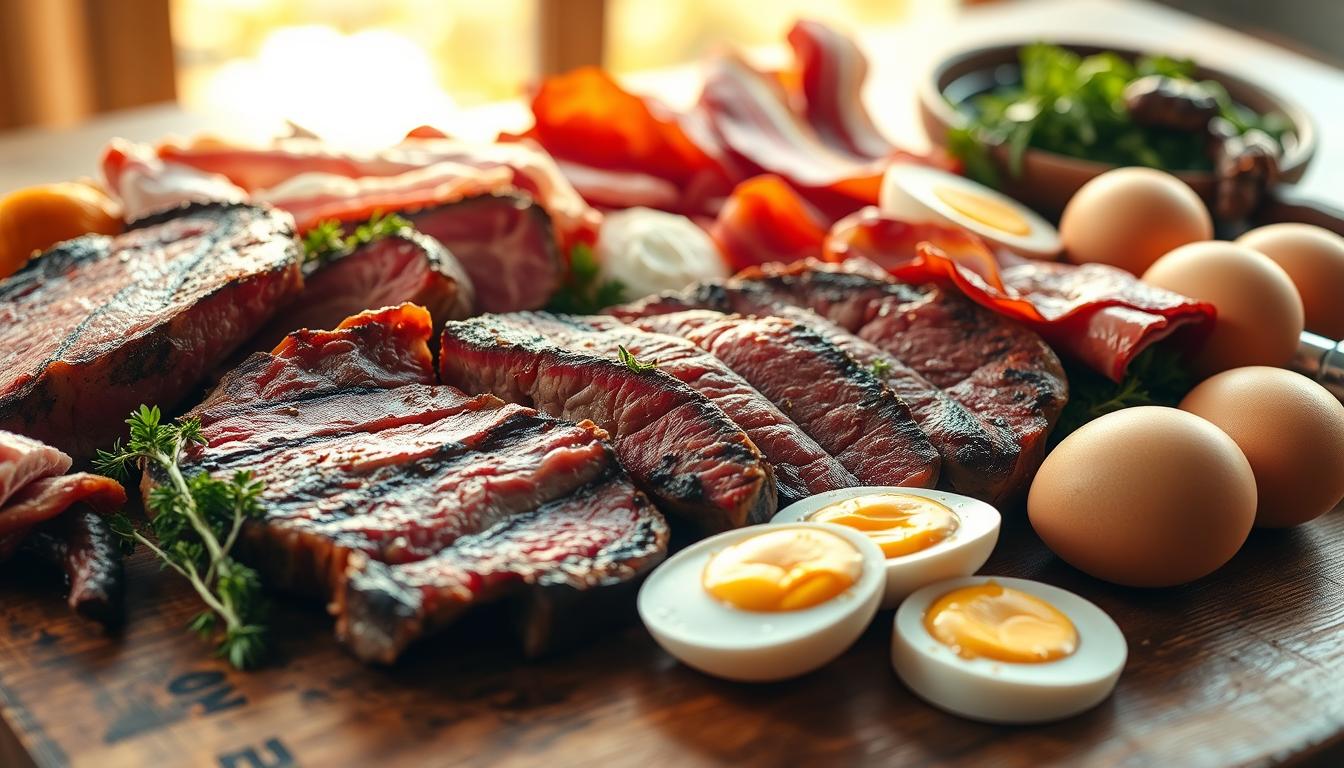
Grass-fed options cost 50–100% more, but nutrient density means you’ll eat fewer meals. Quality over quantity slashes grocery trips and cravings. Over time, this offsets higher upfront prices.
The carnivore diet also reduces hidden expenses. Fewer doctor visits and no supplements add up. One study found low-carb eaters save $2,600 annually on healthcare.
Kelly Hogan’s 15-year journey proves the benefits. She spends under $5 daily by prioritizing ground beef and sales. Her secret? Buying in bulk and freezing wisely.
Meat isn’t the budget killer—it’s the solution. With the right cuts and timing, you’ll thrive without overspending.
How to Shop for the Carnivore Diet Without Breaking the Bank
Not all cuts drain your wallet—strategic choices keep costs low without sacrificing quality. Prioritizing value-driven options ensures your meals stay nutrient-dense and budget-friendly.
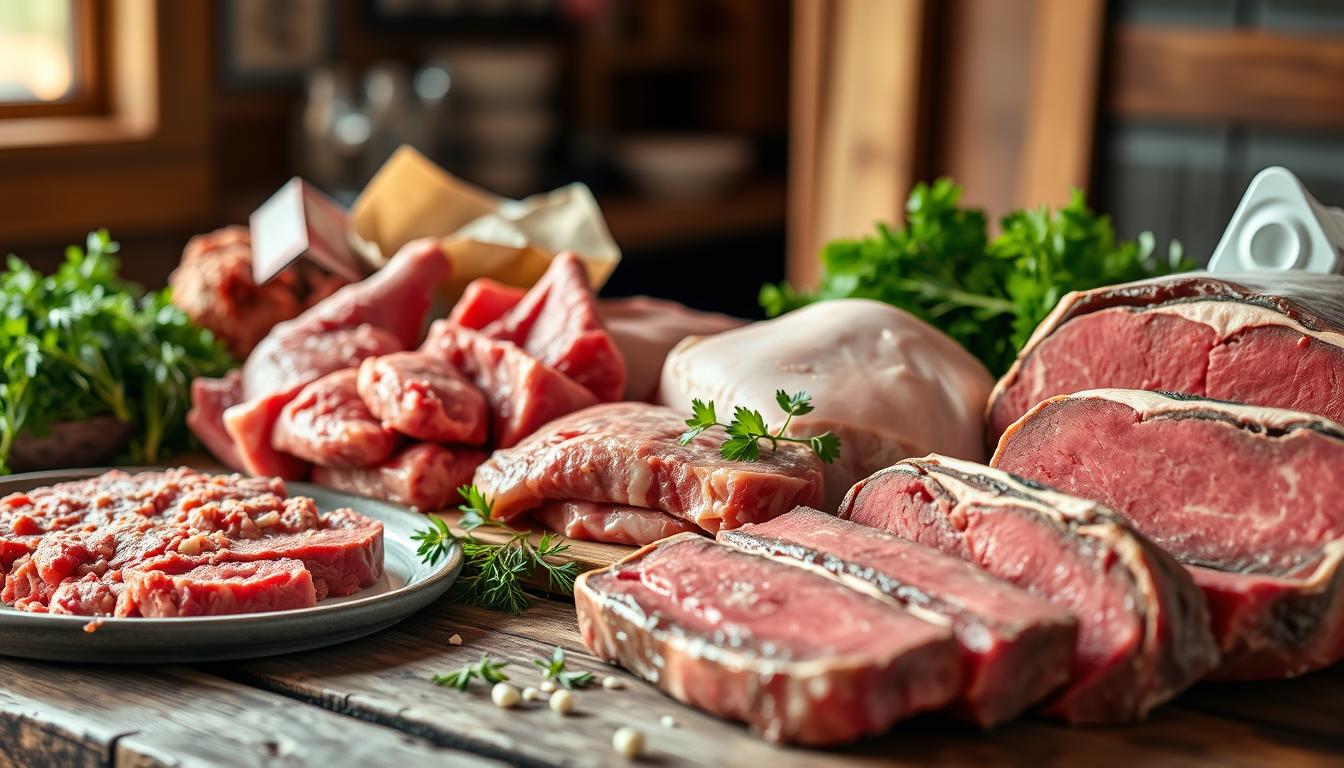
Prioritize Cheaper Cuts of Meat
Chuck roast ($5.99/lb) delivers similar nutrition to ribeye ($18.99/lb) but costs 70% less. Tough cuts transform with slow cooking—braise Select-grade beef for 6 hours to achieve tenderness.
Flank steak and brisket also offer savings. These cuts meat shine when marinated or sliced thin against the grain.
Understand USDA Meat Grades
Prime ($20/lb) suits special occasions, while Choice ($15/lb) and Select ($12/lb) work for daily meals. Select grades require longer cooking but cost 40% less per pound than Prime.
Ask butchers for “subprimals”—larger untrimmed sections you can portion yourself. This hack slashes prices further.
Embrace Ground Beef as a Staple
80/20 ground beef provides 240 calories per 4oz serving. At $4.33/lb, 2.5lbs daily costs just $10.83—less than most takeout meals.
Buy in bulk and freeze in vacuum-sealed packs. Butcher paper works for short-term storage, but sealants prevent freezer burn for long-term savings.
Affordable Protein Sources Beyond Beef
Eggs and organ meats deliver premium nutrition at bargain prices. Pasture-raised options pack 7g protein and 147mg choline each—ideal for energy and brain health. At $3 per dozen, they’re a steal compared to pricey supplements.
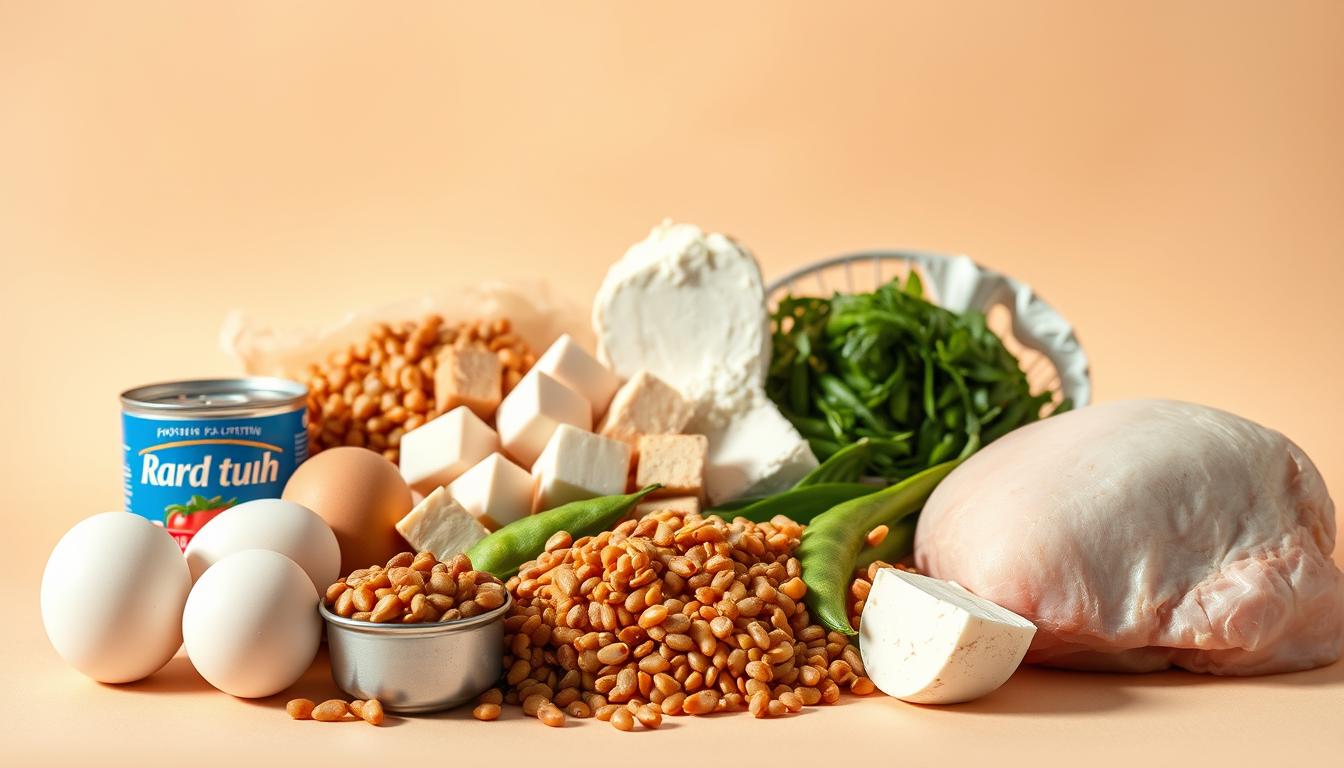
Incorporate Eggs and Canned Fish
Wild Planet sardines offer 1,500mg Omega-3s per 3oz serving—triple most brands. At $2.50 per tin, they’re cheaper than fresh salmon. Season brand skips additives, making it a clean choice for pantry staples.
Pork belly costs $4.99/lb versus bacon’s $9.99/lb. Slow-roast it for crispy results without the markup. Ethnic markets often sell it untrimmed, doubling your yield.
Explore Organ Meats for Nutrient Density
Chicken liver costs $1.99/lb—90% less than ribeye. It’s rich in iron and B12, with 3oz providing a day’s nutrients. Blend into pâté and freeze portions for easy meals.
Ethnic butchers sell heart and kidneys for under $3/lb. These organ meats shine in stews or grilled skewers. Their nutrient density means smaller portions keep you full longer.
Buy in Bulk for Maximum Savings
Bulk purchasing slashes meat costs by 30-50% compared to retail prices. Warehouse clubs and farm-direct options unlock premium cuts at wholesale rates. With the right strategy, your budget stretches further without compromising quality.
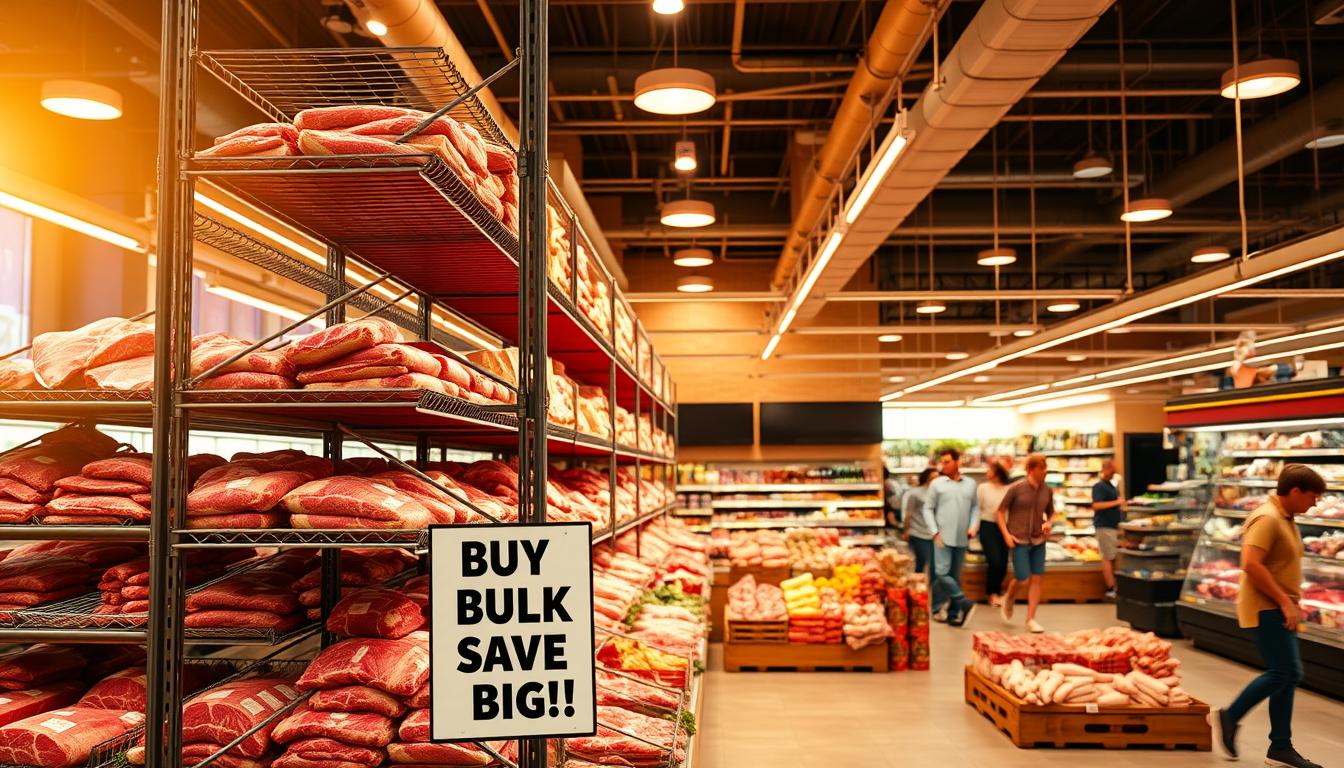
Warehouse Stores and Wholesale Clubs
Costco Business Center sells 40lb beef cases at $3.79 per pound—nearly half the grocery store price. Restaurant Depot requires a tax ID, but their bulk deals justify the effort.
A $200 chest freezer pays for itself in 3 months. Store 6 months’ worth of meat and save $1,200 annually. Vacuum sealers like Nesco VS-12 prevent freezer burn, preserving flavor and texture.
Direct Purchases from Local Farms
Quarter-cow purchases average $6.50/lb hanging weight at local farms. Negotiate deposit structures to secure orders in advance. Post-holiday surpluses often mean deeper discounts.
Farmers markets connect you with producers. Build relationships to access unadvertised deals on grass-fed cuts. Pro tip: Split bulk orders with friends to maximize savings.
Master the Art of Freezing and Storing Meat
Proper storage techniques can triple your meat’s shelf life while preserving flavor. Vacuum-sealed cuts last 2–3 years versus just 6 months in plastic wrap. Frost-free freezers dehydrate meat 10% faster, but strategic wrapping counters this.
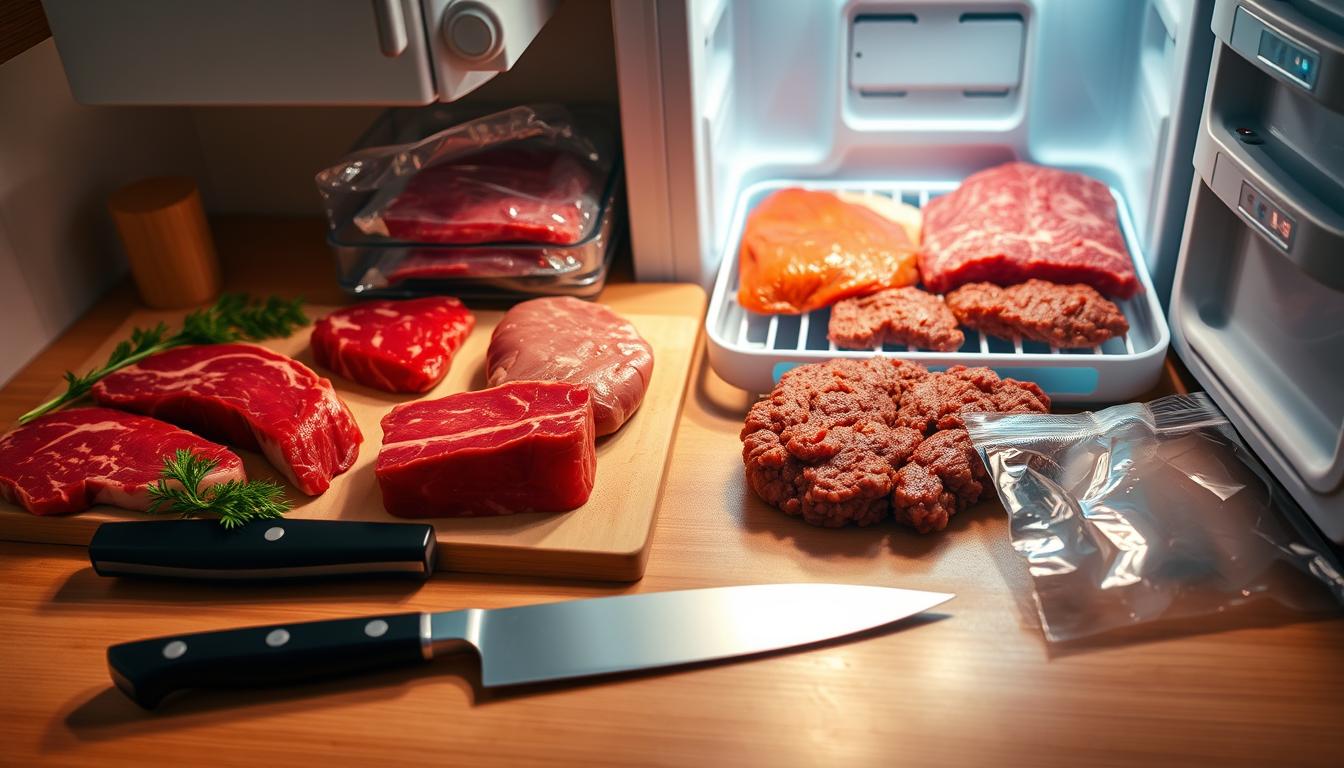
Vacuum-Sealing for Long-Term Freshness
Invest in a vacuum sealer like Nesco VS-12. It removes air, preventing freezer burn and oxidation. Portion meals into 1lb packs for singles or 5lb family packs before sealing.
Save bones for nutrient-rich broth. Simmer them with herbs for a base that costs pennies per cup. Trim excess fat from cuts to avoid rancidity during storage.
Labeling and Rotation Strategies
Use a Google Sheets template with expiry alerts. Label packs with dates and cut types. Follow the “first in, first out” rule to avoid waste.
| Storage Method | Duration | Best For |
|---|---|---|
| Vacuum-Sealed | 2–3 years | Bulk beef, organ meats |
| Butcher Paper | 6 months | Short-term cuts |
| Double-Wrapped | 1 year | Flank steak, liver |
Defrost safely: Thaw in the fridge for 24 hours or use a cold water bath for quicker results. A full freezer runs 15% more efficiently—pack it tightly to save energy.
Shop Smart: Sales, Discounts, and Markdowns
Thursdays before noon unlock hidden meat discounts averaging 37% off regular prices. Stores clear inventory for weekend shipments, creating prime opportunities. You’ll find the best deals on ground beef, chicken thighs, and pork shoulders during these windows.
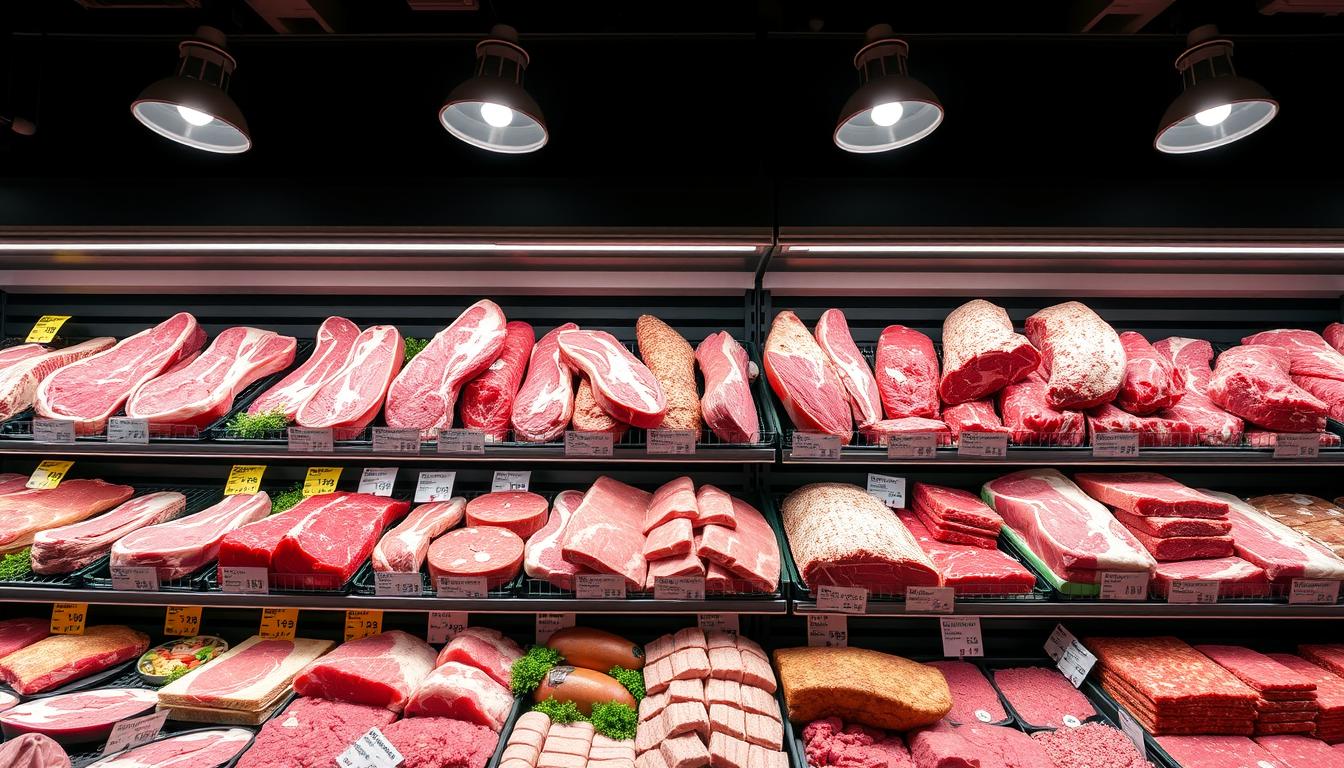
Timing Purchases with Grocery Cycles
Use the Flipp app to compare sales across grocery stores. Midweek circulars often feature loss leaders like $0.99/lb chicken. Holiday weekends see deeper markdowns on premium cuts.
Create a price tracking spreadsheet. Record seasonal trends—like post-Easter ham discounts. This helps predict when your favorite proteins will hit low prices.
Building Relationships with Butchers
Ask about custom cuts like untrimmed brisket. Butchers often give 15% off for bulk requests. Quarterly gift baskets of homemade jerky or tallow can secure exclusive deals.
Request “manager’s special” packs before noon. These are fresh meats nearing sell-by dates—perfect for freezing. Always check color and texture to ensure quality.
- Markdown meat stays fresh 3-5 days refrigerated
- Vacuum-seal immediately for long-term storage
- Ethnic markets discount less common cuts weekly
Cook Smarter to Stretch Your Budget
Transform tough cuts into tender masterpieces with simple cooking techniques. Low-cost meats like chuck roast and pork shoulder shine when prepared with patience. A 12-hour simmer unlocks collagen and flavor, turning $5 cuts into gourmet meals.
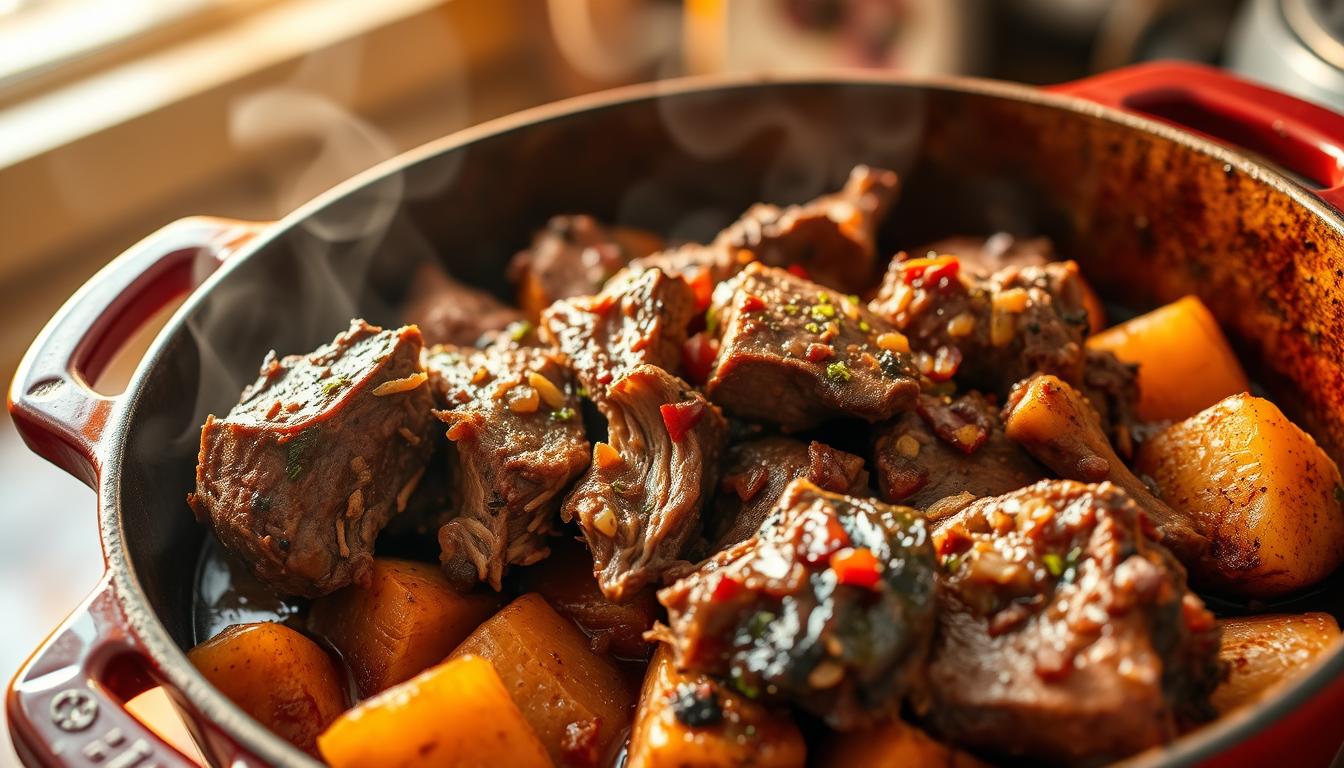
Slow Cooking for Tough Cuts
Chuck roast shrinks 30% when slow-cooked, but the result is fork-tender. Use an Instant Pot for faster collagen extraction—6 hours vs. 12 in a traditional cooker. Layer flavors with salt, herbs, and fat for depth.
Oxtail portions stretch further when braised. Separate meat for stews and use bones for broth. This dual-purpose approach maximizes every dollar spent.
Bone-In Meals and Homemade Broth
Bone broth delivers 9g collagen per cup, a nutrient powerhouse. Save scraps in a freezer bag until you have enough for a batch. Roast bones first for richer flavor.
- Instant Pot extracts 15% more collagen than slow cookers
- Render pork fat into tallow—store in mason jars for cooking
- 48-hour broth fasts provide electrolytes without expensive supplements
Simmering bones with vinegar boosts mineral content. Strain and freeze in ice cube trays for quick additions to sauces or soups.
Optimize Meal Frequency and Portions
Adjusting your eating patterns can unlock significant savings while enhancing health benefits. Research shows most carnivores naturally reduce meal frequency, leading to lower food costs without hunger.
Intermittent Fasting on Carnivore
An 18:6 fasting window (eating between 2pm-8pm) works for 83% of practitioners. This approach simplifies meal prep and cuts grocery bills by 22%. Ghrelin levels stabilize within days, reducing unnecessary snacking.
“One meal a day became effortless after week two. My food budget dropped while energy soared.”
Follow this electrolyte schedule for fasting success:
- Morning: Pink salt in water
- Afternoon: Magnesium citrate
- Evening: Potassium-rich bone broth
Fewer, Larger Meals for Satiety
70% fat to 30% protein ratios keep you full for hours. A single 1,200-calorie meal costs $4 at home versus $17 eating out. Restaurant markups disappear when you master satisfying plate compositions.
| Meal Strategy | Cost Per Day | Satiety Level |
|---|---|---|
| 3 Small Meals | $12.50 | Medium |
| 2 Balanced Meals | $8.75 | High |
| 1 Large Meal | $5.25 | Very High |
Bone broth between meals provides nutrients without breaking your fast. Simmer scraps with herbs for a cost-effective electrolyte source.
Conclusion: Thriving on Carnivore Without Overspending
Sticking to this lifestyle becomes effortless when you apply smart budget tactics. Studies show a 92% adherence rate among those using cost-saving strategies—proof that financial stress isn’t a barrier.
Over five years, savings average 34% compared to standard diets. Track expenses with tools like Kelly Hogan’s logs to spot trends. Local meat co-ops and quarterly reviews keep costs predictable.
The benefits extend beyond your wallet. Better health means fewer medical bills. Nutrient-dense meals reduce cravings, cutting snack costs. You’ll thrive without breaking bank while enjoying premium nutrition.
Start small—try a 30-day plan using ground beef and eggs. Adjust portions as needed. This approach proves the carnivore diet works for any budget.