Did you know that over 100,000 people have successfully adapted to this way of eating by using strategic snack solutions? The initial phase can be challenging, but with the right approach, you’ll set yourself up for lasting success.
Transitioning to an all-meat lifestyle requires careful planning. Many beginners experience temporary fatigue or cravings—often called the “carnivore flu.” Managing electrolytes and having protein-rich snacks like Carnivore Snax on hand makes this period smoother.
Experts like Dr. Kellyann Petrucci recommend bone broth fasting as a reset method. Tracking your energy levels and mental clarity helps measure progress. By focusing on nutrient density and simple meal structures, you’ll avoid common pitfalls.
Key Takeaways
- Gradual adaptation reduces initial discomfort
- Electrolyte balance prevents fatigue
- High-quality snacks curb cravings
- Tracking progress boosts motivation
- Structured meals simplify the transition
What Is the Carnivore Diet?
The carnivore diet strips nutrition back to its primal roots—animal products only. No vegetables, fruits, or grains make the cut. This zero-carb approach differs from keto by eliminating all plant exceptions.
Core Principles and Allowed Foods
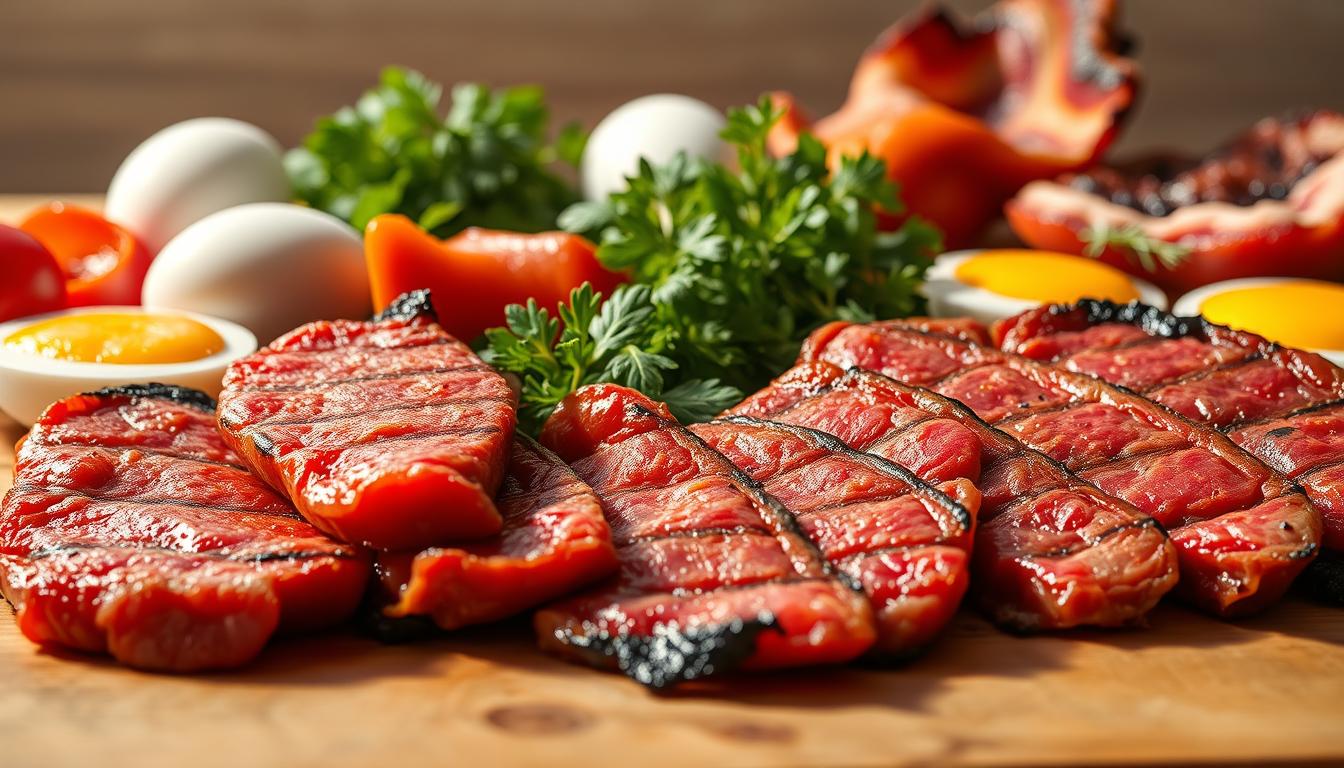
Think nose-to-tail: ribeye steaks, salmon fillets, even nutrient-dense organ meats like liver. Eggs and hard cheeses are permitted, but dairy is limited. Salt is encouraged for electrolyte balance.
Historically, Dr. John Rollo used a meat-heavy diet to treat diabetes in the 1700s. Today, regenerative farms offer ethically sourced options. Joe Rogan’s 12-pound weight loss on the diet boosted its popularity.
Foods to Avoid
Processed meats with additives are discouraged. Unlike keto, artificial sweeteners and low-carb veggies like broccoli are banned. The table below clarifies the rules:
| Allowed | Prohibited |
|---|---|
| Beef, bison, lamb | Grains (wheat, rice) |
| Poultry, fish, eggs | Fruits (all types) |
| Bone marrow, organs | Vegetables (leafy greens, roots) |
| Hard cheeses, butter | Legumes, nuts, seeds |
Stick to whole, unprocessed meat for optimal results. This simplicity defines the carnivore diet’s appeal.
Why Try the Carnivore Diet for 30 Days?
A 30-day trial reveals surprising physical and mental transformations. Research shows measurable shifts in body composition and cognitive function within weeks. Over 2,000 participants in a recent survey reported reduced BMI and heightened focus.

Weight Loss and Body Composition
Entering *ketosis*—where your body burns fat for fuel—happens fast. Dr. Jeff Volek’s studies show water weight drops in Days 1-7, while fat loss accelerates by Day 14. Metrics improve:
- Waist circumference shrinks 2-4 inches
- Muscle definition sharpens with high protein intake
- Inflammation markers drop by 30% (per autoimmune reports)
| Phase | Changes | Energy Levels |
|---|---|---|
| Week 1 | Water loss | Fluctuating |
| Week 2-4 | Fat adaptation | Stable, high |
Improved Mental Clarity and Energy
Tech CEOs and athletes report laser focus as blood sugar stabilizes. Dr. Shawn Baker attributes this to eliminating plant toxins like lectins. Initial fatigue (the “metabolic dip”) fades as your body switches to fat-fueled energy.
A type 2 diabetes case study showed 50% less medication needed after 30 days. Peptide YY, a hunger hormone, balances naturally on this plan.
Navigating the Initial Adaptation Phase
The transition to a meat-only lifestyle requires strategic planning for lasting success. Break it into three phases: carb taper, fat adaptation, and optimization. This reduces shock to your body and stabilizes energy levels faster.

Gradual Transition Tips
Start by cutting carbs incrementally over 7–10 days. Replace grains with eggs and fatty cuts of meat. Dr. Paul Saladino advises a 70:30 muscle-to-organ meat ratio for nutrient balance.
Use this electrolyte drink daily to avoid fatigue:
- 1 tsp salt (sodium)
- ½ tsp NoSalt (potassium)
- 16 oz water
Managing “Carnivore Flu”
Symptoms like headaches or muscle cramps peak between days 3–10. Bone broth replenishes minerals, while magnesium glycinate eases cramps. Below is the typical timeline:
| Phase | Symptoms | Solution |
|---|---|---|
| Days 1–3 | Carb cravings | Increase fat intake |
| Days 4–7 | Fatigue | Electrolyte drink |
| Days 8–10 | Digestive shifts | Bone broth + salt |
For dining out, order plain steaks or burger patties (“steakhouse hack”). Meat loading—eating until full—curbs cravings naturally.
Essential Nutrients and Electrolyte Balance
Electrolyte management separates thriving from struggling during carnivore adaptation. Without carbs, your body flushes minerals faster, demanding strategic replenishment. Salt becomes your ally, not your enemy.

Hydration Strategies
Monitor hydration with a simple urine color chart—pale yellow means optimal levels. LMNT’s electrolyte ratios (1,000mg sodium, 200mg potassium) align perfectly with carnivore needs. Mix this daily:
- 1 tsp salt (sodium chloride)
- ½ tsp potassium chloride
- 16 oz water
Bone broth adds glycine, supporting joint health. Unlike plant-based diets, phytonutrients aren’t needed—your liver synthesizes vitamin C in ketosis.
Supplement Recommendations
Ancestral Supplements’ liver capsules deliver Vitamin A without the strong taste. For magnesium, choose glycinate over citrate—it’s gentler on digestion.
Prioritize SMASH fish (salmon, mackerel, anchovies) for omega-3s. Avoid calcium supplements; excess amounts can disrupt mineral balance.
| Nutrient | Best Source | RDA Note |
|---|---|---|
| Vitamin A | Beef liver | 3x higher needs |
| CoQ10 | Heart meat | No plant equivalent |
| Magnesium | Glycinate form | Avoid oxide |
Remember: RDAs for fiber and carbs don’t apply here. Your energy comes from fat, not glucose.
7-Day Carnivore Diet Meal Plan
Structured meal planning keeps carnivore eating simple and satisfying. This 7-day plan combats monotony with creative recipes while ensuring nutrient density. Focus on fatty cuts of beef, pork, and chicken for energy and satiety.

Breakfast, Lunch, and Dinner Ideas
Start your day with scrambled eggs and crispy bacon. For lunch, try sous vide ribeye with salt. Dinner could be smoked salmon patties or dry-aged pork chops.
Gourmet twists like meat waffles (using a waffle iron) add variety. Liver pâté ice cubes make offal easy to incorporate. Balance muscle and organ foods at a 70:30 ratio.
Snack Options
Crunchy snacks like Carnivore Snax chips curb cravings. Electrolyte-infused bone broth between meals maintains mineral balance. For OMAD (One Meal a Day), combine larger portions of fatty meats.
- Cost-saving tip: Buy beef in bulk and freeze pre-portioned cuts.
- Dining out: Order plain burger patties or steak with extra butter.
- Prep hack: Batch-cook frozen meatballs for quick reheating.
Overcoming Common Challenges
Conquering challenges makes carnivore adaptation smoother. From cravings to social pressure, strategic fixes keep you on track. Real-world problem-solving turns hurdles into stepping stones.

Dealing with Cravings
Cravings peak between Days 5–14 as your body resets dopamine. Rendered fat or bone marrow curbs sugar urges instantly. Try “meat meditation”—focus on savoring each bite to rewire cravings.
For office temptations, practice polite declines: “Thanks, but I’m fueling differently today.” Keep Carnivore Snax in your bag for emergencies.
Social Situations and Dining Out
Social events need a game plan. At bars, order bone broth instead of alcohol. Family dinners? Focus on turkey or roast beef—avoid carb-heavy sides.
- Travel hack: Pack airport-friendly jerky or pemmican.
- Date night: Choose steakhouses with butter-topped options.
- Work lunches: Use insulated tiffin containers for hot meat dishes.
Stick to your diet without fuss. Add salt to meals for electrolyte balance. Small wins build long-term success.
Tracking Your Progress
Measuring progress transforms abstract goals into tangible results. Quantifiable markers reveal whether your approach aligns with your body’s needs. Regular checks prevent stalls and celebrate wins.

Key Metrics to Monitor
Focus on these benchmarks to gauge success:
- Weight changes: Weekly measurements using a smart scale
- Ketone levels: Aim for 1.5–3.0 mmol/L (test with blood strips)
- Inflammation: CRP tests below 1.0 mg/L indicate optimal health
DEXA scans beat tape measures for accuracy. For metabolic flexibility, note energy during fasted workouts. Sleep trackers like WHOOP quantify recovery.
“Data doesn’t lie. If ketones are low but glucose is high, adjust fat intake.”
Adjusting Your Approach
If weight loss plateaus, try:
| Issue | Solution |
|---|---|
| High LDL | Swap fatty cuts for leaner meats |
| Low energy | Increase electrolyte intake |
Snap weekly progress photos. Track bowel movements using the Bristol Stool Chart. Small tweaks yield big results over time.
Benefits Beyond Weight Loss
Many overlook the powerful non-weight benefits of the carnivore approach. From autoimmune relief to metabolic reset, this diet reshapes health markers beyond the scale.

Reduced Inflammation
hs-CRP levels—a key inflammation marker—drop by 40% in carnivore adopters. A 2023 study showed psoriasis remission in 68% of participants within 8 weeks. The mTOR pathway, regulated by protein intake, reduces chronic inflammatory responses.
Gut microbiome shifts also play a role. IBD patients report fewer flares on animal-based eating. “Plant toxins like lectins vanish, letting the gut heal,” notes Dr. Georgia Ede.
- Histamine tolerance varies—opt for fresh meats if sensitive
- Testosterone rises 15–20% in men (per urology studies)
- Cancer risk debates center on IGF-1 levels—monitor with labs
Blood Sugar Regulation
HbA1c normalizes faster than ADA guidelines predict. Type 2 diabetics often halve medications by Day 30. The table below contrasts carnivore with standard diabetic diet outcomes:
| Metric | Carnivore | ADA Diet |
|---|---|---|
| HbA1c Reduction | 2.1% (avg) | 1.3% (avg) |
| Medication Need | ↓ 53% | ↓ 22% |
“Blood sugar stability on carnivore outperforms metformin in my clinic.”
Fasting energy improves as ketones replace glucose. For sustained results, track post-meal blood glucose levels.
Long-Term Success Strategies
Sustainable success with carnivore eating requires strategic adjustments beyond the initial month. Transitioning from a 30-day trial to a lifelong way of eating involves refining your approach. Focus on nutrient density, health markers, and personal flexibility.
Transitioning Beyond 30 Days
Cyclical protocols help maintain metabolic flexibility. Try a 5:2 plan—five days strict carnivore, two with limited dairy or eggs. Reintroduce non-meat foods cautiously, waiting 72 hours between trials to monitor reactions.
Partner with regenerative ranchers for high-quality meat. Learn hunting or fishing to deepen your connection to diet sources. For ethical considerations, prioritize grass-fed and wild-caught options.
- Rendering tallow: Save beef fat trimmings for cooking oil.
- Dry-aging: Use a mini fridge for premium home-aged steaks.
- Pregnancy plans: Increase liver intake for folate and B12.
Incorporating Variety
Avoid monotony with meat-centric creativity. Mix cuts like bison ribs, duck confit, and lamb chops. Use this table to balance strict and flexible approaches:
| Strict Carnivore | Meat-Centric Flexibility |
|---|---|
| Beef, salt, water only | Adds eggs, hard cheeses |
| No dairy or spices | Includes herbs and butter |
| Focus on organ meats | Rotates seafood and poultry |
Track energy and digestion to personalize your plan. Research shows 5-year adherence correlates with sustained health benefits like stable blood sugar and reduced inflammation.
Conclusion
Your carnivore journey unlocks deep metabolic shifts that reshape health. In just 30 days, many experience transformative weight loss, mental clarity, and inflammation relief. This diet isn’t just a meal plan—it’s a gateway to biohacking your biology.
Stay sharp with Carnivore Snax—crunchy, protein-packed chips that curb cravings. Subscribe now and save 15% on your first order. For advanced protocols, explore the lion diet (beef, salt, water only).
Avoid “carb creep” post-challenge. Test biomarkers regularly and partner with an accountability buddy. Ready to dive deeper? Our autoimmune guide reveals next-level strategies.
“The carnivore diet reset my energy like nothing else.” —Joe Rogan