Did you know that nearly 70% of working adults struggle to maintain their well-being due to stress and hectic schedules? Your body’s natural defenses work tirelessly, but modern life can weaken them. That’s where time-tested solutions come in.
Traditional wisdom meets science-backed benefits. Studies from the NIH confirm that certain botanicals can enhance your body’s resilience. Instead of quick fixes, these remedies offer lasting balance.
More companies now integrate wellness programs featuring these powerful ingredients. Why? Because they fit seamlessly into daily routines, offering a practical way to stay healthy.
Key Takeaways
- High stress levels can impact your body’s ability to stay strong.
- Natural ingredients have been scientifically studied for their benefits.
- Corporate wellness trends are embracing these solutions.
- Simple daily habits can make a big difference.
- You don’t need to sacrifice time for effective care.
Introduction to Herbal Immune Support
Science reveals that 70% of your immune cells live in gut tissue, making digestion key to resilience. The World Health Organization notes that 80% of the global population uses plant-based remedies, blending tradition with modern science.
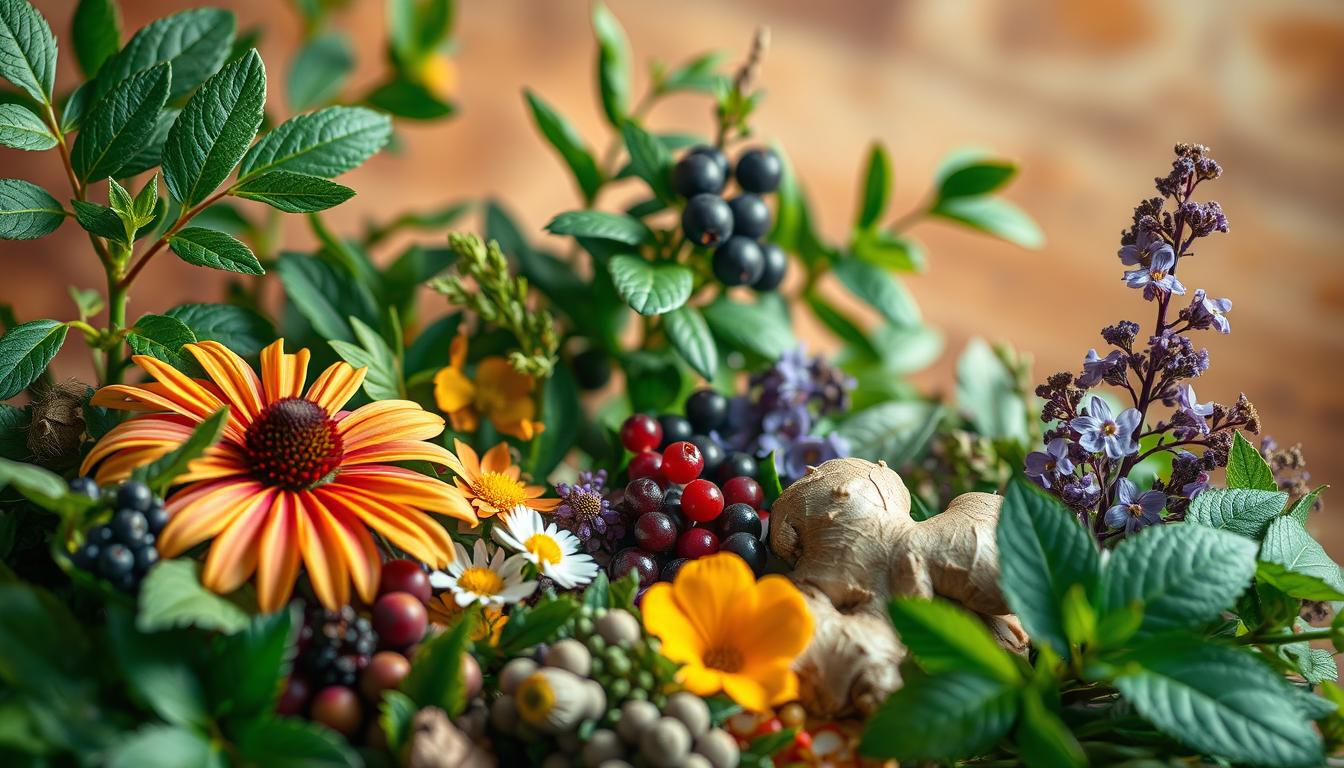
How do these botanicals work? They interact with both innate and adaptive responses in your body. For example, echinacea may boost white blood cell activity, while elderberry blocks viruses from replicating.
Not all forms are equal. Bioavailability varies:
- Teas: Gentle but less concentrated.
- Tinctures: Fast absorption due to alcohol content.
- Cooked herbs: Heat can enhance or reduce active compounds.
“Herb-drug interactions affect 1 in 5 adults, yet only 30% disclose herbal use to doctors.”
Myths persist, like “natural means risk-free.” In reality, potency matters. Adaptogens like ashwagandha help modulate stress—a proven disruptor of your natural defenses. For professionals, these stress-relieving supplements can bridge gaps in hectic routines.
Balance is key. Pair herbs with professional guidance, especially if taking prescriptions. Your body thrives on synergy, not guesswork.
Top 5 Herbs for Immune Support
When it comes to strengthening your defenses, nature offers powerful solutions. These five botanicals have been studied for their ability to may help maintain balance and vitality. Here’s what makes them stand out.
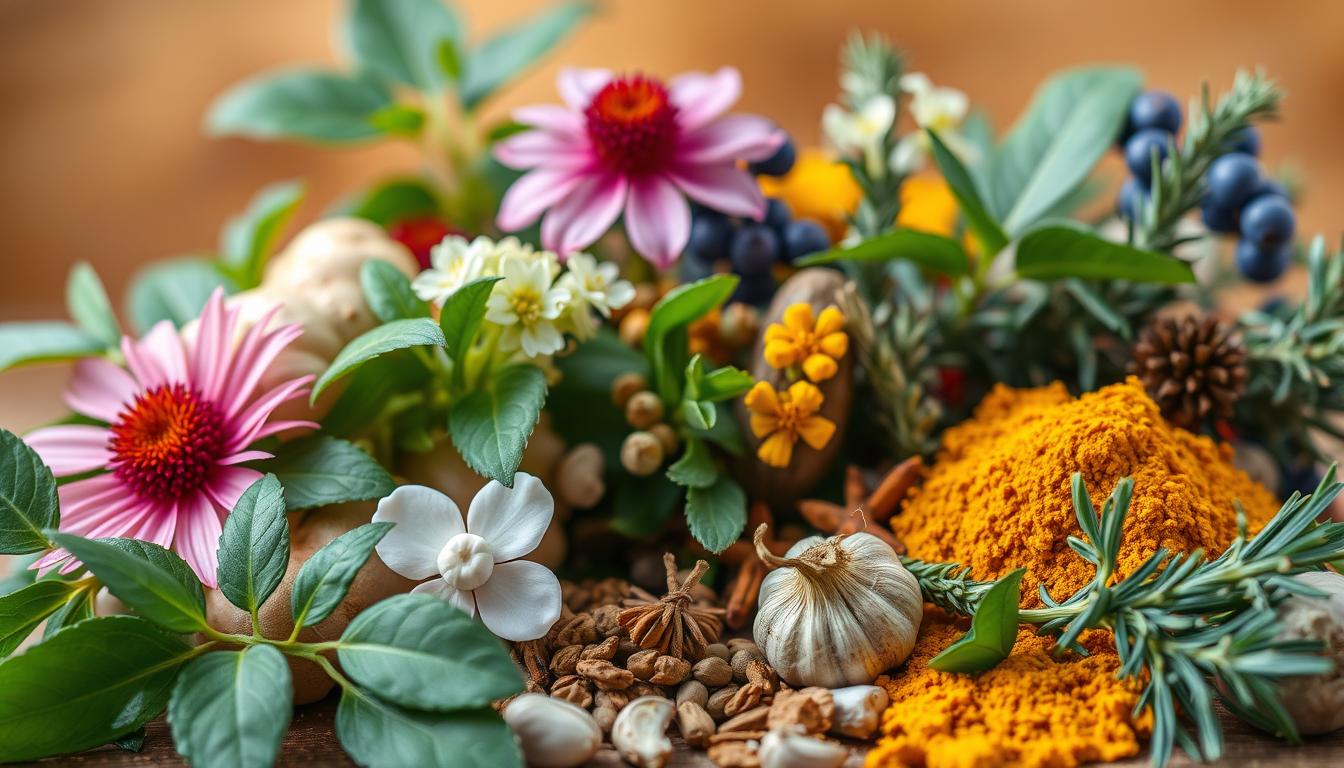
1. Elderberry: The Antioxidant Powerhouse
Elderberry syrup may help shorten cold duration by up to 3.1 days, according to the Journal of International Medical Research. Its high antioxidant content fights oxidative stress.
How to use it: Gaia Herbs offers syrups (10 mL/day) or capsules (500 mg). Avoid raw berries—they’re toxic when uncooked.
2. Echinacea: The Immune Activator
This herb stimulates white blood cells, your body’s first line of defense. For acute needs, take at the first sign of discomfort. For prevention, cycle 2 weeks on/off.
3. Ginger: The Anti-Inflammatory Ally
Fresh ginger root contains more active compounds than powdered forms. Try steeping slices in hot water to reduce inflammation—or add it to stir-fries for a spicy kick.
4. Astragalus: The Traditional Defender
Used in Traditional Chinese Medicine (TCM), astragalus may increase white blood cell count by 37%. Simmer the root in soups for a subtle, earthy flavor.
5. Turmeric: The Golden Healer
Curcumin, its active compound, needs black pepper to boost absorption. Studies suggest it may help reduce inflammation and support joint health.
These top herbs offer science-backed benefits without disrupting your routine. Pair them with a balanced diet for optimal results.
How to Incorporate Herbs into Your Busy Routine
Your packed schedule doesn’t have to mean sacrificing wellness. With smart strategies, botanicals can seamlessly enhance your daily routine without extra hassle. Here’s how to harness their properties efficiently.
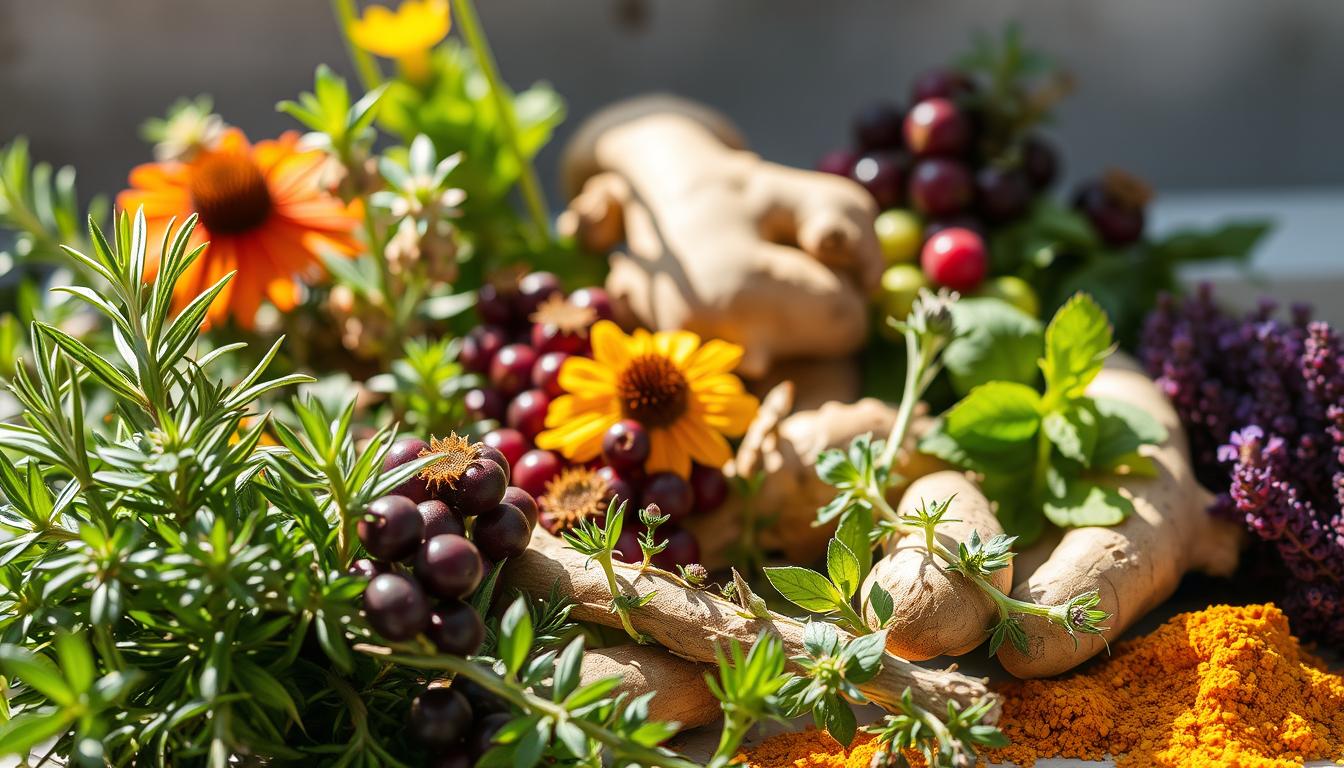
Quick Herbal Teas and Tonics
Pre-portioned sachets (like Traditional Medicinals) let you brew ginger tea in 3 minutes. Try these combos:
- Turmeric + black pepper: Steep with honey for anti-inflammatory benefits.
- Elderberry + hibiscus: Cold-brew overnight for a tangy tonic.
Pique Life Crystals dissolve instantly—ideal for desk drawers.
Cooking with Immune-Boosting Herbs
Freeze chopped herbs into ice cubes for soups or smoothies. Astragalus root simmers well in bone broth, adding earthy notes. Pro tip: Double batches save time.
Supplements for On-the-Go Professionals
Compare formats to fit your way of working:
- Capsules: Convenient for travel (e.g., Gaia Herbs).
- Liquid extracts: Faster absorption; mix into water.
- PatchMD patches: Transdermal vitamins for no-fuss use.
“Immune bitters with astragalus and angelica root offer a concentrated way to support resilience.”
Set phone reminders for consistency. Your immune health thrives on small, steady steps—not perfection.
Safety and Considerations for Herbal Use
The FDA reports contamination risks in 20% of plant-based supplements. While botanicals can enhance wellness, understanding their effects and limits ensures safe integration into your routine.
Consult a Healthcare Professional
Ginkgo biloba, for example, may increase bleeding risk if paired with blood thinners. Always consult a healthcare professional before combining supplements with prescriptions. Johns Hopkins notes that 30% of patients omit herbal use during medical visits.
Quality and Dosage Tips
Low-quality products may lack active ingredients or contain contaminants. Use this table to identify reputable brands:
| Marker | High-Quality | Red Flags |
|---|---|---|
| Certification | USP/NP seal | Missing batch numbers |
| Ingredients | Full disclosure | Proprietary blends |
| Testing | Third-party reports | No lab results |
“ConsumerLab.com independently verifies supplement purity—a resource worth bookmarking.”
Timing and Long-Term Use
Echinacea works best when cycled (2 weeks on/off). Chronic use may reduce its effects on immune function. For workplace accommodations, discuss regimens with HR to avoid conflicts with drug testing.
- Side effects: Monitor for rashes or digestive upset.
- Emergency protocol: Discontinue use and call poison control if severe reactions occur.
Conclusion: Embrace Herbal Support for Lasting Health
Small changes can lead to big results. A 30-day challenge helps you gradually add botanicals to your routine. Start with simple steps like morning tea or evening tonics.
Companies see success too. Wellness programs using natural remedies report fewer sick days and higher energy levels. Harvard Business Review found a 63% productivity boost when teams prioritize their body natural defenses.
Ready to dive deeper? Explore courses from HerbMentor or Rosemary Gladstar. For tailored advice, book a consultation with a certified herbalist.
Your health journey matters. With the right tools, you can keep healthy without slowing down.