Did you know that 43% of parents prefer gentle, home-based solutions when their child has sniffles or a fever? With growing concerns about over-the-counter medications for young children, many families seek trusted alternatives.
Pediatricians now emphasize hydration, rest, and symptom relief as foundational care. The CDC advises against certain OTC drugs for kids under six, fueling interest in holistic approaches. Virtual care platforms, like Children’s Health Virtual Care, also support these methods.
This guide explores doctor-approved strategies to ease discomfort while keeping little ones safe. You’ll learn practical tips backed by medical expertise—because every parent deserves peace of mind.
Key Takeaways
- Many parents prefer home-based solutions for children’s minor illnesses.
- Pediatricians recommend hydration and rest as primary care steps.
- CDC guidelines caution against some OTC medications for young kids.
- Telemedicine services offer support for gentle treatment plans.
- Always consult healthcare providers before trying new remedies.
Natural Cold and Flu Remedies Safe for Kids: Gentle Relief for Your Child
When your little one isn’t feeling well, recognizing the difference between common illnesses helps you respond effectively. The right approach can speed recovery and prevent complications.

Spotting the Difference: Cold or Flu?
Colds and flu share some symptoms, but key differences matter. A runny nose and mild cough often point to a cold. The flu usually brings stronger signs like high fever and body aches.
| Symptom | Cold | Flu |
|---|---|---|
| Fever | Rare or mild | Common, often high (102°F+) |
| Duration | 3-7 days | 1-2 weeks |
| Muscle Aches | Mild | Severe |
| Onset | Gradual | Sudden |
Why Many Choose Home-Based Solutions
Pediatricians often suggest simple, effective methods first. 72% recommend honey for coughs in children over one year instead of syrup. These approaches support the immune system naturally.
Aspirin risks like Reye’s syndrome make alternatives crucial. The American Academy of Pediatrics warns against certain OTC medicines for young children. Antibiotic overuse also reduces their effectiveness when truly needed.
For high-risk cases, antiviral drugs like Tamiflu work best within 48 hours. Always consult your doctor before starting any treatment plan. Their guidance ensures your child gets appropriate care.
Hydration: The Foundation of Recovery
Proper fluid intake can make all the difference when little ones feel unwell. Water and electrolytes replenish lost nutrients, while warm liquids ease congestion. Studies show broth and tea increase mucus clearance by 40%, speeding up recovery.
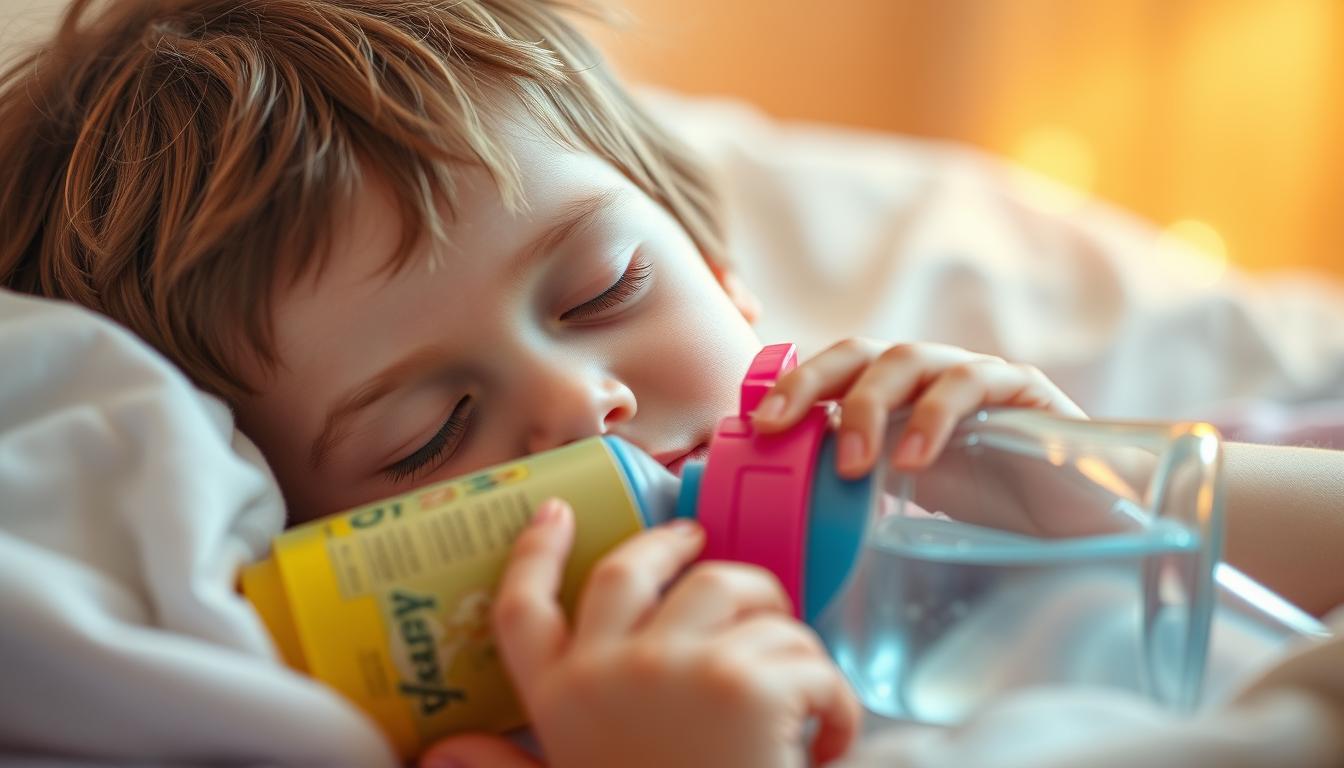
Water vs. Electrolyte Solutions
Plain water works for mild cases, but pediatric electrolyte drinks (like Pedialyte) prevent imbalances from vomiting or diarrhea. Compare options:
- Water: Best for steady sipping. Add lemon slices for appeal.
- Electrolyte solutions: Replenish sodium and potassium faster.
Warm Liquids for Comfort
Homemade broth (low-sodium, with carrots and celery) soothes throats and provides nutrients. Caffeine-free chamomile tea with honey (*for ages 1+*) help relieve coughing. Serve in fun cups or with straws to encourage drinking.
Spotting Dehydration Early
Watch for these signs in your child:
- Sunken eyes or dry lips
- No tears when crying
- Fewer than 3 wet diapers/day (toddlers)
If urine output stops for 8+ hours, seek medical care immediately.
For resistant drinkers, try frozen electrolyte popsicles. Remember, small, frequent sips work better than large amounts at once.
Soothing Cough and Sore Throat Remedies
Coughs and sore throats can make your child miserable, but simple solutions bring quick relief. Pediatricians often recommend these gentle methods to ease discomfort without harsh medications.

Honey: Nature’s Cough Suppressant
Honey (for ages 1+) reduces nighttime coughing by coating the throat. Its antioxidants support recovery. Use 1 teaspoon per 50 lbs of body weight before bed.
While some parents worry about sugar content, studies show honey’s benefits outweigh risks when used sparingly. Never give it to infants under one year due to botulism risk.
Saltwater Gargles for Ages 5+
Mix ½ teaspoon salt in a cup of warm water for gargling. This soothes sore throat and reduces swelling. Teach your child to tilt their head back and gargle for 10 seconds before spitting.
Herbal Teas for Comfort
Warm caffeine-free teas like chamomile or peppermint ease irritation. Chamomile boosts infection-fighting cells, while peppermint clears congestion. Serve lukewarm with a drizzle of honey for extra relief.
- Avoid menthol products for children under 2—they can cause breathing difficulties.
- Try frozen herbal tea popsicles for kids who resist drinking liquids.
Easing Congestion and Runny Nose
Congestion is one of the most frustrating symptoms kids face during illness. A blocked nose disrupts sleep and appetite, but gentle methods can help relieve discomfort fast. Start with these pediatrician-approved strategies.
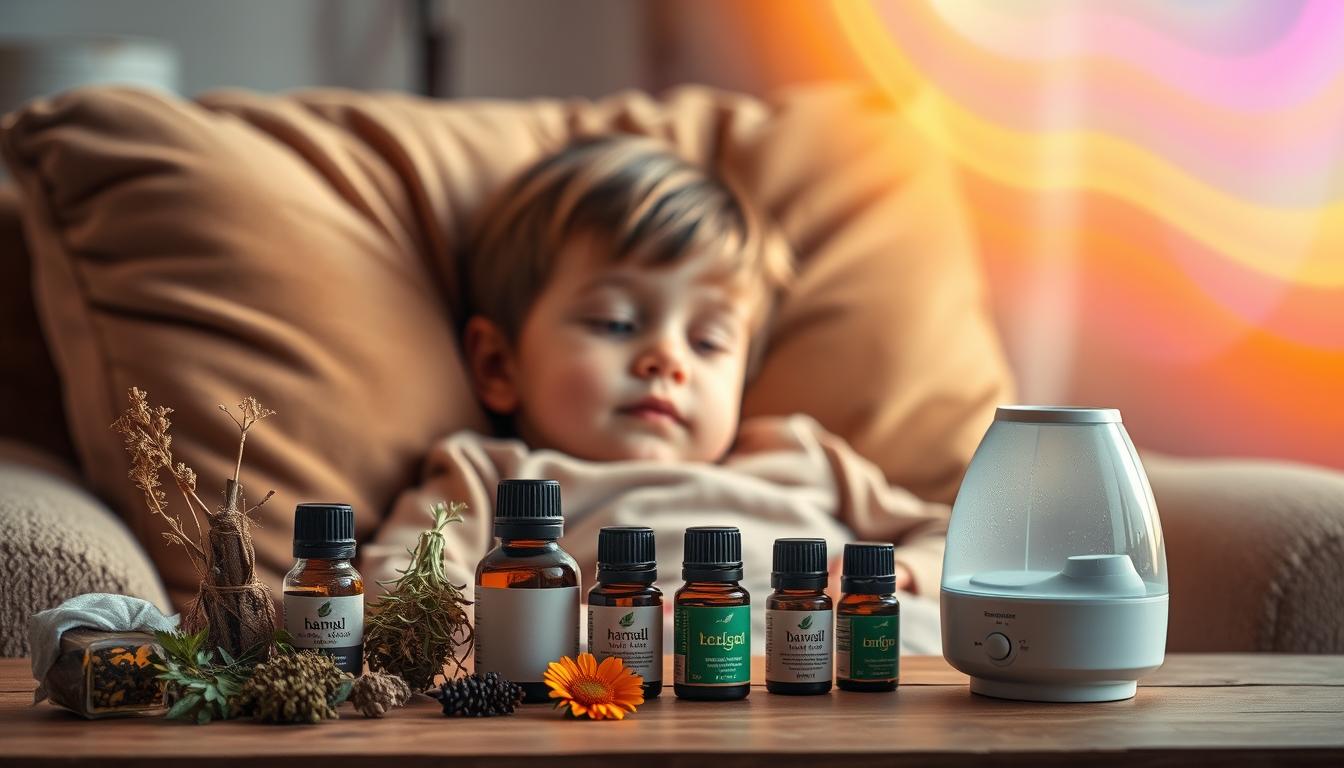
Cool-Mist Humidifier Benefits
A humidifier adds moisture to dry air, reducing nasal inflammation by 60%. Cool-mist models are safest for children. Compare options:
| Type | Best For | Safety Note |
|---|---|---|
| Ultrasonic | Quiet operation | Use distilled water to minimize mineral dust |
| Evaporative | Easy cleaning | Replace filters monthly |
Clean with vinegar weekly to prevent mold. Place the unit 3 feet from the bed for optimal airflow.
Saline Nasal Sprays or Bulb Suction
For thick mucus, saline loosens blockages. Try this DIY recipe:
- 1 cup boiled water + ½ tsp salt
- Cool to room temperature before use
Pair with bulb suction at a 45-degree angle. Limit to 2–3 times daily to avoid irritation.
Steam Inhalation Techniques
Steam sessions thin mucus naturally. Follow this checklist:
- Supervise closely in a closed bathroom
- Run hot shower for 10–15 minutes
- Add eucalyptus oil (for ages 2+) if approved by your doctor
Serve warm “snot-friendly” foods like pineapple (contains bromelain) or spicy broth to further clear passages.
Reducing Fever Discomfort
Fevers can unsettle any parent, but knowing how to respond brings confidence. A fever is the body’s way of fighting infection, and most aren’t dangerous. Focus on comfort and monitoring to help your child recover smoothly.

Lukewarm Baths and Light Clothing
A bath at skin temperature (98.6°F) cools the body gently. Avoid cold water—it can cause shivering, raising internal heat. Dress your little one in breathable cotton and layer lightly for easy adjustments.
Debunked myth: “Starve a fever” is outdated. Kids need extra calories and fluids to recover. Offer small, nutritious meals like oatmeal or banana slices.
Cool Compress for the Forehead
Rotate a damp washcloth on the forehead every 20 minutes. This helps lower skin temperature without shocking the system. Pair with:
- Hydration sips (water, diluted juice)
- Quiet activities like audiobooks
- A favorite blanket for comfort
When to Call the Doctor About Fever
Seek medical advice if your child shows:
- A fever above 102°F (for ages 2+)
- Stiff neck or sensitivity to light
- No wet diapers for 8+ hours
Febrile seizures are rare but more likely with rapid temperature spikes. Stay calm—they typically last under 5 minutes.
Track symptoms with a fever journal: note times, temperatures, and responses to interventions. Temporal thermometers are less invasive but rectal ones offer the most accuracy for infants.
The Power of Rest and Comfort
Rest plays a crucial role in helping children bounce back from illness. Sleep increases infection-fighting cytokines by 50%, giving their immune system a boost. A calm, supportive environment makes this process smoother.

Designing a Restful Environment
Prioritize comfort-focused care with these essentials:
- Blackout curtains and a white noise machine to promote deeper sleep.
- “Quiet time” activity kits with puzzles or coloring books for low-energy engagement.
- Screen time rules: 30-minute intervals with blue light filters.
Balancing Activity and Recovery
A gradual return to movement prevents relapse. Follow this progressive plan:
| Age Group | Recovery Time | Activity Level |
|---|---|---|
| 1–3 years | 3–5 days | Bed → short play sessions |
| 4–6 years | 5–7 days | Couch → 10-minute walks |
For siblings, separate play areas reduce overstimulation. Shared activities like storytime maintain bonds without exhausting the sick child. This approach helps kids feel better while respecting their healing time.
Safe and Supportive Home Practices
Simple adjustments at home can significantly boost your child’s recovery from illness. Focus on gentle methods that help relieve symptoms while creating a comforting environment. These strategies blend science with practicality for faster healing.

Fresh Air and Light Outdoor Time
Circulating air reduces germ concentration indoors. Open windows for 10 minutes daily or use a fan to improve ventilation. For kids well enough to move, short outdoor sessions may help:
- Shaded patios: Ideal for weak or fatigued children.
- Neighborhood walks: Limit to 5–10 minutes if energy allows.
Sunlight exposure boosts vitamin D, which supports immune function. Avoid peak UV hours (10 AM–2 PM) to prevent overheating.
Bland Foods for Upset Stomachs
Swap the BRAT diet with CRAM (cereal, rice, applesauce, milk) for better nutrition. Compare options:
| Food | Benefit |
|---|---|
| Toast | Easy to digest, settles nausea |
| Rice cakes | Low-fiber, gentle on stomachs |
| Saltines | Reduces acid irritation |
Serve small portions every 2–3 hours. Hydration is key—pair with herbal tea or electrolyte drinks.
Essential Oils: Eucalyptus and Lavender
Diluted oils may help ease congestion and promote rest. Follow these safety guidelines:
- Dilution ratio: 1% for kids (1 drop per teaspoon of carrier oil).
- Diffuser use: 3–5 drops max, run for 30-minute intervals.
- Avoid direct skin application for children under 2.
For asthma or sensitivities, consult your pediatrician before use. Opt for sensory-friendly blends like lavender + chamomile at bedtime.
Dress your child in loose cotton pajamas to complement aromatherapy benefits. Tight fabrics can restrict circulation during fever.
Remedies to Avoid for Children
Mistakes with medications send thousands of kids to emergency rooms yearly. Knowing what never to give can prevent dangerous side effects. Always consult your pediatrician before trying new treatments.
Aspirin and Reye’s Syndrome
Never give aspirin to a child with cold flu symptoms. It’s linked to Reye’s syndrome, a rare but deadly condition with a 40% mortality rate. Check labels for aliases like acetylsalicylic acid or salicylates.
Honey for Infants Under 1
While honey soothes coughs in older kids, it risks infant botulism. Stick to alternatives like saline drops or warm apple juice (for babies 6+ months).
Over-the-Counter Medication Precautions
10% of ER visits stem from OTC errors. Follow these guidelines:
- Decode labels: “Infant” formulas are more concentrated than “children’s.”
- Avoid decongestants under age 4 (AAP recommendation).
- Use natural options first: humidifiers, hydration, or bulb suction.
| OTC Type | Age Restriction | Safer Alternative |
|---|---|---|
| Cough syrup | Under 6 | Honey (1+ years) |
| Decongestants | Under 4 | Saline spray |
| Pain relievers | Check dosage | Lukewarm baths |
Dispose of expired medications safely: Mix with coffee grounds and seal before tossing.
Keep the Poison Control hotline (1-800-222-1222) handy. Quick action reduces side effects from accidental ingestions.
Conclusion: Partnering with Your Pediatrician
Working with your pediatrician ensures the best care for your child’s health. They provide tailored advice, whether through in-person visits or telehealth services like Children’s Health Virtual Visit.
Compare options with your doctor: Virtual consults work for minor symptoms, while fevers lasting 3+ days need office evaluations. Vaccines, like the flu shot, add extra protection.
Track symptoms diligently—note temperatures, durations, and responses to care. Share this record with your doctor for precise treatment. Always reconcile medications to avoid overlaps or side effects.