Did you know that your mitochondria produce 90-95% of your body’s cellular energy? These tiny powerhouses are essential for keeping you energized and healthy. When they don’t function properly, you might experience chronic fatigue, brain fog, or even age-related decline.
Your mitochondria play a critical role in your overall well-being. By focusing on targeted nutrition, you can optimize their efficiency and even encourage their growth. Combining the right foods with lifestyle strategies, like intermittent fasting, can make a significant difference.
In this article, we’ll explore expert-backed ways to enhance your mitochondrial function. You’ll discover how specific nutrients can help you feel more energized and support your long-term health. Let’s dive into the science behind these powerful strategies.
Key Takeaways
- Mitochondria produce 90-95% of your body’s cellular energy.
- Dysfunction can lead to fatigue, brain fog, and age-related issues.
- Targeted nutrition can improve mitochondrial efficiency.
- Lifestyle strategies like intermittent fasting are beneficial.
- Expert-backed ingredients can optimize your energy levels.
Introduction to Mitochondrial Health
Mitochondria are the energy factories in your cells, powering nearly every function in your body. These tiny organelles are found in almost every cell and are essential for producing ATP, the molecule that fuels your organs and muscles.
Through processes like the TCA cycle and electron transport chain, mitochondria convert nutrients into energy. This energy is critical for everything from muscle movement to brain function. Without efficient ATP production, your body would struggle to perform even basic tasks.

Unfortunately, mitochondrial efficiency declines with age. By the time you reach 70, your mitochondria may operate at only 40% of their peak capacity. This decline can lead to fatigue, slower recovery, and even age-related diseases.
Mitochondrial dysfunction is also linked to chronic conditions like diabetes and Alzheimer’s. When these organelles aren’t working properly, your cells can’t produce enough energy, leading to widespread health issues.
Several factors threaten mitochondrial health:
- Oxidative stress: Harmful byproducts like ROS can damage mitochondrial DNA, which lacks robust repair mechanisms.
- Environmental toxins: Heavy metals and pesticides can impair mitochondrial enzymes, reducing their efficiency.
- Nutrient deficiencies: Without essential vitamins and minerals, mitochondria can’t produce energy effectively.
Understanding these threats is the first step toward protecting your mitochondrial health. By addressing these factors, you can help your cells function at their best and maintain your energy levels as you age.
1. Coenzyme Q10: The Energy Booster
Coenzyme Q10, often called CoQ10, is a vital nutrient for your cellular energy. It lines the membranes of your mitochondria, where it plays a dual role. First, it’s essential for the electron transport chain, which drives energy production. Second, it acts as a powerful antioxidant, neutralizing harmful free radicals that can damage your cells.

Unfortunately, your body’s ability to produce CoQ10 declines with age. By the time you reach 80, the levels in your heart may drop by 50%. This decline can lead to reduced mitochondrial efficiency and lower energy levels. To combat this, you can focus on foods rich in CoQ10 or consider high-quality supplements.
What is Coenzyme Q10?
CoQ10 is a naturally occurring compound found in every cell of your body. It’s crucial for converting nutrients into ATP, the energy currency of your cells. Without enough CoQ10, your mitochondria can’t function optimally, leading to fatigue and other health issues.
Food Sources of CoQ10
Certain foods are excellent sources of CoQ10. Organ meats like beef heart provide the highest amounts, with 11.3mg per 100g. Oily fish such as herring offer 6.5mg, while plant-based options like peanuts contain 2.6mg. Including these in your diet can help protect mitochondria and maintain energy levels.
When it comes to supplements, there are two main forms: ubiquinone and ubiquinol. Ubiquinol is the active form and is more easily absorbed by your body. Studies show that taking 100mg of CoQ10 daily can improve mitochondrial efficiency by up to 30%, making it a valuable addition to your health routine.
2. Magnesium: The Essential Mineral
Magnesium is a powerhouse mineral that fuels over 300 biochemical reactions in your body. It’s particularly vital for your mitochondria, where it helps stabilize ATP, the energy molecule. Without enough magnesium, your cells can’t produce energy efficiently, leading to fatigue and other health issues.

Modern diets often fall short of providing the recommended daily intake of magnesium. Stress further depletes your body’s stores, making it even harder to meet your needs. This deficiency can cause mitochondrial swelling and disrupt their inner structures, known as cristae.
Why Magnesium Matters
Magnesium binds to phosphate groups in ATP, ensuring it remains stable and ready to fuel your cells. This process is critical for maintaining energy levels and supporting overall health. Low magnesium levels can impair mitochondrial function, leaving you feeling sluggish and unwell.
How to Increase Magnesium Intake
Including magnesium-rich foods in your diet is the best way to boost your levels. Pumpkin seeds, spinach, and dark chocolate are excellent sources. Here’s a quick comparison of their magnesium content:
| Food | Magnesium Content |
|---|---|
| Pumpkin Seeds | 156mg per ounce |
| Spinach | 157mg per cup |
| Dark Chocolate | 64mg per ounce |
If you’re considering supplements, choose forms like magnesium citrate, glycinate, or threonate for better absorption. Aim for 400-600mg daily, and pair it with vitamin B6 to enhance uptake. This combination can help optimize your mitochondrial function and keep your energy levels steady.
3. Omega-3 Fatty Acids: The Protective Fats
Omega-3 fatty acids are essential for maintaining the integrity and function of your cellular powerhouses. These healthy fats play a critical role in protecting your mitochondria from damage and enhancing their efficiency. By incorporating omega-3s into your diet, you can support energy production and reduce harmful oxidative stress.

Benefits of Omega-3s for Mitochondria
Omega-3s, particularly EPA and DHA, integrate into mitochondrial membranes, stabilizing their structure. DHA is especially important for maintaining cardiolipin, a lipid in the inner mitochondrial membrane that supports energy production. Without sufficient omega-3s, your mitochondria may struggle to function optimally.
These fatty acids also reduce the production of reactive oxygen species (ROS) by up to 40% compared to carbohydrate metabolism. This reduction helps protect mitochondrial DNA and proteins from oxidative damage, which can otherwise lead to dysfunction and aging.
Additionally, omega-3s help balance inflammatory pathways. Unlike omega-6 fatty acids, which can promote inflammation, omega-3s have anti-inflammatory effects. This balance is crucial for maintaining mitochondrial health and overall cellular function.
Best Sources of Omega-3s
To boost your omega-3 intake, focus on foods rich in EPA and DHA. Wild salmon provides 2.3 grams per 3-ounce serving, while sardines offer 1.5 grams per can. For plant-based options, algae oil is an excellent source of DHA.
When choosing supplements, opt for phospholipid-bound forms, which are more bioavailable than ethyl ester forms. A daily intake of 2 grams of EPA/DHA has been shown to improve mitochondrial respiration rates, making it a valuable addition to your health routine.
| Source | Omega-3 Content |
|---|---|
| Wild Salmon | 2.3g per 3oz |
| Sardines | 1.5g per can |
| Algae Oil | Varies by product |
4. Antioxidants: The Cellular Protectors
Your cells rely on antioxidants to combat oxidative stress and protect their energy factories. These powerful compounds neutralize harmful free radicals, which can otherwise damage mitochondrial DNA and proteins. By incorporating antioxidant-rich foods into your diet, you can enhance your cellular health and maintain energy levels.
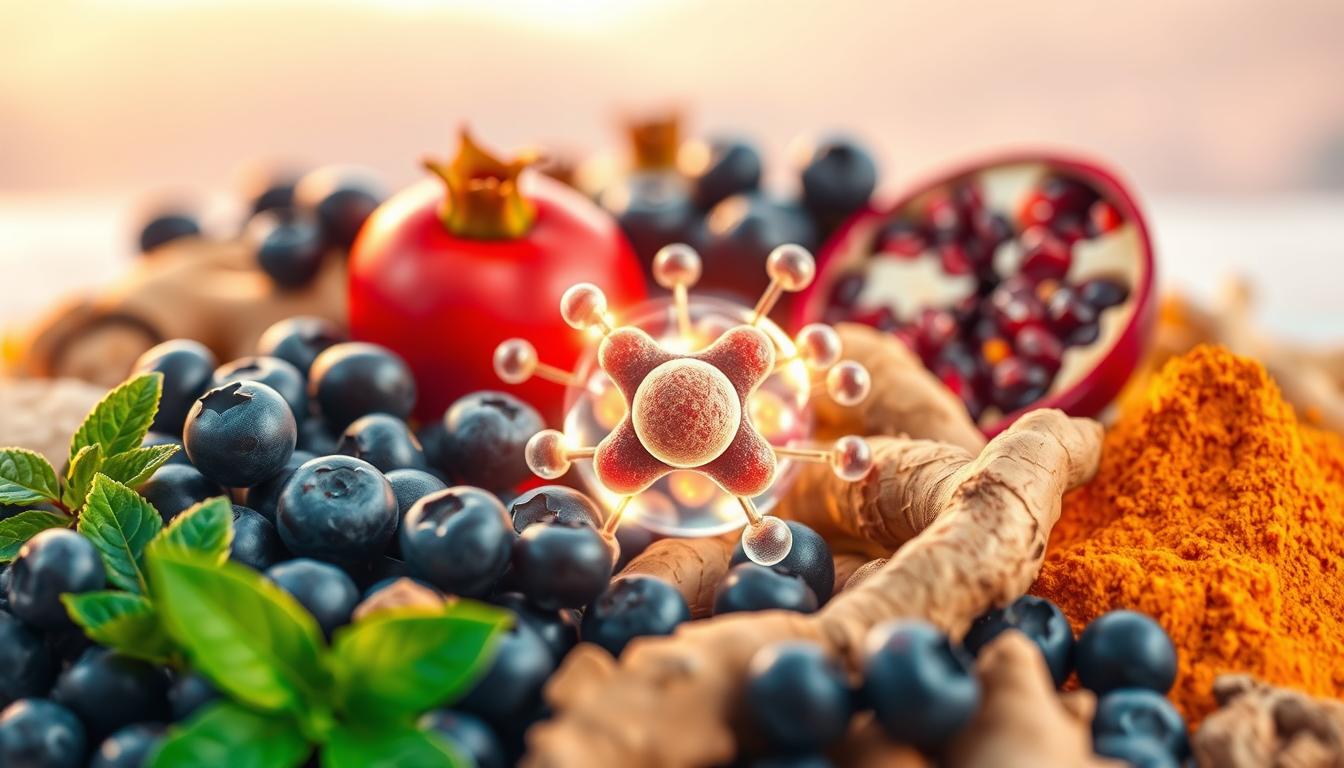
Role of Antioxidants in Mitochondrial Health
During energy production, 1-3% of the oxygen consumed by mitochondria becomes superoxide, a reactive oxygen species (ROS). Over time, this can lead to damage and reduced efficiency. Antioxidants like alpha-lipoic acid play a crucial role in regenerating other antioxidants, such as glutathione, vitamin C, and vitamin E.
N-acetylcysteine (NAC) is another key player. It boosts glutathione synthesis, which helps protect mitochondria from oxidative stress. Studies show that combining antioxidants can reduce mitochondrial DNA damage by up to 62%, making them essential for long-term health.
Top Antioxidant-Rich Foods
Including a variety of colorful vegetables and other antioxidant-rich foods in your diet can significantly benefit your mitochondria. Here are some top options:
- Turmeric: Contains curcumin, which reduces inflammation and oxidative stress.
- Blueberries: Packed with anthocyanins, these berries protect cells from damage.
- Broccoli: Rich in sulforaphane, it enhances antioxidant defenses.
Time-released antioxidants like astaxanthin are also effective. Found in algae and seafood, they provide long-lasting protection against oxidative stress.
| Food | Key Antioxidant |
|---|---|
| Turmeric | Curcumin |
| Blueberries | Anthocyanins |
| Broccoli | Sulforaphane |
By focusing on these foods, you can support your mitochondrial health and keep your cells functioning at their best.
5. B Vitamins: The Energy Catalysts
B vitamins are the unsung heroes of your cellular energy production. These essential nutrients act as cofactors in the electron transport chain (ETC), the process that generates ATP. Without them, your mitochondria would struggle to produce the energy your body needs to function.

Importance of B Vitamins
Each B vitamin plays a specific role in the ETC. B1 (thiamine) supports Complex I, B2 (riboflavin) aids Complex II, and B3 (niacin) is crucial for Complex III. These vitamins ensure the smooth flow of electrons, which is essential for efficient energy production.
Methylfolate (B9) is another key player. It’s vital for nucleotide synthesis, which helps repair and maintain mitochondrial DNA. However, MTHFR gene variants can impair the metabolism of B9 and B12, leading to deficiencies. If you have this variant, activated forms like methylcobalamin (B12) and methylfolate are more effective.
How to Get More B Vitamins
Including bioavailable sources of B vitamins in your diet is the best way to meet your needs. Nutritional yeast is a great source of B complex, while pasture-raised eggs provide ample B12. For plant-based options, sunflower seeds and leafy greens are excellent choices.
When choosing supplements, opt for activated forms like methylcobalamin instead of cyanocobalamin. These forms are more easily absorbed and utilized by your body. A high-quality B-complex supplement with RDI levels can help optimize your mitochondrial function.
| Food | Key B Vitamins |
|---|---|
| Nutritional Yeast | B Complex |
| Pasture-Raised Eggs | B12 |
| Sunflower Seeds | B1, B6 |
By focusing on these foods and supplements, you can ensure your mitochondria have the nutrients they need to keep you energized and healthy.
Additional Ways to Support Mitochondrial Health
Optimizing your cellular energy goes beyond just nutrition—lifestyle choices play a key role. Practices like intermittent fasting, regular exercise, and effective detoxification can significantly enhance your mitochondrial function. These strategies work together to protect your cells and boost energy production.
Intermittent Fasting
Intermittent fasting is a powerful tool for mitochondrial health. By fasting for 12-16 hours, you activate pathways like NAD+/sirtuin, which improve cellular repair and energy efficiency. Studies show that fasting can boost PGC-1α by 200%, promoting mitochondrial biogenesis—the creation of new mitochondria.
If you’re new to fasting, start with a 12-hour window and gradually increase it. A 16:8 schedule—fasting for 16 hours and eating within an 8-hour window—is a popular and effective approach. This method helps reduce sugar intake and prevents ATP depletion, keeping your mitochondria functioning optimally.
Exercise and Detoxification
Regular exercise is another essential strategy. Both steady-state cardio and high-intensity interval training (HIIT) increase mitochondrial density, but HIIT has been shown to be particularly effective. Exercise also stimulates mitophagy, the process of removing damaged mitochondria and replacing them with healthy ones.
Detoxification is equally important. Environmental toxins can impair mitochondrial function, so incorporating detox protocols is crucial. Glutathione precursors like N-acetylcysteine (NAC), infrared sauna sessions, and binders like activated charcoal can help eliminate harmful substances. Sauna use, for example, upregulates heat shock proteins, which support mitophagy.
Additionally, limiting fructose to ≤25g per day can prevent ATP depletion and protect your mitochondria. By combining these strategies, you can create a comprehensive plan to support your cellular health and energy levels.
Conclusion
By combining key nutrients like CoQ10, magnesium, and omega-3s, you can significantly enhance your cellular energy production. These elements work together to optimize mitochondrial function, ensuring your cells operate at their best.
Consistency is key. Over 6-12 months, these strategies can lead to noticeable improvements, such as a 30% reduction in fatigue scores. Pairing them with a balanced diet and healthy lifestyle habits amplifies their benefits.
For a personalized approach, consider micronutrient testing like SpectraCell. This helps identify deficiencies and tailor your plan to support mitochondria effectively. Professional guidance can further refine your efforts for optimal results.
Taking these steps not only boosts your energy but also promotes long-term mitochondrial health. Start today to feel the difference in your vitality and well-being.