Did you know that mitochondria produce 90% of your body’s energy? These tiny structures inside your cells act like power plants, converting food into fuel. Without them, your body wouldn’t have the energy to function properly.
Your mitochondria play a crucial role in fat loss. They oxidize fatty acids, turning stored fat into usable energy. When your mitochondria are efficient, your body burns body fat more effectively. This process is essential for achieving sustainable weight loss.
Recent research from UCSD shows that mitochondrial dysfunction is linked to obesity. Fragmented mitochondria struggle to produce energy, slowing down your metabolism. By optimizing their function, you can enhance your body’s ability to manage weight.
Understanding how these cellular powerhouses work can transform your approach to health. Improving mitochondrial efficiency isn’t just about energy—it’s about unlocking your body’s full potential for fat loss and overall well-being.
Key Takeaways
- Mitochondria generate 90% of your body’s energy.
- They oxidize fatty acids, aiding in fat loss.
- Efficient mitochondria boost fat-burning capacity.
- Mitochondrial density influences metabolic rate.
- UCSD research connects mitochondrial fragmentation to obesity.
- Optimizing mitochondrial function supports weight management.
Introduction to Mitochondria: The Powerhouses of Your Cells
Deep within your cells lies the key to your energy. These tiny structures, known as mitochondria, are responsible for generating the fuel your body needs to function. Without them, even the simplest tasks would be impossible.
What Are Mitochondria?
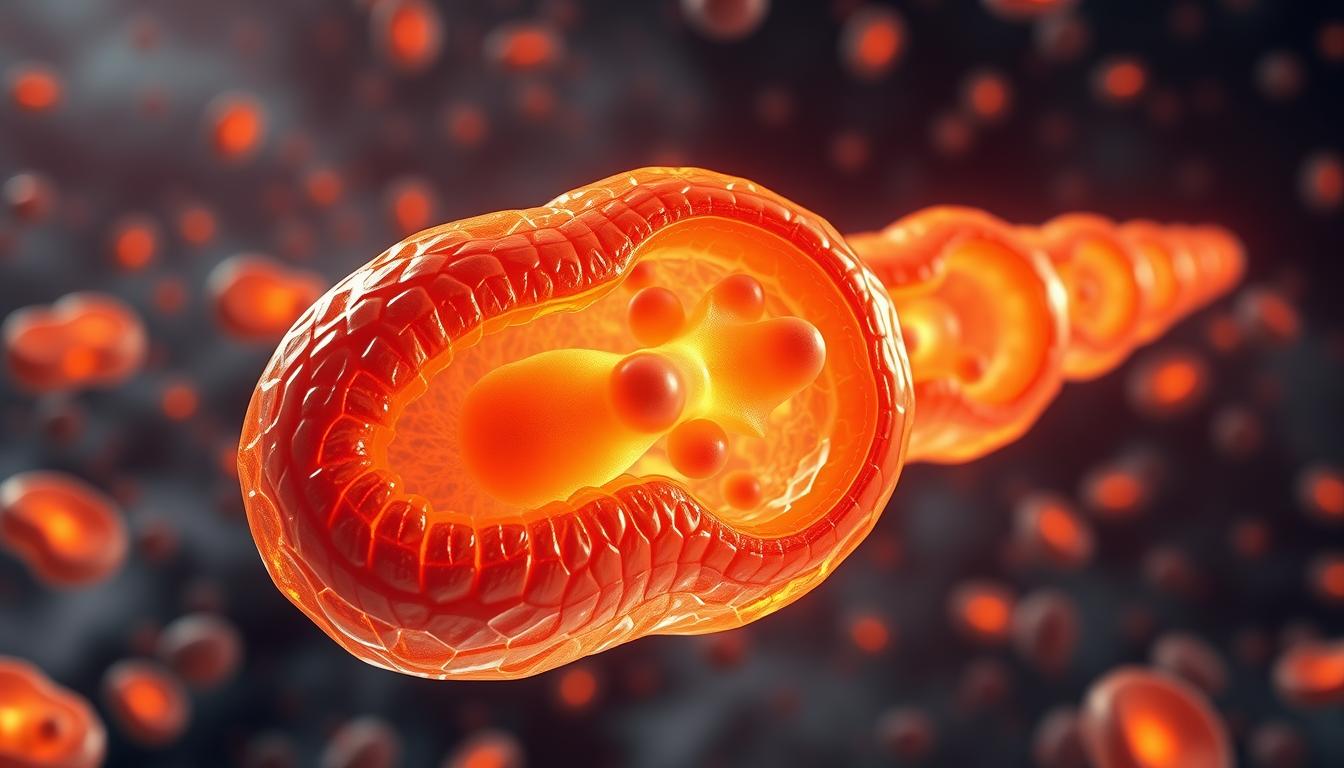
Mitochondria are complex organelles with a unique structure. They have a double membrane, with inner folds called cristae that increase surface area for energy production. Inside, they contain their own DNA, which plays a role in their functions and replication.
The process of ATP synthesis occurs in the mitochondria through the electron transport chain. This chain uses oxygen to convert nutrients into adenosine triphosphate (ATP), the molecule that powers your cells.
Why Are Mitochondria Important for Energy Production?
Mitochondria are dynamic structures that constantly fuse and divide. Fusion optimizes energy production by combining resources, while fragmentation reduces efficiency. Obesity, for example, can cause mitochondrial fragmentation, leading to decreased energy burn.
A UC San Diego study found that high-fat diets cause mitochondrial fragmentation in white adipose tissue. This disrupts energy production and contributes to metabolic issues. In contrast, brown fat contains more active mitochondria, which burn energy to generate heat.
Understanding these dynamics can help you optimize your mitochondrial health. By supporting fusion and reducing fragmentation, you can enhance your body’s ability to produce energy efficiently.
The Role of Mitochondria in Weight Loss
Your body’s ability to burn fat hinges on the efficiency of tiny cellular structures. These organelles, often called the powerhouses of your cells, play a pivotal role in converting stored fat into energy. When they function optimally, your metabolism thrives, making weight management more achievable.
How Mitochondria Burn Fat
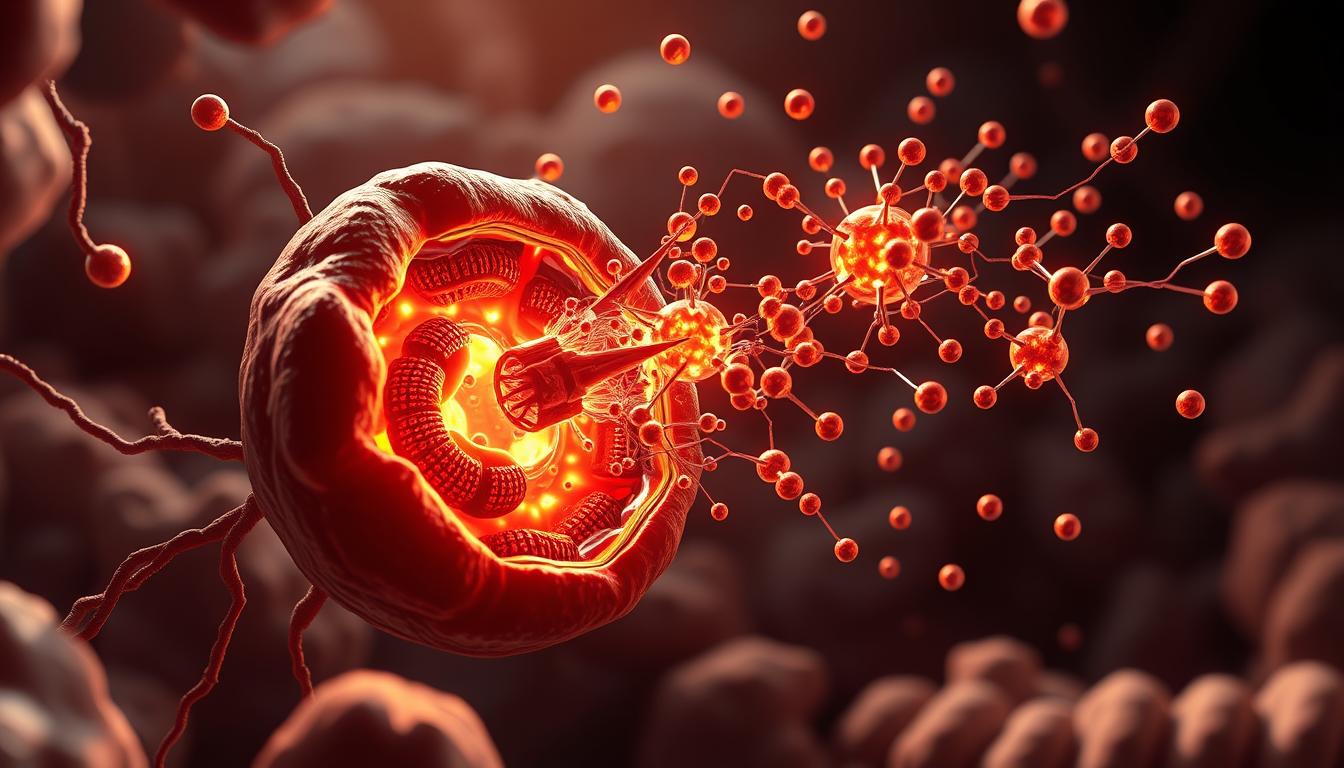
Fat burning begins with a process called beta-oxidation. Fatty acids are transported into the mitochondria, where they are broken down to produce energy. This process relies on a series of enzymatic reactions that convert fat into adenosine triphosphate (ATP), the energy currency of your cells.
When mitochondrial function is impaired, this process slows down. A condition known as “metabolic gridlock” can occur, where fat accumulates instead of being utilized. This dysfunction is often linked to obesity and other metabolic disorders.
| Step | Process |
|---|---|
| 1 | Fatty acids enter the mitochondria. |
| 2 | Enzymes break down fatty acids into acetyl-CoA. |
| 3 | Acetyl-CoA enters the citric acid cycle. |
| 4 | ATP is produced through oxidative phosphorylation. |
The Connection Between Mitochondrial Function and Obesity
Recent research from UC San Diego highlights the role of the RalA protein in fat metabolism. In a study involving mice, activation of RalA reduced fat-burning capacity by 40%. Conversely, RalA-deficient mice resisted diet-induced weight gain, suggesting a direct link between mitochondrial function and obesity.
Human tissue analysis has revealed similar mechanisms in white fat cells. Mitochondrial fragmentation, a common issue in obesity, disrupts energy production and contributes to insulin resistance. This finding underscores the importance of maintaining mitochondrial health for effective weight management.
By understanding these processes, you can take steps to optimize your mitochondrial function. Supporting their efficiency not only aids in fat loss but also improves overall metabolic health.
How Mitochondrial Dysfunction Affects Weight Gain
Your diet plays a significant role in the health of your cellular powerhouses. When these structures malfunction, your body’s ability to burn fat and produce energy declines. This dysfunction is often linked to weight gain and metabolic issues.

The Impact of a High-Fat Diet on Mitochondria
A high-fat diet, particularly one rich in saturated fats, can overwhelm mitochondrial capacity. Studies show that diets containing 60% fat cause fragmentation within 8-12 weeks. This process disrupts energy production and leads to oxidative stress.
In mice, excessive fat intake activates the RalA protein, which triggers the Drp1 protein. This causes excessive mitochondrial division, reducing their efficiency. These changes are directly linked to weight gain and metabolic slowdown.
Insulin Resistance and Mitochondrial Fragmentation
Dysfunctional mitochondria also contribute to insulin resistance. When mitochondria fragment, they produce less energy and more reactive oxygen species (ROS). This cascade of events leads to inflammation in adipose tissue, further impairing metabolic function.
A Clinical Nutrition study found that improving mitochondrial function reduced visceral fat in participants. This highlights the importance of maintaining healthy mitochondria for effective weight management.
Additionally, mitochondrial ROS production is linked to leptin resistance, a condition that disrupts appetite regulation. Addressing these issues can help mitigate the risk of obesity and related health problems. For more on this, explore the symptoms of overweight people.
How to Boost Mitochondrial Function for Effective Weight Management
Optimizing your cellular powerhouses can transform your approach to weight management. By enhancing mitochondrial efficiency, you can unlock your body’s full potential for fat burning and overall health.
The Role of Exercise in Increasing Mitochondrial Density
Regular physical activity is one of the most effective ways to boost mitochondrial density. Studies show that interval training increases mitochondrial density 25% more than steady-state cardio. High-intensity interval training (HIIT) protocols, such as 30-second sprints with 2-minute recovery intervals, are particularly effective.
Resistance training also plays a crucial role. It builds muscle-based mitochondrial networks, enhancing your body’s ability to produce energy. Combining these methods can significantly improve your metabolic performance.

Dietary Changes to Enhance Mitochondrial Efficiency
Your diet directly impacts mitochondrial function. A ketogenic diet, for example, forces mitochondria to utilize fatty acids for energy. This process can improve fat-burning efficiency and support weight management.
Incorporating phytonutrient-rich foods like berries and leafy greens can also enhance mitochondrial efficiency. These foods support the electron transport chain, a critical component of energy production.
“A Mexican clinical trial demonstrated that dietary interventions improved monocyte mitochondrial function, highlighting the importance of nutrition in cellular health.”
| Dietary Strategy | Impact on Mitochondria |
|---|---|
| Ketogenic Diet | Forces mitochondria to burn fatty acids. |
| Phytonutrient-Rich Foods | Enhances electron transport chain efficiency. |
| Balanced Macronutrients | Supports overall mitochondrial functions. |
By combining targeted exercise and a nutrient-rich diet, you can optimize your mitochondrial health. This approach not only aids in weight management but also improves your overall well-being.
What Are Mitochondria and Why They Matter for Weight Loss: Key Takeaways
Unlocking the secrets of your cellular powerhouses can revolutionize your weight management journey. These tiny structures are not just energy producers—they are essential for burning fat and maintaining metabolic balance. Recent findings show that improving mitochondrial efficiency can accelerate weight loss by up to 18%.
Why Optimizing Mitochondrial Health is Crucial for Weight Loss
Your mitochondria play a central role in converting stored fat into energy. When they function optimally, your body burns calories more efficiently. However, mitochondrial dysfunction can lead to metabolic slowdown and weight gain. Researchers have linked poor mitochondrial health to conditions like obesity and insulin resistance.
Studies highlight that mitochondrial fragmentation disrupts energy production, making it harder to lose weight. By focusing on mitochondrial optimization, you can enhance your body’s ability to manage weight effectively.
Practical Steps to Improve Mitochondrial Function
Improving mitochondrial health revolves around three pillars: exercise, diet, and stress reduction. Here’s how you can implement these strategies:
- Exercise-Induced Biogenesis: High-intensity interval training (HIIT) and resistance training boost mitochondrial density, enhancing energy production.
- Diet-Supported Beta-Oxidation: A ketogenic or phytonutrient-rich diet encourages mitochondria to burn fat for fuel.
- Stress Reduction: Chronic stress impairs mitochondrial function. Practices like meditation and adequate sleep support repair cycles.
Additionally, aligning your circadian rhythm ensures mitochondria repair during sleep. Supplements like CoQ10 and PQQ, based on UCSD’s RalA pathway findings, can further enhance mitochondrial efficiency.
| Biomarker | Role in Mitochondrial Health |
|---|---|
| Fasting Insulin | Indicates metabolic efficiency and insulin sensitivity. |
| CRP | Measures inflammation levels, which can impair mitochondrial function. |
| VO2 Max | Reflects aerobic capacity and mitochondrial density. |
Finally, avoid environmental disruptors like BPA and phthalates, which can harm mitochondrial function. By taking these steps, you can optimize your cellular powerhouses for better health and sustainable weight management.
Conclusion
Your journey to sustainable weight management starts with understanding cellular energy. Recent research highlights the critical role of mitochondrial health in combating obesity. Chronic RalA activation, for instance, suppresses energy expenditure by 30% in obese adipose tissue, emphasizing the need for targeted interventions.
Emerging therapies focusing on RalA inhibition show promise in enhancing mitochondrial efficiency. By optimizing these cellular powerhouses, you can achieve lasting results. Start today with practical steps like a structured HIIT schedule and a balanced diet plan.
Focus on long-term metabolic health rather than quick fixes. Small, consistent changes can lead to significant improvements in energy levels and fat loss. Take action now to unlock your body’s full potential.