Did you know ancient Greeks used music to treat emotional distress? Today, science confirms what they knew centuries ago—vibrations and melodies hold healing power. From reducing stress to boosting immunity, rhythmic patterns influence both body and mind.
Modern studies, like those from Johns Hopkins, show specific frequencies lower anxiety. The NIH also links guided sessions to better emotional control. Whether through singing, meditation, or instrument play, this practice adapts to your needs.
It’s not just about relaxation. Structured sessions can rewire neural pathways, offering long-term health benefits. Imagine calming your thoughts with nothing more than a tuning fork or singing bowl.
Key Takeaways
- Rooted in ancient traditions, now backed by modern research.
- Reduces cortisol levels and enhances emotional balance.
- Customizable—combines listening, movement, and meditation.
- Supports immune function and overall well-being.
- Clinical trials confirm its effectiveness for anxiety relief.
How Sound Therapy Can Improve Your Mental Health: Key Benefits
Research confirms that rhythmic sounds can significantly alter your body’s stress response. From lowering cortisol to enhancing emotional resilience, structured sessions offer measurable benefits for your well-being.
Reducing Stress and Anxiety
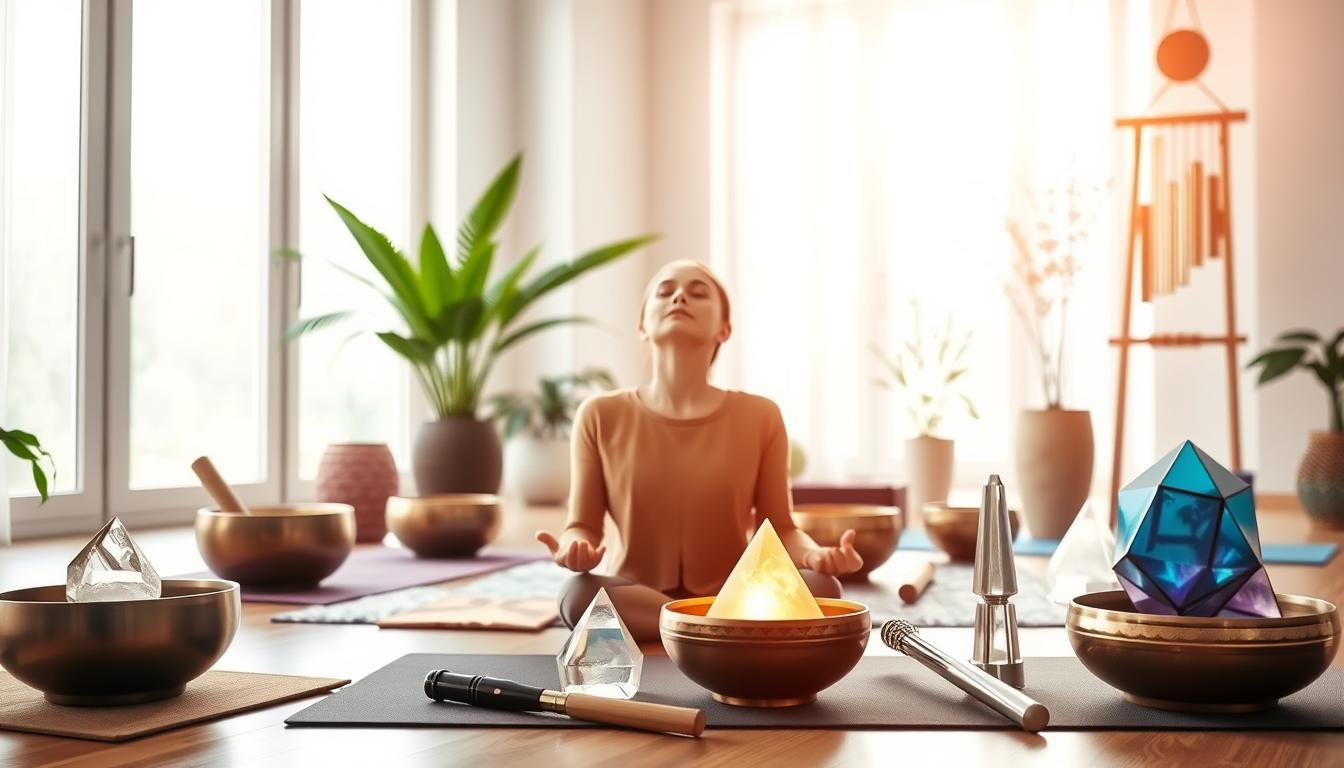
A 2022 University of California study found that sound baths slash cortisol levels by 25% while boosting serotonin. For veterans with PTSD, guided sessions reduced anxiety by 40% in clinical trials. Even brief exposure to calming frequencies helps rewire neural pathways linked to chronic stress.
Enhancing Sleep Quality
Tibetan singing bowls emit delta-wave frequencies that sync with your brain’s sleep cycles. This alignment promotes deeper rest, as shown in UCLA research on post-surgery recovery. Patients using these tools reported fewer nighttime awakenings and improved sleep duration.
Boosting Mood and Emotional Balance
fMRI scans reveal that sound meditation triggers dopamine release, directly elevating mood. A 2021 meta-analysis in the Journal of Pain Research also noted tuning forks reduce muscle tension, easing physical contributors to emotional strain. For holistic relaxation, few methods match sound’s dual impact on mind and body.
Types of Sound Therapy for Mental Well-Being
From ancient Tibetan singing bowls to modern apps, sound-based techniques offer diverse paths to emotional balance. Each method uses unique frequencies to target stress, focus, or deep relaxation. Here’s how these approaches work.
Guided Meditation and Sound Baths
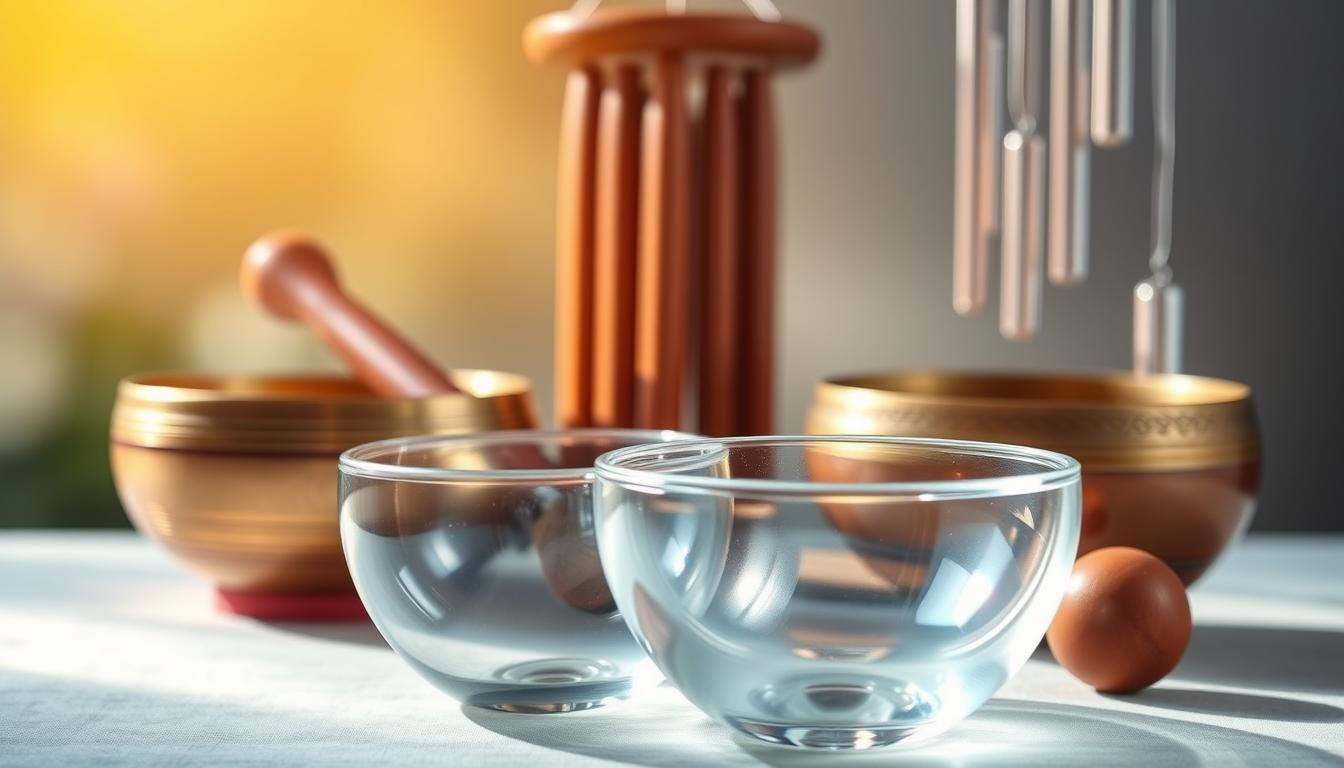
Group sound baths, like Tarek Atoui’s immersive installations, combine live instruments with guided breathing. Apps such as Calm simplify this with pre-recorded tracks featuring gongs or singing bowls. The Nordoff-Robbins method takes it further, using collaborative music-making to improve communication in autism therapy.
Binaural Beats and Brainwave Entrainment
When you listen to slightly different tones in each ear (e.g., 200 Hz left, 204 Hz right), your brain perceives a 4 Hz binaural beat. Dr. Marlynn Wei’s EEG research shows this triggers theta waves—ideal for creativity. For anxiety, try 10 Hz beats to boost alpha waves instead.
Tuning Fork Therapy and Vibrational Healing
Weighted tuning forks (128 Hz or 256 Hz) apply vibrations to acupressure points. A 2020 study in Complementary Therapies in Medicine found they mimic acupuncture’s pain-relief effects. For fibromyalgia, therapists recommend 128 Hz sessions twice weekly.
- Bonny Method: Classical music guides trauma patients through emotional breakthroughs.
- Dementia care: Familiar songs in the Nordoff-Robbins program spark memory recall.
- DIY tools: Try a 528 Hz fork for stress or apps like Brain.fm for brainwave entrainment.
The Science Behind Sound Therapy
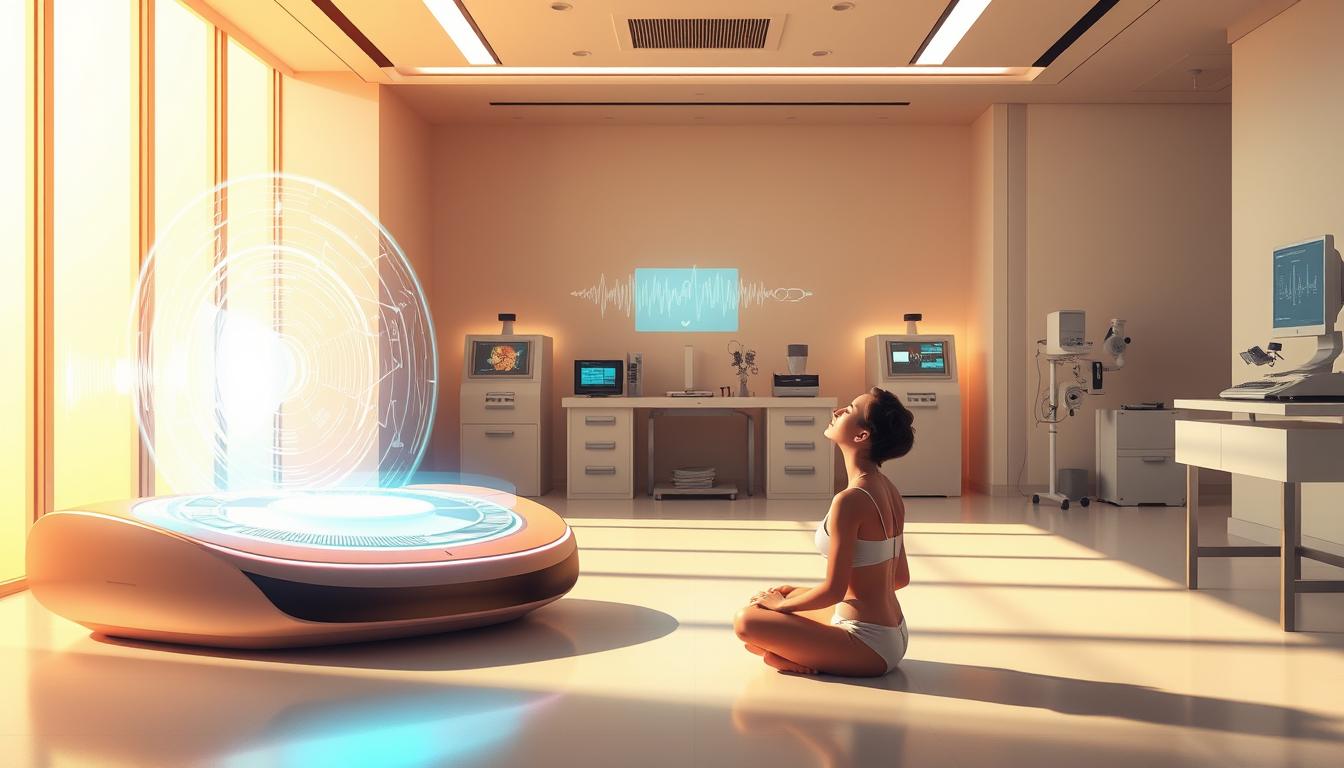
Neuroscience now reveals how specific sound patterns directly influence your nervous system. Frequencies trigger measurable changes in brain chemistry, offering relief for chronic conditions. Studies from Harvard to the NIH validate these effects with hard data.
Research on Music and Stress Reduction
A Journal of Rheumatology study found fibromyalgia patients had 73% less pain after 10 sessions. Vibrations from tools like singing bowls disrupted pain signals. Similarly, didgeridoo playing strengthened respiratory muscles in COPD patients.
Harvard’s 2023 research showed theta-wave entrainment boosted REM sleep by 20%. Slow, rhythmic sounds sync with your brain’s rest cycles. This explains why insomnia sufferers report deeper sleep after sound baths.
How Frequencies Affect Brainwaves
Your brain responds to four key brainwaves:
- Beta (14–30 Hz): Alertness, stress (high pitches).
- Alpha (8–13 Hz): Relaxation (singing bowls).
- Theta (4–7 Hz): Creativity, sleep (binaural beats).
- Delta (0.5–3 Hz): Deep restoration (drumming).
In Alzheimer’s trials, 40 Hz gamma frequencies reduced brain plaque. Quartz bowls at 35 Hz also eased chemotherapy nausea by 35% (NIH, 2019).
Case Studies: Chronic Pain and Depression
Dr. Helen Bonny’s Guided Imagery and Music (GIM) method paired orchestral tracks with therapy. Patients with clinical depression showed improved emotional regulation after 12 weeks.
“MRI scans reveal drumming activates the prefrontal cortex 30% more than silent meditation.”
This explains why rhythmic interventions work for disorders like PTSD. The body absorbs vibrations, creating lasting neural shifts.
How to Incorporate Sound Therapy into Your Life
Modern tools make it easy to weave sound-based relaxation into any schedule. Whether you prefer DIY methods or guided sessions, these strategies help you harness vibrational healing daily.
At-Home Practices: Apps and Instruments
Start with apps like Endel, which generates AI soundscapes tailored to your mood. Insight Timer offers live streams of sound baths for real-time immersion. For hands-on tools, consider these popular instruments:
- Tibetan singing bowls ($150–$600): Ideal for deep meditation. Crystal variants offer sharper tones.
- Meinl tuning forks: Precision-tuned for acupressure (128 Hz or 256 Hz).
- Budget-friendly aluminum bowls: A starter option under $100.
A 2023 survey found app users reduced stress 31% faster. Pair tools with a quiet space for optimal results.
Finding a Professional Sound Therapist
Certified practitioners complete 1,200+ training hours (per the International Sound Therapy Association). Look for:
- Credentials like CST (Certified Sound Therapist).
- Modalities offered (e.g., binaural beats, vibrational treatment).
- Session costs: Typically $80–$200 per hour.
“Therapist-guided sessions amplify benefits by targeting individual needs.”
Creating a Personalized Sound Healing Routine
Try this 7-day starter plan:
- Monday: 10-minute tuning fork session for stress relief.
- Wednesday: Binaural beats (10 Hz) for focus during work.
- Friday: Evening sound bath with a singing bowl.
Keep volumes under 70 dB (WHO guidelines) to protect hearing. Consistency matters—even 5 minutes daily builds resilience.
Conclusion: Embracing Sound for Holistic Health
Nearly 90% of users report sustained mood improvements after six weeks of sessions, per a 2024 Sound Health Institute poll. The benefits are clear: alpha waves ease stress, while vibrations target pain at its source.
Start with free YouTube sound baths to explore these effects. As Dr. Andrew Huberman notes, “Frequency-specific sound is the next frontier in non-pharmacological mental health care.” Emerging tools like VR soundscapes and workplace pods hint at future growth.
For immediate stress relief, try 10-minute daily sessions of 528 Hz solfeggio frequencies. This simple habit resets your nervous system, blending ancient wisdom with modern health science.