Did you know just 120 minutes a week in green spaces can significantly improve your mental health? Cornell University research confirms this surprising fact, proving that reconnecting with the outdoors isn’t just refreshing—it’s scientifically transformative.
Modern life often disconnects us from the natural world, yet our brains still crave it. Urban living, screen time, and packed schedules leave little room for the calming effects of fresh air and open spaces. But simple activities like walking in a park or sitting under a tree can help reset your stress levels.
This approach isn’t new—humans evolved alongside nature. Today, studies show that even small doses of outdoor time break negative thought cycles and spark positive feelings. Whether it’s urban greenery or wild landscapes, accessible options exist for everyone.
Key Takeaways
- Spending 120 minutes weekly in nature enhances health and well-being.
- Urban green spaces like parks offer similar benefits to wild environments.
- Nature helps interrupt stress and anxiety patterns.
- Simple daily practices, such as mindful walks, make a difference.
- Inclusivity in outdoor access remains a challenge but is improving.
What Is Nature Therapy and How Does It Work?
Green spaces offer more than beauty; they’re a reset button for your mind. Known as nature therapy or ecotherapy, this practice involves intentional time in natural spaces to improve mental health. From forest bathing in Japan to urban park prescriptions, it’s a global movement rooted in science.
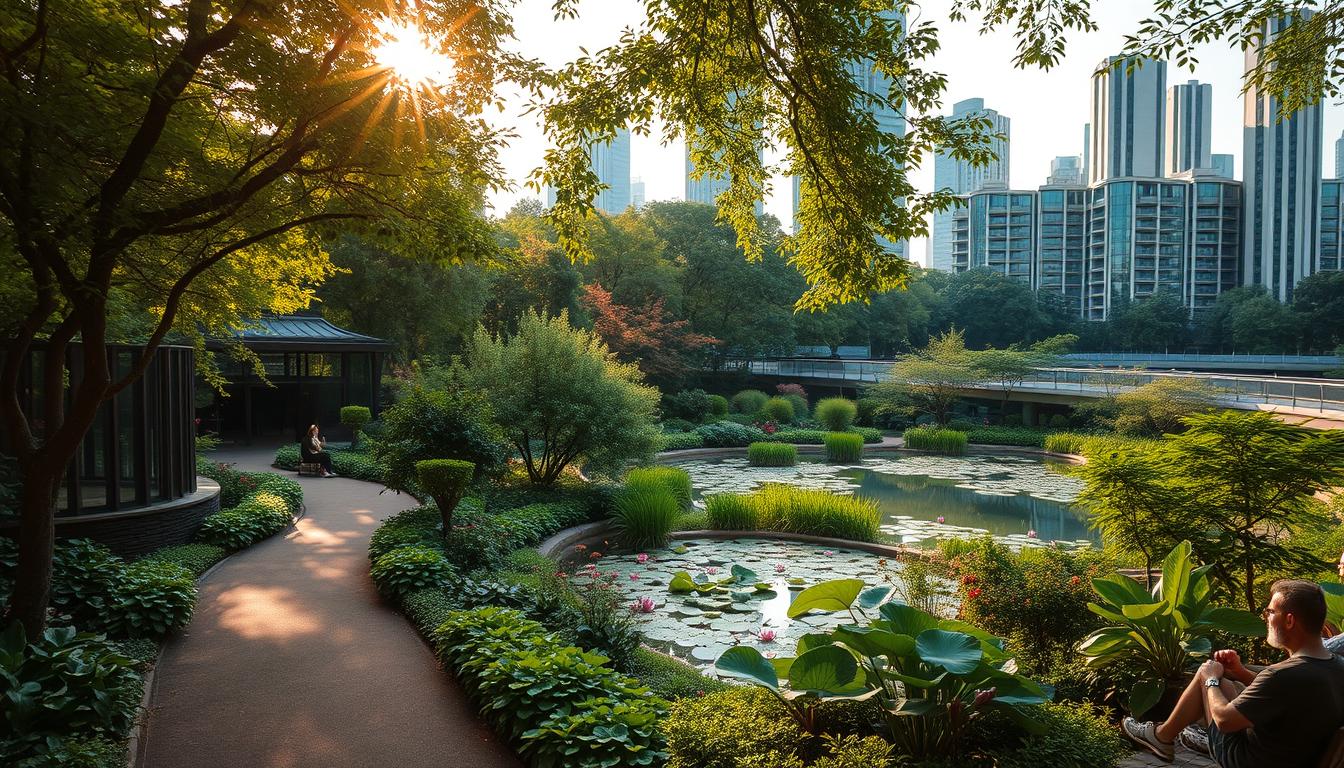
Humans evolved in wild environments, so urban living strains our body and mind. Cornell research shows just 10–50 minutes daily in greenery lowers stress markers like cortisol. Their student program prescribes 10-minute “doses” to combat burnout—proof that small moments matter.
You don’t need a forest. A street tree or community garden counts. Even watching leaves rustle triggers awe, a feeling linked to lower inflammation and a stronger sense of belonging. Nature isn’t just a place; it’s a way to reconnect with the wider world.
Therapy here isn’t clinical—it’s about mindful engagement. Listen to birds, touch bark, or breathe deeply. These activities signal safety to your nervous system. Urban planning now prioritizes accessible green corridors because health outcomes improve when nature is part of daily life.
The Science Behind Nature Therapy’s Mental Health Benefits
Your brain responds to nature in measurable, transformative ways. Decades of research reveal how even brief outdoor time nature sessions reset stress responses and sharpen focus.
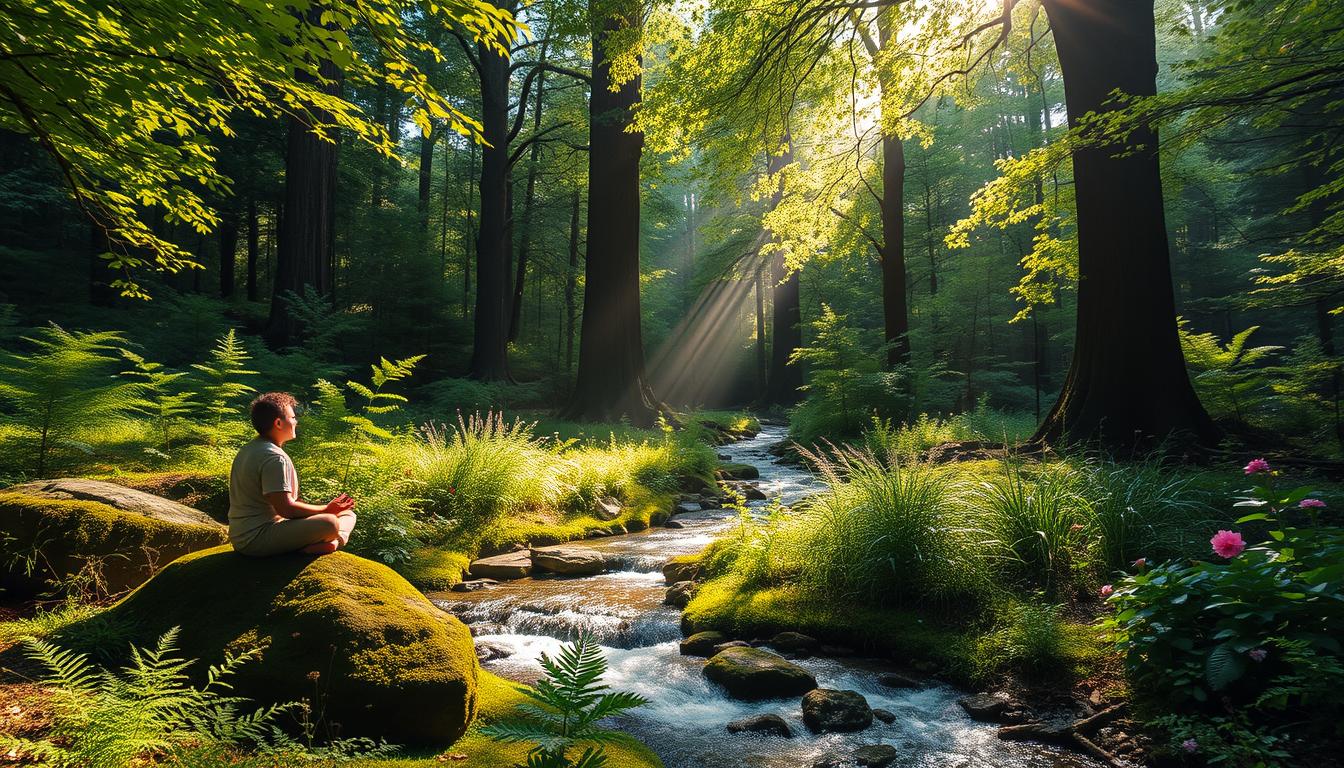
10–50 Minutes: The Optimal “Dose” for Stress Relief
Cornell’s studies show just 10 minutes in green spaces lowers cortisol by 21%. Extend that to 50 minutes, and your body enters a state of deep restoration.
“Short, frequent nature breaks are like hitting a mental reset button,”
notes the study’s lead author.
Physiological Effects: Lower Blood Pressure and Heart Rate
Nature’s effect isn’t just psychological. A 20-minute park visit can reduce blood pressure by 5 points. Here’s how it works:
- Stress hormones drop: Cortisol and adrenaline decrease.
- Heart rate stabilizes: Sympathetic nervous system activity slows.
- Inflammation reduces: Biomarkers like IL-6 decline.
Studies Linking Nature Exposure to Reduced Depression
UK research tracked 10,000 urban dwellers. Those near high-quality green spaces had 33% lower depression rates. Another study found a 90-minute walk in nature reduced rumination—the brain’s negative thought loop—by 40%.
Compare this to indoor exercise: While a treadmill burns calories, outdoor activities uniquely improve mood by engaging senses and fostering awe. The takeaway? Prioritize greenery for health gains that go beyond physical fitness.
How Nature Therapy Can Reduce Anxiety & Boost Mood
Stepping into a forest or park does more than provide fresh air—it actively rewires your mind. Research proves that natural spaces outperform indoor settings for easing stress anxiety and lifting spirits. The difference lies in how our brains process these environments.
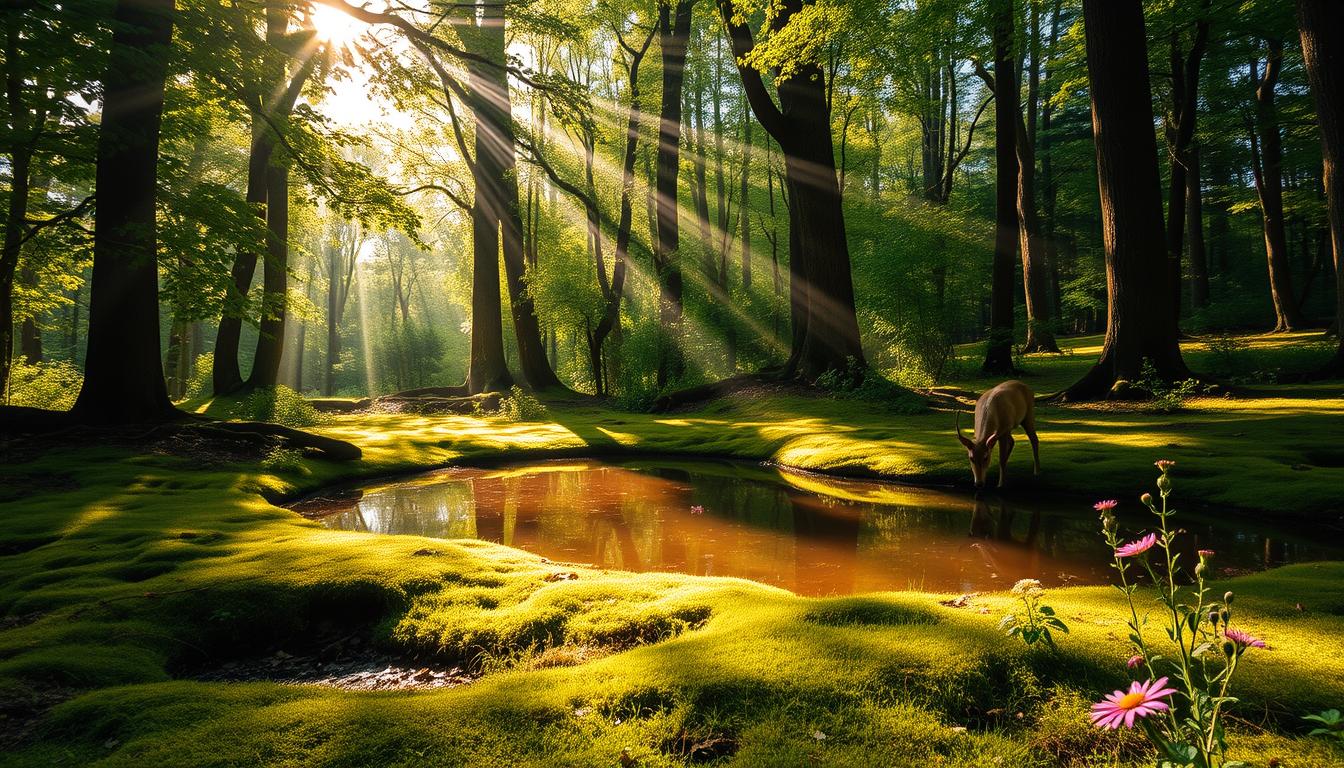
Combatting Anxiety: Natural Spaces vs. Indoor Environments
Urban settings bombard your senses with traffic noise and artificial lights. In contrast, greenery triggers “soft fascination”—a state where rustling leaves or flowing water gently hold attention. This rests your prefrontal cortex, the part of the brain linked to overthinking.
A UK study found outdoor physical activity lowers anxiety 28% more than gym workouts. Natural visuals lack the overstimulation of screens, allowing your nervous system to reset. Even photos of landscapes can temporarily improve mood, but real immersion works best.
Mood Enhancement Through Awe and Beauty
Ancient trees or starry skies create awe, shifting perspective on personal problems. This emotional response releases dopamine and oxytocin—chemicals tied to happiness and connection. One experiment showed that after viewing natural beauty, people became 12% more generous in lab tests.
“Awe makes us feel smaller, yet more connected to something larger,”
explains a UC Berkeley researcher. This dualeffectcombats isolation while putting daily stresses in context.
Nature’s Role in Breaking Negative Thought Cycles
Rumination—replaying worries—decreases by 40% after 90 minutes outdoors. Natural environments engage your senses just enough to distract from spirals without demanding focus. Green corridors in cities now help marginalized groups access these benefits, with studies showing equal improve mood results across income levels.
Whether it’s lunch under a street tree or weekend hikes, consistent exposure to natural spaces builds resilience against anxiety. Your brain evolved among trees and rivers—returning there isn’t escapism, but recalibration.
Simple Ways to Practice Nature Therapy Daily
Urban life doesn’t have to mean missing out on nature’s benefits. Cornell’s research shows just 120 minutes a week in green spaces improves well-being—and problem-solving skills jump 50% after four days outdoors. Here’s how to weave these activities into your routine, even in cities.
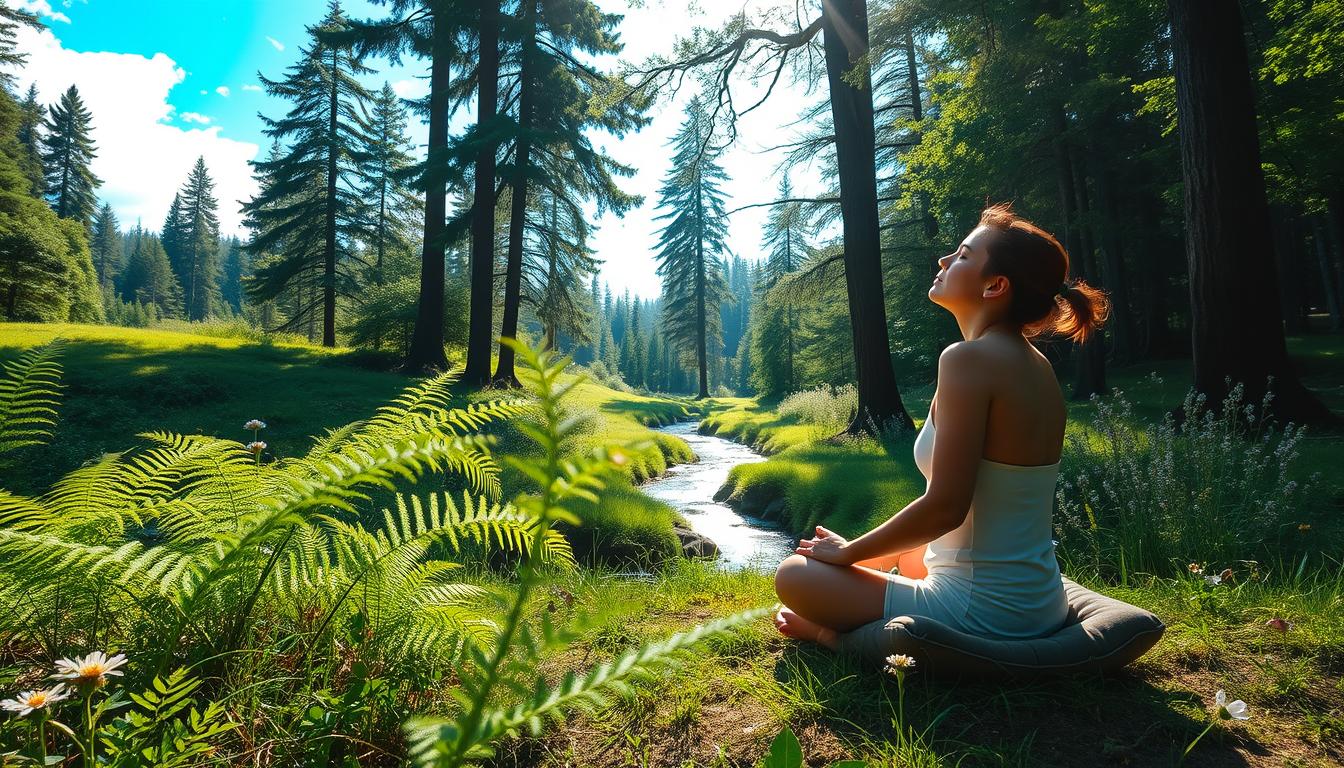
Walking in Green Spaces: A 120-Minute Weekly Goal
Break your time into manageable chunks. A 20-minute lunch walk or weekend hike adds up fast. Neighborhood bike rides count too—movement amplifies nature’s effect on your mind.
- Try “green microdosing”: Ten-minute daily sessions lower stress markers.
- Unstructured play: Let kids (or yourself) explore parks freely to boost creativity.
Sitting Mindfully in Parks or Gardens
No walking required. Simply sit under a tree and observe:
“Five minutes of listening to leaves rustling can interrupt anxiety cycles,”
notes a Cornell Nature Rx guide. Pair this with deep breathing for deeper calm.
Urban Alternatives: Street Trees and Green Corridors
No park nearby? Trees lining sidewalks offer similar benefits. Cities like Portland design urban green corridors for easy access. At home, try:
- Balcony gardens with herbs or flowers.
- Nature soundscapes during work breaks.
Every small connection counts—your brain deserves these reset moments.
Overcoming Barriers to Accessing Nature
Cities often lack green spaces, but creative solutions are bridging this gap. For many people, especially in urban areas, finding nearby nature feels impossible. Yet, projects worldwide prove even small changes can make a big difference.
Solutions for Urban Dwellers Without Green Spaces
No park nearby? Try these ways to connect with nature:
- Green corridors: Cities like London convert roads into pollinator-friendly pathways.
- Balcony gardens: Grow herbs or flowers in small spaces.
- Community projects: Join local efforts to plant street trees or create pocket parks.
Designing Inclusive Natural Areas for Disabilities
Nature should be for everyone. Adaptive designs help:
| Feature | Benefit |
|---|---|
| Wheelchair-accessible trails | Enables mobility-impaired people to explore |
| Sensory gardens | Supports autism and dementia health |
| Braille signage | Makes nature informative for the visually impaired |
Safety and Inclusivity in Nature Spaces
Feeling unsafe keeps many people indoors. Solutions include:
- Better lighting on trails and in parks.
- Visible pathways to deter isolation.
- Community patrols to ensure safety.
“Inclusive design isn’t just physical—it’s about creating belonging,”
notes a UK project leader. From rural Cornell studies to city parks, equitable access to nature improves health for all.
Conclusion
Small daily doses of nature offer big benefits for stress relief. Just 10–50 minutes outdoors can sharpen focus and lift your mood. Audit your weekly routine—lunch breaks or evening walks add up fast.
This therapy isn’t a replacement for medical care, but a powerful part of holistic mental health strategies. Communities must expand access to parks and green corridors, ensuring everyone reaps these rewards.
Cornell’s research shows a future where nature prescriptions are as common as medication. Start small, think big, and let the world outside heal you.