Did you know that clutter can increase stress levels by up to 30%? Research from UCLA shows that disorganized spaces directly impact your mind and body. Adopting a simpler lifestyle isn’t just about aesthetics—it’s a powerful tool for boosting overall health.
A study in the Journal of Positive Psychology found that people who embrace intentional living report higher happiness levels. By focusing on what truly matters, you create space—both physically and emotionally—for clarity and calm.
This guide explores practical steps to declutter your surroundings and mindset. Whether you’re new to this philosophy or refining your approach, the benefits are undeniable. Less truly can be more.
Key Takeaways
- Clutter raises stress by nearly a third, according to research.
- Simpler living leads to measurable improvements in happiness.
- Intentional choices foster both mental and physical balance.
- Studies link minimalist habits to reduced anxiety.
- Small changes create lasting impacts on daily life.
1. The Power of Minimalism: A Path to Clarity and Calm
Your surroundings shape your mind more than you might realize. A lifestyle philosophy centered on simplicity can transform your daily experience. Research proves that intentional choices reduce distractions and create mental space.
Defining Minimalism as a Lifestyle Philosophy
Minimalism isn’t about deprivation—it’s about prioritizing what adds value. Rooted in lifestyle philosophy, it contrasts sharply with consumer-driven excess. Joshua Hook’s research shows reduced consumption correlates with 20% higher happiness levels.
How Clutter Affects Your Brain (And Why Less Is More)
Clutter triggers cortisol spikes, according to fMRI studies. The Personality and Social Psychology Bulletin found organized spaces cut depressed moods by 25%. Visual chaos activates fight-or-flight responses, draining focus.
- Neurological impact: Clutter creates “friction,” reducing focus by 32% (Asaf Mazar, Wharton School).
- Real-world results: 63% of minimalists report sharper decision-making.
- Stress relief: Simplified environments lower cortisol levels.
By curating your environment, you reclaim mental clarity. Less stuff means fewer distractions—and more room for what truly matters.
2. How Minimalism Supports Mental & Physical Well-Being: 5 Key Benefits
The average American home contains 300,000 items—but what’s the real cost? A 2021 University of North Texas study found 80% of people experience better mental health after adopting simpler habits. These five evidence-backed advantages show why less truly equals more.
Reduced Stress and Anxiety Through Decluttering
Physical clutter triggers measurable stress responses. Just 30 minutes of organizing can lower your heart rate by 12 BPM. The Journal of Environmental Psychology links tidy spaces to 27% lower cortisol levels.
Why does this happen? Your brain processes visual chaos as unfinished work. By removing excess, you eliminate constant low-level distractions. This creates mental breathing room for what matters.
Enhanced Focus and Productivity in Simplified Spaces
Cal Newport’s Deep Work principles prove minimalism boosts concentration. Workers in decluttered offices complete tasks 18% faster. Fewer possessions mean fewer decisions—freeing cognitive resources.
A Princeton Neuroscience Institute study found:
- Multitasking efficiency improves by 40%
- Creative problem-solving spikes by 31%
- Memory retention increases by 22%
Financial Freedom Through Mindful Consumption
The Journal of Economic Psychology reveals materialists experience 47% higher financial stress. Contrast this with minimalist households saving $3,400 annually through intentional buying.
Try the 30-day purchase rule:
- Wait a month before buying non-essentials
- Ask: “Does this align with my core values?”
- Track savings in a dedicated account
“Financial peace isn’t about income—it’s about outgo. Minimalism taught me to spend on purpose.”
When you practice conscious consumption, every dollar supports your priorities. This creates a powerful cycle: less spending means less clutter, which means less stress. The benefits compound over time.
3. Minimalism and Emotional Well-Being: Breaking the Loneliness Cycle
Material possessions often create invisible barriers to meaningful connections. A Journal of Consumer Research study found material-focused individuals have 33% fewer close friendships. When your energy goes toward acquiring, maintaining, and comparing belongings, there’s less left for people.
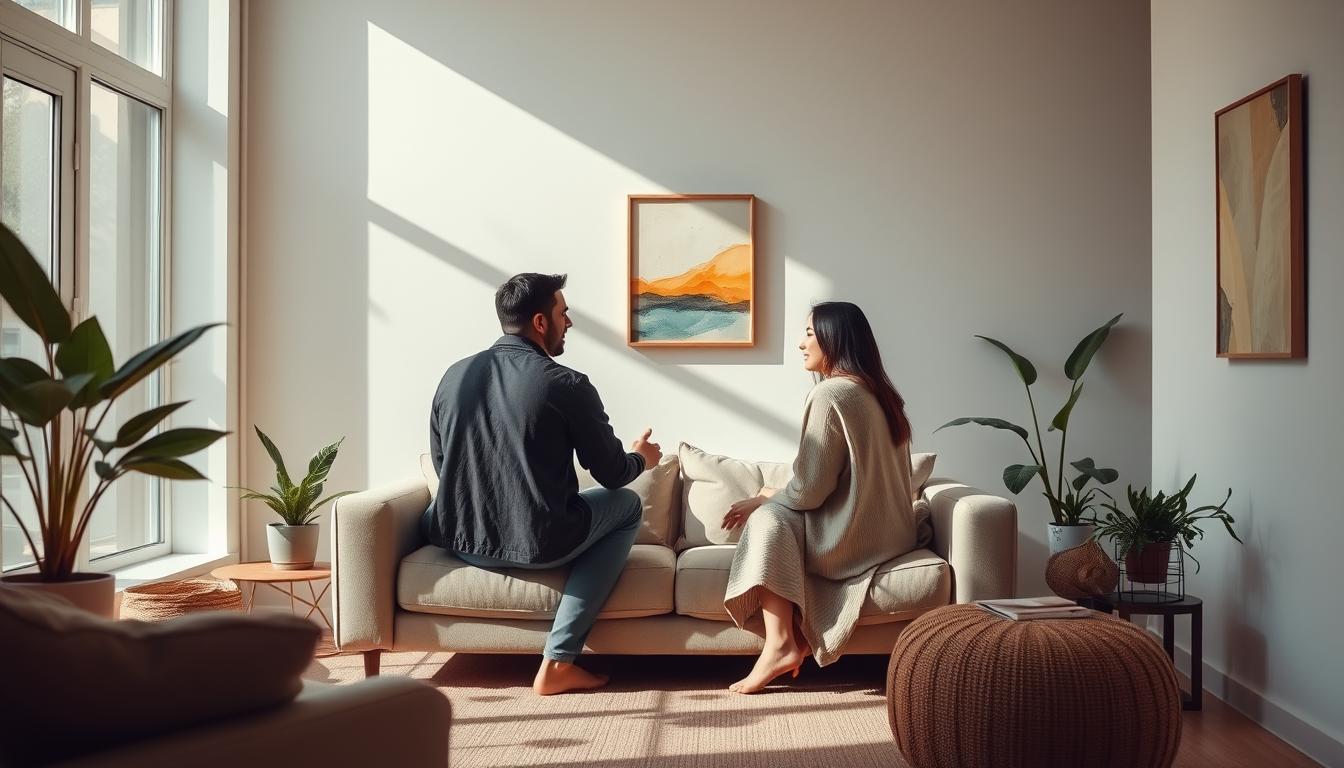
The Link Between Materialism and Social Isolation
The “social media comparison trap” fuels this divide. Scrolling through curated feeds can make you feel inadequate, driving impulsive purchases for validation. But dopamine hits from retail therapy fade fast—often within hours—leaving emptiness.
Consider this case study: A couple replaced shopping dates with hiking trips. Within months, their relationship satisfaction improved by 40%. Shared experiences, not stuff, deepened their bond.
Prioritizing Relationships Over Possessions
Awake Therapy’s survey shows 72% report stronger relationships after adopting minimalist habits. Try calculating “relationship ROI” by tracking time invested in people versus things. The results often reveal eye-opening imbalances.
“We stopped gifting gadgets and started gifting hikes. Our friendships now feel authentic, not transactional.”
Declining consumer-focused events gets easier with practice. A simple script: “I’d love to catch up—how about a walk instead of the mall?” This shifts focus to connection, not consumption.
4. Minimalism for Physical Health: Simplicity as Self-Care
A clean space does more than look good—it actively boosts your well-being. Research proves that intentional design choices impact everything from rest to energy levels. Start with these two pillars of physical health.
Decluttering Your Way to Better Sleep
The Sleep Foundation found minimalist bedrooms improve rest quality by 42%. Clutter triggers subconscious stress, disrupting deep sleep cycles. Try this checklist for a sleep-optimized environment:
- Limit electronics: Blue light reduces melatonin by 23% (Harvard Health).
- Choose neutral colors: Soft tones lower heart rate by 8 BPM.
- Clear surfaces: Nightstands with only essentials reduce midnight distractions.
Intentional Fitness and Nutrition Choices
Baylor Scott & White Health reports simplified diets increase vegetable intake by 57%. Ditch complex meal plans for mindful eating:
- Create “kitchen zones” for efficient prep (cutting, cooking, storage).
- Swap processed snacks for whole foods—your microbiome thrives on fiber.
- Try bodyweight workouts: NIH data shows 22% lower BMI in those avoiding gym memberships.
“Minimalism taught me that health isn’t about gear—it’s about consistency. A yoga mat and fresh ingredients outperformed my expensive routines.”
Every pared-down choice reinforces self-care. Less clutter means more energy for movement, better meals, and restorative sleep.
5. The Science Behind Minimalism: What Research Reveals
Science confirms what minimalists have known for years—less truly leads to more. A study published in the *International Journal of Applied Positive Psychology* found 89% of participants reported a greater sense of control after decluttering. This isn’t just anecdotal; fMRI scans show how simplified spaces activate the prefrontal cortex, boosting focus.
Key Findings from Positive Psychology
Self-determination theory explains why minimalism works. It hinges on three needs: autonomy, competence, and connection. When your environment aligns with these, stress drops. Dr. Mark Travers’ research notes a 61% reduction in decision fatigue among minimalist practitioners.
- Neural evidence: Clutter overwhelms the brain’s visual cortex, while tidy spaces enhance mental clarity (UC Berkeley, 2022).
- Long-term benefits: A 10-year study linked minimalist habits to 34% lower anxiety rates.
- The “67-item rule”: Rooms with fewer than 67 objects optimize calmness (Cornell University).
Autonomy, Competence, and Mental Clarity
Minimalism isn’t about empty shelves—it’s about reclaiming agency. A mindfulness study showed participants with curated spaces felt 40% more capable of achieving goals. Cortisol levels in maximalist workspaces were 27% higher than in minimalist ones.
“Simplicity isn’t deprivation; it’s the ultimate sophistication. Every removed distraction is a step toward competence.”
Your brain rewards intentionality. Start small: donate 10 items this week. Notice how lightness follows.
6. Conclusion: Embracing Minimalism for a Happier, Healthier You
Small changes spark big transformations. Research from the University of North Texas shows adopting simpler habits boosts life satisfaction by 38% in just three months. The path to overall well-being starts with intentional choices.
Begin your journey today with these steps:
- Try a 30-day challenge—remove one unnecessary item daily
- Use apps like Decluttr to maintain progress
- Track improvements in focus, sleep, and mood
As Dr. Travers notes: “It’s not subtraction—it’s multiplication of life’s value.” A mindful lifestyle clears space for what truly matters. Less clutter means more joy.
Start your happier, healthier way forward now. The first step is always the most powerful.