Did you know your body clock controls more than just sleep? This 24-hour cycle, known as the circadian rhythm, regulates hormones, digestion, and even mood. When aligned, it boosts energy, sharpens focus, and supports long-term wellness.
Disruptions, like late-night screen time or erratic meals, can trigger fatigue, weight gain, and mental fog. The good news? Simple adjustments—light exposure, consistent sleep, and mindful eating—can reset your internal clock.
From newborns to seniors, everyone benefits from syncing with natural cycles. Ignoring them risks metabolic disorders and poor cognitive performance. Ready to harness your body’s natural power?
Key Takeaways
- Your internal clock influences sleep, hormones, and metabolism.
- Proper alignment enhances energy and mental clarity.
- Light exposure and sleep schedules are critical for balance.
- Meal timing impacts your circadian rhythms.
- Disruptions may lead to health risks like obesity or depression.
What Is the Circadian Rhythm?
Hidden within your brain is a master conductor orchestrating daily biological functions. This 24-hour cycle, called the circadian rhythm, governs sleep, digestion, and hormone release. Think of it as your body clock, fine-tuned by evolution to align with Earth’s day-night cycle.
Your Body’s Internal Clock
The suprachiasmatic nucleus (SCN) in your hypothalamus acts as the master clock. It syncs peripheral clocks in organs using light signals detected by retinal cells. Here’s how it works:
- Melanopsin, a light-sensitive protein, detects blue wavelengths—signaling daytime alertness.
- At dusk, the SCN triggers melatonin production, priming you for sleep.
- Cortisol spikes at dawn, boosting morning energy.

How Light and Dark Influence Your Rhythm
Natural light keeps your circadian rhythms sharp. Artificial light, especially after sunset, suppresses melatonin by 50%. Late-night screens trick your brain into thinking it’s still daytime, delaying sleep onset.
Vitamin A-rich foods (like salmon and spinach) support melanopsin function. For optimal sync:
- Seek morning sunlight for 15–30 minutes.
- Dim lights 2 hours before bed.
- Limit screen time after dark.
How Your Circadian Rhythm Works
Behind your daily energy highs and lows lies a biological masterpiece—the circadian rhythm. This internal timing system coordinates everything from body temperature to hormones, ensuring peak performance at the right moments.
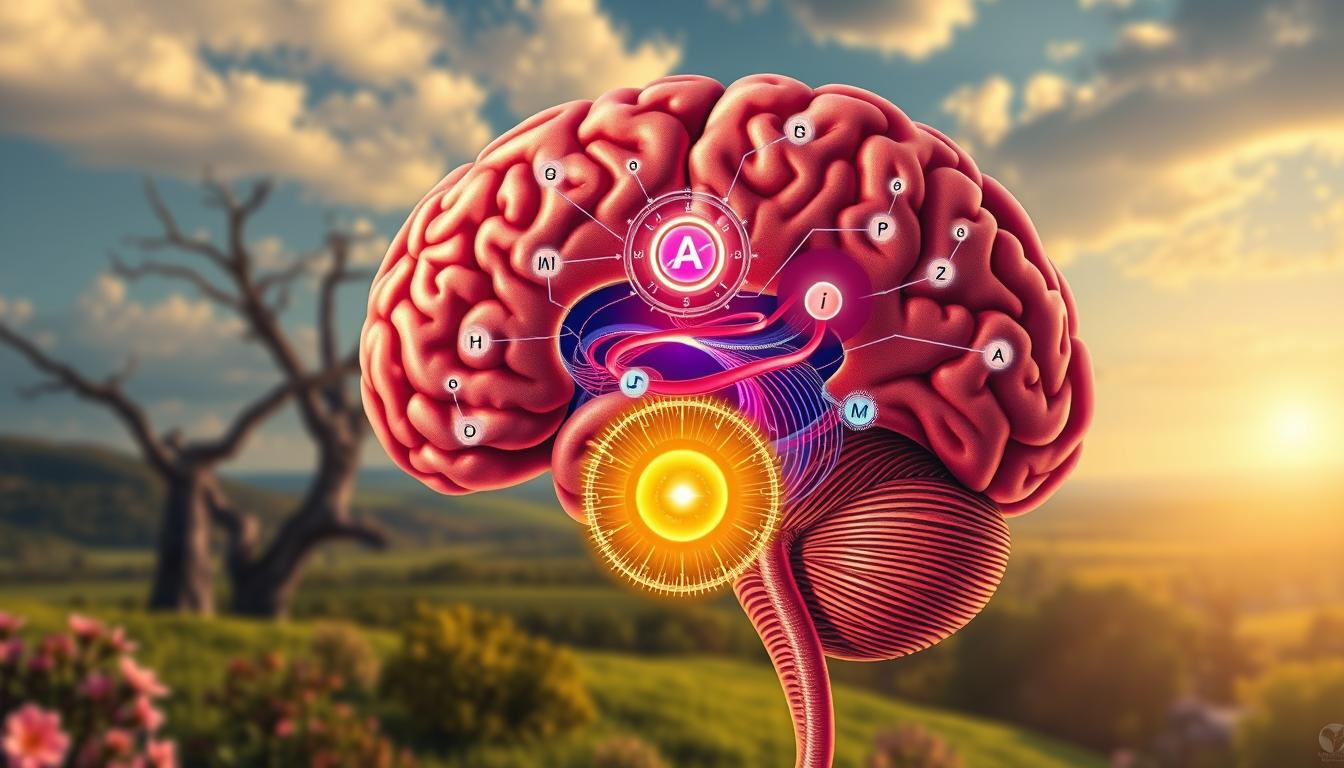
The Role of the Suprachiasmatic Nucleus (SCN)
Your brain’s suprachiasmatic nucleus (SCN) acts as the master clock. Nestled in the hypothalamus, it syncs peripheral clocks in organs using temperature changes and neural signals. Here’s how it maintains harmony:
- Adjusts core body temperature by 1–2°F daily, peaking in late afternoon.
- Signals the pineal gland to release melatonin as daylight fades.
- Aligns liver clocks with meal times to optimize glucose metabolism.
Hormones and Their Impact on Your Rhythm
Cortisol and melatonin are the yin and yang of your circadian rhythms. Their carefully timed release keeps you alert or relaxed:
| Hormone | Peak Time | Effect |
|---|---|---|
| Cortisol | 8 AM | Boosts morning focus and energy |
| Melatonin | 9–10 PM | Triggers sleepiness, lowers body temperature |
| Insulin | Early afternoon | Enhances nutrient absorption post-meals |
Disruptions, like late-night eating, confuse peripheral clocks. A 2021 study found irregular meals reduce insulin sensitivity by 27%. Conversely, morning workouts advance your rhythm, while evening exercise delays it slightly.
Cold showers may also help reset clocks by activating mitochondria—your cells’ energy factories. Just 30 seconds of cold exposure boosts alertness, mimicking dawn’s natural cue.
Why Your Circadian Rhythm Matters for Health
Science reveals a direct link between daily rhythms and lifelong vitality. When your internal clock syncs with natural cycles, it enhances energy, mental clarity, and metabolic efficiency. But disruptions—like late-night screen time or shift work—can trigger a cascade of health issues.

Effects on Sleep, Metabolism, and Hormones
Your sleep quality hinges on timing. Late bedtimes reduce deep sleep, impairing memory consolidation. A 2022 study found irregular sleepers had 27% higher insulin resistance, fueling weight gain.
Metabolism thrives on predictability. Eating at erratic hours confuses liver clocks, slowing fat breakdown. Night owls face a 30% higher diabetes risk than early risers due to misaligned meal schedules.
- Hormones: Cortisol spikes too late? Daytime fatigue follows. Melatonin suppression from screens delays sleep onset by 90 minutes.
- Immune function drops: Shift workers heal wounds 40% slower, per Journal of Clinical Investigation.
Long-Term Health Risks of Disruption
Chronic misalignment isn’t just fatigue—it’s a risk multiplier. UK Biobank data tied irregular rhythms to 40% higher depression rates in 91,000 adults. Cardiovascular disease and neurodegenerative disorders also rise with long-term shift work.
Sync matters. Align meals with daylight, prioritize morning light, and defend sleep consistency. Your body’s clock is the silent architect of health.
How Your Circadian Rhythm Changes with Age
From infancy to old age, your internal clock evolves in surprising ways. Each life stage brings unique sleep patterns, hormone shifts, and challenges. Understanding these changes helps you adapt routines for better energy and health.

Babies and Toddlers: Developing a Rhythm
Newborns lack melatonin production until about 3 months old. Their sleep is erratic, with short cycles of 2–4 hours. By 6 months, cortisol rhythms stabilize, helping them sleep longer at night.
Tips for parents:
- Expose infants to natural light during daytime naps.
- Establish a bedtime routine by 4–6 months to reinforce rhythms.
- Aim for 12–16 total hours sleep (including naps) for infants.
Teens: The Sleep Phase Delay
Puberty triggers a 2-hour shift in melatonin release, making teens fall asleep later. Early school start times clash with this biology, reducing focus and memory retention.
Solutions:
- Use blackout curtains to minimize light interference at bedtime.
- Limit screens after 9 PM to reduce melatonin suppression.
- Advocate for later school start times—studies show grades improve by 5%.
Adults and Seniors: Shifts in Sleep Patterns
After 50, your body produces less melatonin and experiences advanced sleep phase disorder. Many seniors wake at 4–5 AM but struggle with midday fatigue.
Research links fragmented sleep in older adults to a 30% higher dementia risk. Morning light therapy and consistent meal times can help reset rhythms.
“Aging doesn’t just change sleep duration—it alters the very architecture of rest.”
Key adjustments:
- Seniors: 7–8 hours of sleep, with 20-minute naps if needed.
- Adults: Maintain a fixed wake-up time, even on weekends.
Common Disruptors of Your Circadian Rhythm
Modern life constantly battles your body’s natural timing system. Artificial light, erratic work hours, and cross-continental travel disrupt circadian alignment. Left unchecked, these factors impair sleep quality, metabolic function, and mental clarity.

Shift Work and Irregular Schedules
Rotating shifts force your master clock into conflict with peripheral organ clocks. Night shifts reduce melatonin production by 70%, increasing risks for breast cancer and diabetes according to WHO research.
Mitigation strategies:
- Use light exposure therapy lamps during night shifts
- Maintain consistent meal times despite changing work hours
- Wear blue-blocking glasses when commuting home at dawn
Travel and Jet Lag
Crossing time zones creates a mismatch between external cues and internal clocks. The body typically adjusts at 1 day per time zone crossed—a 6-hour flight west requires nearly a week for full adaptation.
Proven jet lag remedies:
- Gradually adjust your sleep schedule 3 days pre-travel
- Book daytime flights when traveling east
- Hydrate aggressively and avoid alcohol during flights
Poor Sleep Habits and Screen Time
Evening blue light (480nm wavelength) suppresses melatonin more effectively than other colors. A 2023 Sleep Medicine study found that two hours of screen use before bed delays sleep onset by 90 minutes.
Digital hygiene tips:
- Enable true amber lighting (not just “night mode”) post-sunset
- Establish a screen curfew 2 hours before bedtime
- Replace late-night scrolling with audiobooks or podcasts
Circadian Rhythm Disorders: Signs and Symptoms
Your body’s natural timing system can fall out of sync, leading to noticeable health impacts. When sleep disorders disrupt your internal clock, daily functioning suffers. Recognizing these conditions early helps restore balance.

Delayed and Advanced Sleep Phase Disorders
Night owls and early birds aren’t just preferences—they’re biological. Delayed sleep-wake phase disorder (DSWPD) affects 15% of teens, making it hard to fall asleep before 2 AM. Conversely, advanced sleep phase disorder (ASWPD) strikes 1% of older adults, causing 5 PM bedtimes.
Common symptoms include:
- Chronic insomnia despite fatigue
- Daytime sleepiness affecting work or school
- Depression linked to social jet lag
“DSWPD isn’t laziness—it’s a mismatch between biology and societal clocks.”
Shift Work and Jet Lag Disorders
Irregular schedules force your body into conflict with natural light-dark cycles. Shift work disorder plagues 20% of night workers, reducing alertness by 40%. Jet lag disorder temporarily scrambles sleep-wake patterns after time zone changes.
| Disorder | Key Features | Treatment Options |
|---|---|---|
| Non-24 Disorder | Daily 1-2 hour sleep delay (common in blindness) | Timed melatonin, light therapy |
| Irregular Sleep-Wake | Fragmented sleep without clear rhythm | Behavioral therapy, structured routines |
| Jet Lag | Daytime fatigue, digestive issues | 0.5mg melatonin pre-flight, hydration |
Light therapy improves sleep onset by 30 minutes for DSWPD. Cognitive behavioral therapy (CBT-I) teaches techniques to retrain sleep patterns effectively.
How to Reset Your Circadian Rhythm for Optimal Health
Small lifestyle tweaks hold the power to sync your biological rhythms. Aligning light, meals, and movement with natural cycles boosts energy, focus, and metabolic health.
Harness Morning Light
Sunlight is your master clock’s strongest cue. Just 30 minutes of morning light advances rhythms by 12 minutes daily. It triggers cortisol release, sharpening daytime alertness.
- Walk outdoors within 1 hour of waking.
- Use a light therapy lamp (10,000 lux) on cloudy days.
- Avoid sunglasses early to maximize retinal light intake.
Stick to Fixed Sleep and Meal Times
Consistency trains peripheral clocks in organs. A 2021 study linked erratic meal timing to 27% lower insulin sensitivity. Ideal eating windows last 8–12 hours (e.g., 8 AM–6 PM).
| Habit | Benefit |
|---|---|
| Fixed wake-up time | Stabilizes cortisol spikes |
| Dinner before sunset | Enhances liver clock function |
Time Exercise Strategically
Workouts shift rhythms based on timing. A 7 AM run advances your clock, while evening sessions delay it. Avoid intense activity within 3 hours of bedtime.
- Morning: Boosts melatonin onset by 20%.
- Afternoon: Maximizes muscle performance.
Limit Evening Stimulants
Blue light and caffeine sabotage melatonin. Screens after dark delay sleep onset by 90 minutes. Caffeine’s 6-hour half-life means a 2 PM cutoff.
“Red nightlights (650nm) preserve melatonin better than amber bulbs.”
- Enable true amber screen filters post-sunset.
- Swap coffee for herbal tea after lunch.
Conclusion
Your body clock thrives on consistency. Light exposure, meal timing, and sleep patterns work together like gears in a finely tuned machine. Disruptions don’t just cause fatigue—they’re linked to long-term health risks like diabetes and heart disease.
Start small. Walk outside in morning light. Eat dinner earlier. Dim screens after sunset. These tweaks help reset circadian alignment gently.
Persistent sleep issues? Consult a specialist. Your circadian rhythm orchestrates everything from digestion to mood—keep it in harmony for peak vitality.
“Think of your internal clock as a conductor. Every choice either sharpens or dulls its precision.”