68% of backpackers say they crash from energy during long treks. This is often because of sugary snacks and instant noodles. But climbers on Mt. Adams show you don’t need carbs to conquer tough trails. They eat protein-rich breakfast skillets and nut-based snacks, backed by science.
Outdoor lovers face a challenge: camping foods are light but don’t last long. Backcountry Foodie’s plans show how strategic fat adaptation keeps hikers going without needing to stop for food. Imagine starting your day with bacon-wrapped avocado packets, not oatmeal that makes you crash.
This isn’t about giving up food. It’s about making your wilderness kitchen better. Learn from Pacific Northwest expeditions how to:
- Use cast iron skillets for keto-friendly meals
- Keep electrolytes balanced without sugary drinks
- Carry nutrient-rich ingredients that can withstand rough trails
Key Takeaways
- Low-carb nutrition stops energy crashes during hard activities
- Planning meals for the backcountry means balancing nutrients
- Expert recipes make packing and cooking easier
- Fat-adapted diets boost endurance at high altitudes
- Modern outdoor cooking mixes ancient methods with science
1. The Essentials of Low-Carb Camping Nutrition
Planning your meals for outdoor adventures with low-carb foods is key. Unlike car camping, wilderness trips need light, balanced foods. These should have protein, fats, and fiber without too many carbs.
Understanding Macronutrient Balance in Wilderness Settings
Your body needs three main nutrients for survival in the wild:
Protein Sources That Travel Well
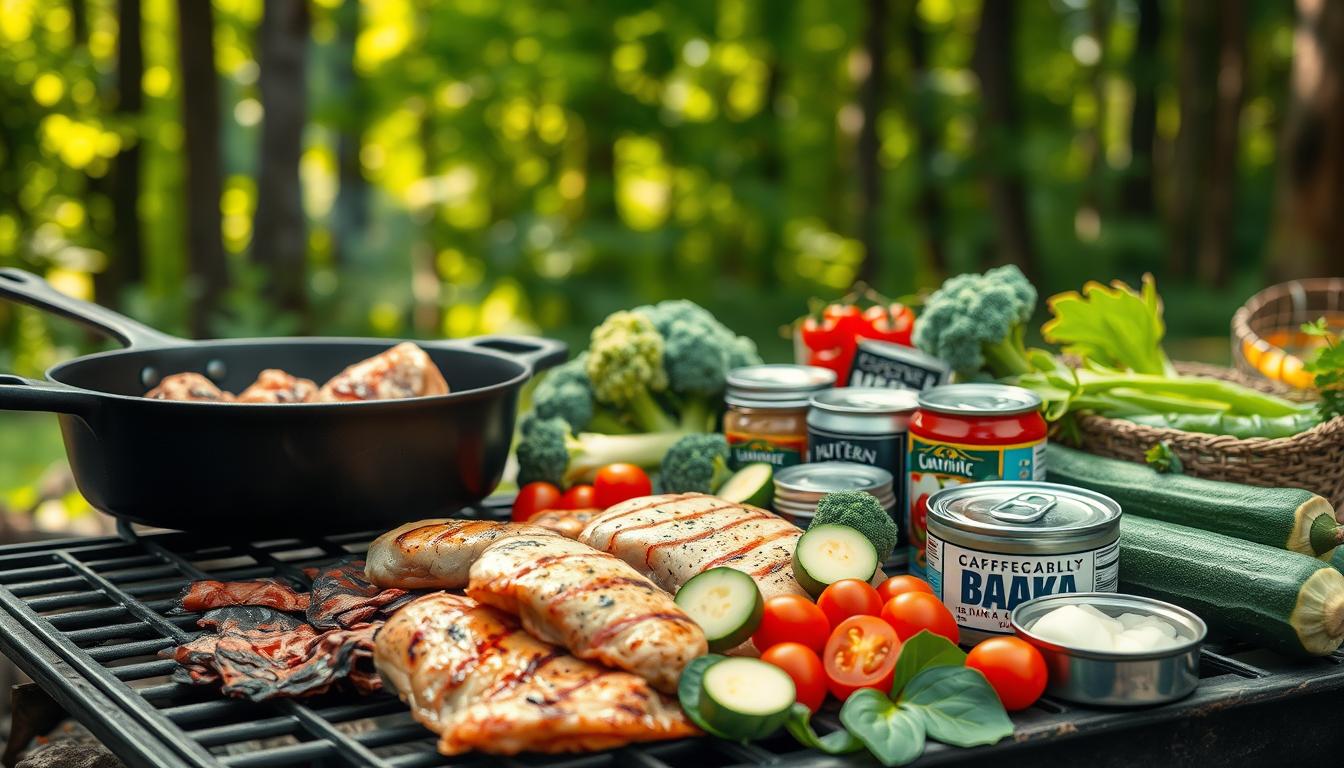
Take beef jerky (2g carbs per ounce) and vacuum-sealed salmon (0g carbs). Collagen packets mix with hot water for a protein boost. Whey isolate powders stay fresh for 72 hours in sealed containers.
Healthy Fat Options for Sustained Energy
Fat is great for energy, with 9 calories per gram. Use ghee packets instead of butter. A tablespoon of macadamia nut oil has 14g fat and just 1g carb.
Fiber-Rich Low-Carb Vegetables
Dehydrated kale chips (4g net carbs per cup) and freeze-dried broccoli rehydrate quickly. Jicama sticks stay crisp for 3 days in beeswax wraps.
“Backpackers on high-fat, low-carb diets had 23% better endurance in Appalachian Trail tests than those on high-carb diets.”
Shelf-Stable Low-Carb Staples
Focus on these non-perishable items for your food kit:
| Food | Carbs (per oz) | Fat (g) | Storage Life |
|---|---|---|---|
| Almonds | 2.9 | 14 | 9 months |
| Pecans | 1.2 | 20 | 6 months |
| Chia Seeds | 1.7 | 9 | 2 years |
Dehydrated Vegetable Options
Mountain House’s zucchini slices (3g net carbs) rehydrate in 8 minutes. Store them in separate silicone bags to avoid flavor mixing.
Portable Protein Powders
Opt for unflavored bone broth protein (0g carbs) over sweetened ones. Use reusable straws for 25g protein servings, making campfire cooking easy.
2. Mastering Low-Carb Campfire Cooking Techniques
To make great meals in the wilderness, you need more than just good ingredients. You also need to know how to cook them well. Whether you’re cooking steak or soups, these tips will help keep your dishes tasty without using carbs.
Fire Management for Optimal Cooking
Your campfire is a living stove that needs constant attention. Divide your fire pit into three areas for better cooking:
- Blast furnace side: Hot flames for quick searing (great for meat crusts)
- Simmer station: Medium heat for sautéing veggies or reducing sauces
- Ember nest: Cool coals for Dutch oven baking or slow cooking
Move pans between zones to control cooking time. “The secret to perfect campfire chili? Let it simmer in embers for two hours – the smoke adds a unique flavor,” says chef Lisa Marquez.
Essential Tools for Carb-Conscious Camp Chefs
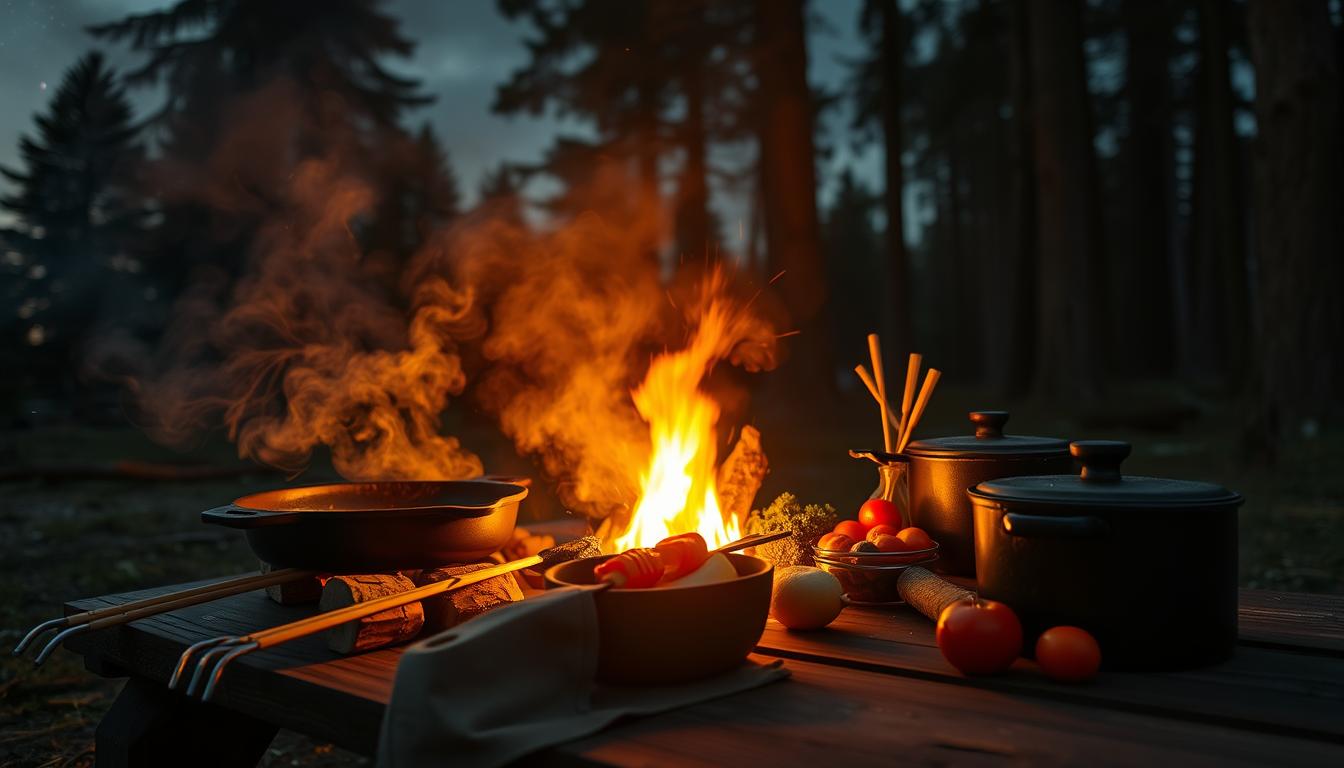
These tools make outdoor cooking easier:
- Cast iron skillets: Keep heat even for perfect crusts without sticking (tip: season with avocado oil before you go)
- Adjustable grill grates: Use rocks or metal stands to change heat levels
- Spice caddies: Use labeled Tic Tac containers for seasonings – saves space and prevents spills
Try the Mountain Man Breakfast casserole: Layer sausage, eggs, and cheese in a Dutch oven. Bake it with ember heat. It’s a protein-rich dish that shows low-carb can be delicious.
3. Breakfast Recipes to Fuel Your Day
Starting a wilderness adventure with protein-packed breakfasts is a great way to stay energized. These healthy campfire meal ideas are easy to make and taste amazing. They use techniques that have been tested in the backcountry for years.
3.1 Foil Packet Vegetable Frittata
Ingredients and Prep Instructions
This breakfast is simple and only needs 5 ingredients:
- 6 large eggs
- 1 cup diced zucchini
- ½ cup crumbled feta
- ¼ cup sun-dried tomatoes
- 1 tbsp olive oil
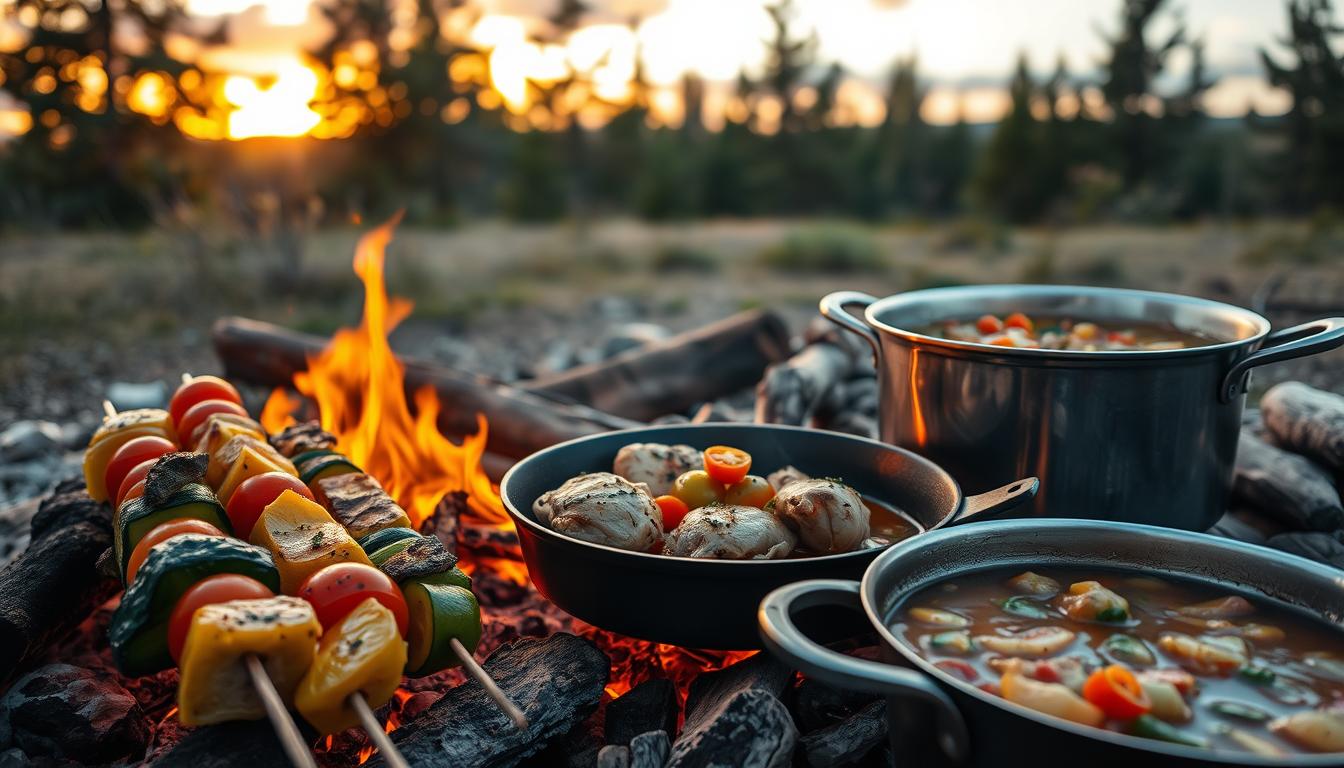
Whisk eggs in a resealable bag. Then, pour them into heavy-duty foil. Add vegetables and cheese, and seal it up. Make sure to double-wrap to avoid leaks.
Cooking Time Variations
Cook over medium coals for:
- 8-10 minutes (sea level)
- 12-14 minutes (high altitude – add 2-3 minutes per 1,000 ft elevation)
Flip it halfway for even cooking. It’s done when the edges are golden and the center is firm.
3.2 Keto Campfire Skillet Hash
Radish Substitute for Potatoes
Diced radishes work like potatoes when sautéed. Here are some tips:
- Choose large radishes for easier chopping
- Pre-soak in ice water to reduce peppery taste
- Cook until translucent (8-10 minutes)
Bacon Rendering Techniques
Get crispy bacon with this method:
- Start with cold cast iron skillet
- Arrange strips in single layer
- Cook over low flame, flipping every 4 minutes
Use the bacon fat to cook radishes. It adds 9g protein per serving and keeps carbs low. For longer trips, pre-cook bacon at home and finish it at the campsite.
Both recipes give you 20-25g protein with shelf-stable ingredients. The foil packet is easy to clean up, while the skillet makes hearty meals for morning hikes.
4. High-Protein Lunch Solutions
Afternoon hikes or kayaking need lunches that keep energy up without the crash. These high-protein, low-carb outdoor meals are perfect for keto or paleo diets. We have two recipes that are tasty and easy to make.
4.1 Grilled Chicken Lettuce Wraps
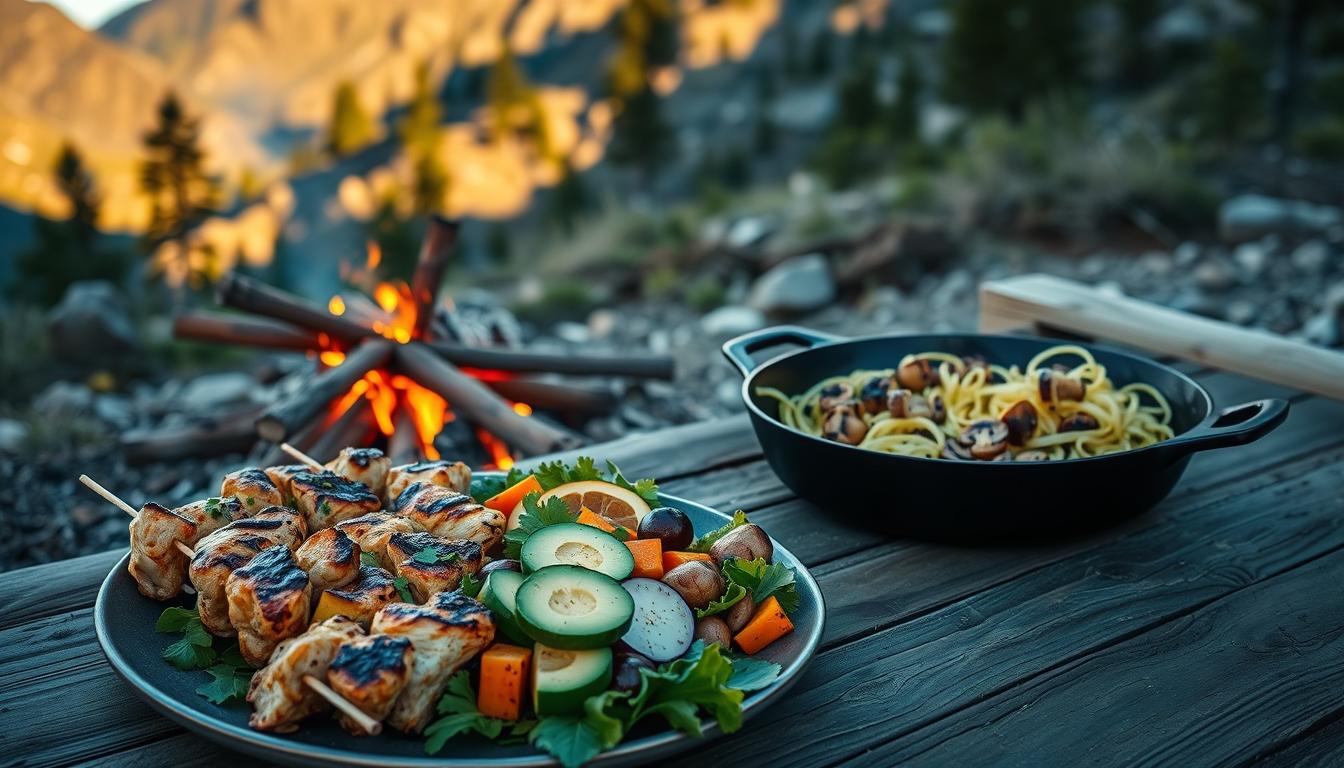
Turn simple campfire chicken into a tasty meal with these tips:
Marinating for Flavor Retention
Marinate chicken breasts in vacuum-sealed bags for 4-6 hours before you go. Use apple cider vinegar to tenderize and olive oil to keep it moist. For the best flavor:
- Slice breasts into 1-inch strips
- Massage marinade into meat fibers
- Store chilled in insulated containers
Assembly in the Field
Butter lettuce is better than tortillas for wraps. Pack veggies in silicone bags to stay crunchy. Use a DIY wrap station with:
| Component | Storage Method | Shelf Life |
|---|---|---|
| Grilled chicken | Vacuum-sealed pouch | 3 days chilled |
| Lettuce leaves | Damp paper towel in container | 2 days |
| Avocado slices | Lemon-coated in foil | 1 day |
4.2 Salmon in Foil with Asparagus
This quick campfire dish has 35g protein per serving and is easy to clean up.
Portable Lemon Preservation
Wrap lemon wedges in beeswax paper to stop juice from leaking. For long trips, use dehydrated lemon slices that you can rehydrate with stream water.
Cooking Time for Perfect Flakiness
Put salmon skin-down on foil with asparagus. Cook over medium embers for 12-15 minutes. The foil should puff up when it’s done. Check if the salmon flakes easily with a fork.
“Properly cooked campfire salmon has a smoky crust and moist flakes. It’s the essence of wilderness gourmet cooking.”
5. Satisfying Low-Carb Dinners
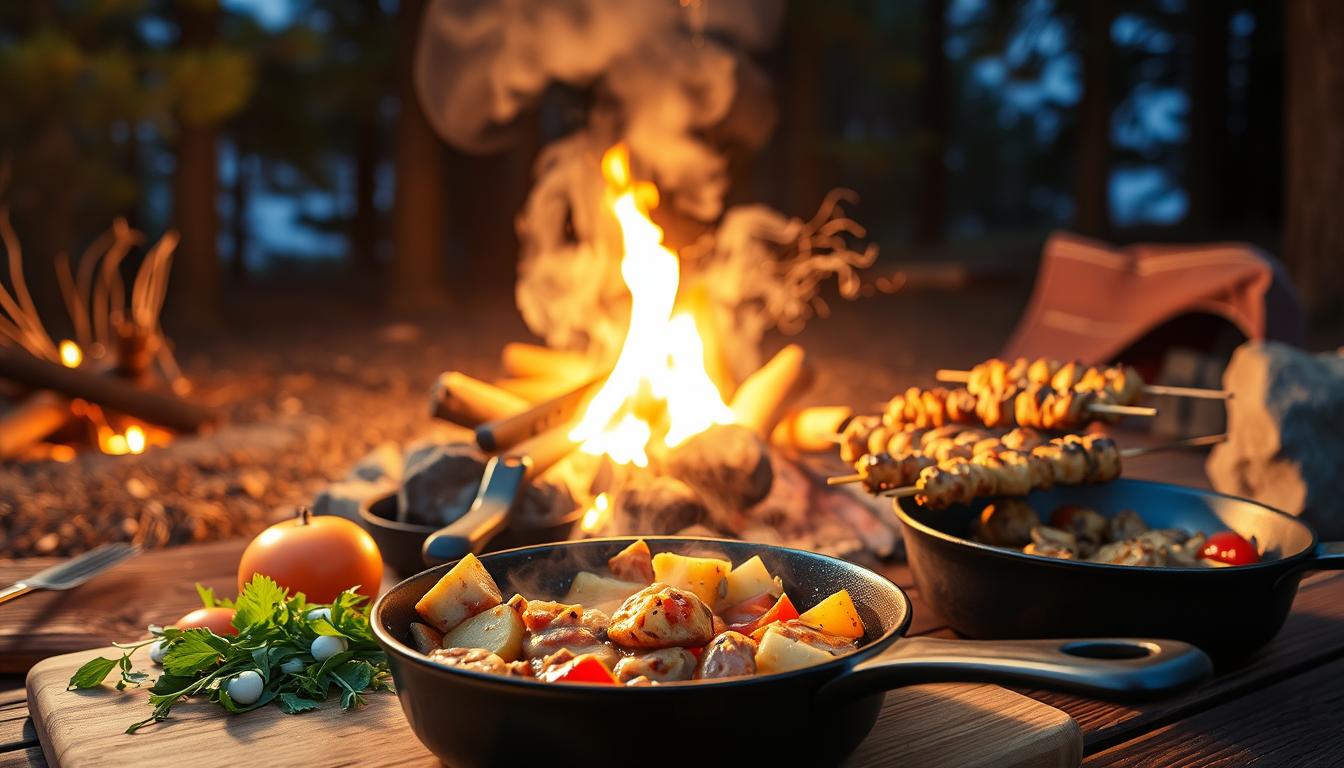
Evening meals by the campfire are unforgettable when they mix taste and health. These campfire dinner ideas show you can enjoy filling meals without carbs. Let’s look at two favorites that bring professional cooking to the outdoors.
Zucchini Noodle Stir Fry
Turn fresh zucchini into a tasty pasta substitute. Spiralizer alternatives help you make noodles easily without special tools:
- Use a vegetable peeler for flat “linguine” strips
- Slice thin ribbons with a sharp knife
- Crisscross cuts create bite-sized “zoodles”
Sauce Thickening Without Cornstarch
Xanthan gum is great for keto-friendly sauces. Add 1/4 teaspoon to hot liquids and whisk well. For other texture options:
| Thickener | Amount | Best For |
|---|---|---|
| Almond flour | 1 tbsp | Creamy sauces |
| Chia seeds | 1 tsp | Marinades |
| Avocado | 1/4 mashed | Cold dressings |
“Xanthan gum makes sauces as good as in restaurants. It’s much better than wheat thickeners.”
Campfire Chili Con Carne
This classic dish gets a low-carb update. Bean substitution options keep the texture while cutting carbs:
- Diced zucchini (45% fewer carbs than kidney beans)
- Chopped mushrooms (adds umami depth)
- Cauliflower rice (absorbs spices beautifully)
Spice Level Adjustments
Adjust the heat without losing flavor:
- Reduce chili powder by half for mild versions
- Add unsweetened cocoa powder for smoky richness
- Balance heat with lime juice before serving
These dinner ideas show how Campfire Recipe Inspiration makes backcountry meals better. Whether you’re spiralizing veggies or tweaking chili textures, these tips ensure delicious meals under the stars.
6. Keto-Friendly Campfire Snacks
When adventure calls, smart snacking keeps your energy steady without carb crashes. These portable low-carb options combine crunch and flavor while surviving rugged conditions – no refrigeration required.
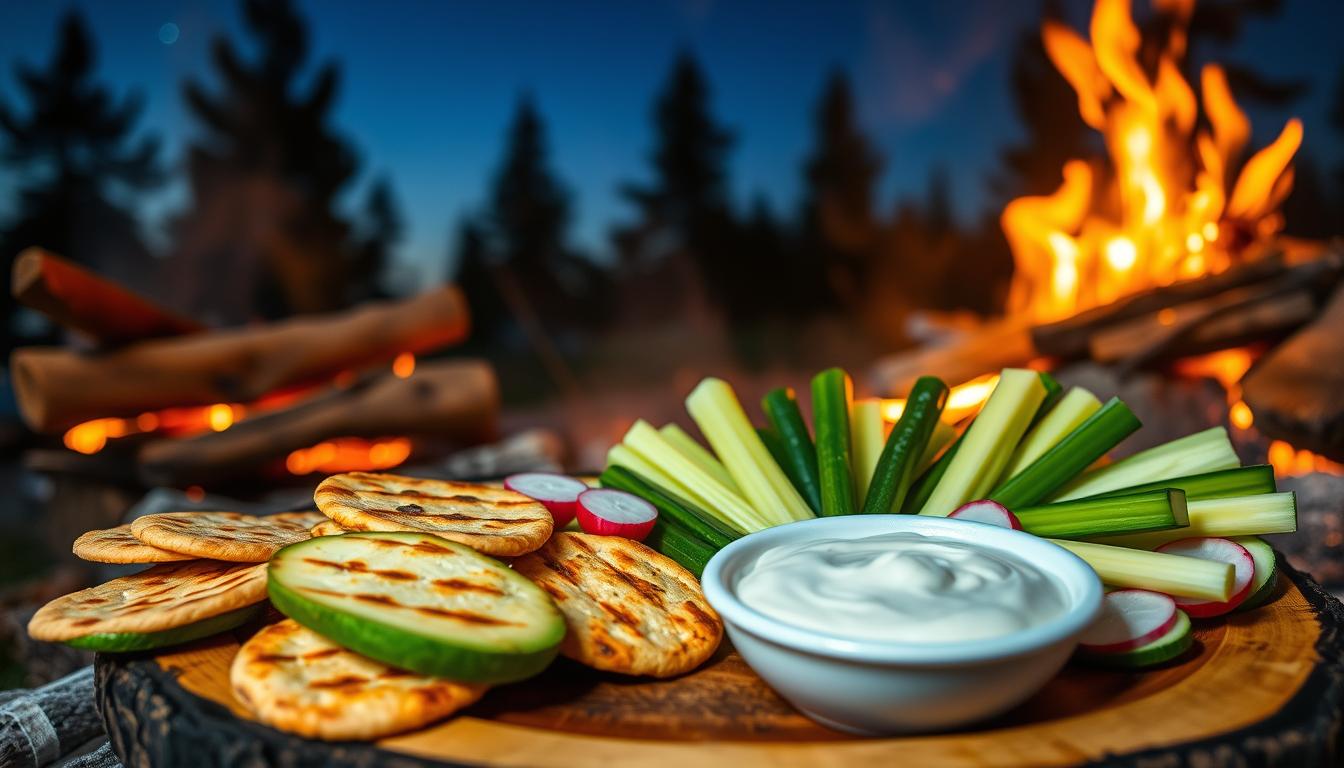
Parmesan Crisps Preparation
Transform shredded cheese into crispy delights with minimal effort. Spread freshly grated parmesan in 3-inch circles on parchment paper, leaving space between each mound. Cook over indirect heat until golden – about 90 seconds per side.
Mold Prevention Techniques
Keep crisps cracker-dry using silica gel packets in airtight containers. Avoid plastic bags – trapped moisture turns snacks rubbery. Store in cool, shaded areas away from morning dew.
Flavor Variations
- Smoked paprika & garlic powder for savory kick
- Everything bagel seasoning for texture
- Rosemary-infused olive oil drizzle
Spiced Nut Mix Formulas
Macadamia and pecans shine in these protein-packed mixes. Source 1’s storage research proves vacuum-sealed jars prevent rancidity – key for keeping healthy fats fresh during long trips.
Sweet vs Savory Combinations
| Sweet Mix | Savory Mix |
|---|---|
| Cinnamon + Erythritol | Smoked sea salt + Chipotle |
| Cocoa nibs + Vanilla | Nutritional yeast + Garlic |
Storage Solutions
Use individual portion bags to control serving sizes. Double-bag mixes in odor-proof containers to avoid attracting wildlife. For humid climates, add oxygen absorbers to maintain crunch.
7. Low-Carb Baking Alternatives
Imagine pulling golden-brown bread from a Dutch oven as your campfire crackles nearby. Low-carb baking in the wilderness isn’t just possible—it’s delicious. You can make crusty bread or fluffy pancakes with clever ingredient swaps.
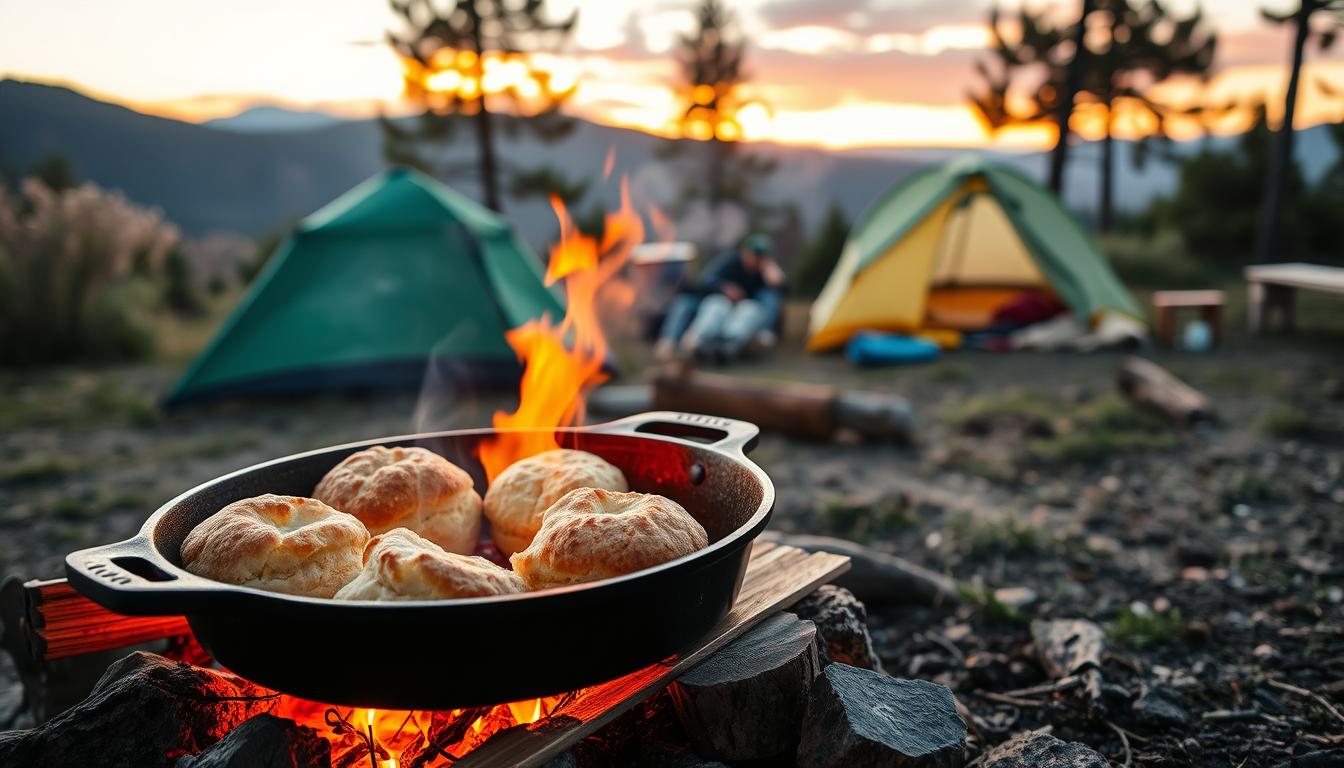
7.1 Dutch Oven Almond Flour Bread
Almond flour’s nutty richness makes it perfect for rustic campfire bread. It skips gluten but offers a satisfying crunch. For the best taste, use high-quality fats like grass-fed butter or olive oil.
Rising Agent Alternatives
Yeast isn’t practical for wilderness baking. Instead, use these leavening agents:
- Baking powder: 1 tsp per cup of almond flour
- Egg whites: Whip to stiff peaks for airy texture
- Apple cider vinegar: Reacts with baking soda for lift
| Rising Agent | Quantity per 2 Cups Flour | Best For |
|---|---|---|
| Baking Powder | 2 tsp | Quick breads |
| Eggs | 4 large | Dense loaves |
| Yogurt + Baking Soda | 1/2 cup + 1 tsp | Tangy flavor |
Crust Formation Tips
Create that perfect golden crust by:
- Preheating the Dutch oven lid in coals
- Brushing dough with egg wash
- Using parchment paper to prevent sticking
“Almond flour bread holds up better in a backpack than regular bread—no smushing!”
7.2 Coconut Flour Pancakes
These feather-light pancakes prove keto campfire recipes can rival traditional breakfasts. Coconut flour absorbs more liquid than grain flours, requiring precise adjustments for the perfect batter.
Egg Ratio Adjustments
Use 6 eggs per 1/2 cup coconut flour to prevent dryness. For fluffier results:
- Separate eggs and fold in whipped whites
- Add 1/4 cup unsweetened almond milk
Syrup Substitutes
Ditch sugar with these alternatives:
| Syrup Type | Sweetness Level | Carbs per Tbsp |
|---|---|---|
| Monk Fruit Syrup | 2x sweeter than sugar | 0g |
| Erythritol Blend | 1:1 sugar replacement | 2g |
| Walden Farms Zero-Cal | Mild sweetness | 0g |
At high altitudes, increase baking time by 3-5 minutes and reduce liquid slightly. Pack these mixes in airtight containers, and you’ll enjoy fresh-baked keto treats miles from civilization.
8. Hydration and Low-Carb Drinks
When you’re on a low-carb diet and exploring rough terrain, staying hydrated is key. Electrolyte imbalances and limited drink choices can quickly ruin your outdoor plans. Here are some tips to keep you fueled and on track with your diet.
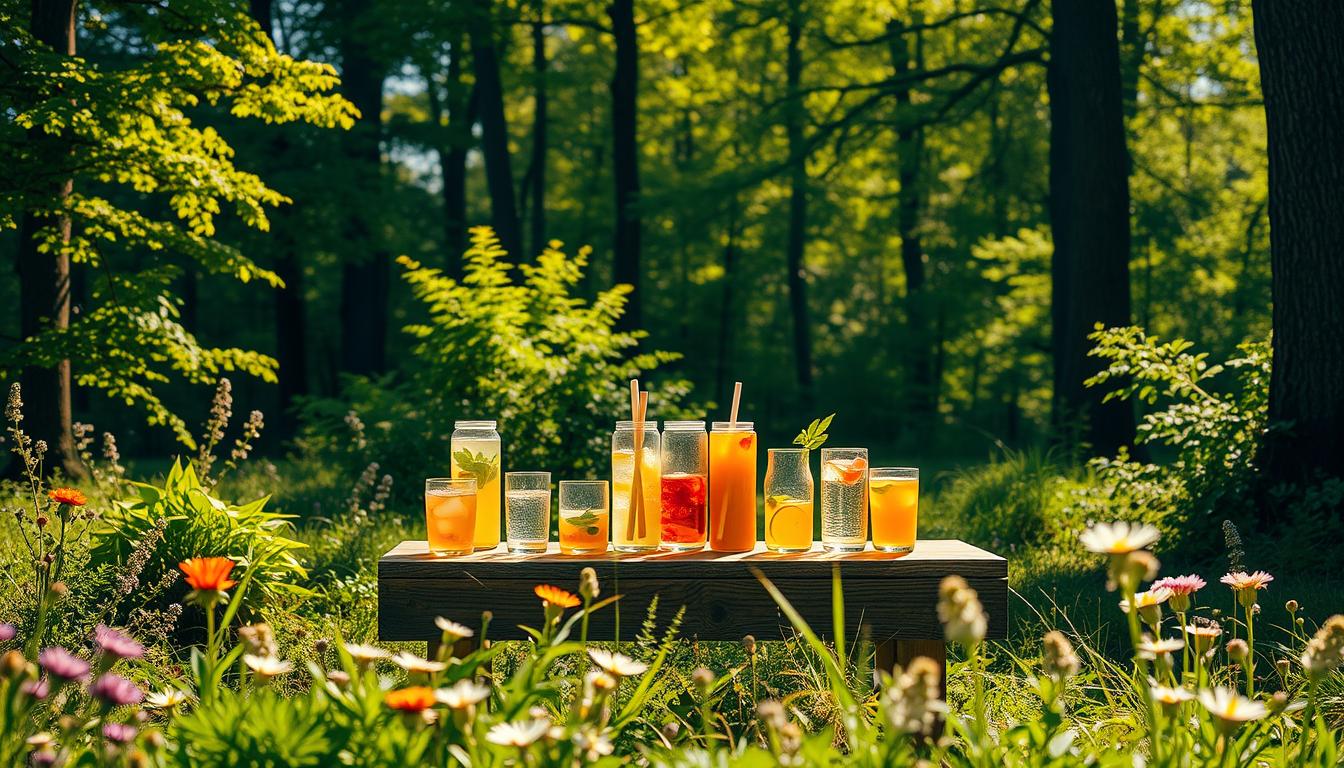
8.1 Electrolyte Infused Waters
For wilderness adventures, plain water just won’t cut it. You need to replenish sodium, potassium, and magnesium to avoid muscle cramps and fatigue. Here are some field-tested methods to help you stay hydrated:
Natural Flavoring Methods
Infuse your water with citrus peels or crushed berries for a hint of sweetness. Fresh herbs like mint or basil add a refreshing touch without adding carbs. For longer trips, pack dehydrated lemon slices in resealable bags.
Mineral Supplementation
Add a pinch of Himalayan salt to your water for sodium. Carry magnesium glycinate tablets that dissolve easily. Also, consider portable electrolyte powders with no added sugars.
| Electrolyte Source | Key Minerals | Preparation Tip |
|---|---|---|
| Citrus Peels | Potassium | Steep in sunlight for 30 minutes |
| Himalayan Salt | Sodium, Calcium | 1/4 tsp per liter of water |
| Spinach Powder | Magnesium | Mix with cold water |
8.2 Campfire Brewing Techniques
Morning coffee and evening teas take on new significance in the wilderness. These low-carb brewing methods require minimal gear while delivering maximum flavor.
Cold Brew Coffee Methods
Prep coarse-ground beans in a mason jar before your trip. Submerge in cool stream water for 12 hours using a mesh filter. Add MCT oil powder for sustained energy during demanding climbs.
Herbal Tea Combinations
Create custom blends using caffeine-free ingredients:
- Chamomile + cinnamon stick (anti-inflammatory)
- Ginger root + turmeric (digestive support)
- Hibiscus + orange zest (vitamin C boost)
Sweeten with liquid stevia stored in travel-sized dropper bottles. Always strain teas through a clean bandana when brewing over open flames.
9. Food Safety in Wilderness Settings
Food safety in the wild is not optional. It’s the base of every healthy campfire meal idea. Proper handling and storage keep your meals safe and nutritious, even far from home. Let’s look at key ways to keep your food safe from spoilage and contamination.
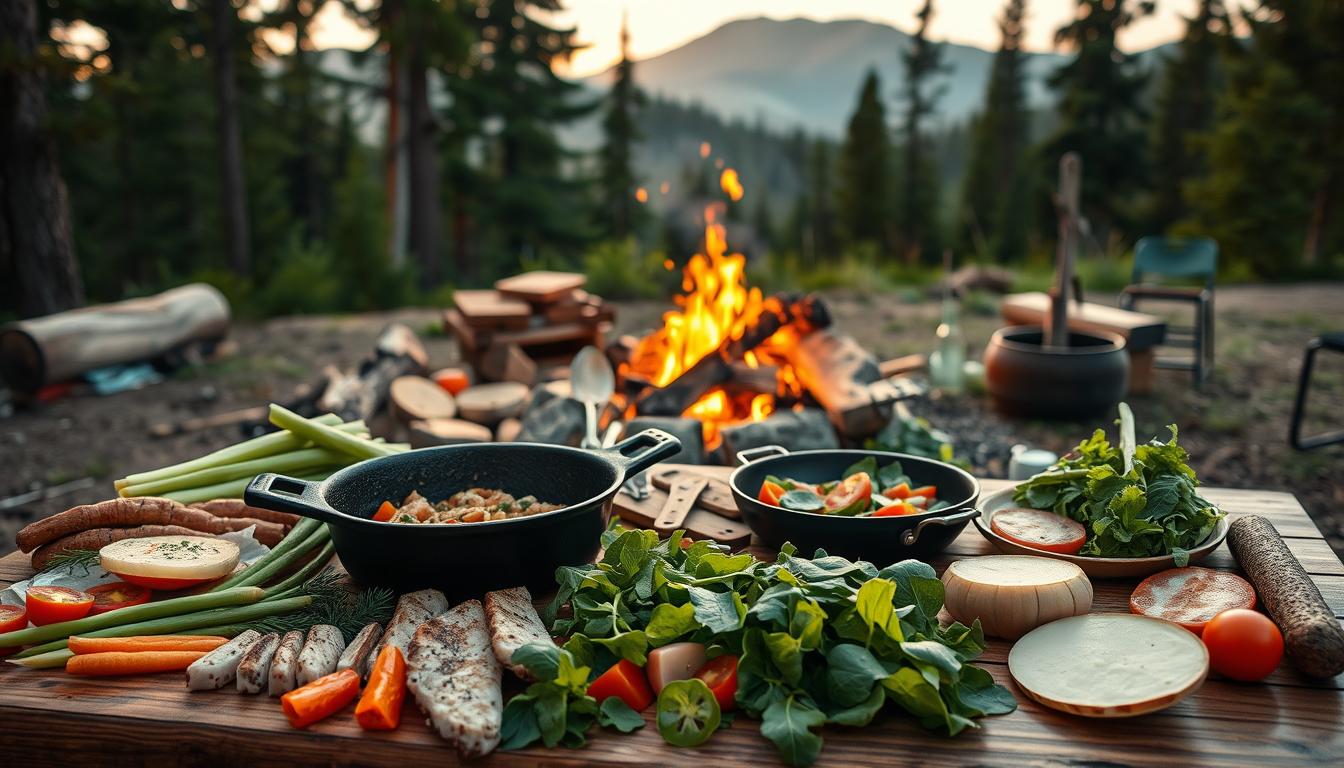
9.1 Temperature Control Strategies
Keeping food at safe temperatures stops bacteria growth in the wild. The USDA says to keep cold foods under 40°F and hot foods over 140°F. This is hard but very important when camping.
Cooler Organization Hacks
- Pre-chill your cooler with ice 24 hours before packing
- Layer foods strategically: raw meats at the bottom, ready-to-eat items on top
- Use frozen water bottles as dual-purpose ice packs and drinking water reserves
Ice Replacement Schedules
- Check ice levels twice daily in temperatures above 50°F
- Drain melted water to prevent food from soaking and spoiling faster
- Pack block ice instead of cubes for longer-lasting cooling
9.2 Cross-Contamination Prevention
Wilderness cooking needs extra care. A single contaminated utensil can ruin your whole low-carb meal plan.
Cutting Board Management
- Assign color-coded boards: red for meats, green for vegetables
- Scrub boards with biodegradable soap and coarse sand after each use
- Store boards in separate waterproof bags when not in use
Utensil Cleaning Protocols
- Boil metal tools for 3 minutes in campfire-heated water
- Use disposable wipes for quick cleanups between tasks
- Designate specific tongs and spatulas for raw vs cooked foods
Remember: These steps keep you and local wildlife safe. Proper food storage keeps bears away and makes your campfire meal ideas safe and tasty. Always carry a food thermometer and pH test strips for safety checks.
10. Meal Planning for Multi-Day Trips
Planning meals for long camping trips is all about balance. You need to keep your energy up and your pack light. We’ll explore how to make your food choices both nutritious and tasty.
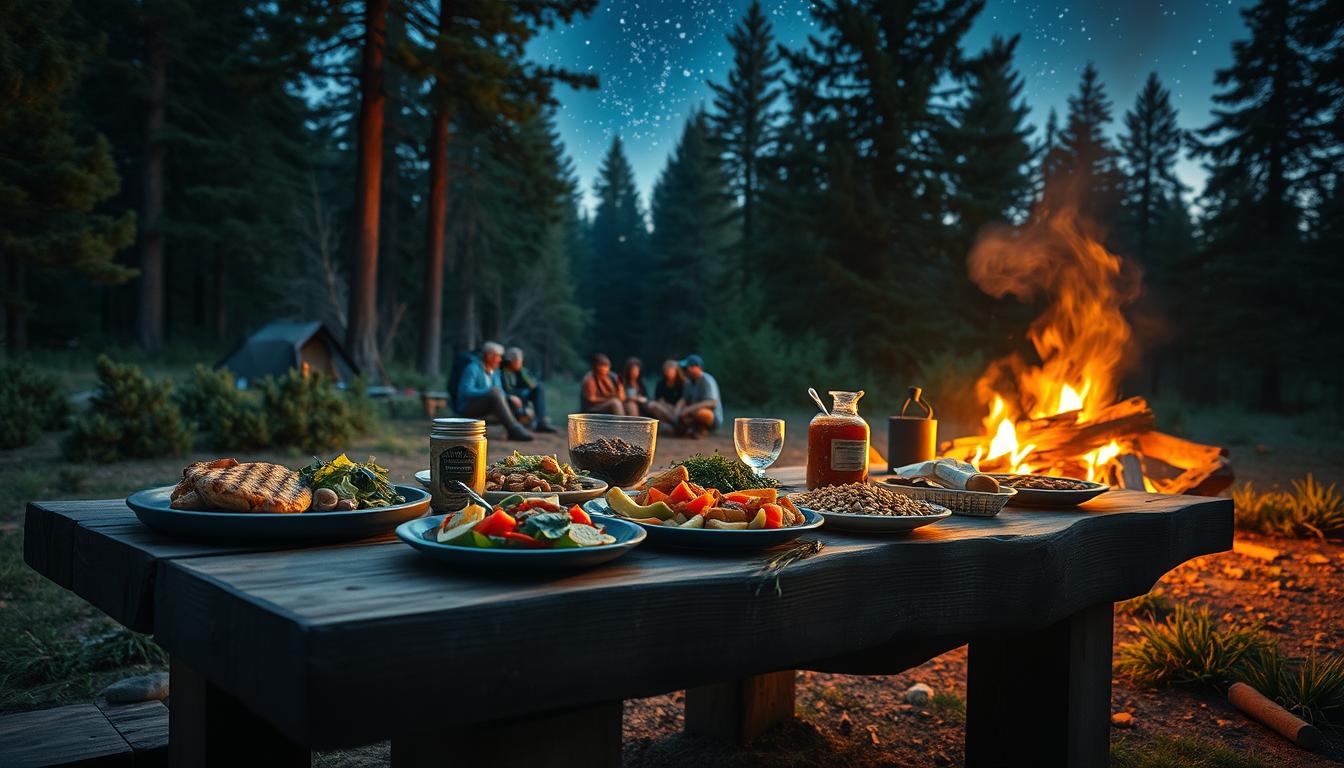
10.1 Calorie Density Calculations
Weight-to-energy ratios are key. Choose foods with at least 120 calories per ounce. Think almond butter, dehydrated meats, and coconut oil. Even though you might eat 3,000 calories a day, remember you burn a lot too.
Activity Level Adjustments
Change your meal plan based on how hard you’ll be hiking and for how long. Here’s a simple formula:
- Base calories = Body weight (lbs) × 12
- Add 300-500 calories/day for moderate hiking
- Add 700-1,000 calories/day for mountain climbing
| Food Item | Calories/Ounce | Carbs (g) |
|---|---|---|
| Pecans | 196 | 4 |
| Beef Jerky | 116 | 3 |
| Dehydrated Eggs | 136 | 2 |
10.2 Resupply Strategies
Switch up your meals every 3 days to avoid getting tired of the same flavors. Use pre-portioned ingredients like:
- Collagen peptides for morning coffee
- Single-serve olive oil packets
- Vacuum-sealed spice blends
Foraging Considerations
Adding wild edibles to your meals can be great, but do it right. Here are some rules:
- Only harvest 10% of any plant cluster
- Avoid root vegetables – they’re ecosystem anchors
- Focus on abundant species like dandelion greens
11. Adapting Traditional Camp Recipes
Why give up on classic camping snacks when you can make them low-carb? Smart swaps and new methods let you enjoy old favorites without the carbs. Let’s make two camp classics keto-friendly.
11.1 Low-Carb Trail Mix Formulas
Get rid of dried fruit and chocolate chips without losing taste. Sweetener alternatives like erythritol-coated nuts or monk fruit-sweetened coconut flakes add crunch. Here’s a basic mix:
- 1 cup roasted almonds
- ½ cup unsweetened banana chips
- ¼ cup cacao nibs
- 2 tbsp pumpkin seeds
For nut-free versions, use roasted chickpeas instead of almonds and sunflower seeds for pumpkin. Riley Harper, an outdoor chef, says:
“Modern sugar alternatives let us create trail mixes that actually improve energy stability compared to traditional versions.”
Sweetener alternatives
Use powdered allulose to coat nuts – it caramelizes like sugar but doesn’t raise blood sugar. Liquid stevia is best for coconut flakes.
Nut-free variations
Try roasted edamame, sesame sticks, and wasabi peas for unique flavors. Add nutritional yeast for a cheesy taste without dairy.
11.2 Keto Jerky Marinades
Make regular jerky into a low-carb protein with these tweaks:
| Method | Drying Time | Texture |
|---|---|---|
| Commercial Dehydrator | 4-6 hours | Chewy |
| Sun Drying | 8-12 hours | Crisp |
Sugar-free curing methods
Swap brown sugar for coconut aminos and apple cider vinegar. For teriyaki, mix tamari with ginger and garlic powder.
Drying time adjustments
Cut meat ¼” thick for quicker drying. Rotate trays every 2 hours in dehydrators. In sunny places, use mesh screens to keep bugs out.
12. Cooking at High Altitude
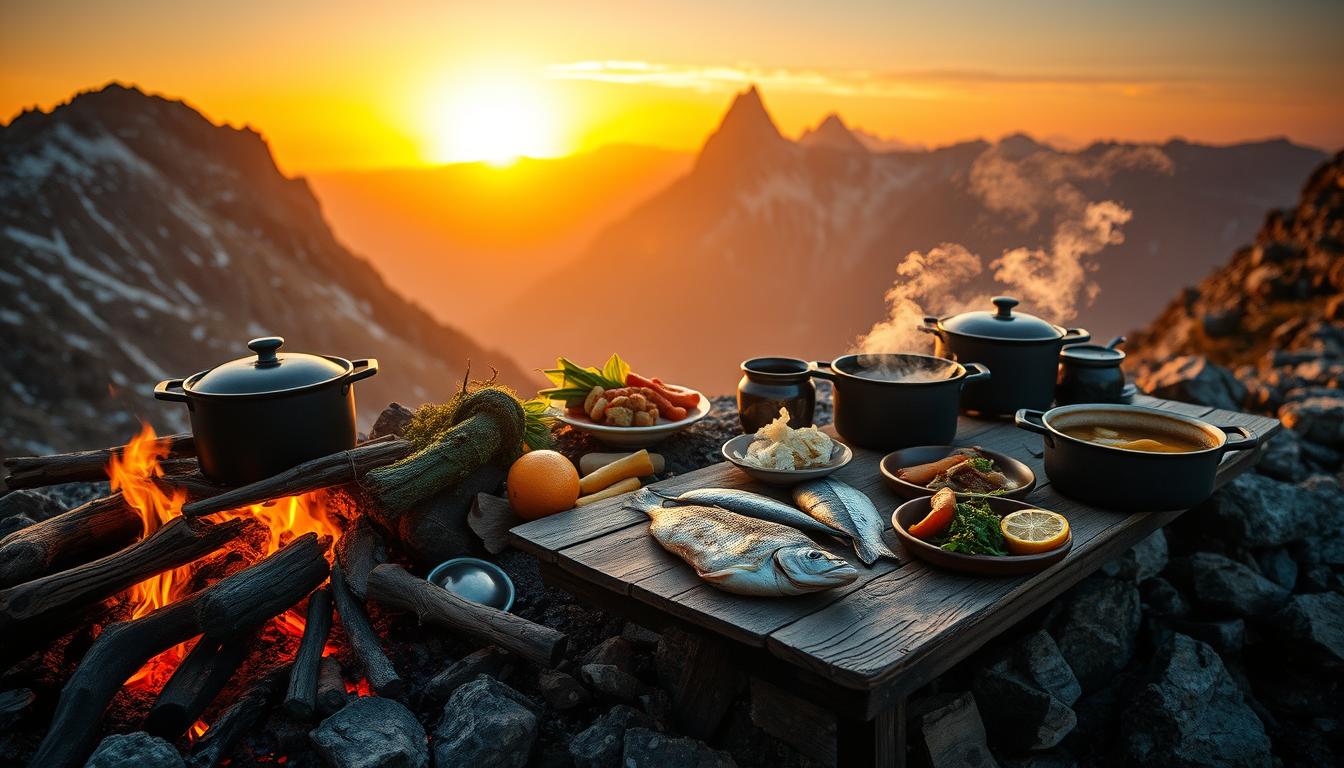
Mountain adventures require special cooking tricks you don’t need at sea level. Thin air changes how water boils and how food cooks. You’ll need to adjust your recipes for success at high altitudes.
Boiling Point Adjustments
Water boils lower at higher elevations. For every 500 feet up, it boils about 1°F lower. This slower boil changes how proteins and veggies cook. Use this chart to adjust your cooking:
| Elevation | Boiling Point | Cooking Time Multiplier |
|---|---|---|
| 5,000 ft | 203°F | 1.25x |
| 8,000 ft | 197°F | 1.5x |
| 12,000 ft | 188°F | 2x |
Cooking Time Multipliers
At 10,000 ft, tough cuts like beef brisket need double cooking time. Eggs take 3-5 minutes longer to hard-boil. Always check meat with a thermometer. Chicken should hit 165°F inside, no matter the altitude.
Water Conservation Tips
- Use tight-fitting lids to reduce evaporation
- Pre-soak beans and grains before cooking
- Repurpose vegetable steaming water for soups
Baking Modifications
High-altitude baking needs careful adjustments for low-carb recipes. On Mt. Adams, climbers found reducing leavening by 25% helped prevent bread collapse. Here’s what to do:
| Ingredient | Sea Level | 8,000 ft Adjustment |
|---|---|---|
| Baking Powder | 1 tsp | ¾ tsp |
| Eggs | 3 large | 4 large |
| Liquid | 1 cup | 1 ⅓ cups |
Leavening Agent Reductions
Reduce baking soda/powder by ⅛ tsp for every tsp used. For almond flour pancakes, use ¼ tsp cream of tartar instead of commercial leaveners.
Moisture Retention Techniques
- Add 1 tbsp Greek yogurt per cup of coconut flour
- Line Dutch ovens with cabbage leaves
- Baste meats with bone broth every 20 minutes
13. Emergency Low-Carb Rations
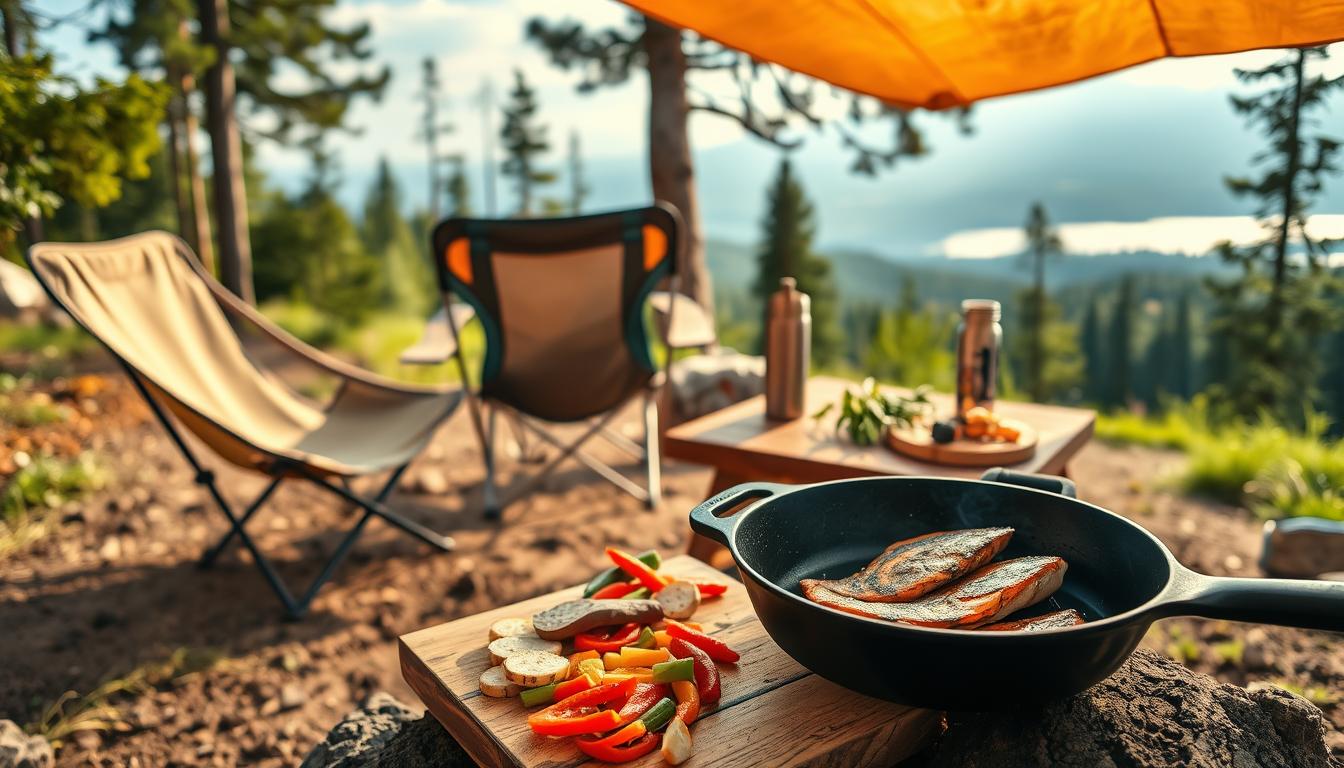
When adventure takes an unexpected turn, having nutrient-packed emergency food is as important as a compass. Modern low-carb solutions mix ancient wisdom with modern preservation. They keep you fueled when plans change.
13.1 Nutrient-Dense Survival Foods
Wilderness emergencies need calories that won’t raise blood sugar. Two options provide energy without the crash:
Pemmican Preparation
This Native American staple is made from jerky, rendered fat, and berries. Use a 2:1 meat-to-fat ratio for long shelf life. Store in wax paper for easy access on the trail.
Fat Bomb Formulations
Mix coconut oil, nut butter, and cocoa powder in silicone molds. Freeze overnight for 300+ calorie portions that last through summer. Add chia seeds for extra fiber.
| Survival Food | Calories/Oz | Shelf Life | Prep Time |
|---|---|---|---|
| Pemmican | 120 | 5+ years | 4 hours |
| Fat Bombs | 150 | 6 months | 15 minutes |
13.2 Long-Term Storage Solutions
Keep your emergency rations fresh with these methods:
Vacuum Sealing Benefits
Remove air from Mylar bags using handheld pumps. This method triples storage duration by stopping oxidation. It’s perfect for fatty foods like cheese crisps.
Oxygen Absorber Use
Put 300cc packets in containers with dehydrated meats. They stop oxygen, stopping bacterial growth while keeping texture. Replace every 6 months.
Test your emergency meals every quarter – rotate stocks before they expire. Use these strategies with your best low-carb outdoor meals plan for full wilderness readiness.
14. Cleaning Without Modern Conveniences
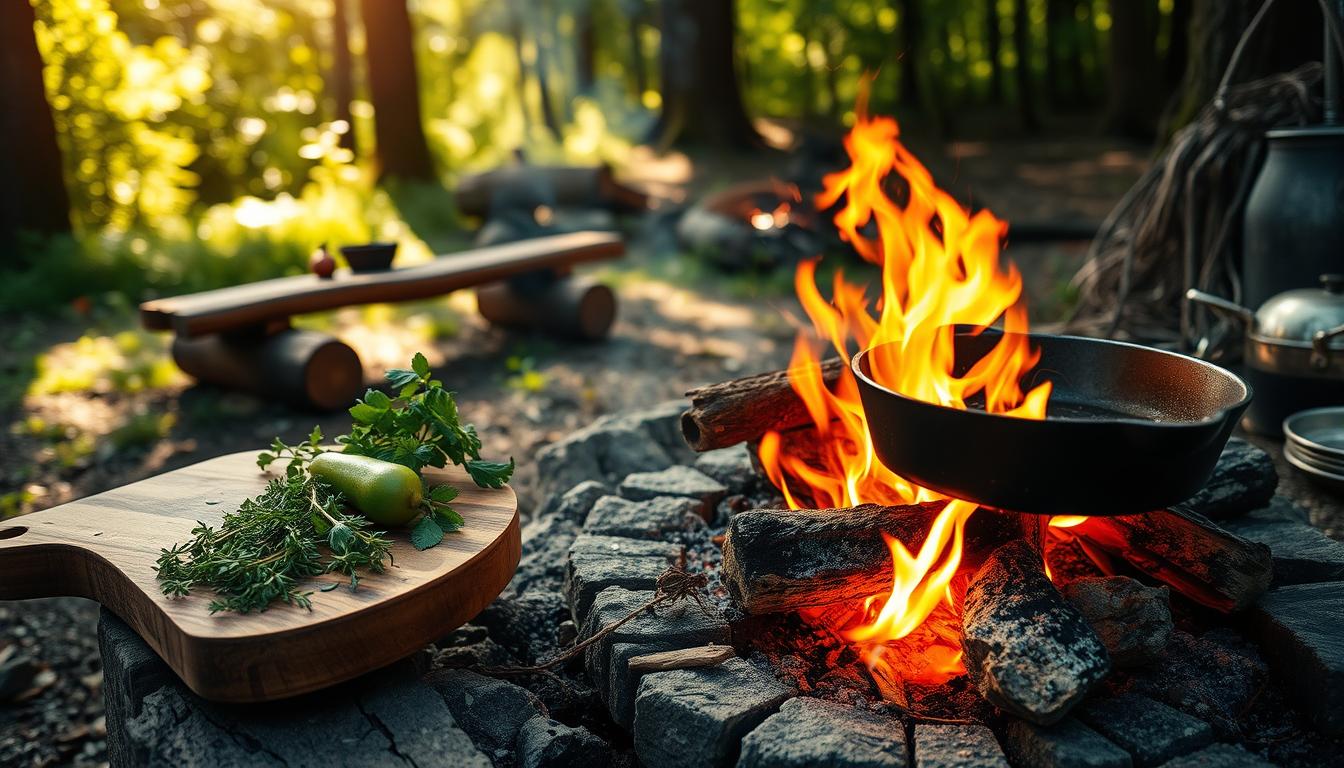
Cleaning up while camping is key to staying healthy and protecting nature. It helps avoid animal encounters and follows Leave No Trace rules. This is important for managing leftovers, like grease or protein-rich foods.
14.1 Biodegradable Soap Techniques
Water temperature is very important. Cold water makes soap less effective, while warm water (not too hot) works best. Always carry wastewater 200 feet away from water sources in a collapsible bucket.
Grease Cutting Methods
Scrape your cookware right after cooking with a silicone spatula. For tough spots, use coarse salt as a natural scrubber. Mix hot water with crushed pine needles for a green degreaser that doesn’t leave chemicals behind.
14.2 Sanitization Best Practices
Boiling is the best way to clean your tools. Soak them in boiling water for 3 minutes, then dry them upside down on a clean rock. For faster drying, lay them out to let air flow between them.
Sun Drying Benefits
UV rays from the sun kill bacteria on fabrics and cookware. Place items on dark rocks between 10 AM and 2 PM for best results. Turn them over every 30 minutes for 99% sanitization in 2 hours.
| Method | Time Required | Effectiveness |
|---|---|---|
| Boiling Water | 3 minutes | 100% pathogen elimination |
| Sun Drying | 2 hours | 99% bacterial reduction |
Take soap bottles and food waste home in odor-proof bags. This keeps your campsite clean and helps nature stay natural for future camping trips.
15. Wildlife-Proof Food Storage
Keeping your food safe from animals is key when cooking in the wilderness. Using smart storage helps avoid dangerous animal encounters and keeps your food fresh. Here are some tips to outsmart bears, rodents, and other forest animals.
15.1 Bear Bagging Alternatives
Odor containment methods are vital for protecting your food. Use vacuum-sealed bags for meats and cheeses. Also, double-wrap strong-smelling items like garlic powder. The USDA suggests using bear-resistant containers that can withstand 60 minutes of direct contact.
Tree selection criteria
- Choose live trees with horizontal branches 15+ feet high
- Position bags 10 feet from trunk and 15 feet from ground
- Avoid “bear highways” near water sources or game trails
| Storage Method | Bear Resistance | Weight Capacity |
|---|---|---|
| Hard-sided Containers | 100% | 5-7 days |
| Ursack Bags | 90% | 3-5 days |
| Traditional Hanging | 75% | 2-4 days |
15.2 Rodent Prevention Tactics
Container elevation strategies are key in areas with mice. Hang food sacks from telescoping poles or store them in elevated mesh cages. Field tests show that raising food just 4 feet can reduce mouse access by 80%.
Natural repellents
- Line storage areas with cedar chips (replace weekly)
- Create peppermint oil-soaked cotton ball barriers
- Scatter crushed red pepper around camp perimeter
| Repellent | Effectiveness | Duration |
|---|---|---|
| Cedar Chips | High | 7 days |
| Peppermint Oil | Medium | 3 days |
| Crushed Pepper | Low | 1 day |
16. Conclusion: Embracing the Low-Carb Wilderness Lifestyle
Adding keto campfire recipes to your outdoor adventures makes them even more special. These recipes fuel your body and spirit. They show that healthy meals don’t have to lose flavor or ease.
Backpackers in Backpacker Magazine’s 2023 study used low-carb meals to stay energized on long hikes. This proves that the right food can make a big difference.
Wilderness cooking becomes a chance to get creative with food. Use dehydrated veggies, quality proteins, and fats that last long. REI now has gear for low-carb campers, showing more people want these options.
When you prepare and cook well, your meals can be just as good as home. Try zucchini noodle stir-fries and almond flour bread. Keep your food safe from animals and weather changes.
Post your best keto campfire recipes on social media with #WildernessKetoChallenge. It’s inspired by Appalachian Trail hikers who share meals. Each trip makes you more confident in sticking to low-carb eating. The wilderness is your kitchen, where healthy choices make adventures better.