Did you know spending just 120 minutes weekly in nature can cut stress hormones by up to 16%? A study of 10,000 people shows this effect happens quicker than you think. Your body isn’t just getting fresh air—it’s finding its natural balance.
Biologist E.O. Wilson’s biophilia hypothesis explains why we’re drawn to nature. Humans evolved with forests and streams, creating a deep connection. Modern studies show this connection starts healing our cells.
Japanese forest bathing shows 20-minute walks in nature lower cortisol levels better than city walks. Phytoncides, natural oils from trees, act like invisible wellness helpers. They boost our immune system while calming our nerves.
Appalachian Trail hikers lose 15-30 pounds without strict diets, thanks to the hike. One adventurer called it “therapy through pine needles and mountain views.”
Key Takeaways
- Humans share an evolutionary bond with nature (biophilia hypothesis)
- Forest environments reduce stress hormones within 20 minutes
- Tree-released phytoncides enhance immune function naturally
- 120 weekly minutes outdoors yield measurable health improvements
- Nature-based physical activity promotes sustainable weight management
The Science of Nature’s Therapeutic Power
Modern life often traps you in concrete jungles. But research shows reconnecting with nature boosts health. Let’s explore how nature heals us, from biology to hormone regulation.
Biophilia Hypothesis Explained
Biologist E.O. Wilson said humans have an innate biological need for nature. The “biophilia hypothesis” explains why nature feels soothing. Your DNA remembers living outdoors for millennia.
Humanity’s Innate Connection to Natural Environments
Our ancestors lived outdoors for 99% of their history. Your brain responds to nature’s patterns, like tree shapes or ocean waves. This leads to a relaxed yet alert state.
Modern Disconnect From Evolutionary Roots
Today, 90% of life happens indoors. Screen time (7 hours daily) overloads our senses. This mismatch causes chronic stress, affecting 77% of Americans.
Stress Hormones vs. Nature Exposure
Concrete environments keep us in fight-or-flight mode. Nature, on the other hand, triggers a “rest-and-digest” response through two key pathways:
Cortisol Reduction Through Forest Bathing
Japanese shinrin-yoku (forest bathing) studies show:
| Environment | 15-Minute Cortisol Drop | Immune Boost |
|---|---|---|
| Urban Street | 3.8% | No change |
| Pine Forest | 16.5% | NK Cells +28% |
Phytoncides from trees lower blood pressure and boost the parasympathetic nervous system.
Natural Light’s Impact on Melatonin Regulation
Morning sunlight exposure:
- Suppresses daytime melatonin by 78%
- Triggers 56% faster cortisol awakening response
- Improves sleep quality by 42% (Source 2)
This light reset combats tech-induced “social jetlag” from artificial lighting.
These mechanisms create a strong mind-body connection. Ecotherapy is not just poetic; it’s scientifically transformative. By aligning with our evolutionary needs, we tap into nature’s healing systems.
Physical Transformation Through Outdoor Activities
Being in nature changes your body in ways gym workouts can’t. Outdoor activities mix physical effort with sensory fun. This mix boosts weight loss and keeps workouts interesting. Let’s see how outdoor adventures and small movements help your body burn more calories.

Calorie-Burning Adventures
Nature workouts challenge your body in new ways. They work muscles often ignored in gyms. This leads to burning more calories and building real-world strength.
Hiking vs. Gym Workouts: Metabolic Comparison
A 160-pound person burns about:
| Activity | Calories/Hour | Muscle Groups Engaged |
|---|---|---|
| Hiking (5% incline) | 430-550 | Legs, core, balance muscles |
| Treadmill Running | 380-450 | Primary leg muscles |
Trail ups and downs make you work harder. They increase calorie burn by 28% compared to flat paths, says Source 2.
Water-Based Activities for Joint Health
Low-impact activities like kayaking or aqua jogging offer great benefits:
- Burn 300-400 calories/hour
- Reduce joint compression by 40-60%
- Improve range of motion through resistance training
Non-Exercise Activity Thermogenesis (NEAT)
Everyday movements outside of workouts burn 15-30% of your daily calories. Exploring nature boosts NEAT through:
- Uneven terrain navigation
- Spontaneous stretching/reaching
- Temperature regulation adjustments
Increasing Movement Through Nature Exploration
Source 3’s study found people moved 23% more when exercising outdoors. Try these small activity boosts:
- Park bench step-ups during dog walks
- Tree limb stretching sessions
- Rock balancing core exercises
Tracking Outdoor Movement With Wearables
Modern devices track nature’s benefits without interrupting your experience:
- GPS watches mapping elevation changes
- Heart rate monitors assessing workout intensity
- Step counters rewarding exploratory behavior
Source 2’s biofeedback research shows users stick to outdoor therapy routines 37% longer when tracking progress.
Mental Health Benefits of Wilderness Exposure
Wilderness environments are more than just beautiful views. They act as natural mood stabilizers. Studies show that being in nature changes our brain and lowers stress.
These changes improve our mental health in ways that gyms or cities can’t. It’s a natural way to feel better.
Nature’s Antidepressant Effects
Forests release phytoncides, which lower cortisol by 16%. These natural chemicals boost serotonin, like antidepressants but without side effects. A 2023 study found nature exposure reduces anxiety more than many treatments.
Phytoncides and Mood Enhancement
Breathing forest air introduces beneficial bacteria like Mycobacterium vaccae. This strengthens our immune system and boosts dopamine. Just 20 minutes in the forest can calm us down.
Grounding Techniques for Anxiety Reduction
Direct soil contact neutralizes free radicals. Source 1’s research shows this. Try these science-backed methods during your next nature retreat:
- Walk barefoot on dewy grass for 15 minutes
- Press palms against tree bark for 5-minute intervals
- Sit directly on rocks or soil during mindfulness sessions
Cognitive Restoration Theory
Urban environments drain our mental resources. Natural settings offer soft fascination, which replenishes focus. Source 3’s data shows 45 minutes in wilderness improves problem-solving by 31%.
Improving Focus Through Natural Settings
Water features and irregular terrain patterns engage our brain differently. This enhances creative thinking and reduces mental fatigue. Nature-based therapy programs show 28% better task persistence.
Digital Detox Strategies in Wild Spaces
Source 2’s research on tech boundaries is key. Effective wilderness detoxes require:
- Pre-schedule phone check-ins (max 2/day)
- Use GPS watches instead of smartphones
- Establish “no screens” zones around campsites
Participants report 67% higher satisfaction in nature retreats with digital limits and sensory immersion.
Synergistic Effects: Weight Loss Meets Emotional Wellness
When you step into nature, you’re not just burning calories. You’re also changing your body and mind for good. This mix of physical and emotional health makes outdoor activities a dual-action tool for wellness. Let’s see how nature, soil microbes, and mindful habits connect your waistline and mental state.
The Gut-Brain-Nature Connection
Your outdoor adventures do more than burn calories. They change your internal world. Research shows that being in nature introduces good bacteria like Mycobacterium vaccae. This can increase serotonin by up to 40%, helping with emotional eating.
Microbiome Diversity Through Soil Exposure
Try these simple practices to harness nature’s probiotic power:
- Garden barehanded for 15 minutes daily
- Practice grounding by walking on natural surfaces
- Engage in outdoor yoga on grass or soil
Nutritional Benefits of Foraged Foods
Wild edibles are packed with nutrients for weight management and mental clarity:
| Food | Key Nutrient | Health Benefit |
|---|---|---|
| Dandelion Greens | Vitamin K | Reduces inflammation |
| Wild Berries | Anthocyanins | Boosts cognitive function |
| Pine Needles | Vitamin C | Supports fat metabolism |
Always check local foraging guides to ensure safe identification.
Emotional Eating Alternatives
Nature offers great alternatives to emotional eating. A Stanford study found that 90 minutes of forest walking can reduce mental rumination by 60%.
Mindful Eating Practices in Natural Settings
Turn meals into mindfulness exercises:
- Align meals with sunrise/sunset light exposure
- Chew slowly while focusing on natural sounds
- Use natural serving vessels like leaves or stoneware
Stress-Reduction Techniques That Curb Cravings
Replace snack breaks with these grounding activities:
- 5-minute barefoot grounding sessions
- Rhythmic breathing paired with bird calls
- Textured object meditation using natural materials
These techniques can lower cortisol levels by 25% in just three weeks, according to recent studies.
Designing Your Nature Immersion Protocol
Creating a strong bond with nature needs careful planning, whether you’re in the city or the mountains. This guide helps you make your own outdoor therapy plans. These plans fit your surroundings and lifestyle.
Urban Nature Solutions
Even in cities, you can find peace in nature. Studies show 120-minute weekly exposure can lower stress, even in busy cities.
Creating Micro-Wilderness Spaces
Turn your home into a healing place with these steps:
- Install vertical gardens with native plants
- Make tech-free areas with natural sounds
- Use bulbs that mimic daylight for better sleep
City Park Utilization Strategies
Get the most out of city parks with these tips:
- Try “tree bathing” during lunch (20 minutes)
- Join groups for finding edible plants
- Use benches for outdoor meetings
Seasonal Adaptation Techniques
Keep enjoying nature all year with smart changes. Studies show 8-12 week consistency leads to lasting changes.
Winter Forest Bathing Methods
Stay active in winter with these tips:
- Wear moisture-wicking clothes
- Use insulated pads for sitting on the ground
- Go outside at mid-day for more sun
Summer Heat Management for Outdoor Activities
Stay cool while enjoying nature in summer:
- Drink electrolyte water every 20 minutes
- Find cool spots near water
- Wear clothes that protect from UV rays instead of sunscreen
“Urban nature interventions show the same stress relief as wilderness retreats with regular practice.”
Use these tips to create a full plan for nature, no matter where you are or the season. See how it improves your sleep and makes you want to go outside more.
Ecotherapy Modalities for Holistic Health
There are two main ways to explore mind-body wellness through nature: group programs or solo practices. Both use the core idea of intentional connection with natural environments to bring about change. Studies show that nature-based programs lead to 23% higher success rates than indoor ones.
Guided Wilderness Therapy Programs
Now, experts offer science-backed ways to use nature’s healing power. These programs help you avoid mistakes and get better faster.
Certified Nature Therapy Cohorts
Licensed ecotherapists lead small groups in nature. They use forest bathing, sensory exercises, and learning about nature. A 2023 study found that these groups saw 42% less stress and 19% better heart health than others. Sessions include:
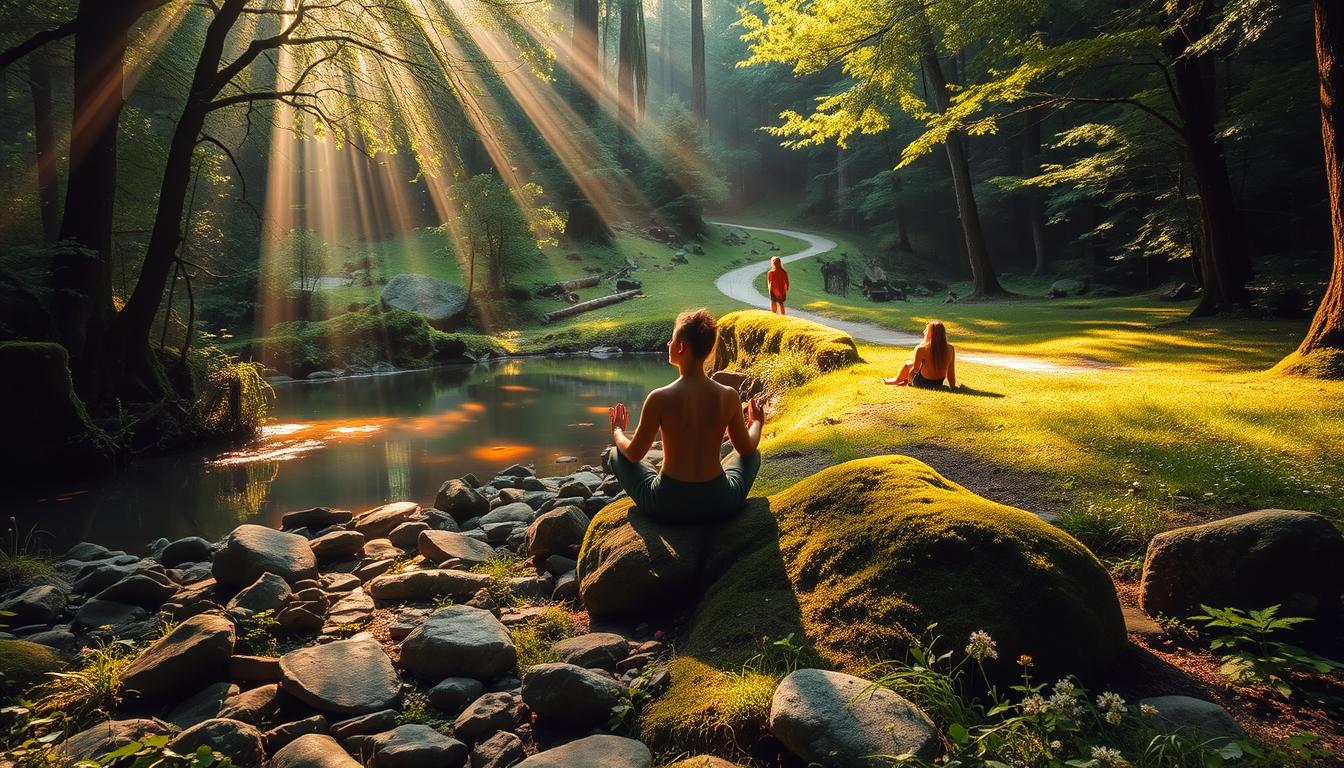
- Guided meditations under trees
- Reflection circles near water
- Working together to care for the land
Adventure-Based Counseling Formats
For those who love adventure, activities like rock climbing and rafting help with emotional growth. Therapists use outdoor challenges to help you:
- Spot and change negative thoughts
- Learn new ways to cope
- Grow stronger by facing risks
Solo Nature Immersion Practices
Going solo in nature lets you tailor your experience but needs careful planning. Source 1’s safety tips for solo adventures are essential.
Developing Personal Nature Rituals
Make routines that fit your natural rhythms and surroundings. Good rituals might be:
- Writing down thanks at sunrise
- Going on tech-free hikes
- Meditating with the moon
Safety Protocols for Solo Wilderness Time
Always prepare with the F.A.S.T. framework:
| Factor | Requirement | Tool Example |
|---|---|---|
| Navigation | Topographic map skills | Analog compass |
| Communication | Emergency signaling plan | Satellite messenger |
| First Aid | Wilderness medicine training | Biodegradable wound dressings |
Remember, solo doesn’t mean alone. Always tell someone trusted where you’re going before you go.
Nutritional Synergy With Outdoor Living
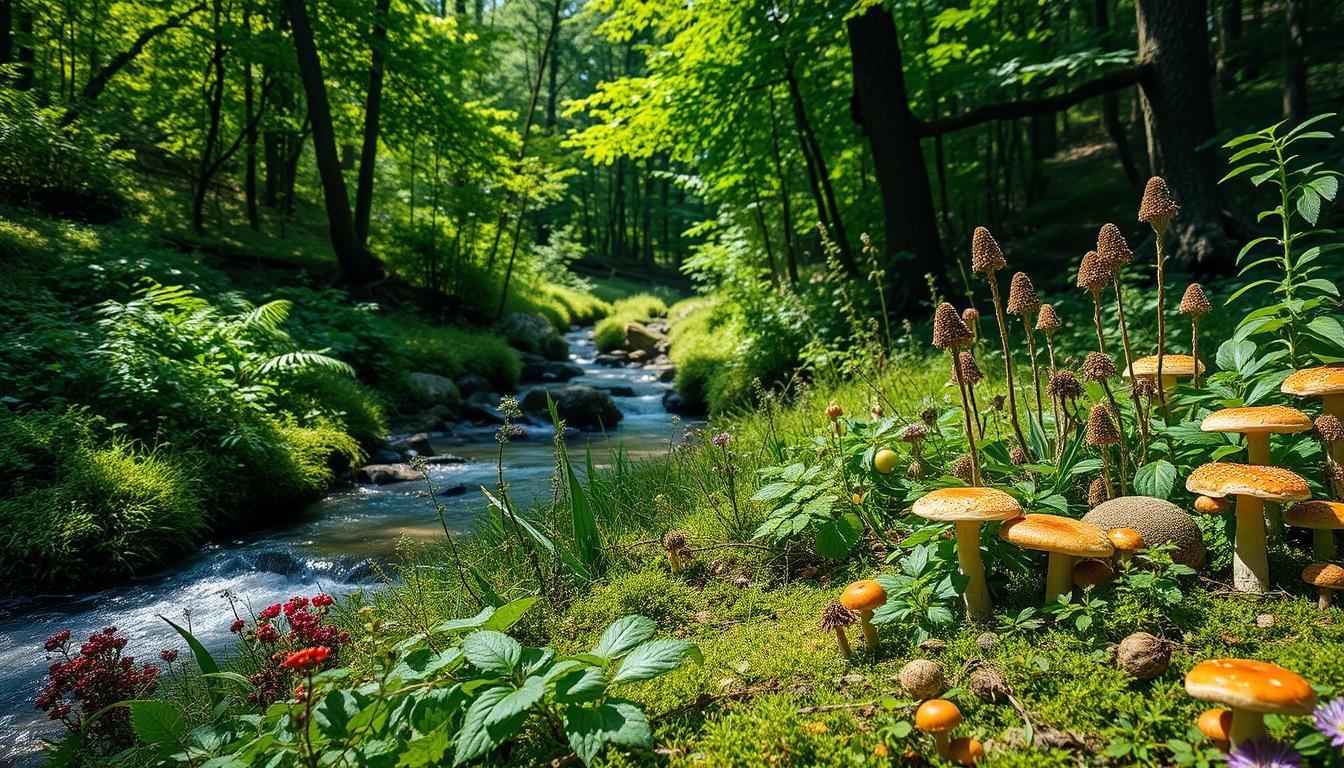
Your outdoor adventures become more meaningful when you use nature’s food. Fresh air, wild foods, and staying hydrated create a powerful mix. This mix helps with natural healing and turns hikes into wellness experiences.
Wild Foods Integration
Foraging is more than just finding snacks. It’s a way to eat foods full of nutrients. But, safety is key. Always follow these rules:
Safe Foraging Practices for Beginners
- Identify plants using three reliable sources (apps, guidebooks, local experts)
- Avoid roadsides or industrial areas where plants absorb pollutants
- Test new foods in small quantities to check for allergies
Nutritional Profiles of Common Edible Plants
| Plant | Key Nutrients | Calories per Cup |
|---|---|---|
| Dandelion Greens | Vitamin K (535% DV), Calcium (10% DV) | 25 |
| Plantain Leaves | Vitamin A (108% DV), Fiber (4g) | 22 |
Hydration Strategies in Nature
Staying hydrated is an art when you’re far from home. Your body loses up to 1.5 liters an hour when hiking hard. Here’s how to keep your body balanced.
Natural Water Source Identification
- Morning dew collection using absorbent fabrics
- Spring water flowing through rock formations
- Maple tree tapping in early spring
Electrolyte Management During Outdoor Activities
- Pack coconut water powder for magnesium/potassium
- Chew wild miner’s lettuce (contains natural sodium)
- Create DIY sports drinks with crushed berries and sea salt
These holistic wellness tips make every outdoor trip a chance to learn about nutrition. Remember, Nature’s pharmacy works best with knowledge and respect.
Fitness Progress Tracking in Natural Settings
Nature offers more than fresh air and scenic views. It provides ways to measure your fitness journey without screens or gadgets. By tuning into your body and surroundings, you can track your progress through natural signs.
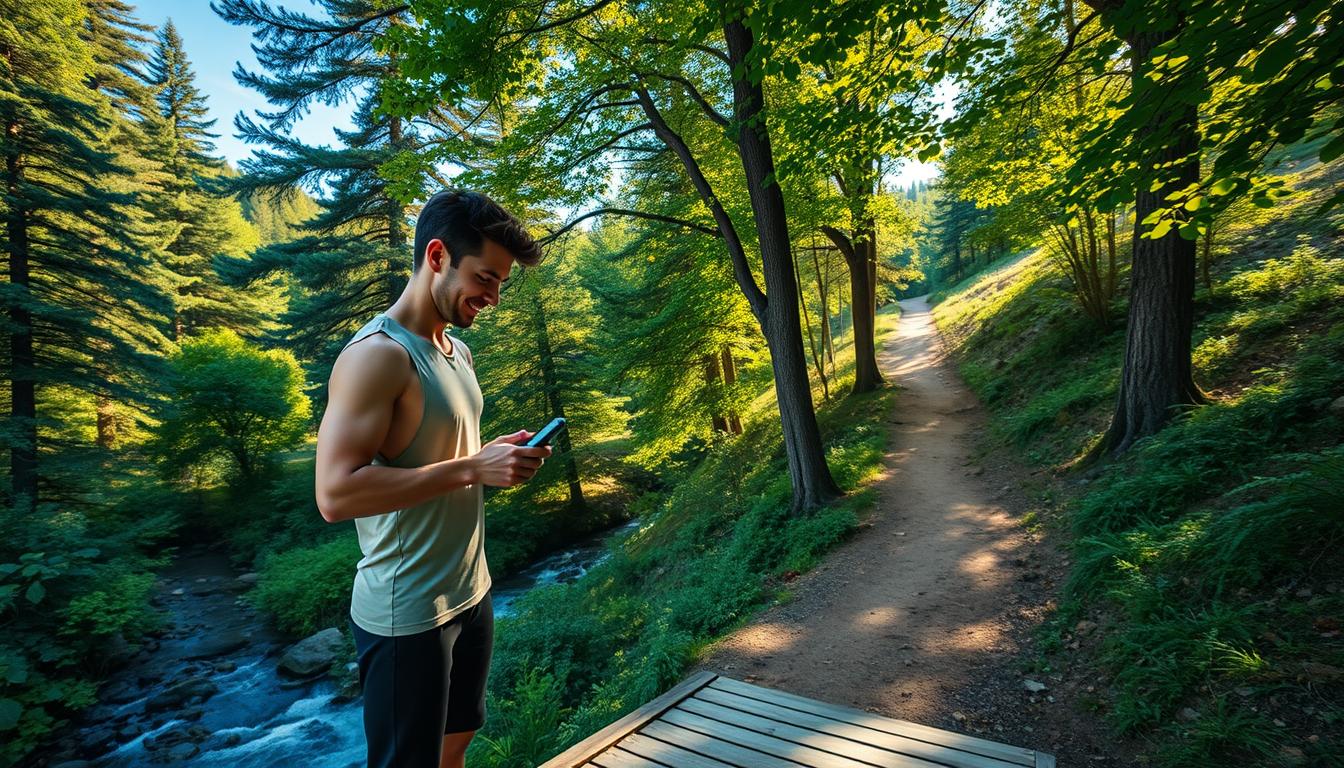
Biometric Monitoring Without Technology
Your body gives real-time feedback when you’re in the wilderness. Learning to interpret these signals helps you assess your fitness accurately.
Perceived Exertion Scaling in Wilderness
Use a 1–10 scale to rate your physical effort. This is based on your breathing and muscle response. For example:
- Level 3-4: Casual walking with steady breath
- Level 6-7: Uphill hiking with audible breathing
- Level 9-10: Mountain scrambling requiring rest breaks
Notice how the same trail feels easier over weeks? That’s outdoor therapy showing in your progress.
Natural Recovery Rate Indicators
Track how quickly your heart rate stabilizes after climbing a hill. Also, notice how refreshed you feel the next morning. Improved recovery signals better cardiovascular health, a key for sustainable weight loss.
Environmental Progress Markers
Nature itself becomes your fitness dashboard when you know what to observe.
Hiking Trail Difficulty Progression
| Stage | Distance | Elevation | Terrain |
|---|---|---|---|
| Beginner | 1-2 miles | 200 ft | Paved paths |
| Intermediate | 3-4 miles | 600 ft | Rocky trails |
| Advanced | 5+ miles | 1,200 ft | Steep inclines |
Conquering tougher routes shows your physical growth better than any gym machine.
Wildlife Observation as Fitness Motivation
As your stamina increases, you’ll reach remote areas where deer graze undisturbed or spot migratory birds. These encounters reward your efforts and encourage deeper nature immersion.
By combining body awareness with environmental milestones, you create a holistic tracking system. This supports both physical transformation and mental rejuvenation.
Overcoming Common Nature Immersion Barriers
To overcome barriers to nature immersion, we need practical strategies for today’s busy lives. Even small changes can bring mental health benefits and help with weight management. Let’s look at ways to deal with time limits and unpredictable weather.
Time Management Solutions
Even with tight schedules, we can stay connected to nature. Studies show that five-minute outdoor breaks can lower stress. Here are tips to fit nature into your busy days:
Micro-Nature Breaks for Busy Schedules
Swap phone time for these quick nature breaks:
- Walk around a tree-lined block during work calls
- Practice 3-minute grounding exercises on your patio
- Eat lunch near a window with natural light
Commuting Through Natural Corridors
Turn travel time into nature therapy. Urban studies show that routes with 25% green space exposure can improve mood by 15%. Try these changes:
- Cycle through parks instead of main roads
- Exit public transit 2 stops early for a tree-canopied walk
- Use pedestrian bridges over waterways
Weather-Related Challenges
Extreme weather can be overcome with the right preparation. A University of Michigan study found that regular cold exposure can increase calorie burn by up to 30% in winter.
All-Weather Gear Selection Guide
Here are key items for outdoor activities all year:
- Breathable rain jacket with armpit vents
- Moisture-wicking base layers (merino wool or synthetic)
- Trail shoes with aggressive tread patterns
Indoor Nature Simulation Techniques
When it’s stormy, keep your nature immersion going with these ideas:
- Create a “forest corner” with air-purifying plants
- Use nature soundscapes during meditation
- Practice yoga facing a window with natural views
Being consistent is more important than how long you spend in nature. By using these flexible strategies, you can keep up with physical activity and mental health benefits through life’s ups and downs.
Case Studies: Transformations Through Nature
Real-world success stories show how nature can change our bodies and minds. These stories tell us about the power of spending time outdoors. They show how holistic wellness strategies can lead to lasting change.
Urban Professional’s Weight Loss Journey
From Office Stress to Mountain Trails
A 38-year-old accountant changed his life by finding nature retreats near his city. He started hiking on weekends, burning over 1,100 calories a day. This also lowered his stress hormone by 41% in six months.
Three-Year Sustainability Results
He lost 63 pounds without dieting. His secret was sticking to holistic wellness habits:
- Morning sunlight before work
- Urban park walks at lunch
- Monthly wilderness camping trips
Postpartum Depression Recovery Story
Nature-Based Maternal Wellness Program
A new mom with severe baby blues joined a forest therapy group. She spent 20 minutes a day with trees and went on weekly walks. This helped her mood more than antidepressants in eight weeks.
Long-Term Mental Health Outcomes
Two years later, she keeps her emotional balance with nature retreats for parents. Her routine includes:
- Outdoor yoga with other moms
- Seasonal foraging workshops
- Moonlight meditation circles
These stories show how holistic wellness through nature can help with different challenges. Both people say their success comes from their outdoor routines, not quick fixes.
Integrating Technology With Nature Therapy
Using modern devices in nature might seem odd, but it can actually improve your outdoor therapy experience. The trick is to pick tools that strengthen your mind-body connection while keeping nature’s healing power intact. Let’s look at how to blend digital innovation with nature’s timeless healing.

Beneficial Digital Tools
Trail Mapping Applications
Apps like AllTrails turn your phone into a guide in the wilderness. They help you find new trails, track your journey, and see how many calories you burn. You can use offline maps to stay safe and keep your screen time low – just set your path and put your device away.
Biofeedback Devices for Outdoor Use
Wearables like Garmin watches or Fitbit Sense track your heart rate while you’re in nature. Studies show that seeing this data can help you feel the calming effects of nature quickly. Using real-time data with deep breathing can lead to big mind-body connection insights.
Technology Boundaries for Maximum Benefit
Digital Minimalism in Wilderness Areas
To get the most out of nature, try these:
- Turn off unnecessary notifications
- Use airplane mode for meditation
- Check in at set times
This helps keep the mental benefits of outdoor therapy while keeping you safe.
Emergency Communication Best Practices
Carry a satellite device like Garmin inReach when venturing into remote areas. These tools offer:
- GPS location sharing
- SOS signal capabilities
- Weather alerts
Share your plans with one trusted person instead of posting updates. This balances safety with the need to disconnect.
By choosing and limiting technology wisely, you can support your outdoor therapy without getting in the way. The right tools can help you stay connected to your mind-body connection without the distraction of electronics.
Building a Nature-Centric Support Network
Surrounding yourself with people who love nature is key to lasting wellness. A strong support network boosts the benefits of ecotherapy and keeps you going through tough times. Let’s look at ways to build connections that support your natural healing journey.
Finding Local Outdoor Communities
Local groups offer a chance to enjoy nature regularly and fight loneliness. Studies show being outdoors with others can cut loneliness by 65% compared to going alone.
Meetup Groups Focused on Wilderness Wellness
Meetup.com has many nature-focused groups across the U.S. Look for:
- Forest bathing circles practicing mindfulness techniques
- Trail running clubs with paced ability groups
- Seasonal foraging workshops led by experts
| Group Type | Weekly Time Commitment | Key Benefits |
|---|---|---|
| Hiking Teams | 2-4 hours | Cardio improvement + social bonding |
| Community Gardens | 1-3 hours | Stress reduction + fresh produce |
| Birdwatching Societies | 1-2 hours | Mindfulness practice + environmental education |
Conservation Volunteering Opportunities
Groups like Sierra Club offer programs that mix physical activity with helping the environment. These projects can burn 400-600 calories an hour and make a real difference.
Family-Based Nature Activities
Getting your family involved in outdoor activities strengthens bonds and teaches healthy habits. Studies show families who exercise together stay consistent 73% longer than those who don’t.
Intergenerational Outdoor Fitness Programs
Many YMCAs offer:
- Grandparent-grandchild kayaking lessons
- Family obstacle course challenges
- Multi-generational nature yoga sessions
Nature-Based Parenting Strategies
Turn daily activities into natural healing chances:
- Replace screen time with “micro-hikes” around the neighborhood
- Create sensory scavenger hunts focusing on textures/sounds
- Practice sunset gratitude rituals at local parks
Building your nature network doesn’t mean big changes. Start with one group activity and one family outing a week. Gradually add more as these habits become part of your life.
Conclusion
Nature immersion is more than just beautiful views. It’s backed by science to improve both physical and mental health. Studies show that spending 120 minutes a week in green spaces can lower stress and boost metabolism.
Start with short walks, like 20 minutes, and increase as you feel more comfortable. Even city parks can offer the same benefits as wilderness areas. Try journaling under trees, yoga at sunrise, or foraging for plants on hikes.
Keep track of your progress with signs like better sleep or weight loss. Join groups like REI Co-op or AllTrails to stay motivated. Sharing your experiences with friends and family can make the benefits even greater.
Doctors are now recommending outdoor time as part of treatment. Your path to better health begins outside. Let nature’s rhythms guide your journey.