Did you know 73% of Americans give up on their diet goals during summer events? The UC Health Weight Loss Center found that outdoor gatherings lead to 3x more diet setbacks than winter holidays. But, outdoor meals can actually boost your wellness journey if done right.
Warmer months don’t have to ruin your diet. Experts at UC Health share simple tips to make outdoor meals healthy. You’ll learn how to enjoy social events while making mindful food choices—no need for just lettuce salads.
This guide helps you overcome common summer challenges like limited fridge space and sugary drinks. Discover how to create filling meals that keep you energized while spending time with friends. From protein-rich snacks to refreshing desserts, these tips are perfect for beach trips, concerts, and BBQs.
Key Takeaways
- Swap mayo-based salads for Greek yogurt dressings to cut 220 calories per serving
- Freeze water bottles as edible ice packs for temperature-sensitive foods
- Use divided containers to control portions without sacrificing variety
- Opt for whole-grain wraps instead of white bread for sustained energy
- Pre-cut veggies with single-serving dips prevent overeating
Mastering Picnic Meal Planning
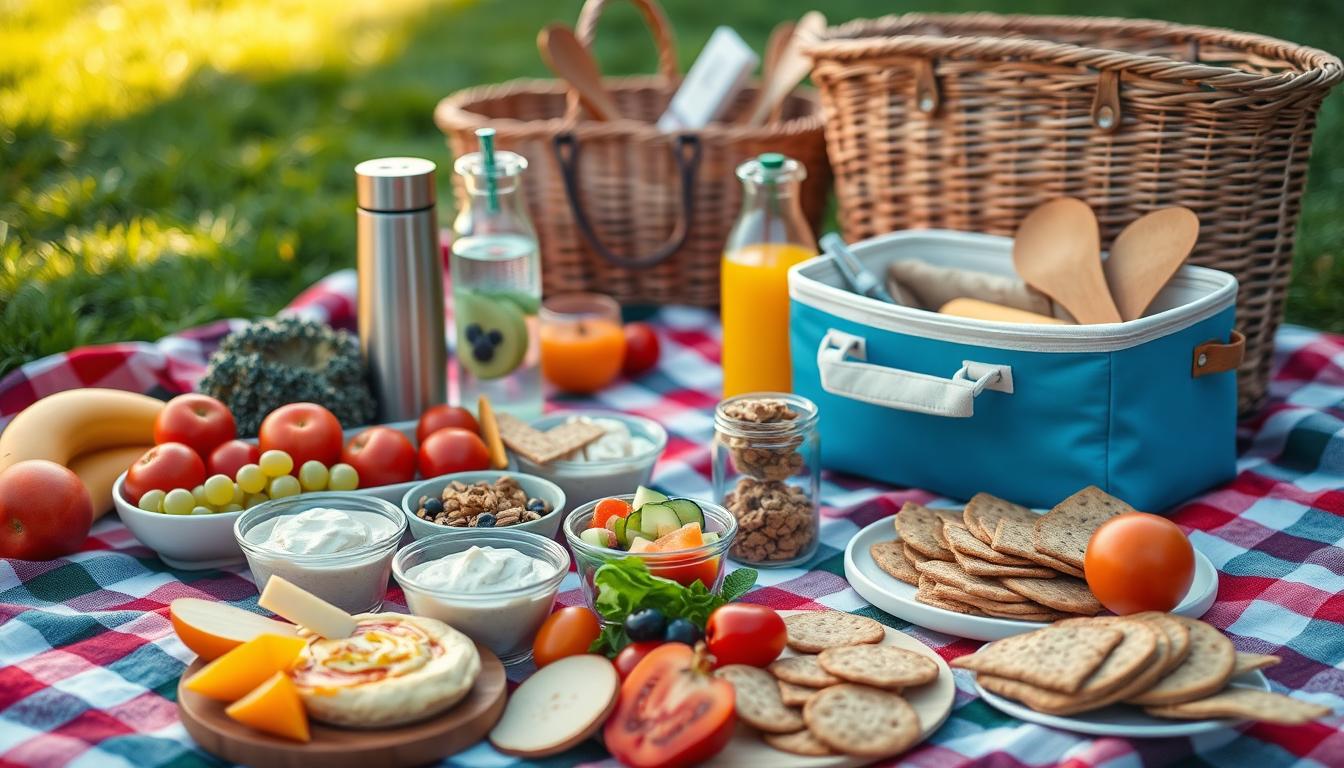
Turn simple outdoor meals into balanced, tasty experiences. Good picnic meal planning means pairing the right foods with seasonal ingredients. This way, your food keeps you energized and tastes great. Let’s explore how to make meals that boost energy from start to finish.
Balancing Macronutrients Outdoors
Outdoor meals need to be easy to carry and keep energy up. Use UC Health’s “cooler-bag system”. Store proteins in insulated bags and carbs in breathable totes. This keeps food fresh and safe.
Protein-Packed Picnic Essentials
Choose proteins that stay fresh in the summer:
- Grilled chicken skewers with lemon marinade
- Individual hummus cups with veggie sticks
- Hard-boiled eggs in reusable silicone pods
Smart Carb Choices for Sustained Energy
Match proteins with carbs that digest slowly:
| Carb Type | Picnic-Friendly Option | Prep Tip |
|---|---|---|
| Whole grains | Quinoa salad jars | Layer dressing at bottom |
| Fiber-rich | Whole wheat pita chips | Bake with olive oil spray |
| Low-glycemic | Roasted sweet potato wedges | Pack in parchment paper |
Seasonal Produce Selection Guide
Use fresh ingredients to boost flavor and nutrition. Culinarynutrition.com’s “food board” idea helps arrange produce by color and texture. This makes your food look as good as it tastes.
Summer vs Fall Picnic Produce Swaps
| Summer Staples | Fall Alternatives | Prep Method |
|---|---|---|
| Watermelon cubes | Roasted pumpkin slices | Toss with cinnamon |
| Cherry tomatoes | Roasted beet rounds | Marinate in balsamic |
| Zucchini noodles | Shredded Brussels sprouts | Massage with lemon |
Farmer’s Market Shopping Strategies
Follow these tips from nutrition experts:
- Arrive early for best selection
- Ask vendors for ripening timelines
- Choose imperfect “ugly” produce for discounts
Use reusable mesh bags to protect fruits and greens. Mix different types of produce for a colorful salad.
Essential Food Safety Protocols
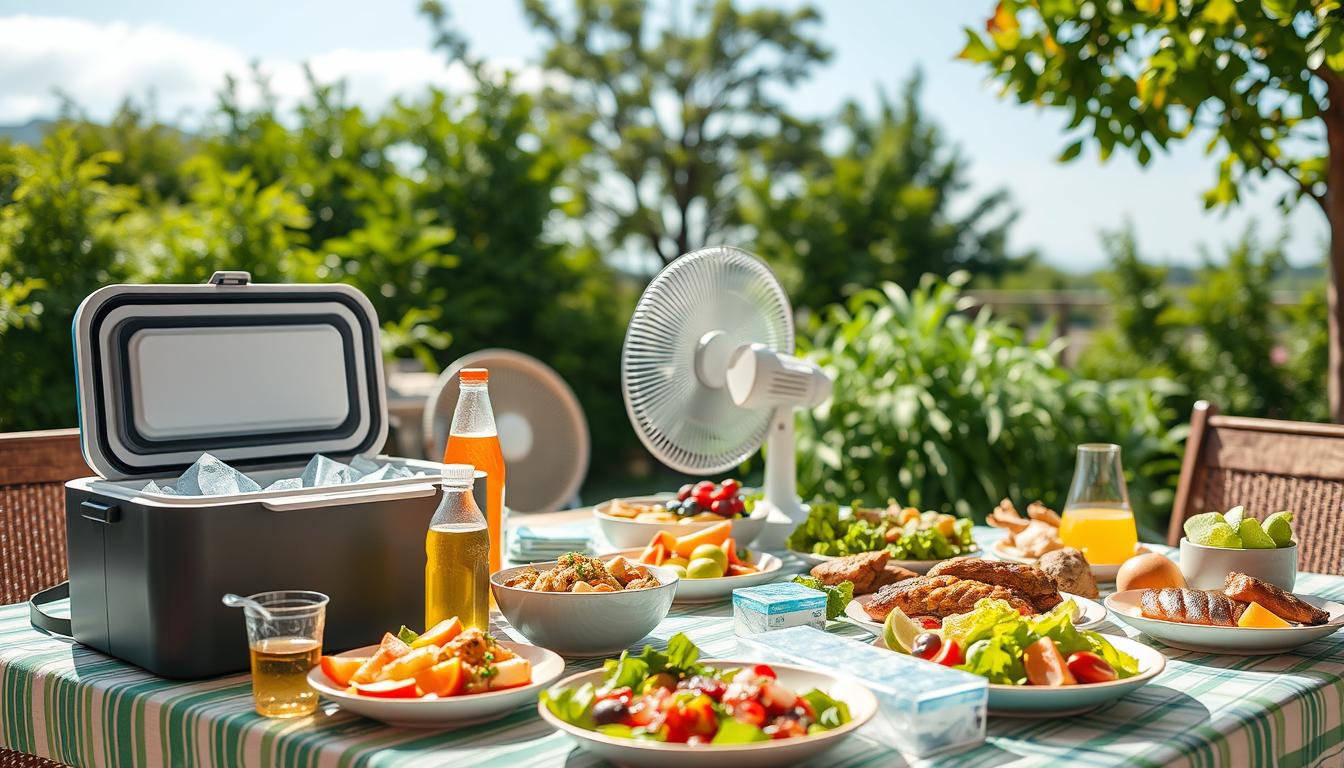
Outdoor meals need more than just tasty recipes. They require smart ways to fight off bacteria. The USDA says perishables are risky if they stay in the “danger zone” (40°F–140°F) for over two hours. This rule gets stricter to one hour in very hot weather. Let’s look at how to keep your outdoor food safe with science and clever tricks.
Temperature Control Techniques
Your cooler’s insulation quality is key to food safety. Not all containers are created equal. Make sure to check their ice retention ratings before you pack.
| Container Type | Ice Retention | Best For |
|---|---|---|
| Basic Plastic Cooler | 12-18 hours | Short trips |
| Rotomolded Cooler | 5-7 days | Multi-day events |
| Insulated Tote Bag | 4-6 hours | Immediate consumption items |
Ice Pack Alternatives That Work
- Freeze water bottles – they chill food and provide hydration as they melt
- Use frozen juice boxes as kid-friendly cold sources
- Pre-chill hard vegetables like carrots as natural ice substitutes
Cross-Contamination Prevention
UC Health researchers found that 58% of picnic-related illnesses come from bad food handling. Here are some ways to fight this:
Color-Coded Utensil Systems
- Red tools for raw meats
- Green utensils for vegetables
- Blue servingware for dairy products
Separate Storage Solutions
Keep these items in separate containers:
- Raw proteins in leak-proof glass containers
- Pre-cut veggies in ventilated produce bags
- Dressings/sauces in squeeze bottles
“Frozen water bottles keep food safe 40% longer than ice packs,” notes UC Health’s outdoor safety guide.
Hydration Hacks for Active Groups
When you’re out hiking, playing sports, or enjoying family games, staying hydrated is key. Water is essential, but there are other drinks that can boost your energy and taste. Let’s look at some refreshing drinks that follow UC Health’s tips for staying hydrated outdoors.
Infused Water Recipes
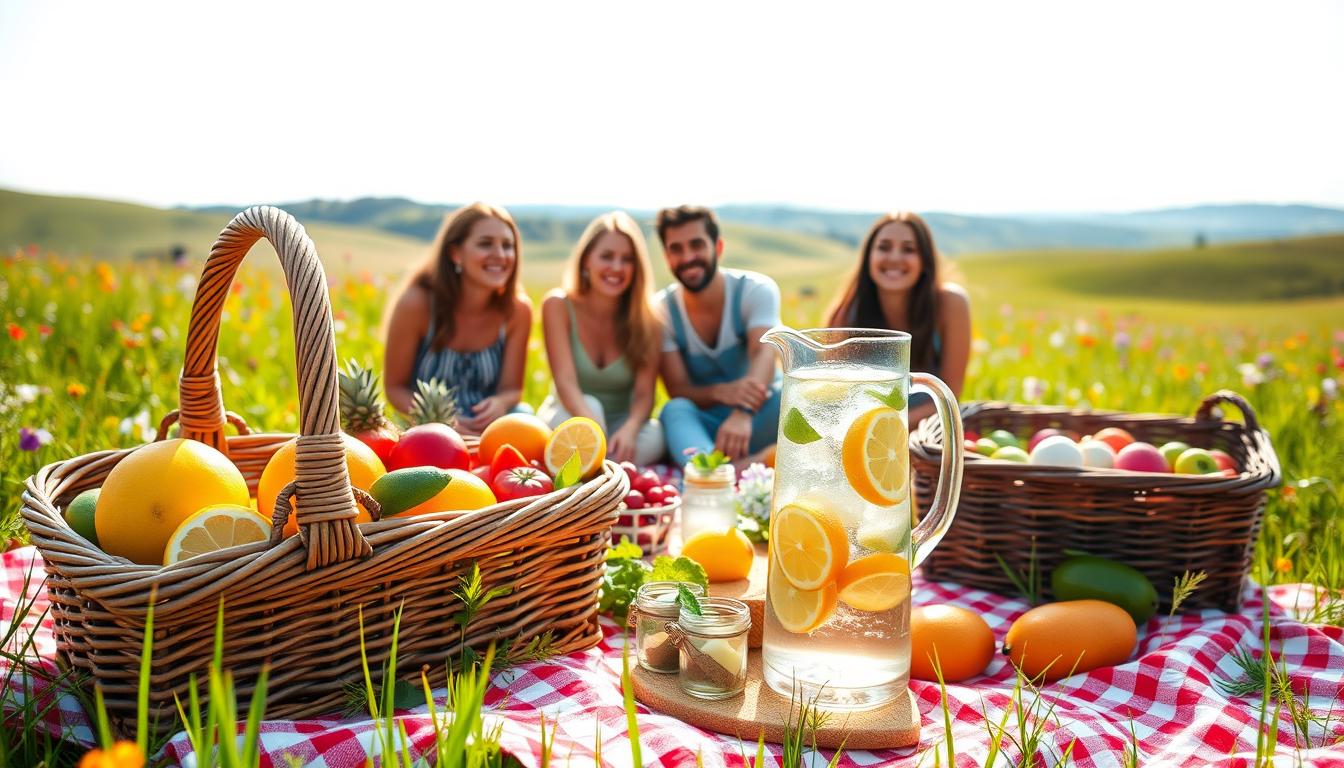
Make plain water more exciting with natural flavors. These flavors add nutrients without the sugar:
Cucumber-Mint Revitalizer
- 6 thin cucumber slices
- 10 fresh mint leaves
- 1 lemon (thinly sliced)
- 2 quarts cold water
Let the ingredients steep for an hour before drinking. Cucumber adds electrolytes to replace what’s lost through sweat.
Berry Blast Antioxidant Booster
- 1 cup mixed berries (strawberries, blueberries, raspberries)
- 1 orange (sliced with peel)
- Ice cubes
Mash the berries a bit to get their juice. This mix is full of vitamins to help your immune system when you’re outside a lot.
Alcohol Alternatives
Try these fancy drinks without alcohol for everyone to enjoy:
Kombucha Mocktail Mixes
- Combine ginger kombucha with pineapple juice (2:1 ratio)
- Top with crushed ice and basil leaves
Kombucha has probiotics to help with digestion after eating a lot.
Herbal Iced Tea Blends
- Brew hibiscus tea with cinnamon sticks
- Add chilled green tea and lime wedges
Make a big batch in a 1-gallon container. These drinks are caffeine-free and better than sugary drinks for staying hydrated.
Pro Tip: Freeze herbal tea in bottles to use as ice packs. They’ll be cold and ready to drink by the time you need them.
Crunch-Worthy Vegetable Preparations
Turn simple veggies into picnic highlights with creative prep. These methods add flavor and ease to your spread. They make sure your food stays fresh and tasty, fitting perfectly with picnic menu ideas.
Dippable Veggie Sticks
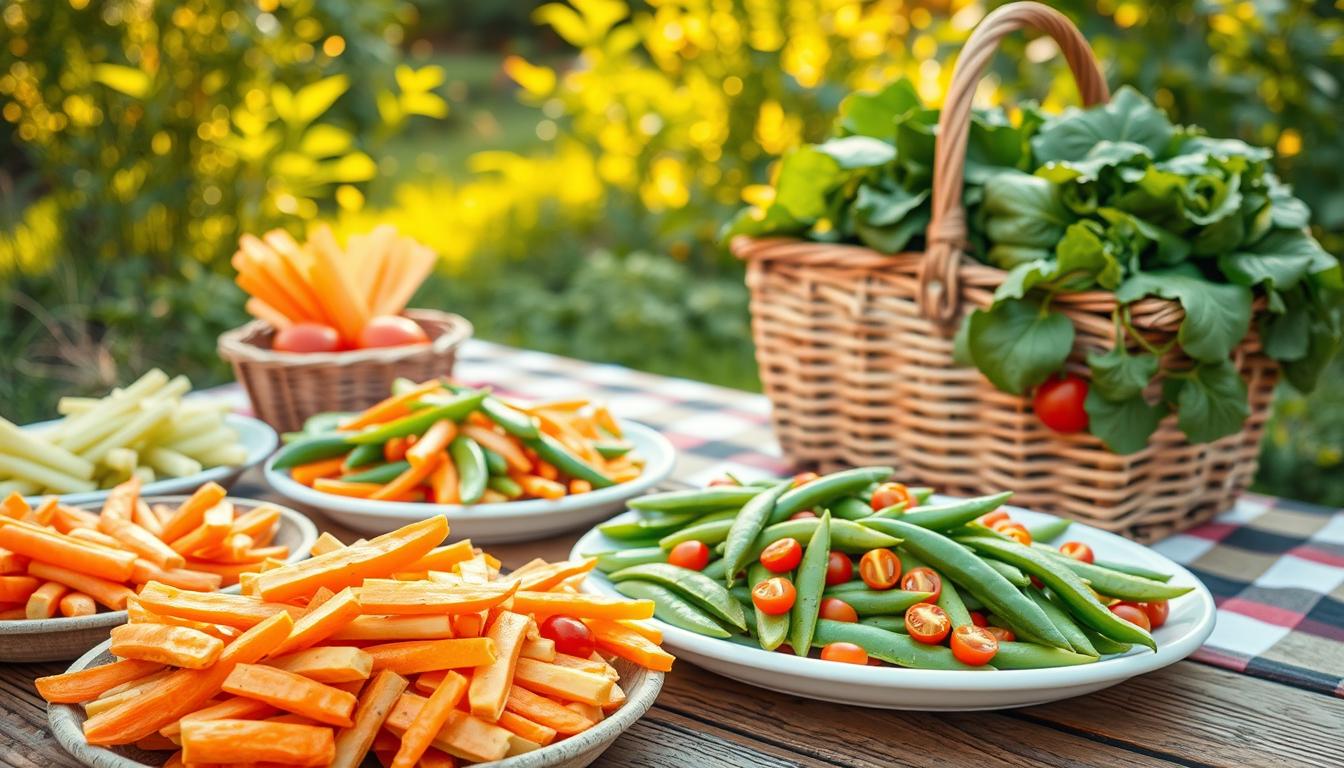
Match crisp veggies with tasty dips for a hit with guests. Cut bell peppers, cucumbers, and jicama into sticks for easy dipping. Keep them fresh in mason jars with ice packs.
Hummus Trio Presentation Ideas
Make a splash with three hummus colors. Try roasted red pepper, spinach-artichoke, and classic chickpea. Serve them in small bowls with veggie “spears” for dipping. This setup is not only pretty but also follows healthy eating guidelines.
Yogurt-Based Ranch Alternatives
Choose protein-rich yogurt dips over heavy dressings. Mix Greek yogurt with dill, garlic, and lemon for a zesty flavor. These dips have 40% less sodium than ranch, perfect for outdoor meals.
Marinated Salad Jars
Learn the Hawaiian layered jar method for salads that last. Pack ingredients tightly, starting with dressing at the bottom. This keeps your salad fresh for hours.
Layered Italian Antipasti
Layer Mediterranean flavors with artichoke hearts, roasted peppers, and olives. Add mozzarella pearls and cherry tomatoes before sealing. The olive oil marinade makes the veggies ready to eat.
Asian Slaw in a Jar
Make a slaw with shredded cabbage, carrots, and snap peas in rice vinegar dressing. Top with sesame seeds and crispy wonton strips. These jars are great for crunchy, portable salads.
Protein-Packed Main Dish Solutions
Outdoor gatherings need meals that fill you up and keep you going. Protein-rich dishes are key, blending ease with health. Let’s dive into making grilled chicken and plant-based options for your picnic.
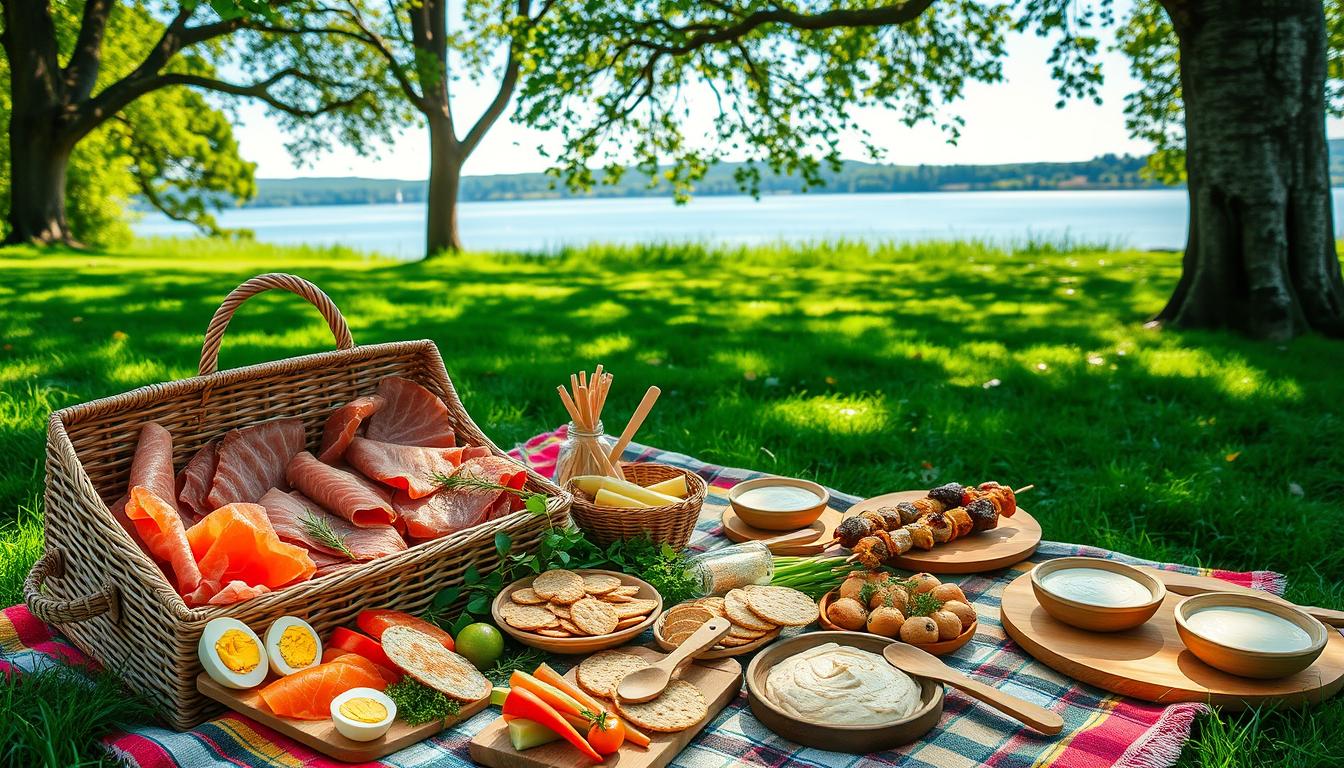
Grilled Chicken Innovations
Turn simple chicken into a hit with these tips. Always marinate or season chicken at least 2 hours before grilling for the best flavor.
Lemon-Herb Skewer Marinade
Make a marinade with 2 lemons’ zest, ¼ cup olive oil, 3 minced garlic cloves, and 1 tbsp each of rosemary and thyme. Put chicken cubes on wooden skewers and marinate for 3 hours. Grill at medium heat for 8-10 minutes per side.
Smoked Paprika Dry Rub Formula
Blend 2 tbsp smoked paprika, 1 tbsp brown sugar, 1 tsp garlic powder, and ½ tsp cayenne. Dry chicken thighs and coat well before grilling skin-side down first. Cook 6-7 minutes per side until it hits 165°F.
| Preparation | Marinating Time | Grill Temperature | Serving Size |
|---|---|---|---|
| Lemon-Herb Skewers | 3 hours | Medium (375°F) | 4-6 people |
| Paprika Rub Thighs | None (dry rub) | Medium-High (400°F) | 3-4 people |
Plant-Based Protein Options
For those who prefer meat-free, focus on texture and rich flavors. UC Health suggests “choosing legumes and whole grains for protein while cutting saturated fats”.
Quinoa-Stuffed Peppers
Roast bell peppers for 15 minutes at 425°F. Fill with quinoa, black beans, corn, and 2 tbsp nutritional yeast. Top with avocado before serving.
Lentil Walnut Lettuce Wraps
Cook 1 cup lentils with ½ cup walnuts, 1 tbsp soy sauce, and 1 tsp maple syrup. Fill butter lettuce leaves with the mix and add shredded carrots.
| Dish | Protein per Serving | Prep Time | Make-Ahead Friendly |
|---|---|---|---|
| Quinoa Peppers | 14g | 25 minutes | Yes (3 days) |
| Lentil Wraps | 18g | 15 minutes | Yes (24 hours) |
Smart Snacking Strategies
Make your picnic better with snacks that keep you going without losing nutrition. Smart snacking means choosing snacks that are easy to carry and good for you. We’ll look at fun ways to make snacks that are healthy and liked by everyone.
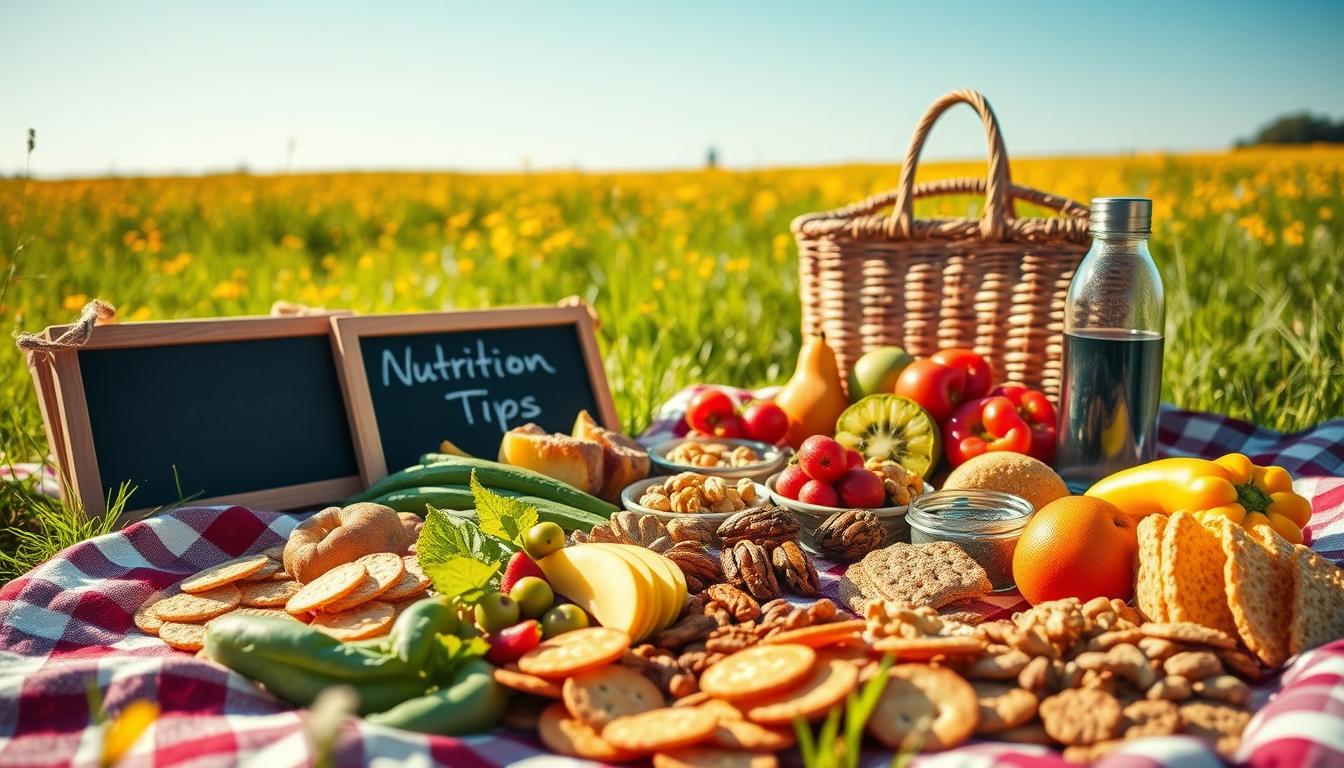
Trail Mix Customization
Make trail mix your own by mixing different textures and tastes. Follow UC Health’s advice for the right mix of protein and sugar. Use your palm to measure – one handful is a serving.
Nut-Free School-Safe Versions
Swap almonds and peanuts for roasted chickpeas or pumpkin seeds for crunch. Add whole-grain cereal squares and unsweetened dried fruit for sweetness. This mix is safe for allergies and has 5g of protein and less than 8g of sugar.
Dark Chocolate Antioxidant Boost
Add 70% dark chocolate chips for taste and health benefits. A 2023 study found dark chocolate has 40% more antioxidants than milk chocolate. Mix with tart cherries or goji berries for a great taste.
“Smart snacking isn’t about cutting out food – it’s about choosing the right mix. Combine carbs with plant-based proteins for lasting energy.”
Energy Ball Formulas
These no-bake bites are perfect for picnics. Keep them 1.5 inches in diameter for easy eating.
Date-Coconut Protein Bombs
- 1 cup Medjool dates (pitted)
- ½ cup unsweetened shredded coconut
- 2 tbsp chia seeds
- 1 scoop vanilla protein powder
Blend and shape into 12 balls. Each ball has 4g of protein and 3g of fiber, great for after a hike.
Oatmeal Raisin Energy Spheres
| Base | Binder | Mix-Ins | Coating |
|---|---|---|---|
| Rolled oats | Almond butter | Golden raisins | Cinnamon |
| Quinoa flakes | Applesauce | Chopped walnuts | Desiccated coconut |
Freeze energy balls for two hours before packing. Store in reusable bags with ice packs to keep them fresh. These tips make sure your snacks are safe and tasty from start to finish.
Whole Grain Reinventions
Make your picnic basket better with whole grains. They add texture and keep you full. Unlike refined carbs, they stay good in warm weather and give you fiber and protein.
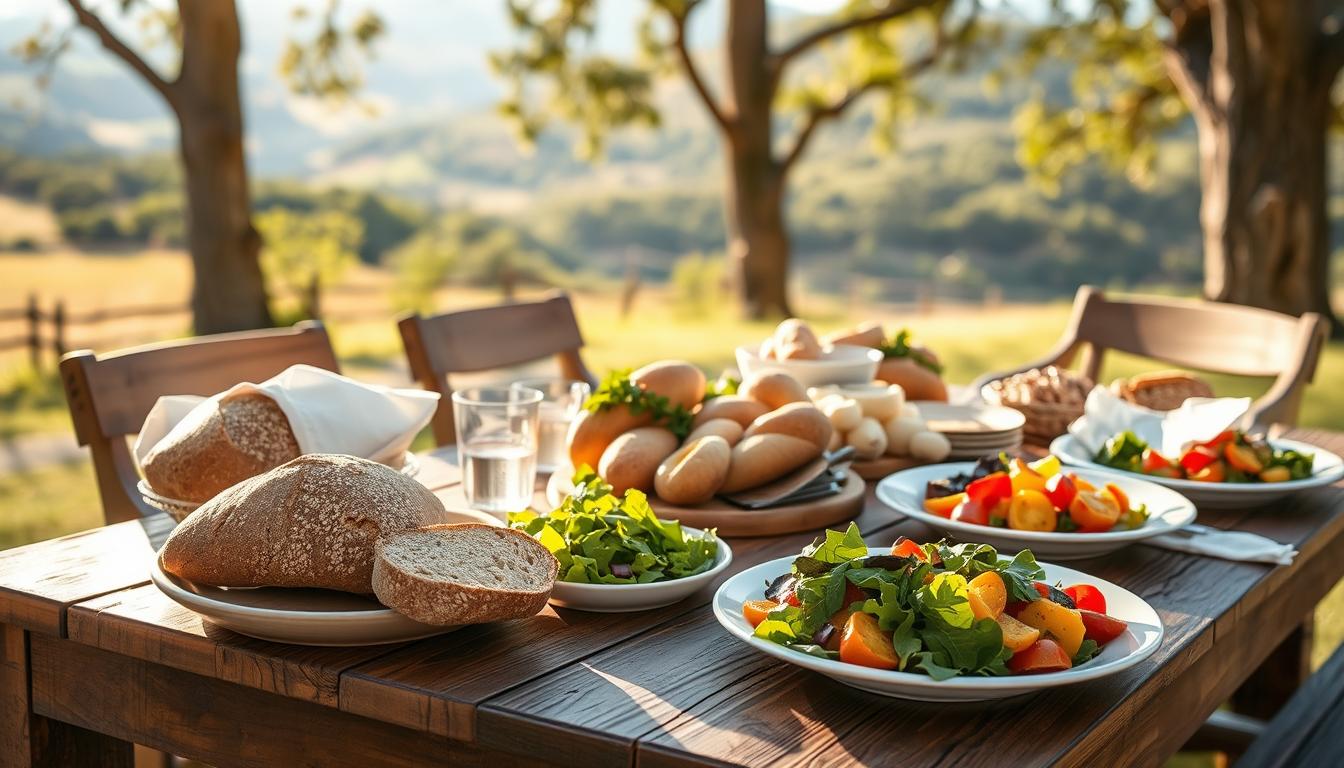
Ancient Grain Salads
Try new grains instead of pasta and rice. Farro Mediterranean bowls mix chewy grains with sun-dried tomatoes and feta. Add lemon vinaigrette just before eating.
For smoky tastes, try freekeh vegetable toss with roasted peppers. Both salads are better chilled overnight, perfect for easy picnic prep.
Farro Mediterranean Bowl
Mix cooked farro with cucumbers, cherry tomatoes, and red onion. Add feta and olives, then drizzle with olive oil and oregano. Keep dressing separate for crunch.
Freekeh Vegetable Toss
Sauté freekeh with garlic, then simmer in broth. Mix with grilled zucchini and mint. Top with toasted pine nuts for crunch.
Flatbread Upgrades
Make better handheld carbs with whole grains. Whole wheat pizza spirals spread pesto and mozzarella on dough, then roll and slice. Bake until golden.
For crunch, try spelt cracker assortments with hummus. Culinarynutrition.com suggests using seeded crackers for more protein and omega-3s.
Whole Wheat Pizza Spirals
Roll out dough into rectangles. Add marinara, spinach, and low-fat cheese. Roll up, slice, and bake at 375°F for 18 minutes.
Spelt Cracker Assortments
Make a mix of spelt flour, sesame seeds, and olive oil. Roll thin, cut into shapes, and bake at 350°F until crisp. Store in airtight containers for up to three days.
These grain ideas show healthy eating can be tasty. Prepare parts ahead for quick assembly at your picnic.
Fresh Fruit Presentation Ideas
Make your picnic stand out with creative fruit displays. These displays are both beautiful and practical. They turn simple fruits into stunning centerpieces, keeping your healthy food for picnics focus sharp.
Kabob Combinations
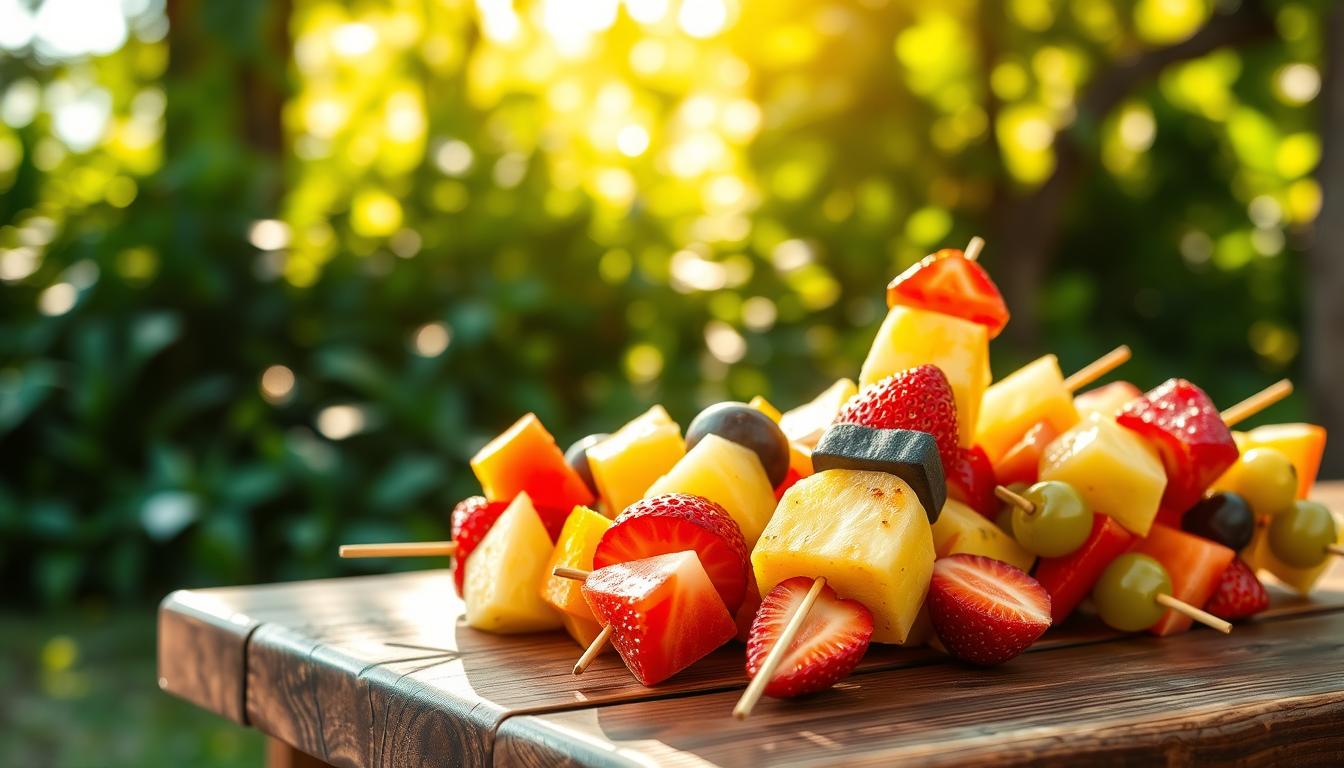
Skewered fruits are easy to eat and fun to make. Use bamboo sticks or colorful picks to cut down on waste.
Tropical Paradise Skewers
Put frozen pineapple, mango, and bananas on skewers. The Hawaiian frozen grape technique is great here. Freeze grapes to keep your kabobs cool and act as natural ice packs.
Melon-Mint Refreshers
Stack cantaloupe, honeydew, and watermelon with mint leaves. Use a melon baller for neat, eye-catching shapes.
Dipping Station Concepts
Set up stations where guests can make their own treats. This lets them control how much they eat. Choose healthy pairings that fit healthy food for picnics goals.
Dark Chocolate Fountain Setup
Choose 70% dark chocolate for its health benefits. Pre-melt chocolate in a thermos. Offer it with strawberry halves and apple slices for a safe, tasty treat.
Yogurt Drizzle Bar Essentials
Provide plain Greek yogurt with vanilla bean paste. Add toasted almonds and chia seeds for extra protein. This is a healthier choice than sugary dips, following UC Health’s balanced approach.
Dessert Makeovers
Make your picnic desserts healthier without losing flavor. Try new twists on old favorites that are good for you. These changes use real food to make your treats tasty and satisfying.
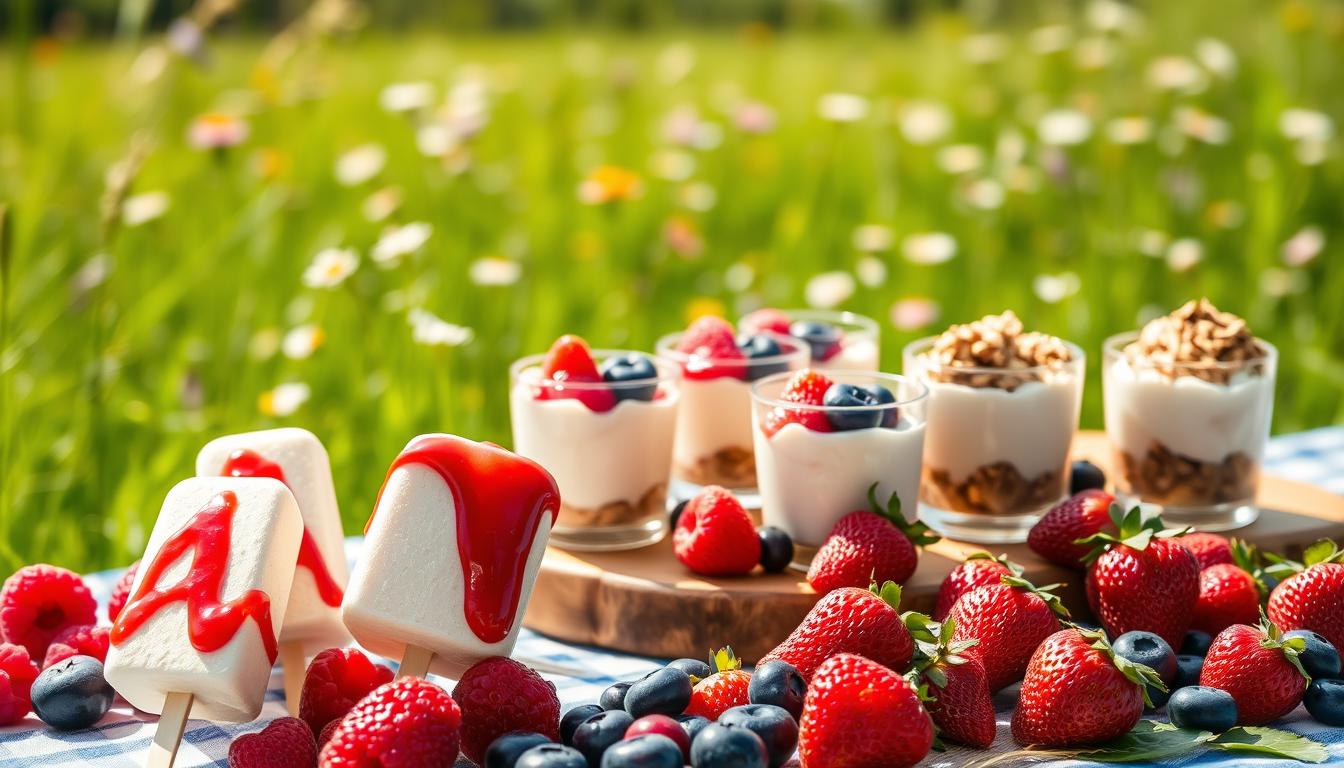
Frozen Treat Alternatives
Stay cool with refreshing desserts that are also snacks. UC Health’s Greek yogurt bar concept inspired these easy-to-make treats perfect for outdoor fun.
Greek Yogurt Berry Pops
Blend Greek yogurt with mashed raspberries and honey. Pour into silicone molds for single servings. Freeze overnight for a protein-rich treat that stays firm.
Chia Seed Pudding Cups
Mix chia seeds with almond milk and vanilla. Layer with mango or kiwi. These cups thicken in 4 hours and travel well in mason jars. Top with toasted coconut flakes for crunch.
Baked Good Swaps
Make healthier versions of your favorite treats. Use nutrient-dense ingredients that are easy to transport. These sweets avoid refined flours but taste homemade.
Zucchini Brownie Bites
Shredded zucchini makes cocoa batter moist, cutting oil in half. Bake in mini muffin tins for portion-controlled squares. They stay fudgy for hours, perfect for picnics.
Almond Flour Cookies
Use almond flour for gluten-free chocolate chip cookies. The higher fat content makes them chewy. Dark chocolate chunks add antioxidants. Store in wax paper to prevent crumbling.
These dessert makeovers show that healthy picnic menu ideas can please everyone. Focus on natural sweetness and smart substitutions for treats that are memorable and fit an active lifestyle.
Portion Control Techniques
Effective portion control is key to enjoying outdoor meals without overindulging. UC Health researchers found that visual cues reduce overeating by 22% during group gatherings. Let’s explore two methods to keep servings balanced while embracing healthy eating hacks for picnics.
Single-Serve Packaging Solutions
Pre-portioned containers prevent mindless snacking and simplify cleanup. These innovative systems work well for active groups and children.
Reusable Silicone Pouch System
Flexible food pouches let you pack exact amounts of nuts, dried fruit, or veggie chips. Their squeeze design makes snacking mess-free – perfect for hikes or beach days. Color-coding helps identify contents at a glance.
Mini Mason Jar Meals
Layer grains, proteins, and veggies in 8-oz jars for complete meals. The Hawaiian snackle box concept adapts beautifully here – arrange bite-sized portions in separate compartments for variety without excess.
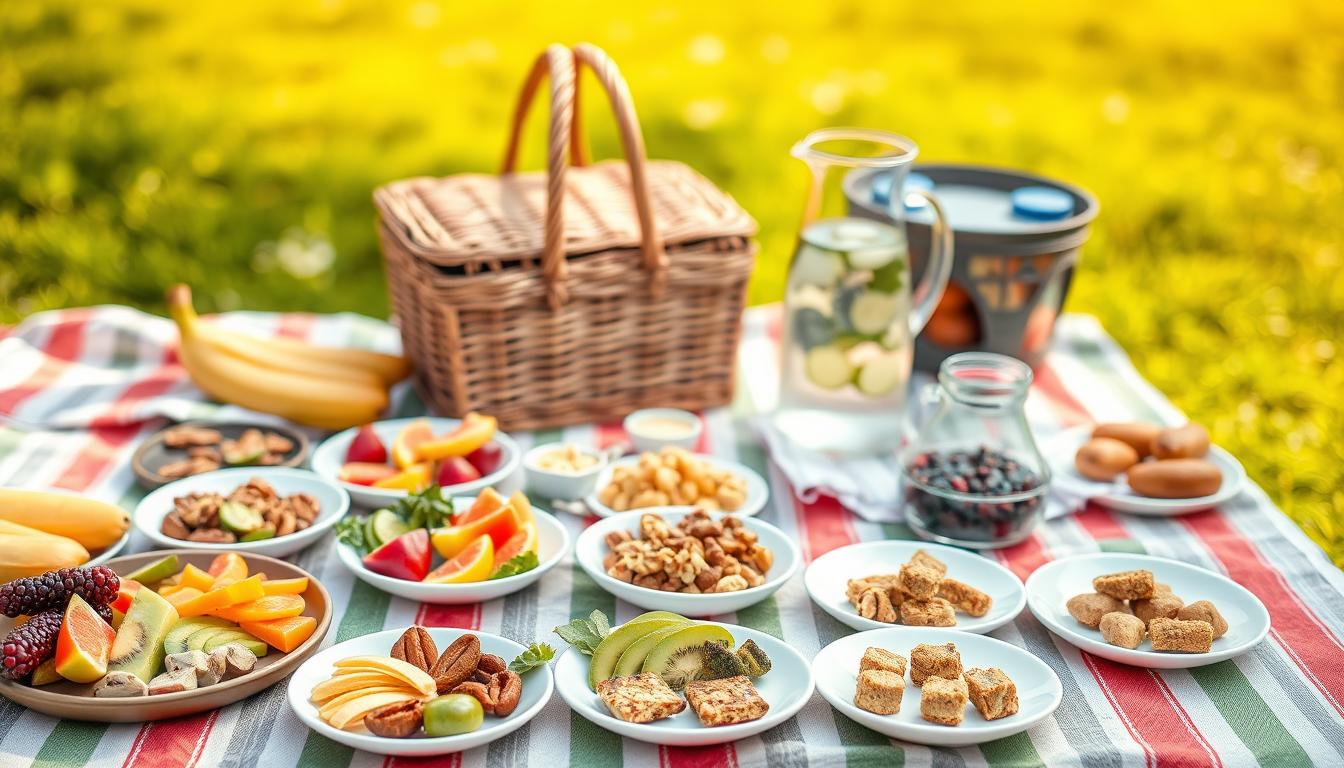
Visual Measurement Guides
No scales needed! These practical references help estimate portions using everyday objects.
Hand-Size Portion References
- Protein: Palm-sized (3-4 oz)
- Carbs: Cupped hand (½ cup)
- Fats: Thumb tip (1 tsp)
Plate Composition Ratios
| Food Group | Plate % | Visual Cue |
|---|---|---|
| Vegetables | 50% | Two baseballs |
| Proteins | 25% | Deck of cards |
| Grains | 25% | Lightbulb size |
Combine these healthy eating hacks with MyFitnessPal’s tracking principles for optimal results. Remember: picnic portions should fuel activities, not induce sluggishness.
Allergy-Aware Menu Planning
Planning a picnic that everyone can enjoy means focusing on safety and taste. About 10% of U.S. adults have food allergies. This makes allergen-conscious meal prep key for group outings. We’ll look at easy swaps and label tips to make sure your outdoor meal is safe for all.
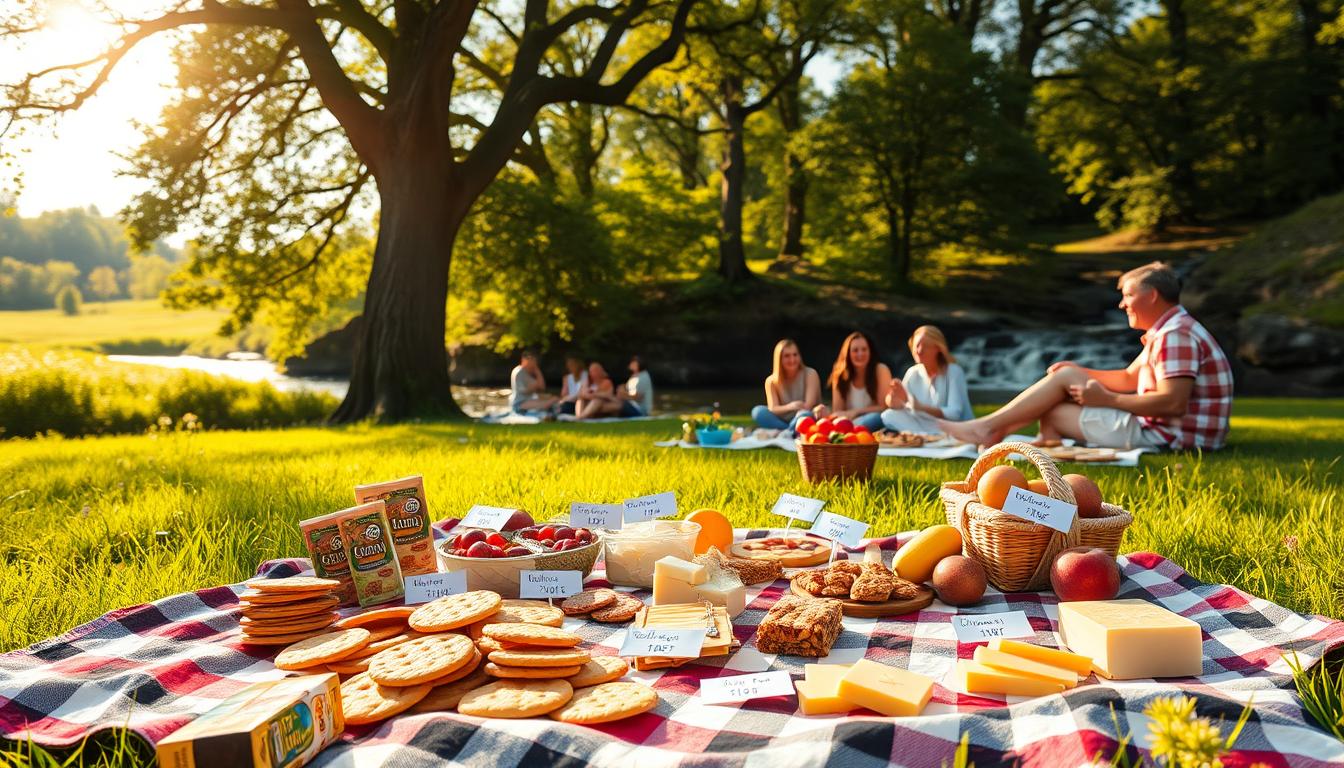
Common Allergen Substitutes
By making smart swaps, you can make classic dishes safe for everyone. Replace top allergens like nuts and dairy. Keep the taste and texture the same.
Nut-Free Pesto Options
Use sunflower seeds or pepitas instead of pine nuts in pesto for a crunchy texture. Basil sauces with olive oil and nutritional yeast offer a herby punch without nuts. Add avocado for creaminess.
Dairy-Free Dressing Formulas
Make tangy dressings with tahini or silken tofu as bases. Mix in lemon juice, garlic, and Dijon mustard for a zesty ranch taste. Use cashew cream for thicker dips after soaking and blending.
Label Reading Workshop
When buying packaged foods, check labels three times. Do this at the store, before preparing, and when serving.
Hidden Ingredient Alerts
Be cautious of “natural flavors” or “spices” that might hide allergens. Soy can be listed as lecithin, and milk derivatives might be in casein or whey protein. Always check “may contain” warnings.
Certification Symbol Decoder
- GF: Certified gluten-free
- V: Vegan (no dairy/eggs)
- OU-D: Dairy-free kosher certification
Use separate utensils and color-coded containers to avoid cross-contamination. This way, guests can easily find safe food options.
Eco-Friendly Serving Solutions
Make your outdoor gatherings green with smart serving ideas. Today’s eco-friendly items are both useful and kind to the planet. They let you enjoy nature without harming it. You can choose from durable reusable items or compostable options.
Reusable Tableware That Travels Well
Bamboo utensil sets are better than plastic because they’re light and natural. They come in travel pouches, great for picnics. Try the Hawaiian muffin tin hack for serving dips or salads in portion-controlled trays.
Silicone Storage Collapsibles
Collapsible bowls and cups save a lot of space and are leak-proof. They’re perfect for:
- Carrying dressings
- Storing leftover grilled veggies
- Mixing salads on the go
| Material | Weight | Dishwasher Safe | Best For |
|---|---|---|---|
| Bamboo | 2.1 oz/set | No | Dry foods |
| Silicone | 4.3 oz/bowl | Yes | Liquids |
Compostable Packaging Made Simple
For when you need to use disposables, pick plant-based wraps. They break down in 90 days. Look for wraps made from:
Plant-Based Wrap Alternatives
- Beeswax-coated cotton
- Soybean fiber sheets
- Recycled paper with potato starch adhesive
Edible Serving Vessels
Make snack containers fun with edible options:
| Vessel | Food Pairing | Shelf Life |
|---|---|---|
| Hollowed apples | Nut butters | 2 hours |
| Bread bowls | Dips/spreads | 4 hours |
| Cucumber cups | Chicken salad | 3 hours |
Finish your setup with the shower curtain blanket tip. Use a waterproof curtain as a washable picnic cover. This mix of reusable and compostable items makes cleanup easy and helps the environment.
Active Picnic Enhancements
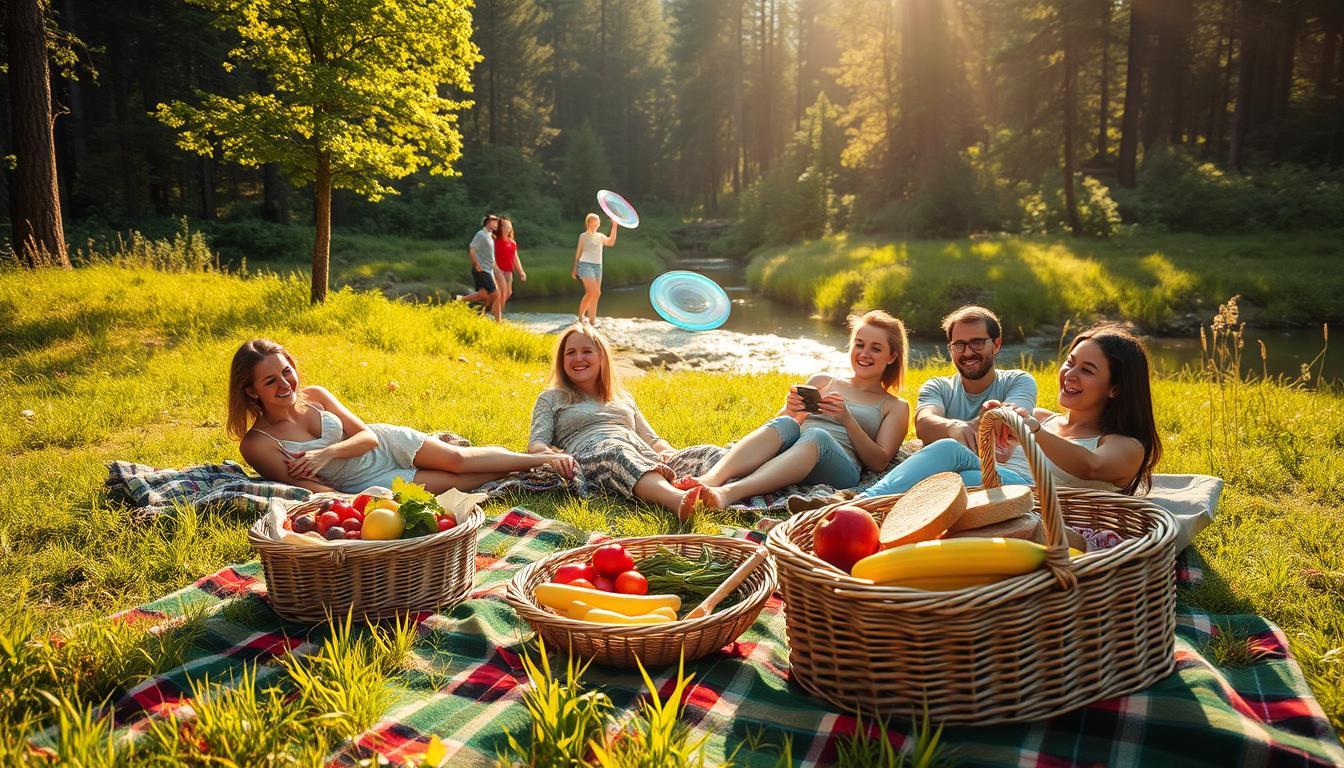
Make your outdoor gathering more exciting by mixing fun activities with relaxation. These healthy picnic ideas keep everyone’s energy up. They also help you connect with nature and each other.
Post-Meal Movement Ideas
Beat the post-lunch drowsiness with activities that work your muscles and brain. Start with simple exercises and then move on to more active ones.
Group Yoga Sequences
Get out your mats for a 15-minute yoga session. It includes easy poses like:
- Sun salutations to stretch your spine
- Tree pose to improve balance
- Partner-assisted downward dogs
Pay attention to your breathing to help with digestion. Finish with a “gratitude meditation” to make outdoor meals more special, as suggested by culinarynutrition.com.
Nature Scavenger Hunts
Make lists for everyone to find things in nature:
- 5 different leaf shapes
- 3 types of cloud formations
- 1 animal track identification
Make sure to set rules and time limits to keep everyone safe while they have fun.
Family-Friendly Games
Turn classic yard games into healthy picnic fun. Add snacks and exercise naturally.
Frisbee Golf Course Setup
Turn your picnic area into a 5-hole frisbee course:
- Use baskets or marked trees as targets
- Assign point values based on distance
- Reward winners with first pick from fruit platters
Healthy Snack Treasure Hunt
Hide snacks like these in different spots:
- Almond packs in shady areas
- Frozen grapes near seating areas
- Rice cake stacks by landmarks
Include clue cards with exercise prompts like “Do 10 jumping jacks to unlock the next hint” for more fun.
Leftover Management System
After an outdoor feast, managing leftovers is key. It’s about safety and creativity. You want to enjoy tomorrow’s meals without losing flavor or freshness. Let’s look at how to store and reuse picnic leftovers.
Smart Food Preservation Methods
UC Health talks about the danger zone principle. Food left between 40°F–140°F for over two hours is not safe. But, outdoor settings need extra care.
When the Two-Hour Rule Doesn’t Apply
In hot weather, cool leftovers in one hour. Use coolers with ice packs for transport. Discard food exposed to sunlight.
Chill Food Fast
Here are ways to cool food quickly:
- Divide big portions into shallow containers
- Submerge sealed bags in ice baths
- Freeze gel packs to place between food layers
Transform Leftovers Like a Pro
Make yesterday’s picnic into today’s kitchen hit with these ideas:
Salad Jars Reborn
Layer leftover grilled veggies, grains, and proteins in mason jars. Add fresh greens and dressing. Shake it up for a quick lunch.
Breakfast Hash Magic
Sauté chopped grilled chicken or tofu with potatoes and peppers. Top with fried eggs for a protein-rich breakfast. This works well with pineapple-marinated leftovers.
“Reheating food to 165°F kills most bacteria, but when in doubt, throw it out.”
Conclusion
Planning a Picnic with a Purpose turns simple meals into chances to nourish and connect. By using UC Health’s tips and smart food prep, you make gatherings that focus on health and taste. You can host memorable events in parks, beaches, or backyards with these methods.
These ideas work all year round. Summer salads become autumn roasted vegetable platters, and using reusable containers keeps things green. Add smart hydration and games from Section 14, or try fruit presentations from Section 9 for holidays. Each idea helps make outdoor meals that boost energy, not drain it.
Your next picnic is a chance to eat mindfully and enjoy nature. Use protein-packed mains from Section 6 for sports events, or eco-tips from Section 13 for clean-up gatherings. Every picnic under the sky helps you and your guests stay healthy. Start with small changes, like veggie jars instead of chips, or citrus water instead of soda. See how thoughtful choices make outdoor dining better.