Did you know your gut sends more signals to your brain than your brain does to your gut? This amazing connection relies on cholecystokinin (CCK). It makes you feel full and starts digestion at the same time. Without it, your body can’t break down fats or know when to stop eating.
This hormone works through a direct line to your brain called the vagus nerve. When fatty foods reach your small intestine, CCK hormone function kicks in. It makes your gallbladder release bile and your pancreas send out digestive enzymes. At the same time, it tells your brain to stop eating.
CCK is special because it does two things at once. It’s not just about breaking down food—it’s also about controlling how much you eat. Studies show CCK’s connection to the vagus nerve might explain why some people feel full faster. This balance affects everything from how well you absorb nutrients to your weight.
Key Takeaways
- CCK acts as both a digestive aid and appetite regulator
- Communicates with the brain through the vagus nerve
- Triggers gallbladder contraction and pancreatic enzyme release
- Helps control meal size by promoting fullness
- Essential for proper fat digestion and nutrient absorption
Understanding the Discovery of CCK
Your body has a special way to tell you when you’re full after eating. This all started nearly a century ago. Scientists noticed something interesting in animal studies, leading to a big change in how we see hunger.
Historical Background of Cholecystokinin
In 1928, Andrew Ivy and Eric Oldberg made a key find. They gave intestinal extracts to dogs and saw their gallbladders contract a lot. This landmark experiment showed the first known use of what we call CCK today.
At first, they called it “cholecystokinin,” meaning “gallbladder mover” in Greek. For years, people thought CCK only helped with digestion. But in the 1970s, scientists found out it also helps control how much we eat, changing how we see the stomach and intestines.
Key Researchers and Breakthrough Studies
The 1970s were big for CCK research, thanks to Dr. John Gibbs and Dr. Gerard Smith. They showed that CCK can make animals eat less. This was a big step in linking digestion and feeling full.
Three key findings have shaped our understanding of CCK:
- Smith’s 1974 study showed CCK helps stop eating
- Found CCK receptors in the vagus nerve (1980)
- Cloned the CCK gene (1985) for more detailed studies
These discoveries made CCK a key player in studying hunger. Today, research on obesity and eating disorders uses this knowledge to help us understand our body’s signals better.
The Dual Role of CCK in Your Body
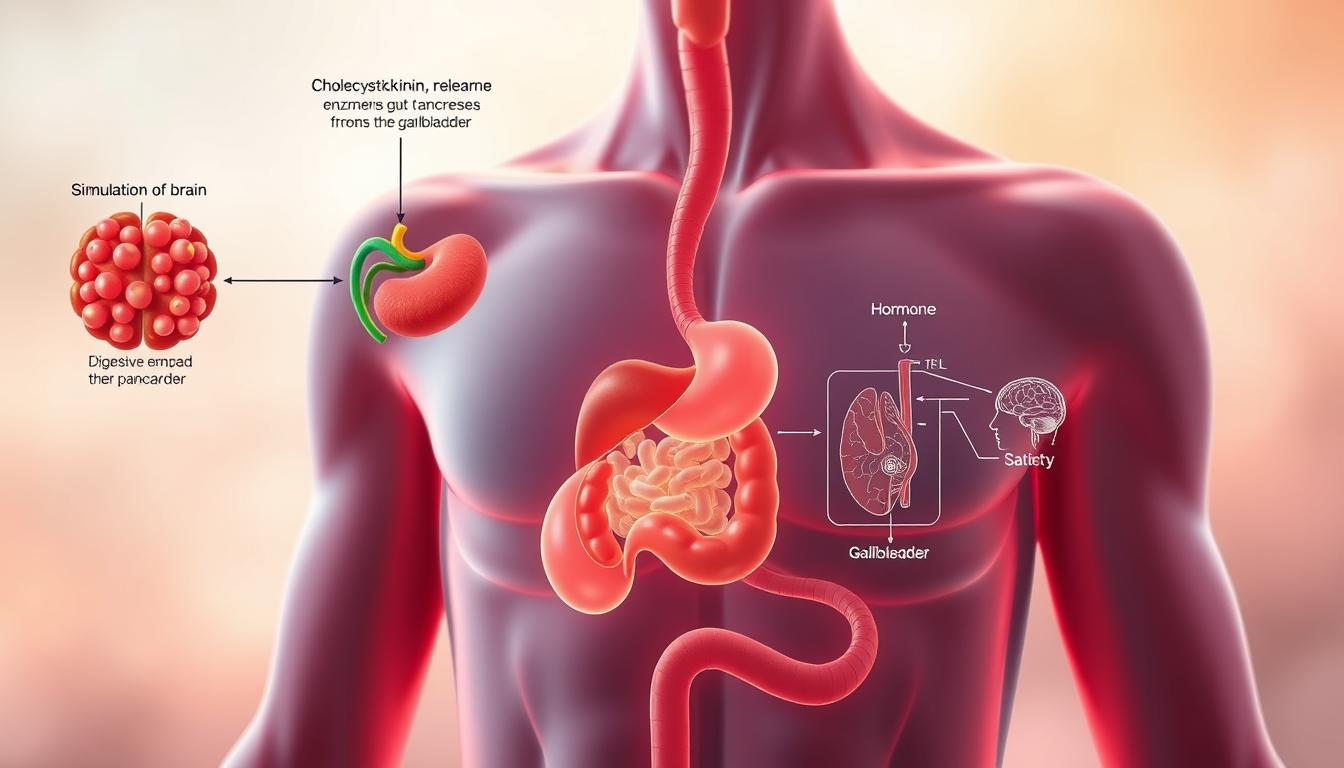
CCK is a hormone that does two important jobs. It helps digest food and tells your brain when you’re full. This makes it key for breaking down nutrients and controlling hunger.
Digestive System Functions Explained
When you eat, CCK starts working through hormonal signaling. It’s not just about moving food through your body. It’s about breaking it down into nutrients your body can use.
Pancreatic Enzyme Stimulation
CCK tells your pancreas to send out enzymes. These enzymes break down fats, proteins, and carbs. This process starts within 20-30 minutes of eating.
- Lipase for fat digestion
- Trypsin for protein breakdown
- Amylase for carbohydrate processing
This helps your body absorb nutrients quickly.
Gallbladder Contraction Mechanisms
CCK also makes your gallbladder release bile. This greenish liquid helps break down fats. Without CCK, fats wouldn’t be digested properly.
Satiety Signaling Pathways
While digesting food, CCK sends signals to your brain. These signals help you know when you’ve eaten enough.
Vagus Nerve Communication
CCK talks to your brain through the vagus nerve. This nerve is like a superhighway for gut and brain messages. It starts working within 15 minutes of eating.
Brain-Gut Axis Interactions
The signals from CCK reach your brain’s hunger center. This center sends a message to stop eating. It makes you feel full and satisfied.
- Reduces hunger pangs
- Enhances meal satisfaction
- Delays subsequent food cravings
High-protein meals make you feel fuller because they trigger more CCK. This is why they can keep you satisfied longer than sugary snacks.
How CCK Regulates Your Appetite
Your body uses the CCK hormone like a precision tool to manage hunger and fullness. This chemical messenger doesn’t just influence when you eat—it determines how much you consume before feeling satisfied. Let’s explore how this appetite conductor works behind the scenes.
Meal Initiation vs Meal Termination
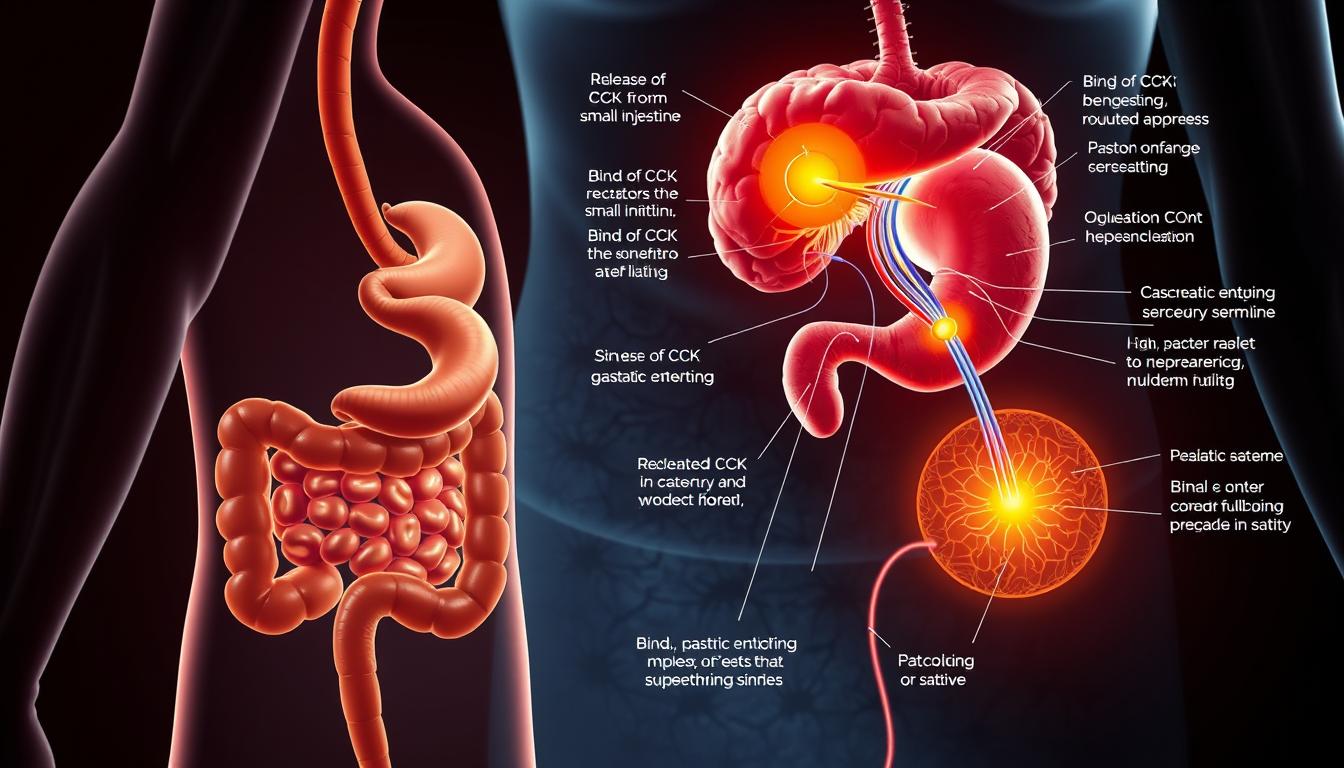
CCK acts as your biological stop button during meals. When nutrients hit your small intestine, specialized cells release CCK to:
- Activate satiety signals in POMC neurons
- Suppress hunger-promoting AgRP/NPY neurons
- Slow stomach emptying through sphincter contractions
This triple action creates what scientists call the “ileal brake”—your gut’s way of saying “put the fork down.” Unlike gradual hunger cues, CCK works rapidly, peaking within 15 minutes of food intake.
Hunger Hormone Interactions
CCK doesn’t work alone. It partners with other hormones to maintain your hunger-satiety balance through precise counterbalances and synergies.
Ghrelin Counterbalance Effects
While ghrelin shouts “Eat now!” CCK whispers “You’ve had enough.” Research shows CCK:
- Reduces ghrelin’s activity by 40% post-meal
- Blocks ghrelin receptors in the hypothalamus
- Shortens hunger wave durations between meals
Leptin Synergy Mechanisms
CCK amplifies leptin’s satiety signals through a powerful tag-team effect. Together they:
- Enhance insulin sensitivity in brain cells
- Boost dopamine release during nutrient absorption
- Extend post-meal satisfaction by 2-3 hours
This partnership explains why balanced meals keep you fuller longer compared to snacking on empty calories.
“CCK serves as the bridge between immediate gut signals and long-term energy balance regulation.”
Understanding your CCK rhythm helps explain why rushed meals often lead to overeating. When you chew slowly, you give this hormone time to activate its full appetite-suppressing power.
CCK Production and Release Triggers
Your body releases cholecystokinin through precise biological mechanisms. These mechanisms respond to what and how you eat. This explains why some meals make you feel full longer than others.
Macronutrient Specific Responses
Different nutrients activate CCK secretion in distinct ways. Fats and proteins are strong stimulants. Carbohydrates play a secondary role in this hormonal symphony.
Fat-Induced CCK Secretion
Fatty foods trigger the strongest CCK release within 15 minutes of reaching your small intestine. Enteroendocrine cells detect long-chain fatty acids. This prompts a rapid surge in hormone production.
This is why meals rich in olive oil or avocado often create lasting fullness signals.
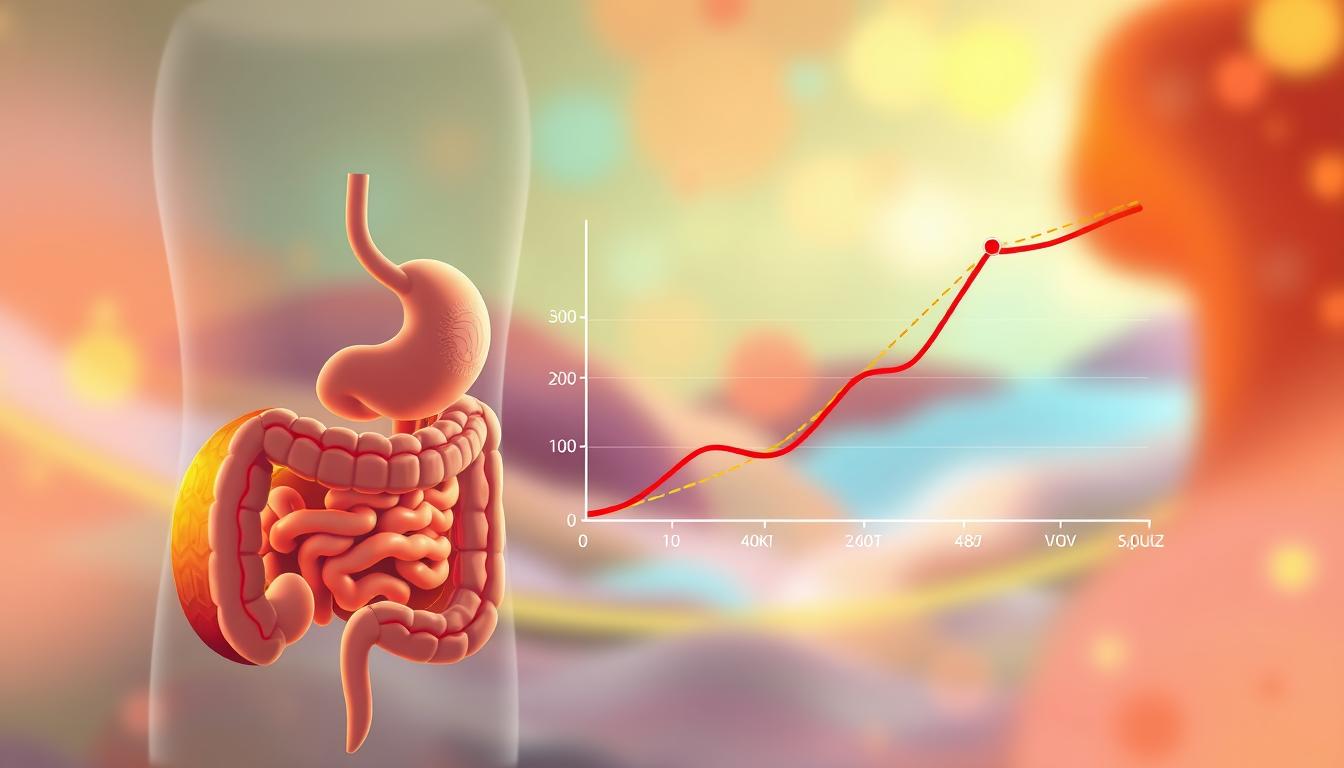
Amino acids from protein digestion stimulate CCK secretion differently than fats. The response starts slower but lasts for hours. This makes chicken breast or lentils effective at maintaining appetite control between meals.
Mechanical vs Chemical Stimuli
Your digestive system uses two parallel systems to regulate CCK release:
Mechanical detection occurs when stomach stretching activates nerve endings. This physical distension signals your brain through the vagus nerve. It complements CCK’s chemical messaging.
Chemical sensing happens when intestinal cells identify specific nutrients. These detectors recognize fat molecules and protein fragments. They trigger precise CCK release amounts based on meal composition.
Together, these systems create a layered satiety response. Mechanical signals provide immediate feedback about meal size. Chemical detection ensures long-term appetite regulation based on nutritional quality.
The Gut-Brain Communication Network
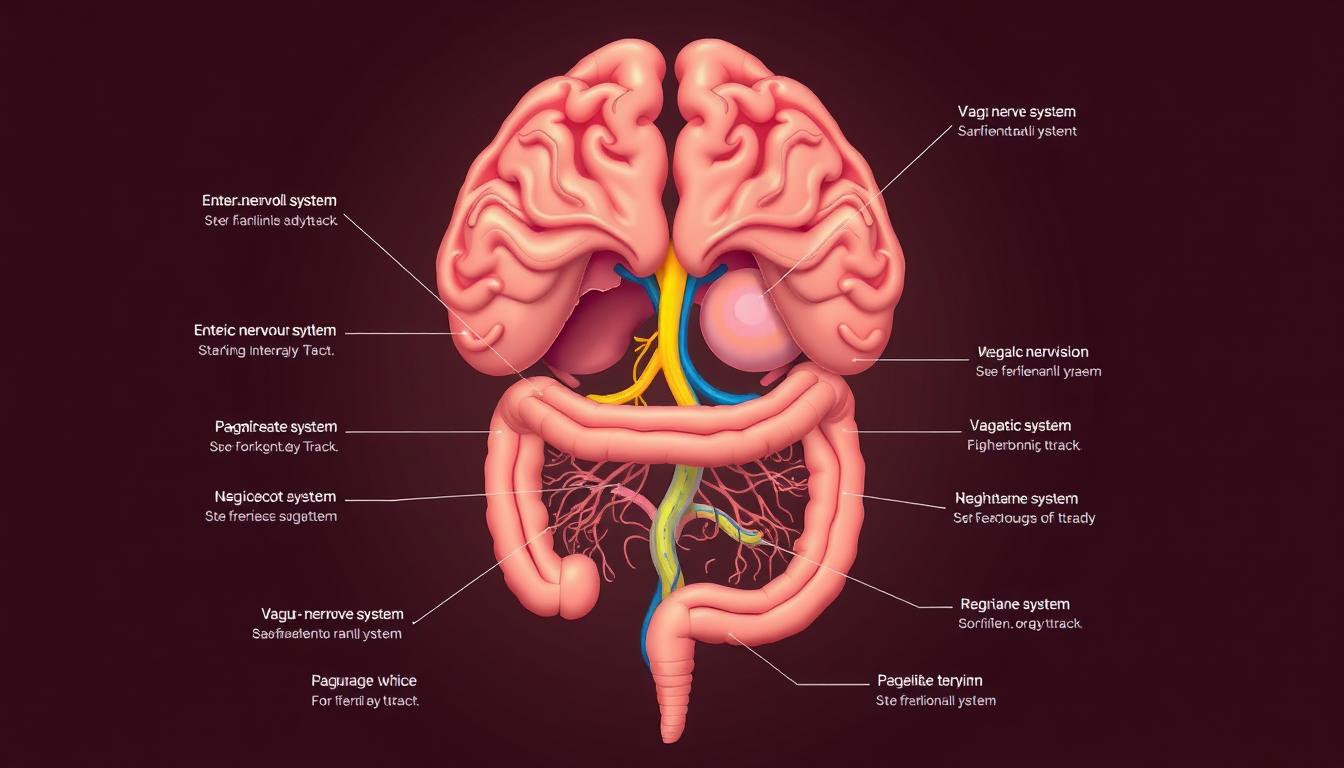
Your body has a complex messaging system. Gut hormones like CCK send signals to your brain. This brain-gut axis interaction turns digestive signals into brain responses. It affects everything from hunger to cravings.
Neural Pathways Activated by CCK
When fats or proteins reach your small intestine, CCK starts a chain reaction. Special neurons in the nodose ganglion send signals. These signals travel through the NTS-PBN pathway to your brain’s appetite centers.
This pathway:
- Alerts your brainstem to slow digestion
- Activates satiety centers in the hypothalamus
- Modulates dopamine release in reward circuits
| Pathway Component | Function | Impact on Eating Behavior |
|---|---|---|
| Nodose Ganglion Neurons | Initial signal detection | Meal termination signals |
| Nucleus Tractus Solitarius (NTS) | Signal integration | Digestive rhythm regulation |
| Parabrachial Nucleus (PBN) | Emotional processing | Food aversion/preference formation |
CCK’s Impact on Food Preferences
CCK doesn’t just tell you when to stop eating. It also influences what you want to eat. By affecting dopamine in the substantia nigra, CCK:
- Reduces cravings for high-fat foods after protein-rich meals
- Enhances satisfaction from balanced macronutrient intake
- Creates lasting associations between certain foods and fullness
Your brain’s reward system learns to seek meals that trigger CCK. This is why some foods make you feel full, while others make you want to snack more.
Clinical Implications of CCK Dysregulation
When CCK signaling goes awry, it’s not just about feeling hungry. It affects your metabolism and digestion too. Studies reveal that eating too much fat can harm the vagus nerve. This nerve is key for your body to feel full.
Obesity and CCK Resistance
Overeating can change how you feel hunger. Just like how some people become resistant to leptin, eating too much fat can make you less responsive to CCK. A 2022 study found that eating a lot of fat can reduce CCK receptors in the gut by 40% in just 8 weeks.
This creates a vicious cycle. Weaker signals of fullness mean we eat more, making CCK even less effective.
Your vagus nerve is like a messenger for CCK to your brain. When fats damage these nerves, you might feel hungry even when you’re full. Many people say they feel hungry an hour after eating, even if they’ve had a lot of food.
Gallbladder Disorders Connection
CCK is also important for digestion. It helps the gallbladder contract to release bile for fat digestion. Low CCK levels can cause bile to build up, raising the risk of gallstones by 300%, studies show. People with biliary dyskinesia often have low CCK levels.
Here are three signs you might have a CCK-related gallbladder problem:
- Right upper abdominal pain after meals
- Chronic indigestion despite dietary changes
- Elevated liver enzymes without alcohol use
Keeping CCK levels healthy can prevent these problems. Next, we’ll look at how to naturally balance your hormones.
Nutritional Strategies to Optimize CCK
What you eat affects your body’s hunger signals through Cholecystokinin (CCK). Making smart food choices boosts this hormone, making you feel full longer. It also helps with digestion. Let’s look at how to make meals that help your body, not hinder it.
Ideal Macronutrient Ratios
Protein is key for CCK. Eating 20-30 grams per meal triggers a big hormone release. Think of a chicken breast or a scoop of whey protein. Adding omega-3 foods like salmon or walnuts can increase CCK by up to 30% compared to saturated fats.
Fiber also helps, but in a different way. It stimulates the gut. Aim for:
- 5-10 grams of soluble fiber per meal (oats, lentils)
- 3-5 grams of insoluble fiber (broccoli, whole grains)
| Macronutrient | Recommended Intake | CCK Impact |
|---|---|---|
| Protein | 25-30g/meal | Triggers immediate release |
| Healthy Fats | 10-15g/meal | Sustains CCK production |
| Fiber | 8-12g/meal | Enhances gut response |
Meal Timing Considerations
Snacking too much can make your body less responsive to CCK. Studies show:
- 3 meals/day keeps CCK sensitivity 40% higher than 6 snacks
- 4-hour breaks between meals help receptors recover
Intermittent fasting also boosts CCK. A 16:8 eating window increases CCK responsiveness by:
- Allowing complete digestive cycles
- Resetting gut-brain signaling
- Reducing fat cell interference
“Timed nutrient intake works synergistically with CCK’s natural rhythm – it’s not just what you eat, but when you eat it that matters.”
CCK’s Relationship with Gut Microbiota
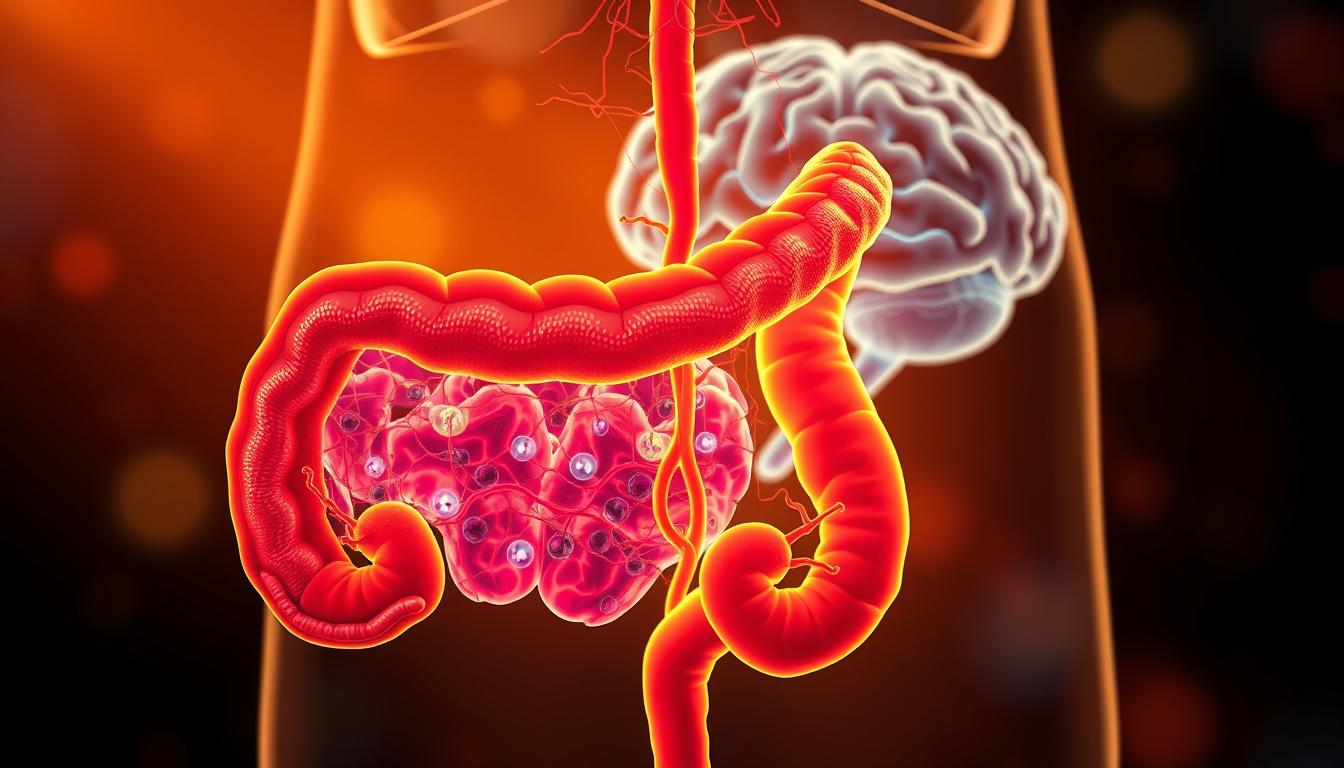
Your gut microbiome plays a big role in how your body handles nutrients and feels full. This partnership works through the gut-brain axis interactions. Here, microbes directly affect hormone levels. Let’s dive into how these tiny helpers shape your digestion.
Microbial Metabolites Influence
Gut bacteria make short-chain fatty acids (SCFAs) by breaking down fiber. These acids help release CCK by turning on intestinal cells. For instance, butyrate boosts bile acid metabolism, which signals CCK to slow digestion and make you feel full.
But, high-fat diets can mess with your gut’s balance, lowering SCFA levels. This can weaken CCK signals, making you eat more. Yet, eating prebiotic foods can fix this imbalance in just weeks.
Probiotic Interactions
Some probiotics, like Lactobacillus rhamnosus, boost CCK levels. They do this by increasing peptide YY, which helps you feel full longer. Other probiotics, such as Bifidobacterium longum, enhance bile salt activity, which also boosts CCK’s signals.
Research shows probiotics work in three ways:
- They make your intestines more sensitive to nutrients
- They strengthen your gut barrier
- They affect the vagus nerve’s signals
Though more studies are needed, early findings suggest probiotics could help reset CCK levels in people with obesity. Always talk to your doctor before trying new supplements.
Evolutionary Perspective on CCK Function
CCK’s role in our bodies comes from millions of years of evolution. It was meant to help our ancestors survive when food was scarce. Now, it faces new challenges in our modern world.
Survival Advantage Mechanisms
Early humans used CCK to get the most energy from their meals. When food was hard to find, CCK helped by slowing digestion and storing fat. Three important adaptations were:
- Extended satiety signals to reduce foraging risks
- Enhanced nutrient absorption during scarce periods
- Coordinated gallbladder contractions to optimize fat digestion
Modern Diet Mismatches
Your body’s CCK system is like it’s from the Stone Age. Foods full of refined fats and sugars overstimulate CCK receptors but offer little nutrition. This creates a problem:
- Frequent eating windows prevent natural CCK reset periods
- Hyperpalatable foods bypass evolutionary portion controls
- Reduced fiber intake weakens CCK’s natural triggers
Now, a hormone designed for famine faces constant abundance. This leads to leptin resistance and slower metabolism. Studies show our diets are 400% more calorie-dense than what CCK evolved for.
Measuring CCK Levels: Clinical Methods
Figuring out your body’s CCK activity is a complex task. This hormone is key for hunger control but is hard to measure. It’s because of its short life and complex makeup. We’ll look at why blood tests often fail and what else you can try.
Why Blood Tests Struggle With Accuracy
There are three big problems with traditional CCK testing:
- Rapid degradation: CCK quickly breaks down in blood samples
- Cross-reactivity: Tests might confuse CCK with other hormones like gastrin
- Technical demands: It needs special radioimmunoassay equipment
“Only 23% of clinical labs can reliably measure CCK due to stringent handling requirements,” notes a 2022 Journal of Endocrinology study.
Practical Alternatives for Real-World Assessment
Smart doctors use tests that show CCK’s effects, not just measure it:
| Method | Procedure | Accuracy |
|---|---|---|
| Gallbladder Scan | Measures organ contraction after a fatty meal | 89% correlation with CCK activity |
| Nutrient Challenge | Tracks digestive enzymes post-protein/fat intake | Assesses multiple gut hormones |
The mixed-nutrient test is great for CCK testing:
- Have a standardized meal (15g fat/20g protein)
- Collect blood samples every 15 minutes
- Look at how pancreatic enzymes respond
Pharmacological Uses of CCK
CCK naturally helps with digestion and controlling hunger. But, its man-made versions have opened up new medical uses. Doctors use this hormone to find and treat health problems related to the gut.
Diagnostic Applications
Synthetic CCK is key in liver and bile duct imaging. It makes the gallbladder contract. This helps doctors spot problems like blockages or issues with how it works.
This method is great for finding:
- Gallstones that can’t be seen with regular ultrasound
- Obstructions in the pancreas due to chronic pancreatitis
- Problems with the sphincter of Oddi
In tests of the pancreas, CCK helps measure how well it makes enzymes. “This method helps tell if the pancreas isn’t making enough enzymes or if the intestines can’t absorb nutrients,” says Dr. Emily Torres, a researcher at Johns Hopkins.
Therapeutic Potentials
Companies are working on CCK-based treatments for weight loss. Early tests show these treatments can cut down on how much people eat by 15-20%. Some promising areas include:
- Injectable CCK-receptor activators to control hunger
- Oral drugs that boost CCK and GLP-1
- Gene therapies to increase CCK in gut cells
But, using CCK for treatment needs careful dosing. Too much CCK can cause nausea or make the gallbladder work too hard. This is why scientists are working on ways to deliver it safely.
Exercise-Induced CCK Responses
Your workout routine does more than build muscle—it directly influences hunger signals through CCK regulation. Physical activity triggers complex hormonal responses that shape your appetite and digestion patterns. Let’s examine how different exercise types affect this satiety hormone and how to fuel your body for maximum benefit.
Aerobic vs Anaerobic Impacts
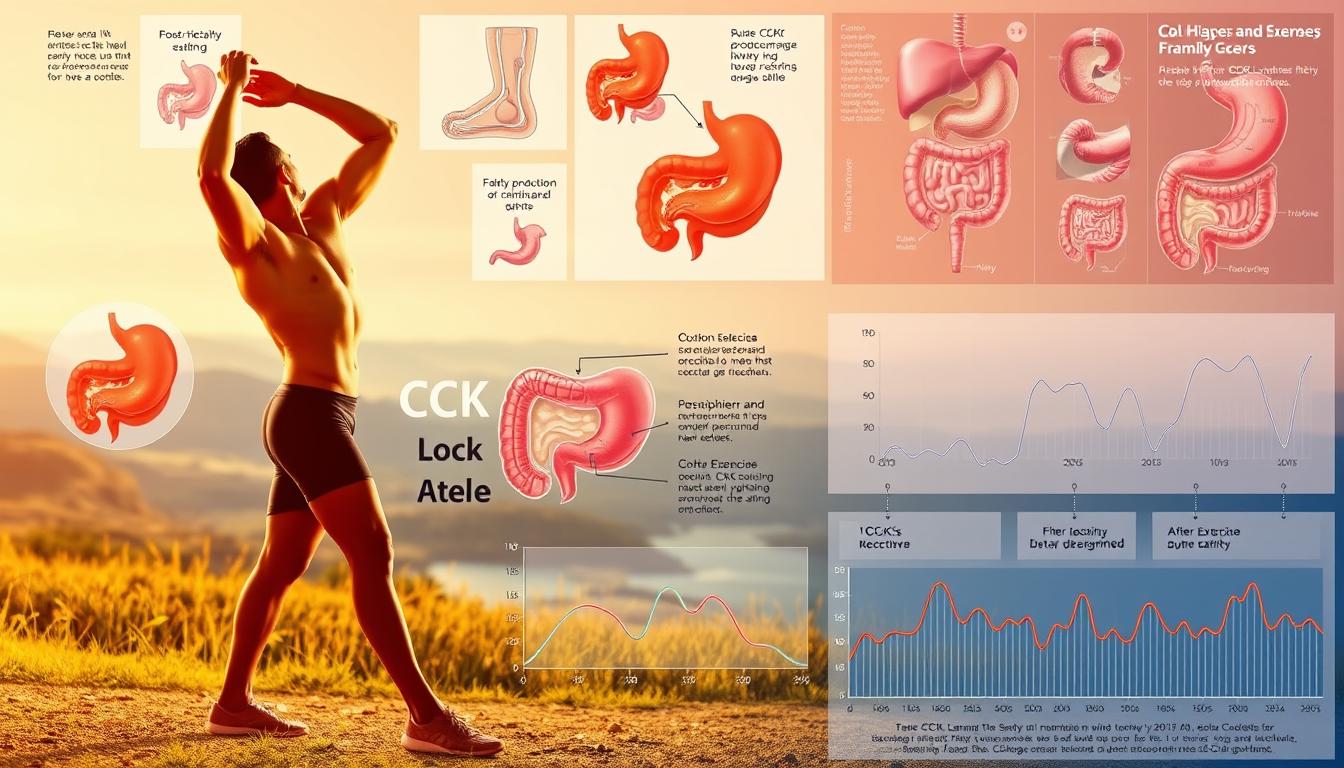
Endurance training like running or cycling enhances CCK sensitivity by improving glucose metabolism. Studies show 45-minute moderate-intensity sessions increase hormone release by 18-22%, helping you feel fuller longer. This effect peaks 30-60 minutes post-exercise, creating a natural window for controlled eating.
High-intensity interval training (HIIT) temporarily suppresses CCK production due to elevated stress hormones. While this might increase short-term hunger, the metabolic boost lasts hours. Balance intense workouts with protein-rich snacks to avoid overeating later.
Recovery Nutrition Strategies
Optimize post-exercise meals using these CCK-friendly approaches:
- Combine 20-30g lean protein with healthy fats (like avocado or nuts) to stimulate hormone release
- Choose fiber-rich carbs like oats or berries over refined sugars
- Stay hydrated—dehydration mimics hunger signals, confusing CCK pathways
Timing matters most after anaerobic workouts. Consume your recovery meal within 45 minutes when CCK levels rebound. This helps stabilize blood sugar while leveraging the hormone’s natural appetite-curbing effects.
CCK in Weight Management Programs
Changing your diet and habits to boost CCK activity can really help with weight management. Studies show 23% greater weight loss success with CCK-optimized strategies than just counting calories. This hormone slows digestion and boosts feelings of fullness, aiding in fat loss.
Dietary Approaches Enhancement
Optimizing meal composition triggers stronger CCK responses. Focus on these three elements:
- Protein-rich starters: Begin meals with 20g of lean protein to stimulate CCK release
- Healthy fats timing: Add olive oil or nuts midway through eating to prolong satiety
- Fiber pacing: Space high-fiber foods 10 minutes apart to maintain CCK activation

Recent research shows eating protein first boosts CCK levels by 40% over carb-heavy meals. This simple change can help cut calorie intake without feeling deprived.
Behavioral Modification Synergy
Combine nutritional changes with these CCK-boosting behaviors:
- Chew each bite 15-20 times to enhance gut-brain signaling
- Pause for 2 minutes mid-meal to assess fullness cues
- Use bitter flavors (arugula, dark chocolate) to amplify CCK release
Mindful eating strengthens vagal nerve communication, the main pathway for CCK’s satiety signals. A 2023 study found those using these techniques had 31% fewer cravings and ate smaller portions naturally.
Pairing strategic nutrition with mindful eating habits creates a powerful feedback loop. Your body’s CCK system becomes more responsive, helping you maintain weight loss with less effort over time.
Myths vs Facts About CCK
It’s important to know the truth about cholecystokinin (CCK) and its health effects. Let’s clear up common myths with facts.
Supplement Claims Analysis
Many products claim to boost CCK for weight loss or better digestion. But here’s the truth: CCK supplements are not FDA-approved, and their benefits are unproven. Studies show that how well your body responds to CCK matters more than just the hormone levels. A 2022 study found no real difference in appetite control between those taking supplements and those who didn’t.
False claims include:
- “Natural CCK boosters guarantee satiety”
- “Pills replicate meal-induced CCK release”
- “Higher CCK levels prevent obesity”
Nutrigenomics shows why these claims don’t hold up. Your genes affect how your body responds to CCK, so two people with the same hormone levels can feel hunger differently. Instead of relying on supplements, eat whole foods that naturally trigger CCK release.
Genetic Determinism Misconceptions
Genetic testing companies sometimes say your DNA controls CCK function. But this is too simple. CCK-related genes account for less than 15% of how we feel full, twin studies show. Diet and eating speed have a bigger impact.
Important facts often missed:
- Gene expression changes with lifestyle
- Epigenetic factors affect CCK receptor efficiency
- No single “obesity gene” controls CCK pathways
Recent studies show that improving gut health boosts CCK sensitivity better than genetic fixes. Your daily choices, not just your genes, influence how CCK works in your body.
Conclusion
Now you know how cholecystokinin (CCK) links meal satisfaction to better health. This summary shows how eating smart can help CCK control hunger. Start with protein like grilled chicken or lentils to feel full sooner.
Add fats like olive oil or avocado to meals with fiber, like broccoli or oats. This keeps you feeling full longer. Remember, when and what you eat is as important as what you eat.
Eating at regular times helps CCK work better. But eating too fast can mess with your gut and brain. Also, try exercises like squats and push-ups to boost CCK after working out.
Choose whole foods over processed snacks to keep your digestion working right. The Mediterranean diet is great for this, as it boosts CCK and lowers gallbladder disease risk. Watch how your hunger changes, not just how many calories you eat.
Doctors use CCK summaries to help with weight and digestion issues. If you feel full too fast or lose weight without trying, talk to your doctor. They can suggest probiotics or mindful eating to help.
Your meals are more than just food; they’re a way to talk to your body’s natural hunger controller. It’s a powerful tool for your health.