What if the root cause of chronic pain and instability in hypermobile individuals isn’t just loose joints—but a body-wide communication system most doctors overlook? Research reveals that 100% of your muscles, organs, and nerves are woven together by a single connective tissue network influencing everything from mobility to metabolic health.
Dr. Tina Wang, a leading physical medicine specialist, describes this system as “the scaffolding that holds you together—and the messenger coordinating every movement.” In people with EDS, this critical framework becomes disorganized. The tissue stretches too easily, loses elasticity, and fails to transmit vital signals properly.
This dysfunction creates a domino effect. Joints slip out of place because surrounding support structures lack tension. Pain flares occur when nerve endings become compressed by sagging tissue. Even digestion and circulation suffer as organ-positioning networks weaken.
Key Takeaways
- Fascia forms a continuous web connecting every cell in your body
- Structural changes in this tissue drive many EDS-related symptoms
- Hypermobility often coincides with fascial weakness and poor force distribution
- New research links fascial abnormalities to chronic pain patterns
- This living matrix actively responds to injury, stress, and movement habits
Understanding this hidden network explains why symptoms seem unrelated—and opens doors to targeted therapies. What feels like separate issues in your knees, gut, or skin might share a common source in compromised connective tissue.
Understanding Fascia: Its Role in the Body
Beneath your skin lies a dynamic network that does more than hold muscles in place. This connective tissue acts as both structural scaffolding and a cellular communication highway, influencing how your body moves and heals.

Definition and Overview of Fascia
Fascia forms a 3D web of collagen and elastin fibers that wraps around every muscle, organ, and nerve. It exists in two primary layers:
| Layer | Location | Function |
|---|---|---|
| Superficial | Just below skin | Stores fat, regulates temperature |
| Deep | Around muscles/organs | Transmits force, reduces friction |
Specialized cells within this tissue detect pressure changes and trigger healing responses. The extracellular matrix gives it flexibility while maintaining structural integrity.
Fascial Functions in Metabolic and Structural Processes
This living matrix actively transports nutrients and removes waste through lymphatic channels. Research shows it:
- Distributes mechanical stress during movement
- Contains 6x more nerve endings than muscles
- Adapts to repetitive motions within 72 hours
When healthy, these layers glide smoothly like sheets of silk. Damage or dehydration creates adhesions that disrupt whole-body communication. Your movement patterns directly shape this tissue’s long-term resilience.
Fascia and Connective Tissue in EDS/HSD
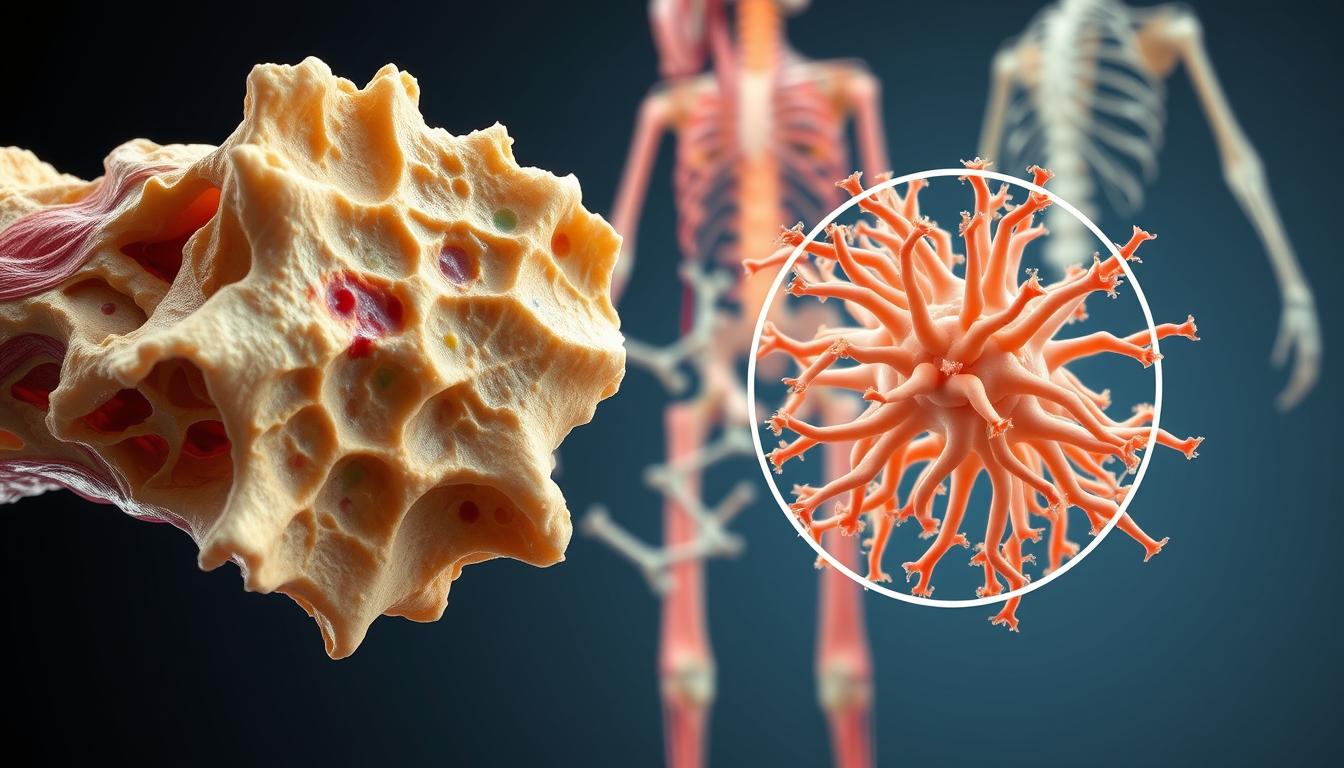
Imagine your body’s support system working against itself—some parts sagging like overstretched elastic, others stiffening like dried glue. This imbalance defines connective tissue challenges in hypermobility spectrum disorders. The system meant to stabilize joints and transmit movement signals becomes a source of instability.
When Support Becomes Stress
In EDS/HSD, your collagen-rich matrix behaves unpredictably. Joint capsules stretch beyond safe limits, while nearby tissue hardens abnormally. One study notes: “Hypermobile patients show 40% less fascial recoil compared to healthy controls.”
| Tissue Property | Normal Function | EDS/HSD Dysfunction |
|---|---|---|
| Elasticity | Returns to shape after stress | Permanent deformation |
| Glide Capacity | Smooth layer movement | Restricted sliding |
| Force Distribution | Even load sharing | Localized overloading |
This erratic behavior forces muscles to compensate. Your biceps might strain to stabilize a shoulder joint that connective tissue can’t secure. Over time, these adaptations lead to fatigue and pain cycles.
Proprioception—your body’s position sense—relies on tension feedback from this network. When tissue slackens, your brain receives distorted signals. You might misjudge step heights or grip strength, increasing injury risks.
Breaking this cycle requires addressing both joint mobility and the surrounding matrix. Targeted therapies now focus on re-educating this system through controlled loading and sensory retraining.
The Science Behind Fascia Dysfunction
Why does a paper cut heal in days, while fascial damage lingers for years? The answer lies in cellular shifts that reshape your body’s scaffolding. When this matrix malfunctions, it doesn’t just snap back—it remodels itself into a source of persistent strain.
Altered Gliding and Densification of Fascia
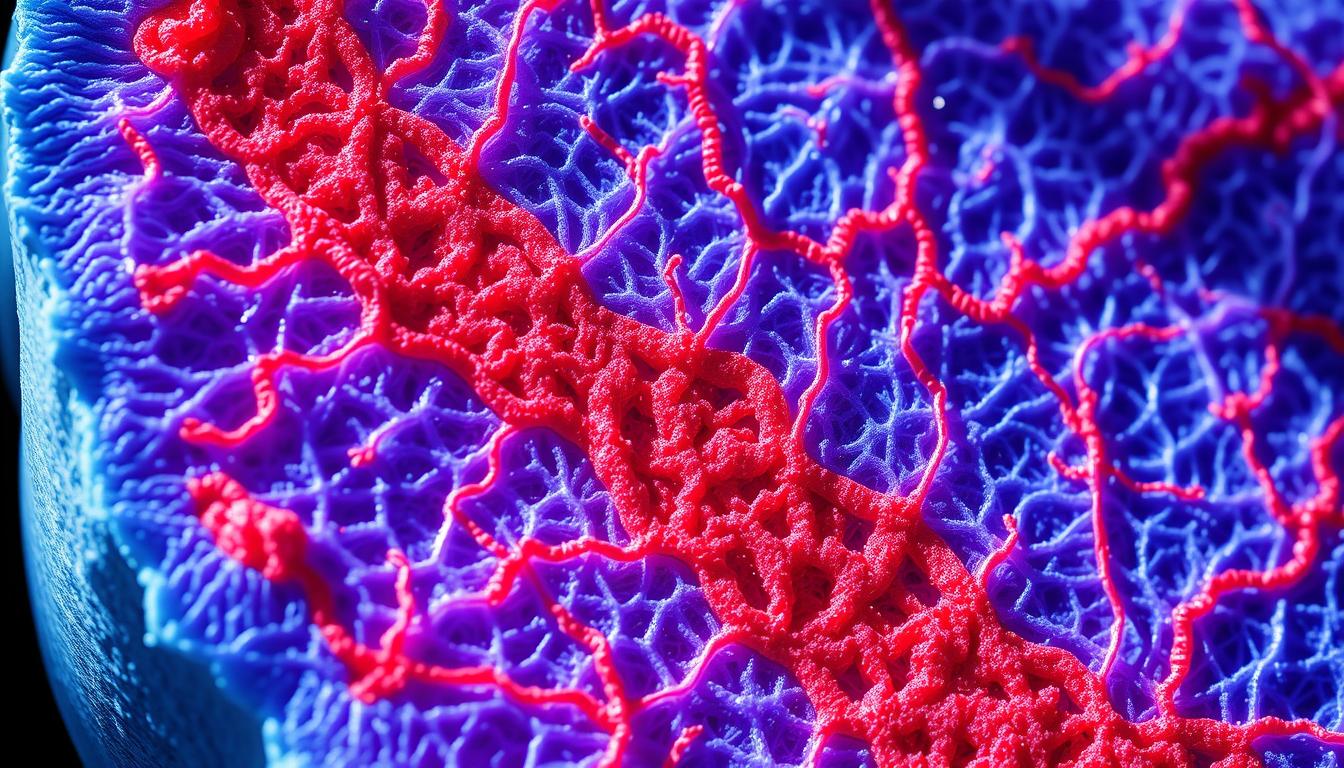
Healthy connective tissue layers slide smoothly like sheets on a bed. But chronic stress glues these layers together. Research shows repetitive motions or injuries can reduce fascial glide by 30% within weeks. This restriction forces adjacent muscles to overwork, creating domino-effect pain patterns.
Densification—a thickening process—worsens the problem. Myofibroblasts, cells normally active during wound healing, become stuck in overdrive. They pump out excess collagen, turning flexible tissue into stiff scar-like material. One study found these cells remain active 5x longer in hypermobile individuals compared to controls.
Myofibroblast Activity and Pathological Changes
Dr. Wang’s team discovered emotional stress triggers the same biochemical alarms as physical trauma. Both activate mast cells, which release histamines that:
- Increase inflammation
- Signal fibroblasts to transform into myofibroblasts
- Alter the extracellular matrix’s composition
This cycle explains why symptoms persist long after initial injuries heal. The tissue isn’t just damaged—it’s reprogrammed. New imaging techniques reveal densified areas transmit force unevenly, straining joints and nerves.
Breaking this pattern requires more than rest. Emerging therapies target cellular communication pathways to reset abnormal remodeling processes. By addressing both mechanical triggers and biochemical drivers, lasting relief becomes possible.
Hypermobile Syndromes and Fascia
For years, medical professionals struggled to explain why some patients experience widespread pain despite normal joint imaging. The answer emerged through studying connective tissue’s master regulator – the extracellular matrix.
Decoding the Spectrum
Hypermobility spectrum disorders exist on a continuum. Some people show exceptional joint flexibility without symptoms, while others face daily battles with dislocations and fatigue. A 2020 study revealed 73% of symptomatic patients have measurable fascial abnormalities.
Dr. Maria Colombi’s groundbreaking work identified altered gene activity in eds hsd patients. Her team discovered 42 genes related to matrix organization function differently. “These changes create a biological domino effect,” she notes. “Tissue that should provide support becomes a source of instability.”
Key distinctions in presentation include:
- Localized vs systemic involvement
- Collagen organization patterns
- Nerve density in connective tissue
| Presentation | Asymptomatic | Moderate | Severe |
|---|---|---|---|
| Joint Stability | Normal | Occasional slips | Daily dislocations |
| Pain Patterns | None | Activity-related | Constant |
| Recovery Time | 24-48 hours | 3-5 days | Weeks+ |
Environmental factors like repetitive motions or hormonal changes often trigger symptom onset in genetically predisposed individuals. This explains why identical twins might have dramatically different experiences with hypermobility disorders.
Modern diagnosis now considers fascial integrity alongside joint mobility tests. This shift helps explain why some eds hsd patients struggle with digestion and circulation – systems all connected through the body’s fibrous network.
Fascia 101: The Hidden Network Behind Ehlers-Danlos Symptoms
Cutting-edge discoveries are reshaping how we understand chronic conditions tied to connective tissue. Advanced imaging tools now reveal what was once invisible—structural changes in the body’s support system that drive complex symptoms.
Scientific Insights and Research Contributions
Dr. Tina Wang’s 2021 ultrasound study marked a turning point. For the first time, researchers observed thickened deep connective tissue in individuals with hypermobile EDS and related disorders. This visual proof connected genetic factors to tangible changes in the body’s scaffolding.
Modern techniques like elastography show how this tissue behaves differently under stress. “We’re seeing real-time evidence of force distribution failures,” Wang notes. These findings explain why pain often appears in seemingly unrelated areas—your knees and gut share the same strained network.
Implications for Diagnosis and Treatment
These breakthroughs are changing clinical approaches. Doctors now use fascial thickness measurements to support diagnosis, reducing reliance on subjective assessments. Targeted therapies focus on restoring glide between tissue layers through specialized exercises.
Emerging treatments address cellular communication breakdowns. By combining movement retraining with anti-inflammatory strategies, patients report improved stability and reduced pain cycles. Your care team might now include fascia specialists alongside traditional providers.