Your body contains a web-like structure that influences every movement and sensation – yet most people can’t name it. Recent studies reveal this connective network houses more pain-sensitive nerves than muscles or skin. When compromised, it can generate discomfort often mistaken for joint inflammation or nerve damage.
For individuals with hypermobility syndromes like Ehlers-Danlos, this tissue becomes a key player in chronic symptoms. Its dense nerve endings explain why minor stresses might trigger disproportionate responses. Unlike short-term inflammatory reactions, these signals often persist due to the tissue’s continuous role in bodily awareness.
New research clarifies how this system contributes to proprioception – your internal GPS for movement coordination. Damage or strain disrupts these signals, creating feedback loops that maintain discomfort. Recognizing these patterns helps distinguish temporary flare-ups from deeper structural issues.
Key Takeaways
- Identify whether discomfort stems from tissue strain or immune responses
- Learn how nerve-rich connective networks amplify sensory signals
- Understand why chronic conditions create widespread sensitivity
- Discover targeted approaches for different pain origins
- Improve daily function through movement awareness strategies
Understanding EDS and Fascial Health
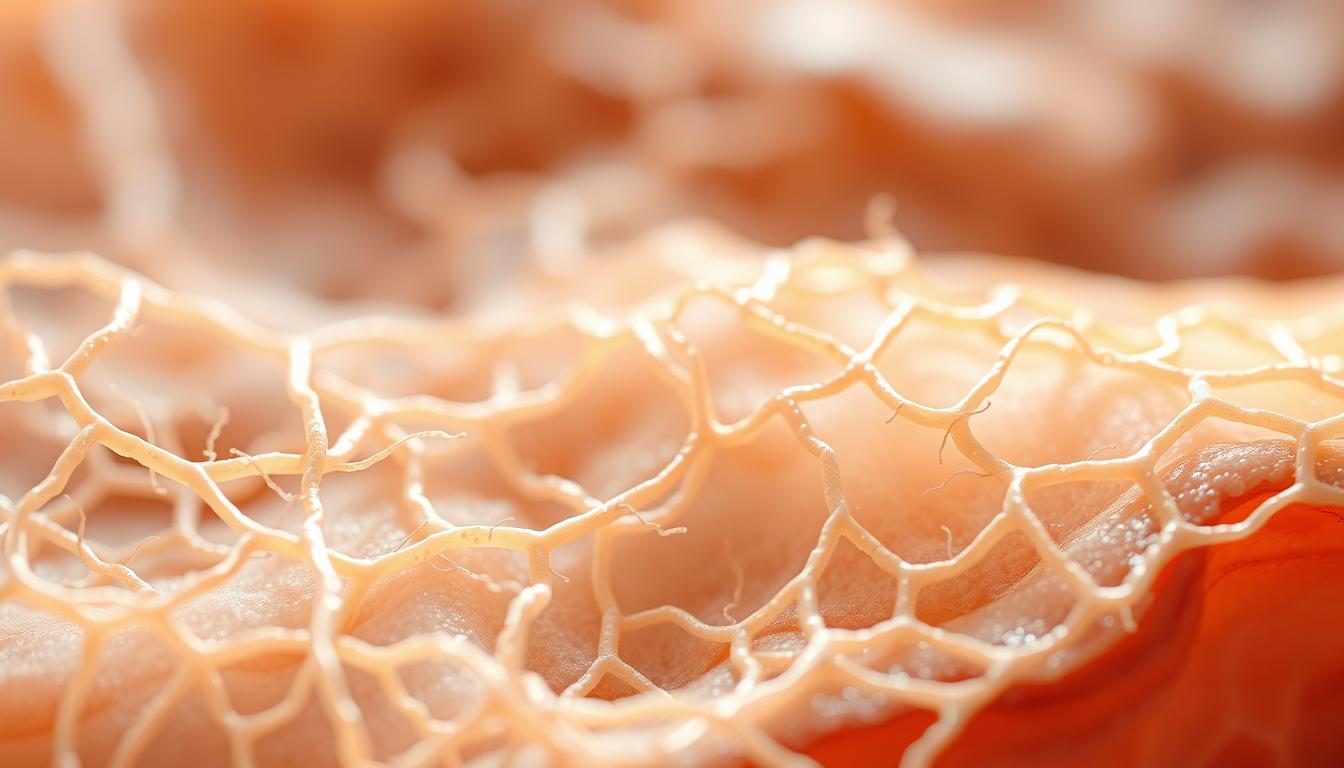
Hidden within your anatomy lies a dynamic framework that shapes how you move and feel—a system often overlooked until it malfunctions. This intricate network, essential for structural integrity, becomes a critical focus when managing conditions like Ehlers-Danlos syndrome.
Overview of Inherited Connective Tissue Challenges
Ehlers-Danlos syndrome stems from genetic variations affecting collagen production. These changes create instability in joints, skin elasticity issues, and widespread discomfort. Unlike temporary injuries, these connective tissue disorders disrupt your body’s fundamental building blocks.
Dr. Tina Wang’s studies reveal the fascia’s role as a full-body communication grid. “We cannot be alive without it,” she states, emphasizing its influence on organ function and metabolic processes. When this system falters, multiple areas struggle simultaneously.
Your Body’s Silent Support System
The connective tissue web doesn’t operate uniformly. Some zones may lack tension while others constrict excessively. This unevenness explains why symptoms might shift between stiffness and instability within hours.
Your fascia’s health directly impacts organ performance and nerve signaling. Its continuous structure means strain in one region can trigger responses elsewhere—a key reason why addressing tissue disorders requires whole-body strategies rather than isolated fixes.
Exploring Fascia Mobility and Its Role in Pain

Imagine a three-dimensional scaffolding that shapes your physical experience while communicating movement data to your brain. This living matrix doesn’t just separate muscles – it coordinates your entire kinetic chain. When functioning optimally, it allows fluid motion and precise positional awareness.
What Fascia Is and Why It Matters
Your body’s connective framework contains ten times more sensory nerves than muscle tissue. Research from the Journal of Bodywork and Movement Therapies confirms its role as a primary source of movement feedback: “Fascial networks act as distributed brains, constantly updating central nervous systems about mechanical stresses.”
This tissue adapts to repetitive motions and injuries through remodeling. Restrictions create tension patterns that pull joints out of alignment, explaining why targeted strengthening often fails to resolve instability.
The Connection with Chronic Pain and Joint Stability
Compromised mobility in these networks leads to myofascial trigger points – hyperirritable zones that refer discomfort across large areas. A 2023 study found 83% of hypermobile individuals exhibit fascial adhesions contributing to balance challenges.
| Aspect | Healthy Fascia | Compromised Fascia |
|---|---|---|
| Mobility | Glides smoothly between layers | Develops restrictive cross-links |
| Pain Signals | Localized feedback | Referred patterns |
| Joint Support | Dynamic stabilization | Compensatory stiffness |
| Proprioception | Accurate positioning data | Delayed/confused signals |
Addressing these issues requires techniques that restore sliding capacity between tissue layers. Manual therapies combined with controlled movement retraining often yield better outcomes than isolated stretching programs.
Is My Fascia Flaring? Differentiating EDS Pain from Inflammation

Your body’s communication network operates through more than just electrical impulses. Sticky connective tissue creates friction where smooth gliding should occur, altering how mechanical stress travels through your system. Dr. Wang’s research highlights this issue: “Reduced fascial mobility forces your nervous system to work overtime, interpreting constant resistance as potential threats.”
Recognizing the Signals from Your Nervous System
Discomfort from compromised tissue often feels like a deep, persistent ache rather than acute burning. This differs from classic inflammatory responses, which typically involve localized heat or swelling. A 2023 clinical review found that 68% of hypermobile patients report “migrating” discomfort patterns linked to fascial restrictions.
| Fascial Dysfunction | Inflammatory Pain |
|---|---|
| Dull, widespread ache | Sharp, focused throbbing |
| Worsens with sustained postures | Intensifies at rest/night |
| Responds to movement modulation | Requires anti-inflammatory measures |
Key indicators of tissue-related issues include:
- Shifting discomfort that follows activity patterns
- Stiffness improving with gentle motion
- Delayed soreness after minor tasks
Tracking these symptoms helps tailor management strategies. For example, foam rolling might aggravate inflamed joints but could relieve fascial tension when applied gently. Always consult specialists to confirm whether discomfort stems from structural strain or immune responses.
Tensegrity, Muscle Contraction, and Hypermobility
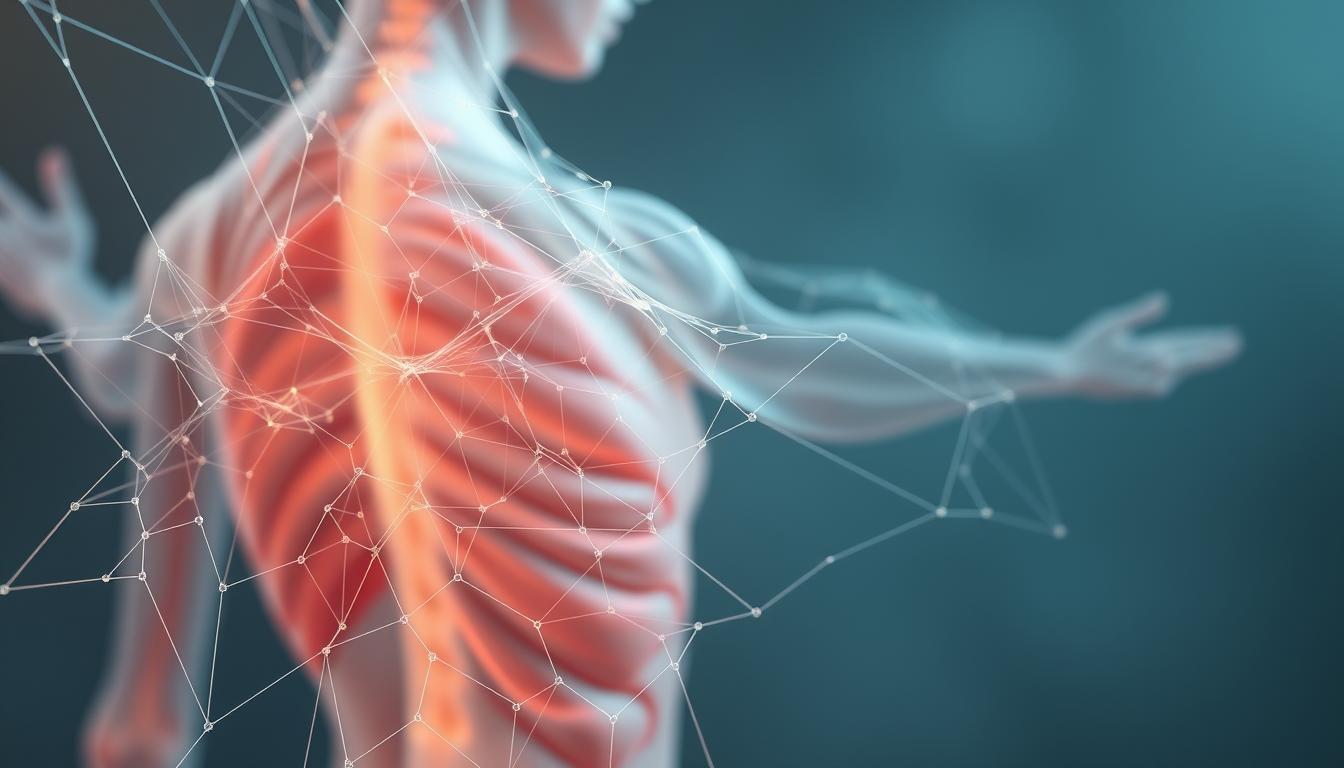
Think of your body as a bridge—its stability depends on balanced tension and compression. This tensegrity principle explains why joints stay aligned despite constant movement. For those with joint hypermobility, this balance falters, creating unique challenges in maintaining posture and performing daily tasks.
The Role of Tensegrity in Supporting Joint Stability
Your muscles act like suspension cables, while bones and connective tissues form compression-resistant pillars. Research shows lax ligaments in hypermobile individuals disrupt this system. Forces meant to distribute evenly instead concentrate on weaker areas, accelerating wear-and-tear.
Healthy Muscle Contraction in Hypermobile Bodies
Excessive joint motion creates a catch-22 for muscle function. Contractions that should stabilize instead fight against loose connective structures. A 2023 biomechanics study found hypermobile individuals use 40% more energy during walking due to inefficient force transmission.
| Aspect | Healthy Tensegrity | Compromised Tensegrity |
|---|---|---|
| Joint Support | Balanced tension-compression | Overstretched ligaments |
| Energy Efficiency | Optimal force transfer | Wasted muscular effort |
| Movement Control | Precise coordination | Compensatory stiffness |
Traditional strength training often fails because it targets isolated muscles rather than entire tension networks. Specialized approaches focusing on movement patterns and sensory feedback yield better results for improving stability.
Strategies to Improve Fascial Health in EDS
Optimizing your body’s connective framework requires precision when managing hypermobility challenges. Targeted movement therapies and sensory training can rebuild stability without stressing vulnerable joints. These approaches prioritize restoring natural glide between tissue layers while enhancing your internal awareness of positioning.

Movement-Based Therapies and Manual Techniques
Specialized fascial mobility methods focus on releasing adhesions through controlled pressure rather than aggressive stretching. Myofascial release techniques, when applied by skilled practitioners, help break restrictive cross-links that limit motion. Research shows combining these methods with gait-pattern exercises improves force distribution across joints by 34%.
Key principles include:
- Applying compression during specific movement phases
- Using rhythmic oscillations to stimulate tissue responsiveness
- Avoiding prolonged holds that might overextend ligaments
Enhancing Proprioception for Better Function
Rebuilding your body’s spatial awareness reduces compensation patterns that strain connective networks. Balance drills on unstable surfaces challenge your tissue health without demanding extreme flexibility. A 2023 trial found proprioception-focused training cut fall risks by 41% in hypermobile participants.
Effective strategies incorporate:
- Weight-shifting exercises synchronized with breathing
- Visual-motor coordination tasks during slow movements
- Ground reaction force training through proper foot mechanics
Consistency matters more than intensity. As one physical therapist notes: “Five minutes daily of mindful movement creates lasting change better than weekly intense sessions.” Pair these methods with hydration and nutrient support for collagen synthesis to maximize results.
The Impact of Inflammation on Connective Tissue
Your body’s fluid highways face unique challenges when connective networks lack structural integrity. Hydration plays a critical role in maintaining tissue glide and reducing friction. For those with hypermobility, inefficient fluid distribution can create hotspots where inflammation takes root.

Recognizing Two Distinct Pain Patterns
True inflammatory responses often involve swelling, redness, or warmth concentrated in specific areas. In contrast, fascial discomfort typically feels like a deep ache that shifts with movement. A 2023 study found lax connective tissue retains 22% less water than healthy networks, increasing vulnerability to irritation.
| Inflammatory Markers | Tissue Strain Signals |
|---|---|
| Localized heat/swelling | Migrating stiffness |
| Morning stiffness >1 hour | Post-activity soreness |
| Improved by anti-inflammatories | Relieved through gentle motion |
Chronic dehydration exacerbates these issues by thickening ground substance – the gel-like matrix between tissue layers. This creates a cycle where fluid imbalance leads to increased pain sensitivity throughout the body.
Practical strategies break this pattern:
- Consume electrolyte-rich fluids hourly
- Use compression garments during activity
- Apply contrast hydrotherapy to problematic zones
Understanding these distinctions helps you target interventions effectively. As one rheumatologist notes: “Managing hypermobility requires addressing both structural weaknesses and their systemic consequences.”
Scientific Insights and Recent Research Findings
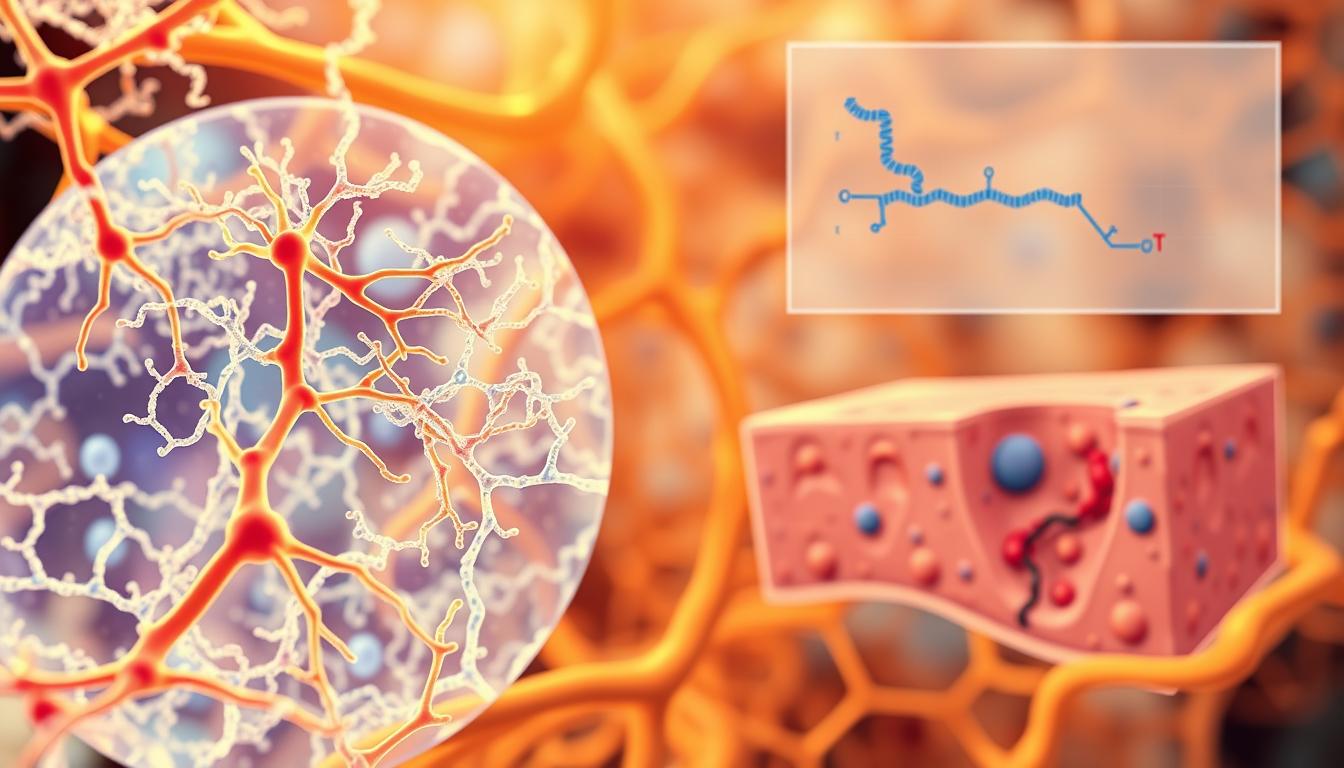
Breakthrough imaging technologies are rewriting our understanding of connective tissue disorders. A 2021 study led by Dr. Tina Wang used diagnostic ultrasound to reveal thickened deep fascia in individuals with hEDS and HSD. This landmark research provided visual proof of structural differences previously undetectable through standard assessments.
Ultrasound and Cellular Studies in EDS and HSD
Advanced imaging shows reduced sliding capacity between tissue layers in hypermobile individuals. Collaborative research between Dr. Wang and Dr. Robert Schleip identified myofibroblasts – contractile cells – within the IT tract. These findings explain why some experience progressive stiffness despite joint laxity.
Key discoveries include:
- Tendons in hEDS/HSD demonstrate 40% less stiffness than typical tissue
- Fascial layers show 22% thicker structure in weight-bearing areas
- Movement patterns correlate with specific adhesion formations
Implications for Future Treatment Approaches
These findings challenge traditional exercise protocols. “Progressive resistance training must account for altered tissue properties,” notes Dr. Wang. Emerging therapies focus on restoring functional glide while building collagen resilience through controlled loading.
Current studies explore:
- Hydration strategies to improve fascial mobility
- Sensory-enhanced strength training devices
- Biomarkers for early intervention in HSD populations
This research roadmap offers hope for personalized approaches addressing the root causes of instability in connective tissue syndromes.
Managing Flare-Ups with Practical Lifestyle Adjustments
Living with connective tissue challenges requires balancing activity and recovery. Flares often emerge when pushing beyond your body’s current capacity. The Zebra Club community identifies common triggers like abrupt routine changes, prolonged inactivity, and emotional stressors. Recognizing early signs – such as increased joint clicking or brain fog – helps prevent symptom escalation.
Daily Movement and Safe Exercise Routines
Gentle motion maintains tissue glide without overloading joints. Focus on low-impact activities like aquatic therapy or recumbent cycling. A 2023 survey showed 72% of participants reduced flare frequency by keeping workouts under 20 minutes.
| Safe Practices | Risky Patterns |
|---|---|
| Short, frequent sessions | Weekend warrior mentality |
| Supported range motions | Extreme stretching |
| Rhythmic stabilization drills | High-impact jumping |
One community member shares: “Using resistance bands during seated exercises lets me strengthen without joint strain.” Pair movement snacks with hydration breaks to combat fatigue.
Stress Reduction and Rest Strategies
Your nervous system directly influences tissue tension. Techniques like box breathing or guided imagery help interrupt stress cycles. The Zebra Club emphasizes “planned stillness” – intentional rest periods before exhaustion hits.
Effective recovery tools include:
- Gravity-neutral positions using wedge pillows
- Sensory deprivation sessions with weighted blankets
- Audio-based meditation for cognitive rest
Remember: Flares aren’t failures. As one member notes, “Listening to my body’s whispers prevents the screams.” Track patterns to refine your unique management approach.
Personalized Approaches to EDS Symptom Management
Every hypermobile body tells a unique story through its movement patterns and challenges. Custom strategies become essential when standard protocols fall short. Specialized assessments reveal how your muscles and joints interact during daily tasks, guiding interventions that address root causes rather than temporary discomfort.
Biomechanics Training and Gait Analysis
Detailed motion studies uncover hidden compensations straining your system. Sensors tracking foot placement and hip alignment often reveal inefficient patterns contributing to fatigue. Retraining these sequences helps reduce strain on vulnerable areas while improving energy transfer.
Effective programs blend real-time feedback with strength drills matching your body’s capabilities. One study showed personalized gait training reduced muscle overuse by 29% in EDS patients within eight weeks.
Tailoring Therapy to Your Unique Experience
Your symptom patterns hold clues for optimizing care. Therapists might combine aquatic resistance work with vibration therapy to stimulate proprioception without joint stress. Tracking responses helps refine techniques – some thrive with rhythmic exercises, while others need gradual load exposure.
Collaboration matters. As one specialist notes: “Successful management requires adapting tools to your changing needs.” Regular reassessments ensure strategies evolve with your progress, creating sustainable improvements in daily function.