Groundbreaking research reveals that 75% of individuals with hypermobile Ehlers-Danlos syndrome (hEDS) show visible abnormalities in their connective tissue structure—a discovery made possible by ultrasound imaging. For decades, these changes were invisible to standard diagnostic tools, leaving patients without clear answers for their widespread symptoms.
Dr. Tina Wang, a leading expert in physical medicine, has pioneered methods to visualize how the body’s hidden scaffolding—the fascia—behaves differently in hypermobility disorders. Her work uncovers thickened layers and restricted movement in this tissue network, which connects every muscle, organ, and joint. These findings explain why conditions like hEDS and classical EDS (cEDS) cause pain far beyond loose joints.
Imagine a web that holds your body together while also sensing tension, coordinating movement, and regulating inflammation. When this system malfunctions, it impacts everything from digestion to wound healing. Dr. Wang’s studies prove that fascial dysfunction isn’t just a side effect—it’s a root cause of the fatigue, instability, and chronic pain experienced by millions.
This new understanding is transforming care strategies. Clinicians now recognize that addressing fascial health could improve outcomes more effectively than focusing solely on joint stabilization. For patients, it validates their experiences and opens doors to targeted therapies that tackle the source, not just the symptoms.
Key Takeaways
- Ultrasound imaging now reveals structural changes in connective tissue for 75% of hEDS patients.
- Fascia acts as a body-wide communication network influencing metabolism, movement, and pain signaling.
- Abnormalities include thickened tissue, reduced flexibility, and impaired gliding between layers.
- These dysfunctions explain multisystem symptoms like digestive issues and chronic inflammation.
- New treatment approaches focus on restoring fascial health rather than just managing joint instability.
- Research validates patient experiences and supports development of mechanism-based therapies.
Introduction to Fascia and Connective Tissue Disorders
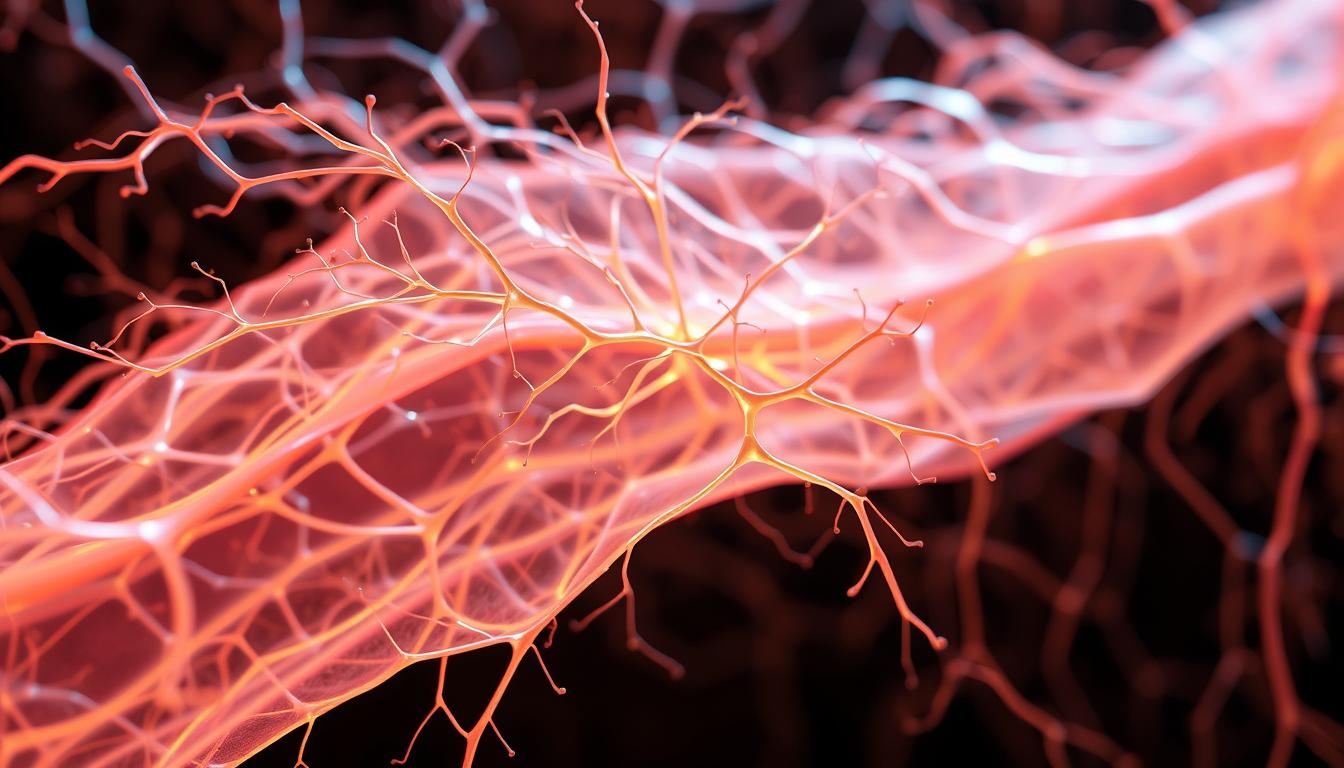
Your body’s most underappreciated system isn’t your heart or lungs—it’s the intricate web connecting every cell. This living matrix coordinates movement, regulates inflammation, and even influences how you process nutrients.
Understanding the Role of Fascia in the Body
This dynamic network acts as your biological internet—transmitting mechanical forces and chemical signals. It stores energy, supports organs, and contains ten times more sensory nerves than muscles. Three key functions define its importance:
- Structural organization: Maintains tissue alignment during movement
- Metabolic support: Facilitates nutrient exchange between cells
- Neural communication: Relays pain signals and positional awareness
Identifying Connective Tissue Conditions
Disorders like EDS disrupt this system’s balance. Imagine wearing a sweater with uneven stitching—some threads sag while others constrict. This explains why symptoms range from joint instability to digestive issues.
Diagnosis requires looking beyond loose joints. Providers now check for:
- Abnormal wound healing patterns
- Unexplained autonomic nervous system responses
- Multi-system inflammation markers
Anatomy and Function of Fascia
Your body’s framework does more than hold you upright—it’s a living communication grid. This network contains three specialized layers working in harmony:

What is Fascia?
Superficial layers cushion your skin. Deep sheets wrap muscle groups like biological packaging. Visceral membranes protect organs while allowing movement. Each layer contains the extracellular matrix (ECM)—a dynamic mix of collagen, elastin, and sugars that adapts to physical demands.
Fascia’s Role in Metabolic and Structural Processes
This matrix isn’t passive scaffolding. It senses pressure changes, directs nutrient flow, and stores metabolic waste. Nearly 30% of your body’s fluid transport occurs through these microchannels.
Nerve endings in fascial sheets relay positional data to your brain, enabling precise movements. When layers glide smoothly, you lift groceries or sprint stress-free. But thickened or sticky areas disrupt this efficiency, causing stiffness and poor coordination.
Research shows ECM composition directly impacts tissue repair speed. Healthy matrices rebuild faster after injury—critical for those managing connective tissue conditions. By maintaining fascial health, you support whole-body resilience.
Clinical Profiles of hEDS and cEDS

Navigating the Ehlers-Danlos syndrome landscape reveals striking contrasts between subtypes. While all 13 types share connective tissue challenges, hypermobile EDS (hEDS) and classical EDS (cEDS) present distinct diagnostic journeys.
Defining hEDS and cEDS
hEDS stands apart as the only subtype without confirmed genetic markers. Diagnosis rests on three pillars: joint hypermobility measured by Beighton scoring, systemic connective tissue signs, and ruling out other conditions. This clinical puzzle contrasts sharply with cEDS, where collagen gene mutations provide clear biological evidence.
Consider these critical differences:
| Feature | hEDS | cEDS |
|---|---|---|
| Genetic Basis | Unknown | COL5A1/COL5A2 variants |
| Diagnosis Method | Clinical evaluation only | Genetic testing available |
| Key Identifier | Age-adjusted Beighton score ≥5 | Velvety skin with atrophic scars |
Nearly 80% of EDS patients have the hypermobile type. Yet without genetic confirmation, clinicians must meticulously assess skin elasticity, scarring patterns, and family history. One study found 62% of hEDS cases were initially misdiagnosed due to overlapping symptoms with autoimmune disorders.
The Beighton scoring system remains essential but requires interpretation. A teenager scoring 8/9 might be normally flexible, while a 40-year-old with 5/9 signals potential hEDS. This age-adjusted approach helps distinguish true hypermobility from typical joint mobility.
Fascia Dysfunction in hEDS vs. cEDS: What You Need to Know
The hidden battle beneath the skin reveals why two similar conditions demand distinct care approaches. While both EDS subtypes affect connective tissue, their impact on the body’s structural network differs dramatically.
Key Differences in Fascial Pathology
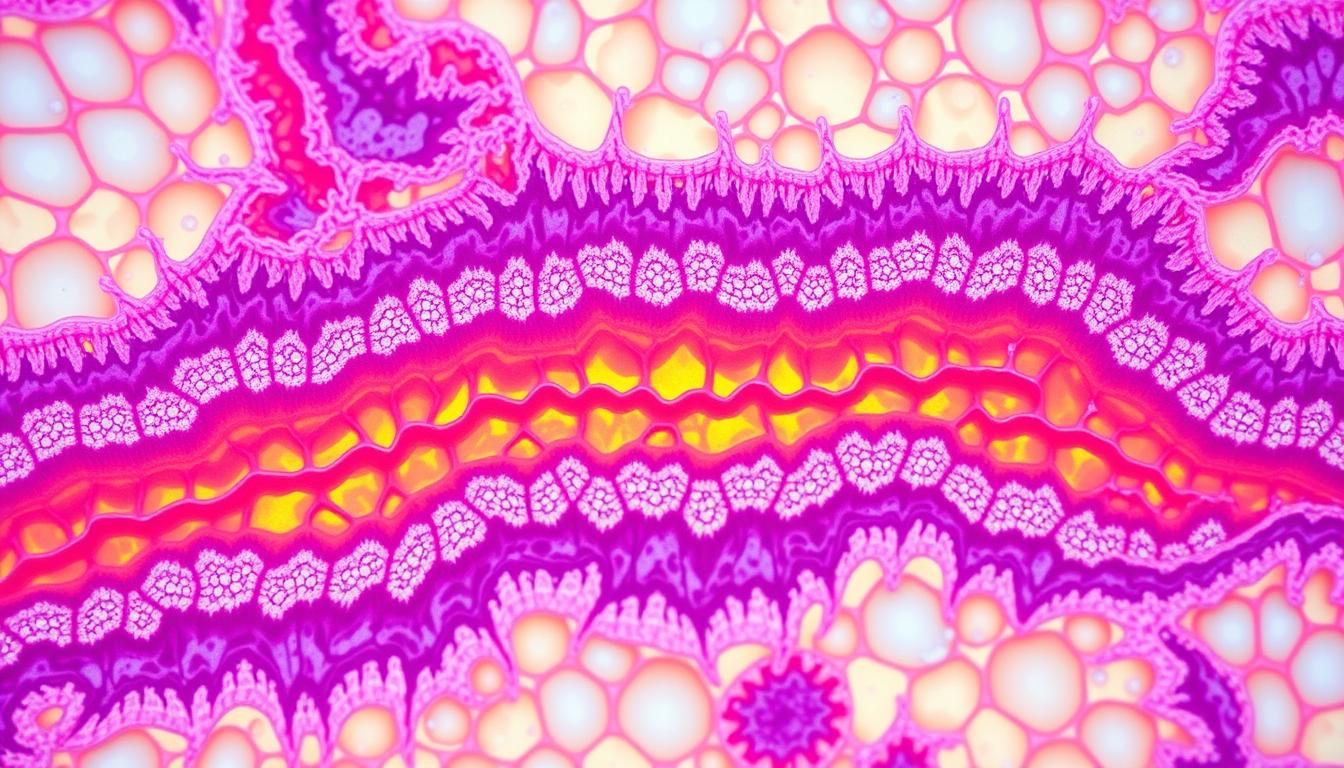
Hypermobile EDS triggers unique changes in deep connective layers. Unlike classical EDS—where collagen defects dominate—hEDS causes abnormal fibroblast behavior. These cells transform into myofibroblasts, creating rigid tissue zones that restrict movement.
| Feature | hEDS | cEDS |
|---|---|---|
| Tissue Changes | Thickened deep layers | Fragile skin |
| Primary Cause | Myofibroblast activity | Collagen mutations |
| Pain Pattern | Deep, widespread | Localized injuries |
Implications for Patients
Stiffened tissue alters how your body moves. Muscles work harder to compensate, increasing dislocation risks. One study found hEDS patients use 40% more energy during simple tasks compared to healthy individuals.
Traditional therapies often miss the mark because they target joints alone. Effective care now includes:
- Manual techniques to improve tissue glide
- Exercises restoring fascial elasticity
- Pain management addressing nerve compression
Recognizing these differences helps clinicians develop personalized strategies. It also validates why some treatments work better for specific EDS subtypes.
Molecular Mechanisms and the Extracellular Matrix
At the cellular level, a startling transformation occurs in hypermobile connective tissue disorders—up to 90% of fibroblasts adopt abnormal behavior. This shift creates a cascade of structural changes that reshape the body’s biological framework.
ECM Remodeling and Densification
The extracellular matrix becomes rigid through excessive collagen deposits. Researchers have identified αvβ3 integrin proteins as key players in this process. These molecules cluster on cell surfaces, forming abnormal communication hubs.
| Feature | Normal Tissue | hEDS Tissue |
|---|---|---|
| Fibroblast Activity | 5-10% α-SMA+ | 60-90% α-SMA+ |
| ECM Composition | Flexible collagen | Dense fibrils |
| Signaling Pathways | Balanced ILK | Overactive ILK/Snail1 |
The Myofibroblast Transition Phenomenon
Cells transform into hyperactive myofibroblasts through a molecular chain reaction. When αvβ3 integrins activate, they trigger integrin-linked kinase proteins. These enzymes then switch on Snail1 genes—the genetic blueprint for tissue contraction.
This abnormal signaling creates permanent cell changes. Transformed fibroblasts pull surrounding matrix fibers too tightly. The result? Thickened tissue layers that restrict movement and amplify pain signals.
Understanding these mechanisms explains why traditional approaches often fail. New therapies targeting specific signaling molecules could potentially reverse harmful matrix changes at their source.
Impact of Fascial Densification on Joint Stability
Your joints aren’t acting alone—their stability depends on hidden teamwork beneath the skin. When tissue layers lose their ability to glide smoothly, they fail to absorb mechanical stress. This forces joints to handle excessive loads, often leading to partial dislocations.
Research shows thickened fascial chains create a domino effect. Restricted movement in one area overloads neighboring structures. You might experience joint instability even if specific joints appear normal during exams.
Traditional approaches targeting joint hypermobility often miss this critical detail. Effective care requires addressing stiffness along entire kinetic chains. Therapies improving tissue mobility between muscle groups reduce strain on vulnerable areas.
Three key strategies help manage these challenges:
- Manual therapy restoring fascial glide
- Movement retraining to redistribute forces
- Strengthening exercises for load absorption
By treating the body as an interconnected system, clinicians can better address the root causes of instability. This approach reduces reliance on joint braces while improving long-term function.