Did you know your body uses two hormones discovered 50 million years apart to tell you when to eat—and when to stop? While 42% of American adults struggle with obesity, evolution created a precise system for appetite control. This system involves teamwork between your gut and brain.
Meet your body’s unsung hunger conductors: one triggered by your last meal, the other by your fat stores.
The first hormone acts fast, sending “fullness memos” from your digestive tract within minutes of eating. The second hormone tracks energy in fat cells like a fuel gauge. Together, they form a partnership refined over millennia of evolution—a system now challenged by modern diets.
This dual signaling explains why crash diets often fail. Ignoring one hormone’s signals makes the other sound louder alarms. Understanding their teamwork helps explain everything from post-meal satisfaction to stubborn weight plateaus.
Key Takeaways
- Two hormones work together to regulate hunger and fullness signals
- One responds immediately to food intake, the other monitors long-term energy stores
- Their partnership evolved through gut-brain communication over millions of years
- Modern eating patterns frequently disrupt this delicate balance
- Proper hormone function helps maintain natural weight regulation
Understanding Appetite’s Conductor
Your body’s appetite control system is like a fine orchestra. It balances what you need now with what you’ll need later. This balance makes sure you eat enough for today and save energy for tomorrow.

The Hunger-Satiety Continuum
Your appetite regulation works on two levels:
Short-term vs Long-term Energy Regulation
- Immediate signals (like stomach stretching) tell you to stop eating within minutes
- Chronic signals (like fat cell hormones) influence weekly eating patterns
This system stops you from eating too much at meals and gaining weight over time. The hypothalamus acts as your body’s energy manager. It constantly checks:
- Current blood nutrient levels
- Long-term fat reserves
Peripheral vs Central Nervous System Inputs
Your gut and brain talk to each other in many ways:
- Vagal nerve signals from stomach to brainstem (NTS pathways)
- Hormones crossing the blood-brain barrier to reach hypothalamic ARC neurons
The Biological Duet: CCK and Leptin as Twin Signals
These two hormones act like biological clock hands:
| Feature | CCK | Leptin |
|---|---|---|
| Timeframe | Minutes | Weeks |
| Source | Small intestine | Fat cells |
| Main Action | Stop eating now | Maintain weight setpoint |
Evolutionary Significance of Dual Signaling
Our ancestors needed both systems to survive. CCK’s quick response prevents choking on too much food. Leptin’s slow adjustment helps them endure when food is scarce.
“Dual signaling represents an evolutionary insurance policy against starvation and obesity”
Complementary Temporal Actions
These hormones work together in shifts:
- CCK peaks during meals to trigger satiation
- Leptin maintains baseline between meals
- Both modify hypothalamic neuropeptide production
This partnership explains why crash diets often fail. Leptin levels drop before significant fat loss occurs. This triggers intense hunger signals that override short-term satiety hormones.
CCK: The Immediate Satiation Maestro
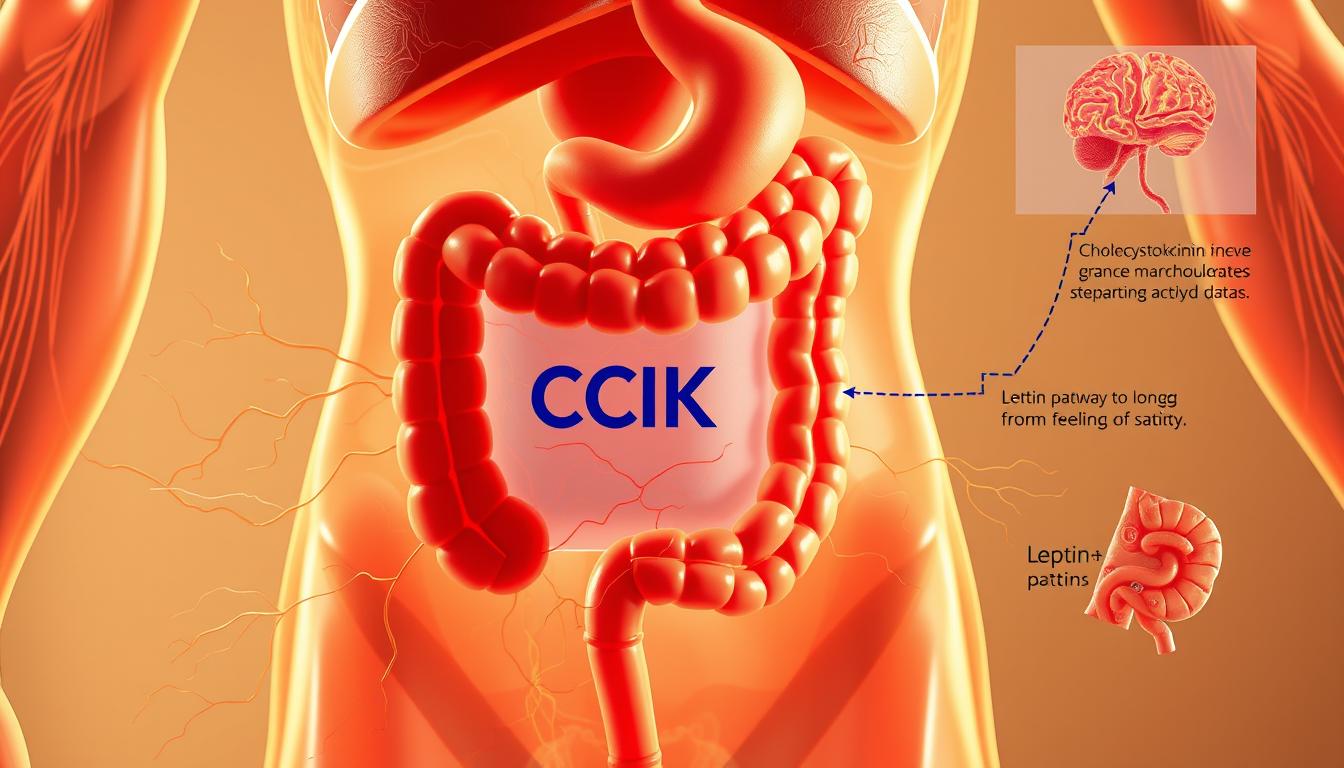
When you finish eating, your body doesn’t wait long to feel full. It uses cholecystokinin (CCK) to control hunger quickly. This hormone helps your brain and stomach work together during meals.
Biochemical Composition and Production
CCK is not one molecule but a group of peptides. The most active ones, CCK-58 and CCK-33, have special amino acid sequences. These sequences are key to appetite regulation. Shorter peptides like CCK-8 also play a role but don’t last as long.
CCK Peptide Structure Variants
CCK variants are like different keys for the same lock. Longer peptides bind better to receptors in your brain and gut. This makes them more effective at blocking hunger. Studies show CCK-58 can block hunger 40% longer than shorter peptides.
Enteroendocrine Cell Activation Triggers
Enteroendocrine cells in your small intestine release CCK when they sense:
- Dietary fats (specifically long-chain fatty acids)
- Partially digested proteins
- Certain aromatic amino acids
This quick response is why high-protein meals often make you feel full faster.
Mechanisms of Action
CCK’s true power is in its ability to communicate with your body in two ways. Within 20 minutes of eating, it starts two processes to reduce hunger and improve digestion.
Vagal Nerve Pathway Activation
About 80% of CCK’s signals go through your vagus nerve. This nerve connects your gut to your brain. It sends a signal to stop eating before your stomach even gets full.
Gallbladder/Bile Duct Coordination
CCK also helps release bile from your gallbladder. This bile breaks down fats for better nutrient absorption. This creates a cycle where better fat digestion leads to stronger CCK signaling.
“CCK doesn’t just tell you to stop eating—it makes sure every bite is used well.”
CCK keeps your body in balance and prevents overeating. Its quick action is key to avoiding snacking between meals and keeping your metabolism healthy.
Leptin: The Long-Term Energy Maestro
While CCK handles short-term meal signals, leptin acts like a long-term energy manager. It gives your body a monthly report on fat reserves. This hormone adjusts hunger signals and metabolism over weeks or months.
Unlike quick chemical messengers, leptin focuses on sustained energy balance. It does this through sophisticated biological pathways.
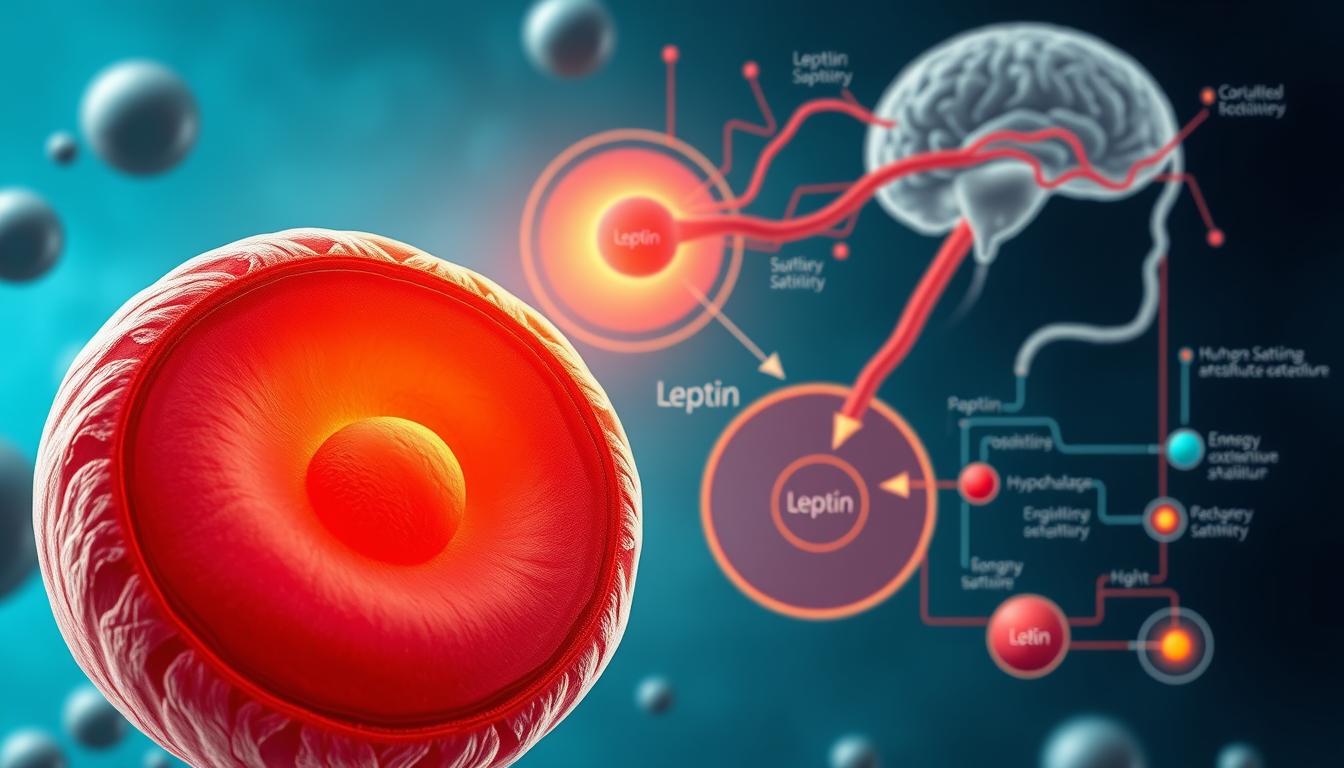
Your Fat Cells: Unexpected Hormone Factories
Adipose tissue does more than store energy – it’s your largest endocrine organ. Fat cells produce leptin through the LEP gene. Production increases as they expand.
This biological feedback system helps maintain stable body weight when functioning properly.
LEP Gene Expression Dynamics
Your fat cells’ DNA contains the blueprint for leptin production. When fat stores increase, the LEP gene becomes more active. This results in:
- Increased leptin mRNA production
- Enhanced protein synthesis in adipocytes
- Higher circulating leptin levels
Pulsatile Secretion Patterns
Leptin doesn’t flow steadily like a river – it pulses like waves. This rhythmic release pattern helps maintain hormone sensitivity in the brain. Research shows these pulses become less pronounced in obesity, potentially contributing to leptin resistance.
Brain Communication Networks
Leptin’s main target is your hypothalamus – the brain’s metabolic control center. Here, it performs two critical functions through specialized neurons:
Hunger Switch Suppression
NPY/AgRP neurons act like hunger accelerators. Leptin steps on the brakes by:
- Blocking neurotransmitter production
- Reducing electrical activity
- Decreasing receptor sensitivity
Satiety Signal Activation
POMC/CART neurons function as biological stop signs. Leptin supercharges these cells through:
- Enhanced α-MSH production
- Increased synaptic connections
- Improved receptor efficiency
In obesity, this communication system often breaks down. High leptin levels paradoxically fail to suppress hunger – a condition called leptin resistance. Emerging research also reveals leptin’s role in immune function, connecting weight management with infection resistance.
“Leptin resistance represents a biological paradox – the body becomes deaf to its own energy status signals.”
Understanding these appetite control mechanisms helps explain why long-term weight loss proves challenging. Unlike temporary diet hormones, leptin’s effects persist through multiple biological systems. This makes it key for sustainable energy balance.
The Hormonal Counterpoint
Your body’s appetite control system works like a clock. CCK and leptin signaling create a balance. This balance helps you stop eating when you’re full and keeps your energy levels steady over time.
Temporal Coordination Mechanisms
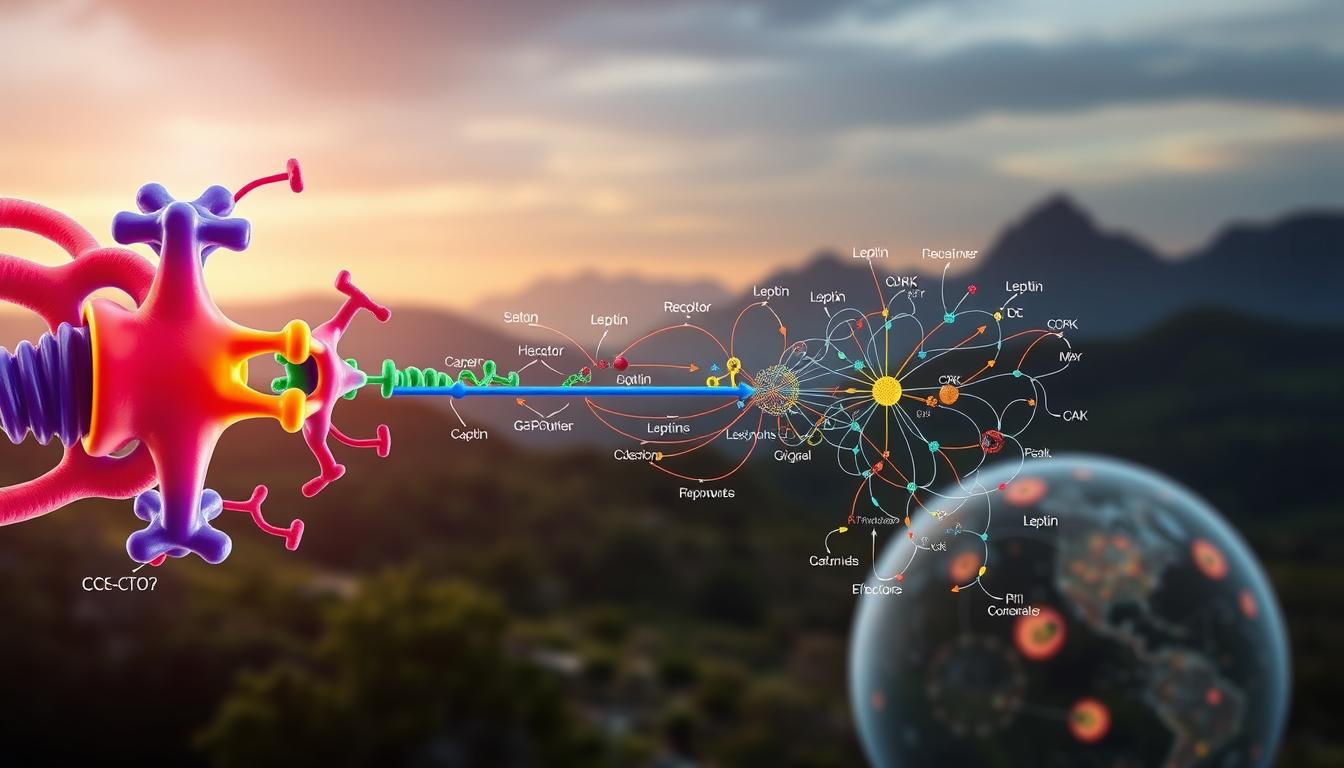
These regulators work on different schedules but use the same neural paths. CCK is quick to act, while leptin plans for the long term.
CCK’s Acute vs Leptin’s Chronic Effects
Right after you eat, CCK sends signals to slow down digestion. Leptin takes longer, checking fat levels and adjusting hunger. Studies show:
| Hormone | Timeframe | Primary Trigger | Key Action |
|---|---|---|---|
| CCK | 0-30 minutes | Nutrient detection | Meal termination |
| Leptin | Days to weeks | Adipose tissue levels | Metabolic rate adjustment |
Neural Integration Points
The NTS is CCK’s main hub, sending signals through the vagus nerve. Leptin mainly targets the hypothalamus. Bariatric surgery shows these areas improve communication in weight loss.
Synergistic Weight Regulation
Together, these hormones create strong appetite suppression. Alone, no molecule could do this.
“The CCK-leptin axis shows nature’s way to balance energy – quick signals of fullness plus long-term fat cues.”
Meal Termination Reinforcement
CCK’s signals to stop eating are stronger with the right leptin levels. This is why people with healthy leptin eat less.
Energy Expenditure Modulation
Leptin’s metabolic changes work best with CCK’s meal patterns. Studies show this team can increase calorie burning by 12-18% at rest.
Signaling Pathway Breakdown
Your body talks to itself through hormones and receptors to control hunger. This complex system is why some people have trouble managing their weight. Scientists are working to understand and improve this system.
CCK Receptor Pharmacology
After you eat, CCK starts a conversation with two types of receptors. CCK1 receptors are in your digestive system, while CCK2 receptors are in your brain. This teamwork helps your body respond to food.
| Feature | CCK1 Receptor | CCK2 Receptor |
|---|---|---|
| Main Location | Gallbladder, vagus nerve | Central nervous system |
| Primary Role | Trigger satiation signals | Modulate anxiety/memory |
| Drug Targets | Obesity treatments | Neurological disorders |
CCK1 vs CCK2 Receptor Functions
Your gallbladder works with CCK1 when fats enter your small intestine. At the same time, CCK2 receptors in your brain help you remember meals. This teamwork explains why some foods affect you physically and emotionally.
Allosteric Modulation Potentia
New drugs are being made to adjust receptor activity instead of fully activating them. This could help avoid side effects of older CCK drugs while keeping hunger in check.
Leptin Receptor Isoforms
Leptin is made by fat cells, but it needs receptors to work. The Ob-Rb isoform is key for leptin to talk to your brain’s hunger centers.
Ob-Rb Signaling Cascades
Leptin binds to Ob-Rb receptors in your hypothalamus. This starts a chain reaction. The message goes through JAK2 proteins to STAT3 molecules, affecting genes that control hunger and energy use.
JAK-STAT Pathway Intricacies
Too much eating can block this message through STAT3 resistance. Researchers found that making JAK-STAT sensitive again helps obese mice lose weight. This is now being tested in humans.
“Targeting receptor signaling pathways offers our best hope for durable obesity treatments that work with biology, not against it.”
Companies are working on dual-action therapies for CCK and leptin. These combos aim to fix the problems of single-pathway drugs that often lose effectiveness over time.
Metabolic Disruptions
Hormone imbalances often lead to metabolic problems that make it hard to manage weight. When leptin signaling is off, the brain can’t tell how much energy we have. This leads to eating too much.
Also, not feeling full soon enough makes it tough to control how much we eat. Studies show that these issues often happen together in people who are overweight. Inflammation in the brain and changes in how genes work play a big role.
Neuroinflammation is key in this problem. Eating too much food for a long time can make the brain’s hunger control center less effective. Lifestyle choices, like eating a lot of fat, can make things worse.
Research shows we need to fix both the body’s problems and the things that cause them.
New treatments aim to tackle these issues. GLP-1 receptor agonists, like Ozempic and Saxenda, help with feeling full and improve how the body responds to leptin. Vagus nerve stimulation, found in devices like Enterra, helps the brain and gut talk better.
Using both kinds of treatments can work better than just one. This is shown in studies by Novo Nordisk and Medtronic.
Understanding these connections can help with weight management. Eating foods that fight inflammation and eating at the right times can help. Checking biomarkers like the leptin-to-adiponectin ratio can help tailor treatments.
Research into changing how genes work suggests future treatments could fix hormonal problems at the DNA level. This could lead to lasting solutions for metabolic health.