Did you know over 60% of people following a low-carb diet experience a weight loss stall within six months? This sudden halt in progress often feels confusing, especially after initial success. The truth is, your body adapts to dietary changes, and metabolic shifts can temporarily pause fat loss—even when you’re doing everything “right.”
A keto diet plateau isn’t a sign of failure. It’s a natural response as your metabolism adjusts to burning fat for fuel. Early weight loss often includes water weight, which tapers off as your body stabilizes. When the scale stops moving, it doesn’t mean you’ve hit a dead end. Instead, it signals that small, intentional changes are needed to reignite progress.
Many factors contribute to this stagnation, from hidden carbs disrupting ketosis to hormonal fluctuations affecting energy balance. The good news? With targeted adjustments to your eating habits, activity levels, and stress management, you can push past this phase and continue shedding pounds.
Key Takeaways
- Weight loss plateaus are common and expected during metabolic adaptation.
- Hidden carbs or calorie creep may unknowingly hinder ketosis.
- Hormonal changes play a significant role in fat-burning efficiency.
- Strategic dietary tweaks often resolve stagnation without drastic measures.
- Consistency with keto principles remains critical for long-term success.
Understanding Keto Plateaus
Hitting a standstill after weeks of progress can feel frustrating. What seems like halted results often reflects your body’s intricate balancing act between fat loss and survival mechanisms.

Defining What a Keto Plateau Is
A true plateau occurs when your weight remains unchanged for 8-12 weeks despite strict adherence to low-carb eating. Daily scale fluctuations of 2-5 pounds are normal—often from water retention or digestion cycles. For example:
| Factor | Normal Fluctuation | True Plateau |
|---|---|---|
| Duration | 1-7 days | 3+ months |
| Primary Cause | Water shifts, food weight | Metabolic adaptation |
| Scale Readings | Variable | Consistently static |
| Body Changes | Fat loss continues | Muscle/fat ratio stalls |
Metabolic and Hormonal Influences
As you shed pounds, your body fights to conserve energy. Leptin levels drop by up to 50% during significant weight loss, increasing hunger signals. Ghrelin—the “hunger hormone”—rises, making portion control harder.
Your metabolism also slows through adaptive thermogenesis. Research shows this process reduces daily calorie burn by 15% during prolonged dieting. This isn’t failure—it’s your biology prioritizing energy reserves for perceived scarcity.
Common Causes of Keto Plateaus
Unexpected stalls in weight loss can stem from everyday habits that quietly undermine efforts. These plateaus often result from overlooked details rather than major dietary failures. Let’s explore three stealthy triggers that might be slowing your progress.

Excess Carbs and Hidden Calories
Even small amounts of carbs in sauces or dressings can add up. A single tablespoon of ketchup contains 4 grams of carbs—enough to disrupt ketosis if consumed repeatedly. Processed foods labeled “keto-friendly” often contain hidden sugars or starches that stall fat burning.
Caloric Surplus and Miscalculations
High-fat foods like cheese and nuts pack more calories per bite than many realize. Eating just 10% more than your daily needs creates a surplus that halts weight loss. Track portion sizes carefully—a “handful” of almonds can easily become 300+ calories.
Stress, Poor Sleep, and Sedentary Habits
Chronic stress elevates cortisol, which promotes fat storage around organs. Just one night of poor sleep increases hunger hormones by 15%, making overeating likely. Combine this with low activity levels, and your calorie burn plummets—even if your diet seems perfect.
Recognizing True Weight Loss Plateaus
Daily scale numbers often lie. Your weight naturally swings 2-4 pounds due to water retention, meal timing, or hormonal shifts. These temporary changes don’t mean progress has stopped—they’re just noise in your data.

Distinguishing Normal Fluctuations from Plateaus
Real plateaus last 8+ weeks with zero movement in measurements. Compare daily jumps to long-term trends:
| Factor | Daily Shift | True Stall |
|---|---|---|
| Duration | 1-7 days | 2+ months |
| Causes | Water, digestion | Metabolic adaptation |
| Measurements | Scale only | All metrics static |
Effective Tracking and Monitoring Techniques
Use multiple methods to see full progress. Waist measurements often shrink when scales freeze. Try these tools:
| Method | Frequency | What It Shows |
|---|---|---|
| Progress photos | Every 2 weeks | Visual body changes |
| Tape measure | Weekly | Inches lost |
| Clothing fit | Daily | Comfort improvements |
Track energy levels and ketone readings between meals. Stable energy + ketones mean your body still burns fat—even if weight hasn’t budged this week.
Why Keto Plateaus Happen and How to Break Through
Your body’s survival instincts might be the hidden hurdle in your weight loss journey. When you maintain a calorie deficit for months, biological safeguards activate to preserve energy. Research reveals a 20-25% drop in daily calorie burn after losing 10% of your body weight—a survival mechanism dating back to food scarcity eras.

The Science Behind the Weight Loss Stall
Adaptive thermogenesis slows your metabolism through three key pathways:
| Mechanism | Impact | Example |
|---|---|---|
| Hormonal shifts | Lower thyroid output | 15% slower metabolism |
| Muscle efficiency | Reduced movement calories | Fewer fidgets/day |
| Cellular changes | Better fat storage | 25% more efficient |
Your system also prioritizes fat preservation as loss continues. A study in Obesity Journal found participants retained 22% more adipose tissue when dieting long-term versus short-term.
Practical Steps to Reignite Fat-Burning
Combat metabolic slowdown with these evidence-based strategies:
- Cycle calories: Alternate deficit days (1,500) with maintenance days (2,000)
- Boost protein: Aim for 1g per pound of goal weight to protect muscle
- Time carbs: Use 50g carb refeeds weekly to temporarily elevate leptin
These methods trick your body into thinking resources are plentiful, easing its defensive response. Combine this with consistent keto principles, and you create sustainable conditions for continued fat reduction.
Adjusting Your Macros and Calorie Intake
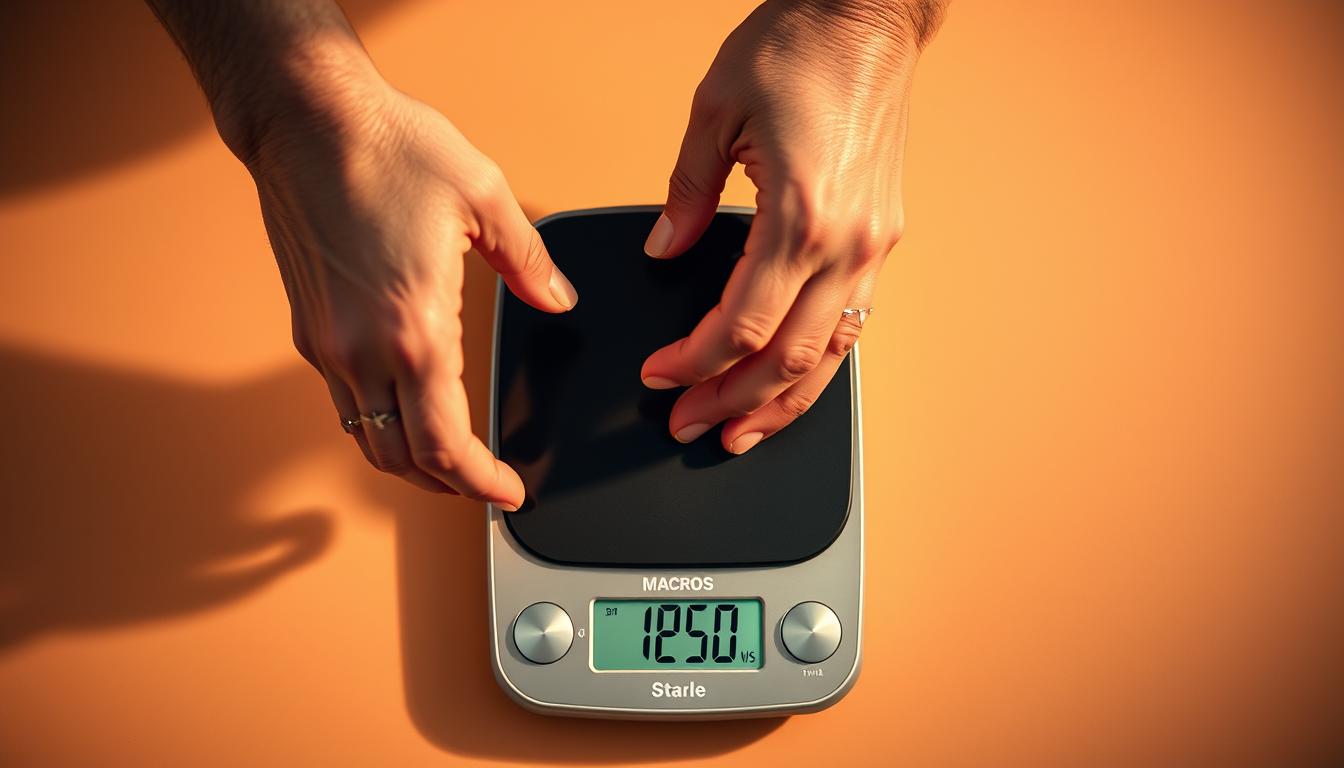
Your nutritional needs evolve as your body transforms—what worked initially may now hinder progress. When you lose weight, your metabolism adapts to require fewer calories for basic functions. This shift demands precise adjustments to maintain fat-burning momentum without triggering defensive starvation responses.
Recalculating Your Caloric Needs
Every 10 pounds lost reduces daily energy needs by approximately 70-100 calories. Use this formula to estimate your new baseline:
| Body Fat | Calories/Pound | Example (150 lbs) |
|---|---|---|
| 30% | 12-13 | 1,800-1,950 |
| 20% | 11-12 | 1,650-1,800 |
| 15% | 10-11 | 1,500-1,650 |
Multiply your current weight by these values based on body fat percentage. Add activity calories (steps, workouts) for your total daily intake target.
Optimizing Macronutrient Ratios for Fat Loss
Prioritize protein to preserve muscle while in a deficit. Aim for 0.8-1g per pound of goal weight—a 180-pound person targeting 160 would eat 128-160g daily. This approach:
- Boosts metabolism by 15-30% during digestion
- Reduces hunger hormones by 20-25%
- Protects lean mass that maintains metabolic rate
Adjust fat intake to fill remaining calories after accounting for protein and 20-30g net carbs. As you lean out, decrease dietary fats slightly to match your body’s reduced energy demands.
Increasing Physical Activity and NEAT
Sitting for two extra hours daily could be sabotaging your progress. Research shows obese individuals spend 150+ more minutes seated than lean counterparts—time that adds up to 300 fewer calories burned each day. This gap highlights the power of non-exercise activity thermogenesis (NEAT), which includes all movement outside formal workouts.
Smart Workout Combinations
Balance structured exercise with daily motion. Excessive cardio—over 60 minutes daily—can lower metabolic rate by 15%. Instead, pair strength training with brief aerobic sessions:
| Activity | Frequency | Metabolic Benefit |
|---|---|---|
| Resistance training | 3x/week | Preserves muscle mass |
| HIIT sessions | 2x/week | Boosts afterburn effect |
| Walking | Daily | Supports NEAT calorie burn |
Muscle tissue burns 6 calories daily per pound versus 2 for fat. Building just 5 pounds of muscle adds 30 extra calories burned at rest.
Movement Hacks for All-Day Energy
Increase NEAT through simple swaps that accumulate over 24 hours:
- Stand during phone calls (burns 50% more than sitting)
- Take 5-minute walking breaks every 90 minutes
- Do bodyweight squats while waiting for coffee
These micro-activities can add 200-400 calories burned daily—equivalent to a 3-mile run. Track steps using a fitness watch, aiming for 500 more each day than your current average.
Managing Stress and Optimizing Sleep
Your nightly routine might hold the key to overcoming stalled progress. Chronic stress elevates cortisol—a hormone that drives fat storage and hunger pangs. Combined with poor sleep, this creates a double threat to your weight loss efforts by disrupting leptin and ghrelin levels.
Stress Reduction Techniques for Better Results
Just 10 minutes of daily mindfulness can lower cortisol by 20%. Try breath-focused meditation: inhale for 4 counts, hold for 7, exhale for 8. Nature walks three times weekly reduce stress hormones 15% more than indoor workouts.
Improving Sleep Quality to Support Metabolism
One study found 4 hours of sleep increases cravings for carbs by 45%. Aim for 7-9 hours in complete darkness—light exposure suppresses melatonin production. Cool your bedroom to 65°F for optimal body recovery.
These adjustments help reset hormonal balance, making your system more responsive to dietary efforts. Consistency in stress management and sleep health often breaks plateaus when nutrition alone stalls.