Did you know 73% of Americans with gym memberships never use them? Yet, research shows that regular exercise boosts metabolism by up to 20%. It also lowers stress hormones like cortisol. Experts at Nebraska Medicine say workouts outside gyms can be just as effective.
Fitness isn’t about fancy equipment or crowded gyms. Your body loves movement that challenges muscles, raises heart rates, and sharpens focus. You can turn park benches into weight benches and staircases into cardio machines.
This guide shows how to use everyday places for the best results. You’ll discover science-backed tips that fit your life, budget, and goals. No gym membership needed. Let’s change what we think of as “working out.”
Key Takeaways
- Structured exercise increases metabolic efficiency more effectively than casual activity
- Stress reduction occurs faster through intentional movement patterns
- Bodyweight workouts can match gym equipment results with proper technique
- Public spaces offer diverse terrain for cardio and strength training
- Consistency matters more than workout duration for long-term health gains
10 Free Ways to Get Fit Without a Gym Membership
The American Heart Association says we should do at least 150 minutes of moderate exercise each week. But, 1 in 5 adults find it hard to reach this goal. What if you could stay active without spending a penny? This guide shows you how to use free fitness resources found in your community.
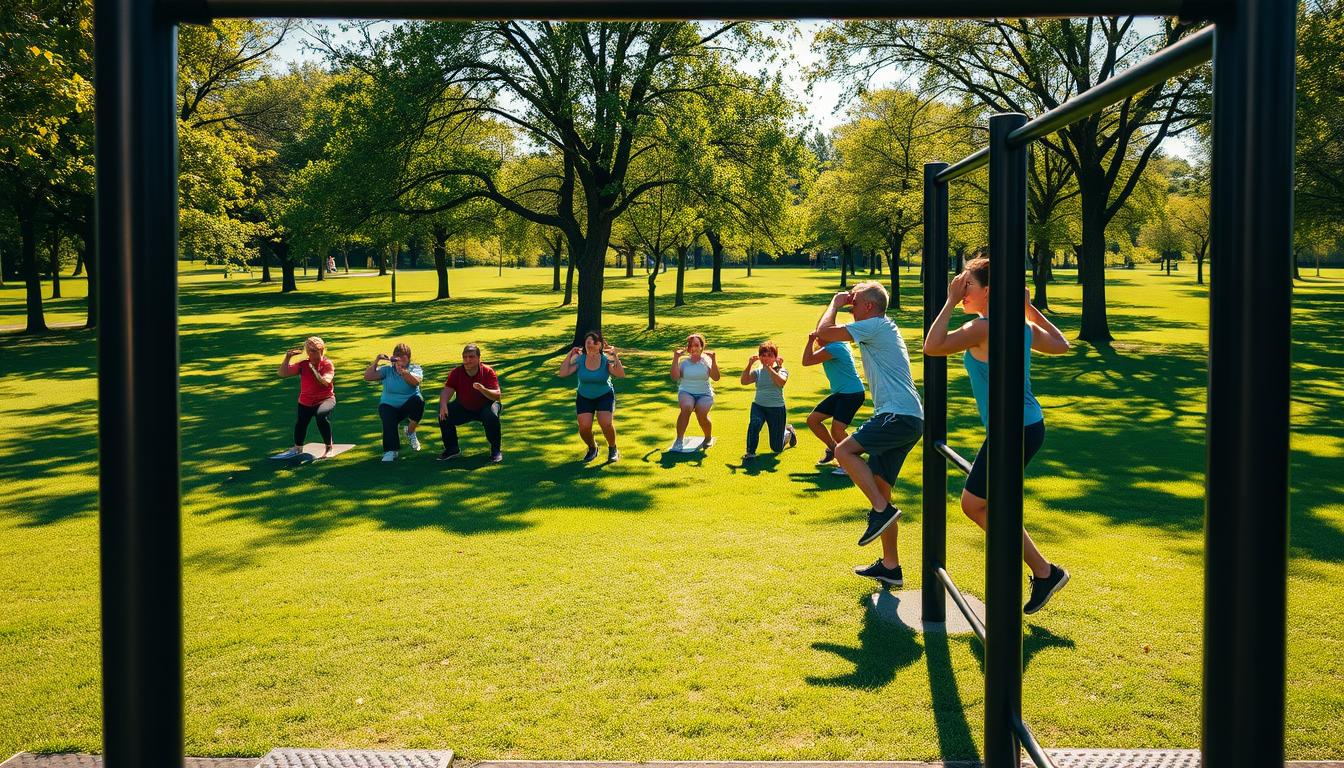
Urban planners behind the Active Cities initiative say 73% of Americans live near a park or trail. These places can be your gym with bodyweight exercises, cycling paths, or swimming areas. Plus, you’ll save over $700 a year compared to gym memberships.
Our list combines science-backed methods with easy access:
- Bodyweight circuits needing no equipment
- Public staircases for intense intervals
- Community-led outdoor yoga sessions
Studies show outdoor workouts make you stick to it 41% more than indoor ones. Whether you’re walking city streets or suburban areas, free fitness resources fit your life. Are you ready to make everyday places your own wellness studio?
1. Bodyweight Training Fundamentals
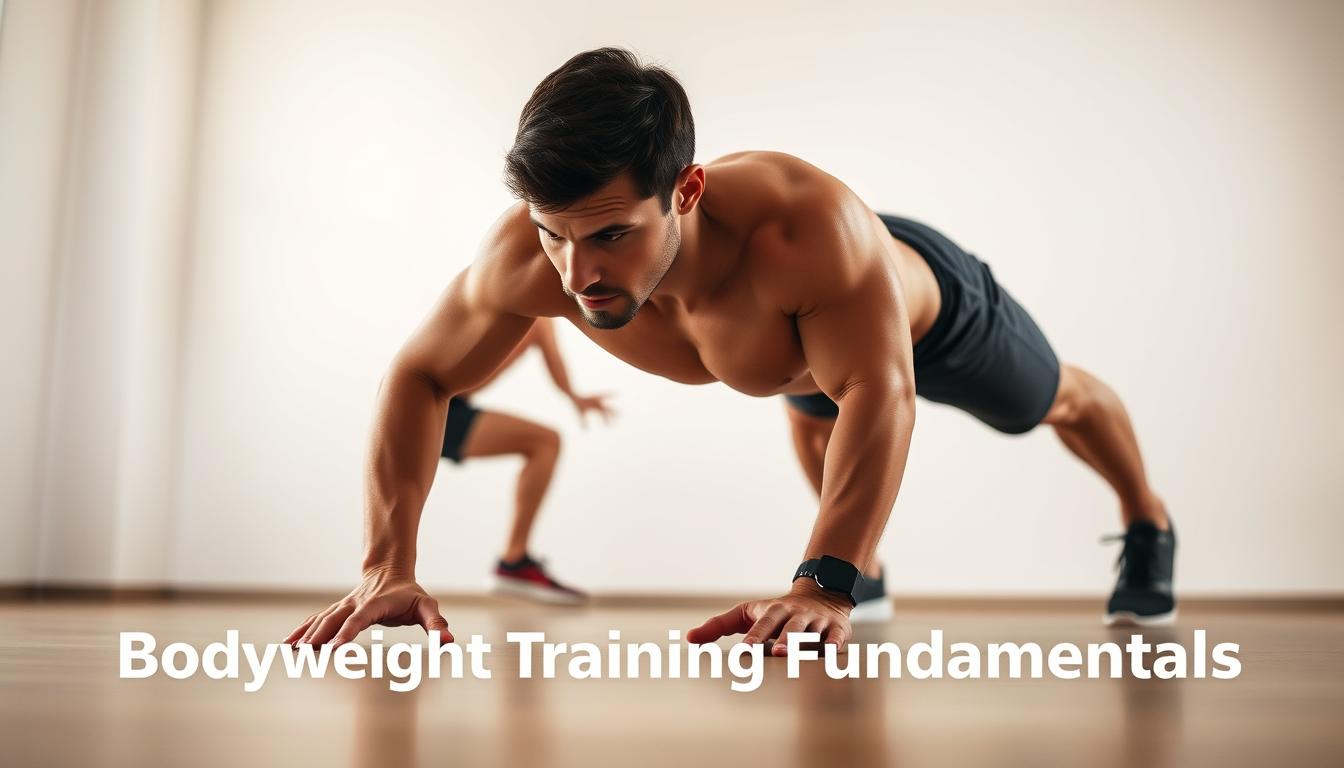
Using your own body weight opens up a world of fitness options. You don’t need dumbbells or machines. This method builds real strength and helps muscles work together.
Benefits of Zero-Equipment Workouts
Bodyweight exercises have three main benefits for staying fit:
- They’re always available – you can work out anywhere, anytime.
- They’re safer because they follow natural movements.
- You can make them harder or easier by changing how you do them.
Essential Movements to Master
Nebraska Medicine suggests starting with these basic movements:
- Horizontal push: Try modified push-ups on your knees or on a raised surface.
- Vertical pull: Use a doorframe to help with squats.
- Core stabilization: Hold different plank positions for timed periods.
Sample Full-Body Circuit
Here’s a 20-minute workout that combines strength and flexibility:
- Wall sits (45 seconds)
- Incline push-ups (12 reps)
- Bodyweight squats (15 reps)
- Side plank rotations (10/side)
Take a 60-second break between each set. Pro tip: Make it harder by moving slower.
Safety Considerations
Bodyweight training is generally safe, but follow these fitness tips to avoid injury:
- Keep your spine straight during exercises.
- Give yourself 48 hours to rest after hard workouts.
- Check your form in a mirror or video.
Start by getting the technique right before adding more reps. If your joints hurt, adjust the exercise to make it easier.
2. Outdoor Running Trails Exploration
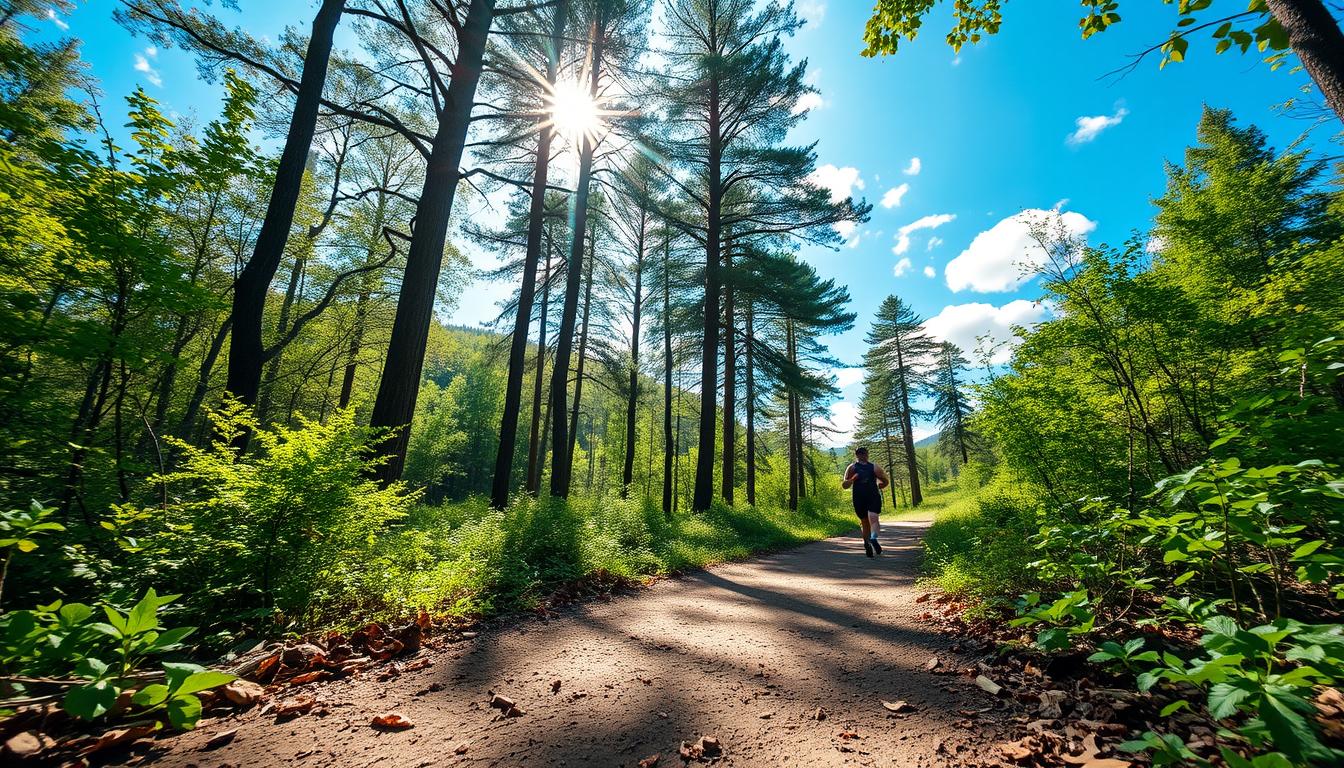
Leave the treadmill behind and let nature guide your fitness. Trail running is more than just fresh air. It’s a workout that tests your balance, coordination, and endurance on varied terrain.
Cardio Benefits of Natural Terrain
Running on uneven paths like dirt and grass makes your muscles work harder. Research shows this natural resistance:
- Increases VO2 max through oxygen changes
- Strengthens muscles that keep you stable
- Burns 15-20% more calories per mile
“Trail runners get better at sensing their body and avoiding injuries. Nature’s terrain is like a constant personal trainer.”
Finding Local Running Paths
Explore fitness opportunities in your area with these tools:
| Resource | Features | Best For |
|---|---|---|
| AllTrails App | Difficulty ratings | Route discovery |
| Parkrun Events | Free 5K races | Social motivation |
| City Rec Sites | Mapped trails | Safety info |
Beginner-to-Advanced Progression
Here’s an 8-week plan to improve your trail running:
| Week | Focus | Terrain Type | Duration |
|---|---|---|---|
| 1-2 | Footing basics | Flat dirt paths | 20 mins |
| 3-4 | Hill adaptation | Rolling terrain | 30 mins |
| 5-6 | Speed control | Rocky surfaces | 40 mins |
| 7-8 | Endurance build | Mixed elevation | 50+ mins |
Begin with three runs a week, alternating with rest days. Increase the elevation by 10% each week to avoid overdoing it.
3. Park Calisthenics Circuits
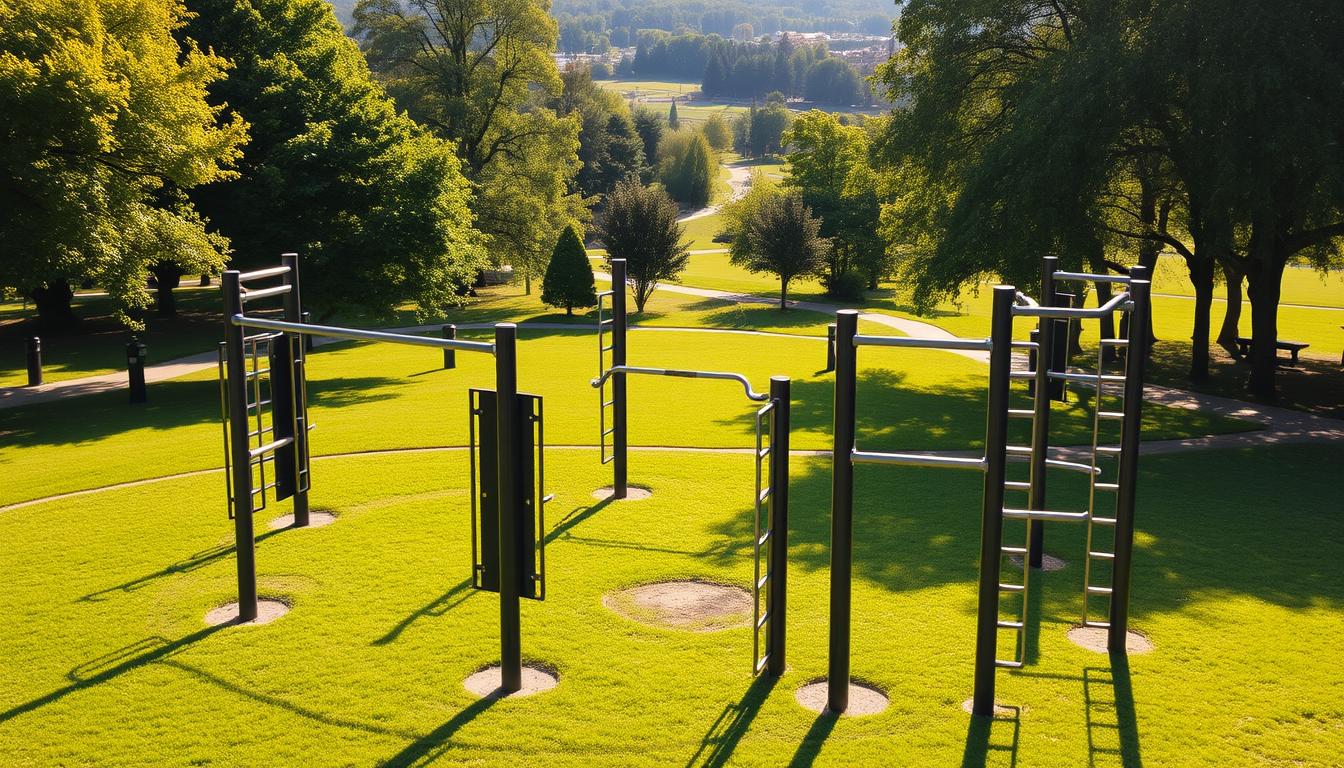
Your local park can be a full fitness studio with a little creativity. This zero-cost workout uses gravity and public spots to build strength. It’s a great way to stay active all year with free fitness resources.
Playground Equipment as Fitness Tools
Monkey bars are not just for kids. They’re great for pull-up variations. Try these upgrades to basic movements:
- L-sit pull-ups (knees raised parallel to ground)
- Alternating grip chin-ups (switch hand positions mid-set)
- Bench tricep dips with elevated feet
Always check if the equipment is stable before using it. Metal gets slippery when wet. Wear workout gloves in rainy seasons.
Building Momentum Through Group Workouts
“The Saturday calisthenics crew keeps me accountable – we’ve collectively lost 200 pounds this year!”
Many cities offer free outdoor fitness meetups. Look for them on:
- Meetup (search “park workouts”)
- Facebook Community Groups
- Local recreation department calendars
Weather-Proofing Your Routine
| Season | Clothing Tips | Workout Adjustments |
|---|---|---|
| Summer | Moisture-wicking fabrics | Shade-based circuits |
| Winter | Layered compression gear | Dynamic warm-ups |
Stay hydrated all year. Freeze half your water bottle in winter. It will be cold as it melts during your workout.
4. Staircase Interval Training
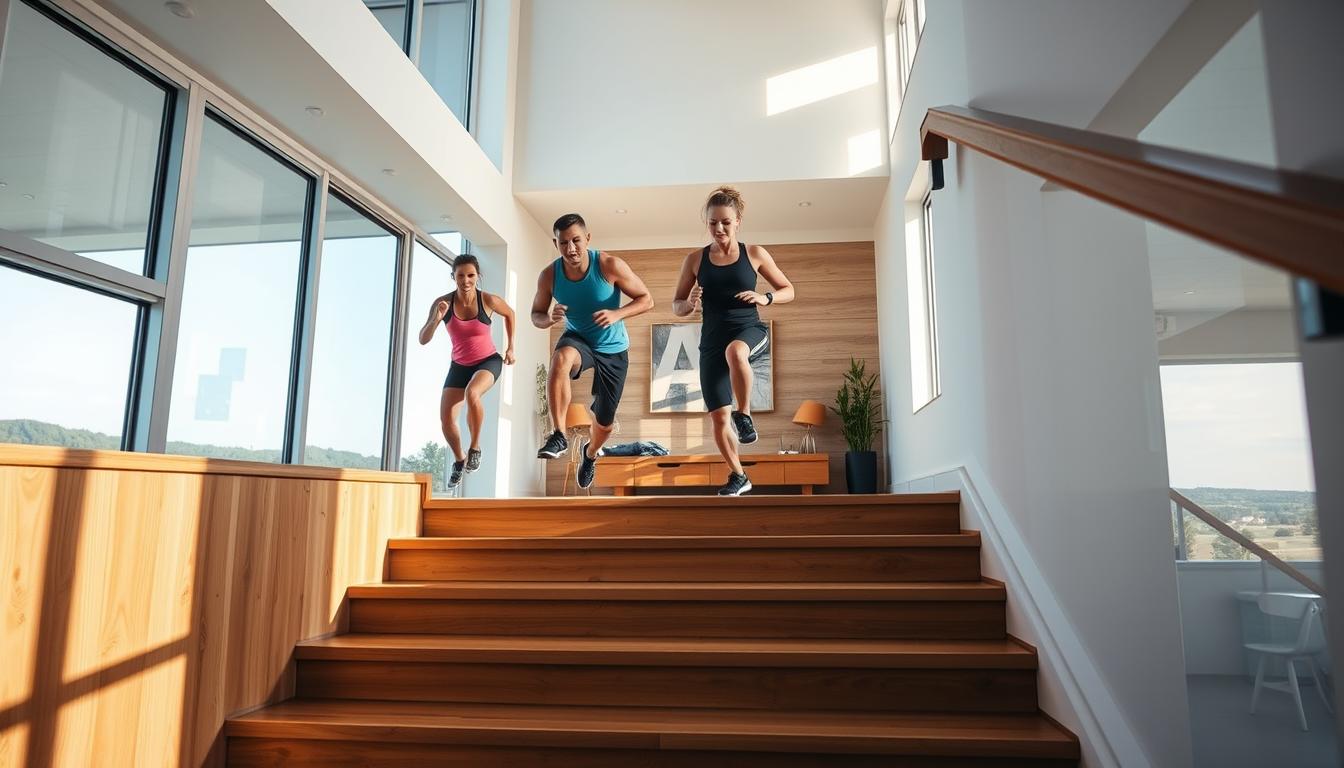
Make everyday stairs your personal fitness ladder with interval training. This method boosts strength and cardio in one go. It’s perfect for anyone, whether you live in a high-rise or near public spots.
Vertical Challenge Advantages
Climbing stairs works your glutes, quads, and calves harder than flat exercises. A 20-minute climb can burn 200 calories and boost balance and bone health. Here’s a science-backed plan:
- 2-minute warm-up: Walk up/down slowly
- 30-second sprint: Take steps two at a time
- 90-second recovery: Descend at relaxed pace
- Repeat 8 cycles
To protect your knees, try stepping sideways or doing single-leg raises on bottom steps.
Apartment-Friendly Workouts
Turn your building’s stairwell into a gym with these home workout tips:
“Stair training eliminates equipment costs while providing natural resistance progression – just climb faster or higher.”
Work out in the morning to avoid elevator crowds. Carpeted stairs are quieter. Use railings for incline push-ups or tricep dips between climbs.
Public Space Alternatives
Urban explorers love spots like Philadelphia’s Museum of Art steps (from Rocky). Here are some free spots:
| Location Type | Best Time | Safety Tip |
|---|---|---|
| Park monuments | Weekday mornings | Check for dry surfaces |
| Stadium seating | Off-game days | Use buddy system |
| Pedestrian bridges | Sunset hours | Wear reflective gear |
Local hiking trails with elevation changes are great for stair/hill workouts.
5. Yoga Flow in Living Spaces
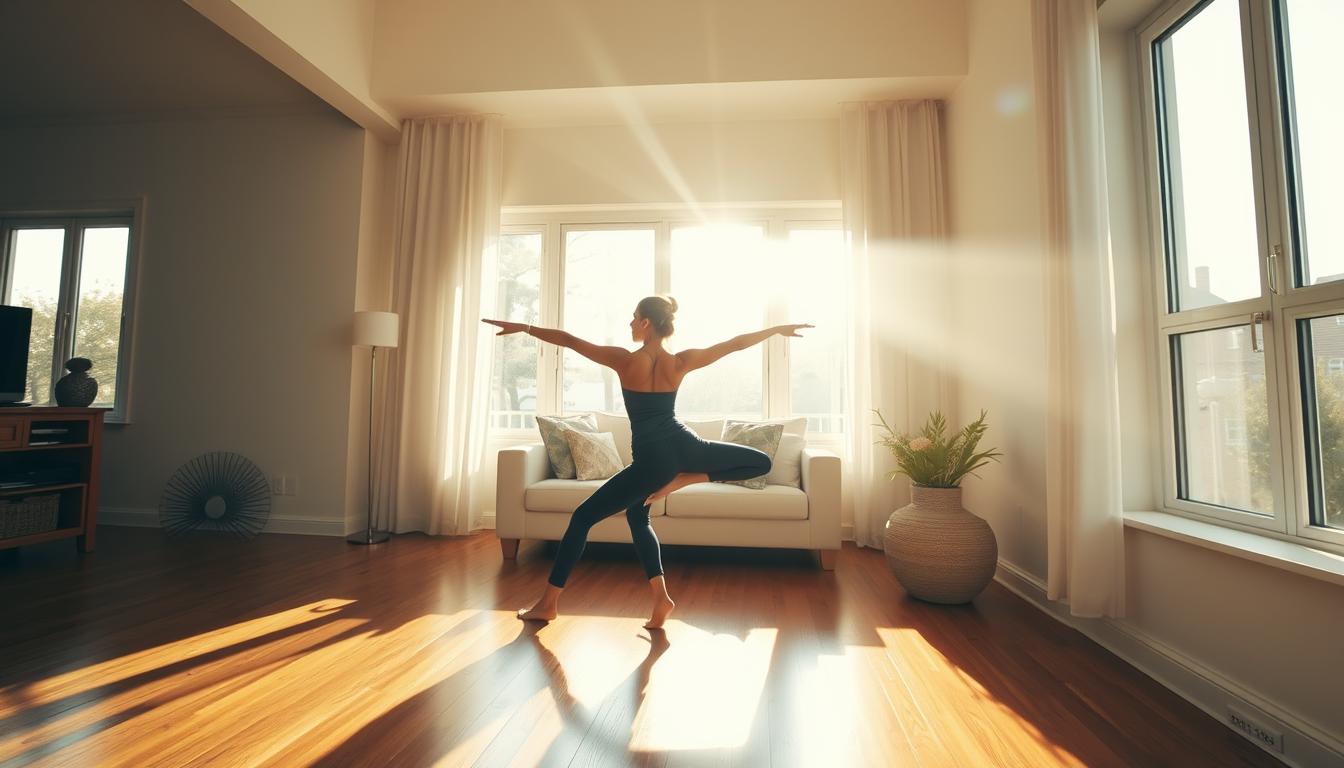
Yoga isn’t just for studios. Your living area can be a place of strength and calm. With a little planning, any room can become a space for mind-body connection. This way, you can easily fit health and fitness into your daily routine.
Mental/Physical Synergy Benefits
Yoga connects your mind and muscles in a special way. Downward dog strengthens your core while deep breathing calms you down. Research shows that poses like legs-up-the-wall can even out your nervous system in just weeks.
| Pose | Physical Benefit | Mental Benefit |
|---|---|---|
| Child’s Pose | Stretches hips/spine | Reduces anxiety |
| Warrior II | Builds leg endurance | Boosts focus |
| Corpse Pose | Relaxes muscles | Enhances sleep quality |
Essential YouTube Channels
These free fitness resources offer top-notch guidance:
- Yoga With Adriene: 30-day challenges for all levels
- Boho Beautiful: Combines yoga with nature visuals
Both channels have tips for doing yoga in small spaces, so you don’t need any special equipment.
Space Optimization Hacks
Clear a 6×6 ft area by moving furniture against walls. Use dining chairs for balance or doorframes for stretch bands. Folded blankets can replace bolsters, and hardwood floors are better than carpets for stability.
Starting your day with morning light can motivate you. Place your mat near windows. For evening yoga, string lights can create a soothing atmosphere without harsh overhead lights.
6. Cycling Commuting Conversions
Turning your daily commute into a fitness opportunity is easier than you think. Over 50% of American workers live within five miles of their workplace. This is a perfect distance for outdoor exercise disguised as transportation. It lets you stay active while doing something essential, making fitness a part of your daily routine.

Transportation-as-Exercise Strategy
Swap just three car trips weekly with bike rides to burn up to 1,500 extra calories monthly. For a 160-pound rider:
| Commute Distance | Calories Burned | Car Fuel Savings |
|---|---|---|
| 3 miles | 150-180 | $0.75 |
| 5 miles | 250-300 | $1.25 |
Route Planning Essentials
Use the PeopleForBikes City Ratings to find bike-friendly routes in your area. Top-rated cities like Portland and Minneapolis offer:
- Protected bike lanes
- Traffic-calmed streets
- Bike signal prioritization
Bike Maintenance Basics
Follow this 5-point pre-ride checklist to stay active safely:
- Check tire pressure (PSI marked on sidewall)
- Test both brake levers
- Confirm chain lubrication
- Ensure lights function
- Verify quick-release wheel security
7. Swimming in Public Waters
Turn lakes, rivers, and oceans into your own gym for free. Swimming is a joint-friendly cardio that works 90% of your muscles. It’s great for keeping fit and healthy.

Low-Impact Full-Body Conditioning
Swimming works your shoulders, core, and legs at the same time. It’s easier on your knees and hips than gym machines, thanks to water’s support.
“Aquatic exercise allows progression without joint punishment – ideal for rehab or long-term conditioning,”
notes a recent sports medicine study.
The USDA has a map of 2,100+ approved swimming holes in U.S. national forests. Always check EPA water quality reports before swimming. Look for these signs:
- Bacteria levels under 200 colonies per 100mL
- Visible clarity of at least 4 feet depth
- Recent stormwater overflow alerts (if any)
Identifying Safe Swim Areas
Coastal swimmers should know the 3-tier buoy system:
- Red/yellow flags: Lifeguard-patrolled zones
- Black/white checkered: Surfcraft-free areas
- All-red buoys: Immediate exit required
For inland waters, use the SwimGuide app for safety updates. Stay away from stagnant coves in summer.
Open Water Safety Protocols
Always swim parallel to shore in designated areas. Use the “buddy plus float” strategy:
- Partner stays beachside as spotter
- Bright swim cap enhances visibility
- Tow a waterproof safety buoy ($15-$30)
Check tidal charts and current forecasts with NOAA’s free Coastal Zone app. Start in waist-deep water and get deeper as you feel more comfortable.
8. Dance Fitness Through Streaming
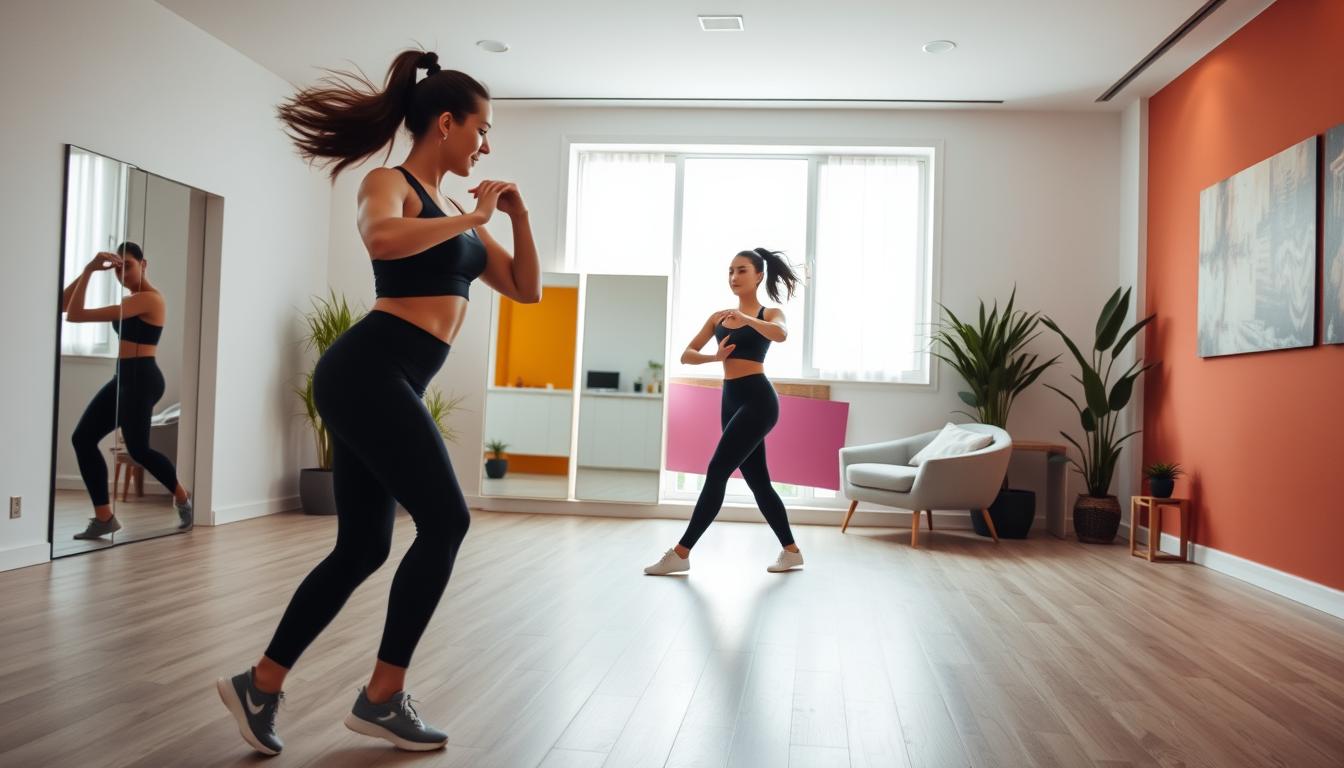
Who says workouts need to feel like work? Turn up the music and let rhythm become your personal trainer with dance fitness streaming. This approach combines heart-pumping cardio with pure enjoyment, making it ideal for those who dread traditional exercise routines.
Cardio Disguised as Fun
Dance workouts trick your body into burning calories while you focus on mastering moves. Platforms like TikTok LIVE host real-time dance challenges where creators like The Fitness Marshall turn pop songs into calorie-torching routines. You’ll improve coordination and endurance without staring at a clock.
Top Free Platforms
You don’t need subscriptions to access quality dance content. Try these:
- YouTube: Channels like “The Fitness Marshall” offer 30-minute hip-hop workouts
- TikTok LIVE: Join trending dance challenges with real-time feedback
- Instagram Reels: Quick 15-minute routines for busy schedules
Creating Home Dance Space
Transform any room into a dance studio with these fitness tips:
- Use yoga mats or interlocking foam tiles for slip-resistant flooring
- Keep noise below 60 decibels (about normal conversation level) for apartment safety
- Clear a 6×6 ft area – enough space for lateral moves and spins
Pro tip: Place thick towels under speakers to reduce vibration noise. This lets you focus on nailing choreography without worrying about neighbors.
9. Resistance Band Alternatives
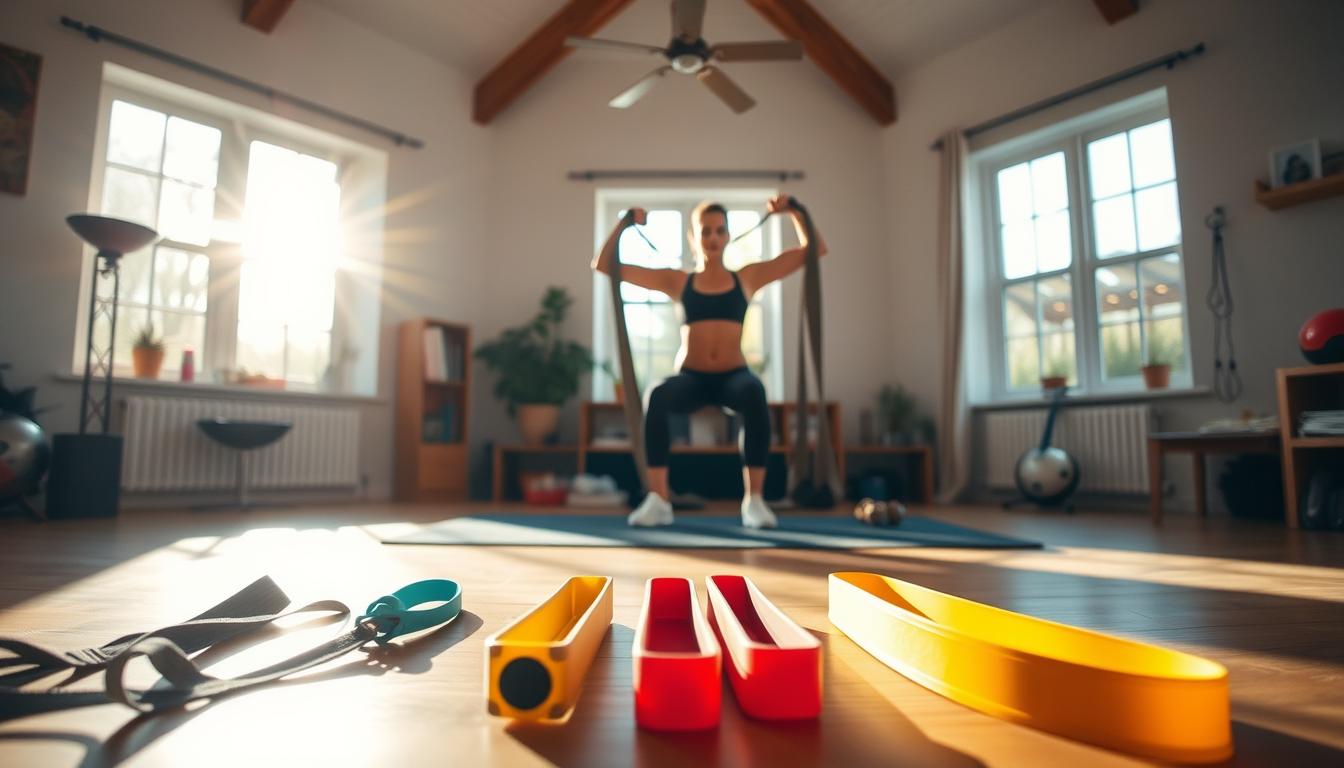
Turn everyday items into fitness tools that work your muscles without the need for expensive gear. This method helps you stay active and get creative with your workouts. It’s great for boosting bodyweight exercises with extra resistance.
Household Item Weight Replacement
Many common objects can act as free weights. For example, a full gallon water jug weighs about 8 pounds. It’s perfect for shoulder presses or lunges. Here are some other items you can use:
- Backpack filled with books: Adjustable 5-20+ lbs
- Laundry detergent jug: 10-15 lbs grip strengthener
- Canned goods: 1-2 lb handheld weights for lateral raises
Try the milk jug clean-and-press by bending your knees a bit. Lift the jug to shoulder height, then press it overhead. This move works your core muscles.
Progressive Overload Techniques
Gradually increase the weight to keep getting stronger:
- Add water gradually to plastic bottles (¼ cup increments)
- Extend exercise duration by 10 seconds weekly
- Combine items – hold cans while doing weighted squats
Keep track of your progress with a notes app or fitness journal. Aim to increase the difficulty by 5% every 7-10 days. This helps avoid getting stuck at the same level.
DIY Equipment Safety Checks
Before each workout, check your homemade gear with this 5-point checklist:
- Secure container lids with duct tape
- Check for cracks/leaks in plastic items
- Test weight distribution in backpacks
- Verify grip surfaces aren’t slippery
- Confirm storage area stays dry
Replace any worn-out items right away. A leaking rice bag or a frayed towel-resistance band can cause injuries. Always keep proper form, even with unconventional weights.
10. Community Fitness Challenges
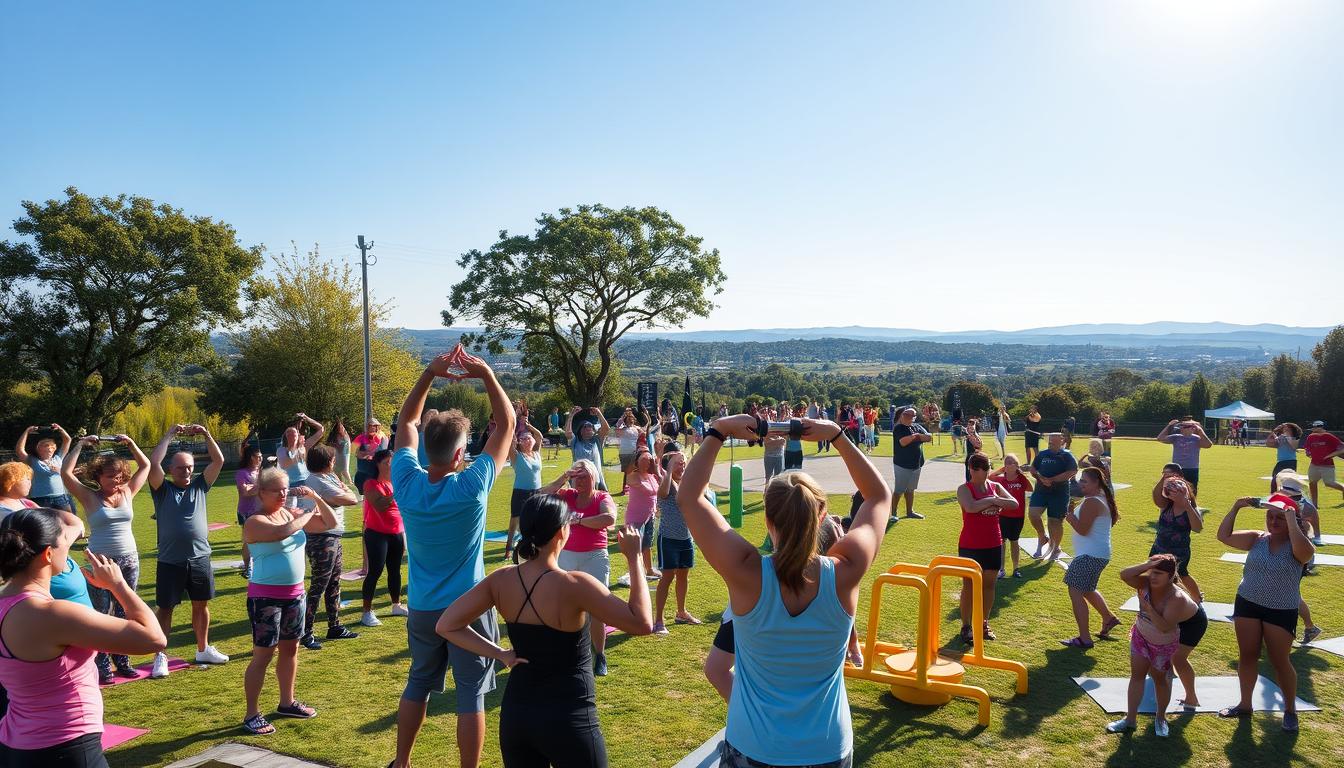
Turning exercise into a group effort can make it more fun. Community challenges mix accountability with friendship, making outdoor exercise and home workouts more enjoyable. Whether it’s racing friends on trails or joining online step challenges, working together keeps you motivated.
Social Accountability Benefits
Joining a challenge with others boosts your performance, thanks to social facilitation theory. A study showed group participants worked out 76% more than those alone.
“Public commitment doubles your likelihood of sticking to fitness goals,”
researchers say. Local running clubs or park yoga groups help build this accountability.
Local Event Discovery Methods
Finding fitness events near you is simple. Here are some free fitness resources:
- Check library bulletin boards for 5K run flyers
- Join “Outdoor Fitness [Your City]” Facebook groups
- Use the Meetup app to find beginner-friendly hikes
Many parks host seasonal challenges, like summer step counts, with no fees.
Virtual Challenge Platforms
Can’t find local events? Apps like Strava let you compete with friends globally. Charity Miles turns walks into donations, and Fitbit challenges sync with smartphones. These platforms offer:
- Real-time progress tracking
- Customizable team goals
- Badge rewards for milestones
Best of all, they show free fitness resources can be as good as paid gym tools with the right motivation.
Maintaining Progress: Avoiding Plateaus & Tracking
Breaking through fitness plateaus needs strategy, not just hard work. Here’s how to outsmart your body’s adaptation. The key is structured periodization and using smart tracking tools. These keep your workouts effective over time.
Try this 4-phase progression model used by elite athletes:
- Phase 1: Build endurance (3 weeks of moderate-intensity workouts)
- Phase 2: Increase strength (2 weeks of resistance-focused training)
- Phase 3: Peak performance (1 week of high-intensity challenges)
- Phase 4: Active recovery (1 deload week with 50% reduced volume)
“Greasing the groove – frequent, sub-maximal practice – helps maintain momentum between intense training phases.”
Tracking devices turn vague efforts into measurable results. Let’s compare two popular options:
| Feature | Fitbit Charge 6 | Garmin Venu Sq 2 |
|---|---|---|
| Workout Modes | 40+ | 25+ |
| Recovery Metrics | Basic sleep tracking | Advanced stress scoring |
| Battery Life | 7 days | 11 days |
Pair technology with the Rate of Perceived Exertion (RPE) scale for balanced self-assessment:
- 1-4: Light effort (recovery days)
- 5-7: Moderate challenge (base training)
- 8-10: Maximum output (peak intervals)
Remember: Your best health and fitness results come from combining data with body awareness. Schedule quarterly “progress audits” to adjust your routine before plateaus strike.
Conclusion
Staying active doesn’t have to cost a lot. You can find free ways to stay fit by being creative and consistent. Try bodyweight exercises in parks or use resistance bands at home. These options show that fitness is available everywhere.
Active Cities encourages using public areas for exercise. This fits well with the idea of finding free fitness resources. It’s all about making the most of what’s around you.
Begin by picking three fitness methods that fit your life. Mix outdoor runs with yoga at home for a well-rounded workout. Look for local calisthenics groups or dance challenges on YouTube.
The American Council on Exercise (ACE) has free exercise libraries. They help you keep your workouts interesting without needing special equipment.
Use apps or journals to track your progress. Change your routine every 4-6 weeks to avoid getting stuck. Try swimming in public pools when it’s warm outside. For structured workouts, home workout strategies can help during bad weather.
Always check the safety of public pools before swimming. Make sure your DIY equipment is in good shape. Sharing your fitness journey with friends or online groups can help you stay motivated.
Every step you take outside or every movement you do inside helps your health. You don’t need a gym membership to stay fit.