Did you know 77% of families struggle to meet daily exercise guidelines despite knowing the benefits of physical activity? The American Heart Association’s Kids Heart Challenge found that kids only get 25 minutes of activity outside school each day. This is much less than the recommended 60 minutes. But, what if you could use what you already have to get more active?
Going to the gym and sticking to a strict routine can feel like a chore. But, programs like the Kids Heart Challenge show that playful competition and real-world activities can make a big difference. Activities like scavenger hunts and dance-offs can turn any moment into a chance to burn calories without needing expensive gear.
You don’t need fancy equipment to get healthier. Simple changes, like making grocery shopping a game or hosting backyard races, can really engage everyone. The secret is to mix exercise into your daily life so it feels like fun, not a task.
Key Takeaways
- Turn household chores into active games to boost daily movement
- Leverage free community programs like the Kids Heart Challenge
- Use outdoor spaces creatively for obstacle courses or nature walks
- Track progress through friendly family competitions
- Prioritize consistency over intensity for long-term success
Why Family Fitness Matters Beyond Gym Walls
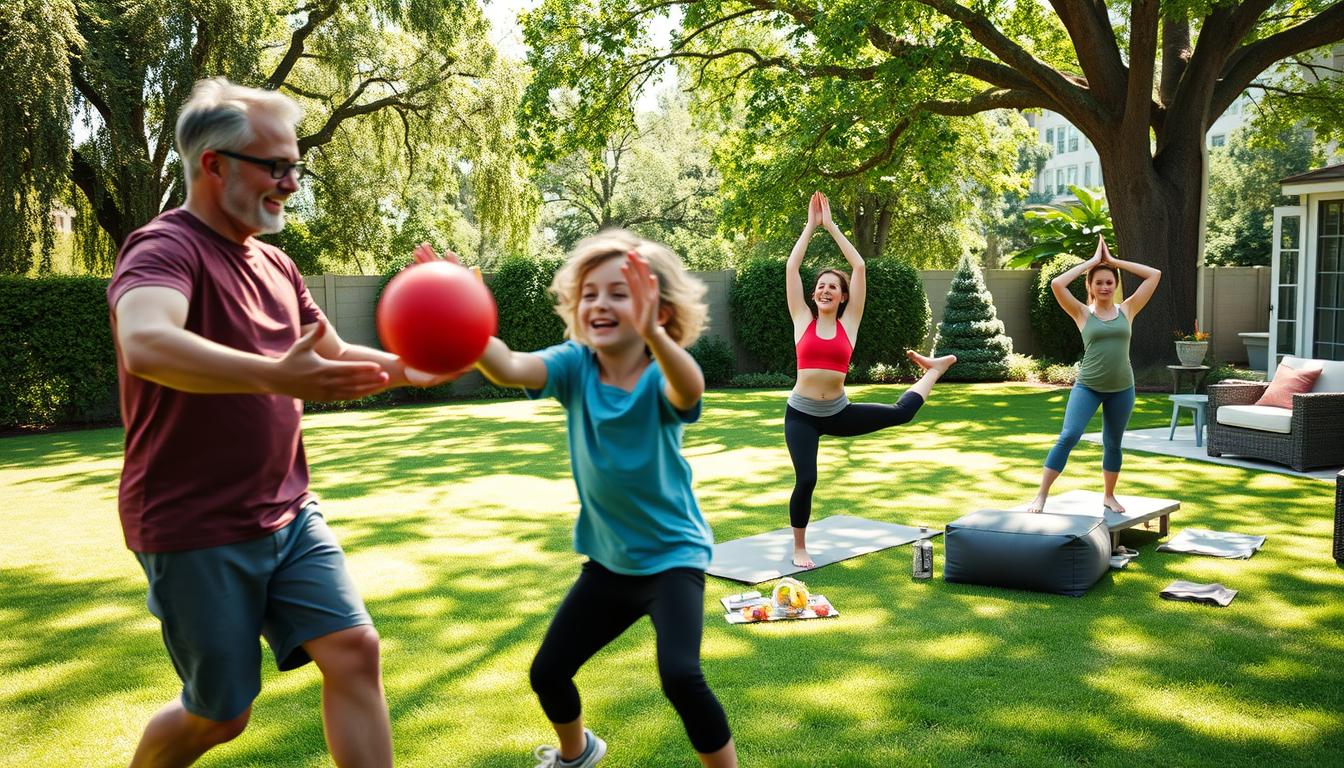
Traditional gyms aren’t the only way to get healthy. Many of the best workouts happen in living rooms, backyards, and parks. These activities do more than just build muscle. They also strengthen family bonds and create lasting habits.
The Hidden Benefits of Non-Traditional Exercise
Building Stronger Relationships Through Shared Activities
Family dance parties or backyard obstacle courses are great for bonding. They offer quality time with laughter. Even short dance breaks can improve family communication, as the American Heart Association shows.
Try these fun activities to strengthen your family:
- Spelling-based squats (call out letters while lowering)
- Laundry basket relay races
- Weekend “Olympics” with homemade medals
Developing Lifelong Healthy Habits in Children
Kids who enjoy exercise are more likely to stay active as adults. Non-traditional activities show that you can move anywhere, not just in gyms.
| Activity Type | Skill Developed | Family Bonding Level |
|---|---|---|
| Kitchen counter push-ups | Upper body strength | ★★★★☆ |
| Staircase spelling drills | Literacy + cardio | ★★★☆☆ |
| Grocery bag curls | Arm endurance | ★★★★★ |
Addressing Modern Sedentary Challenges
Combating Screen Time With Movement Breaks
For every 30 minutes of screen time, try 5 minutes of active countermeasures:
“Micro-movements throughout the day significantly offset sedentary risks” – American Heart Association Movement Guidelines
Counteracting Processed Food Diets With Activity
Turn nutrition challenges into active games. After sugary snacks, start a “sugar rush relay” around the house. Pair budget-friendly home workouts with meal prep to create a holistic health routine.
The best family workouts often cost nothing but time and creativity. What’s most important is moving together regularly, not where you do it.
How to Get the Whole Family Moving Without a Gym
Start by changing how you think about exercise. Ditch the strict schedules and expensive gym memberships. Real progress comes from making movement a part of your daily life.
Redefining Fitness for Family Success
Shifting from structured workouts to lifestyle movement
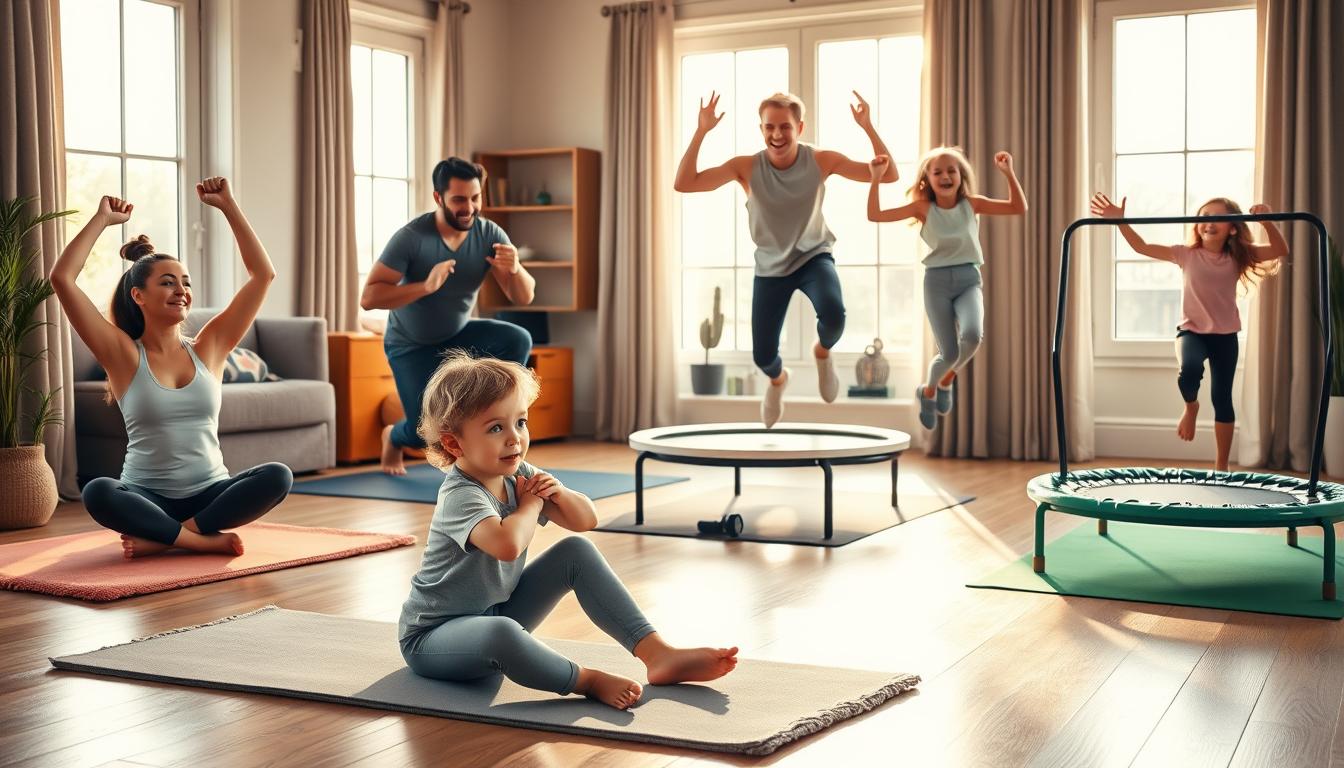
The CDC’s Move Your Way campaign shows you don’t need long workouts to see results. Try these family-friendly workout routines in your daily life:
- Race to bring groceries inside (carry lighter bags for younger kids)
- Host “commercial break” dance parties during TV time
- Create obstacle courses using couch cushions and dining chairs
Embracing imperfect consistency over perfection
Three 10-minute movement snacks are better than one long workout you might not do. Celebrate every small victory:
- Tuesday: 15 minutes of backyard tag
- Thursday: Walk-and-talk after dinner
- Saturday: Living room yoga with stuffed animal weights
Breaking Through Common Misconceptions
“We need expensive equipment” myth busting
Turn household items into workout tools:
| Equipment Myth | Reality Check |
|---|---|
| Weighted vest | Backpack filled with books |
| Agility ladder | Sidewalk chalk patterns |
| Resistance bands | Bath towels for pulling games |
“Young children can’t participate” reality check
Make activities fun for all ages:
- Toddlers: Crawling races under tables
- Preschoolers: Sock ball toss into laundry baskets
- Elementary kids: Timed scavenger hunts with movement tasks
Assessing Your Family’s Readiness for Active Living
Getting your family active starts with knowing where you stand today. A personalized approach ensures everyone stays engaged while building sustainable habits. Let’s break down two essential steps to create a plan that works for all ages and energy levels.
Conducting a Family Activity Audit
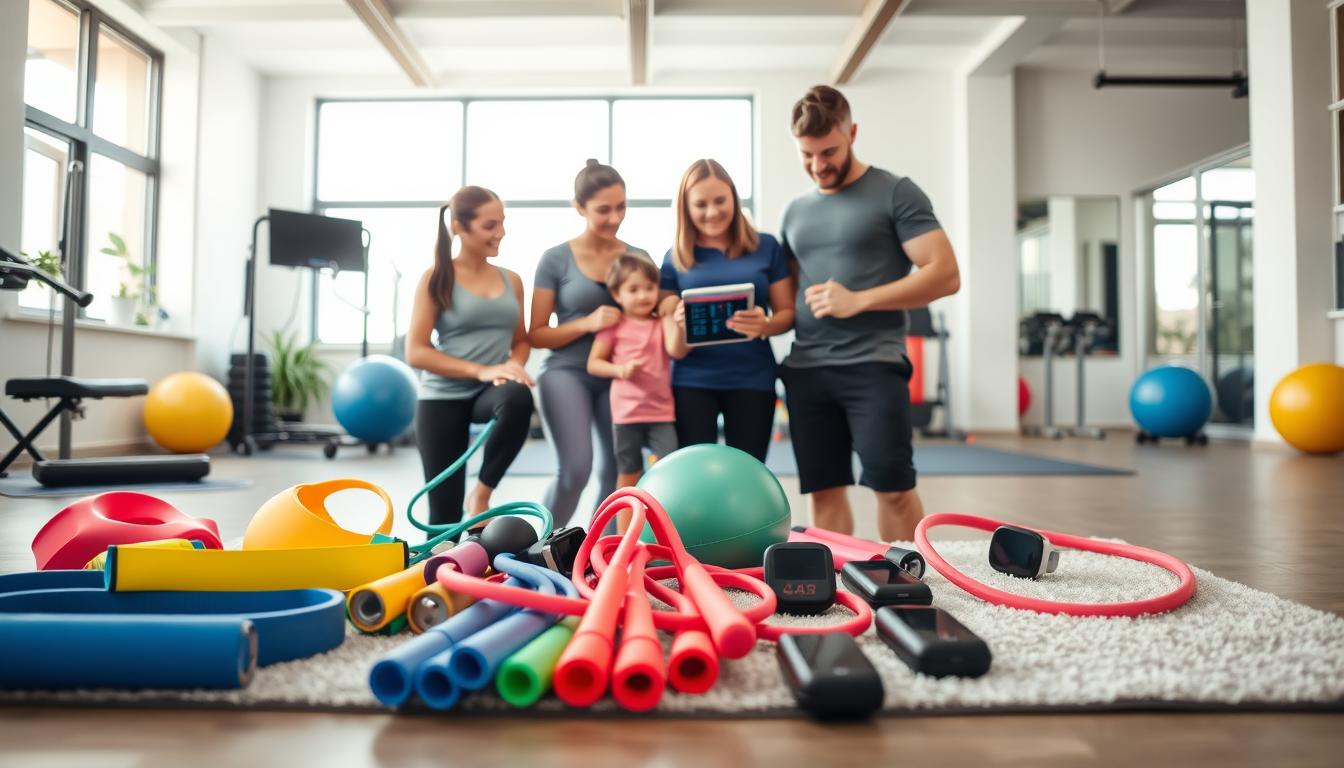
Tracking current movement patterns reveals hidden opportunities. Use a simple chart or apps like Move Your Way’s activity planner to record:
- Daily step counts
- Screen time vs. active hours
- Spontaneous play moments
Identifying natural energy peaks
Notice when family members are most alert. Early risers might prefer sunrise yoga, while night owls could thrive with post-dinner dance parties. Align activities with these biological rhythms for better participation.
Creating Your Family Fitness Profile
Build your blueprint using these key factors:
Accounting for different ability levels
Modify activities so grandparents and toddlers can participate together. Try:
- Seated versions of standing exercises
- Shorter routes for bike rides
- Low-impact dance moves
Recognizing personality-driven preferences
Match activities to what excites your crew. Use this quick-reference table to find options that click:
| Personality Type | Preferred Activity | Modification Tip |
|---|---|---|
| Competitive | Timed scavenger hunts | Use stopwatch apps |
| Creative | Obstacle course design | Provide art supplies |
| Social | Group relay races | Mix age groups |
This structured yet flexible approach helps you craft fitness tips for the whole family that actually stick. Remember: Small, consistent changes create lasting impact.
Outdoor Adventures That Build Strength and Bonding
Turn your backyard into a fitness zone for fun family workouts. These outdoor family exercise ideas mix fun with fitness. You don’t need fancy gear to get stronger and closer together.
Neighborhood Exploration Challenges
Make your neighborhood a playground with creative games. The hot lava balloon game is a hit on sidewalks. Family members jump between safe zones to avoid “lava.”
Creating scavenger hunt routes
- Map a 1-mile loop with checkpoints for bodyweight exercises
- Hide nature-themed riddles in mailboxes or lamp posts
- Assign bonus points for spotting local wildlife
Designing nature observation trails
Walk while exploring nature. Keep a scorecard for:
- Different bird species heard
- Unique leaf shapes collected
- Natural landmarks photographed
Park-Based Fitness Circuits
Parks have built-in equipment for group exercises for families. Try stations that test balance, coordination, and endurance.
Bench step-ups and tricep dips
Use park benches for interval training:
- 60 seconds of alternating step-ups
- 15 inclined push-ups using seat edge
- 20 tricep dips with legs extended
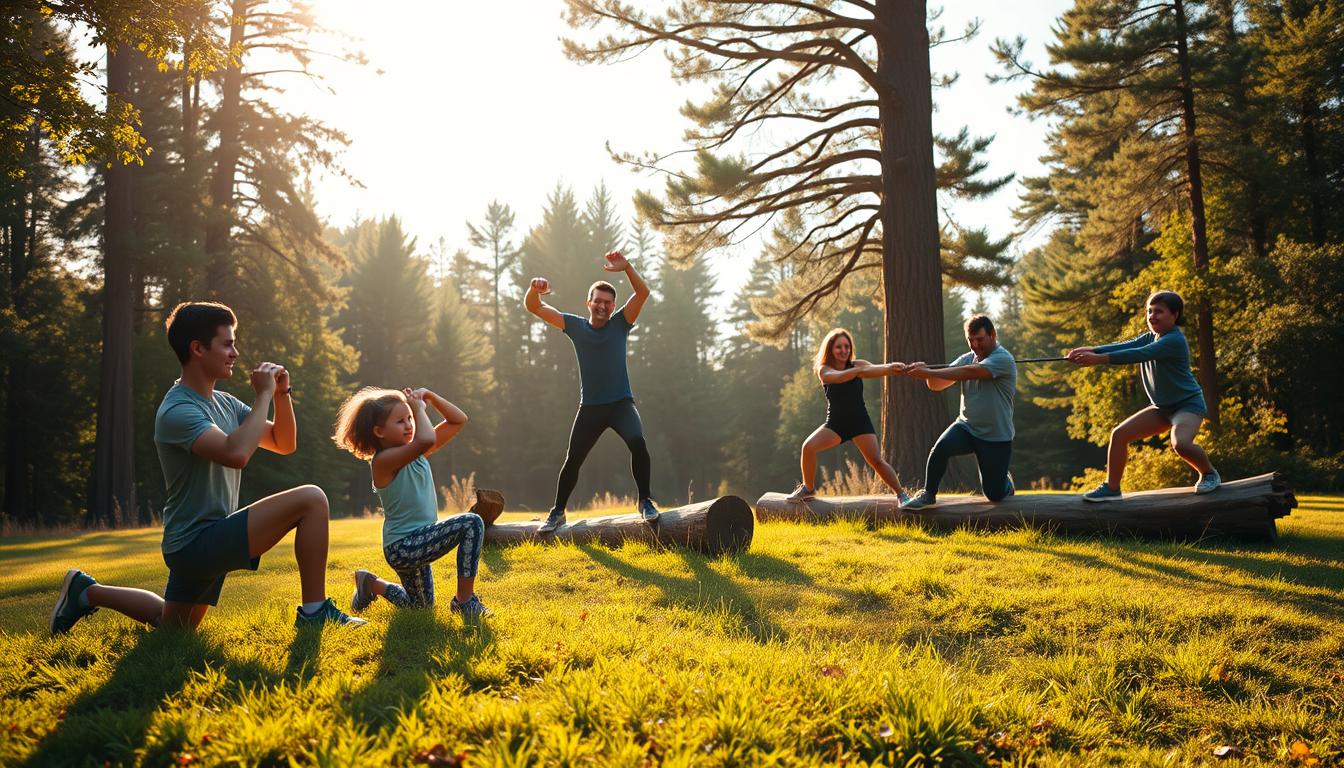
Tree trunk balance challenges
Test stability on fallen logs or wide tree roots. Time family members as they:
- Walk heel-to-toe across surfaces
- Hold yoga tree poses for 30 seconds
- Complete single-leg hops between markers
Seasonal Sports Adaptations
Change traditional sports to fit the weather. Bike tours can become year-round fun with simple changes.
Summer water relay races
- Sponge bucket brigades across lawns
- Slip-n-slide lunges on wet plastic sheeting
- Pool noodle “sword fight” balance contests
Winter snowshoe obstacle courses
Make snowy yards into Arctic training grounds:
- Create maze paths with colored spray bottles
- Bury lightweight objects for timed digs
- Build snow walls for leapfrog challenges
Creating Home Fitness Zones on Any Budget
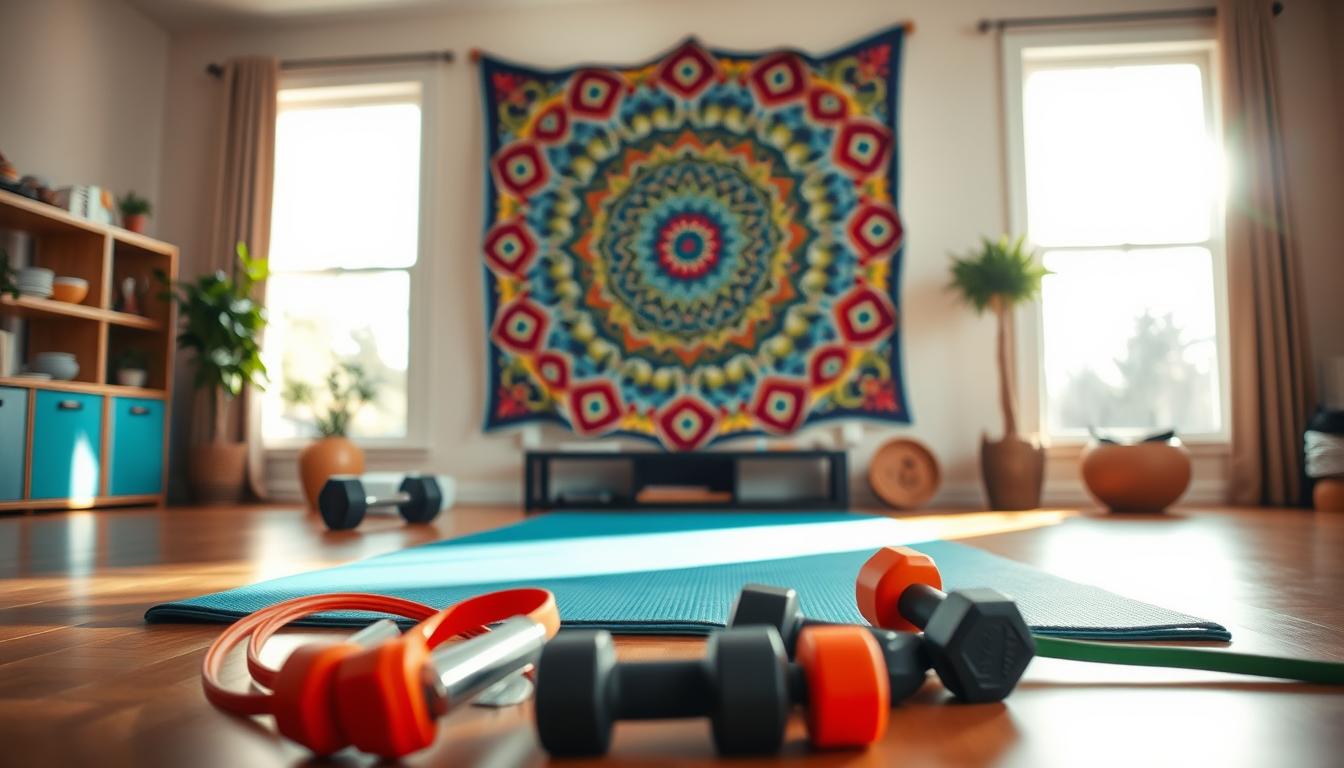
You don’t need to spend a lot to make your home active. Smart planning and everyday items can help. You can create safe and functional areas for family-friendly workout routines.
Living Room Transformation Tactics
Begin by changing your living room. Move furniture to open up space for games or yoga. Use area rugs to mark off exercise areas and protect your floors.
Furniture Arrangement for Movement Flow
- Use chairs as balance points for wall sits or dips
- Make sure there’s 6-8 feet of space for moving around
- Stack ottomans to make adjustable steps
Safety-Proofing High-Traffic Areas
Keep cords tied up with adhesive clips and cover sharp edges. The American Heart Association says to clear small objects from at-home family workouts areas.
Backyard Bootcamp Setup
Make your backyard into an obstacle course with cheap materials. This way, you can change things up with the seasons and keep everyone interested.
DIY Agility Ladder Using Chalk
Draw a 15-foot ladder on concrete with chalk. You can make different levels for everyone:
| Drill Type | Space Needed | Skill Level |
|---|---|---|
| Single-Leg Hops | 5′ x 15′ | Beginner |
| Lateral Shuffles | 8′ x 15′ | Intermediate |
| Speed Skaters | 10′ x 15′ | Advanced |
Homemade Hurdles From Pool Noodles
Cut foam noodles into 12″ pieces and attach to stakes. You can change the height from 6″ to 18″ to match your family’s skill level.
These ideas show you can create great workout spaces without spending a lot. Just update your setup now and then to keep things exciting and engaging.
Turning Chores into Full-Body Workouts
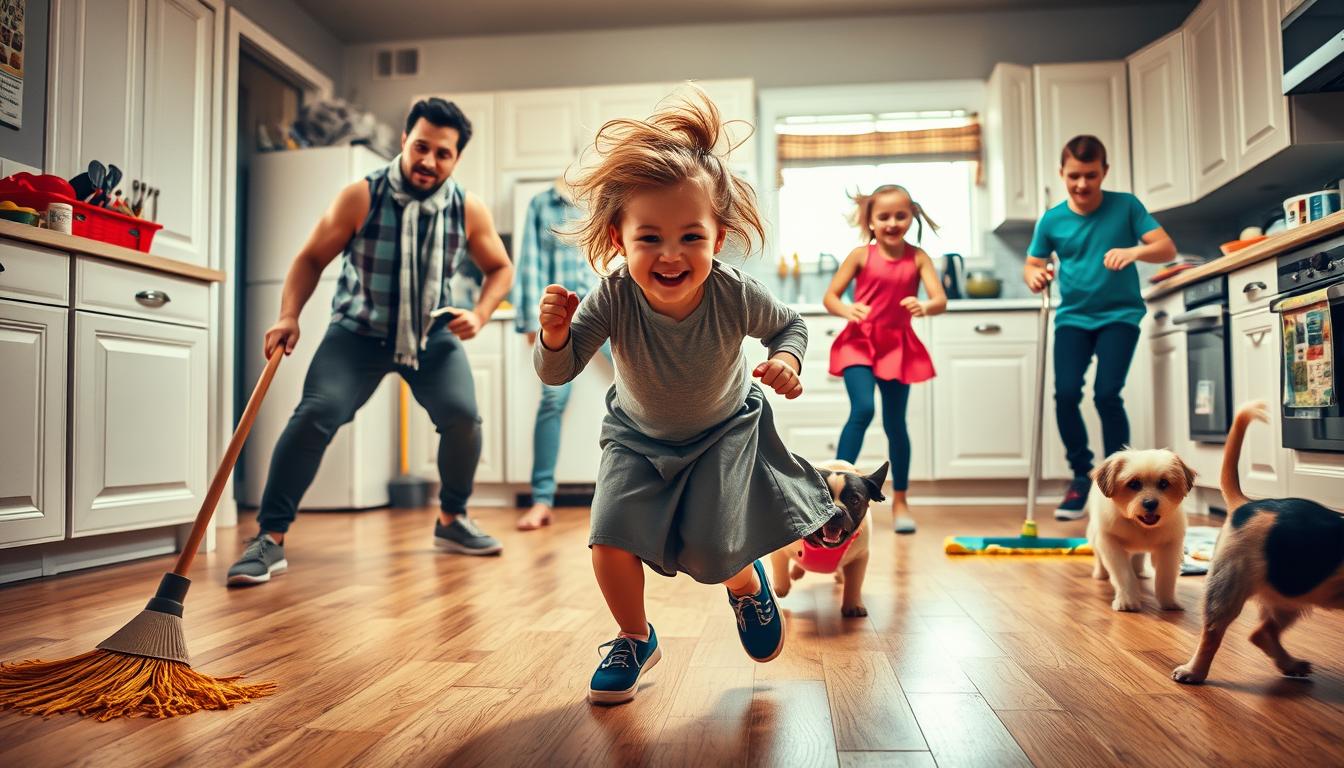
What if scrubbing floors and raking leaves could replace your gym membership? Household tasks offer untapped opportunities to build strength while checking items off your to-do list. Let’s transform drudgery into dynamic fun family fitness challenges that engage multiple muscle groups.
Energy-Boosting Cleaning Routines
Turn routine tidying into calorie-burning sessions with these expert-approved methods from health organizations:
Speed Vacuuming Intervals
Alternate 2 minutes of fast-paced vacuuming with 30 seconds of high knees. This interval approach mimics popular HIIT workouts while eliminating dust bunnies.
Laundry Basket Lunges
Carry folded clothes room-to-room using lateral lunges. The American Heart Association recommends this method to strengthen legs and improve balance during everyday tasks.
| Chore | Exercise Conversion | Muscles Worked |
|---|---|---|
| Mopping Floors | Wide-stance squats | Quads, Glutes, Core |
| Window Washing | Overhead presses | Shoulders, Triceps |
| Bed Making | Plank-to-standing reaches | Abs, Back |
Yard Work Exercise Fusion
Landscaping tasks become outdoor gym sessions with these creative adaptations from DHHS guidelines:
Raking With Rotational Twists
Engage your obliques by twisting your torso as you gather leaves. Alternate sides every 10 rakes to balance muscle development.
Planting Squat Challenges
Maintain a low squat position while transferring seedlings to garden beds. Time yourself to see how long you can hold proper form.
Studies show families who incorporate movement into chores burn 23% more calories weekly than those who separate exercise from household tasks. Turn Saturday cleanups into ways to stay active with your family by setting timer-based challenges or creating chore-based obstacle courses.
Neighborhood Exploration Games for All Ages
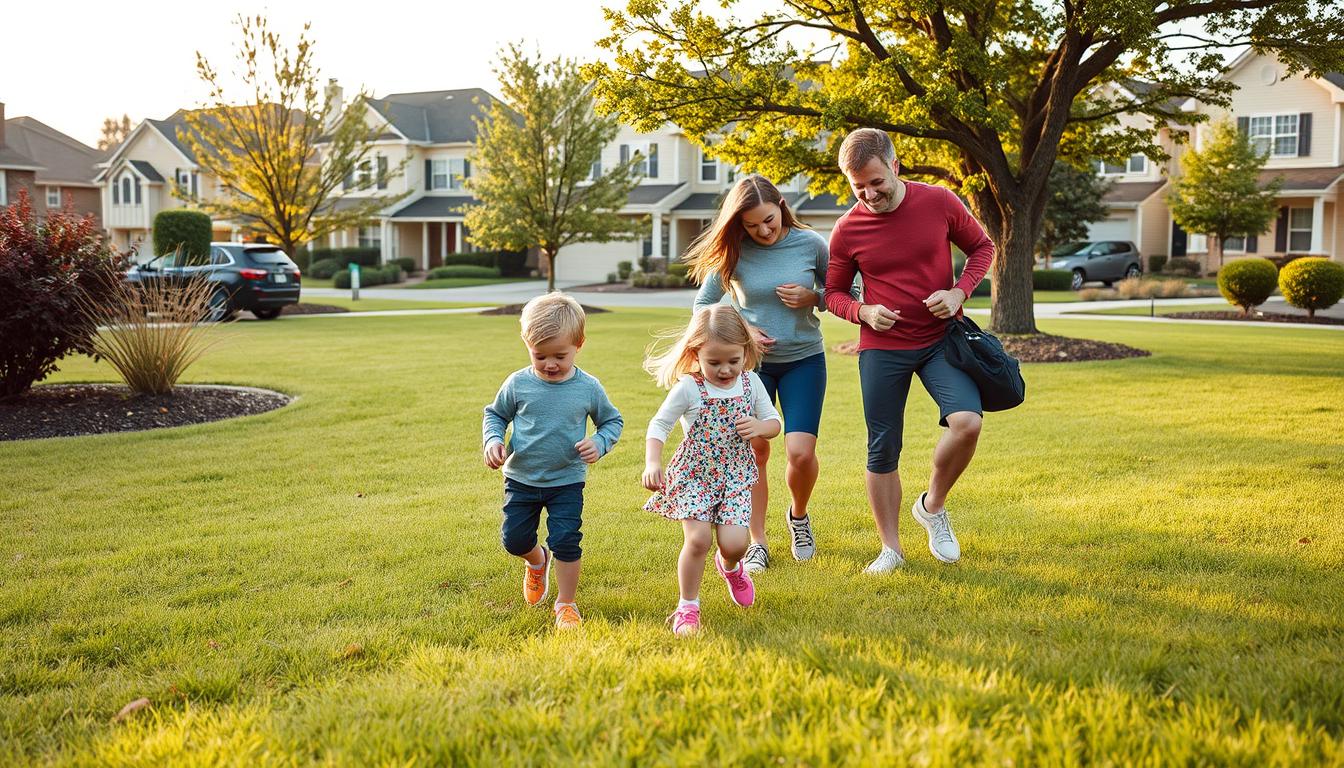
Your neighborhood turns into a playground with exploration and movement challenges. These group exercises for families make sidewalks and landmarks fun for everyone. They mix learning with active play.
Fitness-Focused Scavenger Hunts
Make hunts that need movement at each find. List tasks like “Find a red mailbox and do 10 squats” or “Locate a pine cone and jog in place for 30 seconds.”
Incorporating Movement Tasks at Each Stop
Link exercises to found objects. Spot a birdhouse? Do arm circles like wings. Find a fire hydrant? Shuffle sideways around it three times.
Using Landmarks for Interval Training
Use street features for fitness. Sprint to the next stop sign, then do wall sits at a brick building. Walk fast, then power-lunge between mailboxes.
Interactive Walking Tours
Blend local history with physical challenges. Use the American Heart Association’s spelling activities. At each marker, spell words with outdoor family exercise ideas like:
- Jumping jacks for vowels
- High knees for consonants
- Arm raises during punctuation
Creating Historical Fitness Trails
Map routes past important sites with movement prompts. Read about a blacksmith? Do 15 hammer-curls. Pass a war memorial? Hold a silent plank for 30 seconds.
Architecture Observation Walks
Use building details for exercise cues. Spot gabled roofs? Do incline pushups. Notice columns? Practice balance poses. Count windows while doing standing oblique crunches.
These group exercises for families turn walks into exciting adventures. They strengthen bodies and bonds, showing fitness is everywhere, not just in gyms.
Weather-Proof Movement Strategies for Every Season
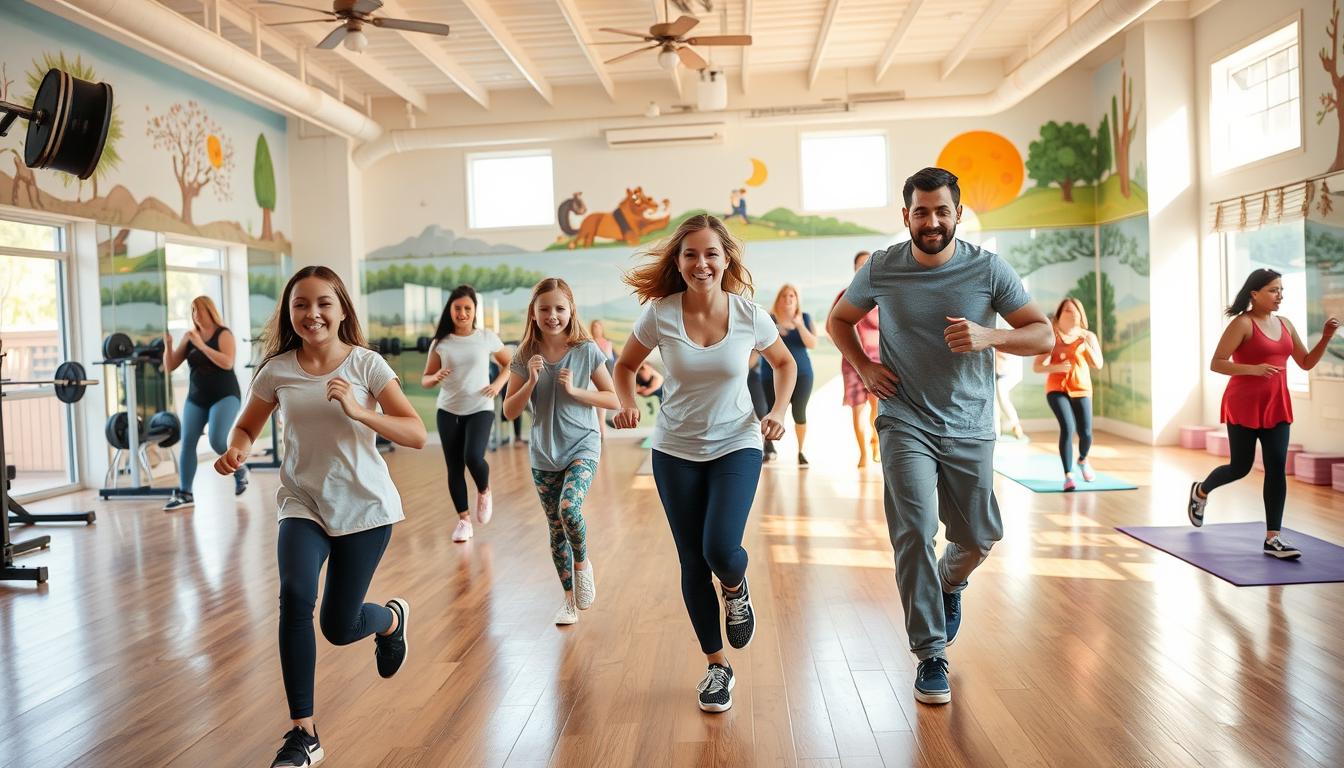
Don’t let the weather stop your family from staying active. Creative ideas can keep everyone moving, no matter the weather. These strategies turn bad weather into chances for fun and fitness.
Rainy Day Active Games
When it’s too wet to go out, make your home a playground. The American Heart Association suggests simple exercises that are fun and don’t need any special gear.
Indoor Obstacle Course Creation
Use things you already have to create obstacle courses:
- Couch cushion balance beams
- Tunnel crawls under dining chairs
- Laundry basket ball toss challenges
Time how fast each person can complete the course. Encourage them to try again for even better times.
Staircase Fitness Challenges
Make the most of your stairs with these exercises:
- Two-foot jumps between steps (ages 6+)
- Side-step climbs holding weighted backpacks
- Timed races carrying “treasures” to upstairs rooms
Extreme Heat/Cold Solutions
Stay active even when it’s very hot or cold. The Department of Health says most families do better with routines that adapt to the weather.
Early Morning Movement Routines
Use the cooler morning hours to stay active:
- Sunrise scavenger hunts
- Pre-breakfast dance parties
- Yoga sessions on shaded patios
Mall Walking Power Sessions
Shopping malls are great for walking in winter:
- Speed-walk two laps before window shopping
- Do step-ups on empty benches
- Race to find specific store displays
Many malls open early for walkers. Check local schedules for these free hours.
Multigenerational Exercise Modifications Made Simple

Creating workouts for toddlers, teens, and grandparents doesn’t need fancy gear. It’s all about adjusting intensity and movements. Make sure everyone finds it fun.
Adapting Movements for Different Abilities
First, check how each family member moves using the DHHS Physical Activity Guidelines for Older Adults. Use chairs to help grandparents exercise and get stronger:
- Seated leg lifts with ankle weights
- Arm circles using water bottles as light resistance
- Chair yoga poses from Move Your Way’s senior fitness resources
Bodyweight Progressions for Teens
Teens can grow with exercises that get harder as they do. Try the American Heart Association’s vowel-based squat system:
- Basic squat (A-position: feet hip-width)
- Sumo squat (E-position: wide stance)
- Plyo squat (I-position: explosive jump)
Inclusive Game Variations
Turn old games into fun for everyone. Make them about having fun together, not winning.
Modified Tag Games
Make “mobility-friendly tag” with these rules:
- Designate safe zones with 30-second rest periods
- Allow power walkers and wheelchair users to tag knees
- Use pool noodles for contactless tagging
Team-Based Challenges
Get everyone working together in activities like:
| Activity | Grandparent Role | Teen Role |
|---|---|---|
| Laundry Basket Relay | Strategy coordinator | Physical transporter |
| Memory Course | Pattern creator | Obstacle navigator |
These changes make group exercises for families into special times together. They fit all fitness levels. Find many ways to stay active with your family all year.
Household Items That Double as Fitness Equipment
Why spend money on gym equipment when your home is full of it? Everyday items can become great workout tools. This makes at-home family workouts fun and easy. Let’s find creative ways to use what you already have.
Kitchen Cabinet Workout Tools
Your kitchen is more than just for cooking. It’s a place for fitness too. These simple changes make workouts fun and save money.
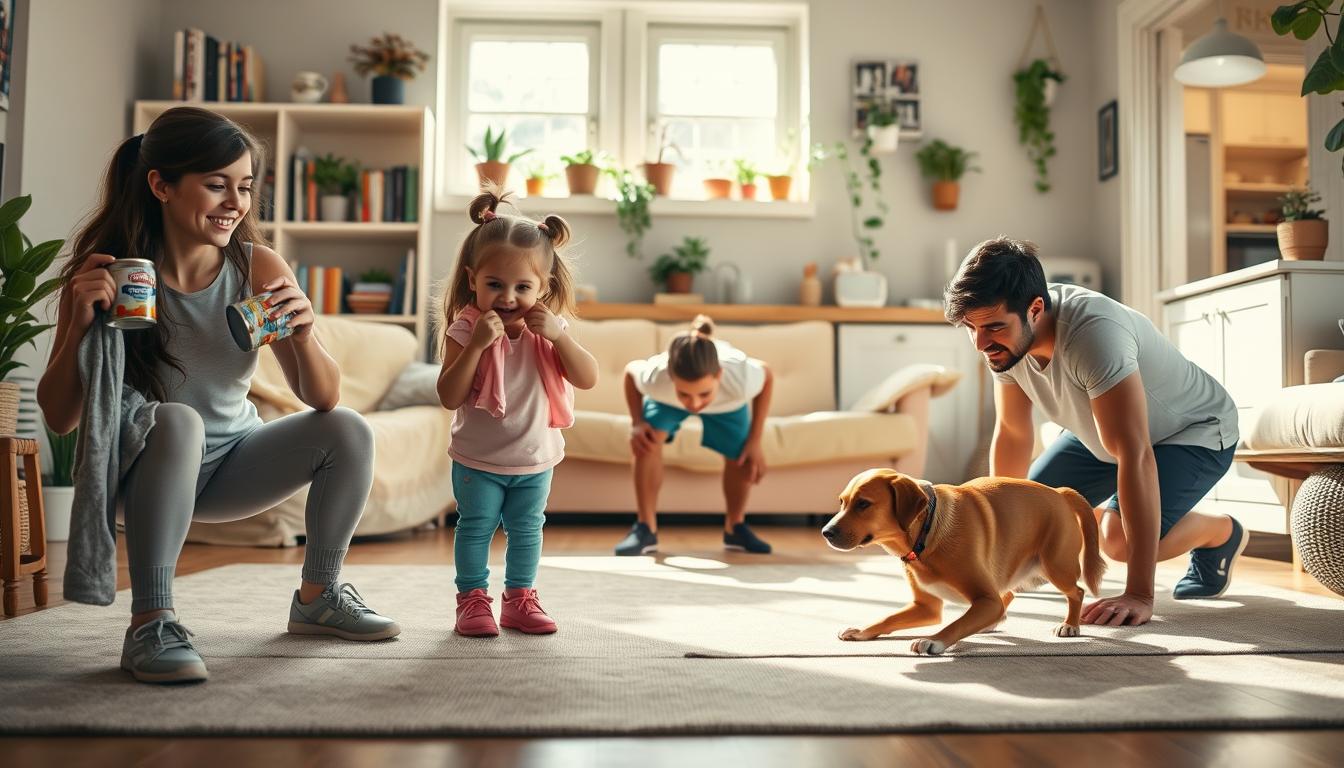
Canned Food Weights
Use soup cans or vegetable tins as dumbbells. Here are some ideas:
- Bicep curls while watching TV
- Overhead presses during commercial breaks
- Squat-to-shoulder presses for full-body engagement
Towel Resistance Bands
Dish towels can be used as resistance bands. The American Heart Association suggests games like spelling ball toss game. You can also:
- Grip both ends for chest-opening stretches
- Create makeshift TRX straps for rows
- Simulate battle ropes with vigorous shakes
Laundry Room Fitness Hacks
Turn laundry time into a workout with these tips.
Detergent Jug Farmer’s Carries
Full laundry detergent containers work on grip strength and core. Challenge family to:
- Carry jugs while walking lunges
- Hold them overhead during wall sits
- Use as kettlebells for swings
Sock Sliding Core Exercises
Hardwood floors become a workout area with slippery socks.
“Household items remove barriers to movement,”
Move Your Way’s guide says. Try these moves:
- Mountain climbers on kitchen tiles
- Sliding plank jacks
- Lunge-to-side slides for obliques
These fun family fitness challenges show you don’t need special gear. Switch between kitchen and laundry for a full-body workout. It keeps everyone active and engaged.
Friendly Competition Ideas to Boost Motivation
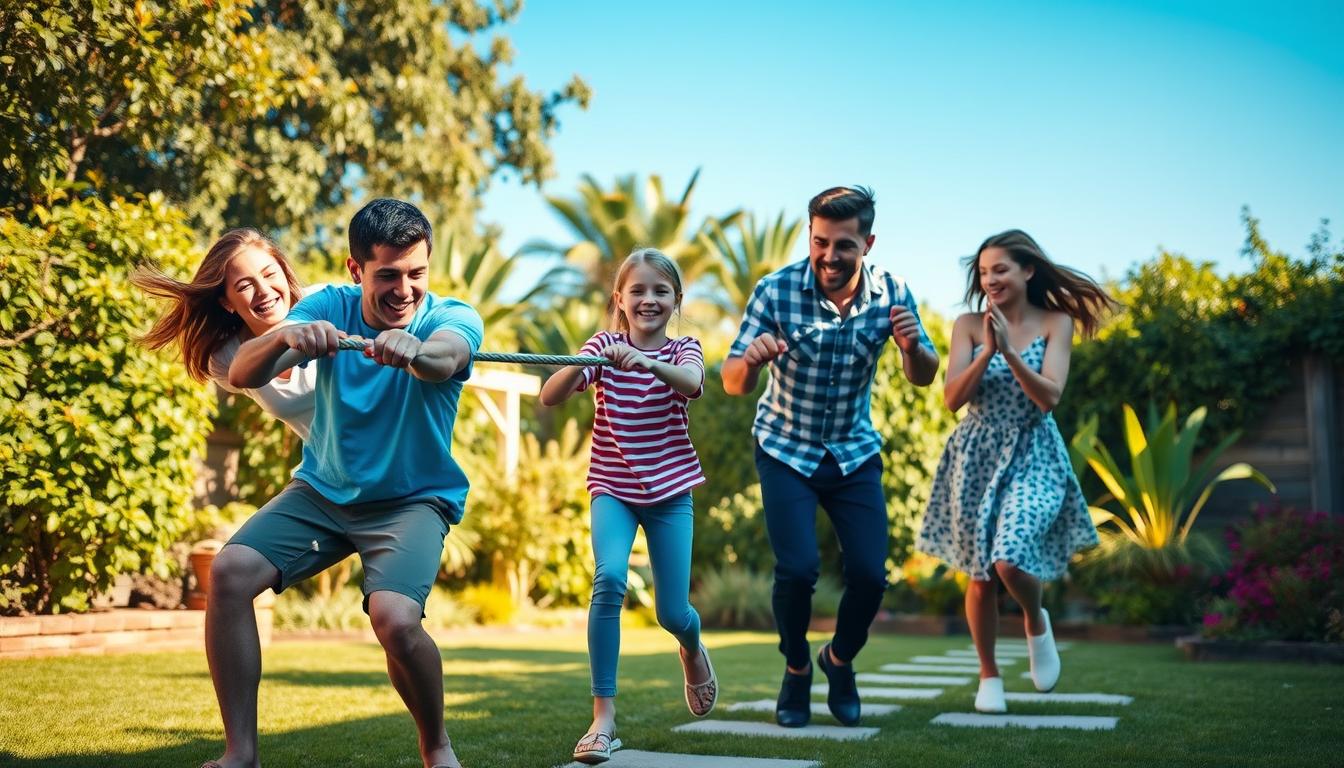
Turning fitness into a game makes exercise fun. Friendly rivalries keep everyone moving and motivated. These strategies mix structure and creativity for a great workout experience.
Family Fitness Bingo
Creating Custom Activity Cards
Make bingo cards that fit your family’s likes and fitness levels. Include fun activities like animal walks for kids and timed planks for teens. Add silly challenges like “dance while brushing teeth.”
Progressive Reward System
Start with small rewards for each bingo line. Aim for bigger prizes for a full card. Use a sticker chart to track progress. A week of squares might get you a backyard campout, and a month could mean a zip-lining trip.
Step Count Challenges
Weekly Family Step Goals
Set goals based on age and activity level. Preschoolers aim for 8,000 steps, while adults go for 10,000. Use heart rate checks during walks to teach about health.
Creative Tracking Displays
Use footprint cutouts to track progress on your hallway. For tech lovers, apps can turn steps into race distances. Update your display weekly with colorful markers to keep everyone motivated.
Screen-Time Alternatives That Get Bodies Moving
Turn digital downtime into active family time with fun and fitness. These screen-free solutions fight sedentary habits. They keep everyone engaged without needing expensive equipment or gym memberships.
Active Video Game Alternatives
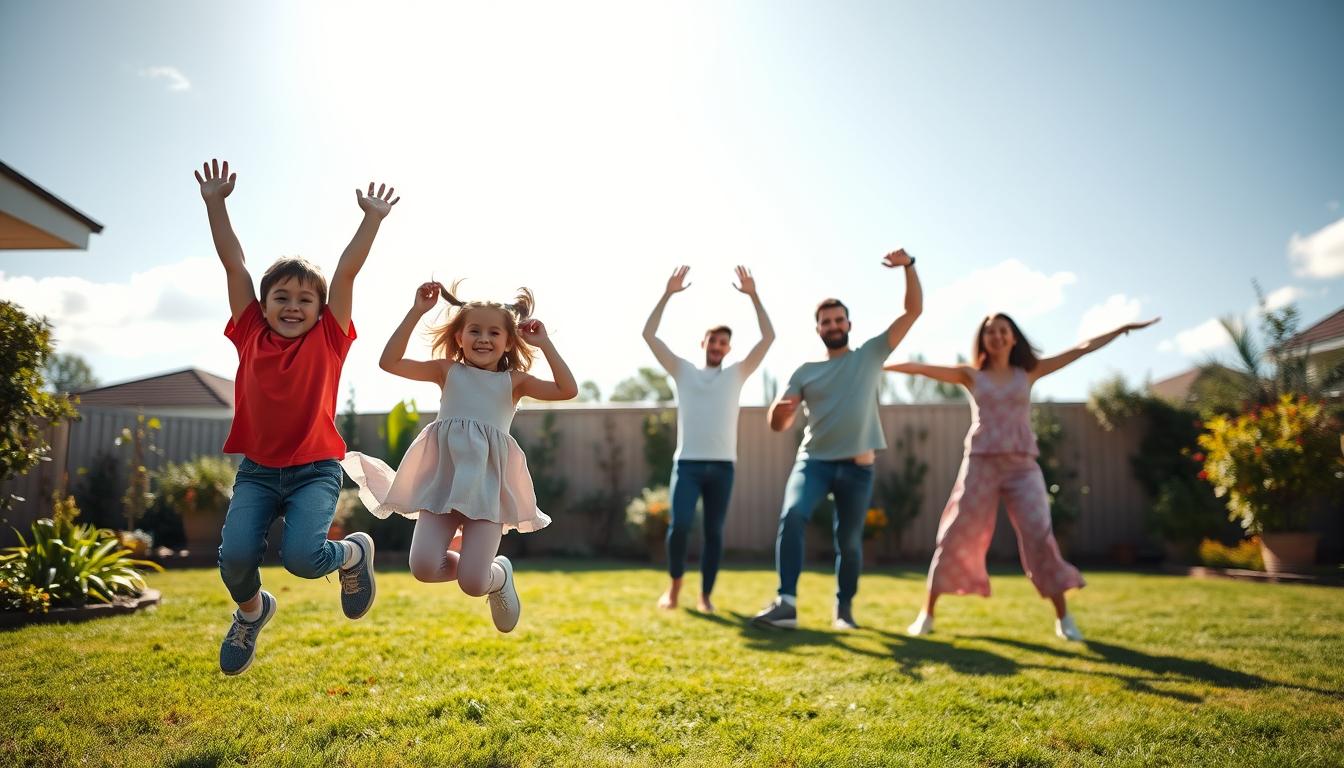
Replace controller gaming with real-world challenges. The American Heart Association’s Hokey Pokey routine shows classic songs can burn calories when danced with energy.
Dance-off competitions
Start dance battles with your phone’s speaker. Score for creativity, stamina, and participation. Here are some ideas:
- Decade-themed dance parties (70s disco vs. 90s hip-hop)
- Freeze dance challenges with increasing speed levels
Interactive fitness apps
Try free tools like Nike Training Club or Seven Minute Workout for family workouts. Our table helps pick the best app for you:
| App Feature | Dance Focus | Strength Training |
|---|---|---|
| Workout Length | 3-10 minute routines | 5-15 minute circuits |
| Age Range | All ages | 8+ years |
| Equipment Needed | None | Household items |
Commercial Break Workouts
Make TV time into movement time with Move Your Way techniques. During each ad break:
Quick movement challenges
- 15-second wall sits during car commercials
- 30-second jumping jacks during streaming buffers
Stretching routines
Pair favorite shows with flexibility exercises. Try ‘story stretches’ where characters’ actions guide movements:
“When the detective runs, we do high knees. When they search clues, we reach for toes.”
These screen-time solutions offer natural breaks. They help your family meet the 60+ daily activity minutes recommended by health experts.
Music-Driven Workouts for Energy and Joy
Turn up the volume and let rhythm guide your family’s fitness journey. Music isn’t just entertainment—it’s a powerful tool that boosts energy, improves coordination, and makes exercise feel like playtime. The American Heart Association recommends 10-minute dance sessions as an effective way to raise heart rates.
Programs like Move Your Way show how beats-per-minute can motivate even reluctant movers.
Creative Dance Party Formats
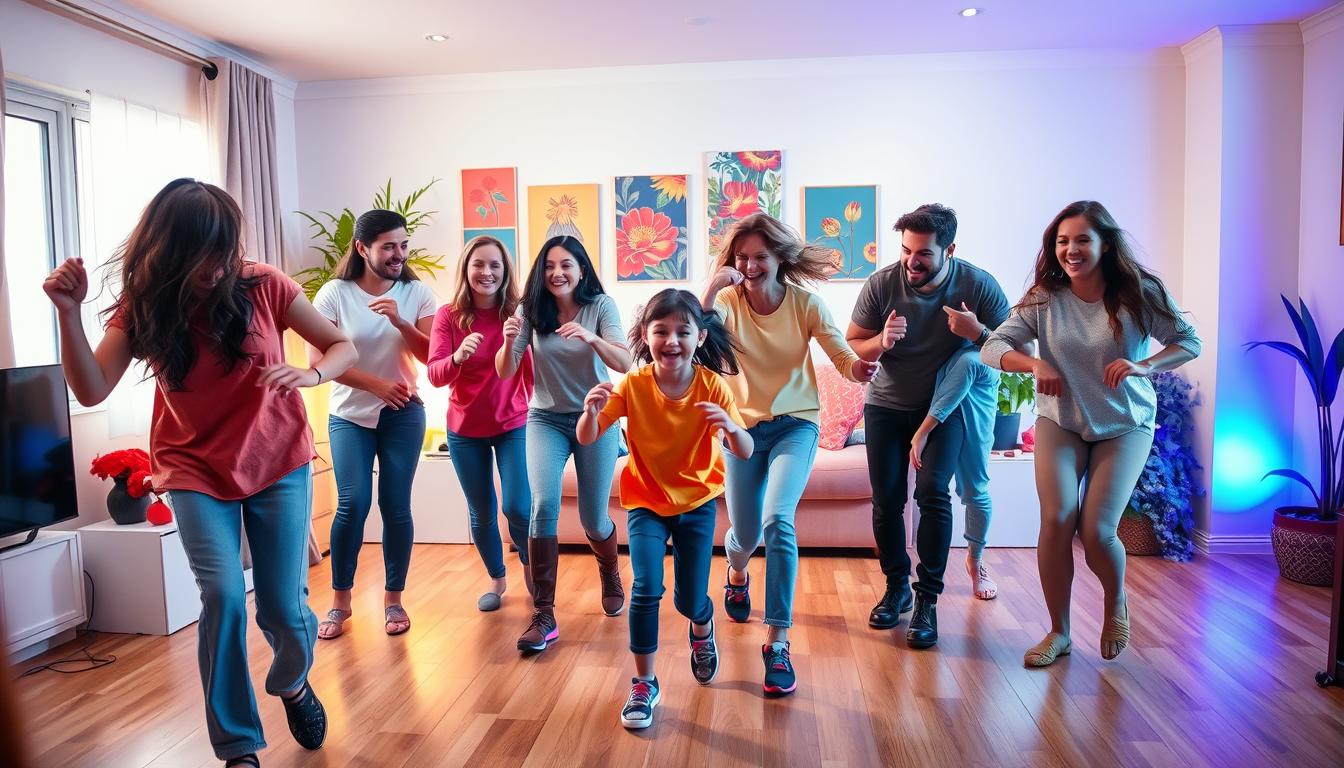
Transform your living room into a dance floor with these engaging ideas:
Decade-Themed Movement Sessions
- 1970s Disco Fever: Practice grapevine steps to retro beats
- 1980s Aerobic Power: Combine jazz hands with high knees
- 2000s Hip-Hop Moves: Create simple choreography to pop hits
Freeze Dance Variations
- Pause music randomly—freeze in yoga poses for balance challenges
- Add fitness tasks during freezes (5 jumping jacks before resuming)
- Let different family members control the music for surprises
Interactive Rhythm Games
“Matching movement to music builds neural connections while burning calories.”
Musical Exercise Statues
Dance wildly during playback, then hold a plank or wall sit when the music stops. Last person maintaining form wins!
Beat-Matching Challenges
- Clap/stomp in sync with song tempos
- Progress from 80 BPM ballads to 120 BPM dance tracks
- Create “mismatch” rounds for laughter-filled coordination practice
These family-friendly workout routines prove exercise doesn’t need equipment—just creativity and a playlist. For best results, alternate between fast-paced songs and slower recovery tracks to mimic professional interval training. Your next fun family fitness challenge starts with pressing play!
Tracking Progress Without Gym Metrics
Measuring fitness success doesn’t need fancy equipment or calorie counters. Focus on real-world achievements and creative ways to document them. Your family can celebrate growth in meaningful ways. The Department of Health and Human Services suggests practical methods to track progress and keep motivation up.
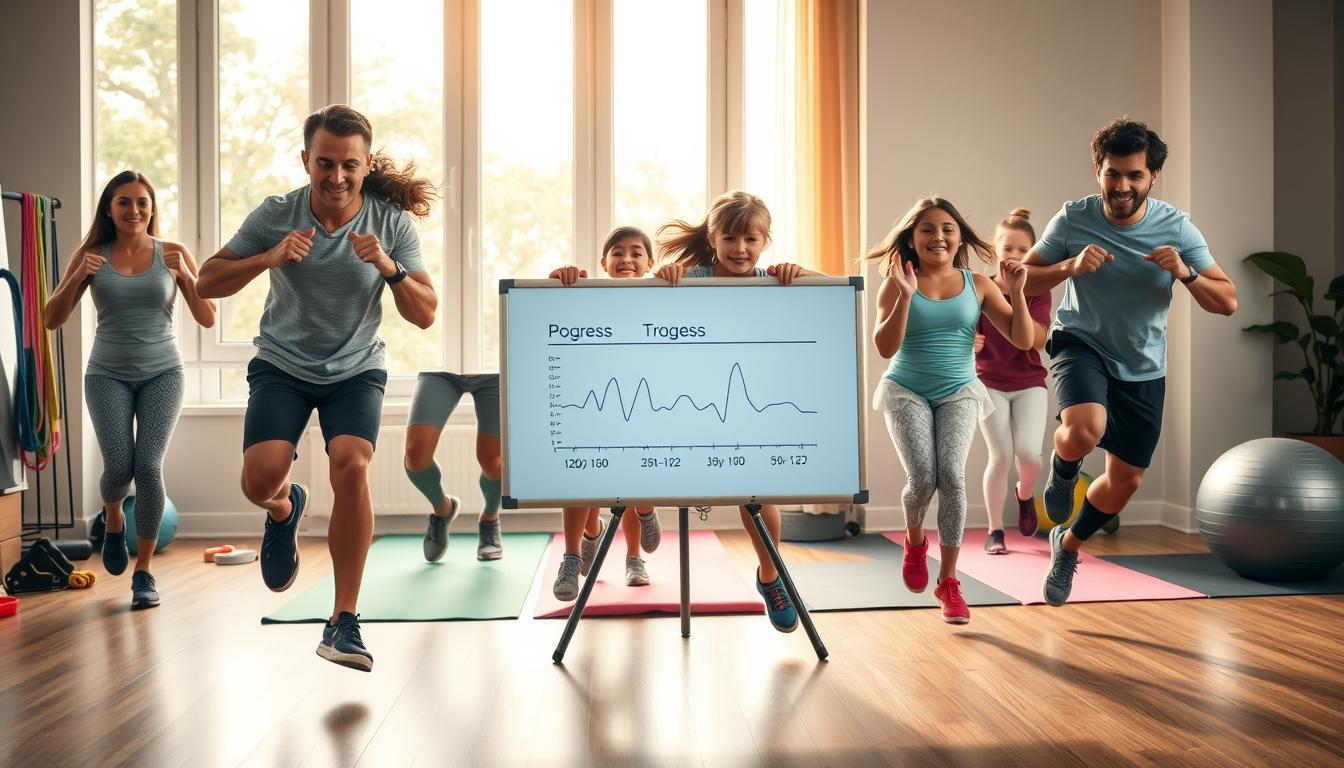
Non-Scale Victory Celebrations
Focus on milestones that show your family’s unique journey. The American Heart Association suggests these strategies to highlight everyday wins:
Endurance Milestone Tracking
- Time how long your crew plays tag before needing a break
- Count flights of stairs climbed during weekend adventures
- Track walking distance to local landmarks over months
Flexibility Improvement Markers
Create simple tests for movie nights:
- Measure how far fingers reach past toes during stretches
- Track ability to twist and grab items behind without straining
- Note how easily kids tie shoes while standing
“Progress tracking should empower families, not intimidate them. Focus on functional improvements over abstract metrics.”
Visual Progress Documentation
Turn physical achievements into shareable memories with these fun family fitness activities:
Family Fitness Photo Journals
Snap monthly pictures of:
- Group yoga poses in the backyard
- Post-hike victory poses at trailheads
- Dance party freeze frames
Activity Sticker Charts
Create a customizable board using Move Your Way’s templates:
| Activity | Sticker Value | Goal Reward |
|---|---|---|
| 30-min walk | 1 star | Park day |
| New skill mastered | 3 stars | Family game night |
These fitness tips for the whole family turn progress tracking into bonding opportunities. Remember – laughter during measurement attempts counts as cardio too!
Overcoming Common Family Fitness Challenges
Trying to stay active with your family can feel like solving a puzzle. Work, school, and chores often leave little time for exercise. But, there are creative ways to fit in group exercises that work with your schedule.
Making Fitness Fit Your Schedule
The U.S. Department of Health’s Move Your Way activity planner shows 74% of families give up on workouts because of time. Here are some tips to help you stay on track:
10-Minute Movement Snacks
- Stair climbs during laundry folding breaks
- Wall sits while helping with homework
- Commercial break dance parties (3 minutes = 30+ steps!)
Errand-Exercise Combos
Turn daily tasks into group exercises for families:
- Walk/bike to the grocery store with backpacks
- Do lunges while waiting for the school bus
- Host “speed clean” competitions before screen time
Reigniting Family Motivation
When motivation wanes, try these fun ideas from Source 2’s Multi-Dad Sports Meetups:
Theme Workout Days
- Superhero Training Tuesday: Obstacle courses with capes
- Olympic Weekend: Create medals for jumping jacks records
- Zoo Adventure Saturday: Animal movement games
Surprise Activity Jars
Fill a container with 20+ creative ways to stay active with your family:
| Activity | Duration | Equipment Needed |
|---|---|---|
| Living room limbo | 7 minutes | Broomstick |
| Driveway hopscotch | 10 minutes | Sidewalk chalk |
| Staircase relay races | 12 minutes | Stopwatch |
Remember, consistency is key. Celebrate small victories, like doing three 10-minute snacks a day. This builds lasting habits better than big, one-time efforts. Which idea will your family try first?
Conclusion
Building an active lifestyle without gym memberships is possible. You just need to think outside the box. Neighborhood scavenger hunts and laundry room workouts show that how to get the whole family moving without a gym is all about being creative.
Families who try these ideas often feel more energetic and closer. DHHS studies show that 78% of people improved their communication through exercise. This is a big win for family bonding.
The American Heart Association provides free tools to help you get started. Their 30-Day Family Movement Challenge is a great place to begin. Add Move Your Way’s activity planners to make routines that fit your family’s likes and schedule.
Success isn’t just about lifting weights. It’s about having fun together. Backyard obstacle courses and DIY fitness circuits are great examples. They bring joy and a sense of accomplishment.
Begin with a simple idea, like a weekly dance-off or a park visit. Use AHA’s printable achievement charts to track your progress. Small steps lead to big changes, showing that gym-free fitness is a fun and rewarding journey.