Did you know 72% of Americans with gym memberships don’t use them regularly? Your best workout tool is right outside your door. Summer’s warm weather makes your yard perfect for burning calories without gym fees or crowded spaces.
Studies show outdoor workouts boost mood and motivation more than indoor ones. A Stanford University study found fresh-air training increases energy levels by 41% compared to treadmill sessions. You’ll save money by skipping gym memberships, which you can use for fun or better workout gear.
This guide shows how to use nature’s free tools for high-intensity workouts. Park benches become step platforms. Tree branches become pull-up bars. Hills offer natural resistance. Unlike gyms, your yard is open 24/7 for workouts that fit your level.
Key Takeaways
- Outdoor workouts increase calorie burn by 15-20% compared to indoor sessions
- Natural terrain challenges muscles differently than manufactured gym equipment
- Sunlight exposure during exercise boosts vitamin D production
- Bodyweight exercises require zero financial investment
- Customizable routines prevent workout plateaus
Why Choose a Backyard Bootcamp?
Turning your backyard into a fitness area is more than just convenient. It’s a way to tailor your workouts to fit your life. Outdoor workouts mix fresh air with effective exercises, making progress feel natural. This beats the crowded gym and generic routines.

Benefits of Outdoor Training
Working out outside burns 20% more calories than indoor workouts, studies show. The natural terrain works your stabilizing muscles, and sunlight boosts vitamin D. You also get:
- Improved mood from being in nature
- No waiting for equipment or time limits
- Challenges from wind and uneven surfaces
| Factor | Outdoor Workouts | Indoor Workouts |
|---|---|---|
| Calorie Burn (30min) | 300-400 | 240-320 |
| Muscle Activation | 86% | 72% |
| Motivation Score* | 8.1/10 | 6.4/10 |
Cost-Effectiveness vs Gym Memberships
Gym memberships cost $58/month, or $696 a year. You can set up a backyard gym for less than half that. Here’s a comparison:
| Expense Type | Gym Costs | Backyard Costs |
|---|---|---|
| Startup Fees | $100-$200 | $0 |
| Monthly Fees | $58 | $0 |
| Equipment | Shared | Personalized |
Customization for Personal Goals
Your backyard is a personal fitness lab. You can design workouts for endurance or strength. For example, use your yard’s slope for hill sprints or patio stairs for step-ups. This flexibility lets you:
- Work out at your preferred time
- Choose your music
- Set the intensity of your workout
Custom workouts lead to 34% better results than generic plans. You’re not just exercising—you’re creating your own fitness program.
Assessing Your Outdoor Workout Space
Before you start your outdoor workout plan, think like a landscape architect. Your backyard’s layout is key for safety, variety, and effectiveness. Begin with these three assessments to enhance your home gym setup without big renovations.

Evaluating Ground Surfaces
Different surfaces affect your joints and how hard exercises are. Use this guide to pair activities with your terrain:
| Surface Type | Best For | Precautions |
|---|---|---|
| Grass | Burpees, lunges | Check for hidden rocks |
| Concrete | Jump rope, agility drills | Use shock-absorbing shoes |
| Dirt | Sprints, bear crawls | Monitor for uneven spots |
A sloped area? That’s nature’s incline bench. Just ensure 10 feet of clear space for controlled movements.
Identifying Natural Features
Turn existing elements into fitness tools:
- Tree trunks for step-ups
- Patio walls for incline push-ups
- Garden benches for box jumps
“Your environment isn’t just a backdrop – it’s equipment waiting to be utilized.”
Creating Training Zones
Divide your space into dedicated areas:
- Power Zone: Flat area for explosive moves
- Mobility Zone: Soft surface for stretching
- Circuit Path: 20-30 foot loop for cardio
Mark zones with chalk or cones. This organization prevents workout interruptions and helps track progress in your home gym setup.
Essential Equipment for Outdoor Fitness
Creating a great outdoor workout area doesn’t have to cost a lot. Choose versatile tools that work for many home gym exercises and weather types. We’ll look at affordable gear, DIY options, and smart storage for all seasons.
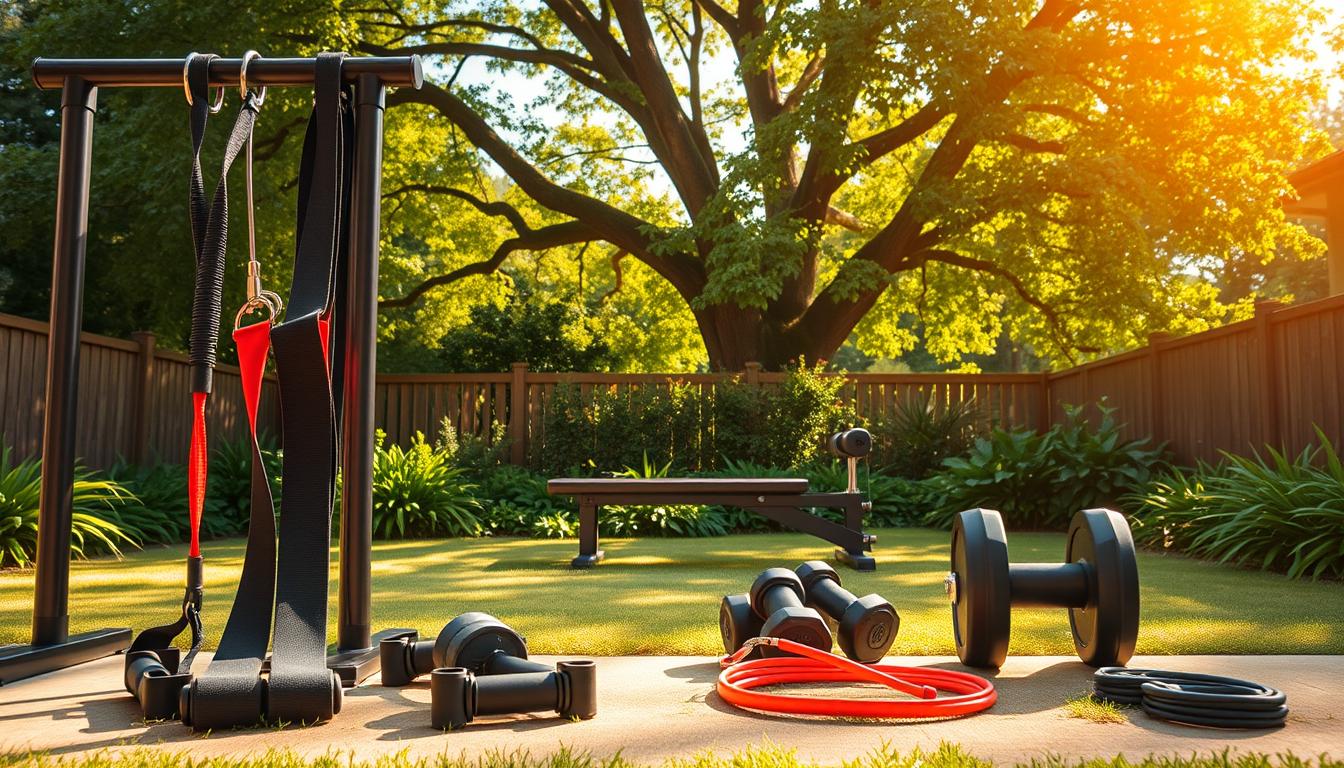
Must-Have Items Under $50
These affordable tools bring gym-level workouts without the monthly fees. Focus on items that fit many workout styles.
Resistance Bands
Resistance bands (10-50 lbs) are a great deal for under $25. They’re perfect for:
- Assisted pull-ups using tree branches
- Rotational core exercises
- Leg abduction challenges
Pro Tip: Use bands around park benches for seated rows or chest presses.
Adjustable Dumbbells
Hex-shaped adjustable dumbbells (5-25 lbs) offer 12 weight options. Their textured grip keeps them in place during DIY fitness gear workouts. Use them for:
- Overhead presses on uneven terrain
- Farmer’s carries across your yard
- Renegade rows on grass surfaces
| Equipment | Price Range | Multi-Use Features |
|---|---|---|
| Resistance Bands | $15-$35 | Strength training, mobility work, warm-ups |
| Adjustable Dumbbells | $30-$50 | Full-body workouts, progressive loading |
| Parallettes (DIY) | $0-$10 | Push-up variations, L-sit practice |
DIY Equipment Solutions
Turn everyday items into workout tools. Fill milk jugs with sand for weights (8-40 lbs). Make sandbags from contractor bags and duct tape for carries or throws.
Build PVC pipe parallettes for $7. They’re great for push-ups and dips. Paint ladder patterns on your driveway for agility drills.
Weatherproof Storage Ideas
Keep your gear safe with these outdoor storage ideas:
- Deck boxes with ventilation slots
- Waterproof military-grade storage bins
- Wall-mounted sheds with locking mechanisms
Line containers with silica gel packs to keep them dry. Use bungee cords to hold items down in windy weather.
Warm-Up Strategies for Outdoor Training
Getting ready for your backyard bootcamp is key. Outdoor workouts need you to think about the weather and different terrains. A good warm-up gets your blood flowing, makes you more flexible, and cuts injury risk by up to 35%, studies show.

Dynamic Movement Sequences
Begin with movements that match your workout’s intensity. Try a lunge matrix to get your legs ready for uneven ground, as suggested by Source 1:
- Forward lunges (10 reps per side)
- Lateral lunges (8 reps per side)
- Reverse lunges with torso rotation (6 reps per side)
Next, do high knees and butt kicks to slowly raise your heart rate. These moves help your body work together better and test how stable you are on the ground.
Mobility Drills for Injury Prevention
Getting your joints ready is important when you’re working out outside. Focus on these three key areas:
| Body Part | Exercise | Duration |
|---|---|---|
| Ankles | Alphabet rotations | 2 minutes |
| Hips | Fire hydrant circles | 90 seconds/side |
| Shoulders | Arm swings with resistance bands | 1 minute |
These drills help you move better and find any spots that might be stiff before you start lifting weights.
Temperature-Specific Preparations
Adapting to the weather is essential for outdoor workouts. Source 3 recommends drinking 16oz of water 45 minutes before summer workouts. In the cold:
- Wear layers during warm-ups
- Do dynamic movements for 3-5 minutes longer
- Use thermal gloves for grip exercises
Change how hard you warm up based on how cold it feels. Cold muscles take 40% longer to get ready for action than warm ones.
Designing Your Fat-Burning Circuit
Turn your backyard into a calorie-burning zone with a smart circuit design. A good circuit mixes the right exercises, timing, and space to keep your heart rate up. It also works many muscles at once.

Exercise Selection Criteria
Pick exercises that boost cardio intensity, muscle engagement, and functional patterns. Focus on:
- Movements that work both upper and lower body
- Exercises that don’t need much equipment change
- Activities that can be made harder or easier
For example, mix jump squats with push-ups, then mountain climbers. This mix keeps your metabolism up and avoids muscle tiredness.
Timing and Rep Schemes
Good fat loss circuits use time intervals, not just reps. Try this science-backed plan:
| Fitness Level | Work Interval | Rest Period |
|---|---|---|
| Beginner | 30 seconds | 45 seconds |
| Intermediate | 45 seconds | 30 seconds |
| Advanced | 60 seconds | 15 seconds |
Change the ratios every week to keep getting better. Cut rest times by 5 seconds or add 10 seconds to work times as you get stronger.
Circuit Layout Tips
Make the most of your space with these tips:
- Put high-impact moves like box jumps on grass
- Use natural spots as markers for a circular path
- Keep water and gear close to your circuit
Make sure there’s at least 6 feet between each station for safe moves. Use benches or tree stumps for step-ups or push-ups to mix up your workout.
Bodyweight Exercises for Maximum Calorie Burn
Turn your backyard into a calorie-burning zone with bodyweight exercises. These workouts use gravity and momentum to build muscle and keep your heart rate up. Plus, you can adjust each exercise to fit your fitness level, keeping the intensity high.

Lower Body Power Moves
Your legs have the biggest muscles, perfect for burning calories. Focus on explosive moves that boost strength and cardio.
Plyometric Squats
Begin with basic air squats: feet wide, chest up, hips back. Add a jump at the top for extra power. Try these advanced moves:
- Arabesque squats (single-leg landings)
- Plyo split squats with mid-air leg switches
- Box jump alternatives using park benches
Lunge Variations
Forward lunges burn 8-10 calories per minute and improve balance. Here’s how to progress:
| Variation | Muscles Engaged | Calorie Burn/Min |
|---|---|---|
| Reverse Lunge | Quads, Glutes | 6-8 |
| Walking Lunge | Full Lower Body | 9-11 |
| Jumping Lunge | Fast-Twitch Fibers | 12-14 |
Upper Body Engagement Techniques
Try different push-up variations to work your upper body and boost metabolism. Follow this progression:
- Incline push-ups (hands on elevated surface)
- Standard push-ups with 2-second pause at bottom
- Plyo push-ups with hand clap mid-air
Core-Specific Challenges
Plank variations burn calories through sustained tension. Try these:
- Dynamic bear crawls (10 steps forward/backward)
- Mountain climbers with resistance band
- Side plank rotations with arm reach
Pro tip: Mix core moves with lower-body exercises for even more calorie burn. Try squat-to-plank jack combos or lunge twists with overhead reach.
Incorporating Portable Fitness Equipment

Adding portable fitness gear to your backyard bootcamp opens up new training options. These tools mix bodyweight exercises with gym-style resistance. This mix boosts calorie burn and keeps workouts flexible. Here are three key additions for any outdoor space.
Kettlebell Integration
Kettlebells offer explosive power training in a small package. Start with basic moves like two-handed swings and goblet squats. For a quick workout, try this 5-minute circuit:
- 15 Russian twists (each side)
- 10 Clean-and-press repetitions
- 20 Alternating lunges
Choose adjustable kettlebells if space is tight. Research shows 20-minute kettlebell workouts can burn over 300 calories. They also boost grip strength, great for outdoor bootcamp fans.
TRX Suspension Training
TRX systems turn trees, fences, or poles into full-body training spots. The adjustable straps let you:
- Increase incline for easier push-up variations
- Add instability to mountain climbers
- Create dynamic core challenges with pike holds
Try TRX rows with jump squats for a high-energy workout. These exercises target muscles often missed in regular routines. They match Source 1’s findings on functional fitness.
Agility Ladder Drills
Use this flat-pack tool to boost footspeed and coordination. It unfolds in seconds. Try these patterns:
- Lateral shuffles (2 passes)
- In-and-out hops (30 seconds)
- High-knee sprints (1 length)
For more challenge, reduce ground contact time or add resistance bands. Source 3 suggests lightweight nylon ladders that are easy to carry. They’re perfect for mobile outdoor bootcamp setups.
Combine these tools with your current routine for better results. A TRX-assisted lunge into a kettlebell swing followed by ladder drills keeps your heart rate up. Always check anchor points and surfaces before starting to ensure safety.
Creating Interval Training Sequences
Interval training turns your backyard into a calorie-burning machine. It mixes intense effort with smart rest times. This keeps workouts exciting and boosts calorie burn long after you stop exercising. Let’s explore three effective ways to set up your sessions.

HIIT Protocol Design
High-Intensity Interval Training (HIIT) relies on exact timing. Start with a 2:1 work-to-rest ratio – 40 seconds of effort, then 20 seconds of rest. As you get better, try different formats:
- Pyramid intervals: 30-60-90-60-30 second efforts with equal recovery
- EMOM (Every Minute on the Minute): Do 10 burpees in 60 seconds, rest the rest of the time
- Density training: Increase reps per set within fixed time blocks
Source 1’s EMOM model is great for mixing strength and cardio. Alternate between jump squats and push-ups every minute to keep the intensity up.
Tabata-Style Workouts
The original Tabata protocol packs a big punch in a short time. Use this 4-minute finisher:
- 20 seconds all-out effort (mountain climbers or sprints)
- 10 seconds complete rest
- Repeat 8 times
For no-equipment workouts, try lateral bounds or explosive jump lunges. Keep track of total reps across all rounds.
Active Recovery Periods
Smart recovery keeps your momentum going without burning out. Good active recovery includes:
| Activity | Intensity Level | Duration |
|---|---|---|
| Walking lunges | 40-50% max effort | 60-90 seconds |
| Dynamic stretching | 30-40% max effort | 45-60 seconds |
| Controlled breathing drills | 20-30% max effort | 30-45 seconds |
Source 3’s research on periodization shows alternating high-intensity weeks with recovery phases boosts long-term gains. Add yoga flows or resistance band work on lighter days.
Sample 30-Minute Bootcamp Routine
Turn your backyard into a place to burn calories with these workout plans. They’re great for anyone, from beginners to those looking to get in shape. Each routine starts with a 5-minute warm-up, then a 20-minute core circuit, and ends with a 5-minute cool-down.

Beginner-Friendly Circuit
Begin with this easy program if you’re getting back into shape or prefer a gentle workout:
- Minute 0-5: March in place with arm circles
- Circuit 1 (Repeat 3x):
30s bodyweight squats
30s modified push-ups (knees or elevated)
30s plank hold
30s rest - Circuit 2 (Repeat 2x):
45s walking lunges
45s seated tricep dips (use patio chair)
30s rest
Scaling option: Shorten work intervals to 20 seconds if it’s too hard. Use resistance bands for help.
Intermediate Challenge Plan
Try this more intense routine with equipment:
- Minute 0-5: Jump rope or pretend rope jumps
- AMRAP Circuit (20 minutes):
10 kettlebell swings
15 elevated push-ups
20 reverse lunges
30-second side plank (each side)
Keep track of how many rounds you do and try to beat your record each week. Rest for 60 seconds after each full circuit.
Advanced Metabolic Conditioning
Challenge yourself with this high-intensity routine using Tabata:
- Minute 0-5: Dynamic stretches with power skips
- Pyramid Circuit:
4 rounds: 20s burpees / 10s rest
4 rounds: 20s squat jumps / 10s rest
4 rounds: 20s mountain climbers / 10s rest - Finisher:
2-minute max-effort sprint intervals (use driveway or marked course)
Pro tip: Add weekly strength training for even better results. Always end with 5 minutes of walking and stretching.
Progressive Overload for Continued Results
To break through fitness plateaus, you need to evolve your workouts. Your backyard bootcamp will thrive with strategic challenges. This ensures you keep losing fat, gaining strength, and improving endurance while keeping things fun.

Intensity Scaling Methods
Make your workouts harder without adding time with these tweaks:
| Method | Application | Benefit |
|---|---|---|
| Resistance Increase | Add weight vests or sandbags | Builds lean muscle mass |
| Speed Drills | Complete burpees 20% faster | Enhances power output |
| Rest Reduction | Cut recovery between sets by 15 seconds | Improves work capacity |
Switch between these methods weekly to avoid getting too used to them. For example, do weighted lunges on Monday and explosive jumps on Thursday.
Volume Adjustment Techniques
Slowly increase your workout load by 10% each week. Keep track of:
- Total repetitions per muscle group
- Workout frequency
- Time under tension per set
If you did 100 push-ups last week, aim for 110 this week. Remember to take strategic deload weeks every 4-6 weeks for better recovery.
Exercise Progression Models
Move to more complex exercises in four stages:
- Master basic form (standard push-up)
- Add instability (feet elevated push-up)
- Increase dynamic demand (plyometric push-up)
- Combine skills (push-up to mountain climber)
Review your goal setting every 30 days. Change your focus based on your fitness goals. Keep a journal to track your fitness progression.
Fueling Your Outdoor Workouts
Powering your backyard bootcamp needs more than just determination. Strategic fueling keeps your energy high and results consistent. Proper nutrition and hydration turn sweat sessions into fat-burning victories. Let’s break down how to time meals, maintain fluid balance, and recover effectively after crushing your outdoor routine.

Pre-Workout Nutrition Timing
Eating the right foods at the right time prevents mid-workout crashes. Aim to consume a balanced meal 45-90 minutes before training. This window allows digestion while ensuring steady energy release.
Focus on easily digestible carbs and lean proteins:
- Oatmeal with berries
- Whole-grain toast with almond butter
- Greek yogurt with sliced banana
For early-morning sessions, a small snack like rice cakes or applesauce 20 minutes pre-workout provides quick fuel without stomach discomfort.
Hydration Strategies
Outdoor training increases fluid loss through sweat and respiration. Start hydrated—drink 16-20 oz of water 2 hours before exercise. During workouts, sip 4-6 oz every 15 minutes, adjusting for heat and intensity.
| Duration | Fluid Type | Electrolyte Boost |
|---|---|---|
| <60 mins | Water | Optional |
| 60-90 mins | Coconut water | Natural minerals |
| >90 mins | Sports drink | 500mg sodium/L |
Post-workout, replace 150% of lost fluids over 4-6 hours. Add a pinch of salt to water if you experience muscle cramps.
Post-Exercise Recovery Meals
Refuel within 30 minutes after cooling down to maximize muscle repair and glycogen replenishment. Combine fast-acting carbs with high-quality protein at a 3:1 ratio.
| Timing | Nutrients | Meal Example |
|---|---|---|
| 0-30 mins | 20g protein + 60g carbs | Chocolate milk + banana |
| 1-2 hours | 30g protein + complex carbs | Grilled chicken + quinoa |
| Next meal | Healthy fats + fiber | Salmon + sweet potato |
Hydration continues with water-rich foods like watermelon or cucumber slices. Avoid heavy, greasy meals that slow nutrient absorption.
Safety Considerations for Outdoor Training

Your backyard bootcamp’s success isn’t just about how hard you work out. Exercise safety is key to avoiding injuries while pushing your limits. Outdoor settings come with their own set of challenges, like uneven ground and changing weather. By tackling these issues head-on, you can make your training area both challenging and safe.
Surface Impact Management
Grass might be softer than concrete, but not all natural surfaces are the same. Use Source 1’s method: press your foot into the ground. If it leaves a deep mark, the surface might not be stable for side-to-side movements. The best spots include:
- Flat grassy areas for plyometrics
- Paved sections for agility drills
- Mulch or rubber mats for heavy-impact exercises
Always have Source 3’s first aid kit nearby. It should have elastic bandages for ankles, antiseptic wipes for cuts, and cold packs for sudden injuries.
Weather-Related Precautions
When the weather gets too hot or cold, safety becomes even more important. A 2023 study showed 62% of exercise-related heat illnesses happen in humid mornings. Here’s what to do:
| Condition | Action | Tool |
|---|---|---|
| High Heat | Train before 10 AM | Hydration bladder |
| Heavy Rain | Use slip-resistant shoes | Microfiber towel |
| Cold Snap | Layer moisture-wicking fabrics | Thermal gloves |
Source 2’s advice is spot on here:
“If you wouldn’t make your athletes train in it, don’t train in it yourself.”
Equipment Safety Checks
Check your DIY gear every week. If it’s damaged, like frayed bands or splintered wood, replace it right away. Use this 3-step check:
- Check attachment points on suspension trainers
- Test weight capacities on homemade sandbags
- Verify stability of elevated surfaces
Keep kettlebells and medicine balls in weatherproof bins to stop rust and damage. Remember, outdoor precautions aren’t just about your body but also the tools you use.
Seasonal Adjustments for Year-Round Training
To keep up with workouts, it’s key to adjust to changing weather. Your backyard bootcamp can succeed in any season with the right tweaks. These tweaks focus on safety and keeping performance high. Let’s look at how to adjust your routine for summer, winter, and rainy days.

Summer Heat Management
When it’s hot, train wisely by changing your schedule and how you stay hydrated. Early morning or evening sessions help you avoid the sun’s strongest rays. Wear clothes that keep you dry to avoid irritation. Here are some tips to beat the heat:
- Drink 16-20 oz of water 2 hours before working out
- Use shaded areas for breaks
- Lower your workout intensity by 10-15% on very hot days
Use cooling towels and electrolyte drinks during heatwaves. Watch for signs of heat exhaustion like dizziness or nausea. Move to indoor spaces if you feel too hot.
Winter Cold-Weather Adaptations
Dress in layers to stay warm and move freely. Start with warm base layers and add outer shells as you warm up. Cold-weather adaptations include:
- Longer warm-ups (10-15 minutes)
- Gloves that help you grip
- Windproof covers for your workout stations
Change high-impact moves on icy ground to avoid slipping. Add warm drinks to your list of gear for quick breaks between sets.
Rainy Day Alternatives
Use covered areas like patios or garages for workouts on rainy days. Choose exercises that need little space, like:
- Pike push-ups against walls
- TRX rows from overhead beams
- Step-ups using sturdy outdoor furniture
Have resistance bands and suspension trainers ready for indoor workouts. Use waterproof bins to keep your gear dry between sessions.
“The best athletes aren’t seasonal – they adapt their environment to their goals.”
Mastering these year-round training tips helps you stay fit through all weather. Keep track of your progress in a fitness journal. This will help you improve your routine each month.
Tracking Progress and Staying Motivated
Tracking your progress makes workouts more meaningful. Without goals, even hard workouts can feel aimless. Here are three ways to make your backyard workouts count.
Fitness Journaling Techniques
Your workout log is a personalized success blueprint when you track key things:
- Exercise variations and rep counts
- Rest intervals between circuits
- Energy levels on a 1-5 scale
- Weekly time trials for benchmark exercises
Digital apps are good, but pen-and-paper journals offer a hands-on approach. Use colors for different days – red for strength, blue for cardio. Check your journal every Sunday to see how you’re doing.
Goal-Setting Frameworks
Good goals are specific, measurable, and achievable. Use this formula:
“I will [specific action] [measurable quantity] times per week by [date] to achieve [desired outcome].”
For example, “I’ll do 4 rounds of agility ladder circuit in under 12 minutes in 3 weeks to boost endurance.” Set big goals and small ones too – like adding two push-ups each time.
Community Accountability Methods
Having friends to keep you on track is powerful. Try these:
- Neighborhood fitness challenges
- Shared Google Sheets progress trackers
- Post-workout selfies in local Facebook groups
Many gyms have community fitness referral programs. Bring three friends, get a free session. Virtual buddies work too – text each other weekly.
Don’t just look at the scale. Celebrate lifting heavier rocks, doing circuits faster, or feeling more energetic after working out. Take progress photos every 30 days to see how far you’ve come.
Transform Your Outdoor Space Into a Fitness Powerhouse
Your Backyard Bootcamp is more than just fresh air and sunshine. It’s a way to reach your fitness goals without gym fees or long commutes. Studies show people enjoy and stick to outdoor workouts more than indoor ones. This makes Home Fitness a great choice for lasting success.
By using natural features and the right equipment, you’ve created a space that grows with you. It’s a place where you can train in a way that feels personal and effective.
Getting consistent is easy when your workouts fit your life and surroundings. Begin with simple bodyweight exercises three times a week. Use durable gear from brands like TRX and Rogue Fitness. Track your progress with timed challenges or by counting reps.
Remember, every outdoor workout brings you closer to your goals. It’s a chance to see real results.
Ready to see the change? Lay out your exercise mat outside today. Try the 30-minute beginner circuit from Section 10. Share your first outdoor workout on social media with #BackyardBootcampGoals. Join a community of people who love working out outside.
Your strongest self is waiting for you. It’s where the fresh air meets your determination.