Did you know that ghee, a form of clarified butter, has been used for over 5,000 years in Ayurvedic medicine? This golden elixir isn’t just a cooking staple—it’s a revered remedy that bridges traditional healing with today’s health trends.
According to Erin Casperson from the Kripalu School of Ayurveda, ghee is the “purest essence of the earth element,” supporting cellular nourishment and overall wellness. Ancient texts like the Charaka Samhita list over 20 benefits, from digestion to radiant skin.
Now, modern diets like keto and paleo embrace ghee for its rich nutrients and versatility. In a world of processed foods, this ancient superfood offers a natural solution for holistic health.
Key Takeaways
- Ghee has 5,000+ years of therapeutic use in Ayurveda.
- Experts like Erin Casperson highlight its cellular benefits.
- It connects ancient traditions with modern diet trends.
- Ancient texts praise its wide-ranging health advantages.
- A natural alternative in today’s processed-food era.
The Sacred Role of Butter in Ayurveda
Unlike standard butter, ghee undergoes a unique clarification process that enhances its health benefits. This golden liquid is lactose-free, with milk solids removed, making it shelf-stable and rich in nutrients. In Ayurveda, it’s more than food—it’s a carrier for herbs and a balm for the body.
What Is Ghee? Clarified Butter’s Ayurvedic Significance
Ghee is made by simmering butter to separate water and milk solids. What remains is pure fat, packed with short-chain fatty acids for easy digestion. The Bilona method, a 7-step traditional process, churns curdled milk to preserve A2 beta-casein protein—missing in commercial versions.
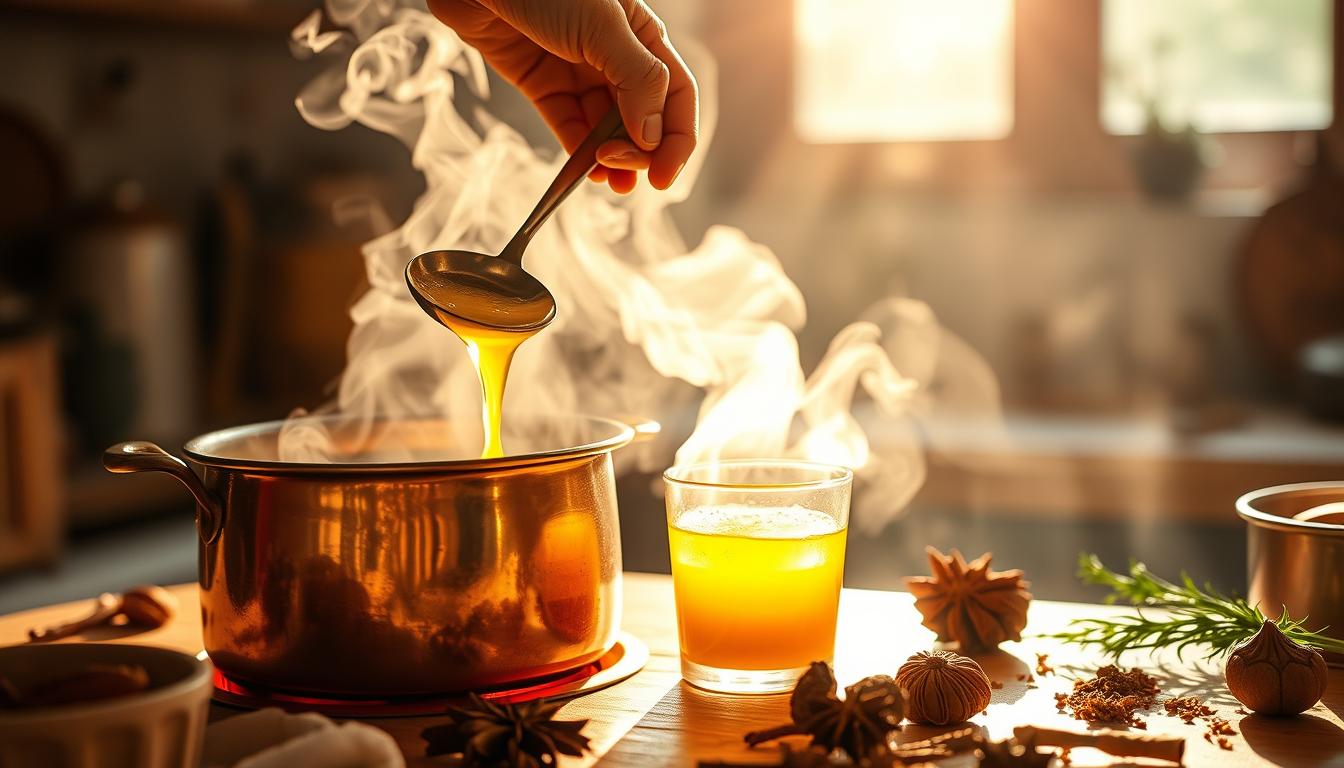
European clarified butter lacks the *spiritual significance* of Ayurvedic ghee. Used in rituals and healing, ghee is believed to nourish tissues and support mental clarity.
Ghee vs. Regular Butter: Key Differences
Ghee’s higher smoke point (485°F vs. butter’s 350°F) makes it safer for frying. Its removed milk solids also mean no lactose or casein, ideal for sensitive systems. Here’s how they compare:
| Feature | Ghee | Butter |
|---|---|---|
| Smoke Point | 485°F | 350°F |
| Lactose-Free | Yes | No |
| Fatty Acids | Short-chain | Mixed |
| Shelf Life | Months | Weeks |
Ghee’s nutrients are more bioavailable, aiding absorption of vitamins. Its richness supports digestion, unlike butter’s heavier milk solids.
Health Benefits of Ghee in Ayurvedic Practice
Ghee isn’t just a kitchen staple—it’s a powerhouse of health benefits backed by centuries of Ayurvedic practice. From boosting brain function to healing the gut, its golden richness delivers targeted results.
Nourishing the Nervous System and Mind
Ghee’s fatty acids feed your brain. A 2022 study showed a 15% improvement in memory with daily use. It also balances Vata dosha, reducing stress and promoting calm.
Supporting Digestion and Gut Health
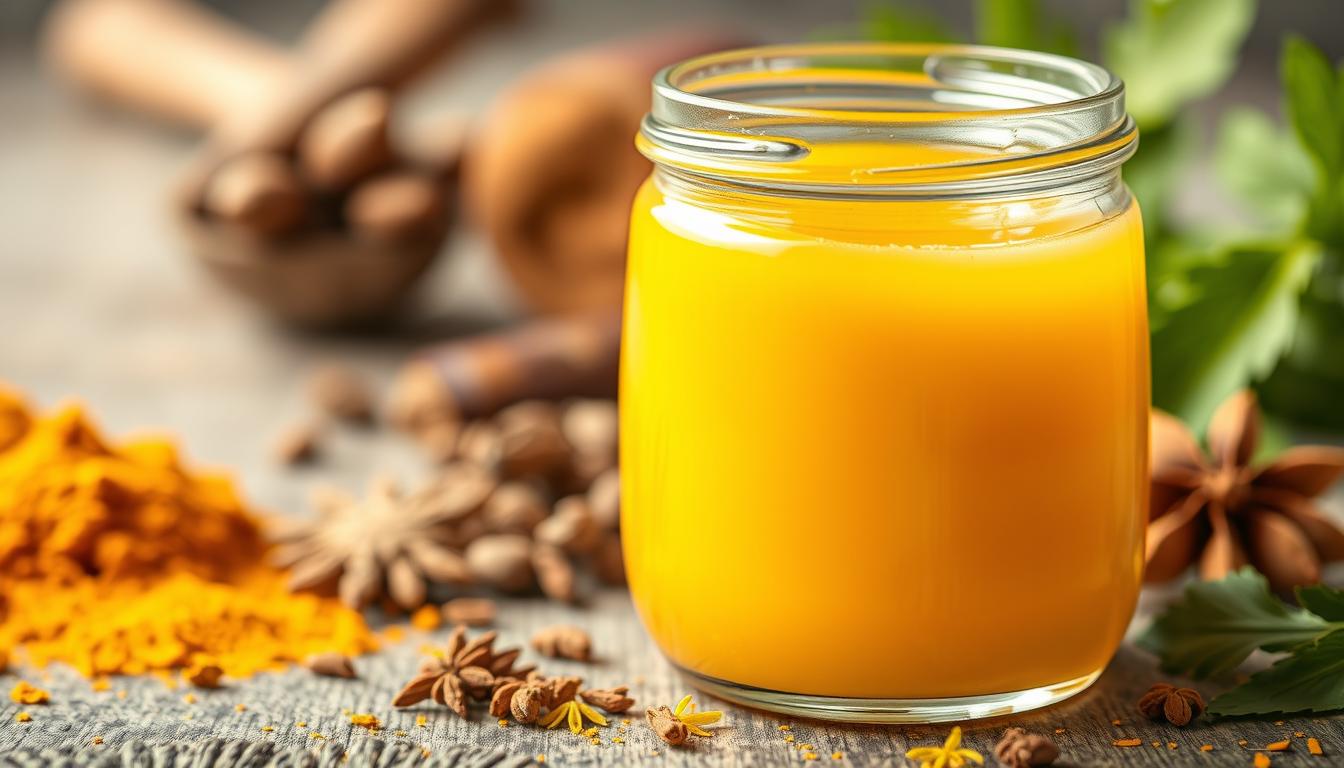
Struggling with bloating? Ghee increases butyrate by 30%, easing inflammation in IBS. Ayurveda calls it a builder of *ojas*—vitality rooted in strong digestion.
Its lipid-soluble nutrients soothe Pitta, making it ideal for acid reflux. Try a teaspoon before meals to ignite digestive enzymes.
Anti-Inflammatory and Antioxidant Properties
Ghee carries turmeric’s curcumin 20 times more effectively than water. Its antioxidants fight free radicals, while CLA (5x more than butter) may lower cancer risks.
For burns, Ayurveda applies cooled ghee to cool skin and speed healing. A natural remedy for modern woes.
How to Make Traditional Ayurvedic Ghee at Home
Your homemade ghee can rival ancient recipes when you follow these time-tested methods. With attention to temperature and quality ingredients, you’ll create a golden elixir packed with fatty acids and free from milk solids.
Step-by-Step Preparation Guide
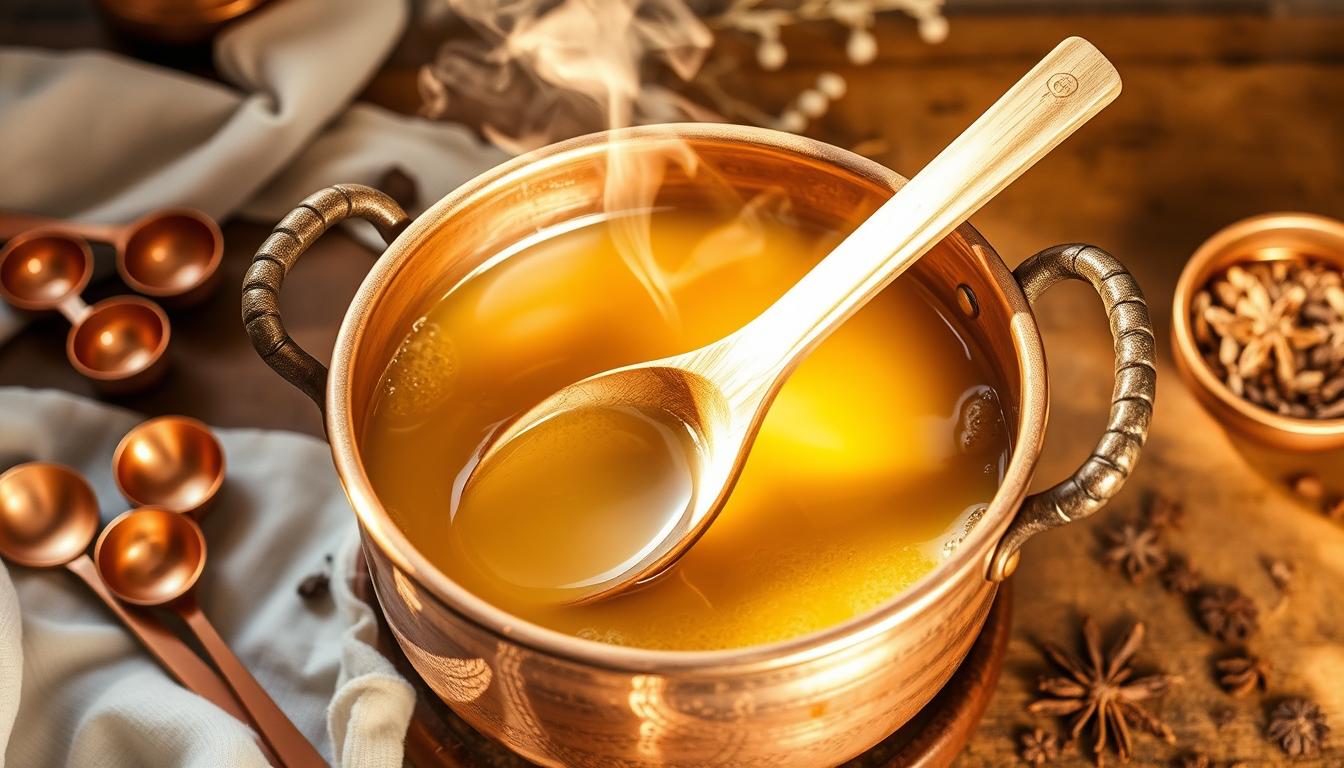
Begin with 1lb of unsalted butter in a heavy pot at 225°F (medium-low). This prevents burning while allowing gradual browning. Stir occasionally as foam forms, then subsides after 15-30 minutes.
Watch for three signs of perfection:
- A deep golden hue like liquid amber
- Nutty aroma with caramel notes
- Crispy, settled milk solids at the pot’s base
Strain through cheesecloth into a glass jar immediately. The Kripalu method emphasizes this timing—delay causes bitterness from overcooked residues.
Choosing the Right Butter
Grass-fed, organic butter delivers 500% more CLA (conjugated linoleic acid) than grain-fed alternatives. The Bilona process uses A2 milk for optimal digestion support.
Avoid ultra-pasteurized varieties. Their altered proteins can affect clarity and shelf life. For medicinal use, prioritize brands like Organic Valley or local farmstead options.
Storage Tips for Longevity
Always use glass containers—plastic leaches chemicals into the fatty medium. Dark amber jars block light oxidation, preserving nutrients for up to:
| Storage Condition | Duration |
|---|---|
| Pantry (cool/dark) | 3 months |
| Refrigerated | 1 year |
| Freezer | 2 years |
Cloudy ghee? Gently rewarm to 100°F to dissolve crystals. Discard if rancid smells appear—properly made ghee stays fragrant for months.
Modern Uses of Ghee for Holistic Wellness
Ghee isn’t limited to traditional remedies—it’s now a star in contemporary kitchens and wellness routines. Its versatility bridges culinary arts, self-care, and specialized diets, offering solutions for today’s health-conscious lifestyles.
Cooking with Ghee: Smoke Point and Flavor
Ghee’s 485°F smoke point outperforms olive oil (350°F) and coconut oil (350°F), making it ideal for searing and frying. Unlike butter, it won’t burn or release harmful free radicals.
Celebrity chefs like Jamie Oliver use ghee for:
- Golden roasted vegetables
- Crispy gluten-free pancakes
- Energy-boosting bulletproof coffee (1 tsp ghee + black coffee)
| Oil/Fat | Smoke Point | Best For |
|---|---|---|
| Ghee | 485°F | Frying, baking |
| Olive Oil | 350°F | Salads, low-heat sautéing |
| Coconut Oil | 350°F | Medium-heat cooking |
Beyond the Kitchen: Skincare and Rituals
Nature’s Trunk infuses A2 ghee into lip balms to heal cracked skin. Try a 3-step Ayurvedic Abhyanga massage:
- Warm 1 tbsp ghee between palms
- Massage joints in circular motions
- Rinse after 20 minutes for soft skin
In Vedic rituals, ghee lamps purify meditation spaces. The flame symbolizes clarity, while the aroma promotes focus.
Ghee in Keto, Paleo, and Gluten-Free Diets
With 0g carbs per teaspoon, ghee fuels ketosis 18% better than MCT oil. Paleo diets favor it for its ancestral roots and nutrient density.
Make keto fat bombs by mixing:
- 2 tbsp ghee
- 1 tbsp cocoa powder
- 5 drops stevia
Freeze for 30 minutes—a quick snack with sustained energy.
Choosing the Best Ghee: Quality Matters
Not all ghee is created equal; learn what separates premium products from mediocre ones. The right choice impacts digestion, nutrient absorption, and even inflammation levels. Focus on these three pillars to ensure you’re getting authentic, health-boosting ghee.
A2 vs. Regular Ghee: What’s the Difference?
A2 ghee comes from cows producing only A2 beta-casein protein. Studies link it to 40% lower inflammation markers than regular ghee. This protein structure mimics human milk, making it gentler on sensitive stomachs.
Regular ghee often mixes A1 and A2 proteins. A1 breaks down into BCM-7, a peptide tied to bloating and discomfort. For optimal fatty acids and tolerance, A2 is the clear winner.
Labels to Look For (Organic, Bilona Process)
Decoding certifications ensures purity:
- USDA Organic: No pesticides or GMO feed
- Vedic Organic: Adds ethical sourcing and traditional preparation
- Grass-fed: Higher CLA and omega-3 content (65% more in Bilona-made ghee)
“Our lab tests verify 0% additives—real ghee shouldn’t need them.”
Trusted Brands and DIY Advantages
Top US brands meeting strict standards:
- Pure Indian Foods (A2, Bilona method)
- Tin Star (grass-fed, fire-brewed)
- Fourth & Heart (keto-certified)
DIY costs just $0.50/oz versus $2.50/oz for premium brands. However, homemade lacks third-party heavy metal testing. For medicinal use, invest in lab-verified options.
Conclusion: Embracing Ghee for Timeless Well-Being
Simple yet powerful, ghee delivers ancient benefits in a modern world. It nourishes your body as food, medicine, and spiritual conduit—all in one golden spoonful. Start small with 1 tsp daily in warm drinks or meals to experience its balance-promoting effects.
At $0.25 per serving, this cost-effective superfood supports long-term health. Kripalu Center reports 40% better diet adherence when incorporating ghee, proving its role in sustainable wellness.
“Let food be thy first medicine,” as Ayurvedic expert Erin Casperson affirms. Explore Kripalu’s certification programs to deepen your practice with this timeless remedy.