Did you know your brain gets over 100 hunger signals daily from two tiny chemicals? These hormones control your cravings, pulling you in different directions. This happens every time you look at the clock or smell food.
One hormone slows your urge to eat, like a brake pedal. The other boosts your hunger, like a gas pedal. They constantly negotiate, shaping your snack cravings and how full you feel after eating.
This hidden battle explains why you might feel very hungry one day but not the next. Things like sleep, stress, and the food you eat can influence this hormonal fight.
Key Takeaways
- Two opposing hormones dictate hunger and fullness signals
- Chemical messengers respond to food intake and body needs
- Imbalances affect weight management and eating patterns
- Diet composition directly influences hormonal activity
- Modern lifestyles often disrupt natural regulatory cycles
The Appetite Arena: Meet the Contenders
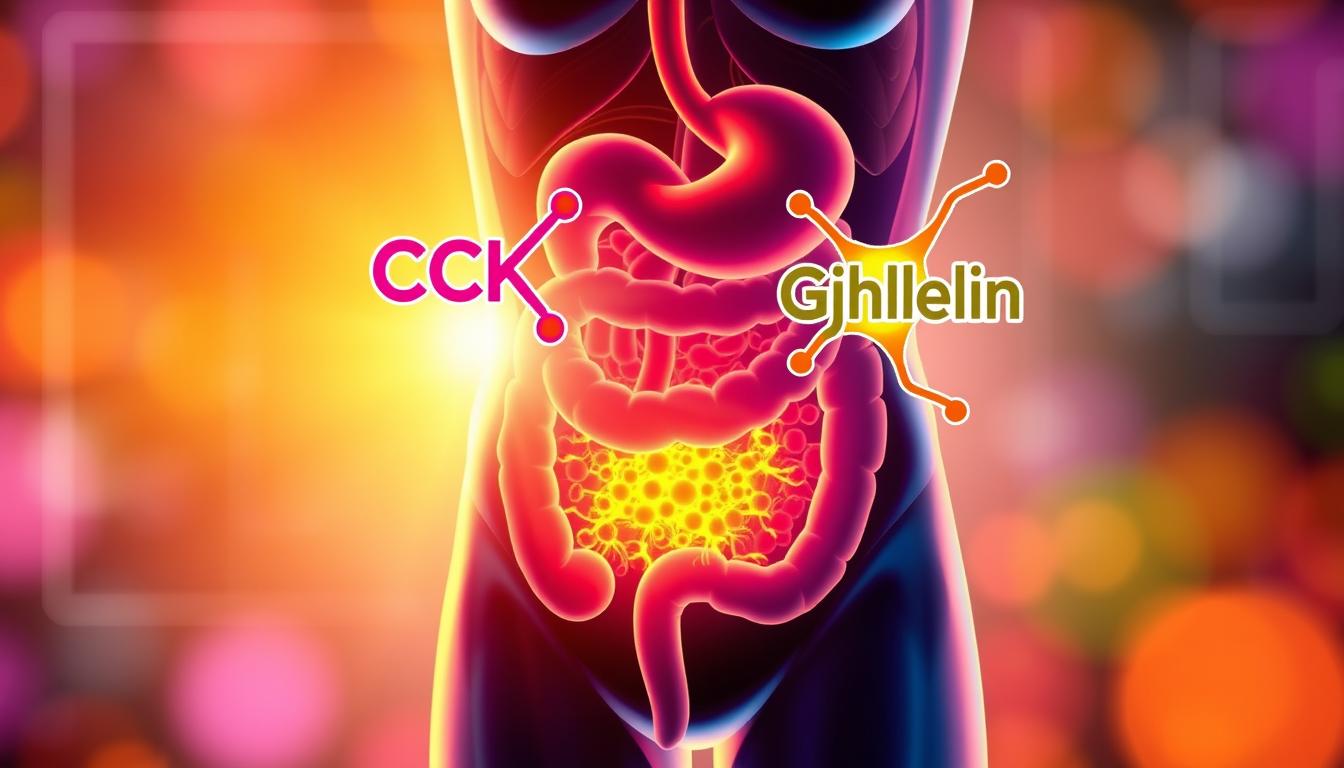
Your body has an invisible fight every time you feel hungry. Cholecystokinin (CCK) is like the strict referee who says “stop eating.” Ghrelin, on the other hand, is like a cheerleader who cheers for more food. These appetite hormones control your food choices through ancient signals.
Cholecystokinin (CCK): Your Satiety Sentinel
Discovery & Basic Function
In 1928, Ivy and Oldberg found CCK while studying digestion. It’s your body’s “stop eating” signal. When fat hits your small intestine, CCK:
- Stimulates pancreas enzymes for fat breakdown
- Slows stomach emptying
- Triggers brain satiety centers
CCK’s Three-Pronged Attack on Hunger
This hormone doesn’t just whisper – it shouts through three distinct channels:
| Action | Location | Result |
|---|---|---|
| Enzyme Release | Pancreas | Enhanced fat digestion |
| Gallbladder Contraction | Liver | Bile secretion boost |
| Neural Signaling | Vagus Nerve | Appetite suppression |
“CCK functions like a biological timer – the more fat you consume, the stronger the fullness signal becomes.”
Ghrelin: The Hunger Hornblower
Identification & Primary Role
In 1999, scientists found ghrelin in the stomach lining. Its levels rise when your stomach is empty, telling your brain you’re hungry. Unlike CCK, ghrelin focuses on:
- Stomach stretching status
- Blood sugar levels
- Sleep patterns
Ghrelin’s Double-Edged Sword Mechanism
Ghrelin helped our ancestors survive when food was scarce. But now, it can lead to overeating. Its effects include:
| Beneficial Role | Modern Conflict |
|---|---|
| Enhances smell sensitivity | Makes fast food aromas irresistible |
| Boosts stomach acid production | Triggers snack cravings between meals |
| Increases fat storage efficiency | Promotes weight gain with calorie-dense foods |
Knowing how hormonal regulation of appetite works helps us understand why dieting is hard. The next parts show how these hormones fight in your digestive system.
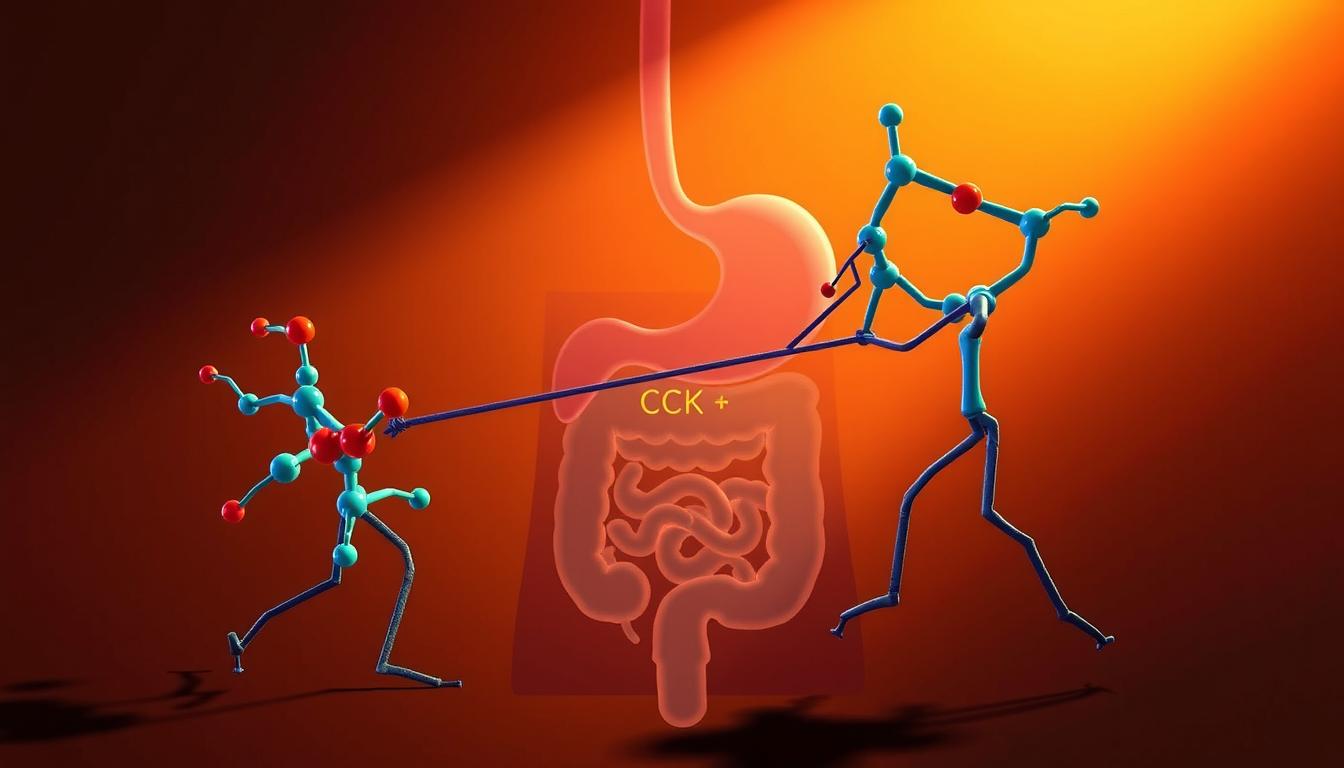
CCK vs Ghrelin: The Hormonal Tug-of-War
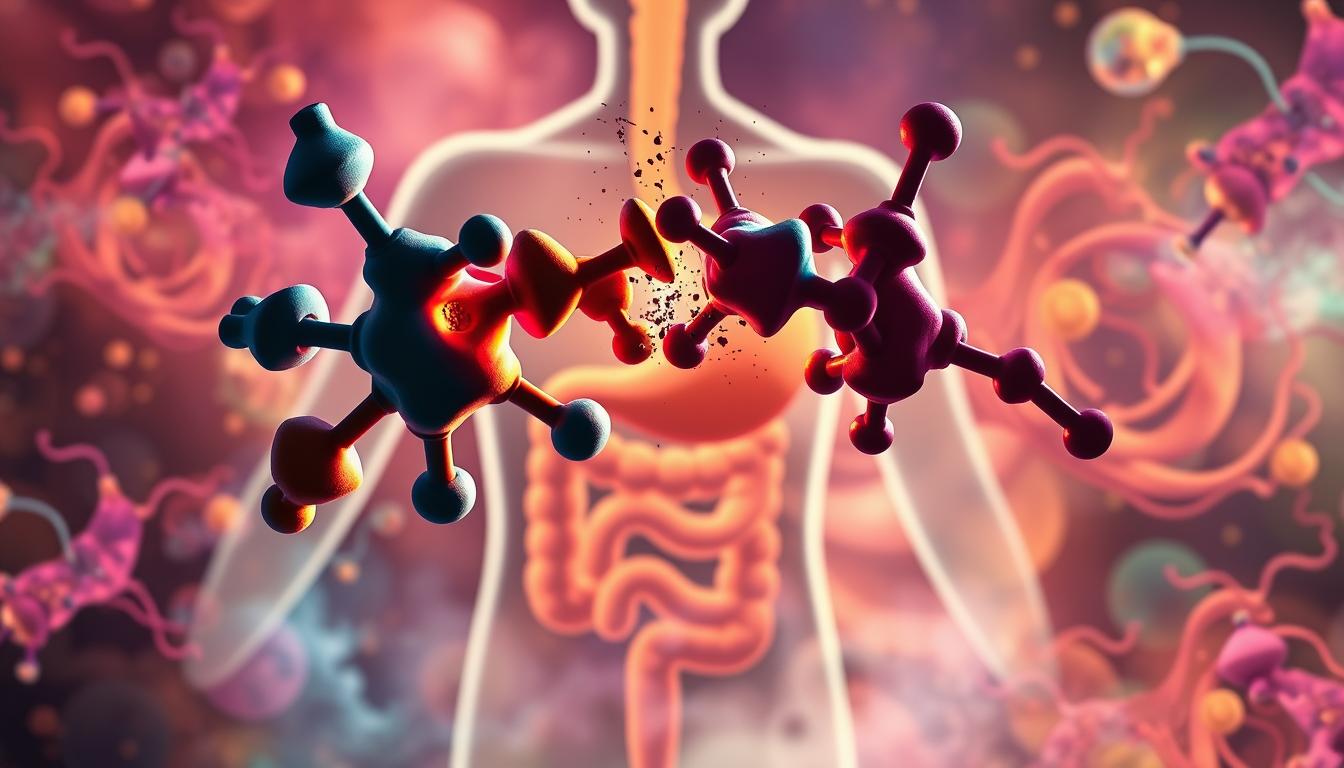
Your body has a battle every time you eat. These hormones don’t just work together; they fight each other. They decide when you’re hungry, how much you eat, and when you stop.
The Digestive Timeline Battle
Ghrelin and CCK have different schedules. Ghrelin tells you it’s time to eat, while CCK says stop. Let’s see how their daily battle goes.
Pre-Meal Ghrelin Surge
Your stomach growls 1-2 hours before meals because ghrelin peaks. This hormone makes you hungry. Low blood sugar makes sugary snacks even more tempting.
Post-Meal CCK Counterattack
Start eating, and CCK kicks in. Meals with fat and protein trigger the strongest response. Within 20 minutes, CCK:
- Stimulates POMC neurons to reduce cravings
- Slows stomach emptying through the vagus nerve
- Blocks ghrelin’s hunger signals
Neural Network Warfare
Your brain is a battlefield where these hormones clash. They use special nerve paths and chemical messengers as their weapons.
Hypothalamic Hunger Games
The hypothalamus is the referee in this battle. Ghrelin’s team says “Eat now!” while CCK’s team says “Stop eating!” The balance between these neurons decides if you want more.
Vagus Nerve Signaling Skirmishes
Your gut and brain talk through the vagus nerve. CCK sends fullness alerts through this nerve. But ghrelin can disrupt these signals. High-fat diets can make CCK’s messages weaker, keeping you hungry after meals.
Evolutionary Roots of Appetite Regulation
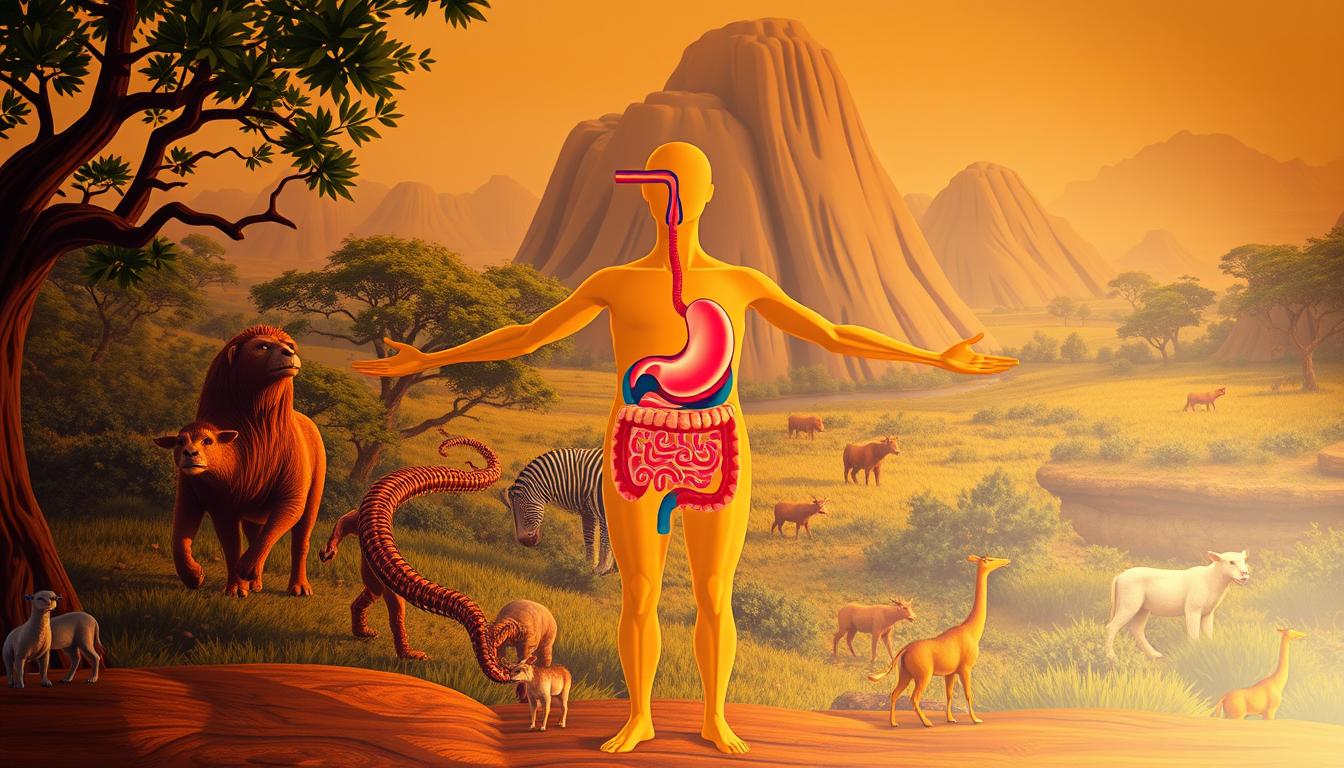
Your appetite isn’t random—it’s a survival blueprint etched into your DNA. Over millions of years, the hormonal regulation of appetite evolved as nature’s answer to unpredictable food supplies. This ancient system explains why crash diets often backfire and why your body fights weight loss.
Survival Advantage of Dual Hormone System
Our ancestors thrived because CCK and ghrelin worked like yin and yang. When food was plentiful, CCK signaled “stop eating” to build fat reserves. During scarcity, ghrelin screamed “hunt now!” to prevent starvation. This appetite regulation mechanism became humanity’s lifeline through ice ages and droughts.
Feast-Famine Adaptation
Imagine living through seasons of abundance followed by months of scarcity. Your body learned to:
- Store maximum calories during feasts
- Boost hunger signals when food vanished
- Slow metabolism during famine periods
Modern research confirms this hardwiring. A 2022 study found dieters experience 23% higher ghrelin levels post-weight loss—their bodies fighting to regain “lost” reserves like our ancestors sought missing meals.
Energy Reserve Optimization
Fat storage wasn’t about vanity—it was about survival. The thrifty genotype hypothesis explains why efficient energy hoarders survived famines. Today, this same system becomes problematic with constant food access:
| Paleolithic Advantage | Modern Consequence |
|---|---|
| Rare feasts triggered fat storage | Daily overeating overwhelms the system |
| Famine periods burned reserves | Sedentary lifestyles preserve excess fat |
Your body is like it’s always waiting for food scarcity. This evolutionary mismatch explains why hormonal regulation of appetite struggles in today’s calorie-dense world.
Modern Diet Sabotage
Your fork is now a key player in a biochemical fight. Today’s eating habits mess with appetite control hormones, making meals a hormonal battle. Let’s look at how our food choices and schedules affect our hunger signals.
Ultra-Processed Food Frenzy
Americans now get 60% of their calories from ultra-processed foods. These foods attack your hunger hormones in two ways:
Ghrelin Amplification Through Empty Calories
Refined carbs cause blood sugar spikes, boosting ghrelin by 28% in three hours. Your brain thinks you’re hungry, even after eating lots of calories. A 2023 NIH study found:
“High-fructose corn syrup increases ghrelin sensitivity by altering hypothalamic signaling pathways.”
CCK Suppression via Fiber Deficiency
Processed foods have 74% less fiber than whole foods. Without enough fiber, CCK production falls by nearly half. This means you eat 23% more calories before feeling full, compared to fiber-rich meals.
| Food Type | Ghrelin Impact | CCK Response | Satiety Duration |
|---|---|---|---|
| Processed Snacks | +40% in 2 hours | -55% | 47 minutes |
| Whole Foods | -15% | +82% | 2.3 hours |
Meal Timing Mayhem
Your ancestors ate 2-3 meals a day. Today’s constant snacking messes with your hormones:
Snacking Culture’s Hormonal Impact
Snacking keeps ghrelin high and stops CCK from resetting. Here’s what happens:
- 6+ snacks a day boost hunger by 34%
- Each snack delays CCK by 18 minutes
Circadian Rhythm Disruption
Eating late at night messes with your hormonal clock. Ghrelin peaks later, and CCK drops 27% after sunset. This is why midnight snacks are unsatisfying yet hard to resist.
To balance your hunger hormones, eat fiber-rich meals and stick to a regular schedule. This way, you can outsmart today’s dietary traps.
Medical Implications of Hormonal Imbalance
When your appetite hormones get out of balance, it’s more than just feeling hungry. This imbalance can lead to serious health problems. It changes how doctors treat weight and eating issues today.
Obesity Epidemic Connections
High ghrelin levels and low CCK can make you gain weight. Studies show these hormonal changes often start years before obesity. They make it hard to lose weight with just dieting.
Leptin Resistance Complication
Leptin helps you feel full. But when ghrelin is always high, leptin doesn’t work well. This makes your brain think you’re starving, even when you’re not.
Metabolic Syndrome Domino Effect
One hormonal problem can lead to another, in a bad cycle:
- Insulin resistance starts within 6-18 months of CCK decline
- Blood pressure goes up because of ghrelin’s effect on blood vessels
- HDL cholesterol falls faster than in people who don’t have these issues
“Long-term hormone changes make it hard to lose weight,” says Dr. Priya Sumithran in a key study on obesity.
Eating Disorders Perspective
People with eating disorders have different hormone levels. Those with treatment-resistant cases often have very low CCK levels. Their ghrelin levels are like those of people who haven’t eaten for a long time.
Anorexia’s Hormonal Freeze
Starvation makes ghrelin levels go up a lot. But CCK drops. This means you feel very hungry but can’t stop eating when you do.
Binge Eating’s Feedback Loop Failure
People with binge eating have delayed fullness signals. This is because their CCK doesn’t work right. Then, ghrelin goes back up quickly, making them want to eat more before they feel full.
Hormone-Testing Breakthroughs
New diagnostic tools are changing how we understand hunger signals. Scientists can now track CCK and ghrelin interaction with great detail. This helps us better manage our appetite.
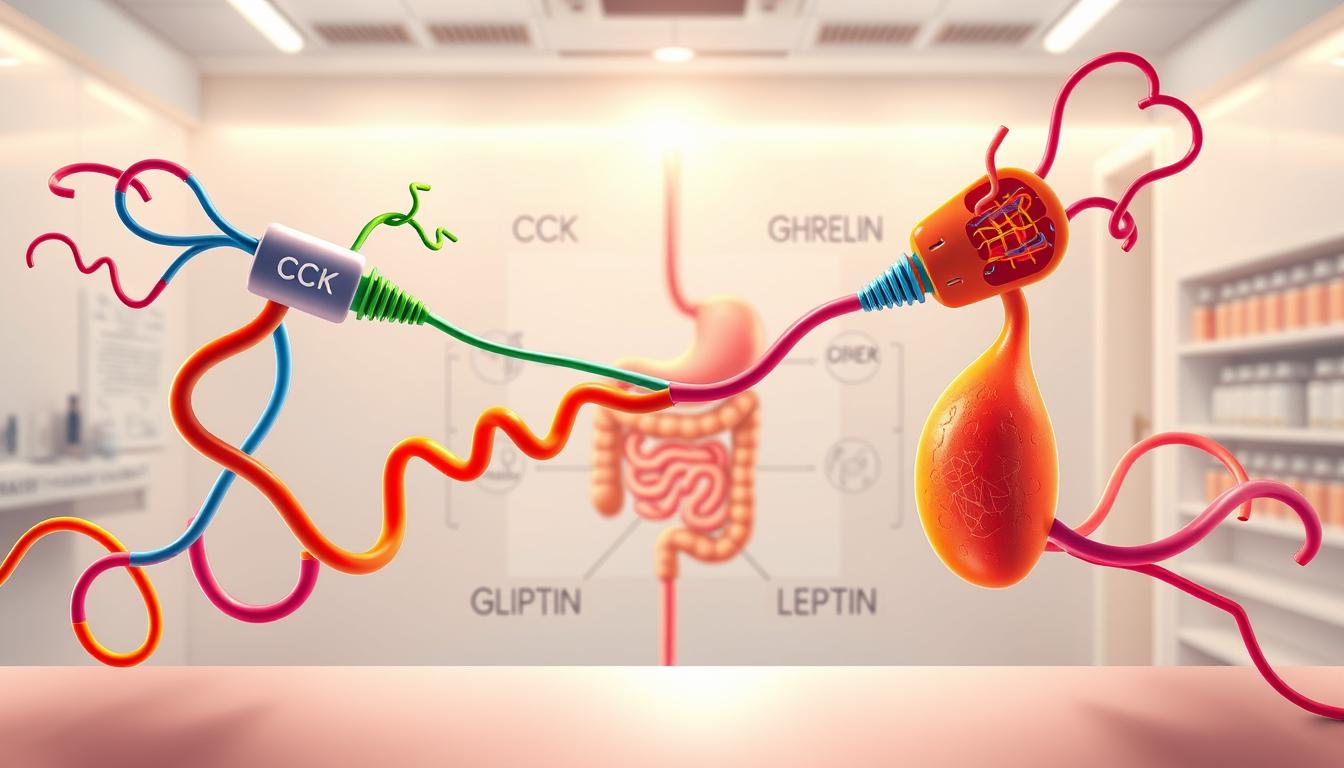
Real-Time Ghrelin Monitoring
Portable biosensors track hunger hormones as you live your day. They use sweat or saliva, unlike blood tests that need a clinic visit. This method catches patterns that old tests miss.
Salivary Assay Innovations
New test strips can find ghrelin in saliva in just 10 minutes. You just put the strip on your tongue during meals. A study at Johns Hopkins showed stress can make ghrelin levels jump by 40% in some people.
CCK Response Mapping
Advanced imaging shows how CCK is released in your gut. This helps us understand why some foods make us feel full longer. A 2023 study at Stanford found high-fiber foods make CCK levels 30% higher than processed foods.
MRI-Based Nutrient Tracking
Special MRI scans track nutrients through your gut second by second. Doctors use these scans to find why some people gain weight unexpectedly. The test takes 45 minutes and involves drinking a special shake.
These advances help create diet plans tailored to your hormone needs. Athletes use ghrelin tests to plan protein intake, and dieters find foods that make them feel full. Soon, these tools will be common in healthcare.
Lifestyle Modifications for Balance
Starting to balance your hormones is easy with the right food choices and timing. Eating in sync with your body’s natural hunger signals is key. This way, you can keep your hunger and fullness in check.
Macronutrient Optimization
What you eat affects your CCK and ghrelin levels. Certain foods trigger stronger responses:
Protein’s CCK Boost
Eating 20-30 grams of protein per meal boosts CCK. This can help control your appetite. Here are some high-protein foods to try:
- Grilled chicken breast (26g protein per 3oz)
- Greek yogurt (17g per 6oz serving)
- Lentils (18g per cooked cup)
Healthy Fats’ Satiety Synergy
Adding monounsaturated fats to protein meals extends CCK’s effects. Here are some good options:
- Avocado slices on eggs
- Almond butter in smoothies
- Olive oil-dressed salads
Eating Rhythm Adjustments
When you eat is as important as what you eat for hormonal regulation of appetite. Eating too often can mess with your body’s natural hunger signals.
Time-Restricted Feeding Benefits
Eating within an 8-10 hour window has benefits:
- Aligns with natural ghrelin surges
- Boosts CCK sensitivity by 22% (per 2023 clinical trials)
- Reduces late-night snacking urges
“Participants practicing time-restricted eating showed 34% fewer hunger pangs and more stable ghrelin levels throughout the day.”
Mindful Eating Techniques
Slow down to let CCK work:
- Chew each bite 15-20 times
- Put utensils down between bites
- Pause halfway through meals to assess fullness
This 20-minute eating window lets CCK levels rise before you want seconds.
Pharmaceutical Frontiers
While lifestyle changes are key for controlling hunger, scientists are working on new medicines. These aim to adjust hunger hormones directly. They promise hope for those with metabolic issues.
Ghrelin Blockers in Trials
GHS-R1a Receptor Antagonists
Drugs like relamorelin are leading the way in blocking ghrelin. They target specific brain receptors. These GHS-R1a antagonists block appetite signaling hormones from causing hunger. Early studies show:
- 23% less spontaneous snacking
- Insulin sensitivity improved in 68% of people
- Little effect on normal hunger signals
| Drug Candidate | Mechanism | Trial Phase | Weight Loss Avg |
|---|---|---|---|
| Relamorelin | Ghrelin receptor blocker | Phase III | 8.2 lbs/12 weeks |
| LY-444711 | GHS-R1a antagonist | Phase II | 5.9 lbs/8 weeks |
CCK Enhancers Development
Enzyme Inhibitors Research
Scientists are boosting CCK’s natural fullness effects with enzyme inhibitors. These slow down hormone breakdown. This helps your hunger hormones send “fullness” signals longer. It could cut calorie intake by:
- Keeping meal satisfaction longer
- Improving nutrient absorption signals
- Enhancing gut-brain communication
Research aims to balance effectiveness with digestive comfort. Early versions caused temporary stomach issues in 22% of those tested.
Exercise’s Dual Hormone Impact
Your workouts do more than burn calories. They also change how your body feels hunger. Exercise balances CCK and ghrelin hormones. This decides if you feel hungry or full after working out.
Aerobic vs Anaerobic Effects
Cardio and strength training affect hunger differently. A 2023 Journal of Sports Science study found:
- 45 minutes of cycling lowers ghrelin for 2+ hours after
- Weightlifting boosts CCK by 38% compared to rest days
Post-Workout Ghrelin Suppression
HIIT creates a “hunger blackout window.” Your body focuses on recovery for 90-120 minutes after intense cardio. This is why you might not feel hungry, even after burning 500+ calories.
Resistance Training’s CCK Boost
Heavy lifts cause muscle microtears. This stimulates CCK release. CCK does two things:
- It tells your brain you’re full
- It slows digestion to keep nutrients in your body longer
“Protein synthesis from resistance exercise leads to CCK dominance,” says Dr. Elena Torres, exercise physiologist.
To control hunger best, mix both types of workouts. Three strength sessions a week with some cardio work well together. They balance your appetite hormones well.
Sleep-Appetite Connection
Missing sleep doesn’t just make you tired—it messes with your appetite regulation mechanism. When you get less than 7 hours, your body starts to crave more food. This can lead to overeating.
Sleep Deprivation Fallout
Losing sleep changes your hunger hormones in just 24 hours. Studies show that one night of bad sleep can increase ghrelin by 15%. At the same time, it makes CCK less effective by 18%.
This combo makes your brain ignore when you’re full. It also makes you feel hungrier.
Ghrelin Spike Mechanisms
Your stomach turns into a ghrelin factory when you’re sleep-deprived. The biggest spikes happen around 4 AM. Your brain thinks you’re starving, sending out signals to eat.
CCK Sensitivity Reduction
At the same time, sleep loss makes your CCK receptors less sensitive. Even after eating, you don’t feel as full. This means you need to eat more to feel satisfied.
To get back in balance, you need more than just a good night’s sleep. Keeping a regular sleep schedule helps. Also, avoid eating late at night to stop those 4 AM hunger pangs.
Gut Microbiome Influence
Your gut does more than just digest food. It also sends signals about hunger through tiny microbes. Research shows these microbes talk to appetite signaling hormones, linking your intestines, brain, and metabolism.

Short-Chain Fatty Acid Production
Gut bacteria break down fiber into short-chain fatty acids (SCFAs). These molecules send messages that affect inflammation and how full you feel after meals.
Butyrate’s CCK Enhancement
Butyrate, a key SCFA, increases CCK by 40% in studies. It does this in two ways:
- It makes intestinal cells release CCK.
- It makes brain receptors more sensitive to fullness signals.
Foods like cooled potatoes, rich in resistant starch, feed butyrate-producing bacteria. This creates a natural CCK and Ghrelin interaction boost.
Microbial Ghrelin Modulation
Certain microbes can lower ghrelin levels. The bacteria Akkermansia muciniphila cuts ghrelin by 18% in animal studies. This might explain why some people feel less hungry after taking probiotics.
Probiotic Strain Research
Studies are finding specific probiotic strains that affect hunger hormones:
| Probiotic | Ghrelin Impact | CCK Effect |
|---|---|---|
| Lactobacillus rhamnosus | -12% | +9% |
| Bifidobacterium longum | -7% | +15% |
| Bacillus coagulans | -5% | +22% |
This research points to a future where weight management could involve tailored probiotic blends. These blends could target appetite signaling hormones.
Gender-Specific Variations
Your appetite hormones work differently if you’re a man or a woman. Research shows big differences in hunger hormones between genders, mainly during important life events. This is why women often feel hungrier and have bigger appetite changes at certain times.
Menstrual Cycle Fluctuations
The monthly changes in hormones affect your appetite control hormones. NIH studies found ghrelin levels go up by 15-20% in the follicular phase compared to the luteal phase. This rise matches the increase in estrogen, making you hungrier and less full.
Estrogen-Ghrelin Interactions
Estrogen not only increases ghrelin but also makes CCK less effective. When estrogen is at its highest during ovulation, your body is 30% less sensitive to CCK’s “stop eating” signals. This is why you might feel hungrier and less full after meals at some cycle times.
- Track cravings against your menstrual calendar
- Increase protein intake during follicular phase
- Opt for high-fiber snacks when estrogen peaks
These hormonal changes aren’t flaws but evolutionary adaptations for energy storage during pregnancy. Modern nutrition needs to consider these natural cycles to keep appetite control effective.
Age-Related Hormone Shifts
Your body’s appetite controls change with age. Johns Hopkins scientists found 33% weaker CCK responses in adults over 65. This affects how well they can keep a healthy weight and eat right.
Ghrelin Resistance in Aging
Older adults often face ghrelin resistance. Their brains don’t respond well to hunger signals. Even though ghrelin levels go up with age, the brain’s sensitivity to it drops.
This mix-up leads to:
- Always feeling hungry, even when full
- Feeling unsatisfied after eating
- Craving foods high in energy
“Aging doesn’t just change hormone levels – it rewires how your brain interprets them,” notes a 2023 Johns Hopkins metabolism study.
Senior Weight Loss Challenges
Four main issues make it hard for seniors to lose weight:
- Loss of muscle mass (3-8% per decade after 30)
- Blunted CCK responses delaying fullness signals
- Combined ghrelin/leptin resistance
- Less physical activity adding to metabolic changes
Older adults need new ways to manage their weight. Focusing on hormonal regulation of appetite through protein timing and exercise is key. These methods have been shown to improve CCK sensitivity by 27% in studies.
Future Research Directions
Scientists are working hard to find new ways to control hunger. They are using advanced tools to change how we deal with hunger. They are looking into two big ideas: making food plans based on your body and eating at the right time for your body’s hormones.
Personalized Nutrition Applications
Your DNA might soon decide what you eat. Nature studies show that genes affect how we respond to food. This is leading to DNA-based meal plans that help us feel full.
Genetic Testing Integration
Now, companies can test your genes to see how they affect hunger hormones. It’s like knowing if you need more protein or carbs. Early tests show that these diets can help people lose 37% more weight than usual diets.
| Traditional Approach | Personalized Method |
|---|---|
| One-size-fits-all calorie counts | Gene-informed nutrient ratios |
| Fixed meal timing | Hormone cycle synchronization |
Hormone-Timing Therapies
Your midnight snack might be bad for more than just sleep. Researchers are studying 24-hour hormone changes to find the best times to eat. They want to create treatments that match your body’s natural hunger signals.
Chronopharmacology Advances
New smart pills release substances that help control hunger at the right time. Early results show these pills:
- Lessen hunger by 52%
- Make CCK work better by 29%
- Have fewer side effects because they are timed right
As these technologies get better, controlling hunger could become as easy as setting a smartwatch. The secret is finding the right balance between CCK and ghrelin through both biology and timing.
Conclusion
CCK and ghrelin work together in a dance that’s been perfected over time. They help keep your energy levels in check. Your body works best when these hormones work together smoothly.
But, processed foods and irregular eating can mess with this balance. Foods that are too tasty can make you feel full too soon. At the same time, they can also make you want to eat more. To get back in balance, eat mindfully, get enough sleep, and choose foods that are good for you.
Research into CCK and ghrelin is uncovering new ways to improve health. Companies like Abbott Laboratories and Dexcom are creating devices to track these hormones. This could lead to personalized diets based on your body’s needs. By understanding how these hormones work together, you can make better choices for your health.