Did you know 25% of American families often choose cheaper meals to save money? The USDA says the average family spends $975 a month on food. Yet, many families find it hard to eat well because of high prices and picky eaters.
Starting with strategic planning is key to budget-friendly nutrition. The Environmental Working Group (EWG) found that buying whole foods like beans, oats, and seasonal produce can save up to 30%. Simple changes, like choosing frozen veggies over fresh, can save money without losing nutrients.
You don’t need expensive ingredients to feed your family. Focus on key nutrients like fiber, protein, and vitamins with affordable staples. For example, eggs are packed with 13 essential nutrients and cost about $0.20 each. Pair them with affordable sweet potatoes or quinoa for meals that are both tasty and nutritious.
Key Takeaways
- Meal planning cuts food waste and costs by 15-20% monthly
- USDA guidelines recommend $40-$80 weekly per adult for balanced meals
- Frozen/canned produce often matches fresh items in nutritional value
- Prioritize calcium and iron-rich foods for growing children
- Use EWG’s Clean Fifteen list to save on non-organic produce
Understanding Healthy Eating for Families on a Tight Budget
Healthy eating on a tight budget is possible. It requires smart planning and practical strategies. You can feed your family well without spending too much. Let’s look at how to make meals that are good for you and your wallet.

Why Nutrition Matters in Budget Meal Planning
Good meals are key for kids’ growth and health. They help kids stay healthy and avoid expensive health problems later.
Essential Nutrients for Child Development
Here are some affordable foods that are full of nutrients:
- Protein: Eggs and lentils are cheap and help build muscles
- Iron: Spinach and fortified cereals fight fatigue
- Vitamin C: Bell peppers and oranges boost immunity
The Environmental Working Group says frozen veggies keep 90% of their nutrients. They’re great for budget-friendly meal planning.
Debunking “Healthy Equals Expensive” Myths
Let’s clear up some common myths:
| Myth | Truth | Cost Per Serving |
|---|---|---|
| “Organic is mandatory” | Conventional produce is just as nutritious | $0.30-$1.20 |
| “Fresh is best” | Frozen/canned foods are just as good | $0.50-$1.50 |
| “Meat required daily” | Beans are a cheaper protein source | $0.25-$0.75 |
Oats, bananas, and sweet potatoes are key for healthy eating on a budget tips. They’re versatile and affordable.
The Economics of Family Nutrition
USDA data shows families spend $950-$1,500 a month on food. Making smart choices can cut this by 30% and improve quality.
USDA Food Cost Reports Analysis
Recent reports show:
- Fruits/vegetables: 40% cheaper when frozen
- Grains: Buying in bulk saves 22% a year
- Proteins: Plant-based options are 60% cheaper than meat
Long-Term Savings of Preventive Nutrition
NIH research shows:
- Fewer doctor visits
- Less need for medication
- Lower risk of diet-related diseases
Spending $50 a month on quality ingredients can save $300 in medical bills. That’s a 6:1 return.
Creating Effective Meal Plans
Changing your family’s diet without spending too much money is possible with smart meal planning. We’ll look at ways to make healthy meals without breaking the bank. This includes tips on using seasonal foods and pantry staples.

7-Day Budget Meal Blueprint
The VA’s Thrifty Meal Plan shows families can eat well for $5.63 a day. It uses smart planning to make meals affordable. Here’s a simple plan to follow:
Sample $75/Week Meal Plan
- Monday: Black bean tacos with cabbage slaw ($8.50 total)
- Wednesday: Lentil soup with whole-grain bread ($6.20)
- Friday: Veggie stir-fry with brown rice ($7.80)
“Plan 3 meatless meals weekly to reduce costs by 18-24%” – UNH Cooperative Extension
Seasonal Produce Rotation Strategies
Match your meals with EWG’s “Good Food” list to save money:
- Spring: Spinach, strawberries, asparagus
- Fall: Sweet potatoes, apples, Brussels sprouts
Buy more in season and freeze it using ISU Extension’s tips.
Pantry Staples for Budget Cooking
Keep these 25 essential items from EWG’s list for budget-friendly meals:
25 Must-Have Affordable Ingredients
- Dry lentils ($1.29/lb)
- Rolled oats ($0.17/serving)
- Canned tomatoes ($0.89/can)
Bulk Buying Storage Solutions
Use ISU’s Spend Smart tips to keep bulk items fresh:
- Store grains in airtight containers with oxygen absorbers
- Freeze nuts in portioned bags to prevent rancidity
Good storage can make items last 3-6 months, cutting down on shopping trips.
Smart Grocery Shopping Tactics
Learning to shop smart for healthy food is more than just a list. It’s about strategy. By understanding store tricks and finding hidden deals, you can save money without losing nutrition.

Supermarket Navigation Secrets
Stores aim to get you to buy more, but you can outsmart them. Start by knowing the “perimeter principle”. Fresh foods are on the edges, while processed foods are in the middle.
Perimeter Shopping Advantages
Shopping the edges has many benefits:
- You avoid buying junk food and sugary cereals
- You focus on whole foods for better meals
- You get fresh, seasonal produce
The American Academy of Pediatrics says families who shop the edges spend 18% less on junk compared to those who shop the aisles.
Store Brand vs Name Brand Comparisons
Generic products are often just as good as name brands but cheaper. Here’s a comparison:
| Product | Name Brand | Store Brand | Savings |
|---|---|---|---|
| Rolled Oats (42oz) | $4.29 | $2.89 | 32% |
| Canned Black Beans | $1.19 | $0.79 | 34% |
| Peanut Butter | $3.49 | $2.19 | 37% |
Price Comparison Mastery
Real budget experts track prices like stocks. Your secret? A calculator and a keen eye.
Unit Price Calculation Guide
Look for price per ounce/pound on tags. Smaller packages often cost more. For example:
- 24oz cereal box: $3.99 ($0.17/oz)
- 14oz cereal bag: $1.99 ($0.14/oz)
University of Minnesota research shows families save $23 weekly with unit pricing.
Understanding Sales Cycles
Most stores change prices every 6-12 weeks. Keep track of these cycles:
- Meat markdowns: Wednesday mornings
- Produce specials: Thursday/Friday
- Pantry staples: First week of month
Use apps like Iowa State’s Spend Smart tool to predict price drops. Plan your buys with these cycles to cut costs without losing meal quality.
Affordable Protein Strategies
Getting enough protein doesn’t have to be expensive. With a little planning, you can feed your family well without spending a lot. Let’s look at ways to get more protein without breaking the bank. We’ll explore plant-based options and smart meat purchases.

Plant-Based Protein Solutions
Beans and lentils are cheap and packed with protein. According to Share Our Strength, they offer 15-20 grams of protein per dollar. That’s three times what ground beef gives you.
Lentil/Bean Recipes Under $2/Serving
Here are some affordable ideas:
- Spiced red lentil soup: Simmer lentils with carrots, cumin, and vegetable broth
- Black bean tacos: Mash beans with chili powder for quick filling
- Chickpea curry: Combine canned chickpeas with coconut milk and frozen spinach
Comparing Protein/Dollar Ratios
| Food | Protein per $1 (grams) | Serving Cost |
|---|---|---|
| Dry lentils | 26 | $0.35 |
| Canned black beans | 18 | $0.55 |
| Chicken breast | 9 | $2.10 |
Data source: Environmental Working Group’s 2023 analysis
Meat Purchasing Hacks
When buying meat, choose versatile options. Whole chickens are 40% cheaper per pound than pre-cut parts, says the USDA.
Whole Chicken Utilization Guide
- Roast bird for Sunday dinner
- Use leftovers for sandwiches
- Simmer carcass for broth
Freezer Storage Best Practices
- Portion meat into meal-sized bags
- Label packages with freeze dates
- Use within 3-6 months for best quality
The American Academy of Pediatrics suggests freezing cooked meats in broth. This helps prevent freezer burn.
Frozen/Canned Food Benefits
Frozen vegetables are just as nutritious as fresh ones and are cheaper. Freezing and canning keep nutrients at their best. This makes them key for saving money on healthy food choices. Let’s see how these foods are good for you without costing too much.

Nutrition Retention Facts
NIH studies show frozen fruits and veggies keep up to 90% of their vitamins. Canned foods also keep nutrients well for 1-2 years. But, how they’re prepared can change their nutritional value.
Vitamin Content Comparisons
Here’s how different ways of keeping food compare to fresh produce (per 1 cup serving):
| Vitamin/Nutrient | Fresh | Frozen | Canned |
|---|---|---|---|
| Vitamin A | 100% | 95% | 85% |
| Vitamin C | 100% | 88% | 75% |
| Fiber | 100% | 100% | 98% |
Low-Sodium Canned Options
The AAP suggests these tips for healthier canned food:
- Go for “no salt added” or “low sodium” labels
- Rinse beans/vegetables for 30 seconds (cuts sodium by 40%)
- Choose EWG-approved brands like Amy’s and Eden Foods
Having these affordable foods in your pantry means you can get important nutrients all year. Mixing frozen and canned items with fresh produce makes for balanced meals. This way, you can eat well without spending a lot.
Reducing Food Waste
Smart food management turns every dollar into nutritious meals for your family. Every year, 30% of household food goes uneaten (USDA). It’s key for families on a budget to learn how to reduce waste. Let’s look at ways to use leftovers and make ingredients last longer.

Leftover Transformation Ideas
Turn one ingredient into three meals to get the most from your grocery money. The USDA’s “What’s Cooking” program suggests using a single ingredient in different ways:
3-meal ingredient stretch recipes
- Sunday’s roast chicken becomes Monday’s tacos and Tuesday’s soup
- Cooked rice turns into Wednesday’s stir-fry, Thursday’s stuffed peppers, and Friday’s breakfast fried rice
- Overripe bananas become smoothie packs, oatmeal mix-ins, or muffin batter
“Batch cooking with purpose cuts food costs by 22% on average”
Proper food storage techniques
The USDA FoodKeeper app shows the best ways to keep food fresh:
- Store herbs stem-down in water-filled jars (like fresh flowers)
- Wrap celery/aluminum foil to prevent limpness for 3+ weeks
- Freeze cheese in 1-cup shredded portions to prevent clumping
Preservation Power Moves
Feeding America’s guides suggest these game-changing preservation tips:
| Ingredient | Fridge Life | Freezer Life |
|---|---|---|
| Cooked meats | 3-4 days | 2-6 months |
| Leafy greens | 1 week | Blanched: 12 months |
| Fresh berries | 3 days | Flash-frozen: 10 months |
Try ISU Extension’s vacuum-sealing method for portioned proteins. It keeps texture and flavor 3x longer than regular freezer storage. Use clear bins to keep track of older items that need to be used first.
Cost-Effective Cooking Methods
Changing how you cook can save money and keep food healthy. Using one-pot cooking and choosing energy-saving appliances can cut utility bills by up to $500 a year. This is what Purdue Extension research found.

One-Pot Meal Efficiency
Using just one pot can make cooking 40% faster than using many pots. These meals also need:
- 25% less water for cleaning up
- 15% less energy to cook
- 30 minutes on average to prepare and cook
Energy-Saving Cooking Times
| Method | Avg. Cook Time | Cost Per Meal |
|---|---|---|
| Slow Cooker | 6-8 hours (low) | $0.18 |
| Pressure Cooker | 25 minutes | $0.23 |
| Oven Baking | 45 minutes | $0.35 |
Cook in batches during off-peak hours to save more. “A pressure cooker uses 70% less energy than conventional oven roasting,” says Purdue’s energy study.
Essential Kitchen Tools List
The VA’s $50 starter kit has these must-haves:
- Cast iron skillet (EWG-certified non-toxic)
- 8-quart stockpot with lid
- Collapsible steamer basket
- Multi-purpose silicone spatula set
These tools help make 92% of budget-friendly recipes. Use them with affordable meal prep ideas for families like lentil stews or vegetable-packed stir fries for the best savings.
Budget-Friendly Snacking

Smart snacking doesn’t have to be expensive or unhealthy. You can make tasty treats that everyone loves without spending a lot. By using simple ingredients, you can create snacks that are good for you and fit your budget.
DIY Snack Preparation
Making your own snacks lets you control what goes into them. The American Academy of Pediatrics says that “even small nutritional upgrades in snacks can significantly impact children’s daily nutrient intake.” Here are two easy ways to save money:
$0.25/Serving Snack Ideas
- Spiced chickpeas: Roast canned chickpeas with paprika ($0.18/serving)
- Yogurt dip cups: Mix plain yogurt with frozen spinach ($0.22/serving)
- Oat energy bites: Combine oats, peanut butter, and honey ($0.24/serving)
“Families using SNAP benefits can stretch their budget by 27% through bulk ingredient purchases for snack prep.”
Portable Lunchbox Options
- Whole-grain crackers with sunflower seed butter ($0.30/serving)
- Frozen grapes in reusable silicone pouches ($0.15/serving)
- DIY trail mix with cereal and dried fruit ($0.28/serving)
For food allergies, try using pumpkin seeds instead of nuts. Use containers from dollar stores to keep snacks fresh without plastic waste. Preparing snacks on weekends can save you time during the week.
Community Resource Utilization
Stretching your food budget doesn’t mean you have to give up on nutrition. Local programs and markets offer surprising savings on fresh produce and pantry essentials. By using community resources, you can get quality ingredients without spending a lot.

Farmers Market Savings
Many farmers markets now accept SNAP/EBT benefits. This makes fresh fruits and vegetables more affordable. The USDA Farmers Market Directory helps you find vendors near you.
Look for “Double Up Food Bucks” programs. These match SNAP spending, so a $10 purchase can become $20 worth of produce.
SNAP/EBT Accepted Markets
Over 8,600 markets nationwide accept SNAP payments. Here are some tips to make the most of it:
- Check market websites for bonus dollar promotions
- Shop late for possible end-of-day discounts
- Ask vendors about “seconds” (imperfect but edible produce)
WIC-Approved Food Lists
The 2023 WIC updates made more foods available. Now, whole grains and plant-based proteins are included. Here are some approved items:
| Category | New Additions | Monthly Allowance |
|---|---|---|
| Grains | Quinoa, brown rice | 16-24 oz |
| Proteins | Canned beans, lentils | 2-3 lbs |
| Produce | Fresh herbs, frozen veggies | $25 voucher |
Nonprofit partners like Share Our Strength offer free cooking classes at many markets. These classes teach budget-friendly recipes using seasonal ingredients. As one program participant said:
“Learning to make vegetable stir-fry changed how we eat – it’s cheaper than frozen meals!”
School Lunch Solutions
Starting with smart planning, you can make school lunches affordable and healthy. With 53% of parents feeling stressed about packing lunches*, the right approach can ease that burden. It’s all about saving money and making sure kids eat well.
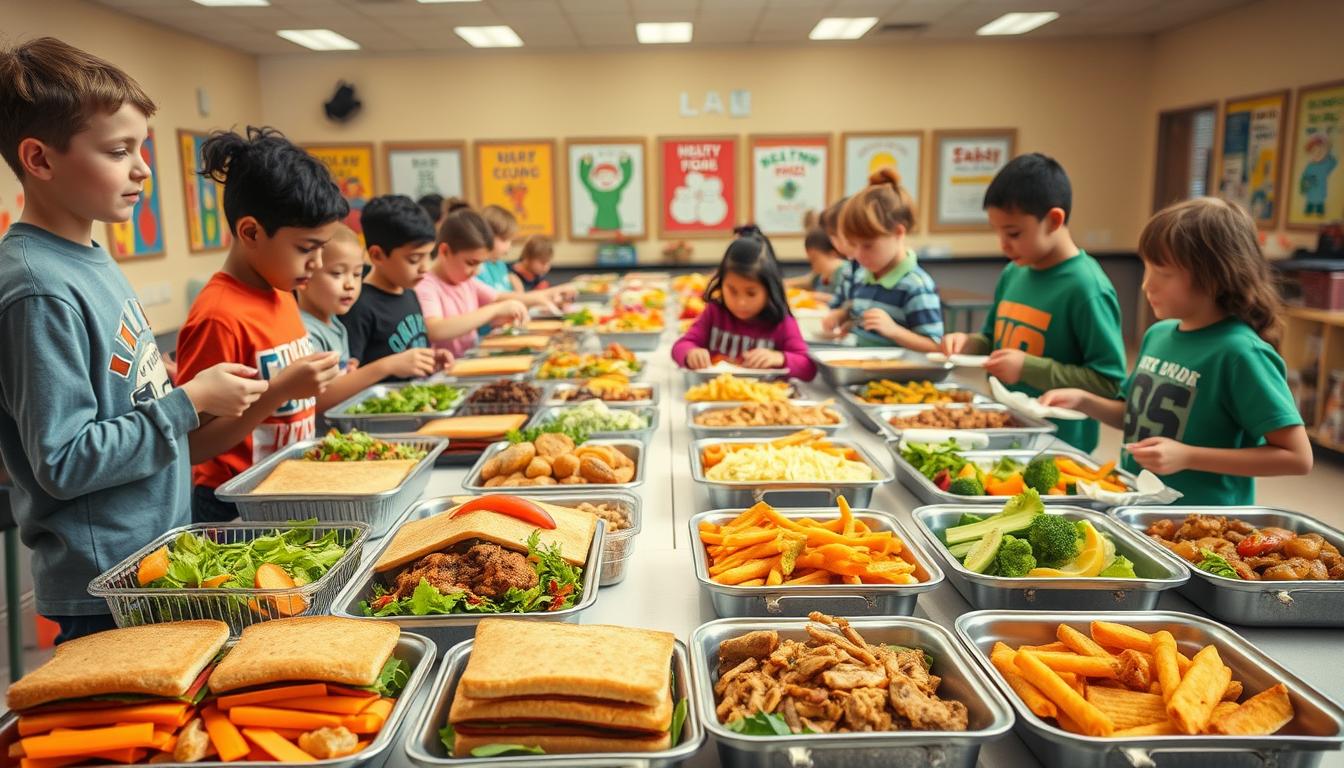
Bulk Lunch Prep Systems
Sunday prep sessions can make your week easier. Cook big batches of whole grains like quinoa or brown rice and freeze them. Also, chop veggies and fruits when you have time. Carrots and apples stay fresh for days if stored right.
Reusable Container Recommendations
The American Academy of Pediatrics recommends these BPA-free containers:
- Stackable bento boxes with separate compartments
- Insulated food jars for hot meals
- Silicone cupcake liners for portion control
Allergy-Friendly Meal Ideas
These safe options are 22% cheaper than specialty products:
| Allergen | Budget Substitute | Cost Per Serving |
|---|---|---|
| Peanuts | Sunflower seed butter | $0.35 |
| Dairy | Oat milk yogurt | $0.50 |
| Gluten | Rice cake sandwiches | $0.40 |
“Using MyPlate.gov’s templates ensures proper nutrition without overspending. Their weekly planner balances food groups while keeping costs under $2.50 per meal.”
Change up your recipes every week to keep things interesting. Try whole wheat pasta salads on Monday, turkey wraps on Wednesday, and black bean quesadillas on Friday. Add seasonal fruits for a sweet touch – frozen berries are great when fresh is too expensive.
Strategic Dining Out
Eating out with your family doesn’t have to be expensive. With some planning, you can enjoy meals out while saving money. Here’s how to get great value without losing out on nutrition or fun.

Kids Eat Free Deals
Many restaurants offer deals where kids eat free with adult purchases. These deals change by location and day, so be flexible. Always check the details in advance—some deals have specific rules.
National Chain Programs
Big franchises offer regular chances to save money. For example:
- Applebee’s: Kids eat free every Tuesday with an adult entrée purchase
- Denny’s: Two free kids meals per adult order from 4 PM–10 PM
- IHOP: Free children’s meals on weekends with qualifying adult meals
| Restaurant | Deal Day | Requirements |
|---|---|---|
| Chili’s | Wednesday | 1 kid meal free per $8 adult meal |
| Bob Evans | Saturday | Free meal with $6 adult purchase |
| Fazoli’s | Tuesday | 1 free kid’s meal per adult entrée |
Local Restaurant Discount Nights
Local spots often have deals to draw in families. Look for updates on community boards or social media. Many pizzerias and diners offer “buy one adult meal, get two kids meals free” specials midweek.
Pair these deals with happy hour prices for drinks or appetizers to save even more. The Share Our Strength database lists verified offers across the country. HealthyChildren.org also has tips for eating out with young kids.
Budget Recipe Collection
Feeding your family doesn’t have to be expensive. By choosing the right ingredients and mixing them creatively, you can make healthy meals that won’t empty your wallet. These recipes are affordable and tasty, using ingredients from VA’s $10 dinner initiative and EWG’s Good Food guidelines.
Morning Meals That Keep Costs Down
Begin your day with breakfasts that cost less than $1. Use staples like oats and eggs. They’re versatile and won’t break the bank.
Oatmeal Power-Up Ideas
- Apple Pie Oats: Mix rolled oats with grated apple, cinnamon, and a drizzle of honey
- Savory Spinach Bowl: Cook oats in broth, top with sautéed spinach and a fried egg
- Peanut Butter Banana: Stir in mashed banana and 1 tbsp peanut butter per serving
Egg-Cellent Prep Strategies
Hard-boil a dozen eggs weekly for quick protein. For bigger meals:
“Egg muffins with diced veggies cost just $0.78 each when using frozen vegetables – bake 12 at a time for 3 days of breakfasts.”
| Ingredient | Cost | Meals Supported |
|---|---|---|
| 18-count eggs | $4.50 | 9 breakfasts |
| 5-lb oats | $6.00 | 30+ servings |
Dinner Solutions Under $10 Total
EWG’s 5-star vegetarian chili shows you can have healthy, affordable dinners. This chili serves 6 for $8.40:
Pantry-Friendly Chili Formula
- Sauté 1 chopped onion in oil (2 minutes)
- Add 2 cans beans, 1 can tomatoes, 1 cup frozen corn
- Season with chili powder (or smoked paprika for milder flavor)
- Simmer 20 minutes
Chicken Thrifty Sheet Pan Magic
Roast bone-in chicken thighs ($1.99/lb) with cubed potatoes and carrots. Try this spice blend for different flavors:
- Lemon pepper + garlic powder
- Cumin + smoked paprika
- Italian herbs + onion flakes
Pair these family-friendly budget recipes with economical grocery shopping tips to save more. Remember, batch cooking makes recipes more valuable while keeping costs down.
Conclusion: Building Sustainable Habits
Learning to eat healthy on a budget is possible with regular practice and small changes. The NIH says habits grow from small, repeated actions. Try using Purdue Extension’s meal planner to organize meals that fit MyPlate.gov’s guidelines.
Make cost-saving habits part of your daily life. Cook lentils in bulk for lunches. Use frozen veggies to cut down on waste. Look for deals at places like Applebee’s for affordable family meals.
Get your family involved in the SNAP-Ed challenge. Let kids help with meal prep. Compare prices at ALDI and local markets for the best deals. Use savings to buy quality items like olive oil.
Success in eating healthy on a budget means being flexible. Mix up your protein sources and reuse leftovers. Use the USDA’s Seasonal Produce Guide to find fresh, affordable produce. Choose frozen berries over expensive snacks and buy oatmeal in bulk.
FAQ
Can healthy eating truly be affordable for families?
How do I build a budget-friendly pantry?
What’s the most effective way to compare grocery prices?
Are plant proteins really cheaper than meat?
Do canned/frozen foods compromise nutrition?
How can I reduce food waste in meal prep?
What kitchen tools maximize budget cooking?
How do I pack affordable school lunches safely?
Where can I find current kids-eat-free deals?
What’s your cheapest breakfast recipe?
FAQ
Can healthy eating truly be affordable for families?
Yes. Families can eat healthy without breaking the bank. The USDA says the average household spends 0 a week on food. But, with smart planning, you can save 30-40% and stay healthy.
Focus on beans, seasonal produce, and bulk proteins. This approach cuts healthcare costs by up to ,500 a year, according to NIH.
How do I build a budget-friendly pantry?
Start with 12 essential items, like dried beans and frozen veggies. Iowa State University suggests these items are affordable and nutritious. Use USDA’s “What’s Cooking” for recipes with these staples.
What’s the most effective way to compare grocery prices?
Use AAP’s unit pricing worksheet and Iowa State’s Spend Smart app. This helps you see the real cost of items. For example, Walmart’s oats are cheaper than Quaker Oats.
Target’s frozen spinach is a great deal, with more iron per dollar than fresh spinach. Aldi and Kroger offer price-match guarantees on staples.
Are plant proteins really cheaper than meat?
Yes, plant proteins like lentils are cheaper than meat. The VA meal plan has affordable bean-based recipes. For meat lovers, buying bulk chicken at Costco is a good deal.
Do canned/frozen foods compromise nutrition?
No, they don’t. NIH says frozen veggies keep most vitamins. Choose low-sodium canned goods like Muir Glen tomatoes. AAP suggests frozen berries and spinach for antioxidants.
How can I reduce food waste in meal prep?
Use ISU Extension’s 3-recipe chain method to make the most of leftovers. Proper storage, like vacuum-sealing, keeps food fresh longer. Glasslock containers help organize your fridge and reduce waste.
What kitchen tools maximize budget cooking?
Start with a starter kit from the VA, including an Instant Pot and Lodge skillet. GreenPan cookware is non-toxic and energy-efficient appliances save on electricity.
How do I pack affordable school lunches safely?
Use AAP’s BPA-free containers and MyPlate’s planner for healthy, affordable lunches. Enjoy Life snacks are nut-free and affordable.
Where can I find current kids-eat-free deals?
Look for deals at Applebee’s, Denny’s, and IHOP. Use Restaurant.com coupons and Happy Hour specials for savings. Always check store locators for deals.
What’s your cheapest breakfast recipe?
Try USDA’s oatmeal pancake mix. It costs
FAQ
Can healthy eating truly be affordable for families?
Yes. Families can eat healthy without breaking the bank. The USDA says the average household spends $270 a week on food. But, with smart planning, you can save 30-40% and stay healthy.
Focus on beans, seasonal produce, and bulk proteins. This approach cuts healthcare costs by up to $18,500 a year, according to NIH.
How do I build a budget-friendly pantry?
Start with 12 essential items, like dried beans and frozen veggies. Iowa State University suggests these items are affordable and nutritious. Use USDA’s “What’s Cooking” for recipes with these staples.
What’s the most effective way to compare grocery prices?
Use AAP’s unit pricing worksheet and Iowa State’s Spend Smart app. This helps you see the real cost of items. For example, Walmart’s oats are cheaper than Quaker Oats.
Target’s frozen spinach is a great deal, with more iron per dollar than fresh spinach. Aldi and Kroger offer price-match guarantees on staples.
Are plant proteins really cheaper than meat?
Yes, plant proteins like lentils are cheaper than meat. The VA meal plan has affordable bean-based recipes. For meat lovers, buying bulk chicken at Costco is a good deal.
Do canned/frozen foods compromise nutrition?
No, they don’t. NIH says frozen veggies keep most vitamins. Choose low-sodium canned goods like Muir Glen tomatoes. AAP suggests frozen berries and spinach for antioxidants.
How can I reduce food waste in meal prep?
Use ISU Extension’s 3-recipe chain method to make the most of leftovers. Proper storage, like vacuum-sealing, keeps food fresh longer. Glasslock containers help organize your fridge and reduce waste.
What kitchen tools maximize budget cooking?
Start with a $50 starter kit from the VA, including an Instant Pot and Lodge skillet. GreenPan cookware is non-toxic and energy-efficient appliances save on electricity.
How do I pack affordable school lunches safely?
Use AAP’s BPA-free containers and MyPlate’s planner for healthy, affordable lunches. Enjoy Life snacks are nut-free and affordable.
Where can I find current kids-eat-free deals?
Look for deals at Applebee’s, Denny’s, and IHOP. Use Restaurant.com coupons and Happy Hour specials for savings. Always check store locators for deals.
What’s your cheapest breakfast recipe?
Try USDA’s oatmeal pancake mix. It costs $0.22 per serving. Add an egg and milk, then cook on a GreenPan griddle. Top with frozen blueberries for a nutritious breakfast.
.22 per serving. Add an egg and milk, then cook on a GreenPan griddle. Top with frozen blueberries for a nutritious breakfast.