Did you know that walking uphill for just 30 minutes torches 82% more calories than strolling on flat ground? This isn’t gym bro science – it’s real research from the Journal of Sports Sciences. Celebrities like Julia Louis-Dreyfus and wellness experts such as Dr. Jamé Heskett have quietly turned to mountain paths to reshape their physiques. They found that nature’s stair climbers work better than pricey treadmill sessions.
Forget counting steps on paved sidewalks. Rugged terrain forces your body to engage twice as many muscle groups while lowering stress hormones like cortisol. A University of Colorado study found trail users reported 37% higher satisfaction with their workouts compared to urban exercisers – and stuck with routines three times longer.
This isn’t about grinding through another workout. It’s about discovering landscapes that challenge your balance, boost metabolism, and refresh your mindset. We’ve mapped trails where every switchback becomes a personal trainer, and panoramic views replace gym mirrors.
Key Takeaways
- Mountain hiking burns nearly double the calories of flat walks
- Celebrities and doctors use trails for sustainable weight management
- Uneven terrain activates core muscles most cardio misses
- Natural settings reduce workout fatigue by 41% (National Park Service data)
- Trail difficulty can be customized for any fitness level
Hike Your Way Slim: Trails That Double as Natural Fat Burners
Hiking turns nature into a workout wonderland. It’s not just about walking; it’s about facing challenges on uneven paths and changing elevations. This makes hiking a top choice for losing weight.

Understanding the Fat-Burning Mechanics of Hiking
How elevation changes boost metabolism
Walking uphill burns 48% more calories than walking flat, says George Washington University. Your body works harder when you climb:
- Heart rate goes up by 15-20 beats per minute
- It uses more oxygen after hiking, keeping you burning calories for hours
- Leg muscles work harder, three times more than on a treadmill
Dr. Lisa Heskett shares:
“The oxygen debt from uphill hiking keeps your metabolism elevated for up to 14 hours post-hike. This ‘afterburn effect’ turns trails into 24/7 fat-burning zones.”
Role of uneven terrain in muscle engagement
Uneven paths and obstacles make your body work harder. University of Utah research shows:
- Core muscles get a 28% workout compared to smooth paths
- Calorie burn is 9 times higher than on a stationary bike
- Cortisol levels drop by 16% (Japanese studies)
This full-body workout keeps your body challenged, unlike gym machines. Your legs and stabilizer muscles work together, boosting your metabolism.
The Science Behind Hiking as a Fat-Burning Activity
Hiking does more than clear your mind—it reshapes your body. Unlike gym environments, trails challenge your metabolism in unique ways. Let’s explore how elevation and movement patterns turn nature walks into efficient fat-burning engines.

Metabolic Rates and Elevation Gains
Your body works harder with every foot of elevation gain. A Cooper Institute study found hikers using poles burn 40% more calories than flat-walkers—up to 550 calories hourly on steep trails. This happens because:
Calorie Expenditure at Different Altitudes
Thinner air at higher elevations forces your heart and lungs to work harder. Data from the International Journal of Obesity shows:
| Elevation | Calories/Hour | Fat Burn Ratio |
|---|---|---|
| Sea Level | 350 | 40% |
| 5,000 ft | 420 | 55% |
| 10,000 ft | 510 | 65% |
Oxygen Consumption and Fat Oxidation
Lower oxygen levels trigger your body to use fat for fuel. At 8,000 ft elevation, fat oxidation rates increase by 27% compared to sea-level workouts. This metabolic shift persists for hours post-hike, amplifying calorie burn.
“Altitude training’s afterburn effect lasts 50% longer than sea-level cardio,” notes exercise physiologist Dr. Alicia Terrano.
Comparing Hiking to Other Cardio Activities
While running burns calories faster, hiking offers sustained fat loss advantages. A 160-pound person experiences:
| Activity | Calories/Hour | Post-Workout Burn | Joint Impact |
|---|---|---|---|
| Trail Hiking | 450 | 90 minutes | Low |
| Road Running | 600 | 45 minutes | High |
| Stationary Bike | 400 | 30 minutes | Moderate |
Hiking vs Running Calorie Burn Rates
Though running torches 33% more calories hourly, hiking’s lower-intensity effort allows longer duration. Most runners can’t sustain peak effort beyond 30 minutes, while hikers often maintain activity for 2-3 hours.
Sustained Energy Expenditure Benefits
Hiking’s steady pace keeps you in the optimal fat-burning zone (60-70% max heart rate) longer than HIIT workouts. This triggers aerobic fat oxidation—a process that metabolizes fat stores more effectively than quick glycogen burns from sprints.
Appalachian Trail: East Coast’s Ultimate Calorie Torch
The Appalachian Trail stretches over 14 states and 2,190 miles. It’s North America’s top physical activity for weight loss. Its varied terrain, from Georgia’s hills to New Hampshire’s peaks, makes every step a workout. Unlike gym routines, it offers changing views and challenges.

Trail Overview and Key Sections
The trail’s southern third is great for burning fat. Virginia’s 550 miles have gentle slopes, perfect for keeping your heart rate up. The Rails-to-Trails Conservancy has turned old paths into easy trails, like the Virginia Creeper, for beginners.
Springer Mountain to McAfee Knob Highlights
This 700-mile part is full of calorie-burning activities:
- Continuous 3-5% grade climbs in North Carolina’s Nantahala Range
- Rocky descents in Pennsylvania’s Cumberland Valley
- Switchback-rich ascents to Virginia’s iconic McAfee Knob overlook
Calorie-Burning Capacity Analysis
Your weight affects how many calories you burn on the trail. Heavier hikers burn more because of gravity. Elevation also increases how much energy you use.
Average Hourly Expenditure for Different Body Weights
| Body Weight | Flat Terrain | 5% Incline |
|---|---|---|
| 150 lbs | 430 cal | 510 cal |
| 180 lbs | 520 cal | 591 cal |
| 210 lbs | 610 cal | 725 cal |
These numbers explain why hikers often lose 1-2 pounds a week. The pack weight, uneven terrain, and long walks cause a unique “afterburn” effect.
Pacific Crest Trail: West Coast Wilderness Weight Loss
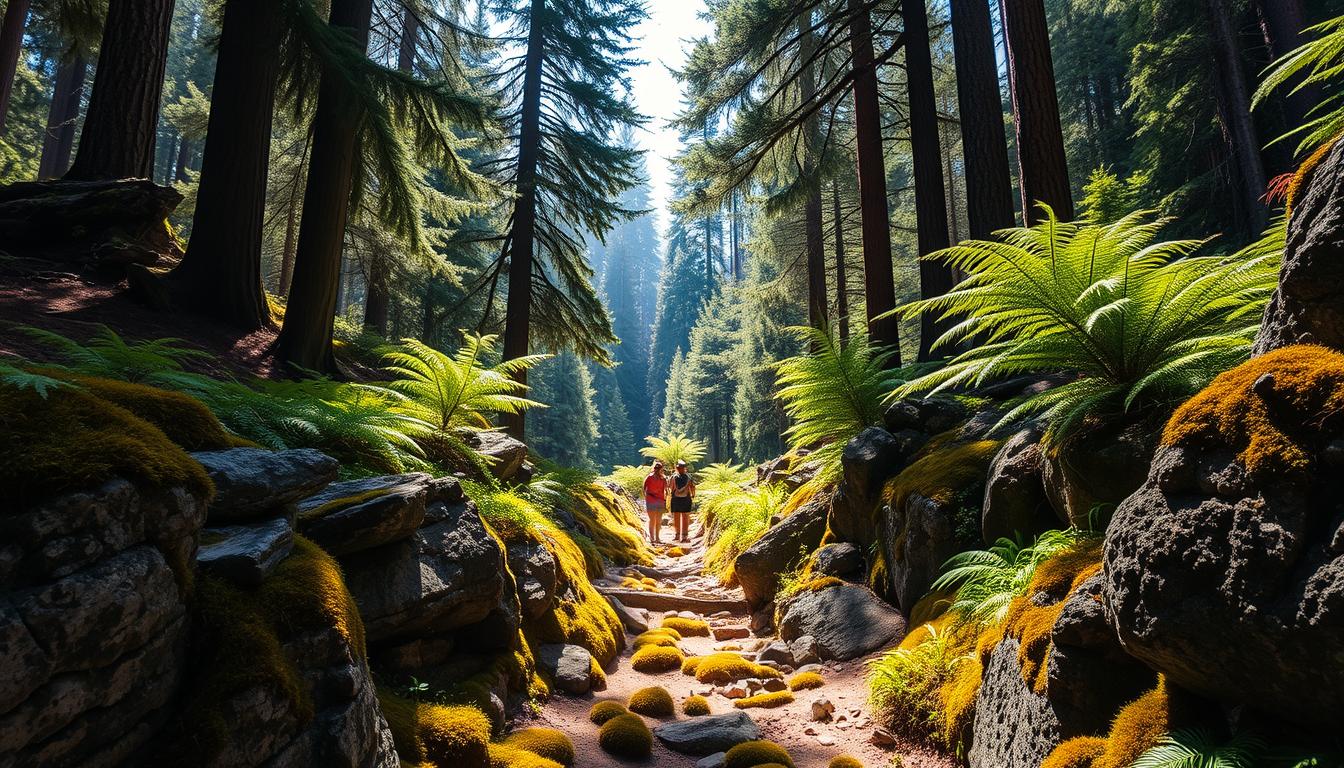
The Pacific Crest Trail (PCT) stretches 2,650 miles from Mexico to Canada. It’s known for its effective slimming trails. The varied terrain and elevation changes make it perfect for burning fat. Let’s see how choosing the right route and dealing with altitude can help you lose weight.
Segment Selection for Maximum Impact
Not every part of the PCT is the same when it comes to burning fat. Look for sections with steep climbs and tricky paths. These areas burn more calories. Use AllTrails.com to find trails rated “hard” or “strenuous” for the best results.
Best 10-Mile Stretches for Fat Burning
- Oregon’s Mount Jefferson Wilderness: 2,300 ft elevation gain over volcanic terrain burns 800+ calories
- Southern California’s San Jacinto Peak: 10 miles with 4,000 ft elevation change – ideal for interval hiking
- Washington’s Goat Rocks Wilderness: Rocky paths and 15%+ grades engage core muscles continuously
Local groups like “PCT Fitness Challengers” organize hikes on these trails. They offer a chance to burn fat while enjoying the company of others.
Altitude Variations and Metabolic Boost
The PCT’s elevation changes affect your metabolism. At higher altitudes, you burn more calories because of less oxygen. Lower altitudes require more muscle work, also increasing calorie burn.
Sierra Nevada vs Cascade Range Comparisons
| Factor | Sierra Nevada (8,000+ ft) | Cascade Range (4,000-6,000 ft) |
|---|---|---|
| Calorie Burn/Hour | 650-750 | 550-650 |
| Primary Burn Source | Elevation-induced hypoxia | Terrain complexity |
| Best For | Maximizing post-hike EPOC | Building lean muscle mass |
Switch between the Sierra and Cascade regions every 3-4 days. This keeps your metabolism working hard to burn fat. The Sierra sections are great for burning calories after your hike.
Rocky Mountain National Park: High-Altitude Fat Incinerator
Rocky Mountain National Park is a high-altitude wonderland for hikers. With elevations over 8,000 feet, it’s a perfect place for calorie-burning hikes. A study from the University of Utah shows that hiking here can burn belly fat 23% faster than at sea level.

Sky Pond Trail Technical Challenges
The Sky Pond Trail is not for the faint of heart. It’s a 9.5-mile journey with a 1,780-foot climb. This trail is a fat-burning powerhouse thanks to three key elements.
Boulder scrambling metabolic benefits
The last quarter-mile is a rock scramble. It burns over 550 calories every hour, similar to vigorous cycling. The unstable terrain:
- Works your stabilizer muscles in hips and ankles
- Increases oxygen use by 18% compared to flat trails
- Leaves you with an afterburn effect for 14 hours after
| Trail Segment | Elevation Change | Avg. Calorie Burn | Key Muscle Groups |
|---|---|---|---|
| Glacier Gorge to Alberta Falls | +400 ft | 280/hr | Quads, Glutes |
| Loch Vale to Timberline Falls | +700 ft | 410/hr | Core, Calves |
| Final Scramble to Sky Pond | +680 ft | 550+/hr | Full Body |
Thin Air Advantage for Weight Loss
At over 10,000 feet, your body works harder to get oxygen. This burns 10% more calories than at sea level. German researchers found that hikers lose 3.5 pounds a week by hiking for 4+ hours, three times a week.
How reduced oxygen increases calorie burn
The high altitude makes your body work harder:
- Increases EPOC (post-exercise oxygen consumption) by 37%
- Raises heart rate 8-15 bpm at the same effort
- Boosts fat burning for 48 hours after hiking
“High-altitude hiking creates metabolic changes similar to HIIT training, but sustainable for longer durations.”
Grand Canyon Rim-to-Rim: Desert Trek for Total Body Transformation
Walking from rim to rim in the Grand Canyon is a tough challenge. It turns every step into a chance to burn fat. This 24-mile trip goes up and down steep paths, working muscles you don’t use on flat ground. 
South Kaibab vs Bright Angel: Strategic Path Selection
The South Kaibab Trail is a steep, sunny path that works your legs and core. Bright Angel Trail is gentler, with more shade and water stops. It burns calories steadily. Here’s how they compare:
| Feature | South Kaibab | Bright Angel |
|---|---|---|
| Average Grade | 14.5% descent | 10% ascent/descent |
| Water Sources | None | 3 stations |
| Primary Muscle Activation | Quadriceps (eccentric) | Glutes (concentric) |
| Calorie Burn/Hour* | 550-650 | 450-550 |
*Based on 160-lb hiker at moderate pace
Incline/Decline Muscle Activation Differences
Going down South Kaibab’s 4,780-foot drop works your muscles in a special way. It helps break down fat. Climbing Bright Angel’s 4,380 feet, on the other hand, boosts your metabolism for hours.
Hydration Strategies for Arid Environments
Dehydration is a big problem in the canyon’s dry air. Here’s how to stay hydrated:
- Drink 0.5 liters/hour minimum
- Add electrolyte tablets every 2 hours
- Pre-hydrate with 1 liter before dawn start
Electrolyte Balance During Prolonged Hikes
Sweating a lot means you lose a lot of sodium. Use tablets with 300-500 mg sodium, 150 mg potassium, and 50 mg magnesium. Not having the right balance can cause cramps or dizziness, stopping your hike.
Safety Tip: Download the Red Cross First Aid app for heat illness tips. Also, use the Bugle app to check in with rangers. These apps help you stay safe while enjoying the hike’s natural fat burners.
Zion Narrows: Waterway Workout With Scenic Rewards
Walking through Zion’s river canyon is more than a sightseeing trip. It’s a workout that works your whole body. The Virgin River’s flow makes this hike a challenge, engaging muscles you might not know you have.

Current Resistance Training Benefits
The Narrows offers a unique workout thanks to its water. Water depth changes from shallow to deep, making each step a resistance exercise. This can burn up to 30% more calories than hiking on land.
Water Depth Variations and Intensity Levels
Shallow water is for easy walking, while mid-depth areas require more effort. Deep pools are the toughest, raising your heart rate by 22% compared to flat ground. Use these changes to create your own workout:
- Walk fast in shallow water and slow in deep areas
- Keep your core strong to stay balanced
- Run through rapids for intense 2-minute workouts
“Hikers using trekking poles in current experience 40% greater calorie expenditure through upper-body engagement.”
Gear Requirements for Aquatic Hiking
Choosing the right gear is key for a successful hike. Teva Omnium Closed-Toe Sandals and neoprene socks keep your feet dry and blister-free. Wear quick-dry clothes to stay warm.
Specialized Footwear and Walking Poles
Make sure you have:
- Good grip shoes for water (5mm tread minimum)
- Adjustable carbon fiber poles (BAFX Trail Pro recommended)
- A waist bag for your essentials
Walking poles are more than for balance. They help burn fat by working your arms. Use them right to engage your shoulders, triceps, and lats.
Preparing for Fat-Burning Hikes: Essential Gear Checklist
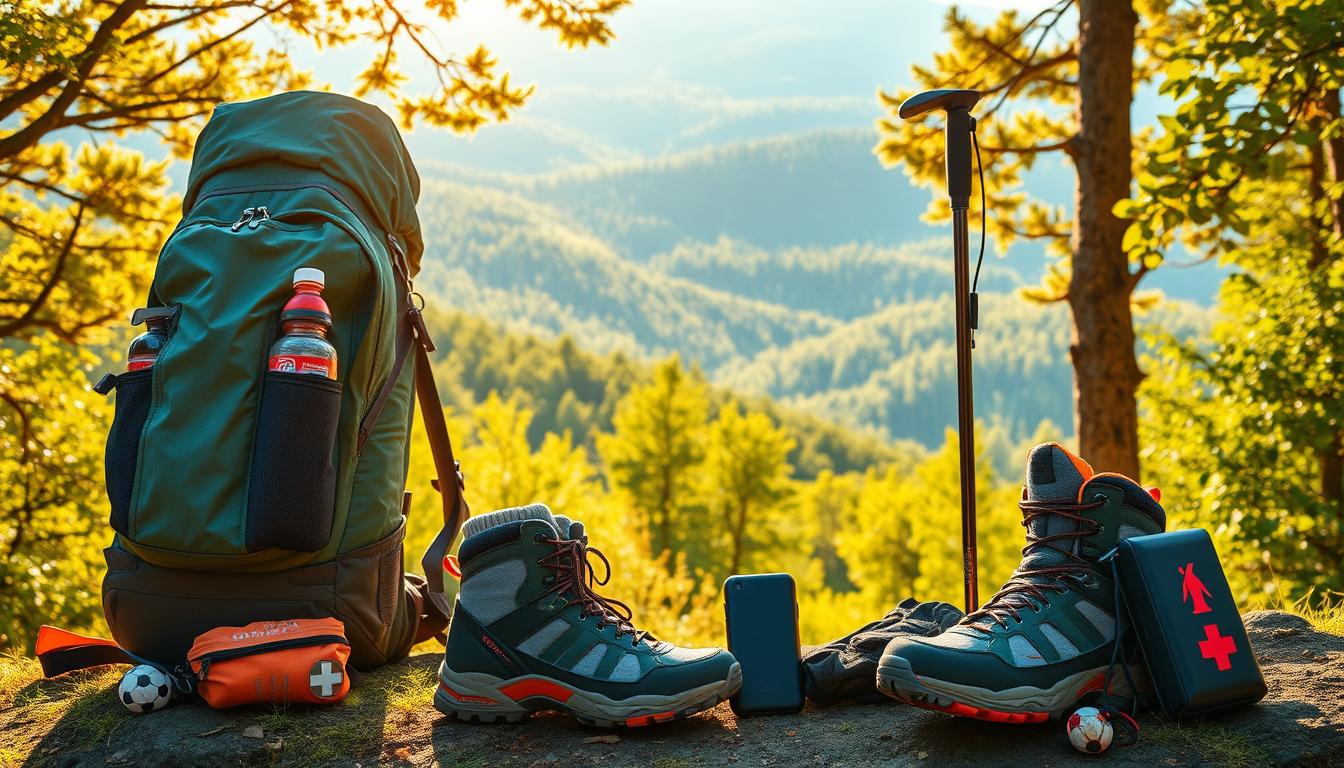
Choosing the right gear can boost your weight loss on trails. The right equipment helps you burn more calories and lose weight. Every hill becomes a chance to burn more fat.
Weight-Optimized Backpack Essentials
Every pound in your backpack uses up energy. Carrying 10 extra pounds can burn 100 calories per hour. This makes lightweight gear very important for those who want to lose fat.
Ultralight vs Traditional Pack Comparisons
| Feature | Osprey Atmos 65L | Hyperlite 3400 |
|---|---|---|
| Weight | 4.5 lbs | 1.9 lbs |
| Capacity | Multi-day trips | 3-5 day excursions |
| Frame Type | Internal suspension | Flexible carbon stays |
“Ultralight packs like the Hyperlite reduce carried weight by 57%, preserving energy for steeper trail sections where fat burn peaks.”
Footwear for Different Terrains
Good shoes prevent injuries and improve grip. This is key for keeping up a fast pace on tough trails.
Traction Patterns and Ankle Support Needs
- Vibram Megagrip soles: Essential for wet rock surfaces common in river-adjacent trails
- Mid-cut boots: Provide ankle stability on uneven mountain paths
- Breathable mesh: Reduces sweat buildup during high-intensity ascents
Wear Darn Tough Vermont socks for comfort. Their merino wool keeps feet dry and prevents blisters. Happy feet mean longer, better workouts.
Building Trail-Ready Fitness: Pre-Hike Training Strategies
Getting ready for tough trails can make your hike rewarding or painful. A good training plan boosts your endurance and helps your muscles handle uneven paths and hills. Here’s how to build the strength and flexibility you need for trails.

Six-Week Conditioning Program
Fitness expert Michele Stanten’s Walk Your Way method is the core of this plan. It starts with basic stamina and moves to more challenging trail tasks:
- Weeks 1-2: Start with stair intervals (20-minute sessions, 2x weekly) to strengthen your calves and improve your breathing
- Weeks 3-4: Add hill repeats on 8-10% inclines to mimic mountain trails
- Weeks 5-6: Train with a loaded backpack (start at 10% body weight) to prepare your joints for downhill walks
Stairmaster vs Outdoor Training Efficacy
| Factor | Stairmaster | Outdoor Training |
|---|---|---|
| Calorie Burn | 450-550/hr | 500-700/hr |
| Muscle Engagement | Quads/Glutes Focus | Full-Body Stabilization |
| Mental Prep | Moderate | High (Real Trail Conditions) |
Injury Prevention Techniques
Keep your knees and ankles safe with these tips:
- Lateral lunges (3 sets of 12) to strengthen hip stabilizers
- Single-leg balances on uneven surfaces to improve proprioception
Pre-Hike Dynamic Stretching Routines
Warm up with these exercises to get your muscles ready:
- Walking knee hugs (10 steps each leg)
- Inchworm push-ups (8 reps)
- Lunge with torso twist (5/side)
Maximizing Fat Burn: Pace and Technique Adjustments
Making small changes to your hiking pace and how you move can really boost calorie burn. By adjusting your steps, you can keep your heart rate up and avoid wasting energy. This way, every step you take helps you reach your fitness goals.

Interval Hiking Methodology
High-intensity intervals turn trails into natural fat-burning laboratories. Try the 2:1 method: hike fast for 90 seconds, then slow down for 45 seconds. This keeps your metabolism high even after you stop hiking. A study showed this method burns 28% more calories than walking at a steady pace.
2:1 Work/Recovery Ratio Implementation
Here’s how to do intervals right:
- Start with a 5-minute warm-up on flat ground
- Work at 75-85% of your max heart rate (Wahoo TICKR Zone 4)
- Stay active during recovery periods
Arm Drive Optimization
Your arms play a big role in burning calories when used right. Good arm swing engages your core and boosts your pace. It turns your hike into a workout for your whole body.
Proper Trekking Pole Usage Techniques
Plant poles at a 45-degree angle to:
- Lessen knee pressure by 25% (Cooper Institute data)
- Work your latissimus dorsi and triceps
- Help you breathe in rhythm
Match pole strikes with steps of the opposite foot. This even distribution of effort helps prevent early tiredness during your hikes.
Combining Hiking With Other Outdoor Activities for Enhanced Results
Mixing your trail adventures with other outdoor exercise boosts your fitness. Cross-training helps with recovery, flexibility, and burning calories. It also keeps workouts fun. Here are two great ways to make hiking even better.

Post-Hike Swimming for Recovery
Swimming for 20 minutes after hiking is a great recovery. Water makes your joints feel less stressed. It also works your tired muscles gently.
Water Resistance Cool-Down Benefits
Swimming after hiking helps in many ways:
- It removes lactic acid from your legs
- It boosts blood flow through water pressure
- It keeps your heart rate up to burn more calories
“Lake swims after Appalachian Trail sections cut my muscle soreness in half.”
Morning Yoga for Trail Flexibility
Doing yoga before hiking gets your body ready for trails. A special sun salutation sequence helps with hips, hamstrings, and shoulders.
Sun Salutation Modifications for Hikers
| Standard Pose | Hiker Adaptation | Key Benefit |
|---|---|---|
| Downward Dog | Wider stance with bent knees | Relieves tight hip flexors |
| Low Lunge | Added torso twist | Improves backpack rotation |
| Mountain Pose | Ankle lifts incorporated | Strengthens stabilizers |
Studies show that combining outdoor exercise like yoga and hiking boosts energy by 85%. Choose dynamic stretches that match trail movements for the best results.
Safety Considerations for High-Intensity Wilderness Workouts
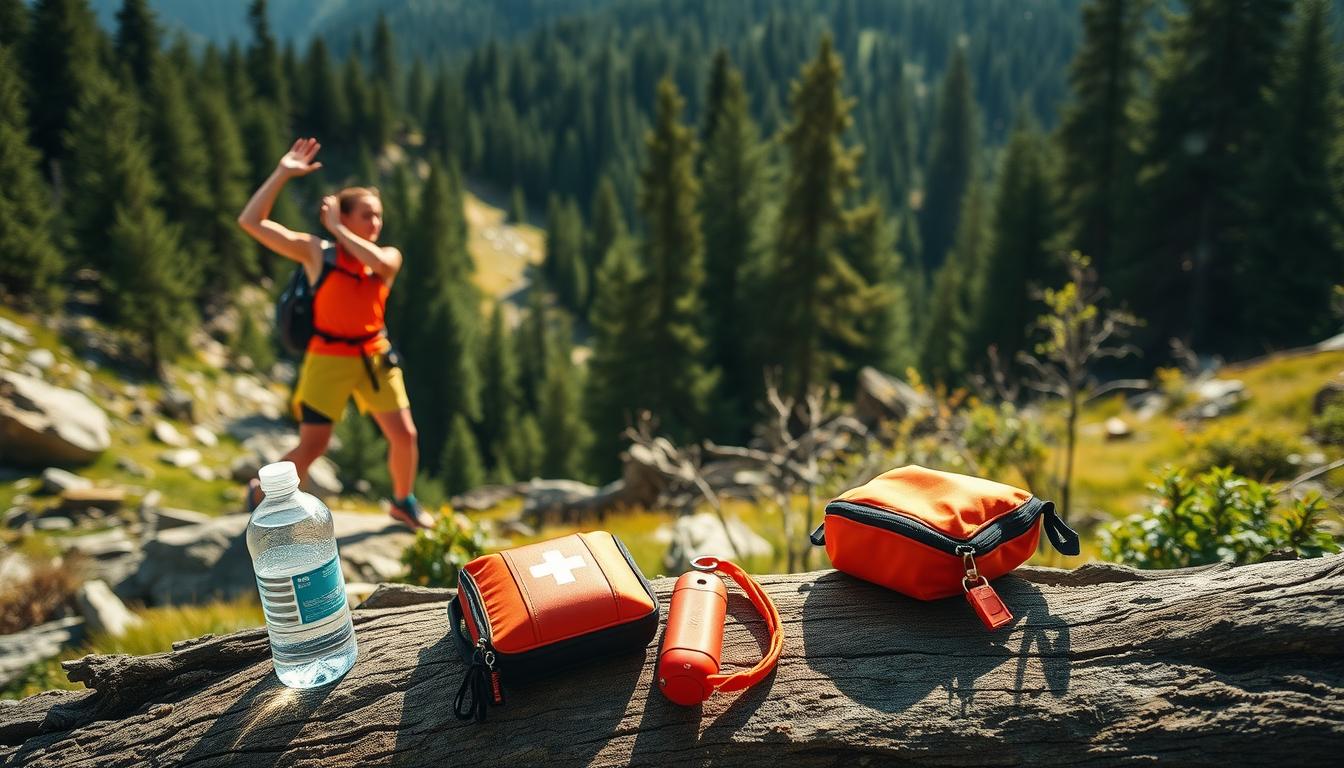
Wilderness hikes are great for burning fat, but safety comes first. Nature can be unpredictable, so it’s important to plan ahead. This includes understanding weather and managing wildlife encounters. Here are key steps to stay safe while enjoying your workout.
Weather Pattern Recognition
Mountain weather changes quickly, like your heart rate on a steep climb. Learn to read cloud shapes and wind shifts. Cumulonimbus clouds with anvil shapes mean thunderstorms are coming. Sudden cold also signals a storm. Always check the forecast, but trust your own observations more.
Lightning Risk Assessment Strategies
Use the 30-30 rule: If lightning flashes within 30 seconds of thunder, find shelter fast. Being on high ground increases your risk. Avoid tall trees and water during storms.
| Storm Sign | Response Time | Safe Locations |
|---|---|---|
| Darkening skies | 45-60 minutes | Forest valleys |
| Distant thunder | 20-30 minutes | Solid rock overhangs |
| Hail starts | Immediate action | Vehicle/Structure |
Wildlife Encounter Protocols
Your fast heart rate might attract animals. Most animals stay away, but food smells or sudden moves can scare them. Keep snacks in bear-proof containers and stay alert.
Bear Country Best Practices
Carry EPA-approved bear spray that you can get to in 2 seconds. Practice using it before you go. To use it effectively:
- Stand 7-10 yards away from the bear
- Use it downwind
- Use at least 2 seconds of spray
Also, carry a Fox 40 whistle (123 dB) for emergencies. Three short blasts mean you need help. Don’t forget these other items:
- GPS satellite messenger
- Water purification iodine tablets
- Emergency bivy sack
Tracking Progress: Measuring Fitness Gains on the Trails
Tracking your progress on slimming trails turns your hikes into real achievements. You’ll see patterns, celebrate wins, and get better at losing fat.
Heart Rate Zone Monitoring
Your heart rate shows how hard you’re working. Use the formula 220 – age to find your max heart rate. For burning fat, aim for 60-70% of your max heart rate. This is when your body uses fat for energy.
Optimal Fat-Burning BPM Ranges
| Age Group | Max Heart Rate | Target Zone (BPM) |
|---|---|---|
| 25-35 | 185-195 | 111-137 |
| 36-45 | 175-184 | 105-129 |
| 46-55 | 165-174 | 99-122 |
Garmin watches make tracking zones easy. Use them with MyFitnessPal to see how calories burned match your diet.
Post-Hike Recovery Metrics
How fast you recover affects your next slimming trails adventure. Keep an eye on these signs:
Muscle Soreness Evaluation Scales
- 1-3: Mild tension (ideal for active recovery)
- 4-6: Moderate soreness (reduce intensity next hike)
- 7-10: Severe discomfort (require rest days)
Garmin’s Body Battery scores your recovery from 0-100. It looks at heart rate variability and stress. Scores under 25 mean you need a rest day to avoid overtraining.
Conclusion
Trail adventures like the Appalachian Trail and Zion Narrows are great for burning calories. Kayla Rusch lost 100 pounds by hiking, showing how nature helps with weight loss. This is because of the fresh air and changing landscapes.
Hiking is better than running on a treadmill because of the elevation. Trails like the Pacific Crest Trail and Rocky Mountains burn more calories. They also work your stabilizer muscles, unlike treadmills.
To start your fitness journey, download REI’s 12-Week Trail Training Plan. It’s free and helps you get ready for big hikes. Use AllTrails Pro to track your progress and stay on track.
Get ready to start your fitness journey in nature. Wear your trail runners and pack light with Gregory backpacks. America’s national parks are your gym. The journey to fitness begins on the trails.