Did you know 80% of Americans believe creating a home fitness space costs over $500? But many beginners are turning unused spaces into gyms for under $100. They start small and focus on what truly delivers results.
In Chicago, a couple built their first gym with resistance bands and a yoga mat for $87. This saves them $60 a month on gym fees. It’s not about cutting corners—it’s about prioritizing versatile equipment that meets your growing needs.
Bodyweight exercises are key here. They include push-ups, squats, and planks, needing no equipment. When you’re ready for more, $15 resistance bands offer many workout options. The main idea? Spend intentionally, upgrade slowly, and let consistent effort, not expensive gear, lead to progress.
Key Takeaways
- Begin with bodyweight exercises requiring no equipment investment
- Prioritize multi-functional tools like adjustable resistance bands
- Real-world success stories prove sub-$100 setups deliver results
- Budget-conscious upgrades prevent overspending early on
- Compare costs to recurring gym fees for long-term savings
Assessing Your Fitness Goals and Space
Your home gym’s success depends on matching your workout goals with your space. First, ask yourself: What results do you want? and Where will you achieve them? This ensures every dollar and square foot is used effectively in your low-cost exercise room.
Identify Your Primary Workout Needs
Cardio vs Strength Training Priorities
Decide between cardio or strength training. Here’s a quick guide:
| Focus | Budget Equipment | Space Needed | DIY Options |
|---|---|---|---|
| Cardio | Jump rope ($8) | 30 sq ft | Stair workouts |
| Strength | Resistance bands ($15) | 45 sq ft | Concrete weights |
| Hybrid | Adjustable dumbbells ($40) | 60 sq ft | Sandbag training |
Bodyweight Exercises vs Equipment Requirements
Save space with these tips:
- Use doorframe pull-up bars for upper body days
- Foldable yoga mats double as floor protection
- Storage ottomans hold resistance bands
Measuring Available Space
Optimal Room Layouts for Small Areas
Make the most of small spaces with these tips:
- Mark 3′ clearance around equipment
- Position mirrors on shortest walls
- Use corner shelves for kettlebells
Multi-Functional Furniture Solutions
These items are great for a low-cost exercise room:
| Furniture | Workout Use | Cost |
|---|---|---|
| Storage bench | Step platform/weight storage | $35 |
| Folding desk | Yoga/Pilates station | $28 |
| Bookshelf | Vertical dumbbell rack | $22 |
Use Google Sheets to plan your layout. Measure your room and add furniture images to cells. Garage conversions show 68% of users use vertical storage in under 100 sq ft.
Essential Budget Equipment Checklist
Turn your workout area into a top-notch space with these affordable must-haves. You don’t need pricey machines for a great home gym. Smart buys under $50 can give you pro-level results. Here’s the gear that beats its price.
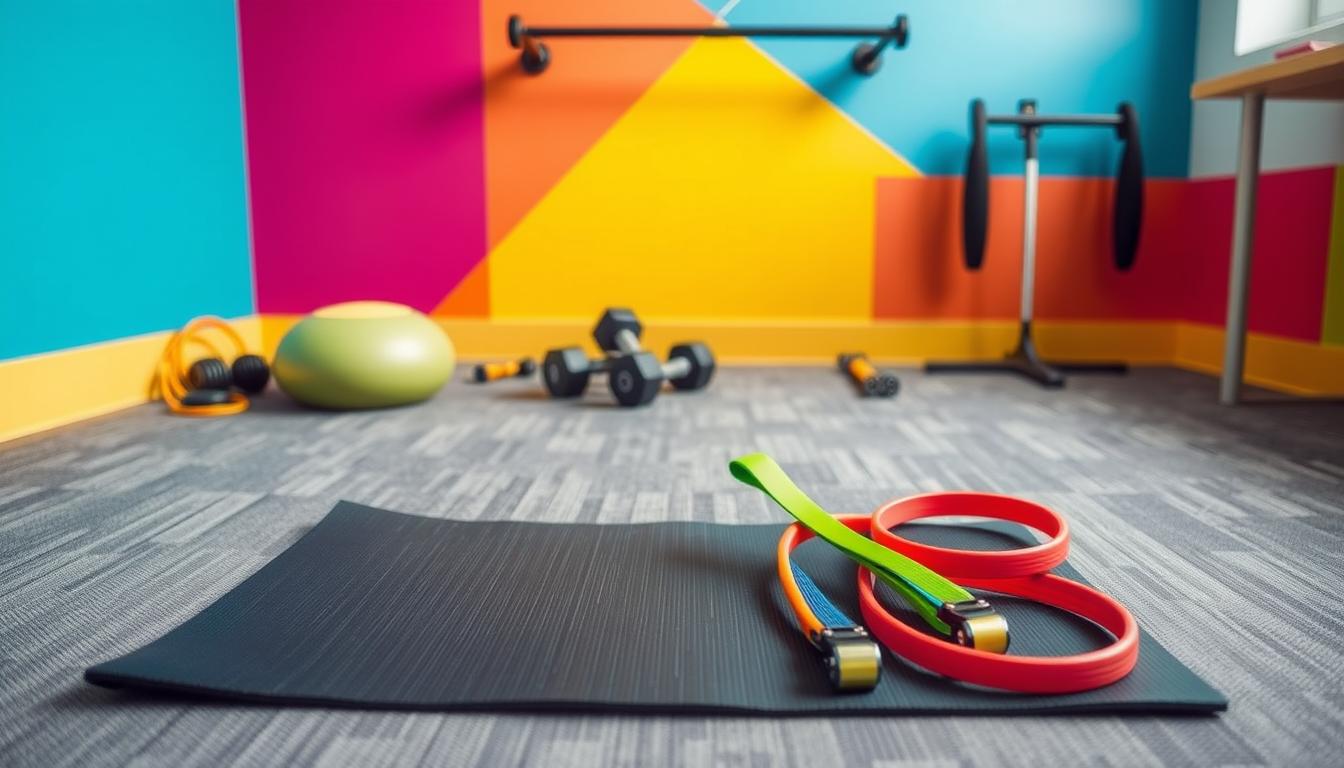
Under $20 Must-Haves
ProSource Fit Puzzle Exercise Mat
This ¾-inch thick foam mat keeps floors and joints safe during tough workouts. Its interlocking design lets you cover any area. Plus, the textured surface prevents slipping. For just $17.99 for six tiles, it’s a bargain compared to high-end brands.
Yes4All Adjustable Dumbbells (5-25 lbs)
These space-saving weights replace big dumbbell racks. The screw-lock system lets you switch weights quickly. Users love the grip-friendly handles and leak-proof sand filling. It’s a cheap gym equipment for home that’s durable.
“Resistance bands became my go-to for travel workouts. The Whatafit set lets me replicate cable machine exercises anywhere.”
$20-$50 Game Changers
Whatafit Resistance Bands Set
This $18 bundle has five latex-free bands (10-50 lbs resistance) and ankle straps. Use them for assisted pull-ups, glute activation, or adding challenge to bodyweight moves. The carrying case keeps your budget-friendly home gym tidy.
Gaiam Yoga Block and Strap Kit
Great for beginners or small spaces, this $22 set helps with stretches and poses. The 4-inch foam block supports proper form, while the 8-foot strap aids flexibility training. It’s light enough to store under furniture.
| Equipment | Price | Key Benefit | Workout Type |
|---|---|---|---|
| ProSource Mat | $17.99 | Joint protection | Floor exercises |
| Yes4All Dumbbells | $19.99 | Adjustable resistance | Strength training |
| Whatafit Bands | $17.99 | Portable versatility | Full-body workouts |
| Gaiam Yoga Kit | $21.99 | Form improvement | Flexibility training |
When you’re ready to upgrade, consider the Fitness Reality 810XLT rack ($149). But for beginners, these four items create a solid budget-friendly home gym under $80 total.
Secondhand Equipment Strategies
Creating a home gym on a budget doesn’t mean you have to give up quality. It’s about finding great deals on used gear. Secondhand markets have lots of hidden treasures if you know where to look. Let’s dive into two top platforms for finding affordable fitness equipment.
Facebook Marketplace Hunting Tips
This platform is full of fitness gear from people selling casually and from closed gyms. Sort listings by “recently added” and set price alerts for keywords like “weight set” or “exercise bench”.
Negotiation Tactics for Used Weights
First, research the average prices for new and used items in your area. When talking to sellers:
- Start with 70% of the asking price
- Offer to pick up quickly
- Look for deals on multiple items
Safety Inspection Checklist
Always test the equipment before buying:
- Look for cracks or uneven surfaces on weight plates
- Check if dumbbell handles have secure collars
- Make sure adjustable benches lock well
Thrift Store Gold Mines
Thrift stores have a mix of items, but they often get barely-used equipment. Visit stores in rich neighborhoods for better quality.
Identifying Quality Kettlebells
Look for:
- Single-piece cast iron construction
- Smooth handles without burrs
- Clear weight markings
One fitness lover found a $30 40lb kettlebell set by checking donation centers near closing boutique gyms.
Sanitizing Used Yoga Mats
Mix equal parts white vinegar and water in a spray bottle. Scrub with a soft brush, then air dry completely. For tough smells, sprinkle baking soda before wiping clean.
DIY Equipment Projects
Don’t spend a lot on gym gear. Your home can be a gym with simple DIY projects. You can make your own equipment from things you already have. This way, you can work out without breaking the bank.
Concrete Weight Creation
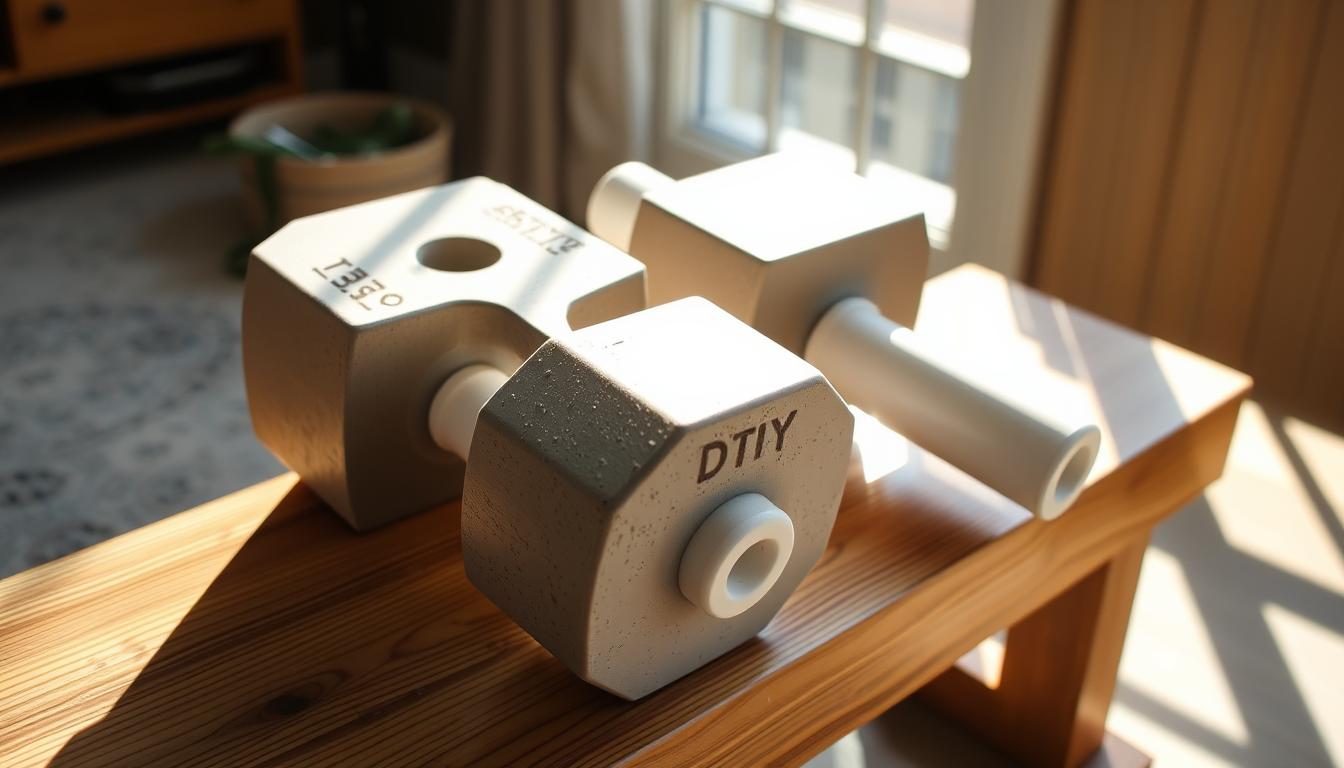
Concrete weights are cheaper than buying them. Pick the right mix for strong weights. A 1:2:3 mix (cement:sand:gravel) with little water makes weights that last. Quick-setting cement helps you get results fast.
Mixing Ratios for Durable Weights
| Concrete Type | Sand Ratio | Gravel Ratio | Water (Gallons) | Weight Capacity |
|---|---|---|---|---|
| Standard | 2 parts | 3 parts | 0.5 | 25-30 lbs |
| High-Density | 1.5 parts | 2.5 parts | 0.4 | 35-40 lbs |
| Lightweight | 3 parts | 1 part | 0.6 | 15-20 lbs |
PVC Pipe Handle Construction
Make grips from 1.5-inch PVC pipes:
- Cut two 12-inch pipe segments
- Sand edges to prevent splinters
- Secure pipes horizontally in wet concrete molds using epoxy glue
Safety tip: Test weight capacity by gradually adding load over 48 hours. Never exceed 50 lbs for single-handle designs.
Upcycled Furniture Gym
Your staircase and dining chairs can be workout tools. Sturdy wooden chairs can hold up to 300 lbs. They’re great for upper-body exercises.
Staircase Step Workouts
- Step-ups for quad development
- Incline push-ups targeting chest muscles
- Lateral lunges to improve balance
Chair-Assisted Tricep Dips
Place hands shoulder-width apart on chair edges. Lower your body until elbows reach 90 degrees, then push up. Pro tip: Add resistance by placing weights on your lap.
“Always check furniture stability before exercising. Reinforce chair legs with brackets if needed.”
Space Optimization Techniques
Creating an inexpensive fitness space doesn’t mean you have to give up on function. With clever organization and creative ideas, you can turn even the smallest area into a workout spot. Let’s look at how vertical storage and multi-use gear can reveal hidden space in your home gym.
Vertical Storage Solutions
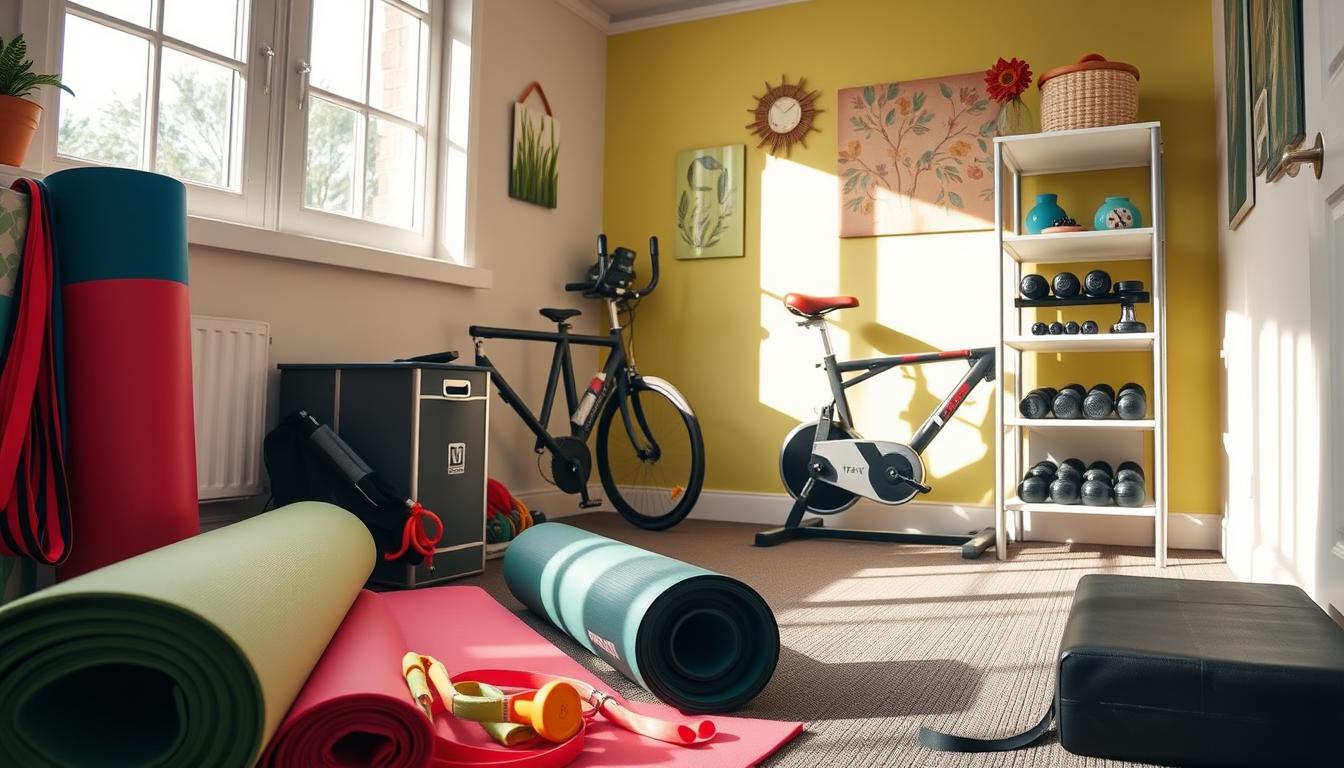
Walls and doors are great for storing your gear. Use over-door resistance band hooks to keep bands untangled and easy to find. For yoga mats, try wall-mounted racks made from PVC pipes or old shelves. These cost under $15 and free up floor space right away.
Wall Control Pegboard System
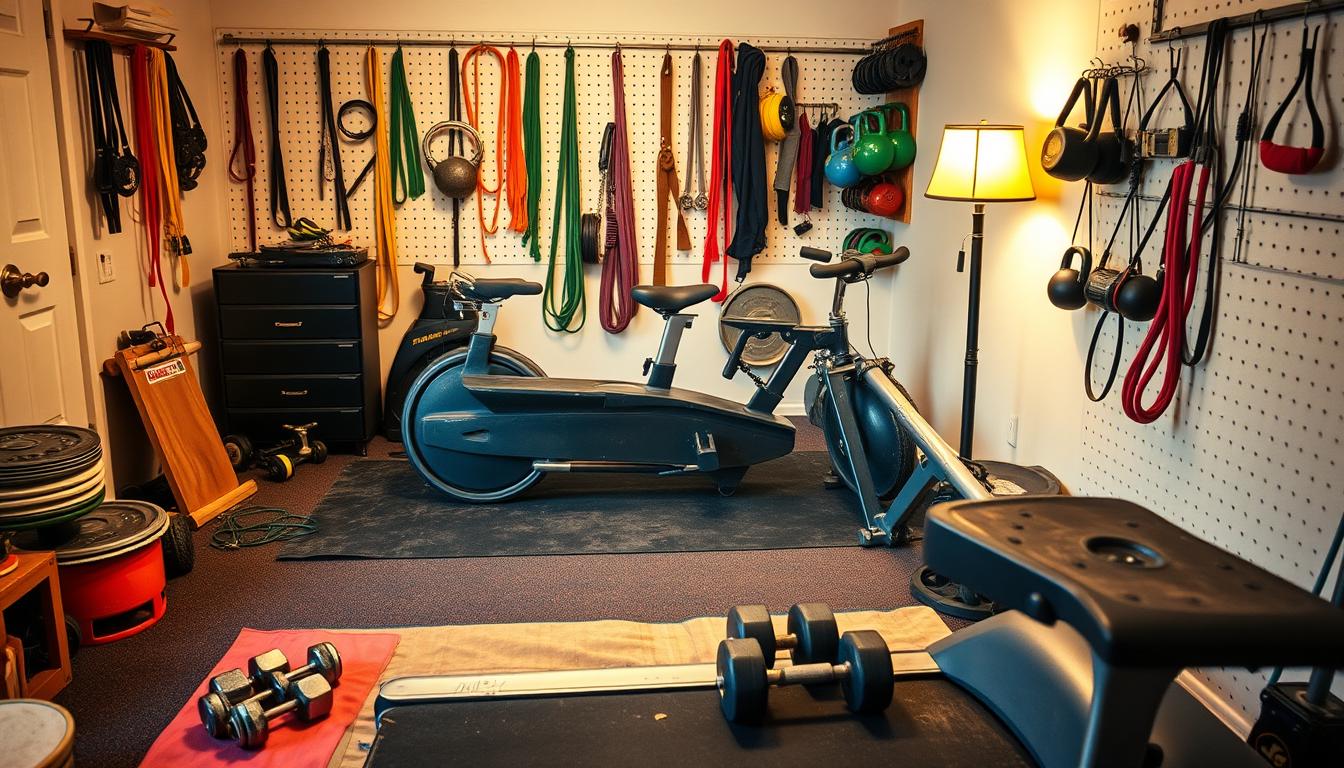
The Wall Control Pegboard lets you store weights, resistance tubes, and foam rollers in a customizable way. Add cube shelves for stacking kettlebells or dumbbells. This setup makes a storage wall from floor to ceiling, perfect for small spaces.
Tension Rod Hacks
Use tension rods between walls to hang resistance bands or jump ropes. Hang shoe organizers with clear pockets for small items like grip strengtheners or workout gloves. These cheap finds keep your floor clear of clutter.
Multi-Purpose Equipment Uses
Using gear for more than one thing saves money and space. Yoga blocks aren’t just for stretching; flip them to make push-up platforms that ease wrist strain. Folded towels can be sliders for exercises like mountain climbers or hamstring curls.
Furniture Conversions
Sturdy chairs can become tricep dip stations or step-up platforms. A weight bench can also be a meditation seat or temporary shelf. Always check furniture weight limits before using it for exercise.
Adjustable Dumbbell Tricks
Adjustable dumbbells can be doorstops, bookends, or anchors for resistance bands. Their small size is perfect for tight spaces. Switch them between workout and household use to get the most value.
By using vertical storage like the Wall Control Pegboard and multi-use gear, you can make an inexpensive fitness space seem bigger. These tips show you don’t need a big room – just smart ideas.
Budget-Friendly Flooring Options
Your home gym’s foundation is key—it protects your joints and saves money. The right flooring absorbs shock, cuts down on noise, and lasts through daily workouts without costing too much. We’ll look at two affordable options that are both practical and effective.
Interlocking Foam Tiles
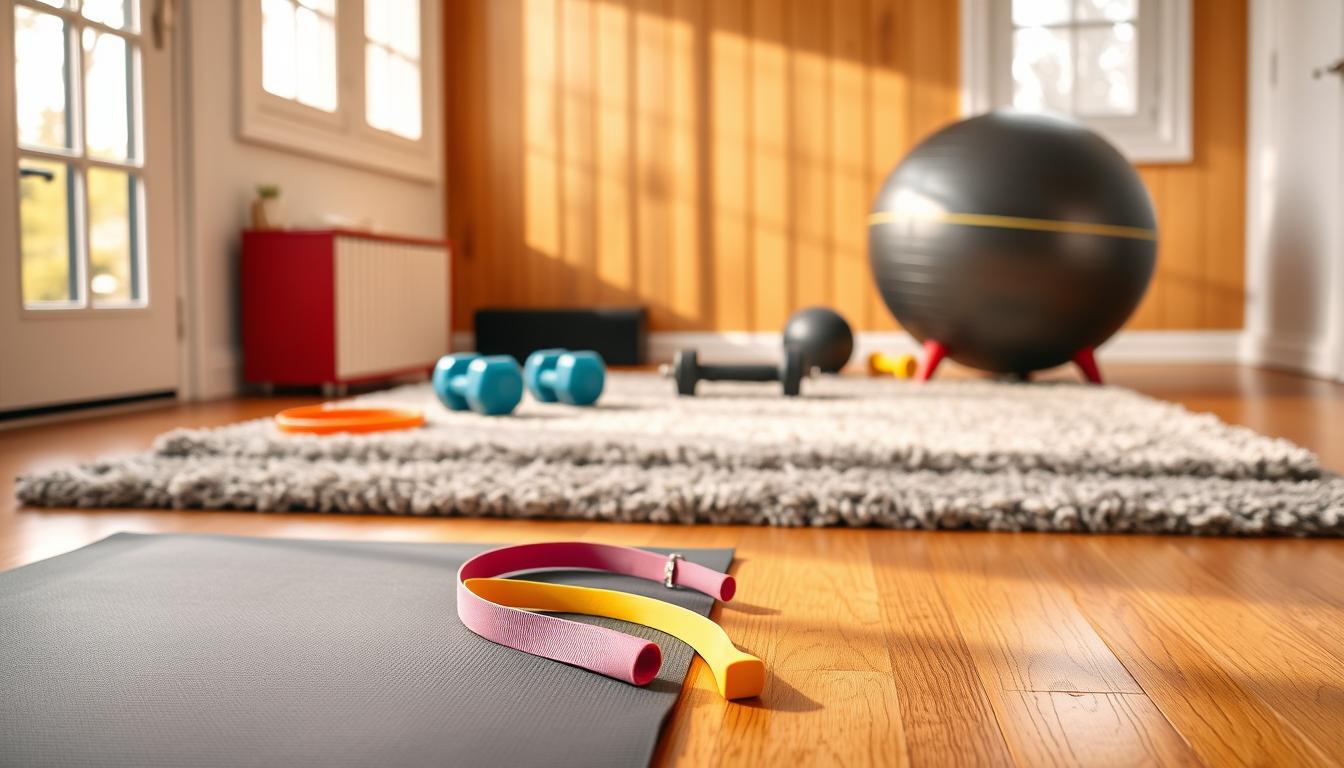
ProsourceFit Puzzle Mat installation is quick, taking under 30 minutes. These 24″x24″ tiles fit together like LEGO® blocks, covering your space smoothly. Use a utility knife to trim edges for a perfect fit around your equipment.
Cost comparison per square foot
| Material | Price/sq ft | Durability | Noise Reduction |
|---|---|---|---|
| ProsourceFit Tiles | $1.25 | 3-5 years | High |
| Stall Mats | $1.80 | 10+ years | Medium |
| Area Rugs | $0.90 | 1-2 years | Low |
Area Rug Alternatives
Thick woven rugs with non-slip rug pad essentials keep you steady during intense workouts. Choose pads with rubberized grips to make your rug last longer. “Stall mats from tractor supply stores offer industrial-grade durability at half the price of fitness-specific options,” a home gym enthusiast shared.
Cleaning maintenance tips
- Vacuum foam tiles weekly to prevent dust buildup
- Spot-clean rugs with vinegar-water mix (1:3 ratio)
- Rotate rugs quarterly for even wear
Lighting and Atmosphere
Your low-cost exercise room’s vibe is all about the lighting. Good lighting boosts motivation and safety. It turns small spaces into great places to work out. Here are some ways to brighten up your room without spending a lot.
Natural Light Maximization
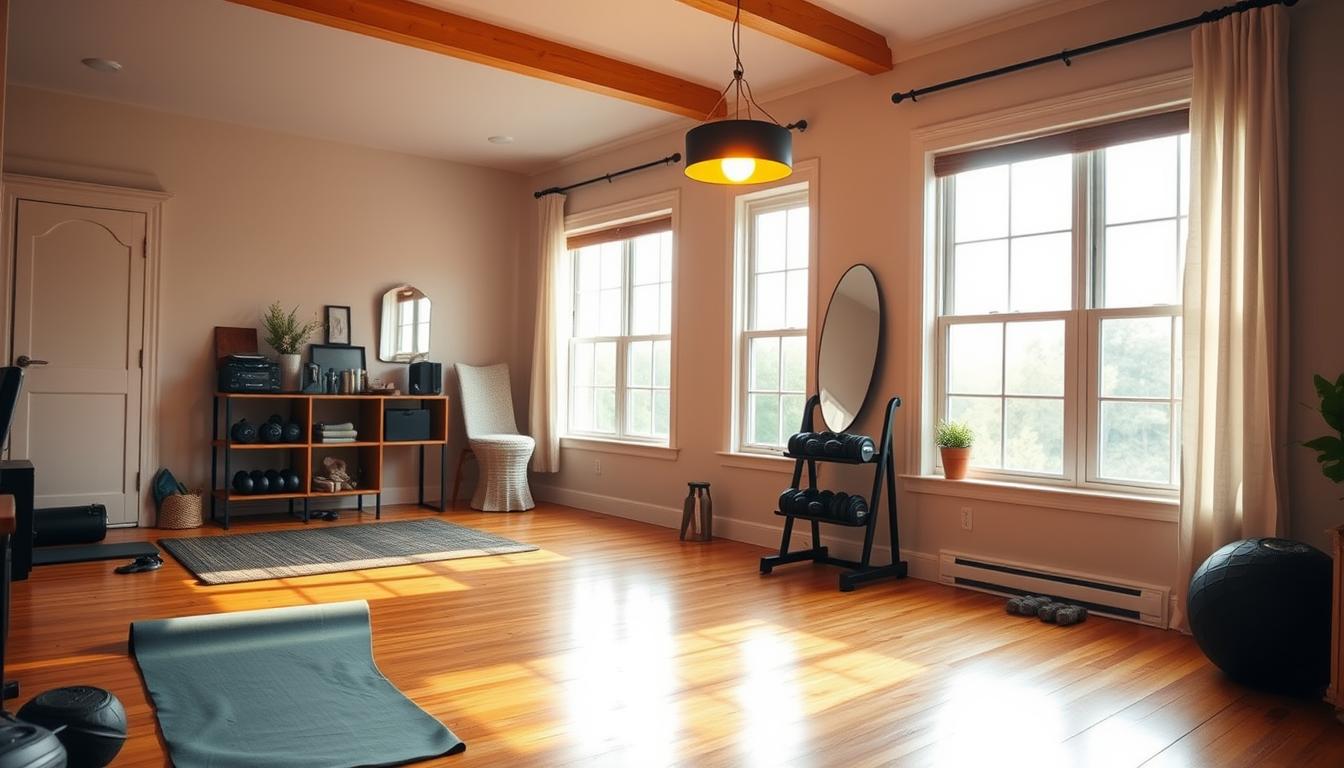
Place a full-length mirror ($90 or less at discount retailers) opposite windows. This trick lets in more sunlight, perfect for small spaces. For privacy and brightness, try these tips:
Mirror Placement Strategies
- Angle mirrors to reflect light toward workout equipment
- Use adhesive strips to mount mirrors safely on garage doors
- Combine multiple small mirrors for wall-sized coverage
Sheer Curtain Alternatives
Replace expensive blinds with double-layered shower curtains from dollar stores. These curtains soften glare and keep things bright. They’re great for yoga in the daytime.
Motivational Decor Hacks
Turn thrift store finds into tools to track your progress. A $5 picture frame can become a DIY whiteboard with printable habit trackers. For inspiration:
| Free Poster Source | Style | Download Size |
|---|---|---|
| Fitness Bloggers | Workout Charts | 8.5″ x 11″ |
| Library Printables | Inspirational Quotes | 11″ x 17″ |
| Community Centers | Exercise Diagrams | 18″ x 24″ |
DIY Progress Tracking Boards
Paint old windowpanes with chalkboard paint for customizable rep counters. Use colored magnets to mark personal records. It’s a visual reward system that costs under $10.
Free Fitness Poster Sources
Local recreation departments often give out free exercise guides. Digital options include:
- Government health websites
- University kinesiology departments
- YouTube creator freebie packs
Long-Term Budget Planning
Creating an inexpensive fitness space is more than saving money upfront. It’s about smart financial planning for the long run. With careful upgrades and maintenance, your home gym can grow without costing too much. Let’s explore how to keep costs low while maintaining quality.
Equipment Upgrade Roadmap
Begin by focusing on upgrades based on how often you use them. Keep track of when things need to be replaced in a spreadsheet. This way, you can avoid unexpected costs and save for better items.
Priority Purchase Timeline
- Year 1: Replace resistance bands and foam rollers
- Year 2: Upgrade dumbbells or kettlebells
- Year 3: Invest in a multi-functional bench
Holiday Sale Calendar
- July: Amazon Prime Day (best for tech gadgets)
- November: Black Friday (weights and racks)
- December: New Year’s sales (yoga mats and accessories)
Maintenance Cost Forecasting
Set aside $5-$10 each month for maintenance. This will cover:
Replacement Part Budgeting
- $3/month for treadmill belts or resistance band clips
- $2/month for weight plate grips
Cleaning Supply Expenses
- Disinfectant wipes: $4/month
- Microfiber towels: $1.50/month
By planning upgrades during sales and tracking your spending, your inexpensive fitness space will last for years. As one Reddit user noted: “Saving $15 monthly for upgrades let me swap worn-out gear without stress.”
Conclusion
Creating a budget-friendly home gym shows you don’t need to spend a lot on fitness. By using smart space planning and finding deals, you can make a great workout area for $100. Jamie Ray’s garage transformation is a great example, starting with resistance bands and growing into a full gym.
Local communities help you grow your gym. Sites like Reddit and Nextdoor offer free swaps and storage tips. Use apps to find deals on equipment as your gym grows. A 2023 study found 68% of users expanded their gyms in six months by saving money.
Share your home gym story on Instagram with #BudgetGymBuilds. What $20 find made a big difference? Maybe your old coffee table can become a weight bench. Your ideas could help someone else start their fitness journey.