Did you know that the average American spends 37 minutes daily preparing meals? That adds up to over 225 hours a year—time you could reclaim with smart planning. Batch cooking lets you enjoy flavorful, low-carb meals without the daily hassle.
A solid meal prep plan slashes kitchen time while keeping nutrition on track. By roasting proteins and veggies in bulk, you create versatile bases for multiple dishes. One-pot techniques and strategic seasoning ensure variety without extra effort.
Busy professionals and families love this approach. Imagine having 4-5 days of dinners ready in 60 minutes. No more last-minute takeout or repetitive meals. With eight adaptable recipe combos, you’ll dodge cooking fatigue and food waste effortlessly.
Key Takeaways
- Batch cooking saves hours each week with minimal effort.
- Low-carb meals stay exciting with mix-and-match ingredients.
- One-hour prep delivers 4-5 days of balanced dinners.
- Strategic techniques like sheet-pan roasting maximize efficiency.
- Fewer grocery trips and less food waste save money.
Why Meal Prep Low-Carb Dinners?
Cutting carbs doesn’t mean sacrificing flavor or convenience—meal prep makes it effortless. By planning ahead, you control ingredients and portions while saving time. Less than 14g net carbs per serving keeps meals balanced without energy crashes.
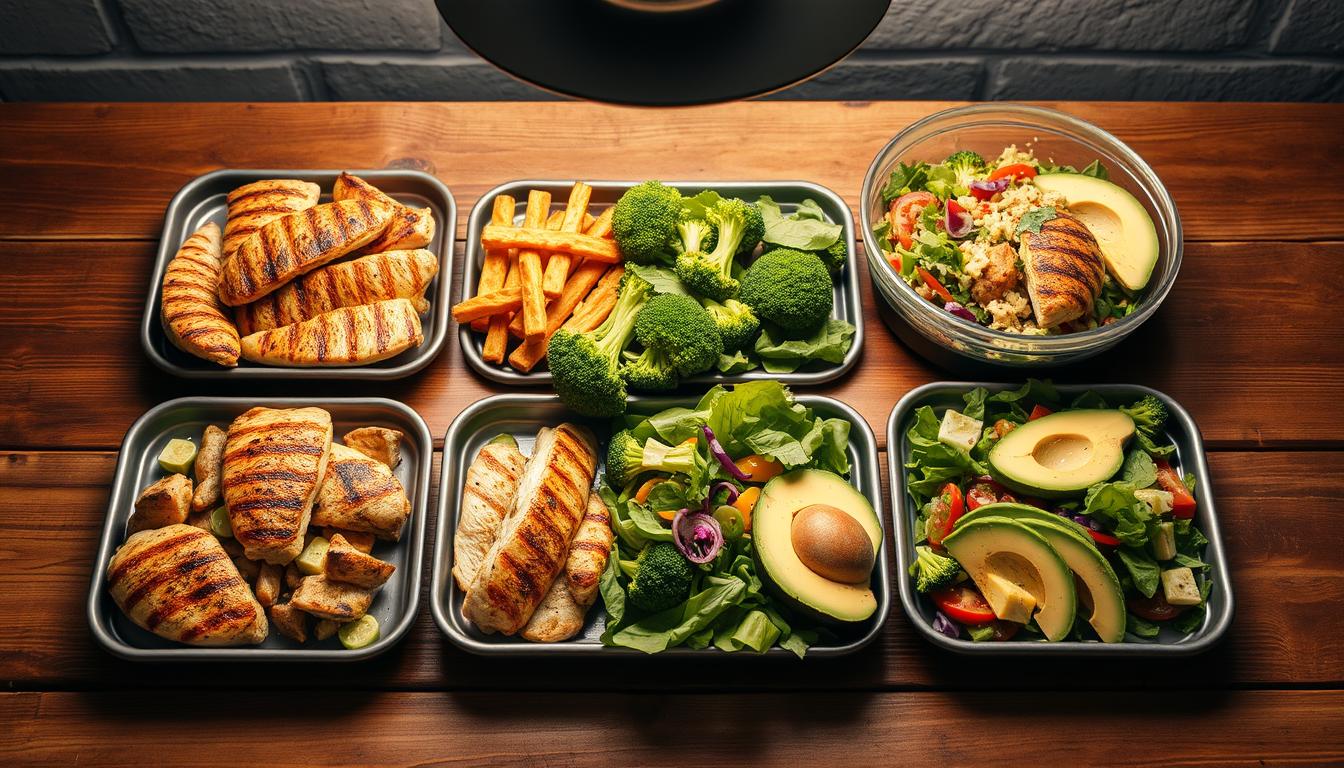
Low-carb diets support weight management and steady blood sugar levels. They also optimize muscle growth by prioritizing proteins and healthy fats. Batch cooking amplifies these benefits by ensuring consistency across your week.
Prepping 4-5 days of meals slashes grocery trips and reduces food waste. Rotisserie chickens, for example, can transform into salads, soups, or wraps. Frozen proteins and pre-cut veggies simplify single-serving prep—no advanced skills needed.
“I use pre-cut veggies and frozen salmon. Ten minutes of assembly, and I’ve got lunches for three days.”
Think beyond dinners: cooked proteins and roasted veggies work for lunches too. A single sheet-pan roast yields versatile bases for bowls, wraps, or stir-fries. Efficiency meets variety, keeping your week flavorful and stress-free.
Essential Ingredients for Low-Carb Meal Prep
Smart ingredient choices are the foundation of efficient low-carb cooking. Focus on versatile staples that save time and maximize flavor. With the right mix, you’ll build meals in minutes all week.

Proteins
Chicken, salmon, and plant-based options like tofu are ideal for batch cooking. Buy in bulk and freeze individual portions for flexibility. Pre-cooked rotisserie chicken or frozen shrimp streamline prep even further.
Vegetables
Prioritize cruciferous veggies like broccoli and Brussels sprouts—they hold up well when prepped ahead. Leafy greens (kale, spinach) and colorful bell peppers add variety. For efficiency, grab pre-sliced bags or frozen mixes.
Pantry Staples
Stock up on olive oil, garlic powder, and chili flakes for instant flavor. Low-carb sauces (think Primal Kitchen dressings) elevate simple dishes. Don’t forget onions and carrots for base flavors in soups or stir-fries.
- Storage hack: Line containers with paper towels to keep blanched veggies crisp.
- Budget tip: Swap fresh cabbage for bagged coleslaw mix—same crunch, less work.
How to Cook a Week’s Worth of Low-Carb Dinners in Under an Hour
Mastering time-saving techniques turns one hour into five days of dinners. Start by boiling water first—this primes your stovetop for blanching veggies while proteins roast. Simultaneously, preheat the oven to 425°F for efficient cooking.

Optimize oven space by roasting chicken and salmon together on separate trays. Reuse the trays for veggies later, minimizing cleanup. For extra crispiness, crank the heat to 475°F for potatoes or sweet potatoes.
Blanch broccoli or green beans for just 90 seconds. This preserves crunch and nutrients while cutting weeknight prep time. Drain and shock them in ice water to lock in color and texture.
Use a rice cooker to prepare cauliflower rice or quinoa in bulk. These bases streamline grain bowl assembly later. While proteins roast, chop herbs or whisk sauces—maximizing every minute.
“I roast two proteins at once, then repurpose them into tacos, salads, or stir-fries. Game-changer.”
Store components separately to maintain freshness. Label containers with reheating instructions for grab-and-go meals. With this workflow, you’ll spend less time cooking and more enjoying flavorful dishes.
Efficient Cooking Methods
Smart techniques let you cook once and eat well all week. By mastering a few time-saving methods, you’ll transform ingredients into multiple meals with minimal effort. Focus on batch prep, strategic tools, and hands-off cooking to maximize results.

Batch Cooking Proteins
Roast chicken and salmon together at 425°F for 15-25 minutes. Use separate sheet pans to prevent flavor mixing. Shredded meat works for tacos, salads, or grain bowls—versatility saves time.
For hands-off options, try a smoker or crockpot. “Set it and forget it” methods like pulled pork or chili deliver flavor without constant monitoring.
Blanching Vegetables
Boil one pot of water for broccoli (90 seconds), carrots (3 minutes), and kale (2 minutes). Ice-water shocking preserves crunch and color. Prepped veggies stay fresh for 4-5 days.
Add sliced peppers or chili flakes for extra flavor. Microwave steamers speed up reheating without sogginess.
One-Pot Techniques
Simmer coconut chicken soup or skillet Buffalo chicken for minimal cleanup. These dishes combine proteins, veggies, and sauces in a single pan—ideal for busy nights.
Tools like the Optigrill ensure perfect proteins every time. Pair with pre-chopped peppers or frozen stir-fry mixes for a 10-minute meal.
Time-Saving Meal Prep Strategies
Streamlining your kitchen routine starts with smart meal prep strategies. Dedicate a power hour weekly—Sunday afternoons work best—to prep ingredients for stress-free dinners. With the right prep plan, you’ll slash cooking time and boost flavor.
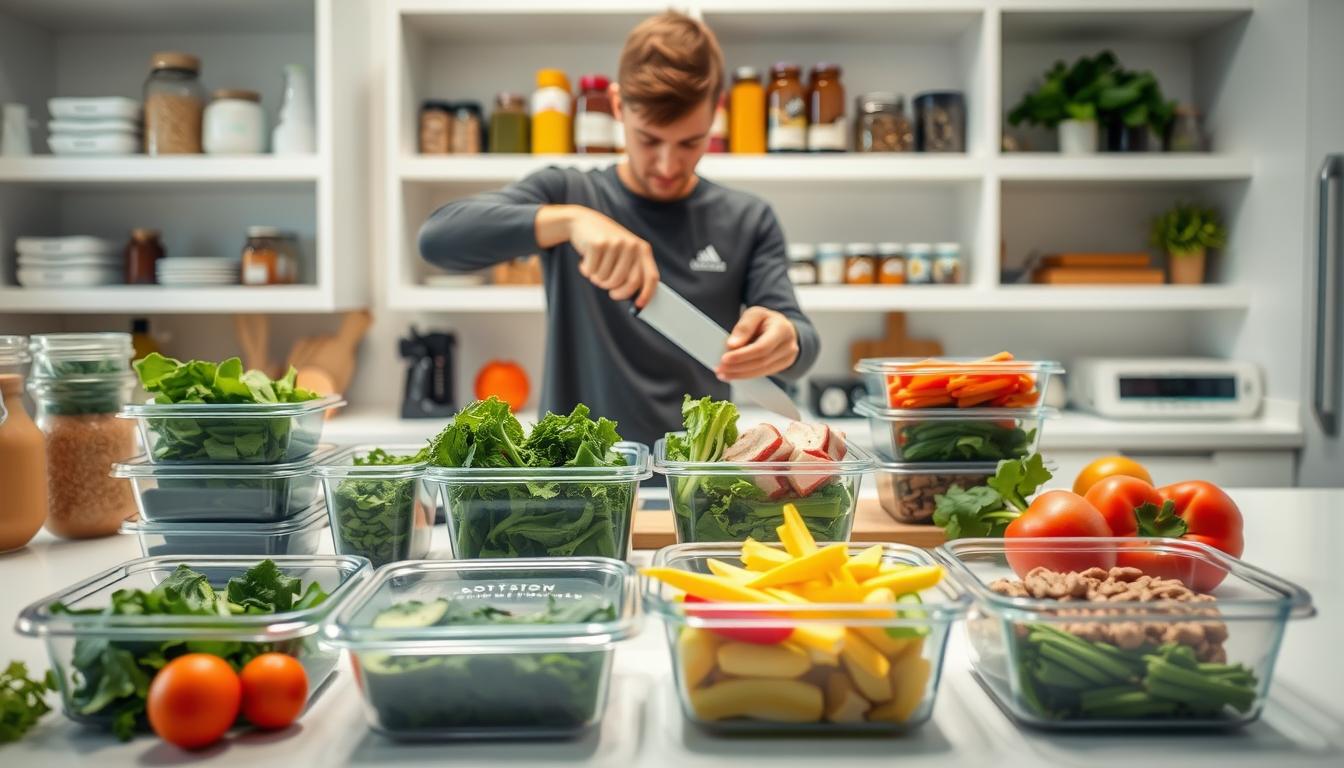
Pro Tip: Use store-bought gochujang or teriyaki to make sauces instantly. No blending required—just mix with proteins or veggies.
- Batch-cook components: Roast chicken, blanch broccoli, and portion dips in two hours. Store in glass containers for easy reheating.
- Multi-use ingredients: Pickled onions elevate salads, tacos, and grain bowls. One prep, three meals.
- Repurpose leftovers: Shred roasted chicken for stir-fries or fold into lettuce wraps.
Pre-wash veggies and use frozen cauliflower rice to skip chopping. Label containers with dates to track freshness. A little planning delivers big rewards.
“I prep sauces and proteins on Sundays. Weeknights become 10-minute assembly jobs.”
With these hacks, your power hour fuels a week of delicious, low-effort meals. Efficiency meets flavor—every time.
Delicious Low-Carb Meal Combinations
Transform your weekly dinners with these flavorful low-carb combos. Each dish balances protein, veggies, and bold flavors—perfect for quick assembly. Customize with *cheese*, *baby spinach*, or spicy sauces to suit your taste.
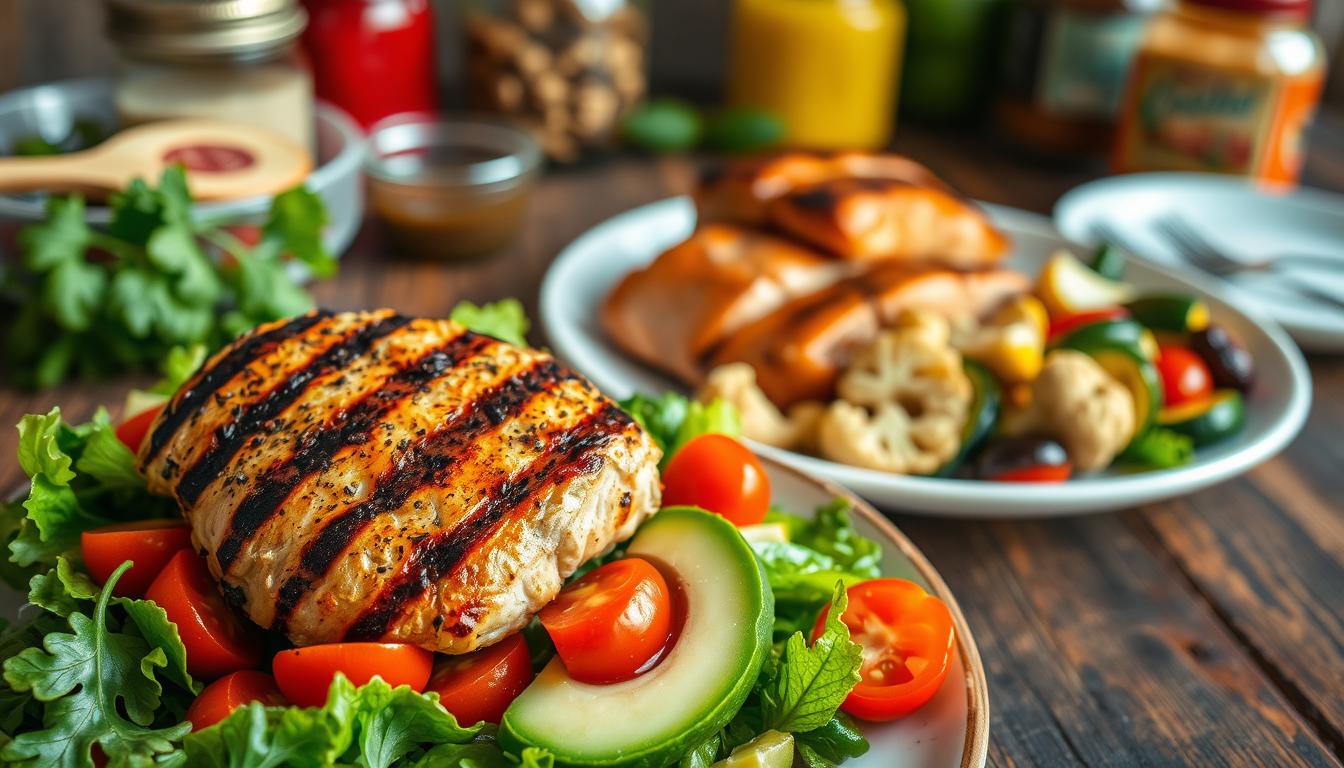
Mediterranean Salad
Arugula, roasted *red peppers*, and crumbled feta *cheese* create a vibrant base. Add balsamic chicken for protein. Drizzle with olive oil and lemon for a tangy finish.
Pro Tip: Swap arugula for *baby spinach* if preferred. Store dressing separately to keep greens crisp.
Teriyaki Salmon Bowl
Flaky salmon pairs with steamed broccoli and cauliflower rice. Top with *sesame seeds* and a dash of chili crisp. Use store-bought teriyaki for a 5-minute sauce.
Make It Vegetarian: Replace salmon with crispy tofu or tempeh.
Kimchi Rice Bowl
Shredded chicken, spicy *kimchi*, and gochujang sauce pack a punch. Serve over cauliflower rice and garnish with *avocado* slices. A sprinkle of *sesame seeds* adds crunch.
| Meal | Protein | Veggies | Net Carbs |
|---|---|---|---|
| Mediterranean Salad | Chicken | Arugula, Peppers | 8g |
| Teriyaki Salmon Bowl | Salmon | Broccoli | 10g |
| Kimchi Rice Bowl | Chicken | Kimchi, Avocado | 12g |
“The kimchi bowl is my go-to—spicy, filling, and ready in minutes.”
Flavor Boosters: Keep sriracha, Nando’s sauce, or homemade pesto on hand. They elevate simple ingredients without extra carbs.
Storing and Reheating Your Meals
Proper storage keeps your prepped meals fresh and flavorful all week. Use wide, flat containers for proteins like chicken or salmon—they cool faster and stack neatly in the fridge. Line veggie containers with paper towels to absorb moisture and prevent sogginess.
Glass containers outperform plastic. They resist odors and simplify microwave reheating. Store proteins and veggies separately to maintain texture. Pre-portioned soups? The freezer is your friend—they’ll last up to 30 days.
- Reheat salmon gently: Use 30-second increments to avoid drying.
- Label everything: Dates and contents prevent guesswork.
- Mason jar salads: Layer dressing at the bottom, greens on top.
“Glass containers changed my meal prep—no more lingering smells or stained plastic.”
For grab-and-go ease, keep a section of your fridge dedicated to prepped meals. Rotate older items forward to minimize waste. With these tricks, your power hour pays off all week.
Conclusion
Your kitchen can become a time-saving powerhouse with the right strategies. Multitask oven and stovetop to roast proteins while blanching veggies—all in one power hour. Mix and match ingredients for global flavors, like Mexican fajitas or Thai-inspired bowls.
Stick to your meal prep plan for long-term wins: healthier choices, less stress, and more savings. Prepped low-carb meals mean no last-minute takeout temptations.
Ready to streamline your routine? Grab our free grocery list and start your next prep session today.