Did you know that 31% of adults worldwide don’t meet recommended activity levels? A 2020 study revealed the average person spends nearly 8 hours sitting daily. This sedentary lifestyle increases risks for chronic diseases and drains energy.
Building a fitness habit at home solves common barriers like gym intimidation or tight schedules. Companies like Peloton saw a 66% sales jump as more people embraced convenient exercise options. The right routine boosts mood, strength, and overall health.
This guide helps you design a plan that sticks. You’ll learn simple ways to stay motivated and see real results—no equipment needed.
Key Takeaways
- Global inactivity rates highlight the need for accessible fitness solutions
- Home workouts eliminate common barriers like time and gym anxiety
- Regular movement reduces disease risk and improves mental clarity
- Post-pandemic trends show lasting demand for flexible exercise options
- Consistency matters more than intensity for long-term success
Understanding the Importance of a Sustainable At-Home Routine
Sitting for hours daily silently harms your body in measurable ways. A 2020 study linked prolonged inactivity to obesity, heart disease, and anxiety. Yet just 150 minutes of weekly movement—as the WHO recommends—can reverse these risks.
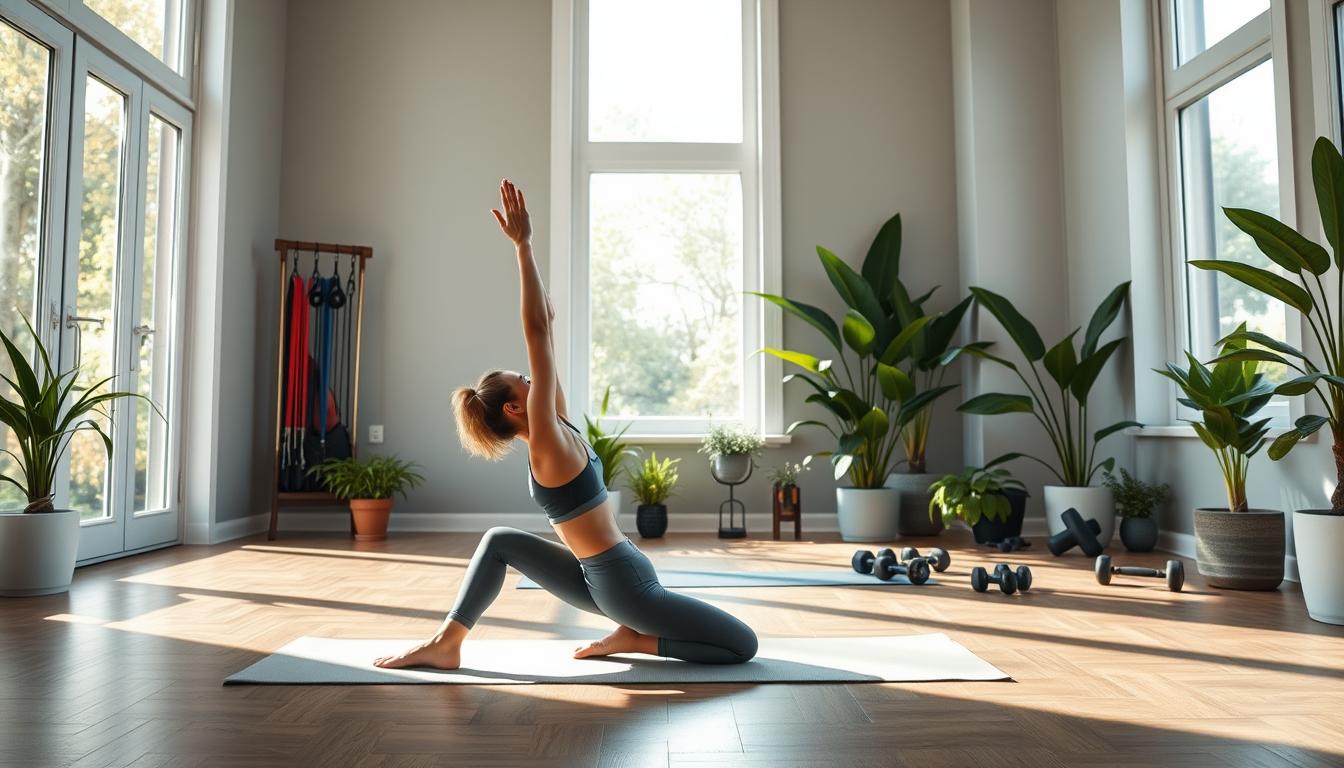
Your fitness journey should feel like a marathon, not a sprint. Quick fixes fade, but small, consistent actions build health that lasts decades. Think of movement as a part of your day, like brushing your teeth.
Remote work blurred lines between home and office, making workouts harder to prioritize. Equipment shortages pushed many to creative solutions—stairs instead of treadmills, soup cans as weights. Adaptability is key.
Researchers identify three exerciser profiles:
- Resisters: Fear starting due to past failures.
- Honeymooners: Burn out after intense bursts.
- Consistent: Focus on gradual progress.
The best routine fits your life, not the other way around. Over years, those who embrace moderation see stronger bodies and sharper minds.
Overcoming Fitness Resistance: Common Fears and Solutions
Breaking through mental barriers is the first step to lasting change. Many avoid exercise due to unaddressed fears—of failing, being judged, or getting hurt. Yet, these obstacles fade with the right approach.

Fear of Failure: Start Small, Win Big
Past gym attempts don’t define you. Reframe them as mismatches with that environment. Home workouts let you control the pace.
Try these tips:
- Begin with 10-minute sessions—consistency beats intensity.
- Explore joyful movement (dance, yoga) via apps like Movement@Home.
- Celebrate tiny wins: “I moved today” counts.
Fear of Judgment: Your Space, Your Rules
Peloton’s 66% app growth proves many prefer privacy. At home, you decide the music, attire, and effort level.
Build confidence:
- Close the curtains or use a privacy screen.
- Join online communities with zero-tolerance for shaming.
Fear of Injury: Move Smart, Stay Safe
Soreness (DOMS) is normal; sharp pain isn’t. Learn the difference to avoid setbacks.
Prevent harm:
- Warm up for 5 minutes—dynamic stretches work best.
- Modify moves: Knee push-ups > risking shoulder strain.
- Hydrate and rest—muscles repair when you sleep.
Setting SMART Goals for Your Home Workouts
Clear objectives transform random movements into real results. A plan with specific targets keeps you accountable and motivated. Research shows people who track progress are 42% more likely to maintain routines.
Defining Specific, Measurable Objectives
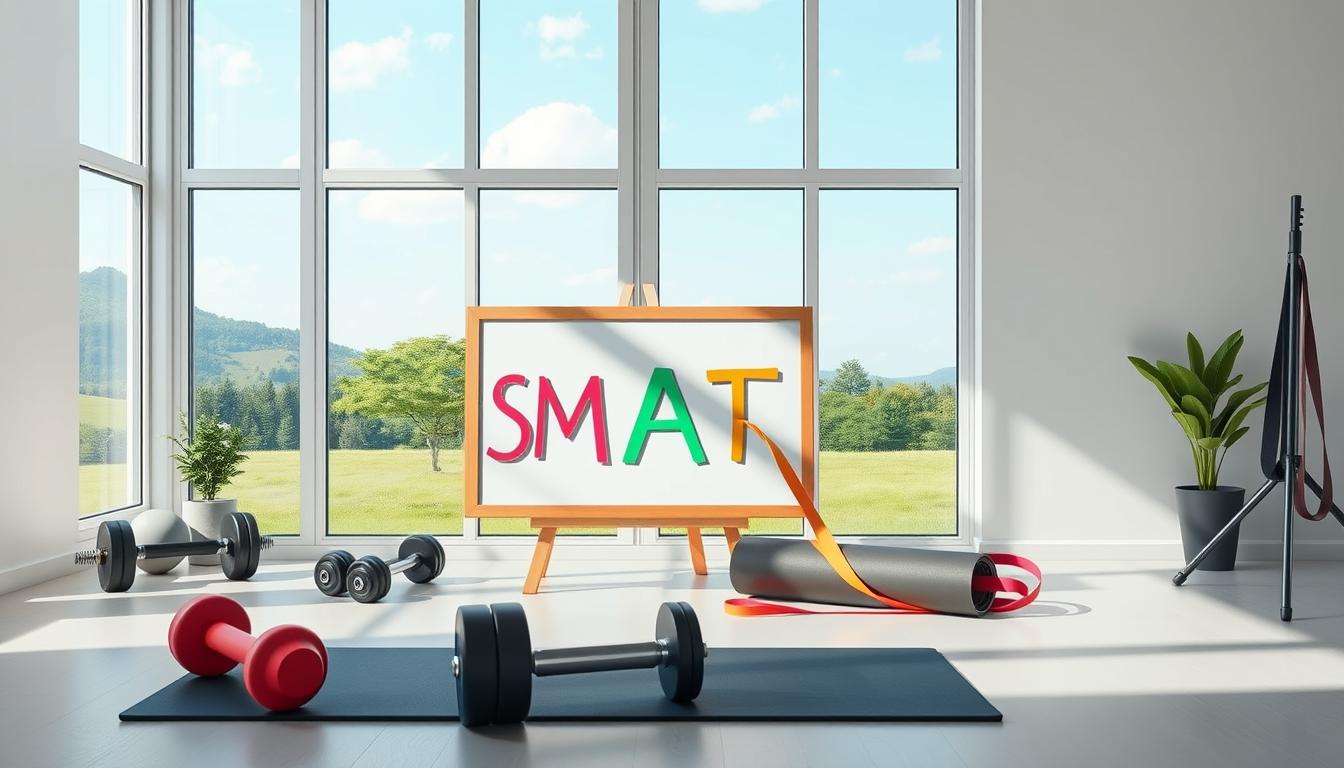
Vague goals like “get fit” often fail. Instead, try “Walk 20 minutes, 3 times per week for one month.” This SMART approach gives clear success markers.
- Count steps or monitor heart rate with wearables
- Stack habits—do calf raises while brushing teeth
- Try 5-minute “exercise snacks” between meetings
“What gets measured gets managed.”
Tracking Progress with Apps or Journals
Tools like MyFitnessPal simplify logging. Apple Health automatically syncs activity data. For deeper insights, Signos CGM tracks how workouts affect blood sugar.
Journal prompts help track non-physical wins:
- Energy levels post-workout (1-10 scale)
- Sleep quality improvements
- Mood changes throughout the week
Review your progress every two weeks. Adjust goals as needed—consistency beats perfection every time.
Designing a Balanced At-Home Workout Plan
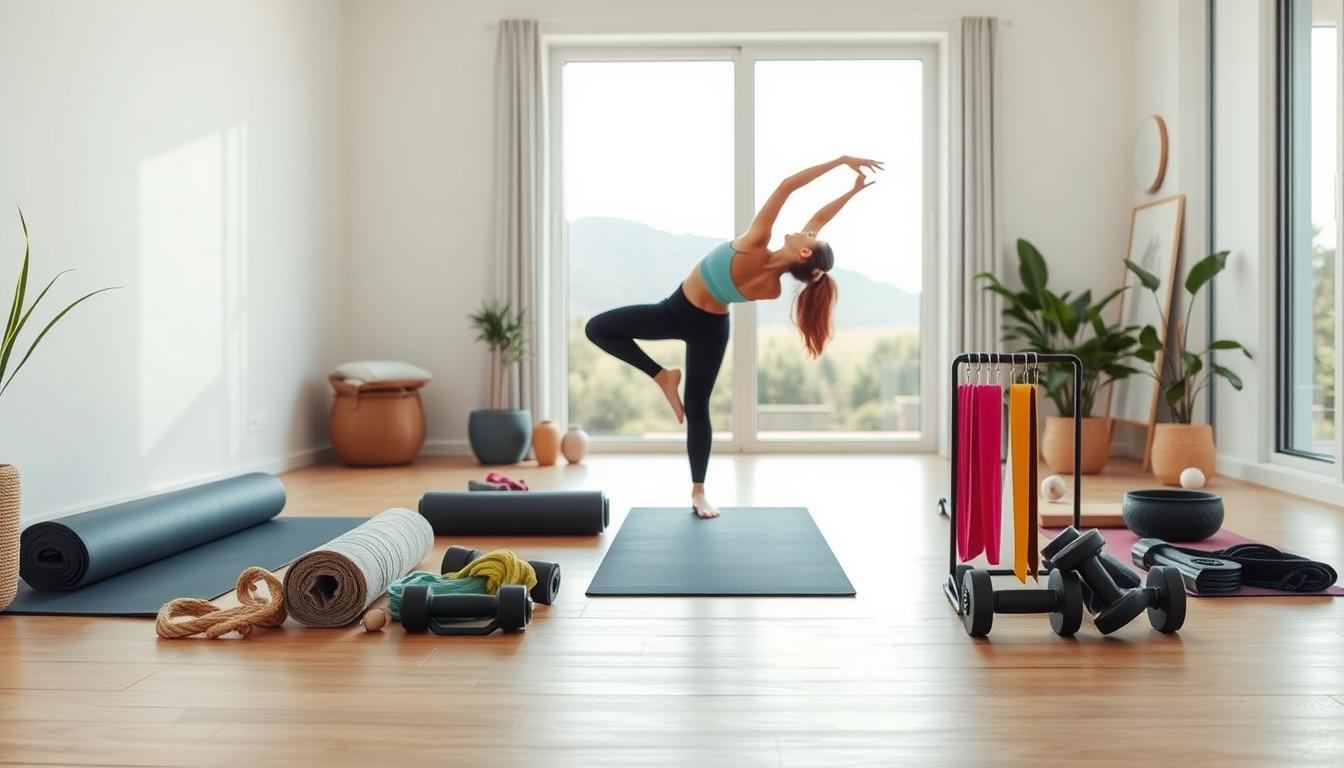
Balance is the secret to long-term success in any fitness journey. Your body thrives when you mix different exercise types throughout the week. This approach prevents plateaus and reduces injury risk.
Cardiovascular Exercises for Home
Heart-pumping cardio improves endurance and burns calories. You don’t need fancy equipment to get your heart rate up.
- Dance to YouTube tutorials—fun way to clock 30 minutes
- Stair circuits: 3 minutes up/down = 1 set
- Jump ropes burn 15+ calories per minute
For under $200, air resistance rowers provide full-body conditioning. They’re quieter than treadmills and fold for storage.
Strength Training Without a Gym
Strength training builds lean muscle that boosts metabolism. Bodyweight exercises work surprisingly well when done correctly.
- Push-up variations (knee, incline, diamond)
- Squat pulses for leg endurance
- Plank rotations for core stability
“Progressive overload—adding reps or difficulty weekly—triggers muscle growth.”
Incorporating Flexibility and Recovery
Stretching and recovery days prevent injuries and improve performance. Aim for 10 minutes of flexibility work after each session.
- Yoga flows enhance mobility
- Foam rolling reduces muscle tightness
- Rest days allow tissue repair
Sample weekly plan:
| Day | Focus | Duration |
|---|---|---|
| Monday | Strength (upper body) | 25 min |
| Wednesday | Cardio (dance/jump rope) | 30 min |
| Friday | Strength (lower body) | 25 min |
| Sunday | Flexibility (yoga/stretching) | 20 min |
Essential Equipment for a Home Gym (On Any Budget)
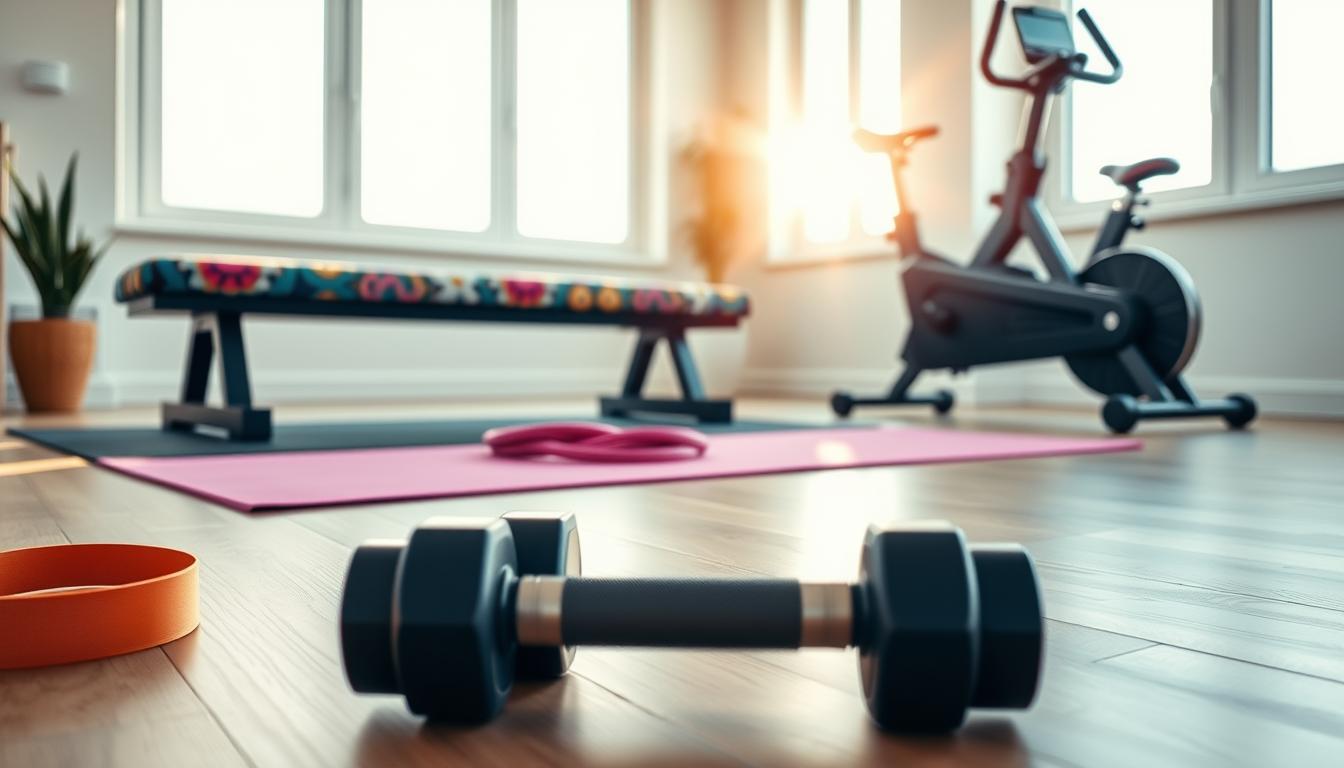
Building a home gym doesn’t require breaking the bank or sacrificing space. With smart choices, you can create an effective workout area for under $50 or scale up to professional-grade equipment. The key is selecting versatile tools that match your fitness level and goals.
Low-Cost Tools: Resistance Bands and Bodyweight
Resistance bands deliver gym-quality results at a fraction of the cost. Rubber versions last longer for intense training, while fabric bands offer comfort for rehabilitation. Both types provide 5-50 pounds of adjustable resistance.
Bodyweight exercises require zero equipment but yield impressive results. Try these space-efficient moves:
- Push-up variations (wide, narrow, staggered)
- Chair dips for triceps strength
- Wall sits for leg endurance
DIY weights work surprisingly well. Fill a tote bag with books for bicep curls or use water bottles for shoulder presses. Reddit users swear by furniture sliders for core exercises on hardwood floors.
Investing in Versatile Gear: Dumbbells and Yoga Mats
Adjustable dumbbells save space while offering weight ranges from 5-50 pounds. The Bowflex SelectTech 552 model replaces 15 pairs of traditional dumbbells. Though pricier upfront, they’re cost-effective long-term.
A quality yoga mat protects joints and prevents slips. Compare these top options:
| Model | Thickness | Price | Best For |
|---|---|---|---|
| Manduka PRO | 6mm | $120 | Professional yogis |
| Amazon Basics | 1/2″ | $25 | Budget-conscious users |
| Lululemon The Reversible | 5mm | $78 | Hot yoga sessions |
Doorway pull-up bars ($30) and foldable treadmills ($400) maximize small areas. Remember: the best equipment is what you’ll actually use consistently.
“Invest in tools that grow with your fitness journey, not just your current ability.”
Whether you spend $50 or $500, the right home setup makes workouts more effective. Start small, focus on multi-purpose items, and upgrade as your routine evolves.
Staying Motivated and Consistent
The secret to lasting fitness isn’t willpower—it’s smart systems. Research shows consistency beats intensity when building exercise habits. Your environment and daily routines play bigger roles than momentary motivation.
Habit Stacking and Micro Workouts
Pair exercise with existing routines to bypass resistance. Try calf raises while brushing teeth or wall sits during phone calls. These “exercise snacks” provide real benefits—a 2022 study found three 5-minute bursts daily improve cardiometabolic health.
Use the 5-minute rule: commit to just 300 seconds of movement. Most people continue longer once started. Effective micro-workouts include:
- Stair sprints between Zoom meetings
- Resistance band pulls during TV ads
- Yoga flows before morning coffee
“Small efforts compound into massive results when repeated daily.”
Creating a Supportive Environment
Your space should pull you toward movement. Fitness mirrors like Mirror and Tonal create immersive environments with live classes. For low-tech solutions:
- Designate a workout zone with proper lighting
- Use scent diffusers (peppermint boosts energy)
- Curate high-BPM playlists for cardio days
Social accountability matters. Join virtual groups through platforms like Obé Fitness. Gamification apps turn consistency into rewards:
| App | Approach | Best For |
|---|---|---|
| Zombies, Run! | Story-driven audio adventures | Outdoor runners |
| FitRPG | XP points for workouts | Gamers |
Track progress visually. Monthly photos show changes your scale misses. Remember: fitness is a part of life, not an all-or-nothing pursuit. Small steps taken consistently create lasting change.
Conclusion: Commit to Long-Term Success
Transforming your space into a fitness haven starts with commitment. Your body needs about 12 weeks to adapt—focus on showing up consistently during this three-month period. Upgrade equipment gradually as you progress, letting your workout routine evolve naturally.
Remember: your living room doubles as a wellness lab now. Tools like Signos CGM help track how movement improves metabolic health over years. This data-driven way reinforces why consistency matters more than intensity.
“Movement is medicine you prescribe yourself daily.” Small wins today build the long-term success you deserve. Keep going—your future self will thank you.