Did you know a 20-minute CrossFit AMRAP workout burns 23% more calories than running on a treadmill? Researchers at Kennesaw State University found this out. They compared bodyweight exercises to steady-state cardio and found bodyweight exercises better for losing fat and building muscle in less time.
Fitness experts like Peloton’s Rad Lopez say being consistent is key: “I built strength with 200 daily push-ups—no gym required.” This method uses progressive overload, which means you do more reps or harder exercises as you get stronger. You can do these workouts anytime, whether it’s during your lunch break or turning your living room into a gym.
Bodyweight exercises work many muscles at once, improving balance and strength. Unlike treadmill workouts, exercises like burpees and lunges work your core and raise your heart rate. Plus, you save money and time by not needing to go to the gym.
Key Takeaways
- High-intensity bodyweight workouts burn calories faster than traditional cardio
- Progressive overload techniques require zero equipment for continued progress
- Expert-recommended routines can be done in limited spaces
- Combined strength and cardio benefits save workout time
- Adaptable for all fitness levels through modified movements
The Science Behind Bodyweight Training Effectiveness
Why are bodyweight workouts so effective? Studies show they can be as good as gym equipment. They use gravity and controlled movements to work many muscles at once. This boosts your functional strength.
Muscle Activation Patterns
Studies using electromyography (EMG) show bodyweight exercises work muscles just as well as weights. A Physiology & Behavior study found push-ups are almost as good as bench presses for chest muscles.
“Bodyweight exercises create comparable muscle recruitment when performed through full ranges of motion,” researchers noted.
Neuromuscular Adaptation Process
Your body changes to handle new challenges. An 8-week study found people got 14% more upper-body strength with daily press-ups. This is as good as using barbells, showing your body adapts to any resistance.
Caloric Expenditure Rates
High-intensity bodyweight exercises burn calories fast. Burpees, for example, burn about 10 calories per minute – 30% more than weight training. This is because they:
- Work many muscles at once
- Keep your heart rate up
- Use oxygen after working out
This makes bodyweight training great for building lean muscle and burning fat.
Creating Your Custom Bodyweight Program
Starting a bodyweight workout routine means knowing your limits and planning your growth. A custom plan fits your abilities, strength, and lifestyle. This is key for beginners doing bodyweight exercises.
Fitness Assessment Protocols
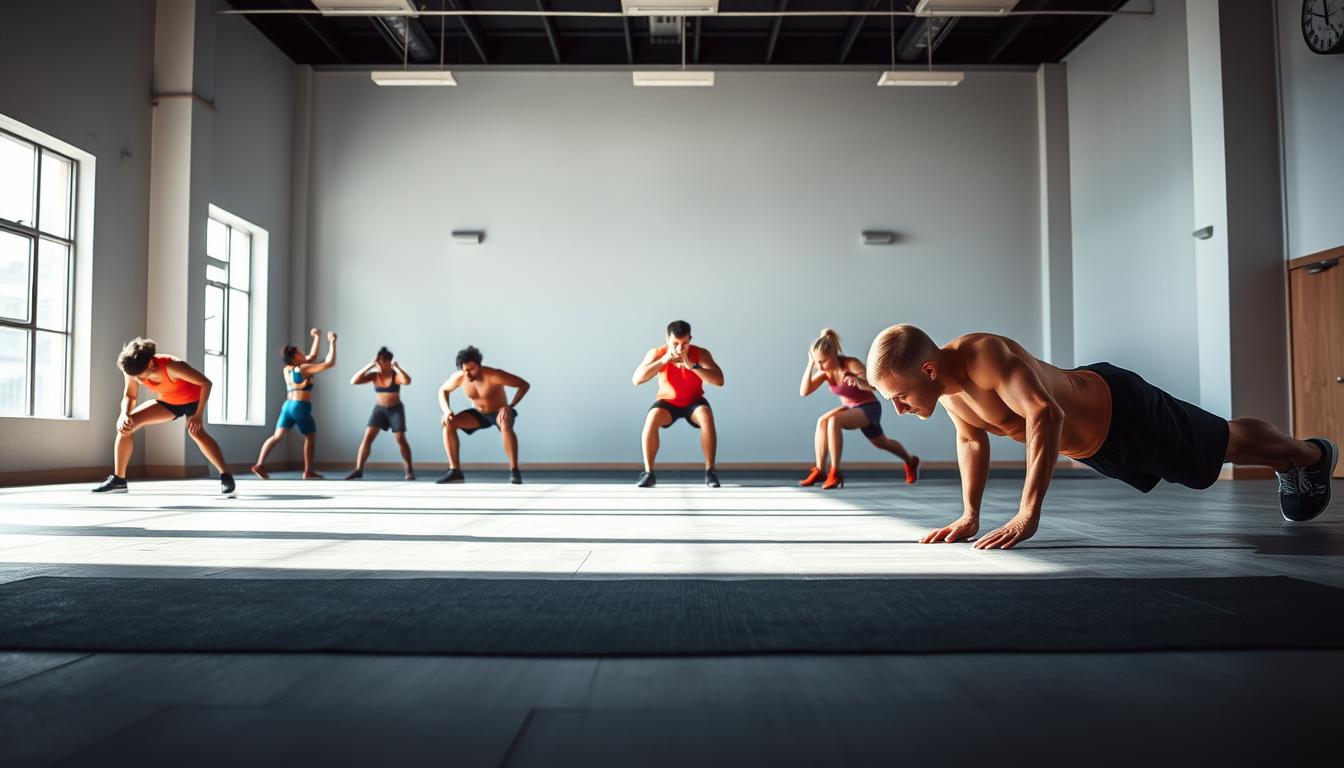
First, set up clear goals with these two types of tests:
Mobility Checkpoints
- Wall handstand test: Hold for 30 seconds with hands 6″ from wall
- Overhead squat assessment: Check ankle/knee/shoulder alignment
- Thoracic rotation: Aim for 90° rotation in a seated position
Strength Baseline Tests
- Max perfect-form push-ups in 2 minutes
- 60-second forearm plank hold
- Single-leg squat balance (30 seconds per side)
“Beginner modifications like knee-assisted push-ups aren’t compromises – they’re smart progression tools,” notes Sweat It trainer Bobby Windebank.
SMART Goal Framework
Use this system to set your goals:
| Component | Description | Example |
|---|---|---|
| Specific | Clear focus area | “Improve push-up endurance” |
| Measurable | Quantifiable target | “Add 5 reps weekly” |
| Achievable | Realistic progression | Start with knee push-ups |
| Relevant | Aligns with priorities | Supports upper body goals |
| Time-bound | Clear deadline | “8-week completion” |
Periodization Principles
Follow this 4-phase model to avoid plateaus:
- Foundation Phase: 3 weeks of mastering technique
- Density Phase: 4 weeks of timed circuits (ties to Section 9)
- Intensity Phase: 3 weeks of advanced variations
- Deload Week: Active recovery with 50% volume
This cycle manages fatigue and challenges your body. Combine it with good nutrition for the best results.
Dynamic Warm-Up Essentials
Your body isn’t a machine that works best when cold. It needs a good warm-up to perform at its best. A dynamic warm-up gets your joints ready, raises your heart rate, and gets your nerves ready for exercise.
Studies show athletes who do mobility work do 19% better than those who just stretch. This is because mobility work gets your body ready for the workout.
Thoracic Spine Activation
Not being able to move your upper back can hurt your push-ups and overhead moves. Start with quadruped spider crawls—do 4 sets of 10 reps on each side. This helps your shoulders and spine work together.
Try the Groiner exercise too. It rotates your torso while keeping your pelvis stable. This helps with rotation and teaches your core to work with your limbs.
Hip Mobility Sequence
Just a little more hip rotation can help you squat deeper by 3 inches. Use lateral leg swings and deep lunge holds to work your hip. Start with small movements and get bigger each rep.
This not only makes your hips more flexible but also helps your muscles grow over time.
Proprioception Drills
Single-leg balance exercises get your nervous system ready for uneven movements. Try clock reaches—touching imaginary numbers around your stance foot—to improve your stability. These drills make you 27% less likely to get hurt and help you move better in complex exercises.
Core Development Workouts
Your core is key to linking upper and lower body movements. It’s vital for mastering effective bodyweight exercises. Unlike old-school ab workouts, functional core training focuses on stability, rotation, and power transfer. Let’s explore three main areas of core development.
Building Anti-Rotation Strength
Anti-rotation exercises help your core resist unwanted movement. This skill improves your form in all bodyweight exercises. The Pallof press is great for this, as it tests your midline stability under tension.
Pallof Press Variations
Start with 30-second iso-holds using a resistance band at chest height. Then, move to dynamic presses. Follow these form tips:
- Keep ribs stacked over hips
- Maintain tension through glutes
- Breathe through diaphragm
For a challenge, try single-arm presses and staggered stance holds. These prepare you for movements like single-arm push-ups.
Developing Rotational Power
While anti-rotation builds stability, dynamic twists boost athletic performance. Russian twist progressions offer scalable intensity for rotational force.
Russian Twist Progressions
Begin with bent-knee twists (3×20 reps). Then, move up this ladder:
- Elevated feet on yoga block
- Weighted medicine ball rotations
- Paused end-range holds
Focus on starting the movement from your obliques, not momentum. Coach Heron’s tip: “Imagine wringing out a towel between your ribs and hips.”
Integrated Core Challenges
True functional strength comes from combining stability and mobility. This 3-tier progression builds a strong core:
| Level | Exercise | Focus |
|---|---|---|
| 1 | Forearm Plank | Basic stability |
| 2 | Star Plank | Limb coordination |
| 3 | Handstand Wall Walk | Full-body integration |
Each tier adds complexity while keeping the rib-to-hip connection for injury prevention. Start with 30-second holds.
Upper Body Strength Progressions
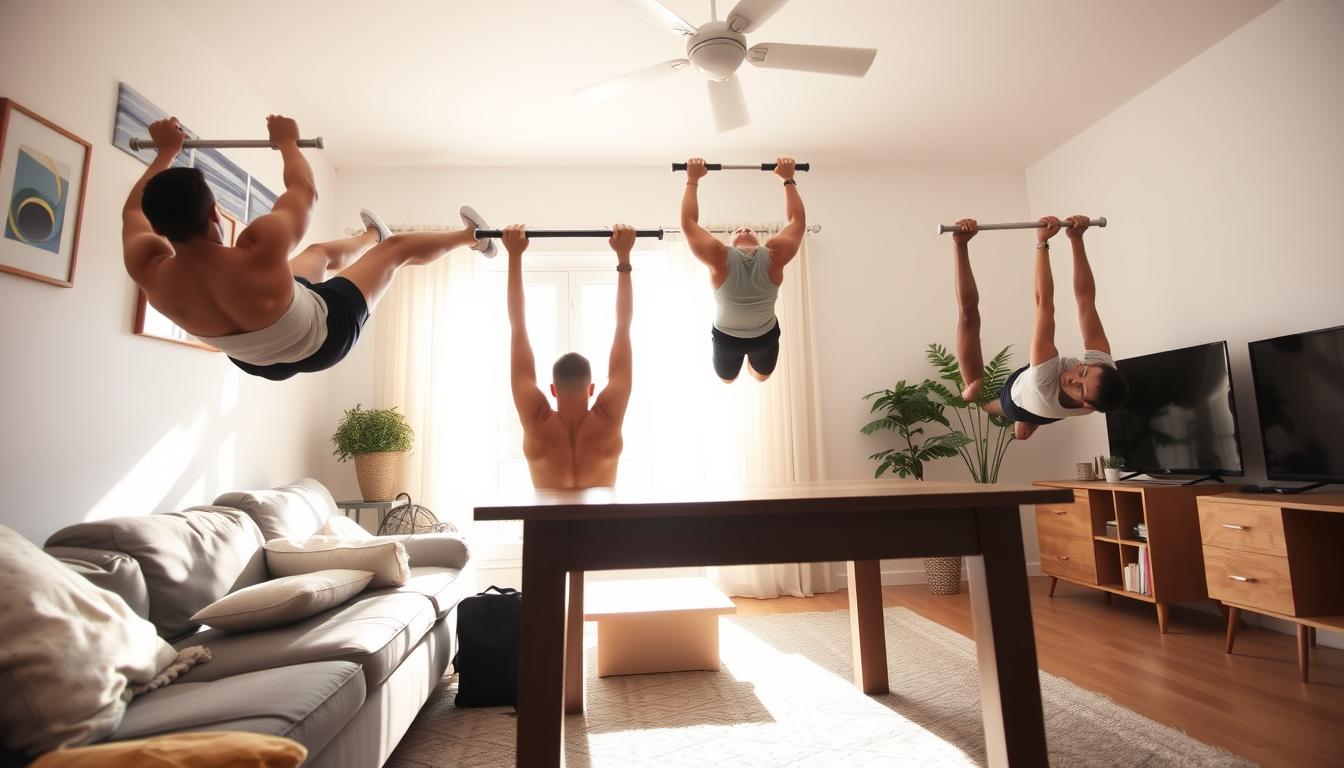
Use gravity and smart progressions to strengthen your upper body. Bodyweight exercises require precise control and gradual increases in intensity. This method builds real-world strength and lowers injury risk, ideal for home workouts.
Push-Up Mastery Path
Mastering push-ups takes 12 weeks of strategic progression. Begin with knee push-ups to build a strong base. Then, move through these phases:
Incline to Decline Transitions
Start with incline push-ups by placing your hands on a sturdy surface. As you get stronger, move to standard push-ups. Then, try decline push-ups with your feet up. This boosts chest and triceps strength by 27%, studies show.
Archer Push-Up Techniques
Archer push-ups help build unilateral strength. Spread your arms wider than shoulder-width and shift your weight during each rep. Key form points:
- Keep hips parallel to the floor
- Maintain straight line from heels to crown
- Lower until chest grazes the working arm
Bodyweight Row Variations
Balance pushing movements with pulling exercises. Use a doorframe and towel for inverted rows:
- Wrap towel around secure door handle
- Lean back with straight body alignment
- Pull chest to hands, squeezing shoulder blades
Handstand Progression System
Follow Nino’s 5-point checklist for safe handstand practice:
- Fingers actively gripping the floor
- Forearms rotated slightly inward
- Shoulder blades protracted
- Core tension maintained
- Breathing rhythm consistent
Begin with wall-assisted holds and gradually reduce support as you get more stable. Aim for 3×30-second holds before trying freestanding handstands.
Lower Body Power Development
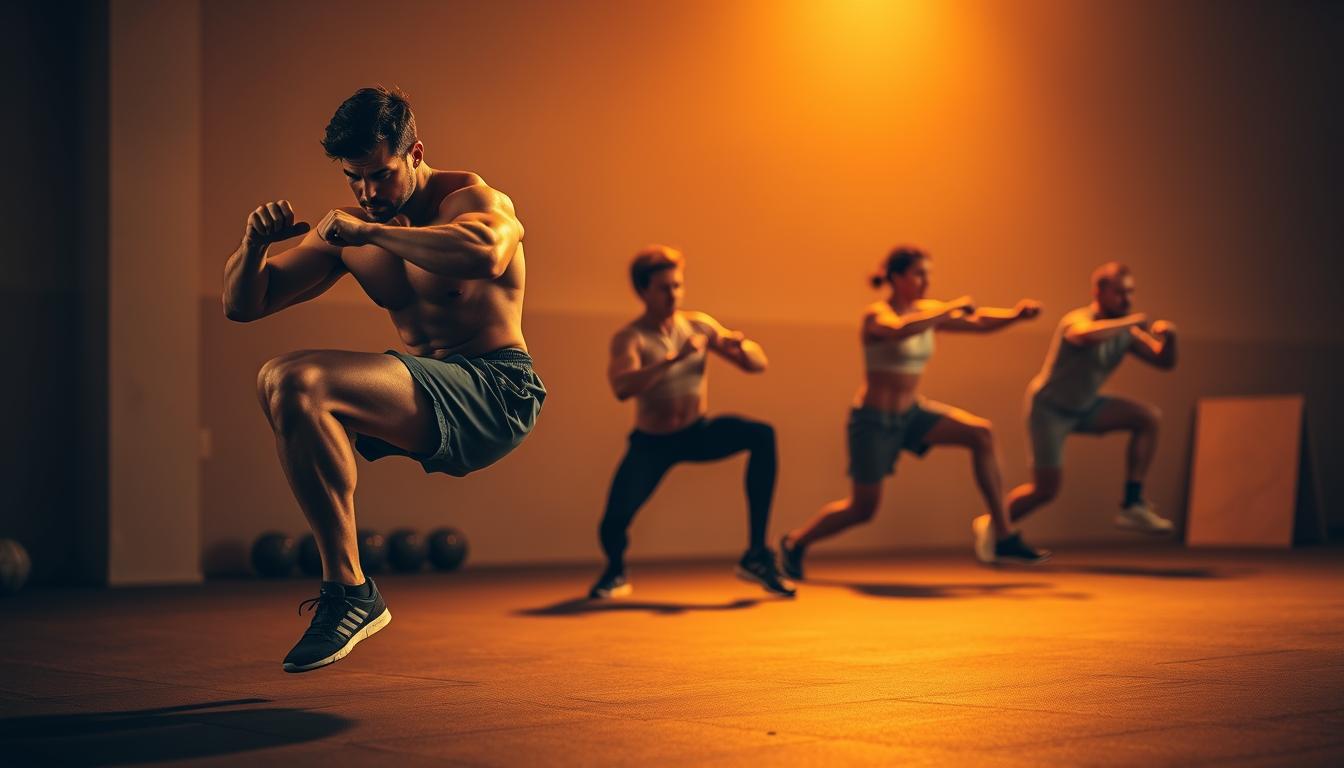
To build explosive lower body strength, you need more than just squats. You need exercises that test your stability, mobility, and how well you use oxygen. Bodyweight exercises are great for losing weight because they mix power with controlled strength. This combo burns calories and builds muscle that works well in real life.
Squat Matrix Training
The squat matrix method combines different movements to work your muscles better. It’s not just about doing the same thing over and over. It switches between exercises that focus on strength and those that focus on power.
Jump Squat Mechanics
Jumping after each squat raises your heart rate and burns more calories. Studies show jump squats burn 11 calories per minute, while regular squats only burn 5. Try to land softly by bending your knees to protect your joints and keep moving.
Shrimp Squat Execution
This single-leg squat is great for building strength in one leg without needing a lot of space. Fitness coach Mike Elliot suggests:
“Grip a TRX strap at chest height for balance. Lower until your back knee nearly touches the floor, then drive through your heel.”
Do 5×5 sets on each leg to get better at balance and make your legs look more defined.
Lunge Complexity Levels
Start with regular lunges and then move to more dynamic ones like curtsy or jumping lunges. Each step up increases the time your muscles are under tension, which helps with weight loss. Adding rotational lunges (twisting your torso toward your front leg) also works your core.
Single-Leg Deadlift Form
Stand near a chair for support. Bend at your hips, lifting one leg back while keeping your spine straight. This exercise helps your hamstrings and glutes, which are key for power. Do 3 sets of 10 reps on each side to improve stability and burn more calories.
Total Body Metabolic Circuits
Metabolic circuits mix strength and cardio into quick workouts. They burn calories and build fitness. These routines are great for bodyweight exercises for weight loss. Here are three effective methods to boost your workout.
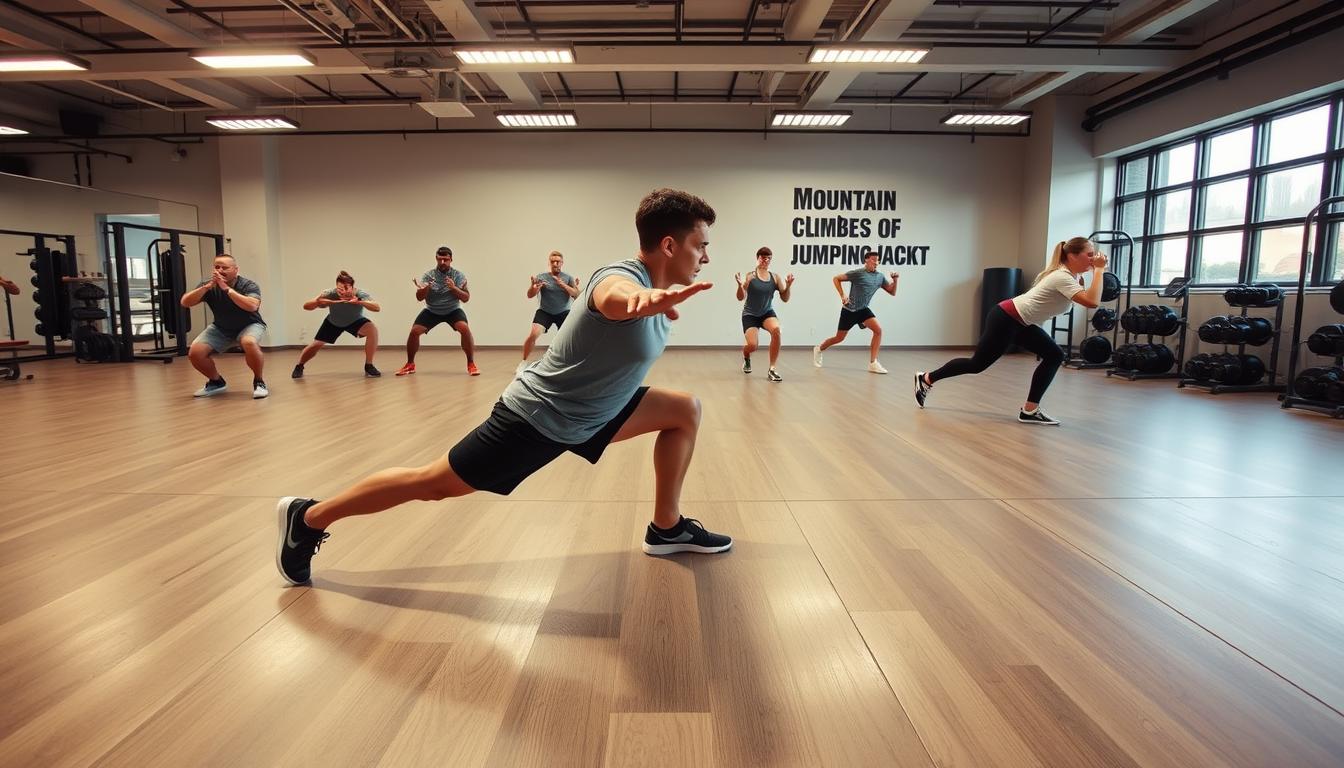
Burpee Variations Pyramid
Burpees are top for full-body workouts, burning up to 10 calories per minute. Try this 15-minute EMOM (Every Minute on the Minute) circuit:
- Minute 1: 10 standard burpees
- Minute 2: 20 lateral crab walks
- Minute 3: 30 mountain climbers
Do the sequence 5 times. Add burpee variations like spiderman push-up burpees or broad jump burpees. This keeps your workout challenging.
Animal Flow Combinations
Animal movements boost mobility and challenge your body. Start with these basic patterns:
- Bear crawl → Crab reach → Scorpion kick
- Lateral ape → Frogger jump → Inchworm
Do each sequence for 45 seconds, then rest for 15 seconds. These movements improve joint stability and coordination.
Plyometric Progressions
Plyometrics increase explosive power through quick movements. Follow this structured plan:
- Week 1-2: Squat jumps (2 sets of 15)
- Week 3-4: Box jumps (3 sets of 10)
- Week 5-6: Depth jumps (4 sets of 8)
Land softly with bent knees to absorb shock. Add isometric holds to strengthen tendons and prevent injuries.
HIIT Programming Strategies

High-Intensity Interval Training turns bodyweight exercises into powerful workouts. By using these three methods, you can push your limits and keep workouts interesting.
Work:Rest Ratio Optimization
How long you rest between intervals affects your performance. Rad Lopez’s study shows:
“Shorter rest times (40:20 intervals) increase anaerobic capacity 18% faster than longer rest times (30:30) in bodyweight HIIT.”
| Ratio | Work Phase | Recovery | Best For |
|---|---|---|---|
| 30:30 | Moderate intensity | Full recovery | Beginners |
| 40:20 | Peak effort | Partial recovery | Conditioning |
| 60:15 | Max power output | Active rest | Advanced athletes |
Density Training Methods
Boost workout density by doing more reps in less time. Try the 100-push-up challenge:
- Week 1: 10 sets of 10 (5-minute cap)
- Week 2: 5 sets of 20 (4-minute cap)
- Week 3: 4 sets of 25 (3-minute cap)
This method forces your body to adapt by combining strength and endurance.
Wave Loading Intensity
Change the intensity level each week to avoid plateaus:
- Week 1: 55% max effort (focus on technique)
- Week 2: 75% effort (emphasize speed)
- Week 3: 90% effort (aim for max output)
This pattern matches your body’s natural recovery and builds your work capacity.
Advanced Progressive Techniques
To take your bodyweight training to the next level, you need to try new methods. Isometric holds, eccentric overload, and combining movements are key. These strategies boost your strength without needing any equipment.
Isometric Holds Implementation
Static positions improve joint stability and muscle endurance at the same time. Start with Windebank’s 5-tier plank progression. Begin with 20-second holds at 50% effort, then move to 60-second max-intensity holds. The Frozen V-sit protocol also works well – hold the position until you can’t anymore, then rest for 30 seconds more than your hold time.
- Phase 1: 3x20s mid-range holds
- Phase 3: 2x45s full-tension pauses
- Phase 5: 1x90s maximum effort
Eccentric Overload Focus
Slow down the lowering phase in exercises like pull-ups to increase muscle damage and growth. Use 3-second descents in inverted rows or pistol squats. For jump lunges, do explosive upward movements followed by 5-second iso-hold squats between reps. This mix boosts power and time-under-tension benefits.
- Explosive concentric (1 second)
- Controlled eccentric (3-5 seconds)
- Paused transition (2 seconds)
Complex Training Pairings
Pair strength and power exercises together for better neuromuscular adaptation. After explosive plyo push-ups, do slow tempo push-ups. This method is great for lower body exercises:
| Power Move | Strength Move | Rest Interval |
|---|---|---|
| Jump Squats | Bulgarian Split Squats | 45s |
| Clapping Push-Ups | Archer Push-Ups | 30s |
| Broad Jumps | Single-Leg Deadlifts | 60s |
Switch between these advanced techniques every 3-4 weeks to avoid plateaus. Keep track of your progress with metrics like hold durations or eccentric control.
Nutritional Support Strategies
Fueling your body right boosts the benefits of bodyweight exercises. It turns hard work into real results. Whether you want to lose fat or build muscle, the right nutrition is key. Here are three ways to help you get better results.

Protein Timing Guidelines
Reyna Franco, a sports nutritionist, suggests eating 20g of protein every 3 hours. This helps your muscles repair faster. It’s very important after workouts that work many muscles at once.
“Eating enough protein makes your body repair muscles all day, every day. It’s vital for mastering tough moves like handstand push-ups.”
Here are some top protein sources for those who do bodyweight exercises:
- Greek yogurt (post-workout)
- Egg whites (breakfast)
- Chicken breast (lunch/dinner)
- Lentils (vegetarian option)
Carbohydrate Cycling Basics
Adjust your carb intake based on your goals. This table shows how to do it:
| Goal | High-Carb Days | Low-Carb Days |
|---|---|---|
| Fat Loss | 2 days/week | 5 days/week |
| Performance | Training days | Rest days |
Franco says: “Cycling carbs helps save energy for hard workouts and boosts fat burning. It’s great for bodyweight athletes.”
Anti-Inflammatory Eating
Chronic inflammation slows down recovery from exercises like burpees. Add these 5 foods to your diet:
- Turmeric (curcumin reduces muscle soreness)
- Wild-caught salmon (omega-3s)
- Blueberries (antioxidants)
- Spinach (magnesium)
- Walnuts (polyphenols)
In Franco’s experience, people who eat these foods and do bodyweight exercises recover 23% faster. They also stick to their workout routines better.
Recovery Optimization Methods
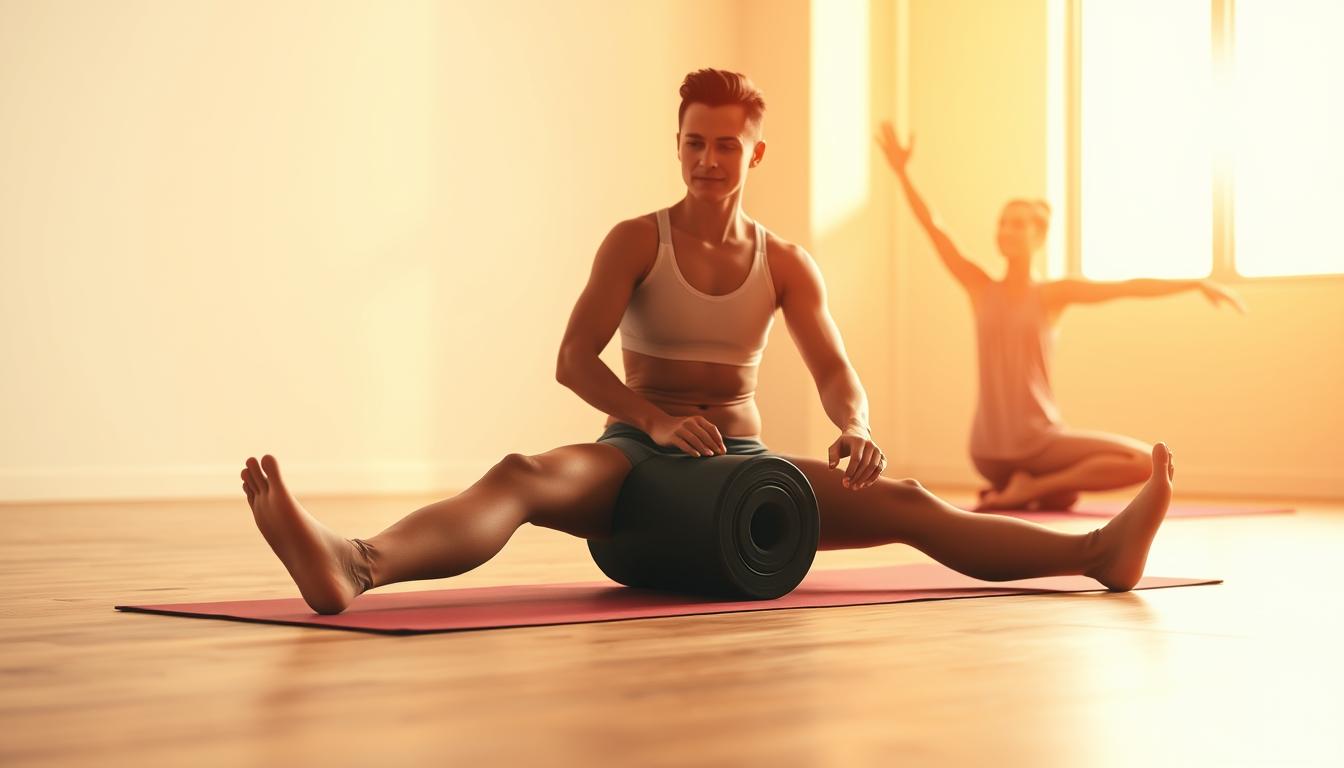
Getting the most out of your bodyweight workout routine means focusing on recovery. Good recovery strategies help muscles heal quickly and lower injury chances. Here are three science-backed ways to improve your downtime.
Myofascial Release Techniques
Use a lacrosse ball to target muscle knots. This improves mobility and lessens soreness. A 5-minute daily routine can help with tight chest and back muscles, common issues for calisthenics athletes. Here’s a simple protocol:
- Roll upper chest muscles for 90 seconds
- Work underarm lat connections for 2 minutes
- Finish with 30-second shoulder blade rotations
Contrast Therapy Benefits
Switch between hot and cold to enhance circulation and recovery. The 3:1 ratio – three minutes warm, one minute cold – is best for bodyweight athletes. Start with warm showers and then ice baths. Benefits include:
- Faster lactic acid clearance
- Reduced DOMS (delayed onset muscle soreness)
- Improved nervous system reset
Sleep Quality Enhancements
Deep sleep is key for muscle repair and hormone balance. Follow this checklist from sports recovery studies:
- Keep bedroom temperature at 65-68°F
- Use blackout curtains + white noise
- Power down screens 90 minutes before bed
- Time last meal 3 hours before lights out
Combine these methods with your bodyweight workout routine to stay at the top of your game without equipment. Remember, consistency is more important than intensity. Treat recovery as seriously as your workouts.
Plateau-Busting Tactics
When you hit a wall in your bodyweight training, making smart changes can get you moving again. These three methods are backed by science. They help beginners break through plateaus and keep up with their workouts.
Exercise Variation Matrix
Changing up your exercises every 4-6 weeks keeps your body guessing. Dr. Emily Frost created a 6-month plan to guide you:
| Phase | Focus | Sample Exercises |
|---|---|---|
| Weeks 1-6 | Foundational Strength | Standard push-ups, bodyweight squats, plank holds |
| Weeks 7-12 | Dynamic Movements | Plyo push-ups, jump squats, bear crawls |
| Weeks 13-24 | Multiplanar Training | Rotational lunges, spider-man push-ups, lateral jumps |
Intensity Cycling Methods
Wave periodization keeps you from getting burned out and boosts your performance. Try this 3-week cycle:
- Week 1: 3 sets of 12-15 reps (moderate intensity)
- Week 2: 4 sets of 8-10 reps (higher intensity)
- Week 3: 5 sets of 5-8 reps (peak intensity)
Then, take a deload week with less volume before starting again.
Cross-Training Benefits
Adding other activities can make your bodyweight exercises even better:
- Yoga flows improve mobility on rest days
- Swimming builds endurance without joint stress
- Cycling boosts leg power for explosive movements
Do 1-2 cross-training sessions a week. It breaks the routine and speeds up your progress in bodyweight exercises.
Motivation Maintenance Systems
Building lasting fitness habits is more than just willpower. It needs smart systems. For those who love bodyweight exercises, staying consistent is easier when you mix physical effort with mental strategies. Here are three proven ways to keep your motivation up, even when it’s hard.
Habit Stacking Techniques
Fitness expert James Windebank once said:
“The most effective workouts are those that become as routine as brushing your teeth.”
Start by linking bodyweight exercises to your daily habits. For example, do a 5-minute mobility flow with your morning coffee or push-ups after checking emails. These small workouts add up without taking too much time.
Here’s a simple stacking formula:
- Choose a daily anchor (e.g., waking up)
- Add a 2-minute bodyweight exercise (plank hold)
- Gradually increase duration weekly
Visual Progress Tracking
Tracking your progress is key. Use our free printable bodyweight progress log to track reps, hold times, and workouts. Color-code your milestones for a visual reward. For tech lovers, apps like RepCount can automatically log your workouts.
Remember, progress isn’t always straight. Celebrate small wins like:
- First full-range handstand
- Longer rest periods between circuits
- Improved sleep quality
Community Engagement
Having accountability partners can triple your success, says ACE Fitness. Join active calisthenics communities:
- r/bodyweightfitness (Reddit’s 1.2M-member hub)
- Thenics App challenge groups
- Calisthenics Academy’s virtual meetups
Share your form videos for feedback, celebrate your wins, or find inspiration. As Windebank’s philosophy shows: “Surround yourself with people who make training non-negotiable.”
Minimal Equipment Enhancements
Improving your home workouts doesn’t need to cost a lot. Adding a few key pieces of equipment can make a big difference. Here are three tools that boost your bodyweight exercises at home without breaking the bank.
Gymnastic Rings Integration
Gymnastic rings turn simple exercises into full-body workouts. They make your muscles work harder, up to 30% more than regular exercises. Try this push-up variation:
| Level | Exercise | Focus Area |
|---|---|---|
| 1 | Kneeling Ring Push-Ups | Chest Stability |
| 2 | Feet-Elevated Push-Ups | Shoulder Engagement |
| 3 | Archer Push-Ups | Unilateral Strength |
“Rings reveal weaknesses you never knew you had – that’s where real progress begins.”
Sliding Disc Applications
These $15 tools offer hundreds of exercises for your core. For sliding disc pikes:
- Start in high plank with feet on discs
- Engage core to pull knees toward chest
- Return with control (3 sets of 15 reps)
Use discs with home gym hacks like towel slides on hardwood for a budget-friendly option.
Weight Vest Utilization
Follow the 10% rule: Start with vest weight equal to 10% of your body mass. A 150-pound person would use 15 pounds. Use it for:
- Pull-up progressions
- Lunge complexes
- Plyometric jumps
Up the weight by 5% every 4 weeks. This keeps your workouts challenging without sacrificing form.
Conclusion
To build lasting strength with bodyweight exercises, you need three key things. First, progressive overload makes your muscles work harder. This can be done by changing how fast you do exercises, doing more reps, or trying new moves.
Nutrition is the fuel for your workouts. Eating the right foods, like protein and anti-inflammatory foods, helps your body recover. Contrast showers, tools like Theragun, and good sleep are also important for recovery.
Start a 30-day challenge to get into shape. Begin with three workouts a week. These should include exercises for your upper body, lower body, and core.
Here’s a sample plan:
- Week 1: Do 4 rounds of 10 push-ups, 15 bodyweight squats, and hold a plank for 30 seconds.
- Week 2: Increase reps by 2 and add 5 seconds to each move.
- Week 3: Try gymnastic ring rows and single-leg deadlifts.
- Week 4: Do density circuits against the clock.
For more exercises and tips, check out Darebee’s Bodyweight Program Database. Use tools like Whoop straps or Fitbit to track your progress. Keep a journal to record your strength gains and share your journey on Reddit’s r/bodyweightfitness.
This method turns any space into a gym. By being consistent and progressive, you can build strength without needing special equipment. Your body becomes the best tool for fitness.