Did you know up to 25% of people starting a low-carb diet experience flu-like discomfort within the first 48 hours? This phenomenon, often called “carb withdrawal,” occurs as your body shifts from burning sugars to fats for fuel. The transition can feel like a storm brewing inside, complete with fatigue, headaches, and irritability.
Your metabolic system undergoes a dramatic overhaul during this phase. Glucose stores deplete rapidly, forcing cells to adapt to ketones—a byproduct of fat breakdown. For some, this adaptation happens seamlessly. Others face temporary hurdles like brain fog or muscle cramps as energy pathways recalibrate.
Timing plays a critical role. Most symptoms peak between days 3 and 5 before fading by the end of the first week. However, factors like hydration levels, electrolyte balance, and prior eating habits influence severity. Understanding these variables helps you prepare mentally and physically for the journey ahead.
Key Takeaways
- Carb withdrawal mimics flu-like effects as your body switches energy sources.
- Metabolic adaptation varies—some experience intense symptoms, others none at all.
- Discomfort typically peaks mid-week but resolves within 7 days for most.
- Electrolyte imbalances and hydration status significantly impact symptom severity.
- Prior dietary habits determine how quickly your system adjusts to fat-burning mode.
Introduction to the Ketogenic Diet and Its Effects
Shifting your body’s primary fuel source requires more than willpower—it demands a complete metabolic overhaul. The ketogenic diet flips traditional eating patterns by prioritizing fats over carbohydrates. This approach isn’t just about cutting bread or pasta—it’s a calculated reprogramming of how your system generates energy.

What Is a Ketogenic Diet?
This eating plan slashes carbs to 20-50 grams daily—roughly the amount in one small apple. Instead, 70-80% of calories come from fats like avocado, nuts, and olive oil. Proteins stay moderate to prevent glucose production through gluconeogenesis.
How Ketosis Impacts Your Body
When carbs drop low enough, your liver starts converting stored fat into ketones. These molecules become your body’s new fuel, crossing the blood-brain barrier to power cognitive functions. Unlike glucose spikes, ketones provide steady energy without dramatic insulin fluctuations.
Three key changes occur during this metabolic shift:
- Your cells optimize fat-burning enzymes within days
- Insulin sensitivity improves as glucose dependence decreases
- Mitochondrial density increases to enhance energy production
This process mirrors how your body survives during fasting—but the keto diet triggers it through precise nutrient ratios rather than starvation. The result? A reprogrammed metabolism that prioritizes fat stores for energy around the clock.
Understanding Keto Flu: Symptoms and Causes
Your body sends clear signals when switching energy sources—like headlights flashing during a sudden detour. While adapting to fat metabolism, temporary discomfort often arises from biochemical shifts rather than illness. Recognizing these signs helps you respond effectively instead of feeling overwhelmed.

Recognizing the Signs
Physical reactions often strike first. You might notice nausea or headaches as glucose stores vanish. Muscle cramps or digestive changes like constipation frequently appear within 72 hours.
Neurological adjustments follow closely. Mental fog or irritability surfaces as your brain recalibrates to ketones. Some report dizziness or trouble focusing—a normal part of neural pathway rewiring.
Sleep patterns often shift temporarily. Cravings for carbs or unexplained weakness highlight your system’s dependence on its former fuel source. These responses typically lessen as adaptation progresses.
Underlying Causes of Keto Flu
Carbohydrate restriction triggers rapid water loss through urine. This flushes critical electrolytes like sodium and potassium, disrupting nerve and muscle function. Reduced insulin levels accelerate sodium excretion, compounding dehydration risks.
Dietary limitations play a role too. Cutting starchy vegetables and fruits slashes potassium intake—a mineral vital for cellular balance. Individual factors like prior sugar intake or genetic metabolism speed determine symptom intensity.
Though uncomfortable, these changes confirm your body’s transition to fat-burning mode. Strategic hydration and mineral replenishment ease the process while systems adapt.
Keto Flu Symptoms and Fixes: What to Expect Week 1
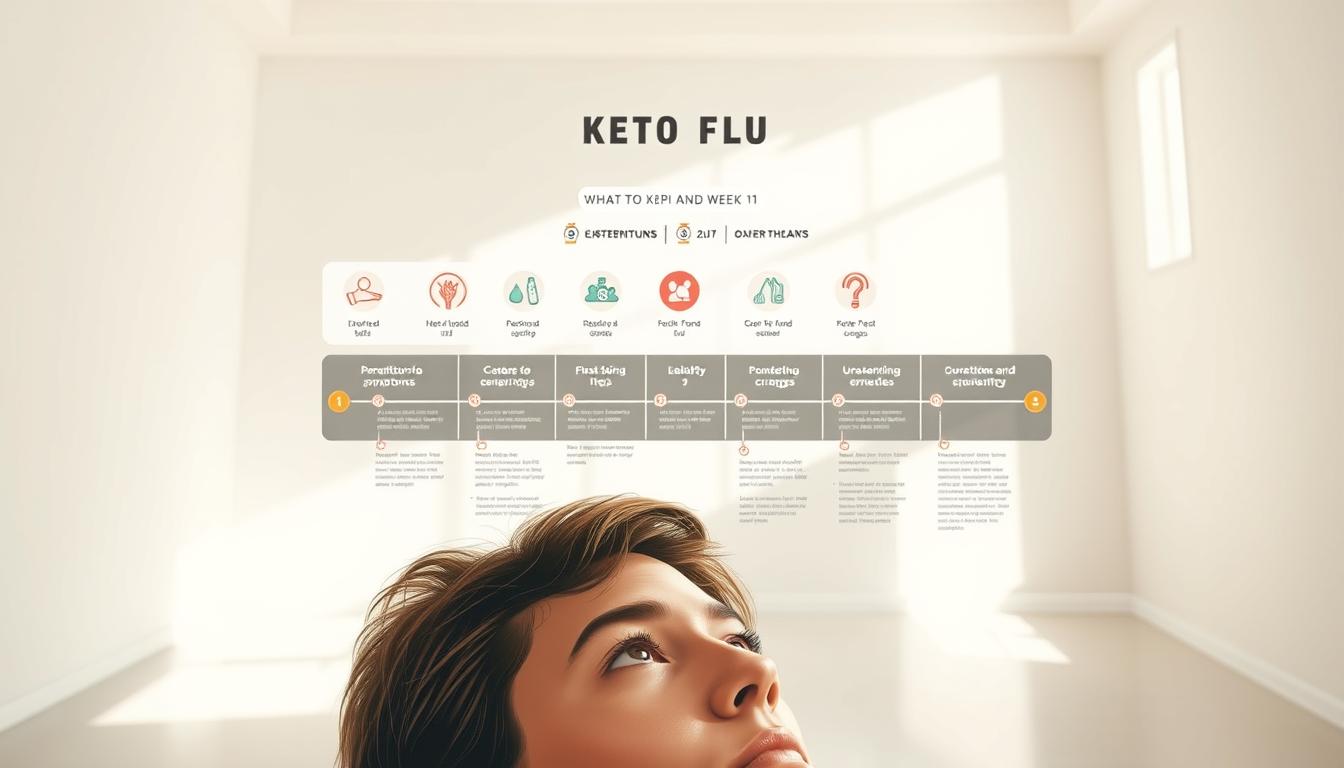
Navigating the first seven days requires understanding your body’s signals as it switches energy sources. Most individuals notice changes within 24-48 hours of reducing carbs, with intensity varying based on prior eating habits and hydration levels.
Week 1 Timeline and Expectations
Days 1-2 often bring fatigue and cravings as glucose reserves deplete. By day 3, many report improved mental clarity despite occasional headaches. Midweek typically marks peak discomfort before gradual improvement.
| Day Range | Common Experiences | Adaptation Progress |
|---|---|---|
| 1-2 | Carb cravings, low energy | Initial ketone production begins |
| 3-4 | Headaches, muscle tension | Liver increases ketone output |
| 5-7 | Improved focus, stable energy | Cellular efficiency doubles |
Three factors determine recovery speed:
- Previous sugar consumption levels
- Electrolyte replenishment consistency
- Sleep quality during adaptation
While 68% of individuals feel normal by day 5, some require 10-14 days for full adjustment. Persistent dizziness or rapid heartbeat beyond day 7 warrants professional consultation.
Practical Strategies to Manage and Prevent Keto Flu
Conquering initial dietary transitions requires tactical adjustments. Three pillars form the foundation of symptom management: hydration, nutrient balance, and gradual adaptation. Addressing these areas systematically helps your system adjust without unnecessary strain.

Hydration Beyond Basic Water Intake
Multiply your weight in pounds by 0.5 to calculate your minimum daily water intake in ounces. For example, a 160-pound person needs at least 80 ounces. Add a pinch of salt to your first glass each morning to counteract sodium loss from reduced insulin levels.
Fueling With Strategic Fats
Prioritize fats that pull double duty—avocados supply potassium, while nuts offer magnesium. Coconut oil and grass-fed butter provide rapid energy without spiking glucose. One study found participants who consumed 70% of calories from fats adapted 36% faster than those eating 60%.
Phased Carbohydrate Reduction
Instead of immediate carb elimination:
- Cut processed sugars first (days 1-3)
- Reduce starchy vegetables next (days 4-6)
- Limit fruits to berries post-day 7
This staggered approach gives digestive enzymes time to adjust. Track your fat intake using apps to ensure you’re not undereating—low calories prolong adaptation. Remember: Your body needs abundant resources to rebuild its energy pathways.
Lifestyle Adjustments: Diet, Sleep, and Exercise Tips
Your body’s transition to fat-burning demands more than dietary changes—it requires holistic lifestyle support. Optimizing rest and movement patterns helps maintain energy levels while easing adaptation challenges.

Sleep Optimization Strategies
Prioritize magnesium-rich Epsom salt baths before bed. These soothe muscle tension while enhancing mineral absorption. Pair this ritual with caffeine-free herbal teas like chamomile to deepen restorative rest.
Create a sleep sanctuary by:
- Using blackout curtains to eliminate ambient light
- Setting consistent wake-up times (even weekends)
- Banning screens 90 minutes before bedtime
Movement Modifications
Swap high-intensity workouts for gentle exercise during adaptation. Restorative yoga flows improve circulation without draining energy reserves. A 2023 study found 20-minute sessions reduce stress levels by 34% compared to intense training.
| Activity | Frequency | Benefits |
|---|---|---|
| Evening Walks | Daily | Boosts melatonin production |
| Chair Yoga | 3x/week | Reduces muscle stiffness |
| Breathwork | Morning/Night | Balances cortisol levels |
Pair movement with colorful vegetables rich in potassium. This combination supports muscle recovery while maintaining electrolyte balance. Remember: Your health transformation thrives on patience and strategic self-care.
Tips for a Smooth Transition into Ketosis
A phased approach to carb reduction supports your body’s natural adjustment. By easing into metabolic changes, you allow enzymes and hormones to adapt without triggering extreme stress responses. This method proves particularly effective for those sensitive to abrupt dietary shifts.
Strategic Carb Tapering Methods
Begin by cutting processed sugar and refined grains—the primary culprits behind energy crashes. Replace these with avocado, nuts, and olive oil to maintain calorie intake while shifting fuel sources. Studies show this swap reduces cravings by 41% within five days.
| Phase | Daily Carb Limit | Key Actions |
|---|---|---|
| Preparation | 100-150g | Remove sugary snacks |
| Transition | 50-70g | Increase MCT oil intake |
| Maintenance | 20-30g | Monitor ketone levels |
This staggered plan lets digestive enzymes adjust while preserving energy. Focus on leafy greens and seeds during the middle phase to supply magnesium—a mineral critical for glucose metabolism. By week’s end, your cells efficiently burn fat instead of scrambling for quick sugars.
Psychological benefits emerge too. Gradual changes help rewire taste preferences, making low carb eating sustainable. Pair this strategy with electrolyte tracking to make sure sodium and potassium stay balanced—a common oversight during early ketosis.
Conclusion
Your journey through initial dietary changes reveals a crucial truth: short-term discomfort often precedes lasting metabolic transformation. While transitional challenges might feel overwhelming, they typically resolve as your system masters fat-burning efficiency. With proper hydration and mineral replenishment, most people navigate this phase successfully within 10-14 days.
Remember that persistent issues like dizziness or nausea beyond two weeks could signal deeper imbalances. Consult your physician if discomfort intensifies or disrupts daily life—some conditions require professional evaluation. Certain groups, including those managing chronic illnesses, should only attempt carb restriction under medical supervision.
You’ve gained actionable tools to ease this adaptation period. Strategic electrolyte intake combats fatigue, while magnesium-rich foods like spinach support nerve function. Pair these with quality rest and stress management techniques for smoother transitions.
Every body responds uniquely to fuel shifts. Track your progress, celebrate small wins, and trust the process. When approached mindfully, this nutritional strategy can become a sustainable path toward renewed vitality.