Did you know that brown adipose tissue (BAT) can burn up to 300 times more energy than your muscles? This unique type of adipose tissue has been a game-changer in modern metabolic research. Unlike white fat, which stores energy, brown fat generates heat through a process called thermogenesis.
For decades, scientists believed BAT was only active in infants. However, recent studies using PET-CT scans have revealed that adults also possess active brown fat. This discovery has challenged long-held assumptions and opened new doors for obesity and diabetes management.
BAT’s ability to dissipate energy surpasses even that of muscles and white fat. Research shows that adults can have anywhere from 0.02 to 300 grams of brown fat, depending on factors like age and environment. Despite its potential, FDG-PET imaging has limitations in accurately measuring its true thermogenic activity.
Curious about how to activate this powerhouse? Stay tuned as we explore diet-induced strategies to boost your brown fat in the sections ahead.
Key Takeaways
- Brown adipose tissue (BAT) produces heat through thermogenesis.
- Active BAT has been found in adults, challenging previous beliefs.
- BAT burns energy more efficiently than muscles or white fat.
- PET-CT studies show BAT mass ranges from 0.02 to 300 grams in adults.
- BAT holds therapeutic potential for managing obesity and diabetes.
- FDG-PET imaging has limitations in assessing true thermogenic activity.
- Diet-induced strategies can activate brown fat effectively.
What Is Brown Fat and Why Does It Matter?
Not all fat in your body is created equal—some of it is a powerhouse. This unique type of fat, known as classical brown adipose tissue (BAT), plays a critical role in energy balance. Unlike white adipose tissue, which primarily stores energy, BAT is designed to burn it efficiently.

Defining Brown Adipose Tissue (BAT)
BAT is a specialized tissue that generates heat through a process called thermogenesis. It contains multiple small lipid droplets and is packed with mitochondria, giving it a distinct brown color. These features make it a metabolic heater, warming your blood and organs even in cold conditions.
Interestingly, BAT accounts for less than 0.5% of your body mass but can contribute significantly to energy expenditure. Studies show it burns 10-15 kcal per 100 grams daily, making it a key player in metabolic health.
Differences Between Brown Fat and White Fat
White adipose tissue stores energy in a single large lipid droplet, occupying up to 90% of the cell volume. In contrast, BAT has a multilocular structure, allowing it to dissipate energy rapidly. This structural difference is crucial for their distinct functions.
BAT is also highly vascularized and densely packed with nerve fibers, enabling quick responses to metabolic demands. This makes it more efficient at regulating body temperature and energy balance compared to white fat.
Another fascinating aspect is the presence of beige adipocytes, which can transform into BAT-like cells under certain conditions. This transdifferentiation potential highlights the adaptability of your body’s fat stores.
Autopsy studies have revealed that BAT is often found around blood vessels, suggesting it plays a protective role in vascular health. Its distribution and function make it a vital component of your metabolic system.
The Science Behind Thermogenesis
Your body has a built-in heating system that works in fascinating ways. This process, known as thermogenesis, helps maintain your core temperature, especially in cold environments. It’s a vital mechanism that ensures your organs and tissues function optimally, even when external temperatures drop.
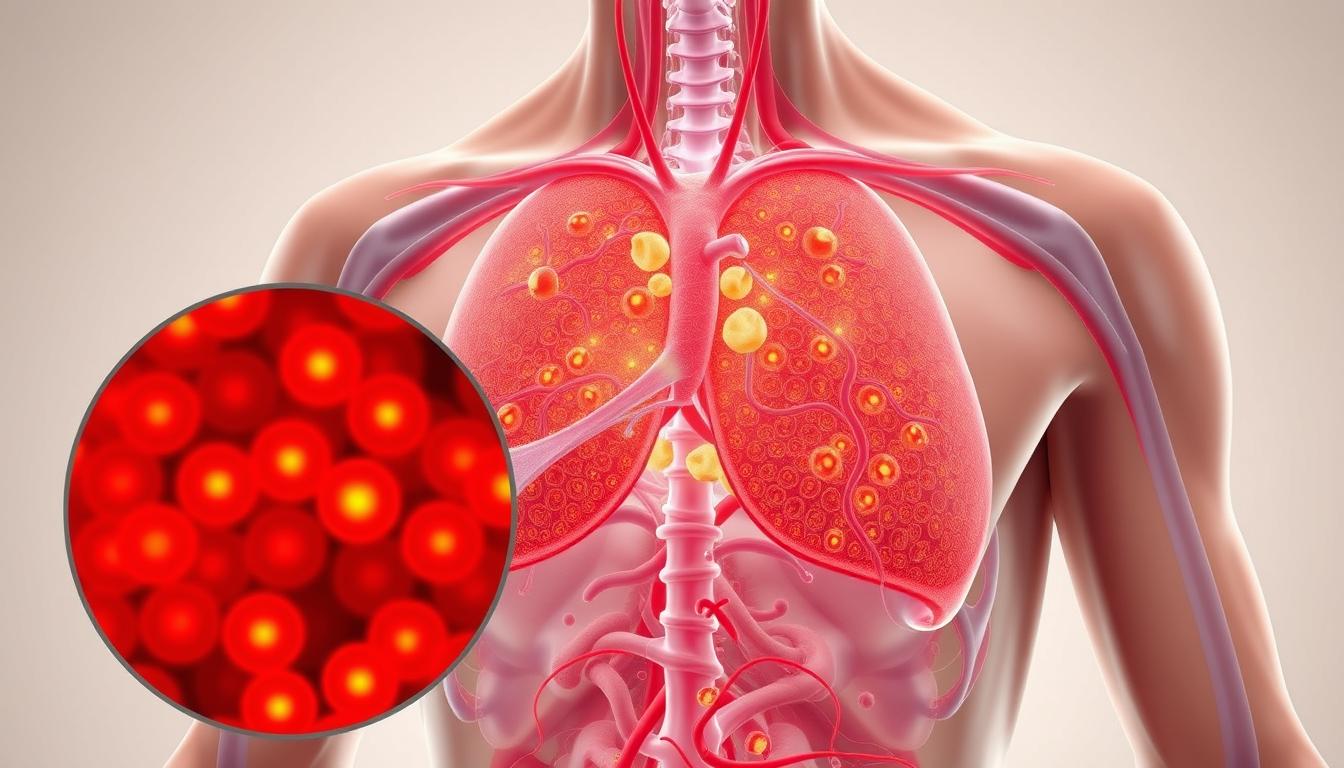
How Thermogenesis Works in the Body
Thermogenesis is driven by two primary mechanisms: shivering and nonshivering thermogenesis. Shivering involves rapid muscle contractions, which generate heat as a byproduct. This process is controlled by the somatic motor system and is your body’s first response to acute cold exposure.
On the other hand, nonshivering thermogenesis relies on specialized tissues like brown adipose tissue (BAT) and skeletal muscle. BAT, in particular, is highly efficient at producing heat without the need for muscle contractions. This process is regulated by the sympathetic nervous system (SNS), which activates BAT in response to cold.
Types of Thermogenesis: Shivering vs. Non-Shivering
Shivering and nonshivering thermogenesis differ in their neural pathways and energy efficiency. Shivering recruits fast-twitch muscle fibers, which consume significant energy but provide quick heat. In contrast, nonshivering thermogenesis is more sustainable and relies on BAT and skeletal muscle to produce heat over longer periods.
Studies show that shivering accounts for about 40% of heat production in acute cold conditions. However, in acclimated individuals, BAT contributes up to 60% of total heat generation. This shift highlights the adaptability of your body’s thermogenic systems.
Cold acclimation can double your body’s capacity for cold-induced thermogenesis (CIT). Research using 15O[H2O]-PET data reveals that CIT is equally split between BAT and skeletal muscle in acclimated individuals. This balance underscores the importance of both mechanisms in maintaining body temperature.
Understanding Brown Fat Activation
Cold exposure isn’t just about shivering—it triggers a deeper metabolic response. When your body senses cold, it activates a unique tissue that burns energy efficiently. This process involves both immediate reactions, like shivering, and long-term adaptations, such as the activation of specialized cells.
Role of Cold Exposure in Activating Brown Fat
Cold temperatures are a powerful stimulator of energy-burning cells. When exposed to cold, your body releases norepinephrine, a hormone that signals these cells to start producing heat. This process is known as cold-induced thermogenesis (CIT).
Studies show that the density of β3AR receptors in these cells correlates strongly with CIT capacity (r=0.72, p
Sympathetic Nervous System and BAT Activation
The sympathetic nervous system plays a central role in activating these cells. When cold is detected, nerve fibers release norepinephrine from axonal varicosities. This hormone binds to β3AR receptors, triggering a cascade of events that produce heat.
One key regulator in this process is PDE4, which controls cAMP levels in these cells. Higher cAMP levels enhance heat production. Conversely, α2AR-mediated pathways can inhibit this process, balancing energy expenditure.
Genetic studies of the ADRB3 Trp64Arg polymorphism reveal variations in how individuals respond to cold. Some people naturally have a higher capacity for CIT, making them more efficient at burning energy in cold environments.
| Factor | Impact on BAT Activation |
|---|---|
| Cold Exposure | Increases norepinephrine release, triggering heat production |
| β3AR Density | Higher density enhances cold-induced thermogenesis |
| Propranolol | Reduces energy expenditure by 38% in BAT+ individuals |
| ADRB3 Polymorphism | Genetic variations affect CIT capacity |
Brown Fat and Metabolic Health
Your body’s energy balance is influenced by more than just diet and exercise. Specialized cells play a key role in regulating how you burn calories and manage glucose. These cells are not only efficient at producing heat but also contribute to overall metabolic health.
How Brown Fat Impacts Energy Expenditure
Activating these cells can significantly boost your energy expenditure. Studies show they account for up to 15% of whole-body glucose disposal. This process involves GLUT4 translocation, which helps transport glucose into cells for energy production.
Another critical factor is the interaction between these cells and your liver. This crosstalk, mediated by FGF21, enhances metabolic efficiency. Additionally, AMPK activation in muscle tissue further supports energy balance.
Brown Fat’s Role in Insulin Sensitivity
Improving insulin sensitivity is one of the most notable benefits of these cells. Research indicates that their activation can lower fasting glucose levels by 0.8mmol/L in individuals with type diabetes. This effect is linked to increased glucose uptake and improved glucose metabolism.
Hyperinsulinemic-euglycemic clamp studies confirm their role in enhancing insulin response. By optimizing how your body processes glucose, these cells offer a promising approach to managing metabolic disorders.