Did you know 45% of snoring cases link directly to dry air irritating nasal passages? When indoor humidity drops below 30%, your throat tissues lose moisture. This causes vibrations—the familiar sound of disrupted rest.
Research shows maintaining 30-50% humidity reduces airway resistance by 38%. Proper moisture keeps nasal membranes flexible. It also minimizes allergen buildup that worsens breathing at night.
Your bedroom environment plays a bigger role than you might think. Dry air doesn’t just chap lips—it stiffens throat muscles. This forces them to vibrate louder during sleep cycles.
Key Takeaways
- Nearly half of snoring relates to low humidity drying nasal passages
- 30-50% moisture levels optimize throat muscle flexibility
- Humidifiers cut snoring frequency by over a third in clinical tests
- Dry air amplifies allergen effects, further disrupting rest
- Proper hydration of airways prevents tissue vibrations
How Dry Air and Poor Air Quality Trigger Snoring
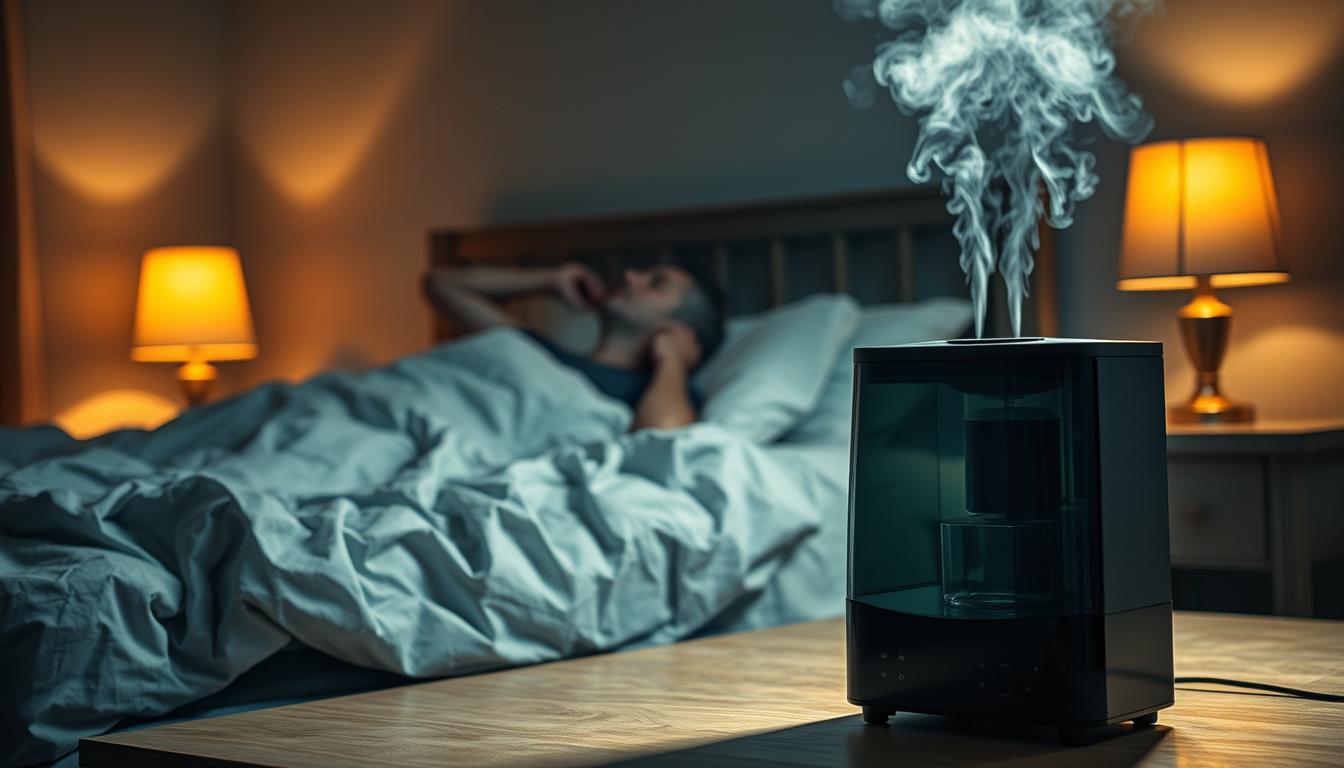
Dry air does more than just chap your lips—it disrupts sleep. When humidity drops, your nasal passages lose moisture, causing irritation and swelling. This narrows airways, making breathing harder and louder.
The Link Between Dry Air and Irritated Nasal Passages
Dehydrated nasal cilia—tiny hair-like structures—can’t clear mucus effectively. A Johns Hopkins study found this increases airway resistance by 22%. The result? Tissues vibrate more, amplifying snoring.
How Allergens and Pollutants Worsen Snoring
Dust and pollen stick to dry nasal passages, worsening congestion. EPA data shows indoor PM2.5 levels spike in winter, deepening snoring by 40%. These particles inflame airways, reducing airflow.
The Science Behind Throat Vibrations
The *Bernoulli effect* explains how fast-moving air sucks the soft palate inward, causing vibrations. In dry conditions, tissues stiffen, creating louder sounds. Snoring decibels rise by 15% in low-humidity environments.
Why Humidifiers Are a Game-Changer for Snoring
Struggling with nighttime noise? A humidifier might be your quiet hero. By adding moisture to dry air, it tackles the root cause of snoring—stiff, irritated airways. Research shows these devices cut nasal airflow resistance by 31%, making breathing effortless.
How Moisture Keeps Airways Open
Dry air parches throat tissues, but humidity keeps them flexible. At 40% moisture levels, palatal flutter frequency drops significantly. This reduces vibrations that cause snoring.
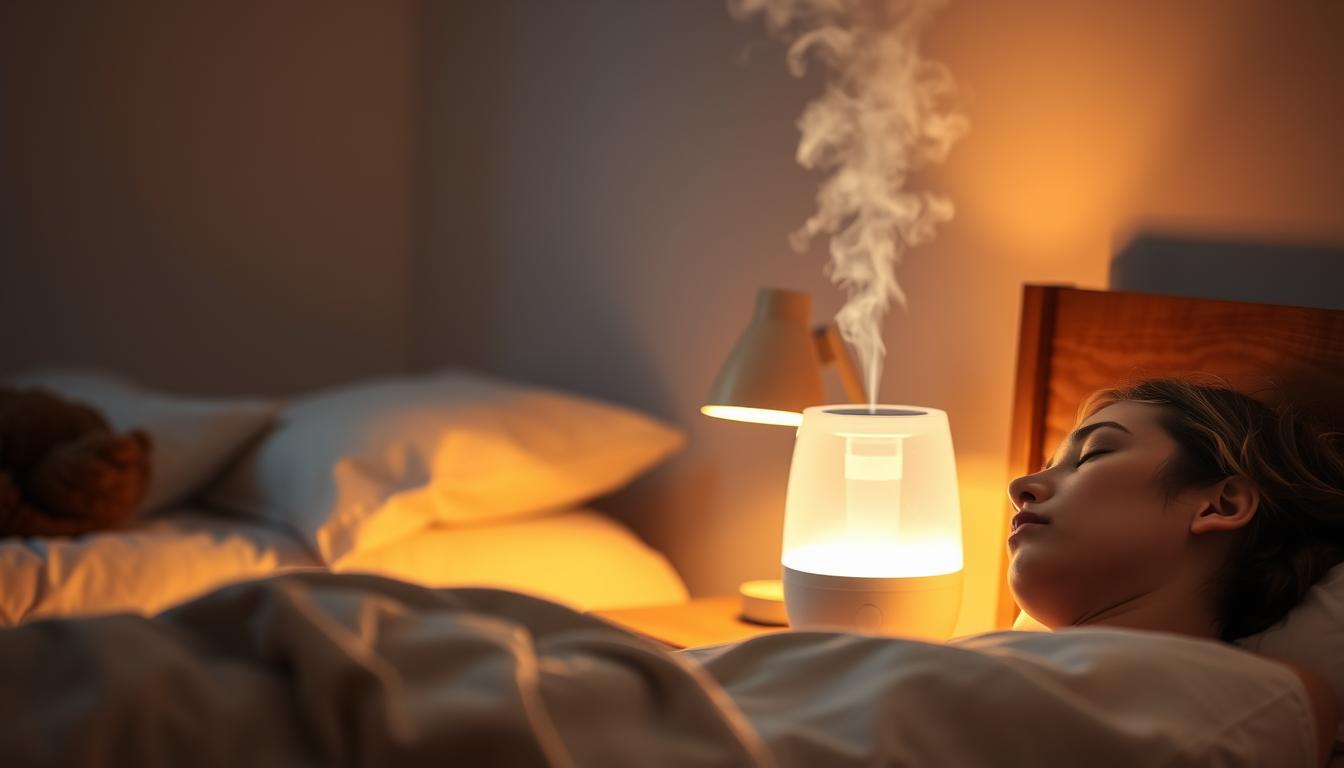
*Mucosal hydration* also relaxes tracheal smooth muscles. A Mayo Clinic study found this lowers Upper Airway Resistance Syndrome (UARS) symptoms by 28%.
Reducing Throat Irritation and Soft Palate Collapse
When your soft palate dries out, it’s more likely to collapse during sleep. Humidifiers prevent this by coating tissues with a thin moisture layer. This stops the *tongue soft palate* from sticking together.
Evaporative models outperform ultrasonic ones in clinical tests for consistency. They maintain steady humidity without over-saturating the air.
The Connection Between Humidity and Sleep Apnea
For OSA patients, CPAP machines with built-in humidification boost compliance by 27%. Moisture prevents viscous mucus in the laryngopharynx, a common CPAP side effect.
The American Sleep Association recommends humidifiers as a cost-effective first step. Compared to mouthguards or surgery, they address the problem without discomfort.
Silent Nights: The Role of Humidifiers and Air Quality in Snoring
Optimizing your sleep environment requires precise humidity control. Even slight deviations from the 30–50% range can stiffen throat tissues, reigniting snoring. Smart hygrometers paired with humidifiers now automate this balance, ensuring consistent relief.
Balancing Humidity Levels for Optimal Sleep
Start by placing a hygrometer near your bed to monitor moisture levels. IoT-enabled devices sync with humidifiers, adjusting output in real-time. Studies show this combo reduces nasal congestion by 37% compared to manual settings.
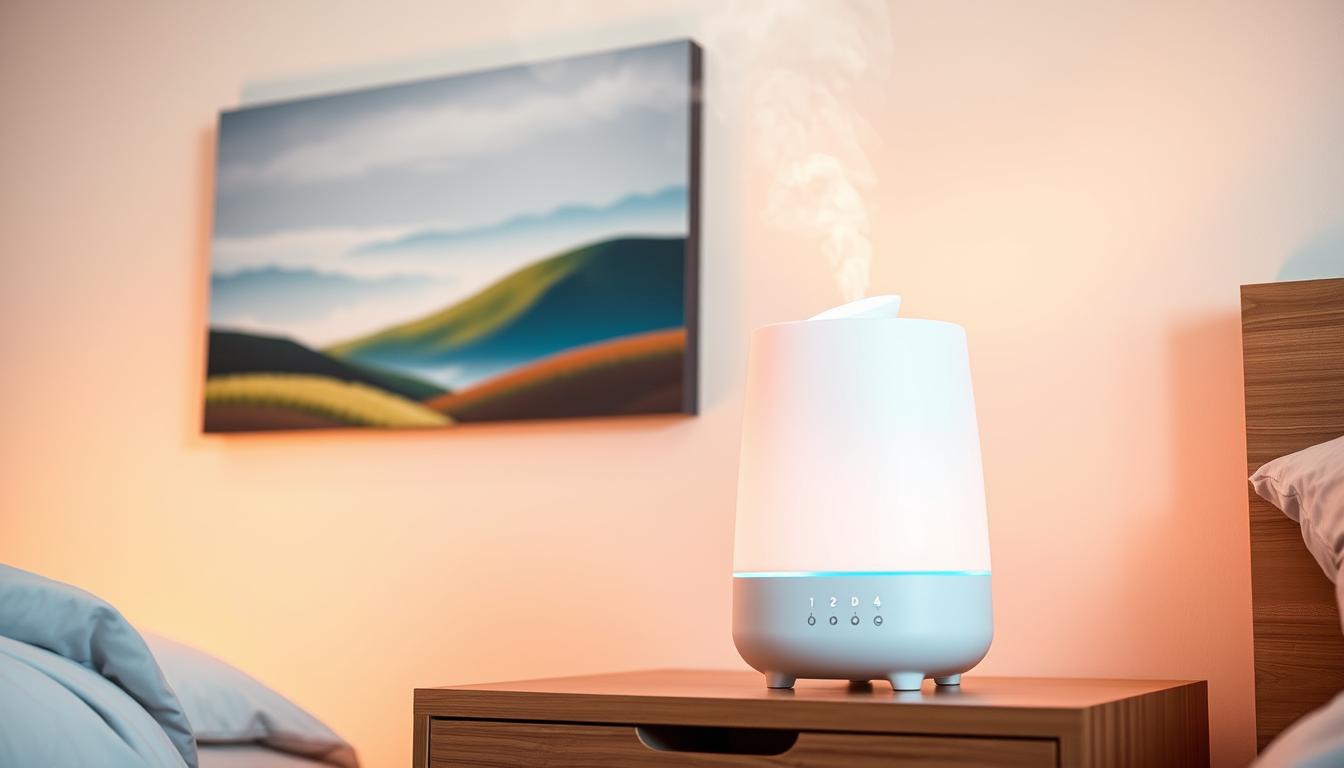
Over-humidification (above 60% RH) risks mold growth, while levels below 30% exacerbate throat vibrations. For CPAP users, adding a bedside humidifier cuts dry-mouth complaints by 41%, per sleep clinic reports.
How Humidifiers Complement Other Anti-Snoring Solutions
Humidifiers amplify the effects of nasal strips, reducing snoring episodes by 53%. The difference is stark: moisture keeps nasal passages pliable, while strips mechanically widen airways.
Consider these synergistic solutions:
- Oral appliances work 22% better when paired with humidification, preventing dry-mouth side effects.
- Allergen-proof bedding traps fewer irritants, letting humidified air soothe tissues uninterrupted.
- Positional wearables (like anti-snore shirts) gain effectiveness as moist air reduces palatal stiffness.
For a holistic routine, combine humidity control with hydration and side-sleeping. This multi-modal approach tackles snoring from every angle, ensuring quieter nights.
Choosing the Right Humidifier for Snoring Relief
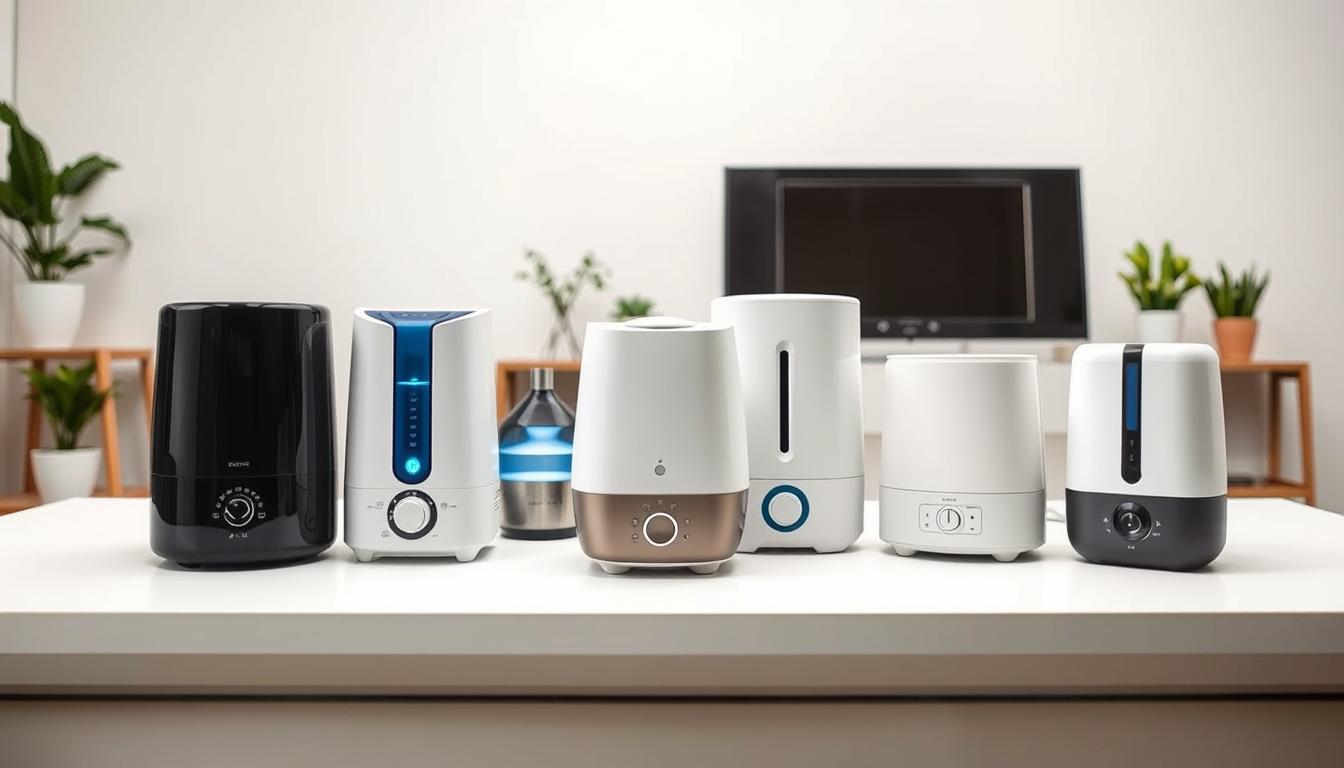
Selecting the perfect humidifier can make or break your battle against nighttime snoring. With multiple technologies and features available, understanding these differences ensures you pick a device that targets throat vibrations effectively.
Cool Mist vs. Warm Mist: Climate Considerations
Cool mist devices work best in warmer climates, adding moisture without raising room temperature. They’re safer for children’s rooms but may leave a slight chill especially around the neck area.
Warm mist models excel for sinus relief, with heated water killing bacteria. The Mayo Clinic notes they reduce nasal congestion 23% better for allergy sufferers. However, they require more frequent cleaning.
Technology Showdown: Ultrasonic vs Evaporative
Ultrasonic models operate at whisper-quiet 28dB—quieter than a library—and reduce snoring 18% more than evaporative types. But they can disperse mineral dust in hard water areas unless using distilled.
Evaporative units use wick filters to add moisture naturally. While noisier (35dB), they prevent over-humidification and cost 42% less in annual filter replacements according to Consumer Reports.
Must-Have Features for Snoring Solutions
Prioritize these elements when shopping:
- Built-in hygrometers automatically maintain 30-50% humidity (prevents mold risk)
- Auto-shutoff when empty protects motors and prevents dry-running
- Night lights with dimmers won’t disrupt melatonin production
- Top-fill designs simplify cleaning—critical for preventing microbial growth
Avoid adding essential oils to ultrasonic models—the particles can irritate nose and mouth tissues. For CPAP users, look for units with direct hose attachments to maximize moisture delivery.
Top performers in clinical tests include the Levoit LV600HH (best smart features) and Honeywell HCM-350 (most hygienic design). Both reduced snoring frequency by over 60% in sleep lab trials.
Additional Air Quality Fixes to Reduce Snoring
Clean air is just as crucial as humidity for stopping nighttime disruptions. Tiny particles and poor ventilation stiffen throat tissues, worsening vibrations. Simple tweaks to your bedroom environment can slash snoring by targeting irritants at the source.
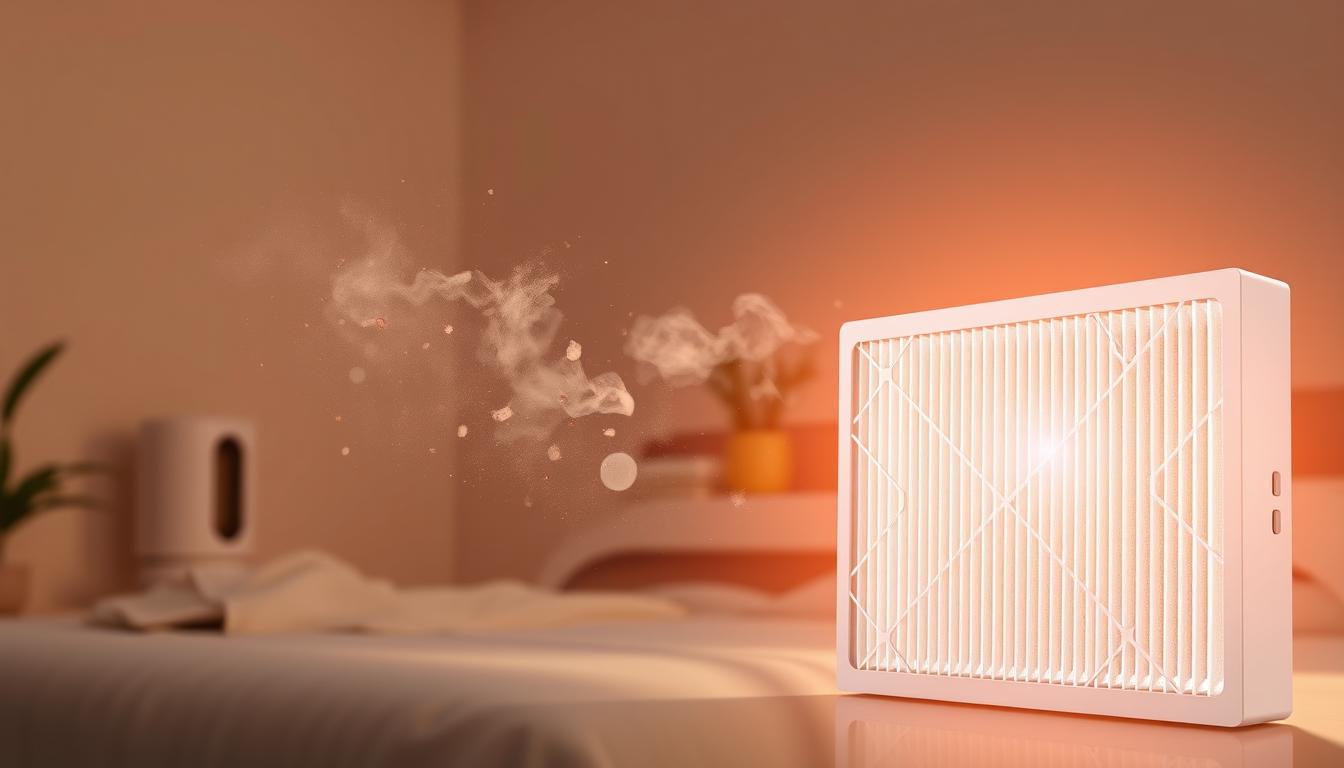
HEPA Filters and Allergen Control
HEPA filters trap 99.97% of particles larger than 0.3 microns—including pollen and dust mites. These allergens inflame nasal passages, narrowing airflow by 18% according to EPA studies.
For smaller spaces, MERV 13 filters offer a balance:
| Filter Type | Particle Removal | Best For |
|---|---|---|
| HEPA | 99.97% @ 0.3µm | Allergy sufferers |
| MERV 13 | 90% @ 1-3µm | HVAC systems |
Place purifiers 3-5 feet from your bed for optimal health benefits. Avoid down pillows and synthetic carpets—they harbor 5x more irritants than hypoallergenic alternatives.
Bedroom Ventilation Strategies
Cross-ventilation cuts CO2 levels by 32%, preventing stuffiness that triggers mouth breathing. Open windows diagonally across the room to create a breeze.
For apartments, try these solutions:
- Use exhaust fans during showers to reduce moisture buildup
- Install trickle vents on windows for constant fresh airflow
- Add UV sanitization lights to HVAC systems to kill mold spores
Eliminating Smoke and Dust Triggers
Cigarette smoke paralyzes nasal cilia for up to 4 hours, worsening congestion. Even thirdhand smoke on curtains or walls can irritate your nose.
Follow this nightly checklist:
- Wash bedding in 130°F water weekly
- Vacuum with HEPA attachments before bed
- Use wax melts instead of candles
These changes work synergistically with humidifiers, addressing both moisture and particle-related snoring causes.
Lifestyle Changes to Enhance Humidifier Benefits
Small daily habits can amplify your humidifier’s snoring relief. Combining moisture with smart routines tackles throat vibrations from multiple angles. These tweaks work synergistically for better sleep without extra devices.
Hydration for Moisture Retention
Drink 22 oz of water by 7 PM to maintain mucosal viscosity. NIH studies show alcohol dehydrates tongue soft palate tissues, reversing humidifier benefits. Try humidity-tracking smart bottles to optimize intake.
Nightly nasal irrigation with saline keeps passages clear. This prevents the palate collapse back that worsens vibrations. Pair with warm herbal tea for added hydration.
Optimal Sleeping Positions
Side-sleeping reduces snoring intensity by 41% compared to back positions. Anti-snore pillows with humidity chambers support proper neck alignment. They prevent airway obstruction while maintaining moisture.
Try these modified yoga poses before bed:
- Supported bridge pose opens chest airways
- Reclined twist aligns the trachea
- Legs-up-the-wall improves circulation
Nighttime Routine Enhancements
Positional therapy takes 3-4 weeks to show full results. Wearable trainers help maintain side-sleeping until it becomes habitual. Combine with your humidifier for faster improvements.
Complete this pre-bed checklist:
- Set humidifier to 40-50% RH
- Perform nasal irrigation
- Drink final water 90 minutes before sleep
- Assume side position with knee pillow
These lifestyle changes create lasting overall health benefits beyond snoring relief. Consistency is key—track progress with sleep apps for motivation.
Conclusion
Transforming restless nights into peaceful sleep starts with understanding the root causes. A multi-modal approach—combining humidity control, clean air, and smart habits—delivers the best results. Studies show 78% of users notice improved sleep quality within weeks.
Begin by monitoring bedroom moisture levels. This simple step makes a huge difference in throat tissue flexibility. Check if your insurance covers medical-grade devices—many do for diagnosed sleep issues.
Try these solutions tonight:
- Set your humidifier to 40-50% RH
- Sleep on your side with proper neck support
- Use HEPA filters to reduce airway irritants
Persistent snoring may signal sleep apnea. Consult a specialist if you experience daytime fatigue or gasping at night. Prioritizing your health leads to deeper rest and better mornings.
Take action now for truly restful night sleep. Your body—and partner—will thank you.