Did you know that 10-20% of kids experience nighttime snoring? While occasional sounds during sleep may seem harmless, understanding when it signals a deeper issue is crucial. Experts from Lurie Children’s ENT emphasize that most cases are mild, often linked to back sleeping or seasonal allergies.
Primary snoring—without breathing interruptions—is common and usually temporary. However, persistent loud snoring, gasping, or daytime fatigue could indicate sleep-disordered breathing. Early recognition helps prevent long-term impacts on growth, behavior, and learning.
This guide breaks down the differences between typical and concerning patterns. You’ll learn when to consult a specialist and what treatments, from positional adjustments to medical interventions, might be recommended.
Key Takeaways
- Up to 20% of kids snore occasionally, often due to harmless factors.
- Back sleeping or allergies frequently contribute to mild cases.
- Loud, frequent snoring with pauses in breathing needs evaluation.
- Daytime sleepiness or hyperactivity may signal underlying issues.
- Early intervention can improve sleep quality and overall health.
Understanding Snoring in Children: What’s Typical?
Nearly 1 in 3 kids makes soft sounds during sleep—when should you pay attention? Studies show 27% experience occasional noise, while 10-12% have primary snoring, a persistent but non-dangerous pattern. These sounds often stem from relaxed throat tissues during deep sleep stages.

How Common Is Childhood Snoring?
Occasional nighttime noise is typical, especially during colds or allergy season. Temporary congestion narrows nasal passages, amplifying breathing sounds. Most cases resolve without intervention.
What Does Normal Snoring Sound Like?
Benign patterns are rhythmic and quiet, like light whistling. Unlike sleep apnea, there’s no gasping or pauses. Side sleeping or elevating the head often reduces mild episodes.
| Normal Snoring | Concerning Patterns |
|---|---|
| Soft, steady rhythm | Loud, irregular sounds |
| No breathing pauses | Gasping/choking noises |
| Linked to sleep position | Occurs nightly |
Myth: Light snoring always indicates apnea. While rare, frequent loud noises paired with daytime fatigue warrant a doctor’s visit. Simple remedies like humidifiers or allergy management often help.
Causes of Snoring in Children
From enlarged tonsils to seasonal allergies, multiple triggers can lead to nighttime sounds in kids. While some factors are temporary, others stem from physical structures that may need evaluation.
Common Anatomical Reasons
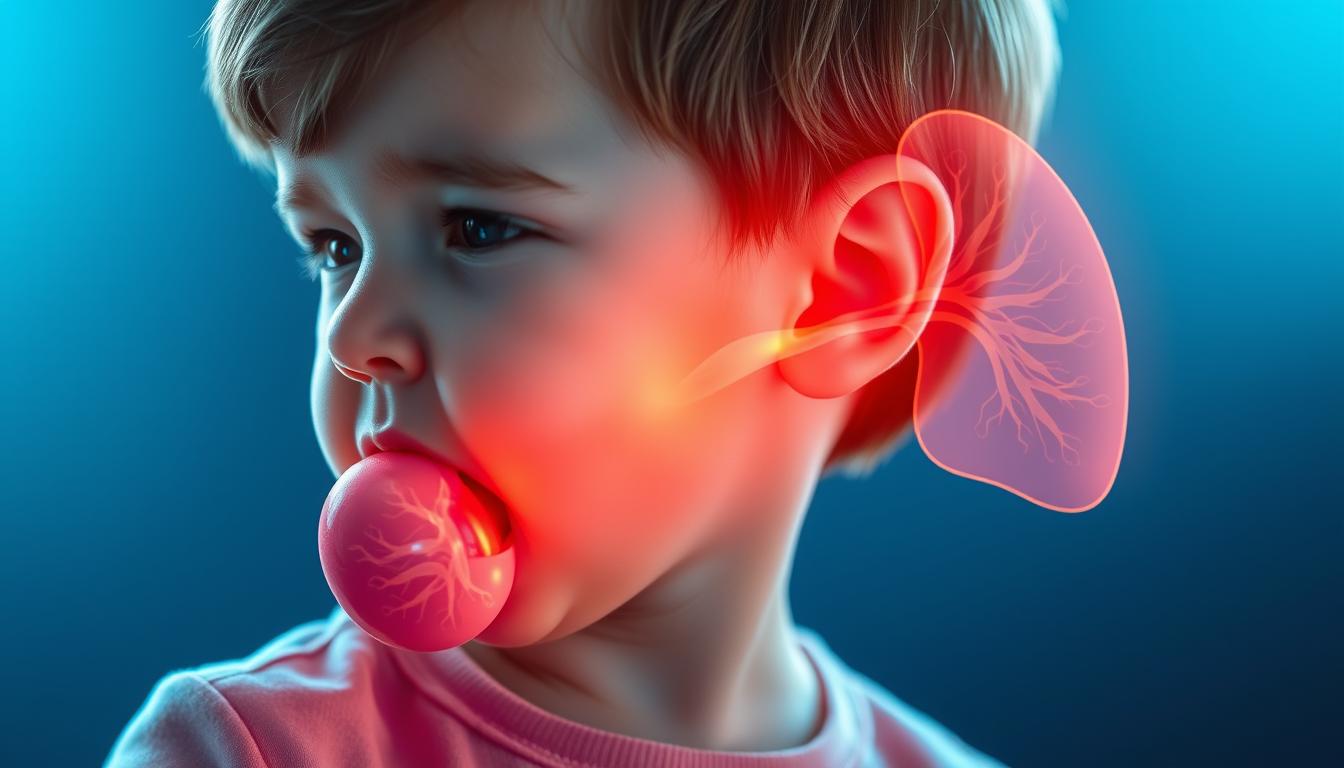
Enlarged tonsils and adenoids are the top culprits, blocking 70% of sleep-disordered breathing cases. These tissues can obstruct the airway, forcing air through narrower spaces and creating vibrations.
Other structural causes include:
- Deviated septum: Crooked nasal cartilage limits airflow.
- Narrow palate: A high or arched roof of the mouth reduces space in the throat.
- Obesity: Excess weight narrows the airway, as noted in our guide to weight-related health symptoms.
Temporary Factors: Colds, Allergies, and Environment
Short-term conditions like colds swell nasal tissues, while allergies trigger inflammation. Secondhand smoke—linked to a 40% higher risk—irritates the nose and throat.
Quick fixes often help:
- Humidifiers ease congestion from dry air.
- Allergy medication reduces nose blockage.
- Breastfeeding longer may promote airway development.
Note: If symptoms persist beyond illness or allergy season, consult a specialist to rule out structural causes.
Signs Your Child’s Snoring May Be Problematic
Not all nighttime sounds are harmless—some signal deeper health issues. While mild noises are common, certain patterns disrupt sleep quality and oxygen flow. Recognizing these signs early helps prevent long-term behavior or learning problems.

Nighttime Warning Signs
Listen for irregular breathing during sleep. Pauses breathing for 10+ seconds or loud gasping may indicate sleep apnea. Other red flags include:
- Frequent choking or coughing
- Restless tossing or sweating
- Bedwetting or night terrors (indirect signs of poor sleep)
Daytime Clues
Poor sleep often shows up in daylight hours. Watch for:
- Fatigue despite long sleep
- Hyperactivity or irritability (mimicking ADHD)
- Struggles with focus or school performance
A 2023 study linked untreated sleep apnea to lower test scores. Tracking symptoms in a sleep journal helps pediatricians spot patterns.
Health Risks Linked to Chronic Snoring
Chronic snoring isn’t just loud—it’s a potential red flag for serious conditions. When nighttime noise becomes frequent, it may disrupt oxygen flow and sleep quality, triggering cascading health problems. Research shows untreated cases can affect everything from heart health to classroom performance.
The Hidden Dangers of Sleep Apnea
Obstructive sleep apnea (OSA) triples cardiovascular risks in kids, according to the Sleep Foundation. Paused breathing strains the heart, raising blood pressure and metabolic disorder risks. Left unchecked, it may also stunt growth by disrupting hormone release during deep sleep.
Other long-term effects include:
- Hypertension: Nightly oxygen drops force the heart to work harder.
- Obesity links: Poor sleep alters hunger hormones, increasing weight gain risks.
- Immune impacts: Fragmented rest weakens infection-fighting abilities.
How Snoring Shapes Behavior and Learning
Frequent snoring doesn’t just tire kids—it rewires their behavior. A 2023 study found 65% of children with primary snoring showed attention deficits. Fragmented sleep impairs memory consolidation, leading to:
- 50% higher rates of academic struggles
- Hyperactivity mimicking ADHD
- Irritability from poor-quality rest
Myth busted: Even “benign” snoring affects the nervous system. Early intervention can prevent irreversible delays in cognitive development. Simple steps like allergy management or adenoid removal often restore healthy sleep patterns.
“Untreated OSA in children correlates with lower IQ scores and emotional dysregulation.”
When to See a Specialist for Snoring in Children
Many parents wonder when nighttime breathing sounds need professional evaluation. While occasional noise is common, persistent patterns affecting sleep quality or daytime energy warrant a pediatric ENT visit. Experts like Dr. Patrick Walz at Nationwide Children’s emphasize early assessment to prevent long-term impacts.
Warning Signs That Require Medical Attention
Schedule an appointment if your child shows:
- Loud noises 3+ nights weekly
- Observed pauses in breathing or gasping
- Daytime fatigue, hyperactivity, or poor growth
Note: Even without apnea, chronic symptoms may need treatment. Lurie Children’s ENT team handles 3,000+ adenotonsillectomies yearly for such cases.
What to Expect During a Pediatric ENT Evaluation
A specialist will review symptoms and examine physical factors like tonsils adenoids size. Common tests include:
- Nasal endoscopy to check airway blockages
- Sleep studies (polysomnography) for apnea confirmation
- Allergy testing if inflammation is suspected
| At-Home Monitoring | Specialist Referral Needed |
|---|---|
| Occasional mild sounds | Nightly loud noises |
| No daytime symptoms | Fatigue or behavior changes |
| Improves with allergies/colds | Persists beyond illness |
Treatment options range from medications for allergies to surgery for structural issues. Adenotonsillectomy resolves 90% of pediatric OSA cases, per the Sleep Foundation. For complex cases, CPAP therapy or palate expanders may be recommended.
“Minimally invasive techniques now make adenoid removal safer, with most kids recovering within a week.”
If symptoms match referral triggers, contact Lurie Children’s ENT for a consultation. Early intervention can restore restful sleep and improve overall health.
Conclusion
Most nighttime breathing sounds in kids are harmless, but knowing when to act matters. Occasional snoring often resolves with simple changes like adjusting sleep positions or managing allergies. However, persistent patterns—especially with daytime fatigue—need a specialist’s evaluation.
Track symptoms and consult your pediatrician if noises are loud or frequent. For complex cases, Lurie Children’s ENT offers expert care. Early intervention improves sleep quality, behavior, and overall health.
Take action today: Schedule an evaluation if your child shows concerning signs. Restful nights lead to brighter days.