93% of people with joint hypermobility report feeling stiff daily – a biological contradiction that leaves many scrambling for answers. This paradox isn’t in your head: emerging research reveals your body’s scaffolding system behaves like overstretched elastic bands dipped in glue.
Your connective network – a living 3D web wrapping every muscle and organ – becomes both too slack and abnormally rigid in hypermobility syndromes. Thickened layers fuse together, creating internal splints that fight against loose joints. “It’s like wearing a sweater three sizes too big that’s been starched stiff,” explains fascia researcher Dr. Tina Wang.
Medical professionals often miss this duality. Your experience of moving freely while feeling trapped in concrete finally has scientific validation. Cellular studies show altered collagen production and chronic inflammation reshape your body’s architecture at microscopic levels.
Key Takeaways
- Hypermobile joints often coexist with persistent stiffness due to connective tissue changes
- Your body-wide support network develops thickened areas that restrict movement
- Medical misunderstandings frequently lead to inadequate treatment approaches
- New research identifies specific cellular mechanisms behind these contradictions
- Effective management requires addressing both looseness and rigidity simultaneously
Understanding Fascia, EDS, and Hypermobility
Your body’s internal architecture relies on a dynamic framework most people never consider. This biological scaffolding influences everything from posture to organ function—and its dysfunction reshapes how you experience movement.
What Is Fascia and Its Role in the Body?
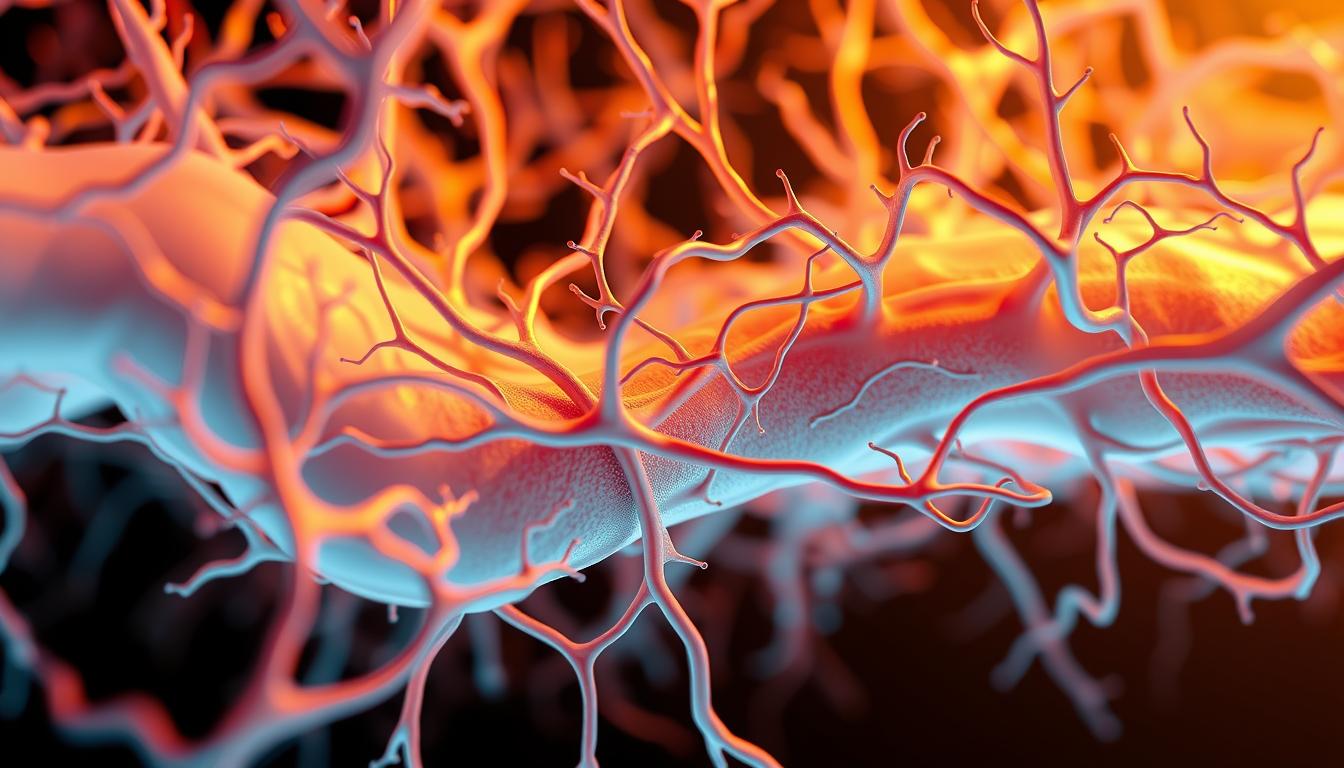
Your fascia forms a living 3D matrix wrapping every muscle, nerve, and blood vessel. Unlike inert packaging material, this system actively transmits forces during activities like walking or reaching. Research shows it contains ten times more sensory nerves than muscles, making it crucial for spatial awareness.
Three key functions define healthy connective tissue:
- Maintaining structural alignment during rest and activity
- Distributing mechanical stress across multiple areas
- Facilitating cellular communication through biochemical signaling
How EDS and Hypermobility Influence Fascia Function
Genetic variations alter collagen production in Ehlers-Danlos syndrome, creating a chain reaction. Your connective tissue becomes like overworked elastic—loose where it should stabilize, rigid where flexibility matters. Intensive sports training during growth years may accelerate these changes.
A 2023 study revealed thickened fascial layers in hypermobile individuals compensate for unstable joints. This adaptation reduces your natural range of motion while increasing energy expenditure during simple tasks. The result? Your body fights itself during basic movements.
The Science Behind Connective Tissue and Fascia Changes
Groundbreaking research now explains why your body’s support system behaves like reinforced concrete wrapped in silk. Cellular studies reveal hidden transformations occurring beneath the skin’s surface that redefine our understanding of hypermobility.
Extracellular Matrix Dynamics and Myofibroblast Activity
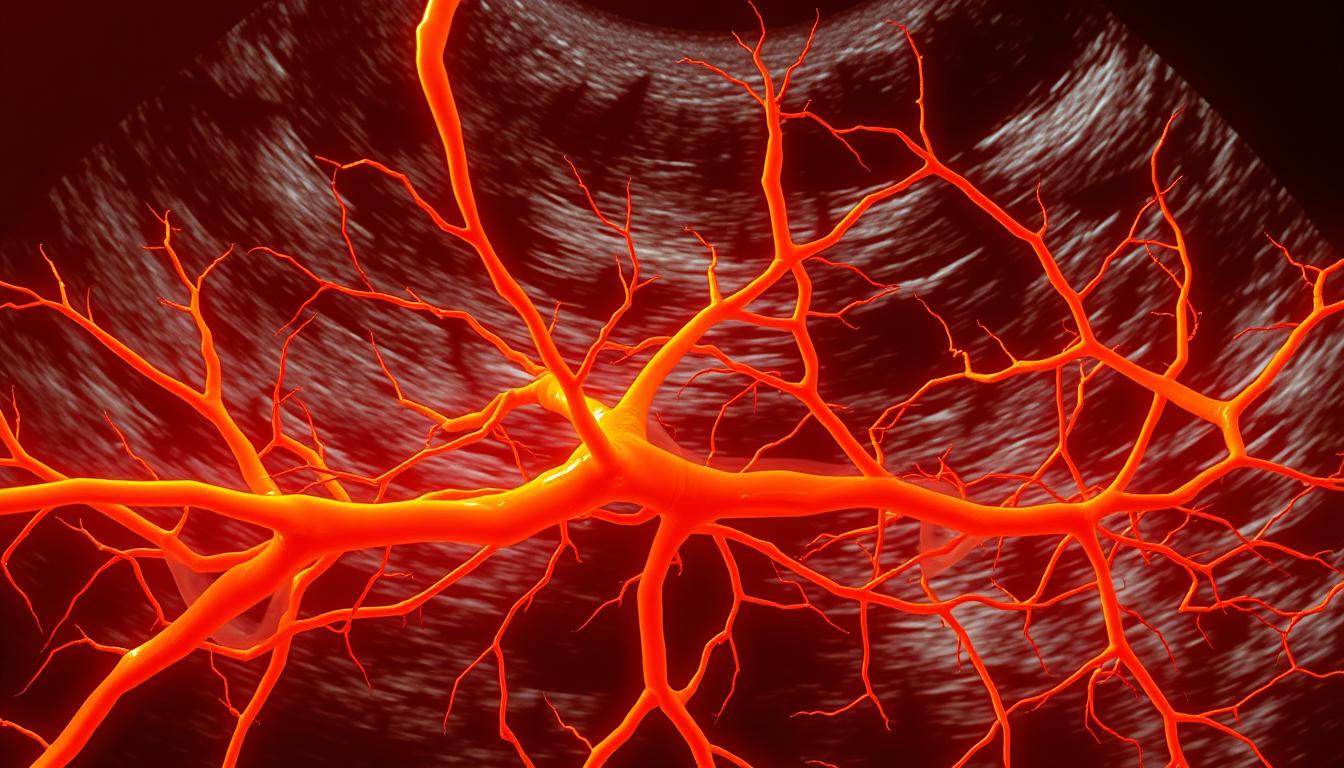
Your cells constantly remodel their environment through microscopic construction projects. In hypermobility spectrum disorders, fibroblasts shift into overdrive, becoming myofibroblasts that pump out excess collagen. This biological overcorrection creates rigid scaffolding where flexibility should exist.
Dr. Maria Colombi’s 2016 discovery showed altered gene patterns affect how your extracellular matrix functions. “The ECM loses its fluidity, becoming denser than healthy tissue while paradoxically allowing joint laxity,” her team reported. This explains why you might feel both unstable and restricted during movements.
Ultrasound Discoveries in hEDS/HSD Research
Advanced imaging techniques finally provide visible proof of what patients describe. A 2021 ultrasound study led by Dr. Wang measured fascial layers 23% thicker in those with hEDS compared to control groups. These structural changes reduce sliding capacity between tissue layers.
Your deep connective tissues develop what researchers call “biological Velcro” – adhesions that limit smooth motion. Diagnostic tools now capture these alterations, offering objective evidence for previously misunderstood symptoms. This validation marks a turning point in developing targeted therapies for the syndrome.
Stretchy but Stiff: Why Fascia Pain Feels Paradoxical in EDS
The sensation of being simultaneously loose and restricted creates a biological tug-of-war. Your body’s connective framework develops conflicting properties – dense adhesions form near hypermobile areas, generating opposing forces during daily activities.
Mechanisms of Paradoxical Pain Sensations
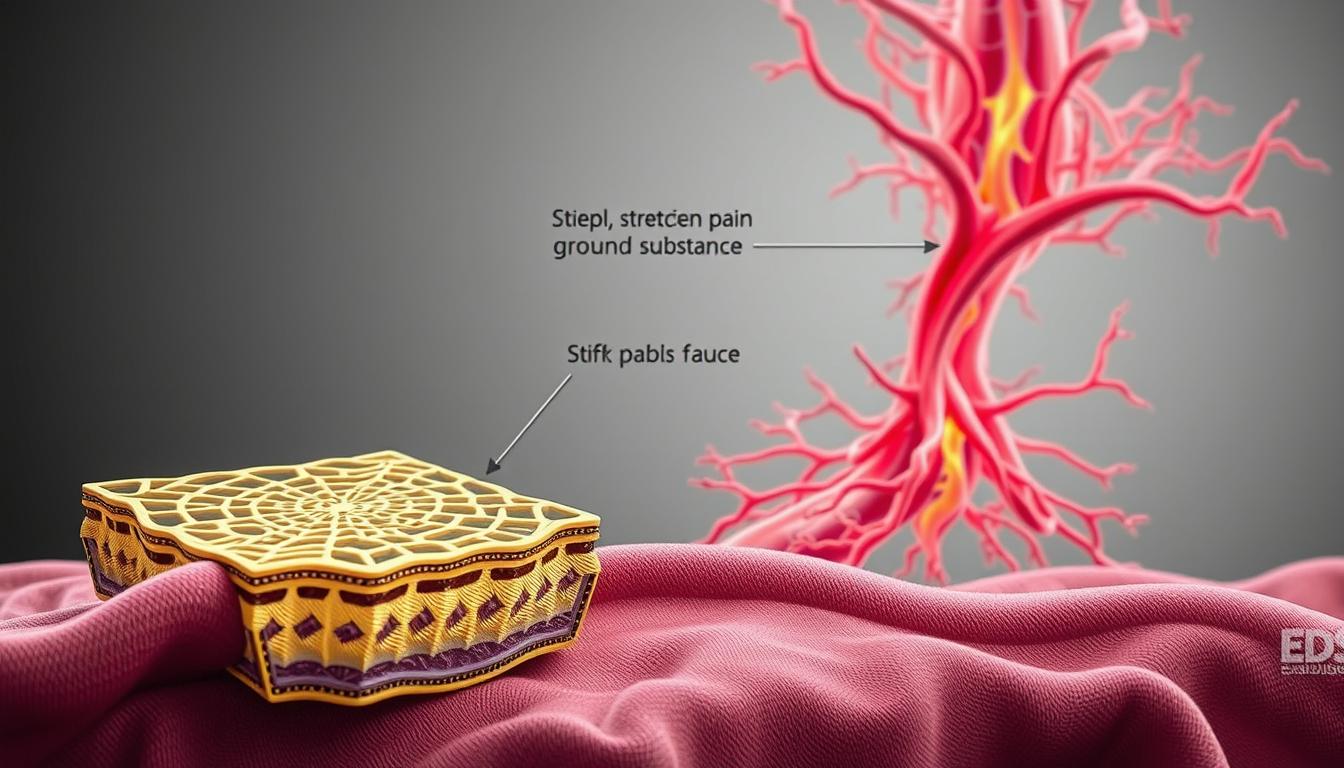
Thickened tissue layers compress nerve endings designed to detect pressure changes. Specialized pain receptors called C-fibers fire constantly when trapped between rigid fascial sheets, creating diffuse discomfort. This explains why you might struggle to pinpoint where the ache originates.
Your nervous system amplifies these signals through central sensitization. Minor movements or touches feel exaggerated as your brain misinterprets harmless stimuli as threats. Over time, this rewiring intensifies stiffness perceptions despite flexible joints.
The Impact on Joint Stability and Movement
Adhered connective tissue disrupts natural force distribution during motion. Stress concentrates on vulnerable areas instead of spreading evenly, overloading already unstable joints. Simple actions like reaching or standing may trigger partial dislocations.
Muscles work harder to compensate for compromised structural support. This constant strain leads to fatigue and protective tightening, creating a false sensation of stability. The cycle continues as inflammation from overuse further degrades tissue quality.
Exploring Proprioception and Sensory Feedback in Hypermobility
Your body’s internal GPS constantly recalibrates using signals from connective tissues – until hypermobility scrambles the coordinates. This hidden sensory network governs how you navigate space without looking at your limbs.

The Science of Proprioception in Fascia
Specialized sensors in fascial layers act like biological motion trackers. These mechanoreceptors detect subtle shifts in tissue tension and joint position. When connective tissue structure changes, these sensors send conflicting data to your brain.
In hypermobility, lax joints stretch receptors beyond normal ranges. Thickened fascial areas simultaneously compress nerve endings. Your nervous system receives muddled signals about where your body exists in space.
How Sensory Disruption Affects Your Balance and Coordination
Walking becomes a guessing game when your feet’s position sense falters. You might trip over flat surfaces or bump into doorways unexpectedly. Research shows hypermobile individuals use 40% more brainpower for basic balance tasks.
Your body compensates by over-relying on vision and inner ear signals. This strain increases fatigue during routine activities. Targeted exercises that challenge position awareness can help rebuild fading sensory pathways.
Integrative Approaches to Managing Fascia Pain
Rebuilding stability in hypermobile bodies demands precision-guided strategies. Traditional exercise plans often backfire, but emerging protocols blend strength training with nervous system retraining for lasting results.
Fascia-Friendly Movements and Resistance Training
Controlled resistance work outperforms stretching for improving joint security. Studies show weighted exercises increase tendon stiffness by 18% in six months when performed consistently. Start with low-load activities like wall push-ups or resistance band rows.
Movement patterns should prioritize quality over quantity. Slow tempos and limited ranges help muscles engage without straining lax joints. A 2022 trial found participants using tempo training reduced dislocations by 37% compared to conventional programs.
Role of Skilled Manual Therapy in EDS/HSD
Specialized therapists use feather-light pressure to coax stuck tissue layers apart. “We’re rewiring the nervous system’s relationship with restriction,” explains physical therapist Dr. Elena Torres. Sessions often combine gentle mobilization with stability drills.
Aggressive techniques risk destabilizing vulnerable areas. Always verify your provider’s experience with hypermobility disorders before treatment. Properly applied manual work can enhance circulation and reduce protective muscle guarding over time.
Effective care plans merge these approaches while respecting your body’s pace. Progress might feel gradual, but sustained effort builds durable improvements in function and comfort.
Recognizing the Challenges of Hypermobility Spectrum and EDS
Navigating the diagnostic landscape for connective tissue conditions often feels like solving a medical mystery. Many struggle for years before finding answers, their symptoms dismissed as unrelated issues.
Identifying Subtle Symptoms and Diagnostic Hurdles
Hypermobility spectrum disorders frequently masquerade as other conditions. Your chronic fatigue or digestive troubles might be labeled as separate problems rather than parts of a larger pattern. This fragmentation leads to incomplete treatment plans.
Healthcare providers sometimes overlook the connection between flexible joints and systemic symptoms. A 2022 study found 68% of patients with confirmed hEDS received three or more misdiagnoses first. The absence of definitive genetic markers complicates identification efforts.
Your experience might not match textbook descriptions of Ehlers-Danlos syndrome hypermobility. Subtle signs like frequent sprains or thin skin often get minimized. Specialized clinics now use multi-system evaluations to piece together these complex presentations.
Effective care starts with recognizing these challenges. Raising awareness about spectrum disorders helps bridge the gap between patient experiences and medical understanding.