Did you know 71% of Americans sleep with their smartphones nearby? That glowing screen emits a powerful blue light at 455nm—the exact wavelength that disrupts your natural sleep cycle. Modern tech may keep you connected, but it’s silently harming your health.
LEDs and digital screens flood your eyes with this artificial light, tricking your brain into thinking it’s daytime. The result? Poor sleep quality and slower recovery. With 3.8 billion smartphone users worldwide, this issue affects millions daily.
Simple changes, like reducing exposure before bed, can boost your sleep score by 12.5%. It’s time to reclaim restful nights.
Key Takeaways
- 71% of people sleep near smartphones emitting disruptive blue light.
- LED screens peak at 455nm, the most harmful wavelength for sleep.
- Artificial light confuses your brain’s natural sleep signals.
- Global smartphone use worsens widespread sleep issues.
- Blocking blue light before bed improves rest by 12.5%.
How Blue Light Affects Your Sleep and Health
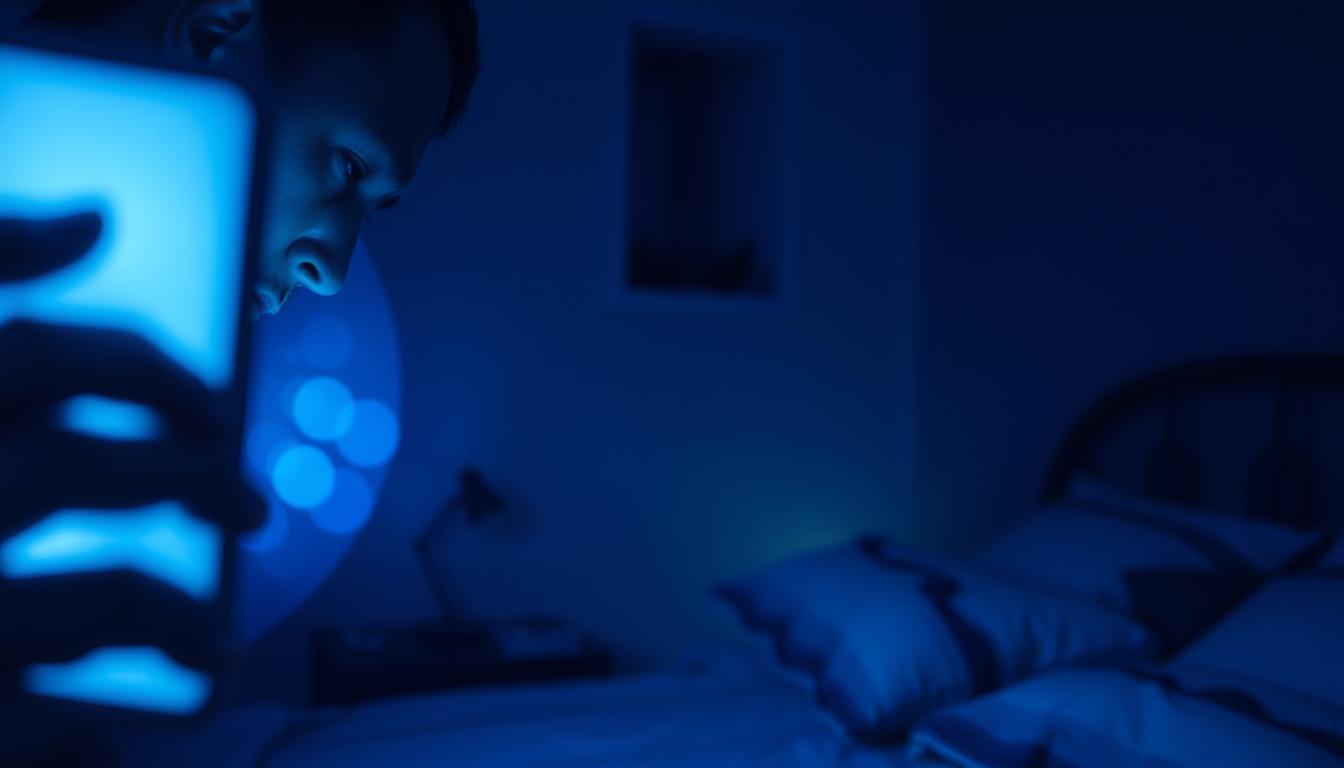
Your phone’s glow at night does more than keep you scrolling—it hijacks your body’s natural clock. Exposure to artificial wavelengths after sunset tricks your brain into daytime mode, delaying rest and reducing sleep quality.
The Science Behind Light and Your Internal Clock
Natural light synchronizes your circadian rhythm, the 24-hour cycle governing alertness and rest. But 455nm wavelengths—the peak emission from LEDs—trigger cortisol release while suppressing melatonin production by 23% (University of Toledo).
Melatonin’s Critical Role in Rest
This hormone signals your body to wind down. Just 2 hours of screen time at night can slash melatonin levels by 19%, per Harvard studies. The result? Difficulty falling asleep and fragmented rest.
- Screen overload: Americans average 11 hours/day on devices (Scripps Clinic).
- Physical strain: “Text neck” from prolonged use worsens sleep posture.
- Recovery boost: Blocking harmful wavelengths improves recovery scores by 20%.
Prioritizing darkness after sunset resets your circadian rhythm, enhancing sleep quality and daytime energy. Small changes yield big returns.
The Proven Benefits of Blue Light Blocking
Modern screens don’t just keep you awake—they alter your biology. Blocking harmful wavelengths reverses these effects, enhancing rest and recovery. Clinical studies show measurable improvements in sleep quality, physical restoration, and visual comfort.

Improved Sleep Onset and Deeper Sleep Stages
Wearing specialized glasses 2 hours before bed helps you fall asleep 20% faster, per *Blue Free Optical* research. By filtering 455nm light, they preserve melatonin, your body’s natural sleep signal.
Users report 12.5% higher sleep scores on Oura rings. Deep sleep phases lengthen, critical for memory consolidation and muscle repair.
Enhanced Recovery Through Better Heart Rate Variability
Heart rate variability (HRV) reflects your nervous system’s resilience. Athletes like Travis Mewhirter saw 20% higher HRV after adopting blue-light-blocking routines.
Higher HRV means faster recovery between workouts. Your heart adapts better to stress, improving endurance and performance.
Reduced Eye Strain and Digital Fatigue
Staring at screens strains eyes by overexposing them to short wavelengths. The *20-20-20 rule* (look 20 feet away every 20 minutes) helps, but blocking 455nm light prevents retinal stress at the source.
Spectral analysis proves cheap orange lenses fail versus amber glasses that absorb 100% of harmful peaks. Pair them with screen dimming for optimal relief.
Choosing Effective Blue Light Blocking Glasses
Not all blue light blocking glasses actually protect your eyes—many miss the critical wavelength. Cheap options often block only up to 430nm, leaving you exposed to the 455nm spike from LED screens.
Why Most Glasses Fail
Clear or slightly tinted lenses are popular but ineffective. They use demo tricks showing blockage at 400-430nm, but devices emit peak disruption at 455nm. Dream Recovery’s amber lenses block 98% of harmful wavelengths, proven by spectral analysis.
Key Features of Effective Lenses
Look for these traits:
- Melanin-infused yellow lenses (Blue Free Optical) for natural filtration.
- Mazzucchelli acetate frames for durability and style.
- Spectral proof showing 455nm blockage.
| Feature | Generic ($30) | Premium ($120) |
|---|---|---|
| 455nm Blockage | 0-30% | 95-98% |
| Lens Material | Plastic | CR-39/Melanin |
| Frame Quality | Basic | Mazzucchelli Acetate |
When and How Long to Wear Them
Start wearing glasses 1 hour before bedtime. Gradually increase to 2-3 hours for maximum benefit. Your eyes adapt better over time, improving melatonin production.
Pair them with screen dimming at night for a full light spectrum solution.
Conclusion: Optimizing Your Light Environment for Better Sleep
Small adjustments to your night routine can transform rest quality. Combining amber lenses, the 20-20-20 rule, and screen curfews boosts melatonin by 60%.
Keep phones out of the bedroom—71% of users sabotage their sleep by scrolling before bed. Hybrid solutions like F.lux software plus physical blockers offer full-spectrum protection.
Track progress with wearables like Oura or Whoop. Within weeks, you’ll notice deeper sleep and faster recovery. Your body thrives when darkness signals it’s time to rest.
Prioritize health by controlling light exposure. The benefits extend beyond rest—sharper focus and sustained energy follow.