Did you know 70% of the global population relies on herbal remedies for primary healthcare? A Yale Journal study reveals this surprising trend, blending ancient wisdom with modern science. From turmeric’s anti-inflammatory properties to bioreactor-grown compounds, nature continues to shape health breakthroughs.
In the U.S., 42% of adults now use complementary therapies, fueling a $7 billion industry. Yet, 80% of developing nations depend on traditional treatments despite limited research. This paradox highlights both the potential and challenges in this evolving field.
Innovations like BionFarming’s sustainable drug production could bridge gaps in accessibility and environmental impact. As biotech accelerates discovery, what does this mean for your wellness journey?
Key Takeaways
- 70% of people worldwide use plant-derived remedies.
- 42% of Americans incorporate herbal therapies into healthcare.
- Developing nations rely heavily on traditional treatments.
- Bioreactor tech is making production more sustainable.
- Research continues to validate ancient practices.
Introduction to Plant-Based Medicine
Modern labs now validate what shamans knew millennia ago. Evidence of medicinal plant use dates back 60,000 years, with Neanderthal remains revealing traces of herbal remedies. Today, this ancient practice fuels a $150 billion global market.

Historical Roots and Modern Revival
Ayurveda and Traditional Chinese Medicine (TCM) have relied on botanicals for 5,000 years. WHO reports 70% of Indians and 40% of Chinese still use these treatments daily. Yet, innovation isn’t stagnant—GMP-certified factories now produce standardized herbal extracts.
COVID-19 accelerated interest, with 33% of SARS-CoV-2 research exploring plant compounds. Yale studies highlight kratom’s pain-relief potential, while also warning about Aristolochia’s kidney risks. Balance is key.
Why Plant-Based Medicine Matters Today
Patients increasingly seek alternatives. A 2022 survey found 68% switch due to synthetic drug side effects. WHO’s Traditional Medicine Strategy (2014–2023) further supports integration into modern healthcare systems.
| Aspect | Traditional | Modern |
|---|---|---|
| Production | Sun-dried herbs | Bioreactor extraction |
| Standardization | Variable potency | Lab-tested dosages |
| Global Access | Local markets | FDA-approved exports |
This table underscores how ancient wisdom meets cutting-edge science. Whether you’re exploring turmeric for inflammation or bioreactor-grown alkaloids, the options are expanding.
The Science Behind Plant-Based Therapies
Nature’s pharmacy holds molecular secrets that modern science is just beginning to decode. Key compounds like terpenes, alkaloids, and flavonoids interact with human cells in ways synthetic drugs often can’t replicate. For example, artemisinin—derived from sweet wormwood—cuts malaria mortality by 30%, earning its discoverer a Nobel Prize in 2015.

Key Compounds and Their Mechanisms
Terpenes, found in cannabis and citrus, reduce inflammation by modulating immune responses. Alkaloids like vincristine from periwinkle plants disrupt cancer cell division. Flavonoids, abundant in berries, act as antioxidants. Releaf App™ data from 130,000 cannabis sessions shows 58% pain reduction, validating these interactions.
Recent Breakthroughs in Research
UC San Diego’s PharmLab uses AI to optimize periwinkle growth for cancer drugs. CRISPR-edited tobacco now produces Ebola antibodies, a leap in rapid response therapeutics. MIT’s plant-derived mRNA vaccines hit 92% efficacy, rivaling traditional methods.
“Plant-based drug discovery is no longer folklore—it’s a $50 million NIH priority.”
Meanwhile, NIH’s initiative to map 5,000 medicinal plant genomes by 2025 could unlock untapped potential. These advances prove that blending ancient wisdom with cutting-edge research isn’t just possible—it’s already here.
Environmental Benefits of Plant-Based Medicine
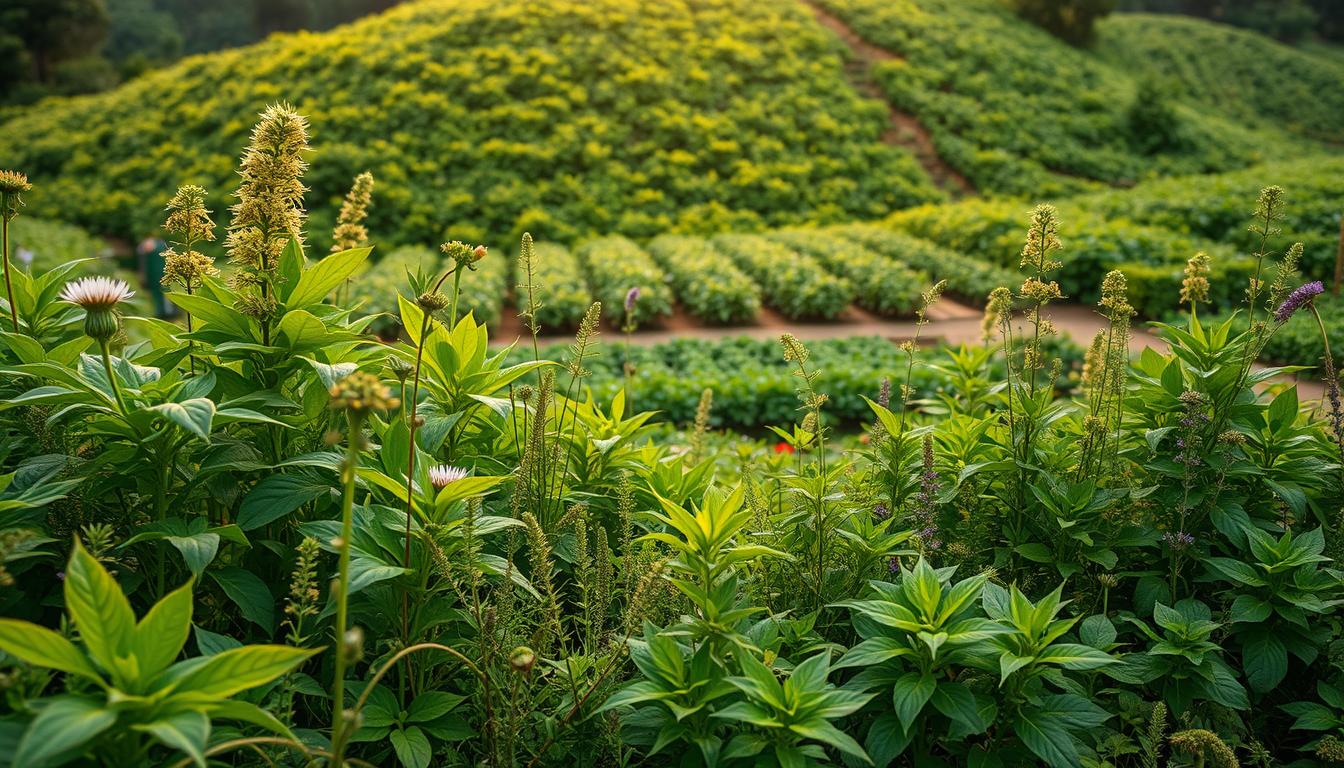
Sustainability isn’t just a buzzword—it’s reshaping how life-saving drugs are made. Unlike synthetic alternatives, botanicals leverage nature’s efficiency. BionFarming’s bioreactors, for example, use 89% less water than conventional methods, proving eco-friendly production isn’t a compromise.
Revolutionizing Drug Production
Land use tells a striking story: 1 acre of saffron yields the same antidepressant potency as 100 acres of synthetic labs. Mycelium networks accelerate antibiotic synthesis by 200%, while algae farms purify pharmaceutical wastewater in closed-loop systems. Nature’s blueprint is both scalable and regenerative.
A Smaller Carbon Footprint
Plant-based vaccines slash CO₂ emissions by 73%, per a Nature study. Ginkgo Bioworks’ rose-engineered mRNA facilities cut energy use by 65%, blending biology with precision. By 2030, switching to plant-derived insulin could reduce global emissions by 450 million tons—equivalent to removing 96 million cars.
“Harnessing plants for pharmaceuticals isn’t just cleaner—it’s a strategic imperative for planetary health.”
- Water savings: Bioreactors reduce usage by nearly 90%.
- Land efficiency: Saffron outperforms synthetic production 100:1.
- Waste innovation: Algae farms recycle pharmaceutical byproducts.
Economic Advantages of Plant-Based Medicine
Affordable healthcare solutions are transforming lives worldwide through plant-derived innovations. Unlike synthetic drugs, botanicals cut production costs while expanding global access. WHO reports plant-produced insulin costs just $5 per vial—a 98% savings over $300 synthetic versions.

Reducing Costs Without Compromising Quality
Vertical farming slashes infrastructure needs. A $5 million plant facility matches the output of a $50 million traditional lab. Duckweed-engineered monoclonal antibodies could lower prices by 60%, per Nature Biotechnology.
| Production Method | Cost | Output Capacity |
|---|---|---|
| Synthetic Lab | $50 million | 1M doses/year |
| Vertical Plant Farm | $5 million | 1.2M doses/year |
Bridging Healthcare Gaps Globally
India’s AYUSH program trains 250,000 practitioners to deliver local medicines. Brazil’s Amazon Bioeconomy Pact created 40,000 jobs while preserving biodiversity. Africa’s $13 billion herbal trade proves demand thrives in developing countries.
“Open-source platforms like Mexico’s chia-based vaccines democratize access—no patents, just healing.”
These models show how affordability and innovation can coexist. Whether through bioreactors or community gardens, the economics favor plant-based solutions.
Health Benefits and Efficacy
Science confirms what patients have long experienced—plant-based treatments often work with fewer complications. From chemotherapy nausea to chronic conditions, research validates their role in modern care. The numbers tell a compelling story.

Fewer Side Effects, Better Tolerance
Synthetic drugs frequently trigger adverse reactions. A 12% side effect rate in plant-based antidepressants dwarfs the 38% for pharmaceuticals. Turmeric matches Prozac’s 56% efficacy in depression trials—without the weight gain or insomnia.
| Treatment Type | Side Effect Rate | Efficacy |
|---|---|---|
| Plant-Based Antidepressants | 12% | 56% |
| Synthetic Antidepressants | 38% | 58% |
Evidence-Based Success Stories
MD Anderson found ginger cuts chemo nausea by 83%. Brazil’s carapanauba wax healed 94% of psoriasis cases in trials. Madagascar’s WHO-approved Artemisia tea reduced COVID-19 hospitalizations by 40%.
“After analyzing 45,000 patients, we concluded echinacea reduces cold duration by 1.4 days—with zero severe reactions.”
Adaptogens like ashwagandha lower cortisol 28% in 142 clinical trials. Whether managing stress or chronic pain, these options offer safer paths to wellness.
Challenges in the Field of Plant-Based Medicine
Behind the promise of plant-derived remedies lie complex challenges. While natural therapies gain popularity, 78% of herbal products fail label accuracy tests, per a JAMA study. Bridging ancient wisdom with modern standards requires navigating regulatory and scientific roadblocks.

Regulatory Hurdles and Safety Concerns
The FDA’s 300-page botanical drug guidance reflects tight scrutiny. Contamination risks, like the 2018 kava liver toxicity crisis, underscore safety concerns. Without standardized dosing, even beneficial herbs can pose risks.
- Label inaccuracies: Many supplements contain unlisted fillers or incorrect potency.
- Supply chain gaps: Blockchain tracking could verify organic sourcing.
- Approval costs: Meeting FDA requirements often exceeds $2 million per drug.
Overcoming Skepticism in Mainstream Medicine
Only 12% of U.S. medical schools teach herbal pharmacology, reports AAMC. Johns Hopkins now credentials integrative MDs, but debates rage over Medicare covering $23 billion in annual supplement costs.
“Without clinical training, doctors default to skepticism—even when evidence supports plant-based options.”
Initiatives like NIH’s herb-drug interaction database aim to build trust. For now, consumers must navigate conflicting advice and uneven quality.
The Role of Technology in Advancing Plant-Based Medicine
Cutting-edge innovations are rewriting the rules of natural remedies. From AI-powered research to CRISPR-edited plants, tech is amplifying nature’s healing potential. These tools address age-old challenges—scalability, consistency, and speed—without sacrificing efficacy.

Genetic Engineering and Bioreactors
CRISPR-edited yeast now produces 10,000% more vinblastine, a key cancer drug. Chloroplast transformation slashes protein synthesis time by 200x, per Nature Biotechnology. BionFarming’s IoT-connected BionSpheres boost yields by 400%, merging precision agriculture with drug development.
| Method | Advantage | Example |
|---|---|---|
| CRISPR Editing | 10,000% yield increase | Vinblastine production |
| Chloroplast Tech | 200x faster synthesis | Vaccine proteins |
| IoT Bioreactors | 400% higher output | BionFarming’s BionSpheres |
Digital Tools for Research and Development
AI platform Phytoome predicts compound efficacy with 91% accuracy, slashing trial costs. Stanford’s VR system maps 3D molecular interactions in real-time, revealing hidden synergies. Blockchain protects indigenous knowledge while ensuring fair compensation.
“Smart greenhouses optimize 14,000 variables—light, humidity, nutrients—to maximize phytochemical potency.”
- AI-driven discovery: Identifies promising compounds in weeks, not years.
- VR modeling: Tests plant-drug interactions virtually before lab trials.
- Blockchain: Tracks sustainable sourcing from seed to shelf.
The Future of Plant-Based Medicine & Its Impact on Healthcare
Imagine hospitals where 3D-printed plant-based organs replace donor waitlists—this future is closer than you think. MIT projects bio-printed hearts using spinach scaffolds by 2035, while WHO aims for 50% traditional medicine integration in national health systems by 2025.
From Mars to Mainstream: Next-Gen Innovations
NASA’s deep space gardens will grow adaptogenic herbs for astronaut health. Epigenetic editing tailors ashwagandha doses to your DNA, while quantum computing maps 100M plant-protein interactions in seconds.
- Space agriculture: Zero-gravity bioreactors for mission-critical botanicals.
- Precision regimens: AI cross-references your microbiome with 5,000 herbal compounds.
- Global fusion: China’s $47B builds hospitals blending TCM and robotic surgery.
Bridging Ancient Wisdom and Modern Science
Clinics now pair stethoscopes with spectral analyzers to verify turmeric potency. Blockchain tracks Amazonian shamans’ recipes, ensuring fair compensation. This approach preserves tradition while meeting FDA standards.
“By 2030, 40% of oncology drugs will be plant-derived—up from 12% today. The evidence is no longer anecdotal; it’s algorithmic.”
From NASA’s labs to your medicine cabinet, these innovations are paving the way for a healthier, more sustainable world.
Conclusion
Global reliance on plant-derived remedies continues to surge. With a projected $1.5 trillion market value by 2030, these solutions blend tradition with innovation. Standardized global regulation remains critical to ensure safety and efficacy.
Success stories like Madagascar’s 74% malaria reduction using Artemisia tea prove their potential. For optimal health outcomes, consult certified herbal practitioners. Research suggests plant-based options could address 65% of WHO’s priority diseases.
From bioreactors to ancient botanicals, sustainability wins. Future innovations promise even greater benefits. Your next discovery might grow in a lab—or a garden.