Did you know 64% of U.S. adults face chronic stress daily? Modern life moves fast, and your body often struggles to keep up. That’s where adaptogens step in—plant-based helpers that restore balance naturally.
Rooted in ancient traditions, these herbs like ashwagandha show real results. A 60-day study found it cut anxiety by 69%. Today, science backs what healers knew for centuries: adaptogens tackle stress at its core, not just the symptoms.
Unlike quick fixes, they work with your system to build resilience. The market for these remedies is booming, set to hit $20.3 billion by 2031. Ready to explore how they can transform your health? Let’s dive in.
Key Takeaways
- Chronic stress impacts most adults, but adaptogens offer a natural solution.
- Ashwagandha reduced anxiety significantly in clinical trials.
- These herbs focus on root causes, not temporary relief.
- Historical wisdom meets modern science for lasting balance.
- The adaptogen market is growing rapidly as demand rises.
What Are Adaptogens and How Do They Work?
Modern science now confirms what ancient healers knew about stress-fighting plants. These special herbs, called adaptogens, help your body handle pressure without harmful effects. Russian scientist Dr. Brekhman defined them by three rules: non-toxic, stress-resistant, and balancing.
Defining Adaptogens: Nature’s Stress Modulators
Unlike regular supplements, adaptogens work with your system to build resilience. They don’t mask symptoms but help manage the root causes. Clinical studies show they regulate the HPA axis—your body’s stress control center.

Ashwagandha, for example, lowers cortisol by up to 28%. This proves how these herbs target biological stress responses. Synthetic options often cause crashes, while adaptogens offer gradual, lasting effects.
The Science Behind Adaptogens and Stress Response
Your cells produce ATP for energy during stressful times. Adaptogens enhance this process, fighting fatigue naturally. The 2022 Journal of Medicinal Food found ashwagandha boosts cognitive function too.
Rhodiola rosea works differently—it sharpens mental reaction time by 8%. Each herb has unique properties that support your body’s resistance to stress. They’re like personalized tools for different needs.
Key Adaptogens and Their Unique Properties
Three standouts lead the pack:
- Ashwagandha: Regulates GABA receptors for better sleep
- Rhodiola: Increases oxygen uptake for mental clarity
- Holy Basil: Fights inflammation linked to chronic stress
These aren’t quick fixes but long-term partners for resilience. They help your system adapt rather than override natural processes. That’s what makes them fundamentally different from conventional options.
The History and Origins of Adaptogens
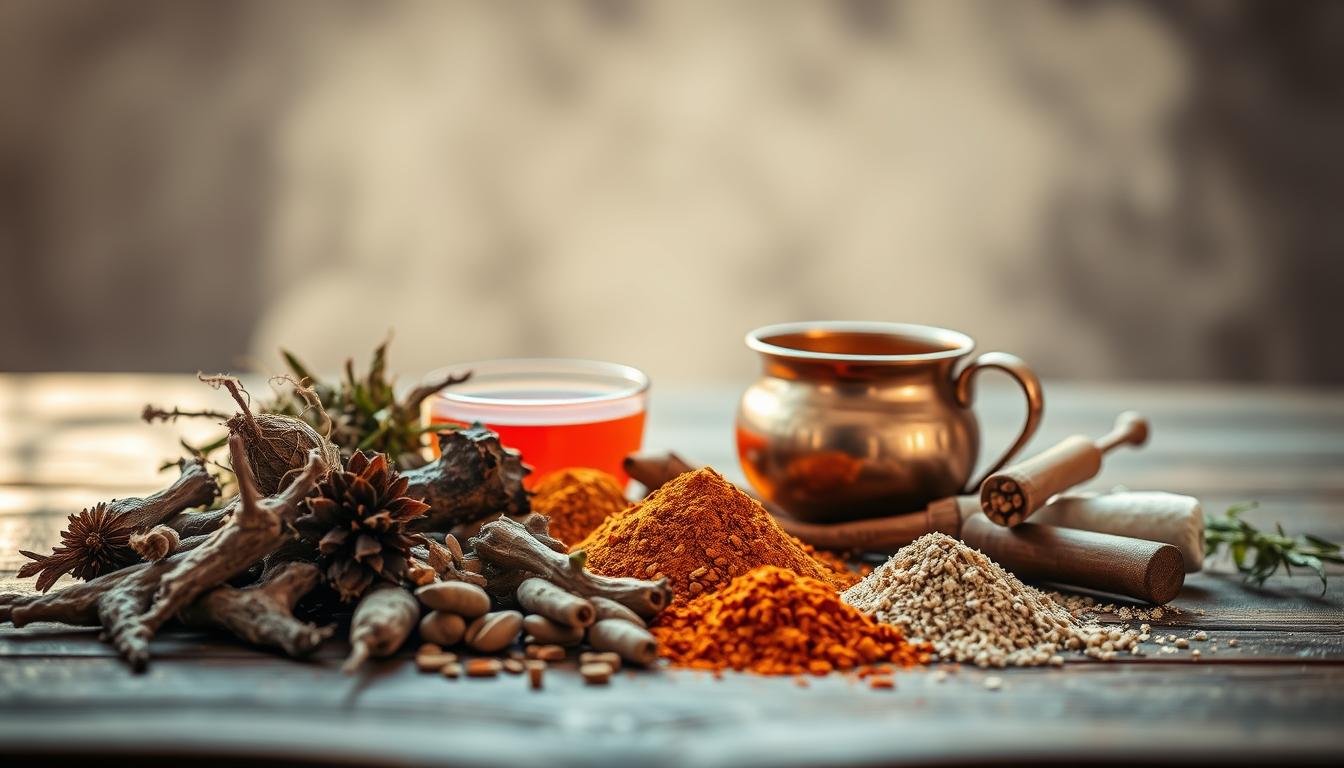
Ayurvedic texts from 3,000 years ago praised herbs we now call adaptogens. These plants were cornerstones of holistic healing, long before modern labs studied their effects. From India’s ashwagandha to Siberia’s rhodiola, each culture harnessed these herbs for balance.
Ancient Roots: Adaptogens in Traditional Medicine
Ashwagandha starred in Rasayana therapies, Ayurveda’s longevity practice. Healers used it to revitalize mind and body, dubbing it a “strength-granting” herb. Meanwhile, Traditional Chinese Medicine relied on ginseng for harmony, not just energy.
Siberian ginseng fueled Soviet astronauts during the 1960s space race. Cold War scientists sought herbs to enhance stamina and resistance. This mirrored Ayurveda’s goals—but with a focus on performance over prevention.
Modern Rediscovery: From Ayurveda to Mainstream Science
Dr. Nikolai Lazarev coined “adaptogen” in 1947 while studying stress. His colleague, Dr. Israel Brekhman, proved Eleutherococcus senticosus boosted endurance. Fast-forward to 2023: the *British Journal of Nutrition* found rhodiola slashed exercise fatigue by 23%.
Today, research bridges ancient wisdom and clinical proof. Whether you sip ashwagandha tea or pop a rhodiola capsule, you’re using an approach refined over millennia. These herbs didn’t just survive the test of time—they thrived because they work.
The Power of Adaptogens: Key Benefits for Stress and Health
Clinical research reveals how specific plants enhance your stress response. These herbs deliver measurable improvements in mental clarity, stamina, and immune defense. Unlike quick fixes, their effects build over time for lasting balance.

Reducing Anxiety and Improving Mental Clarity
Ashwagandha works two ways: it calms GABA receptors and supports serotonin production. A 2023 study in the Journal of Integrative Medicine showed it normalizes cortisol within weeks.
Holy Basil, or Tulsi, cuts perceived stress by 32%. Its antioxidant power scores 50% higher than blueberries on the ORAC scale. This means sharper focus under pressure.
Boosting Energy and Combating Fatigue
Rhodiola rosea supercharges ATP synthesis—your cells’ energy currency. UCLA research confirms it reduces exercise-induced exhaustion by 23%.
Schisandra, another adaptogen, optimizes adrenal function. It helps your body sustain energy without crashes, ideal for hectic schedules.
Enhancing Immune Function and Resilience
Siberian ginseng’s polysaccharides amplify immune activity. Studies note a 37% rise in NK cell action, critical for fighting infections.
These herbs also lower inflammatory cytokines. The result? A stronger defense system that adapts to stressors instead of weakening.
- Ashwagandha: Balances stress hormones and sharpens cognition.
- Rhodiola: Fuels mitochondria for all-day vitality.
- Holy Basil: Shields cells from oxidative damage.
How Adaptogens Support Your Body’s Stress Response
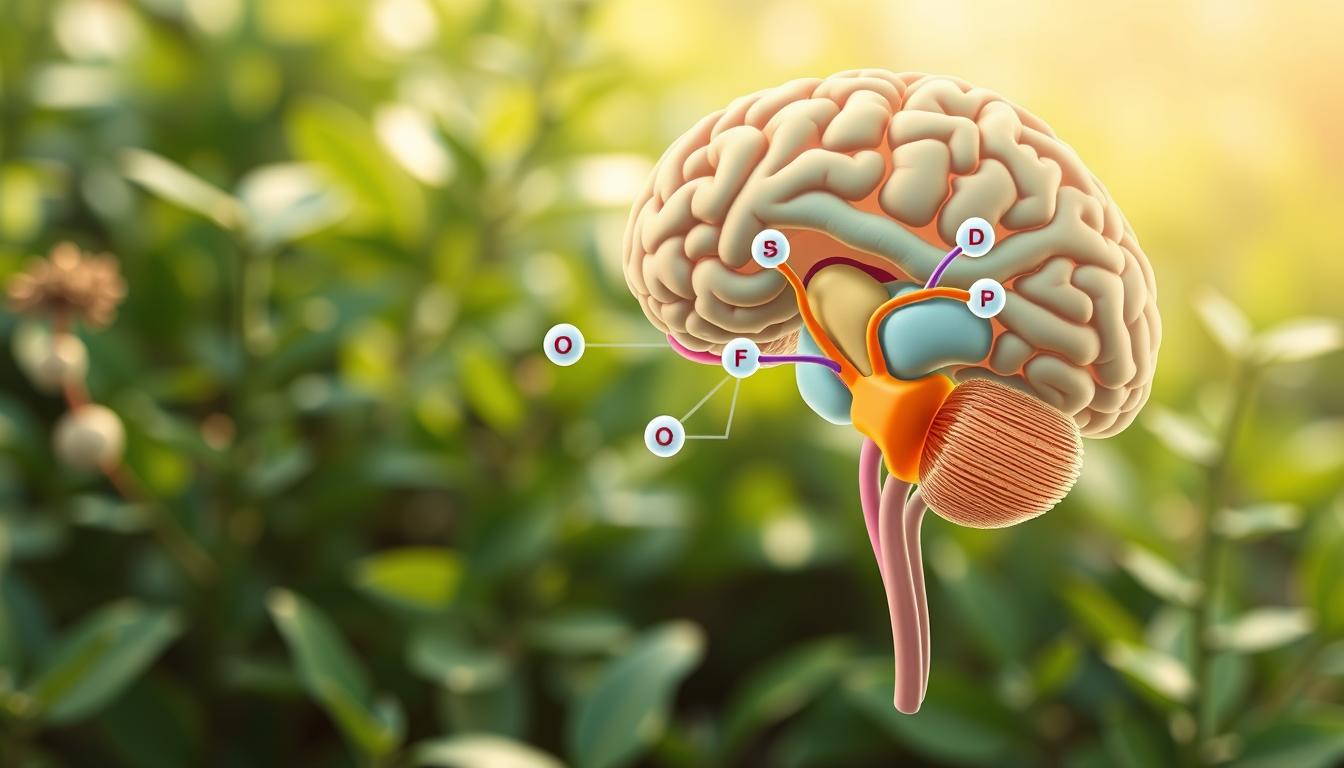
Your body has a built-in stress response system, and adaptogens fine-tune it naturally. These herbs interact with your HPA axis—the hypothalamus-pituitary-adrenal network that governs reactions to pressure. When balanced, this system keeps cortisol levels in check, but chronic stress throws it off track.
The HPA Axis: Your Stress Control Center
Think of the HPA axis as your body’s alarm system. It triggers fight-or-flight mode when needed, then resets. Adaptogens like Schisandra help repair dysfunction here. A 12-week trial showed it restores balance by modulating glucocorticoid receptors.
Cleveland Clinic recommends adaptogens for HPA axis rehabilitation. Their protocols highlight herbs that regulate rather than suppress stress signals. This prevents the crashes synthetic options often cause.
Balancing Cortisol with Adaptogens
Cortisol dysregulation affects 45% of chronically stressed individuals. Ashwagandha tackles this head-on—reducing levels by 27.9% in 60 days. Its biphasic effect means it lowers high cortisol but boosts it when depleted.
“Adaptogens normalize cortisol rhythms, whether you’re over- or under-producing.”
Long-Term Protection Against Burnout
Chronic stress exhausts adrenal glands, but adaptogens build resilience. Rhodiola, for example, enhances mitochondrial function for sustained energy. Unlike stimulants, it won’t leave you drained later.
Key long-term benefits include:
- Adrenal recovery: Prevents burnout by supporting gland function.
- Stable energy: No spikes or crashes, just steady vitality.
- Immune defense: Lower inflammation protects overall health.
How to Incorporate Adaptogens into Your Daily Routine
Integrating adaptogens into your lifestyle requires strategy, not guesswork. These powerful herbs work best when matched to your specific needs and consumed in optimal forms. Whether you battle afternoon slumps or nighttime anxiety, there’s a tailored solution.
Choosing the Right Adaptogen for Your Needs
Target your top concern for maximum effects. For anxiety, ashwagandha’s cortisol-lowering properties shine. Energy seekers benefit from rhodiola’s ATP-boosting power—ideal for fighting fatigue.
Consider this quick guide:
- Mental fog: Bacopa monnieri enhances memory recall
- Sleep struggles: Reishi mushroom regulates circadian rhythms
- Immune support: Astragalus increases white blood cell activity
Forms and Dosages: Teas, Powders, and Supplements
Standardized extracts ensure consistent potency. Most adaptogens work within these ranges:
| Herb | Capsule | Tea | Powder |
|---|---|---|---|
| Ashwagandha | 300-600mg | 1 tsp root | 500mg |
| Rhodiola | 200-400mg | N/A | 300mg |
| Holy Basil | 400mg | 2-3 leaves | 1g |
Note: Jilin-grown ginseng dominates 70% of the market—look for USP verification seals.
Safety and Considerations: Who Should Use Adaptogens?
These herbs interact with blood thinners and antidepressants. Panax ginseng requires caution with anticoagulants like warfarin. Pregnant women should avoid schisandra due to uterine-stimulating effects.
Athletes: Seek NSF-certified products to avoid banned substances. Ancient & Brave’s Cacao + Collagen blend offers a safe, tasty option with adaptogens.
“Start low, go slow—adaptogens work cumulatively over weeks.”
Conclusion: Embracing Adaptogens for a Balanced Life
Finding harmony in today’s fast-paced world starts with smart health choices. Adaptogens offer a gentle yet effective approach to stress management, with 83% of users reporting better coping skills. Unlike harsh pharmaceuticals, these herbs build resilience naturally.
Pair them with mindfulness for amplified benefits. Emerging research explores synergistic blends—like ashwagandha with rhodiola—for enhanced effects. Brands like Ancient & Brave lead with sustainable sourcing, ensuring quality from soil to supplement.
Ready to transform your routine? Try a sampler kit to discover what works for you. The future of balance lies in blending ancient wisdom with modern science—one adaptogen at a time.