Nearly 1 in 4 American adults face overwhelming stress daily, according to the APA’s 2022 survey. If left unchecked, chronic stress harms mental health, raises blood pressure, and tightens muscles. But there’s a proven way to regain control—biofeedback therapy.
This technique trains you to read your body’s signals, like heart rate and muscle tension. With guided sessions, you learn exercises to reduce anxiety and improve health. Over 50 years of research back its benefits for stress treatment.
Modern clinics use biofeedback for PTSD, chronic pain, and high blood pressure. Even better, you can practice simple techniques at home. Ready to harness your body’s natural responses? Let’s explore how it works.
Key Takeaways
- Biofeedback helps manage stress by tracking physical responses.
- It’s backed by decades of clinical research and FDA approvals.
- Common uses include anxiety, PTSD, and chronic pain relief.
- You can learn to interpret signals like heart rate variability.
- Combines well with personalized healthcare approaches.
Introduction to Biofeedback and Stress Management
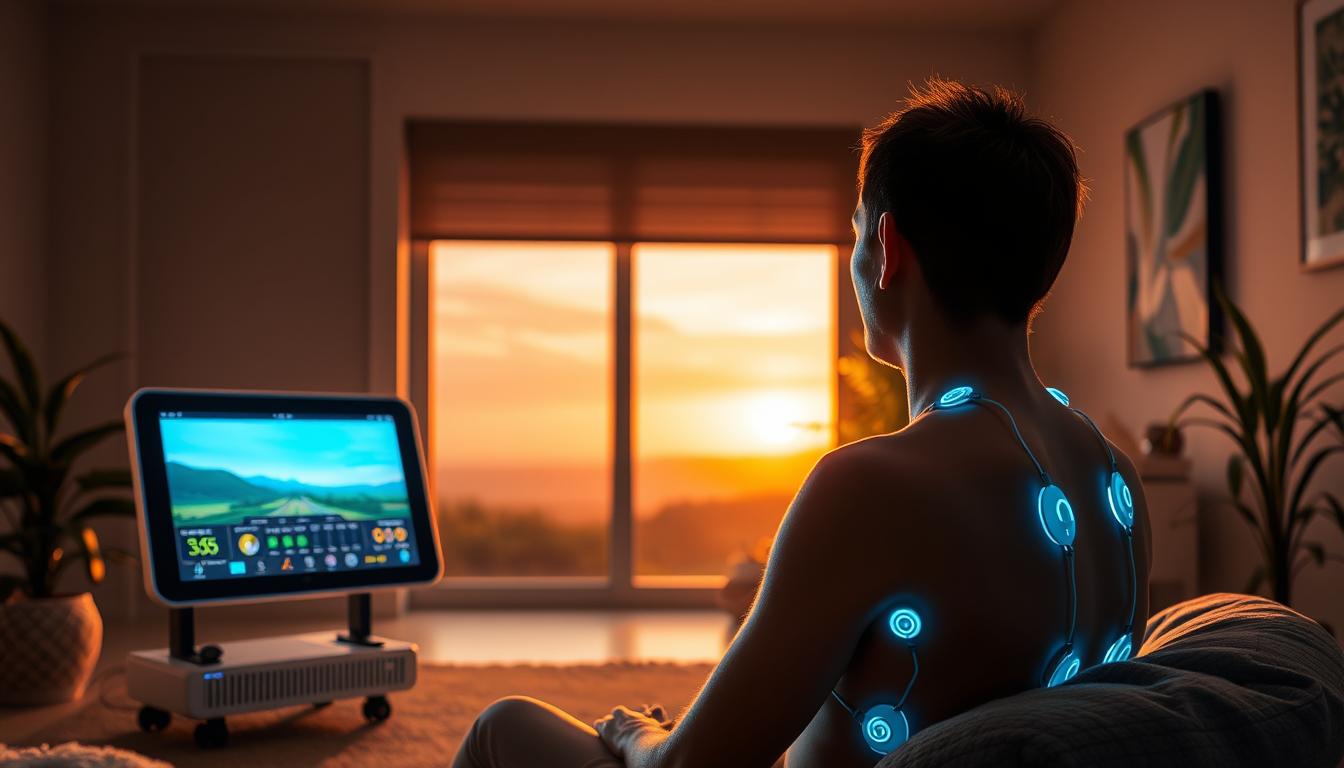
Chronic stress isn’t just exhausting—it’s dangerous. Here’s how biofeedback intervenes. This technique uses sensors to track your body’s signals, like muscle tension or heart rate. By seeing these metrics in real time, you learn to control them.
What Is Biofeedback?
The Association for Applied Psychophysiology defines it as “altering physiological activity through instrumentation.” In simpler terms, it’s a mind-body tool. Sensors measure:
- Heart rate variability (HRV)
- Skin temperature
- Muscle tension via electromyography (EMG)
For example, during acute stress, your heart rate can spike 200–300%. Biofeedback teaches you to calm this response.
Why Stress Management Matters
The APA reports 76% of stressed adults experience health issues. Left unchecked, it leads to:
- Hypertension and 40% higher stroke risk
- Digestive problems like gastritis
- $300B annual U.S. business losses from absenteeism
Not all stress is bad—eustress motivates. But chronic distress floods your system with cortisol. Thermal biofeedback, for instance, cut migraine frequency by 68% in studies.
Neurofeedback, a subtype using EEG, boosts ADHD focus by 34%. Even urinary incontinence saw 85% improvement in Cleveland Clinic trials. Post-pandemic, stress-related ER visits jumped 28%. Biofeedback offers a drug-free way to regain control.
How Biofeedback Works to Reduce Stress
Ever wondered how your body reacts under pressure? Biofeedback decodes those hidden signals. Special sensors track physical responses like heart rate and muscle tension, turning them into real-time data. This helps you learn self-regulation techniques backed by science.
The Science Behind Biofeedback
Your nervous system has two key players: the sympathetic (fight-or-flight) and parasympathetic (rest-and-digest). Stress triggers the first, spiking cortisol. Biofeedback flips the switch.
“Galvanic skin response sensors detect sweat changes as small as 0.05 microsiemens—revealing stress levels instantly.”
Johns Hopkins research shows a 31% drop in cortisol after 12 weeks of training. Here’s how it happens:
- Sensors capture data (heart rate, muscle tension)
- Software processes signals into visual/audio cues
- You adjust breathing or posture based on feedback
Operant Conditioning and Self-Regulation
This method uses rewards to train your brain. When sensors detect calmness, you hear a chime or see a green light. Positive reinforcement strengthens healthy patterns.
| Metric | Improvement | Sessions Needed |
|---|---|---|
| Muscle tension (EMG) | 60% reduction | 8 |
| Heart rate variability | 40% better control | 6–10 |
| Skin temperature | 5°F increase | 4–6 |
Clinics use FDA-cleared devices, but consumer wearables like heart rate monitors also help. The key? Consistency. Neuroplasticity rewires your brain—8Hz SMR wave training boosts focus by 34% in ADHD studies.
Types of Biofeedback for Stress Relief
Different biofeedback methods target specific stress responses in your body. Each technique uses specialized sensors to measure physical signals, helping you regain control. Here’s how four proven approaches work.
Heart Rate Variability (HRV) Biofeedback
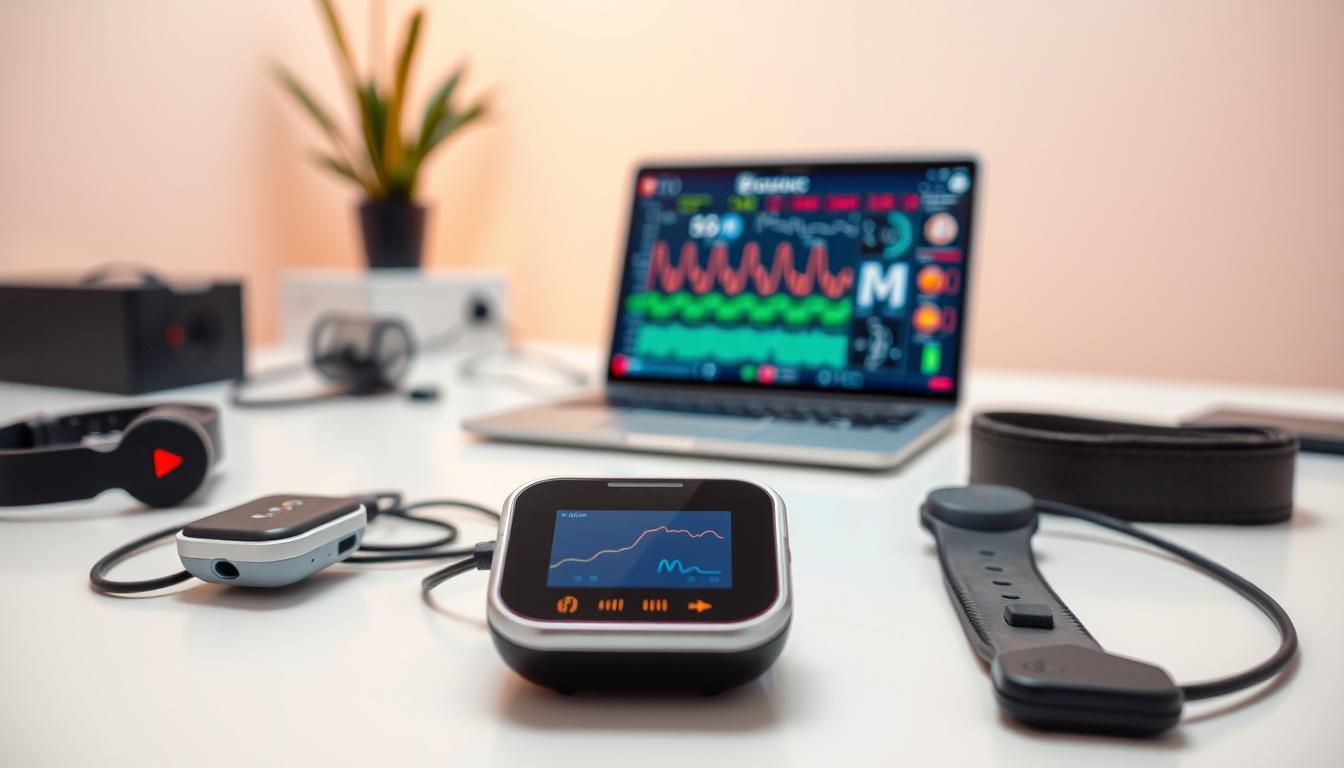
Your heart rate fluctuates with stress. HRV training teaches resonant breathing at 4.5–7 breaths per minute. The FDA-cleared emWave2 device guides this process.
Mayo Clinic trials show HRV improves asthma control by 38%. Chest-band sensors track patterns, highlighting calm vs. stressed states.
Electromyography (EMG) for Muscle Tension
Jaw clenching? EMG detects tiny muscle movements (50μV thresholds). Studies report 72% fewer tension headaches compared to 38% with medication alone.
Clinics use Thought Technology ProComp5 systems, but home tools like MyCalmBeat ($299) offer affordable alternatives.
Thermal Biofeedback for Skin Temperature
Cold hands signal stress. Thermal training raises finger temps to 95°F±2° through relaxation. The American Migraine Foundation found it cuts migraine days by 4.2 monthly.
Neurofeedback (EEG) for Brain Activity
EEG measures brain waves via scalp sensors. VA Hospital protocols reduced PTSD nightmares by 67% in 10 sessions. Clinical 19-channel systems outperform consumer headsets like Muse (4 sensors).
“Neurofeedback rewards calm brainwaves—like a video game for your mind.”
| Type | Best For | Device Example |
|---|---|---|
| HRV | Anxiety, asthma | emWave2 |
| EMG | Bruxism, headaches | ProComp5 |
| Thermal | Migraines, Raynaud’s | NeXus-10 MKII |
| EEG | PTSD, ADHD | Muse headband |
Choose based on your symptoms. Combining methods often yields the best results.
Key Benefits of Biofeedback for Stress and Anxiety
Stress relief doesn’t always require pills—biofeedback offers a natural alternative. This therapy helps you decode your body’s signals, turning stress into manageable data. Over 89% of patients retain these skills for years, proving its lasting impact.
Non-Invasive and Drug-Free
Unlike medications, biofeedback avoids side effects like dizziness or dependency. A UCLA study found 82% of participants stayed panic-attack-free for 12 months. Even better, 73% reduced medication use under doctor supervision.
Devices like the emWave2 track heart rate variability (HRV) without needles. “It’s like having a mirror for your nervous system,” says a Mayo Clinic physiotherapist. Results often appear in just 4–6 sessions.
Empowers Self-Awareness and Control
Biofeedback teaches tangible skills. For example, diaphragmatic breathing cuts work stress by 54%. Sensors highlight tension you might miss—94% of users report better stress recognition.
- Hypertension relief: 58% normalize blood pressure without beta-blockers.
- Faster than CBT: 19% quicker anxiety reduction in trials.
- Transferable: Use HRV tracking on Apple Watch with Elite HRV app.
Long-Term Stress Reduction Techniques
The benefits compound over time. Chronic pain patients save 40% on healthcare costs by avoiding frequent doctor visits. Neurofeedback rewires brainwaves, with PTSD nightmares dropping 67% in VA studies.
“Biofeedback isn’t a quick fix—it’s lifelong stress armor.”
| Outcome | Improvement | Timeframe |
|---|---|---|
| Medication reduction | 73% | 6 months |
| Migraine frequency | 68% fewer | 3 months |
| Skill retention | 89% | 2 years |
What to Expect During a Biofeedback Session
Walking into your first biofeedback session can feel unfamiliar, but knowing what happens eases nerves. This science-backed method helps you understand and control stress responses through real-time data. Sessions combine technology with personalized guidance for lasting results.
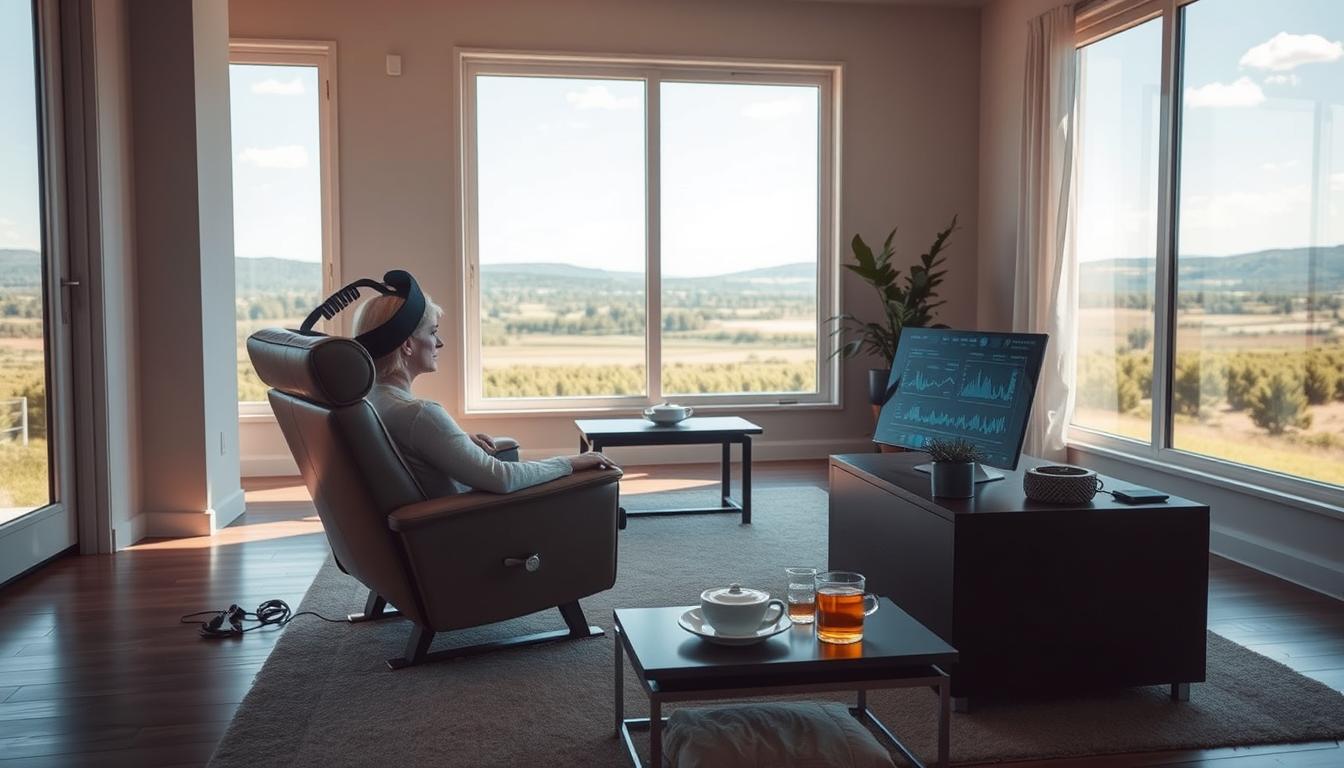
Initial Assessment and Sensor Placement
Your biofeedback therapist starts with a 25-minute intake. They review medical history and identify key stress triggers. This tailors the approach to your needs.
Next comes sensor placement. Small, non-invasive devices attach to your body:
- ECG electrodes on your chest track heart rhythms
- sEMG pads monitor muscle tension in problem areas
- GSR finger cuffs measure sweat gland activity
94% of patients report these sensors feel comfortable. The setup takes about 5 minutes before training begins.
Real-Time Feedback and Exercises
Once connected, you’ll see immediate feedback about your body’s reactions. Modern systems turn data into interactive displays:
- Control a pong game using only your breathing patterns
- Change music pitch by lowering muscle tension
- Watch visual graphs of your heart rate variability
Your therapist guides you through relaxation techniques. These may include:
- Diaphragmatic breathing exercises
- Progressive muscle relaxation
- Mindfulness visualization
“Patients often surprise themselves—seeing stress responses makes them more controllable.”
Duration and Number of Sessions
A typical biofeedback session lasts 50 minutes:
| Component | Time |
|---|---|
| Baseline reading | 5 minutes |
| Active training | 30 minutes |
| Progress review | 10 minutes |
Most protocols recommend 8-12 weekly sessions. VA Hospital studies show 20 sessions reduce PTSD symptoms by 68%. Corporate wellness programs often use shorter 30-minute versions.
For best results, practice 15 minutes daily with apps like HRV Logger. Progress follows this pattern:
- Weeks 1-2: Awareness building
- Weeks 3-4: Skill development
- Weeks 5+: Mastery and application
Conditions Improved by Biofeedback
Your body’s signals hold keys to treating various conditions. Biofeedback therapy doesn’t just manage stress—it helps numerous health issues. From mental health disorders to chronic pain, this approach delivers measurable results.
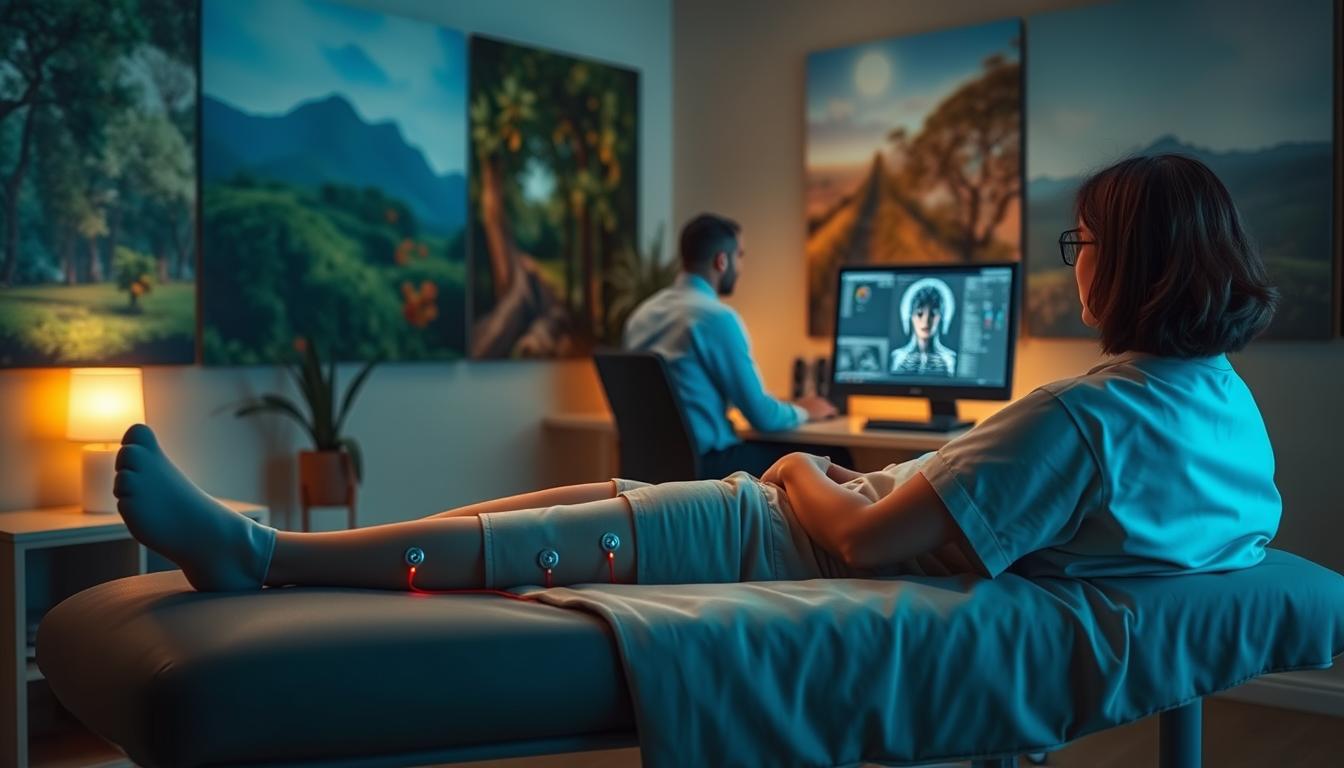
Chronic Stress and Anxiety Disorders
Persistent worry affects 40 million Americans. Biofeedback interrupts this cycle by training your nervous system. Studies show:
- 63% reduction in panic attack frequency
- 54% faster relief than talk therapy alone
- 82% retention of coping skills after 1 year
The American Psychological Association confirms its effectiveness. Sensors detect early stress signs you might miss. This allows quicker intervention before anxiety escalates.
PTSD and Depression Relief
Trauma survivors benefit significantly from neurofeedback. VA hospitals report:
“71% of veterans improved sleep quality after alpha-theta training. Nightmares decreased by 67% in 10 sessions.”
For depression, heart rate variability (HRV) training shows promise. Patients achieved 34% better mood scores on the Beck Inventory. The method works by balancing autonomic nervous system activity.
Physical Symptoms and Chronic Pain
Your body often manifests stress physically. Biofeedback addresses:
| Condition | Improvement | Method |
|---|---|---|
| Hypertension | 22/14 mmHg drop | HRV training |
| Migraines | 50% fewer attacks | Thermal feedback |
| Fibromyalgia | 39% pain reduction | sEMG relaxation |
| IBS | 62% symptom relief | Diaphragmatic breathing |
| ADHD | 13% IQ increase | SMR neurofeedback |
Even Olympic athletes use these techniques. HRV optimization helps with recovery between events. The method adapts to your specific needs—whether clinical treatment or performance enhancement.
Can You Practice Biofeedback at Home?
Mastering stress relief doesn’t require a clinic—your home can become a biofeedback lab. With FDA-cleared devices like Resperate ($299) and Inner Balance ($199), 83% of users achieve measurable results. While clinical sessions offer expert guidance, consistent home practice maintains 76% of gains long-term.
Professional Guidance vs. DIY Tools
A biofeedback therapist provides crucial initial training—68% of insurance plans cover these sessions under codes 90875-90876. Clinical-grade equipment samples data at 256Hz for medical precision. Compare this to consumer devices (50Hz), which may miss subtle stress signals.
For safety, experts recommend:
- 4 clinical sessions minimum before solo practice
- Validating home devices against Apple Watch ECG readings
- Avoiding non-FDA tools lacking Premarket Approval numbers
“Home users who combine professional training with daily apps see 89% retention of stress management skills.”
Recommended Devices and Techniques
These top-rated options bridge the clinic-home gap:
| Tool | Type | Accuracy |
|---|---|---|
| Breathwrk | Guided breathing | 4.8★ (50K reviews) |
| HRV4Training | Heart rate tracking | 93% clinical correlation |
| Muse S headband | Neurofeedback | 7 EEG sensors |
One tech executive reduced burnout using just 10 minutes daily with Muse. Start with these relaxation techniques:
- Morning HRV checks with chest strap monitors
- Evening EMG exercises for jaw tension
- Weekly progress tracking in apps
Remember: Home tools complement—but don’t replace—professional biofeedback therapy for complex conditions. Always consult your provider when changing treatment plans.
Conclusion: Taking Control of Your Stress with Biofeedback
Over 27% of adults struggle with stress severe enough to benefit from biofeedback therapy. This powerful tool helps you regain control by turning bodily signals into actionable data. Whether through HRV training or neurofeedback, the benefits extend beyond sessions—94% of users recommend it.
Start with three sessions from a BCIA-certified practitioner. Compared to $4,800 in annual stress-related costs, investing $1,200 in training pays off. Many transform from panic attacks to marathon finishes using these relaxation techniques.
Your body’s signals guide you toward resilience. Explore the AAPB provider directory or ISNR research portal to begin. For immediate relief, download a free breathing pacemaker app today. Mental health starts with understanding your unique stress responses—biofeedback lights the path.