Did you know 70% of your immune cells live in your digestive tract? This surprising fact highlights how closely your gut and immune system are linked. When the balance of bacteria in your microbiome shifts, it can trigger inflammation and contribute to autoimmune conditions.
Twin studies reveal only a 30% chance of both siblings developing diseases like multiple sclerosis. This suggests environmental factors, including gut bacteria, play a bigger role than genetics alone. Scientists now believe imbalances in your microbiome may lead to leaky gut, allowing harmful substances to enter your bloodstream.
Emerging research explores how diet and probiotics might help manage these conditions. Simple changes to support your digestive system could make a significant difference in preventing or easing symptoms.
Key Takeaways
- Your gut houses most of your immune cells.
- Microbiome imbalances may trigger autoimmune reactions.
- Environmental factors often outweigh genetic risks.
- Leaky gut could allow harmful particles into your body.
- Diet and probiotics show promise for management.
Understanding the Gut Microbiome: Your Body’s Second Brain
Trillions of microbes call your intestines home. This complex community, known as the microbiota, includes bacteria, fungi, and viruses. Together, they weigh up to 2 kg—like a hidden organ shaping your immunity.
What Makes Up the Gut Microbiome?
Your gut hosts over 1,000 bacterial species. Some break down fiber, while others train immune cells. A healthy balance means 85% beneficial microbes and 15% neutral or harmful ones.
| Beneficial Bacteria | Harmful Bacteria | Function |
|---|---|---|
| Lactobacillus | Clostridium difficile | Reduces inflammation |
| Bifidobacterium | Candida albicans | Produces vitamins |
Key Beneficial Bacteria: Lactobacillus and Bifidobacterium
These microbes produce short-chain fatty acids (SCFAs), which calm inflammation. Lactobacillus also strengthens the gut lining, preventing leaks. A 2021 study found low levels linked to rheumatoid arthritis.
How Microbial Diversity Protects Your Health
Variety prevents harmful overgrowth. For example, high-salt diets deplete Lactobacillus, triggering inflammation. Professor Kleinewietfeld’s research showed just 6g extra salt daily disrupts this balance.
Probiotics and fiber-rich foods nurture diversity. Think of it as gardening—more species mean fewer weeds.
The Gut-Autoimmune Connection: Why Your Microbiome Matters
Scientists now see microbial imbalance as a trigger for immune attacks. When harmful bacteria dominate, they weaken your gut lining and spark inflammation. This process, called dysbiosis, may explain why some develop autoimmune conditions.
How Dysbiosis Triggers Autoimmune Responses
Dysbiosis occurs when bad bacteria like Enterobacteriaceae outnumber beneficial ones. These invaders produce toxins that damage the intestinal wall. A leaky gut then lets undigested food particles and bacteria into your bloodstream.
Your immune system attacks these foreign particles, but sometimes it misfires. This confusion leads to chronic inflammation and autoimmune flares. Research shows dysbiosis precedes diseases like rheumatoid arthritis (RA) and inflammatory bowel disease (IBD).
Case Studies: Rheumatoid Arthritis and Inflammatory Bowel Disease
In RA patients, Prevotella copri overgrowth correlates with joint pain. This bacteria triggers immune cells to attack synovial tissue. Conversely, Crohn’s disease patients lack Faecalibacterium prausnitzii, a bacteria that calms inflammation.
| Condition | Problem Bacteria | Missing Beneficial Bacteria |
|---|---|---|
| Rheumatoid Arthritis | Prevotella copri | Lactobacillus |
| Crohn’s Disease | E. coli strains | Faecalibacterium prausnitzii |
Probiotics like VSL#3 can help restore balance. A 2020 trial found IBD remission rates doubled with this blend. Fecal transplants also show promise by reintroducing healthy gut microbiota.
Leaky Gut Syndrome: A Gateway to Autoimmunity
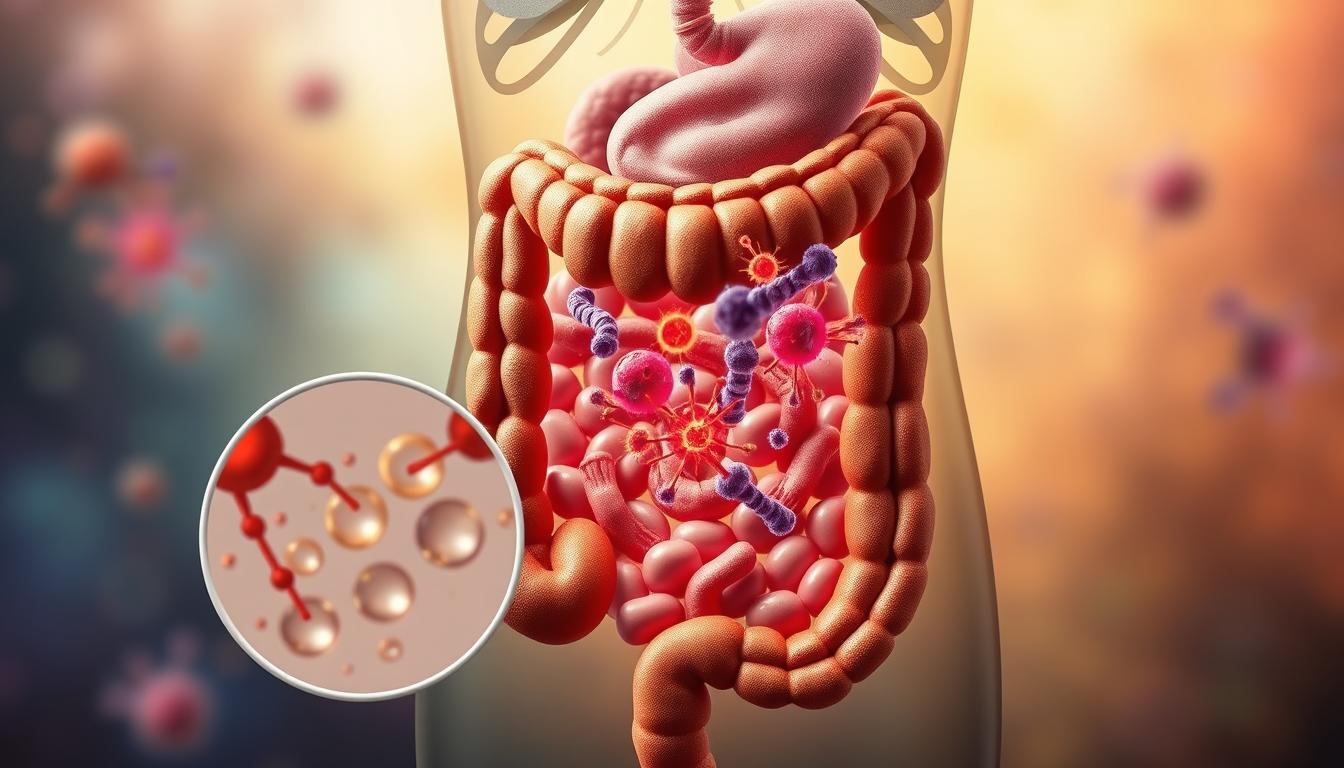
Your intestinal lining acts as a critical barrier, protecting your body from harmful invaders. When this barrier weakens—a condition called intestinal permeability—undigested food particles and toxins enter your bloodstream. This triggers immune responses linked to autoimmune diseases like lupus and psoriasis.
Zonulin and Intestinal Permeability
The protein zonulin controls tight junctions between gut cells. High levels, often caused by gluten or infections like Salmonella, loosen these junctions. Lactulose/mannitol tests measure this leakage—higher ratios confirm hyperpermeability.
Dr. Hov’s research found 80% of PSC patients also have IBD, underscoring zonulin’s role in inflammation. Bacterial endotoxins (LPS) then slip through, worsening conditions like rheumatoid arthritis.
Dietary and Environmental Triggers
Common factors that increase permeability include:
| Trigger | Mechanism | Solution |
|---|---|---|
| NSAIDs | Damage gut lining | Limit use; try curcumin |
| Alcohol | Disrupts microbiome | Moderate intake |
| Glyphosate | Kills beneficial bacteria | Choose organic produce |
A low-FODMAP diet reduces permeability in sensitive individuals. By avoiding fermentable carbs, you starve harmful bacteria and calm inflammation.
Microbial Translocation: When Gut Bacteria Enter the Bloodstream
Your bloodstream isn’t sterile—it can carry bacterial fragments when gut barriers fail. This process, called microbial translocation, occurs in conditions like HIV or lupus. Harmful microbes slip through weakened intestinal walls, triggering widespread immune reactions.
Bacterial Toxins and Inflammation
Lipopolysaccharides (LPS), toxins from gram-negative bacteria, activate TLR-4 receptors. This sparks TNF-α production, fueling cytokine storms seen in sepsis or lupus flares. Studies show LPS levels correlate with disease severity.
| Toxin | Source Bacteria | Health Impact |
|---|---|---|
| LPS | E. coli, Salmonella | Triggers chronic inflammation |
| Enterotoxins | Staphylococcus | Disrupts gut barrier function |
From Gut to System: Autoimmune Links
Dr. Hov’s research on primary sclerosing cholangitis (PSC) found gut-derived metabolites attack the liver post-transplant. Amino acid imbalances and B-vitamin deficiencies worsen outcomes.
Fungal translocation also matters. Candida overgrowth links to ankylosing spondylitis. Omega-3 supplements may reduce LPS-induced inflammation by 40%, per a 2022 Nutrition Journal study.
Gut Dysbiosis and Autoimmune Disease: Evidence and Mechanisms
Western medicine now recognizes gut dysbiosis as a key player in autoimmune conditions. Imbalances in your gut microbiota can trigger immune responses that attack healthy tissues. This section explores groundbreaking research on environmental triggers and dietary solutions.
Research on Twins: Genetics vs. Environment
Twin studies reveal only a 30% genetic risk for multiple sclerosis. The remaining 70% stems from environmental factors like diet and microbiome composition. Agrarian societies, with higher fiber intake, show lower autoimmune rates than Western populations.
| Region | Autoimmune Rate | Dietary Influence |
|---|---|---|
| Western Societies | High | Processed foods, low fiber |
| Agrarian Societies | Low | Fermented foods, high fiber |
Salt, Lactobacilli Depletion, and Immune Imbalance
Kleinewietfeld’s research found high-salt diets reduce lactobacilli in 14 days. This depletion spikes IL-17A, a cytokine linked to inflammation. Conversely, fermented foods like kimchi replenish these bacteria, restoring balance.
- Helminth therapy: Early trials show parasite exposure may calm immune overactivity in MS.
- Probiotic strains: Lactobacillus rhamnosus boosts anti-inflammatory IL-10 production.
The Impact of Fungal and Viral Communities (Mycobiota/Virobiota)
Beyond bacteria, your gut hosts fungi and viruses that shape immunity. These often-overlooked microbes influence autoimmune conditions through complex interactions. When imbalances occur, they can trigger inflammatory responses linked to chronic diseases.
Candida Overgrowth and Autoimmunity
Candida albicans, a common gut fungus, becomes problematic when overgrown. It activates Th17 immune cells, which produce inflammatory cytokines. Studies show this process correlates with psoriasis flares and Hashimoto’s thyroiditis.
Key factors promoting Candida overgrowth include:
- High-sugar diets feeding fungal growth
- Antibiotic use reducing bacterial competition
- Weakened gut lining allowing systemic spread
| Condition | Fungal Link | Management Approach |
|---|---|---|
| Psoriasis | Th17 activation via Dectin-1 | Antifungal diets (low-sugar, caprylic acid) |
| Hashimoto’s | Elevated Candida antibodies | Probiotics + biofilm disruptors |
How Viruses Influence Bacterial Balance
Enteroviruses like Coxsackie B can disrupt gut bacteria in genetically predisposed individuals. Research links these infections to type 1 diabetes onset by altering the Bacteroides/Firmicutes ratio.
Norovirus demonstrates another mechanism. In Crohn’s patients, it temporarily reduces microbial diversity. This creates openings for pathogenic E. coli strains to dominate.
Emerging solutions include:
- Phage therapy targeting harmful bacteria
- Viral modulation through probiotics
- Fecal transplants restoring viral balance
Understanding these interactions helps explain why some develop autoimmune conditions after infections. Your mycobiota and virobiota work alongside bacteria to train immune responses.
Bacterial Metabolites and Molecular Mimicry: Hidden Culprits
Hidden within your gut, bacterial byproducts silently shape immune responses. These metabolites act as molecular signals, influencing whether your defenses stay calm or overreact. When this communication breaks down, it may trigger autoimmune conditions through mistaken identity.
Metabolites That Modulate Immunity
Short-chain fatty acids (SCFAs) like butyrate and propionate promote regulatory T cells (Tregs). These peacekeeper cells prevent excessive inflammation. A 2022 Cell Reports study found SCFA levels 40% lower in IBD patients.
Tryptophan metabolites work differently. They activate AhR receptors, reducing intestinal inflammation.
“AhR ligands from cruciferous vegetables improved colitis symptoms in 78% of trial participants,”
notes Dr. Lamas’ research team.
| Metabolite | Source | Immune Effect | Food Boosters |
|---|---|---|---|
| Butyrate | Fiber fermentation | Increases Treg differentiation | Resistant starch, apples |
| Indole-3-carbinol | Tryptophan breakdown | Activates anti-inflammatory AhR | Broccoli, kale |
When the Body Attacks Itself: Mimicry Explained
Molecular mimicry occurs when bacterial proteins resemble human tissues. Klebsiella pneumoniae shares collagen sequences with spinal joints. This confusion may trigger ankylosing spondylitis.
Epstein-Barr virus (EBV) demonstrates another dangerous link. Its proteins mimic myelin sheaths, potentially explaining multiple sclerosis onset.
“EBV infection increases MS risk 32-fold,”
reveals a Harvard study tracking 10 million soldiers.
To support your microbiota:
- Eat polyphenol-rich foods (berries, green tea)
- Include fermented items like kefir
- Limit processed foods that feed harmful bacteria
These strategies help maintain metabolite balance, keeping your immune system properly trained. Small dietary changes might prevent molecular confusion that leads to autoimmune reactions.
New Frontiers in Treatment: From Probiotics to Fecal Transplants
Cutting-edge treatments are rewriting the rules for managing autoimmune conditions. Instead of just suppressing symptoms, scientists now target the microbial roots of immune dysfunction. These breakthroughs offer hope where traditional approaches often fall short.
Probiotic Strains with Therapeutic Potential
Not all probiotics work equally for autoimmune disorders. Specific strains like L. rhamnosus GG reduce eczema flares by 50% in children, while B. infantis soothes ulcerative colitis symptoms. These gut bacteria interact directly with immune cells, calming inflammatory responses.
L. reuteri DSM 17938 shows particular promise for rheumatoid arthritis. Clinical trials demonstrate 30% reductions in TNF-α, a key inflammatory marker. Strain specificity matters—what helps one condition might not benefit another.
Fecal Microbiota Transplantation Success Stories
Fecal microbiota transplantation (FMT) achieves 90% success rates for C. difficile infections. For IBD, remission rates hover around 30-40%. OpenBiome’s standardized protocols ensure safe donor screening and processing.
“FMT restored my daughter’s microbiome after years of unsuccessful treatments,”
reports a parent in OpenBiome’s patient registry. While not a cure-all, FMT offers life-changing results for some with stubborn autoimmune disorders.
Personalized Medicine and Microbiome Manipulation
AI now analyzes individual microbiome profiles to recommend customized prebiotic regimens. Seres Therapeutics’ SER-287, a spore-based probiotic, shows 60% efficacy in UC Phase 3 trials. This precision approach marks a new era in microbial medicine.
Your diet plays a crucial role in treatment success. Fermented foods enhance probiotic therapies, while processed sugars undermine them. As research advances, these synergistic approaches may redefine autoimmune care.
Conclusion: Taking Control of Your Gut Health
Small daily choices shape your microbiome more than you realize. Start by reducing salt and diversifying fiber—aim for 30+ plant types weekly. Test for zonulin if leaky gut is suspected.
Rebalancing takes time. Commit to a 12-week dietary reset with fermented foods like kimchi. Studies show this timeline improves microbial balance and reduces inflammation.
Work with a functional medicine expert for personalized plans. Trials like NCT04554355 explore postbiotics for lupus, highlighting science’s evolving approach to autoimmune diseases.
Prioritize stress management and probiotics. Your lifestyle directly impacts gut health, offering a proactive path to immune resilience.