Did you know a gland the size of a walnut influences nearly every cell in your body? The American Thyroid Association reports that 20 million Americans currently live with thyroid disorders, yet up to 60% remain unaware of their condition. This butterfly-shaped organ at your neck’s base acts like a master thermostat, controlling metabolism, energy production, and even mood stability.
Women face particularly high risks, developing thyroid issues eight times more frequently than men. Hormones produced here regulate heart rhythms, digestion, and brain development – meaning even small imbalances can create widespread effects. Many dismiss early symptoms like fatigue or weight changes as normal stress, delaying crucial diagnosis.
Early detection transforms outcomes. Modern treatments effectively manage most thyroid conditions when identified promptly. This guide will help you recognize warning signs, understand hormone interactions, and navigate treatment options with confidence.
Key Takeaways
- 20 million Americans have thyroid disorders, with many cases undiagnosed
- Women are 8x more likely than men to develop thyroid problems
- The gland regulates metabolism, heart rate, and brain function
- Early symptom recognition improves treatment success
- Most conditions become manageable with proper care
- Hormone imbalances affect multiple bodily systems
Understanding Your Thyroid Gland
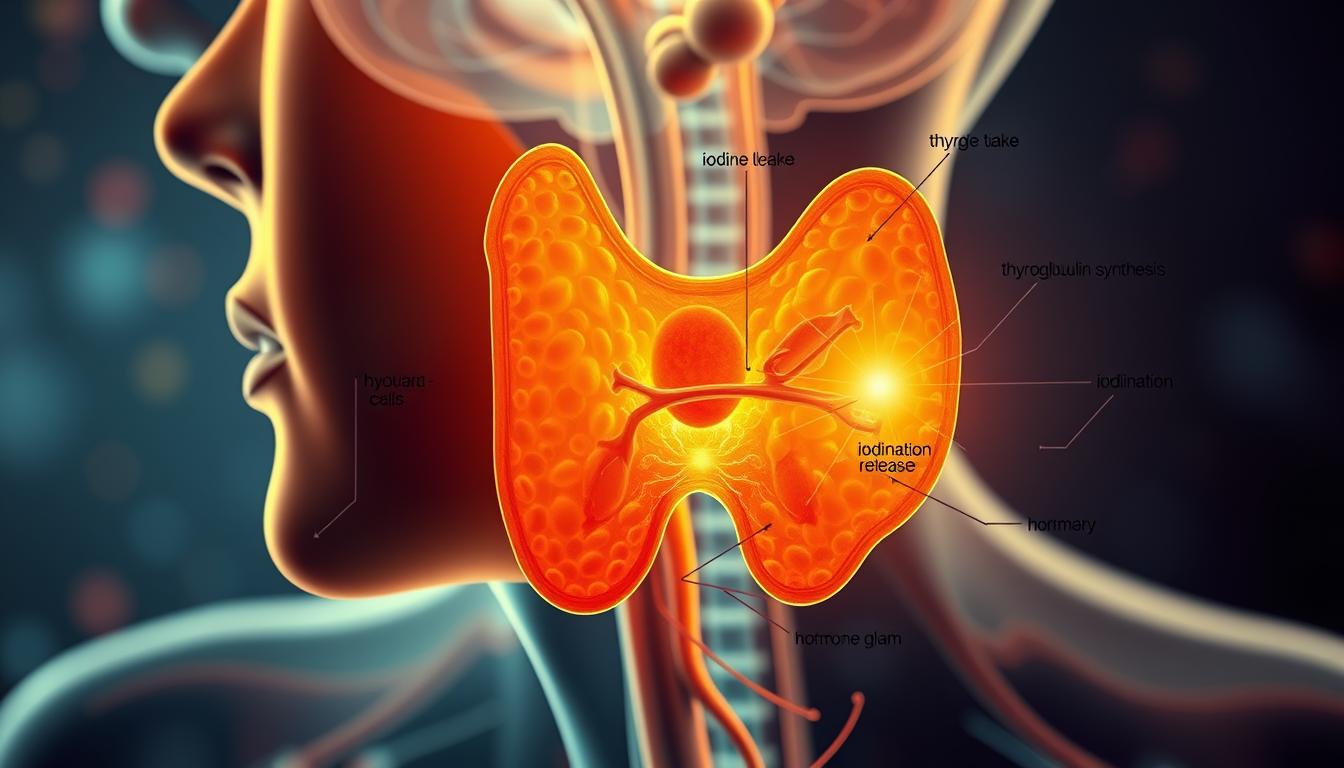
Your neck houses a tiny conductor orchestrating your body’s metabolic symphony. This butterfly-shaped organ wraps around your windpipe like a delicate clasp necklace, weighing less than a standard postage stamp. Despite its small size, it manages energy distribution to every cell through specialized chemical messengers.

Location and Function
Positioned at your neck’s base, the gland uses its strategic placement to efficiently release hormones into your bloodstream. These compounds regulate how fast your cells convert nutrients into energy – a process determining your metabolic rate. Even minor imbalances here can disrupt heart rhythms, digestion, and temperature control.
The Endocrine Connection
Your thyroid doesn’t work alone. It partners with the pituitary gland through a continuous feedback loop, adjusting hormone production as needed. This collaboration ensures your endocrine system maintains precise chemical balance across multiple organs.
Swelling in the neck area often signals thyroid issues, prompting doctors to palpate this region during checkups. When the gland malfunctions, it can trigger chain reactions affecting reproductive health and stress responses. Understanding these connections helps explain why thyroid care impacts your entire well-being.
Thyroid Hormones and Their Functions
Three chemical messengers form your body’s energy control system. TSH, T4, and T3 work like precision instruments in an orchestra—each plays distinct roles but harmonizes to maintain balance. Their coordinated efforts determine how efficiently your cells convert food into fuel.
Role of TSH, T4, and T3
Your pituitary gland acts as mission control, releasing TSH to stimulate hormone production. This trigger tells your gland to make T4—the storage form circulating in blood. T3, the active version, gets created when cells convert T4 or through direct gland production.
A smart feedback loop keeps levels optimal. Low T4/T3 makes TSH spike, signaling “produce more.” When hormones suffice, TSH drops. This system explains why blood tests measure TSH alongside T4 and T3 levels.
Metabolism and Energy Balance
These compounds dictate your metabolic rate—how fast you burn calories. They also manage:
- Heart rhythm consistency
- Digestive speed
- Body temperature regulation
- Cell replacement cycles
Even slight imbalances affect energy. Too little hormone slows functions—like a car idling. Excess revs systems dangerously high. Women notice menstrual changes because these hormones help regulate reproductive cycles.
Common Thyroid Disorders: Hyperthyroidism & Hypothyroidism
Your body’s energy regulator can malfunction in two distinct ways. Most thyroid disease cases fall into opposing categories: one revving systems too fast, the other slowing them dangerously. Recognizing these patterns helps you spot when something’s wrong.

When Your Engine Overheats
Hyperthyroidism acts like a stuck accelerator. Your gland pumps out excess hormones, forcing cells to burn energy rapidly. Common signs include:
- Unexplained weight loss despite increased appetite
- Racing heartbeat exceeding 100 beats/minute
- Shaky hands and heat intolerance
“Left untreated, this condition can strain your heart and weaken bones,” notes Dr. Emily Carter from the Endocrine Society. Blood tests confirming high T4/T3 with low TSH provide definitive diagnosis.
When Systems Slow Down
Hypothyroidism flips the script. Insufficient hormone production makes your metabolism crawl. You might experience:
- Persistent fatigue even after full nights’ sleep
- Unexpected weight gain without diet changes
- Thinning hair and constant chilliness
This disease often develops gradually, tricking people into blaming aging or stress. Annual TSH checks help catch it early, especially if you have a family history.
| Hyperthyroidism | Hypothyroidism | |
|---|---|---|
| Energy Level | Overactive | Underactive |
| Common Causes | Graves’ disease, nodules | Hashimoto’s, iodine deficiency |
| Treatment Focus | Slow hormone production | Replace missing hormones |
Both different types of thyroid problems require medical management. While symptoms seem opposite, they share serious risks if ignored. Proper treatment helps restore balance, letting you reclaim your vitality.
Thyroid 101: What Every New Patient Should Know
Living well with glandular challenges starts with understanding your treatment roadmap. Modern medicine offers effective solutions for most hormonal imbalances, with 90% of patients achieving stable health through proper care. Early intervention prevents complications like heart damage or infertility.

Women face heightened risks – statistics reveal 1 in 8 will develop gland-related issues. Regular blood tests and checkups help catch problems before symptoms escalate. Your medical team becomes your greatest ally in maintaining balance.
| Action | Frequency | Benefit |
|---|---|---|
| TSH blood tests | Every 6-12 months | Tracks hormone balance |
| Medication reviews | Annual checkups | Adjusts dosage accuracy |
| Symptom journals | Daily tracking | Identifies patterns |
Building consistent routines makes management easier over time. Work closely with your doctor to understand medication timing and dietary considerations. Small adjustments often yield significant improvements in energy levels.
Knowledge transforms fear into confidence. Learning how stress, nutrition, and sleep affect your condition helps you make empowered choices. With proper care, most people enjoy full, active lives for years despite their diagnosis.
Recognizing the Signs: Symptoms of Thyroid Imbalance
Your body sends distress signals when hormone levels shift—learning to decode them could transform your health journey. Physical and mental changes often appear gradually, creating patterns that reveal underlying issues.

Physical Symptoms
Hyperthyroidism accelerates systems like an overclocked engine. You might experience:
- Rapid weight loss despite normal eating habits
- Hand tremors or muscle weakness during routine tasks
- Heat intolerance with excessive sweating
Visible neck swelling (goiter) and irregular menstrual cycles often accompany these changes. In contrast, hypothyroidism slows bodily functions:
- Unexplained weight gain without dietary shifts
- Persistent fatigue unrelieved by sleep
- Hoarse voice or hair loss that resists standard treatments
Mental & Emotional Indicators
Your brain reacts sharply to hormonal fluctuations. Accelerated conditions may trigger:
- Anxiety that feels disproportionate to situations
- Restlessness interfering with focus or sleep
Slowed hormone production often manifests as:
- “Brain fog” disrupting memory and decision-making
- Depressive moods that linger for weeks
“Mental shifts often surface before physical symptoms in 40% of cases,” notes endocrinologist Dr. Lisa Moreno. “Tracking mood patterns helps pinpoint causes.”
Temperature sensitivity provides critical clues. Feeling constantly chilly or overheated—despite normal environments—warrants a hormone check. These bodily whispers demand attention before they become shouts.
Risk Factors and Causes of Thyroid Diseases
Why do some people develop glandular issues while others don’t? Your likelihood depends on a mix of inherited traits and daily exposures. Recognizing these influences helps you take charge of preventive care.
Genetic and Medical Influences
Your genes play a key role. If close relatives have gland disorders, your risk jumps 50-60%. Autoimmune conditions like Type 1 diabetes or lupus double trouble—they often trigger thyroid attacks.
Age matters too. Women over 60 face higher disease rates. Past cancer treatments? Radiation near your neck can damage hormone production years later.
Lifestyle and Environmental Factors
Daily choices add layers of risk. High-iodine medications might overstimulate your gland. Extreme stress or chemical exposures? These can tip balances in sensitive individuals.
Watch your diet. Too little iodine harms function, while excess may spark disorders. Annual checkups become crucial if you have medical conditions like Turner Syndrome or rheumatoid arthritis.
Knowledge shields your health. Share family history with your doctor and discuss medications that affect iodine levels. Early action often prevents major complications.
Diagnosis: Tests and Procedures for Thyroid Health
Pinpointing glandular issues requires precise tools that map invisible chemical patterns. Modern diagnostics combine lab work with advanced imaging to reveal hidden imbalances. Your care team uses these insights to create targeted treatment plans.
Decoding Blood Chemistry
Doctors typically start with TSH level checks—the pituitary’s “request memos” for hormone production. Abnormal results trigger T4 and T3 testing. Some cases require antibody screens to detect autoimmune attacks. Fasting isn’t usually needed, but timing matters for accuracy.
Newer tests analyze free hormone levels circulating in your bloodstream. These measurements help distinguish temporary fluctuations from chronic conditions. Most labs return results within 48 hours, speeding up diagnosis.
Seeing Beyond Symptoms
When bloodwork shows irregularities, ultrasounds visualize gland structure. This painless scan identifies nodules or inflammation missed during physical exams. Radioactive iodine uptake tests track how efficiently your cells use hormones.
Clinicians palpate your neck to check for enlargement or tenderness. They might request a biopsy if imaging reveals suspicious growths. Combined approaches provide complete pictures, ensuring no clue goes unnoticed.